Mirrors, Rosemary Branch Theatre

rsz_tim_smyth-mirrors-siobhan_mcmillan_54

Photography © Tim Smyth

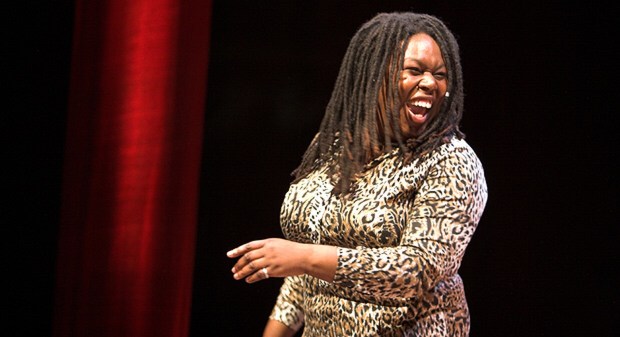
Maybe the witch in Snow White isn’t that bad. Or, maybe her badness is justified, like she had a traumatic childhood or suffers from a mental illness. Siobhan McMillan proposes just that: Shivvers realizes she’s past her prime and, with insecurity taking over rational thought, she decides to hunt down the young woman who dethroned her from her position as the fairest in the land. This quest takes shape as a solo performance told in the third person, like a fairytale. McMillan regularly interjects with contemporary references and using sarcastic humour to great advantage, makes a strong comment on women’s insecurity about aging.

The use of third person narration is one of the more interesting features of Mirrors; it distances McMillan from the audience and herself. Her physicality and energy cannot be denied as she embodies the characters she simultaneously describes. The audience is told her story but has plenty to watch, and a liberal use of sound and vocal effects create a dynamic aural landscape, even if a touch too loud at times.

The use of an occasional live feed adds another visual layer by which the audience scrutinises Shivvers, but a backlight interferes. The intention shows good instinct by director Jesse Raiment. The set isn’t particularly dyanmic with its black flats and mirrors, save for the ornate frame mounted on a table centre stage – a symbol of modern obsession with female appearance and its dominance in Shivver’s life.

This feminist solo show is an excellent display of performance storytelling and a witty comment on modern life as a woman. Not just about aging, it also looks at female competition, the need to be desired and the perils of dating. With the opportunity of a longer run, Mirrors could upgrade its tech and design to create a more polished production matching its content, creating a piece great for touring small to mid-scale venues.

The Play’s the Thing UK is committed to covering fringe and progressive theatre in London and beyond. It is run entirely voluntarily and needs regular support to ensure its survival. For more information and to help The Play’s the Thing UK provide coverage of the theatre that needs reviews the most, visit its patreon.

Shifter, Crick Crack Club at Soho Theatre

Going to a Crick Crack Club storytelling event is a bit like joining a private members’ club. This club doesn’t have strict entry criteria, nor is it cold and exclusive – quite the opposite. A welcoming spirit of community and the use of ritual enhance Jan Blake’s and TUUP’s four globe spanning stories. The first half of the two-hour, four-story Shifter has sturdier narratives, but the tales of trickery and metamorphosis interspersed with simple call and response create a magical, engrossing evening despite a few structural shortcomings.

We begin in Scotland, where young prince Raymond on a hunting trip meets a beautiful woman in the depths of the forest. He takes her home and the two soon marry. After many years and the births of their ten children who all have some sort of foreshadowing deformity, the prince makes a surprising discovery after spying on his wife whilst she bathes one evening. After a public reveal, the myth quickly relocates to a chateau in France, where inexplicable marks on a high window ledge are made clear. The prince is very much the victim of his bride’s deceit, but their love is also held up for admiration. Told by TUUP, this story is particularly male focused, demonising the female but also giving her power. It would be an interesting experiment to see what a woman storyteller could bring to this story. The climax and denouement are rushed, but the final line satisfies. TUUP has a relaxed, magnetic presence and his delivery of this warped love story is endowed with empathy and respect.

Blake now takes us to the Gulla Islands off the coast of America, one of the first settlements by African slaves. This is a another love story, again with a man who falls in love with a powerful, shape-shifting woman. Mary is less friendly than Raymond’s wife, and the threat to hew new husband John is tangible in Blake’s telling. This unnamed tale alludes to Rumpelstiltskin and Sleeping Beauty with the prominence of a spinning wheel and mysterious nighttime happenings. The strongest of the four stories in Shifter, its madness and imminent danger give this story a thrill, heightened by the various percussive instruments TUUP uses to accompany.

After the interval, two tribal, pre-Christian tales evoke the savannahs of Africa and the prestige that comes with being a successful hunter. The morals in these stories aren’t about the fear of powerful women in the Christian West; they more broadly apply to all humanity – don’t allow yourself to lose sight of your life goals, and practice rather than magic will bring you success. This half has a more epic sense of coverage, but the narrative arcs are less familiar to Western stories. They are more rounded, with a greater sense of the world outside of the characters; this makes them initially unsatisfying, but more universal.

TUUP and Blake both have natural warmth and charisma that draws in the audience like a hug. They are energetic but not ostentatious, simply relying on the rhythms and language of their stories. Much of the pleasure from Shifter comes from their presence, though hearing these stories grants a comfortable sense of inclusiveness despite some rocky moments in the stories themselves.

The Play’s the Thing UK is committed to covering fringe and progressive theatre in London and beyond. It is run entirely voluntarily and needs regular support to ensure its survival. For more information and to help The Play’s the Thing UK provide coverage of the theatre that needs reviews the most, visit its patreon.

Skin A Cat, Vault Festival

rsz_skin-a-cat-main-image-digital

Without question, my best new writing discovery of 2015 was young writer Isley Lynn’s play Tether at Edinburgh Fringe. This surprising, diverse two-hander also made it into the top five of my Top 10 Shows of 2015 so I was excited to receive an invitation to her autobiographical play Skin A Cat at Vault Festival. Having been so blown away by Tether, I worried I would find her other work underwhelming, but Skin A Cat is driven by the same sort of quick-witted, emotionally honest characters on a path of discovery that Tether boasts. Skin A Cat’s not about sport, though. It’s a tale of a stubborn vagina and an epic journey of self-acceptance in a world obsessed with sex. Phenomenal performances and humour tell Alana’s struggle with vaginismus and vaginal penetration with refreshingly frank, honest writing.

Theatre (and Western culture) doesn’t shy away from heteronormative sex, but a main character that hates it due to a psychosexual disorder is most rare indeed. Beginning with her first period on holiday at age nine, we see Alana (Lydia Larson) navigate teenage sexual exploits, several boyfriends, university and her twenties as a heterosexual young woman who finds vaginal penetration excruciating to the point of impossible. Try as she might, it doesn’t happen and the older she gets, the more burdensome and upsetting her virginity becomes. Alana tells her story directly to the audience with support by the excellent Jessica Clark and Jassa Ahluwalia, who play everyone else she encounters along the way, sometimes on mics and sometimes in conventional dialogue scenes, seamlessly switching between the two styles. Larson’s fantastic, perky Alana is genuine, funny and grows up before the audience’s eyes; that and Lynn’s unfettered dialogue cause us to feel like we know her inside and out (#sorrynotsorry) at the end of the 90 minutes.

Lynn’s gift for dialogue and detailed characters within a cleverly framed style shines here, and is generally well supported by director Blythe Stewart. Despite the serious subject matter and the control vaginismus has over Alana’s life, Lynn and Stewart use humour delightfully and liberally in both the writing and staging. Sex, attempted sex and orgasms hilariously abound, along with poignancy, tenderness and dogged desperation. It’s a beautiful balance.

Holly Pigott’s set solely consists of a bed; the pressure of its associated activities dominates Alana’s life. Some of the costume choices puzzle, though. The dungarees that Clark and Ahluwalia wear are androgynous and childlike, and rather old fashioned. Larson wears layers of undergarments that creates a simultaneously sexy and exposing, and completely unsexy and concealing effect – a great manifestation of Alana’s inner conflict.

Skin A Cat evokes belly laughs and empathy, nostalgia and wonder. Though it raises awareness of a psychosexual condition, Lynn manages to not make this an “awareness” play. Instead, it’s a story about growing up, loving yourself and making friends with your body’s quirks. Excellent writing and committed performances in Skin A Cat prove Isley Lynn and the cast are ones to watch.

The Play’s the Thing UK is committed to covering fringe and progressive theatre in London and beyond. It is run entirely voluntarily and needs regular support to ensure its survival. For more information and to help The Play’s the Thing UK provide coverage of the theatre that needs reviews the most, visit its patreon.

Red Riding Hood, Preston Continental

rsz_12299318_10153680692062789_6332526754861081608_n

What makes the story of Red Riding Hood so enduring? Is it the clever heroine? Is it the metaphor for growing up? Is it the violence and gore? Horse & Bamboo choose to focus on the colour red and its symbolism in their touring Red Riding Hood. Two actors, Nix Wood and Alex Kanefsky, are actor-storytellers-puppeteers who endow the story with a richness and life that appeals to their young audience as well as their families. The company’s lo-fi touring aesthetic uses a surprising amount of puppets at different sizes, masks and costume to keep the kids’ attention. It’s a bit hodgepodge on the surface but there’s a good amount of layers to this piece: meta theatre, storytelling, playing at the characters, and embodying them. Wood and Kanefsky fluidly switch between the styles that initially feel excessive in their quantity, but the children are so absorbed in the story that cannot be deemed as anything but highly effective and engaging.

The main focus of the story is the dynamic between Red and the Wolf. Mum and Grandma make appearances, but they don’t waste any time getting to the woods. The deeper Red gets, the larger the characters become – a great device. Initially, a tiny Red and mum are reading bedtime stories in a dolls’ house, eventually Wood plays Red in a full mask and the wolf is a nearly life-sized puppet with excellent movement and expression in the head and neck. Music and animated projections add additional detail to Wood’s controlled, emotional physicality communicating the unspeaking Red’s inner life. The wolf and Red focus results in a reinforcement of the “don’t trust strangers particularly if they seem nice” moral, which works for a children’s show but is quite a shallow interpretation in a production that has such depths of performance technique and style.

Red’s cloak is a dark, rich red that stands out beautifully against the rest of the set. Wood sets up red as her favourite colour as she chats with the entering audience pre-show; it’s lovely to watch. Kanefsky is goofy and warm, and loves cakes. This trait follows his characters through the rest of the story. The set is made of abstract blues and greens, inspired by Paul Klee’s art (my initial association was with Kandinsky’s work). Though the idea of starting with visual art for a way into a concept is a common one, the abstract set design clashes with the concrete realism of the puppets and mask, and the animation style was the starkness of shadow puppetry.

As children’s theatre goes, Horse & Bamboo’s Red Riding Hood is more sophisticated than it appears. Despite the moralizing, the craftsmanship and performance skill can be appreciated and enjoyed by all ages. Knowing that Horse & Bamboo are a touring company with just two actors makes their work all the more impressive. An excellent production for families at any time of year, too.


The Play’s the Thing UK is committed to covering fringe and progressive theatre in London and beyond. It is run entirely voluntarily and needs regular support to ensure its survival. For more information and to help The Play’s the Thing UK provide coverage of the theatre that needs reviews the most, visit its patreon.
Top Ten Shows of 2015

rsz_top10-620x400

  1. Carmen Disruption 

This Simon Stephens deconstruction bore little resemblance to the opera. Instead, we had a cast of dysfunctional, damaged characters unable to connect with the world around them on any meaningful level. They filled the Almeida with an electric loneliness that grasped the desperate humanity residing deep inside us all before chucking us out, exposed and raw, into the London night.

  1. Pomona

Written by a 27-year-old, Pomona captures the millennial generation in a single play. Frantically set over several levels of dystopian reality and never able to settle, this epitomises those who suffer the consequences of  baby boomers’ past choices.

  1. Light

The first show I ever gave five stars to, after more than a year of criticism. Good intentions and government exploitation address increasing surveillance with stunningly precise physical theatre, object manipulation and light.

  1. Tether 

A two-hander about a blind runner and her guide, this piece is refreshingly unromantic and driven by dialogue and characterisation. This is a simple and powerful piece by a promising young writer set in a world rarely considered by non-disabled people.

  1. Shakespeare & the Alchemy of Gender

A solo performance by veteran Shakespearean, Lisa Wolpe, founder of L.A. Women’s Shakespeare Company. Exquisite extracts of Shakespeare’s most celebrated male roles interspersed with her father’s biography raises important points about performance, gender and family.

  1. Town Hall Cherubs

Theatre Ad Infinitum and Battersea Arts Centre team up to create an immersive, site-specific piece for 2-5 year-olds. Gentle and responsive to the children’s attention spans, this is a bit of a winter treasure hunt around the BAC that stimulates all the senses.

  1. Chef 

Another sharp one-woman show, this one by Sabrina Mahfouz and performed by Jade Anouka. Anouka is a Michelin-star chef who runs the prison kitchen. Part fictional memoir/part foodie homage, this character driven piece cuts an unforgettable character.

  1. This is How We Die

An explosive spoken word/music piece by Canadian Chris Brett Bailey, it defies description and instead must be experienced. A marmite production amongst critics but Bailey’s use of imagery within language is incomparable.

  1. Don Q

A warm and lovely adaptation of Cervantes’ novel, Don Q is an old man’s gleeful adventure story. Four actors multi-role through this story that looks at the way we treat the elderly and the joy of play-acting.

  1. Eclipsed

Set during the Liberian Civil War, the all-woman cast of Danai Gurira’s doesn’t hold back on the experience of women in wartime. This is a brutally raw survival story with the power to leave you shaken, guilty and grateful for the benefits of Western comforts.

Honourable mention: Invisible Treasure

This is an interactive experience that is audience-led, with no actors and no plot. Like a game, the audience is led into a hi-tech room and led through a series of tasks in order to escape. Fun, challenging and frustrating, it makes some powerful points about group dynamics and personal approaches to problem solving.


The Play’s the Thing UK is committed to covering fringe and progressive theatre in London and beyond. It is run entirely voluntarily and needs regular support to ensure its survival. For more information and to help The Play’s the Thing UK provide coverage of the theatre that needs reviews the most, visit its patreon.
Wilde Without the Boy/The Ballad of Reading Gaol, Rose Playhouse

rsz_wilde-without-the-boy-publicity-shot

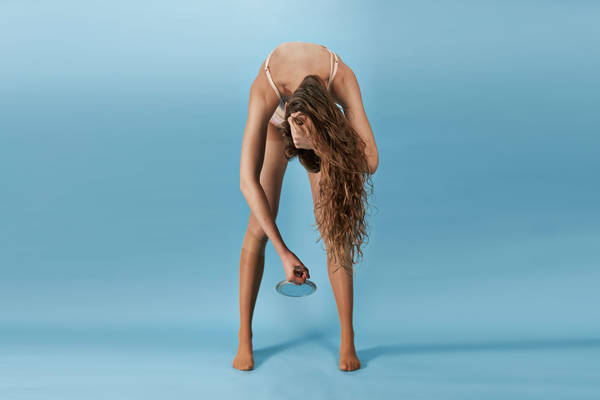
Near the end of his two-year imprisonment for gross indecency, Oscar Wilde was a man broken from hard labour, isolation and social disgrace. Until a sympathetic warden at Reading Gaol allowed him restricted writing privileges, he hadn’t been able to write at all. Provided with a single sheet of paper that would be collected and replaced when that one was filled, Wilde penned an 80-page letter of 50,000 words to the selfish lover who was his downfall, Lord Alfred ‘Bosie’ Douglas. Heavily edited and published posthumously by Wilde’s friend and former lover Robbie Ross, the chatty letter was titled “De Profundis”. After Wilde’s release, he wrote poem “The Ballad of Reading Gaol” whilst exiled in Paris; this work details the execution of a fellow inmate.

In Wilde Without the Boy/The Ballad of Reading Gaol, actor Gerard Logan and director/writer Gareth Armstrong team up to create a staged version of these two narratives as a one-man show in two acts. Dramatic in structure and reasonably well performed, this is a text-heavy piece that suits the intimate Rose Playhouse. However, the consistent, even tone and pace that Logan employs has a lulling effect and the verbosity overwhelms with details. There is little to watch; though Wilde Without the Boy gives insight into Wilde’s state of mind at this challenging point in his life, it would make more sense as an audio recording and I cannot discern why it was put on the stage. The Ballad of Reading Gaol is performed with more vocal and physical variation so even though it is the shorter part of the event, it is the more compelling piece.

The set is simple: a bare table and two chairs for the first act, with a stack of documents that are occasionally referenced as letters. The red rope lighting that outlines the Rose’s archaeological remains casts a faint red glow on the walls reminiscent of the passion and anger that constantly burns in Wilde’s heart. Whether or not this was intentional, it effectively contributes to the heavy mood of both pieces. In the second piece, the table is covered with summer linen and a sole green carnation rests there. It is another powerful symbol of Wilde’s homosexuality that is repeatedly denied in Wilde Without the Boy. This show completely ignores the vast space beyond the stage, a decision that suits the script, but it’s still a shame to neglect such a unique feature. The musical score, intermittent in Wilde Without the Boy but a constant presence in The Ballad of Reading Gaol, is latterly a character in itself and Logan’s delivery is impeccably timed to its rise and fall. No programme was supplied, but whoever designed or composed this score deserves acknowledgement.

Though both are interesting pieces of text in that they aren’t normally performed or read by anyone other that Wilde enthusiasts or students, their theatrical potential is limited. Even with Armstrong’s adaptation and edit of the letter, as a one-person show it’s still more of a recitation with a thin story arc detailing Wilde’s views of Bosie and his experiences in prison. Logan has some lovely emotional moments, but it’s not enough to keep the mind from drifting. The Ballad of Reading Gaol has an actual storyline, which is an immense boost to Logan’s performance. He has a compelling stage present and vocal agility, but Wilde Without the Boy is not the best showcase of his abilities, the Rose as a venue or theatre itself.


The Play’s the Thing UK is committed to covering fringe and progressive theatre in London and beyond. It is run entirely voluntarily and needs regular support to ensure its survival. For more information and to help The Play’s the Thing UK provide coverage of the theatre that needs reviews the most, visit its patreon.

The Notebook, Battersea Arts Centre

https://i0.wp.com/www.forcedentertainment.com/wp-content/uploads/2014/10/The-Notebook-Forced-Entertainment-Rehearsal-Image-April-2014-photo-Tim-Etchells-DSC04935.jpgNearly everyday we see news of refugees fleeing war torn lands in search of safety abroad. No matter how the press spins objective facts to suit their own agenda and their readers’ opinions, the perspective of these events unfailingly separates “them” from “us”. These people running for their lives are The Other that we must either keep out or allow in. It’s all very black and white, heavily doused with an air of superiority; we either look down on them as vermin that need controlling or as victims that need handling with kid gloves. We never really hear from these refugees, though. It’s all, “me, me, me” and a flamboyant display of either virtue or condemnation.
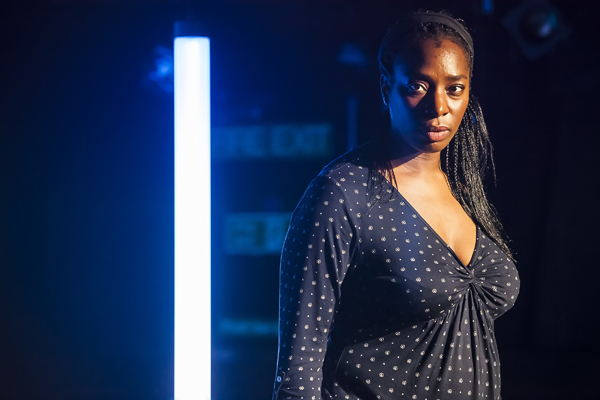
The Notebook, with a stark simplicity that forces the audience to sit and listen for two unrelenting hours, slowly unpacks the horrors of war that drives people to flee from a first person perspective. It makes us take the focus off ourselves for once and genuinely listen to the stories of those in need. Told by nameless twin boys moved to their grandmother’s home in the Hungarian countryside, they come of age during World War II, the subsequent Russian occupation and descent of the Iron Curtain. Adapted from Agota Kristóf’s novel of the same name, Forced Entertainment strips the story down to a text that’s read from thick notebooks by two identically dressed actors (Robin Arthur and Richard Lowdon) who represent the boys. This is storytelling in its most raw, boiled down form, with language being almost the sole vehicle of communication.

The set is two wooden chairs and the lighting rarely changes. There isn’t much to look at, which makes this show a tough one for those used to constant visual stimulation in both real and theatrical worlds. There were times I internally railed against the form, like a kid with ADD in a lesson that lasts more than three seconds. One woman walked out part way through. Others fidgeted and checked their watches. We just aren’t used to sitting down and just listening for a couple of hours anymore. The story is unquestionably riveting, though. Through use of precisely timed delivery, often in unison, childhood innocence breaks down and is eventually destroyed, despite their mother’s attempts to protect it. Their grandmother’s house is hardly a haven, and they must resort to deplorable behaviour to eek out a sub-par existence even though the bombs are a distant threat. It’s understandable though, considering the abuse they endure from their grandmother, the general public and those in positions of trust. The people in this story are rarely kind; even though it’s unsaid it’s given that it’s not their fault. The human spirit can endure only so much.

The language doesn’t hold anything back. It is often explicitly graphic with appalling acts emphasised by unemotional delivery. The audience inevitably uses their imagination to make up for the lack of visuals; these images are far worse than anything that could be presented on stage. Though the performance could use shortening, it’s soaked with detail and condenses years into hours. Shaving off half an hour would still maintain impact, but it’s not Forced Entertainment’s job to make us comfortable. Director Tim Etchells wants us to think, empathise and listen, really listen, even if the process isn’t easy. The Notebook is a hard production to watch, but the message of acceptance and universal humanity is a vital one.


The Play’s The Thing UK is an independent theatre criticism website maintained voluntarily. Whilst donations are never expected, they are hugely appreciated and will enable more time to be spent reviewing theatre productions of all sizes. Click here to make a donation with PayPal.

The Tempest, Bloomsbury Festival

circle

By a guest reviewer who wishes to remain anonymous:

This adaptation of The Tempest by Kelly Hunter was a one-off performance as part of the Bloomsbury Festival at the Bloomsbury Studio Theatre. Hunter specifically designed this piece to enable children on the autism spectrum to participate in the show with the actors. These children’s parents/carers are invited to sit and watch.

I think this was the most unique Shakespeare productions I’ve seen. Hunter and her excellent cast of six set themselves the challenge of using The Tempest as a means of interacting and helping several young people on the autism spectrum to improve their self expression and communication with each other. Initially, I was uncertain how this would work as, personally, I’ve always found the Tempest a tricky play to follow. As the story progressed I saw that The Tempest actually lends itself perfectly to this kind of devised, interactive theatre. The play of course deals in magic; there’s also a clear physicality to many of the characters and a certain playfulness which allows the actors to introduce the young participants to the world of the play. This was not a full production of the Tempest and nor did it need to be. Considering its aims, the production was undoubtedly a huge success. All of the participants seemed to benefit hugely from playing simplified versions of various scenes from the play with these very experienced stage actors. More importantly they, along with the parents and carers watching, seemed to really enjoy themselves. When the play ended there was a lovely, warm feeling in the room. Everyone seemed enlivened by the experience, adults and children alike.

I sincerely hope that Flute Theatre will continue its success producing this kind of work in the future. It is extremely important and valuable to non-traditional theatregoers.


The Play’s The Thing UK is an independent theatre criticism website maintained voluntarily. Whilst donations are never expected, they are hugely appreciated and will enable more time to be spent reviewing theatre productions of all sizes. Click here to make a donation with PayPal.

Joanne, Soho Theatre

Joanne2We never meet Joanne. We do however, meet four women who encounter her at different points over a crucial 24-hour period of her life, and one that remembers her as a child. We learn that she cuts a tall, striking figure, makes immediate impact on those she meets and she doesn’t seem to fit in anywhere the world. Joanne is homeless and has just been released from prison. Production company Clean Break, founded by 2 female prisoners in 1979 and still producing, recognizes the importance of sharing stories from vulnerable women prone to falling through society’s cracks. Joanne, written by five female playwrights, has some wonderful writing and is skillfully performed in an intimate space but the brevity of the monologues and talking around Joanne distances rather than fully engages.

Tanya Moodie first plays a key worker, then easily slips into a police officer, an NHS receptionist, a hostel cleaner and a teacher. All were moved by Joanne’s plight and wanted to help her, innately sensing her need for support. These women related to something within Joanne, humanizing her and the thousands of other female prisoners like her. Moodie captures the genuine care these women feel, as well as their conflict – police officer Grace isn’t supposed to get attached to her cases, but alludes to her own struggle with finding a place in the world for her and her daughter. I am particularly touched by Kathleen, on the front line of an NHS hospital for 28 years. She makes some pointed critiques of government legislation’s effects on her workplace and its effects on those most needing care. These stories are much more engrossing than Joanne’s because they’re in front of us, as Joanne herself is a shadowy puzzle that we slowly and satisfyingly piece together.

Through written by five different writers, the monologues seamlessly connect but remain stylistically distinct. Told in the past tense through the sharing of memories, they are fine examples of storytelling that Moodie makes active and varied rather than nostalgic. She owns the distinct characterization of these women, skillfully masking Róisín McBrinn’s direction. Colour changing light-up columns and panels add visual variation, but don’t contribute towards meaning or location. Their presence is unimposing, but unnecessary. The otherwise minimal, black set draws all attention onto Moodie, as it should in this production. Audience focus is on Joanne’s attempted helpers and their capacity to empathise; they are more solid and demanding of immediate attention than the silhouetted subject of their stories who leaves nothing but a memory.


The Play’s The Thing UK is an independent theatre criticism website maintained voluntarily. Whilst donations are never expected, they are hugely appreciated and will enable more time to be spent reviewing theatre productions of all sizes. Click here to make a donation with PayPal.

Rise Up, Theatre Centre

Kimisha Lewis in Rise UpMay, 1961. The American south. Segregation has been ruled unconstitutional, but southern states ignore the legislation and the federal government does nothing to enforce it. Activists of all ages and races, sponsored by civil rights organizations, challenge this non-enforcement on public transport and customer services by sending groups of riders, black and white, on interstate bus journeys from Washington DC to New Orleans.

They never get to New Orleans. Over the next several months, in Alabama and Mississippi one bus after another is brutally attacked. The activists, who believe in passive protest, are terribly injured and eventually arrested. President Kennedy, embarrassed by their actions on an international level, urges them to stop but they continue to fight for equality. Rise Up by Lisa Evans uses spoken word, storytelling and multi-rolling to inspire young people to fight for equality in their everyday lives and pay homage to these brave people fighting for justice. A cast of four actor-storytellers with boundless energy plays all the characters with minimal set and props, inciting enthusiasm from both adults and young people alike.

Three metal panels on wheels are the old silver Greyhound buses. A few matching metal stools cleverly create bus seats, jail cells, shop counters and so on. Actors Emma Dennis-Edwards, Sam Kacher, Kimisha Lewis and Edward Nkom set the scenes with an array of accents and physicalities under their belts, plus a few hats and small props to help. The audience consisting mostly of children from the local girls’ school immediately warm to them, both during the production and the post-show “revolution”.

The script is narration-heavy, perhaps too much so, but these monologues feature sections of poetry delivered with a hint of spoken word, but not so much so that the performance style changes and does a disservice to production style continuity. Though more showing than telling would have been welcome, the incidents described are quite graphic and not appropriate to vividly show to school children. This isn’t a particularly visual show, so the students’ attention is a testament to the script and performers’ strength.

Theatre for young people continues to develop in leaps and bounds, creating rich stories and detailed characterization that can appeal to all ages. Rise Up is an example of this, telling a clear story that although set in another era and country, manages to relate to the lives of contemporary young people in Britain feeling the effects of inequality. The staging is simple as is the design, but this serves to focus the audience’s attention on Evans’ excellent script.


The Play’s The Thing UK is an independent theatre criticism website maintained voluntarily. Whilst donations are never expected, they are hugely appreciated and will enable more time to be spent reviewing theatre productions of all sizes. Click here to make a donation with PalPal.