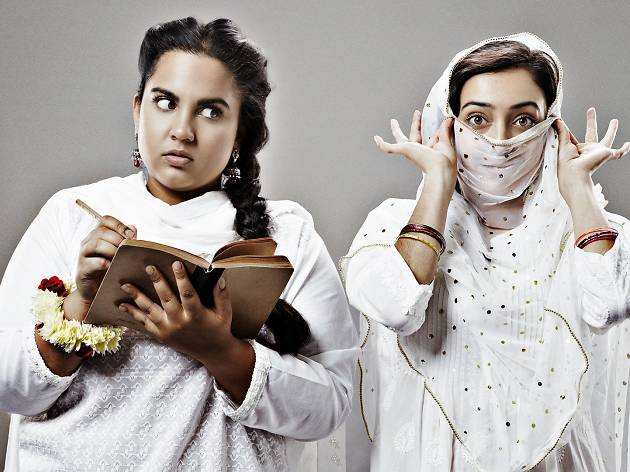
By Tayo Olowo-okere
Santi and Naz are best friends living in a small Indian village just before the partition of India takes place. The story follows their relationship, and how the country’s political situation affects them both.

By Tayo Olowo-okere
Santi and Naz are best friends living in a small Indian village just before the partition of India takes place. The story follows their relationship, and how the country’s political situation affects them both.

by Laura Kressly
In 1831, Mary Prince’s autobiography was the first book published in the UK about a Black woman. Her straightforward, emotive prose shares her lived experience of being an enslaved woman in the West Indies and England in great detail, including numerous accounts of abuse. This two-woman show embraces it all, packing this story of family separation, numerous masters, and a quest for freedom into an hour. Dance, music and ritual are embedded into the dramaturgy, too – this is a dense show, but one telling an important story that’s exquisitely performed.

by Laura Kressly
I feel for the stage manager that has to coordinate the clean-up after this show. Soil, leaves, ketchup, chocolate wrappers, cherry bakewell crumbs, fake flowers and bodily fluids are everywhere. Lucy McCormick is certainly the queen of filth. She’s also ruler of the absurd, grotesque and biting social commentary. Though her previous show Triple Threat is more sophisticated than this one, comedy and vulgarity join forces as McCormick chronicles history’s strong women in the hopes of finding herself a hero.
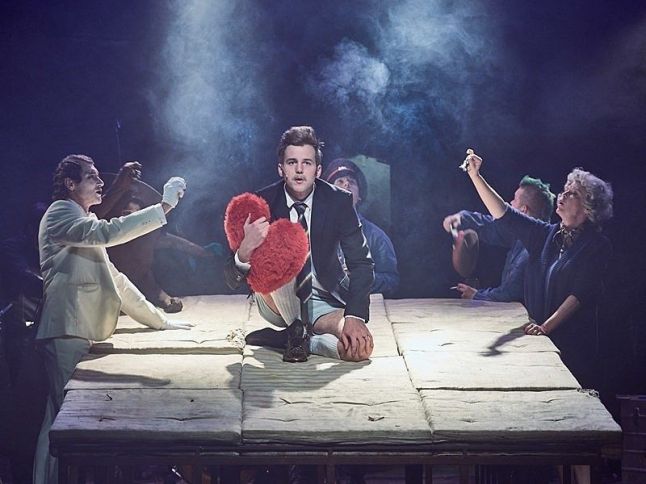
by Nastazja Somers
When I leave Velvel Havel by the Czech Theatre on the Balustrade, I burst out laughing every few minutes. I am walking on air. Air that is filled with ideas, pictures, smells, but above all, this air is home. It’s a revolution of sorts.

by Laura Kressly
Seven-year-old Crispin, newly orphaned and the last remaining member of the Clumps family, has inherited a creepy, country pile called Raddlesham Mumps. Managed by an ancient butler who could have stepped out of a Dickens novel or The Addam’s Family, of course there’s more to this house than meets the eye. The bright and articulate child questions what seem to be supernatural forces and a familial curse, but the answers he gets in this narrative poem are far from savoury.
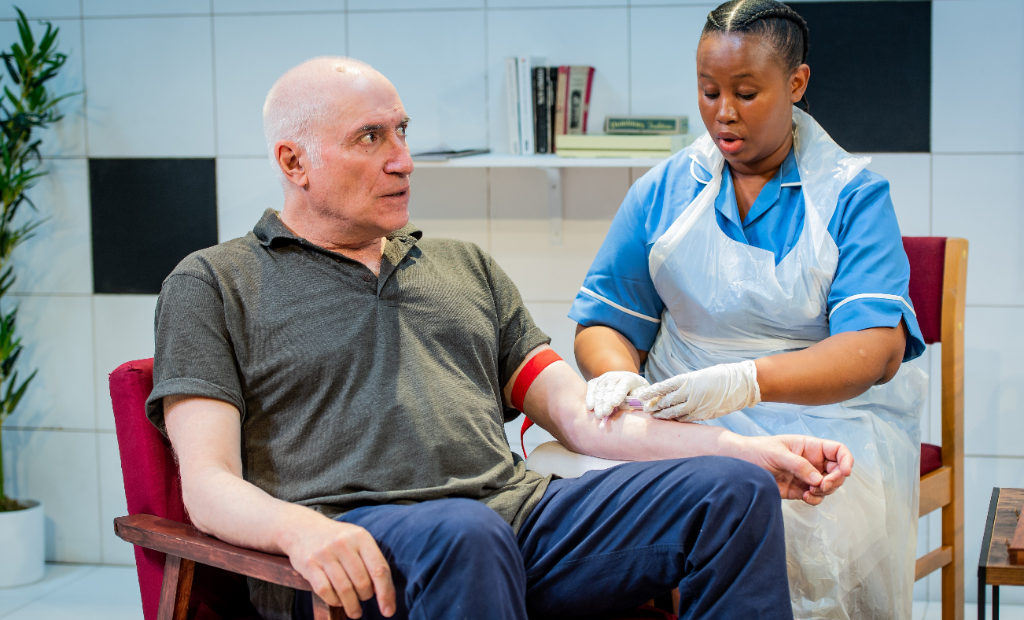
by Laura Kressly
Jacob Zuma, the retired president of South Africa, is in hospital for some tests. On checking into his room he discovers his nemesis, former Minister of Intelligence Ronnie Kasrils, in the room opposite. The two men have a long and complex history that unfolds over the course of Gail Louw’s play as a dialogue-driven wrestling match. Though their relationship has plenty of material to fuel discussions and augments about revolution, women, race and South Africa’s history, the plot meanders through topics rather than telling a cohesive story. Strong performances make this an engaging production minute-by-minute, but the overall result is not satisfying.

by Laura Kressly
Aymeric has been working at the Balbek Theatre, in a small town miles away from the nation’s capital, its culture and politics, for five years. He longs for fame, excitement and to leave the relentless monotony of provincial life behind him and will do anything to achieve these goals. Along with his discontent, right-wing sentiment grows across the country. In the capital, the ‘liberal elite’ make great art, drink champagne and argue over how, as state-funded artists, they should respond to the rising fascism – or if they can at all.

by Laura Kressly
The main stage at Ovalhouse isn’t there anymore. Neither is the floor beneath it or the concrete foundations below, but there is a hole, and a lot of yellowish dirt. Emma Frankland and other four trans and nonbinary artists are energetically digging it, searching for relics and memories of their trans family that preceded them. They also dance, tell stories and share their fears and hopes for the future in this vulnerable and celebratory performance piece on trans identity and lived experience.

by Laura Kressly
When Cora Bissett was 17, she joined a band. It’s the stuff of many indie kids’ school days, but Darlingheart found overnight success. They went from tiny venues to opening for the biggest britpop bands in the country in an extraordinarily short time, but their fame was just as short-lived. Bissett’s show, assembled from the diaries she kept as a child and into adulthood, chronicles her rise to fame and subsequent readjustment to real life. Tenacity, banging tunes and engaging storytelling celebrate Bissett’s resilience whilst critiquing the music industry in this vibrant gig-theatre piece.

by Laura Kressly
It’s 1998, 19-year-old Ben and his mum Viv are moving house again. This time, they’re cramming all their belongings into a one-bedroom ex-council flat in World’s End, Chelsea. They quickly make friends with their neighbours, Ylli and his son Besnik, who are Albanian refugees. The aspirational Viv is unfazed by the move but quiet and high-strung Ben can’t cope. He’s determined to shut himself away with his Nintendo, but the charming and confident Besnik has other ideas.
 The Play's The Thing UK