
by Maeve Ryan
In this powerful revival of Caryl Phillip’s Commonwealth Writers’ Prize-winning play, themes of inter-generational conflict, racism, machismo and cultural disconnection collide in a way that feels disturbingly current.

by Maeve Ryan
In this powerful revival of Caryl Phillip’s Commonwealth Writers’ Prize-winning play, themes of inter-generational conflict, racism, machismo and cultural disconnection collide in a way that feels disturbingly current.

by Amy Toledano
While the UK is dealing with political transitions and scrutiny, so too is Australia. With the large size of the country and massive environmental threats (a hole in the ozone layer and the destruction of the Great Barrier Reef to name a couple), there are plenty of people trying to make change. However, there is also a group of people who truly believe climate change is a thing of fiction – the climate change deniers.

by Laura Kressly
America’s gun epidemic is easy to criticise and ridicule from afar. But Americans, even those who oppose gun ownership, know that the firearms debate stems from deeply entrenched cultural mores and politics, and is also intertwined with class, regionalisms, race, money, and so on. In Sarah Kosar’s latest play, gun-obsessed Sam and her husband John are trying to quit their gun addictions when a local girl disappears, threatening their new, anti-weapon convictions. Cinematic lighting and sparse design heightens the nuanced script, and compelling performances support the story of one of many reasons why someone may want to own a gun.
by Laura Kressly
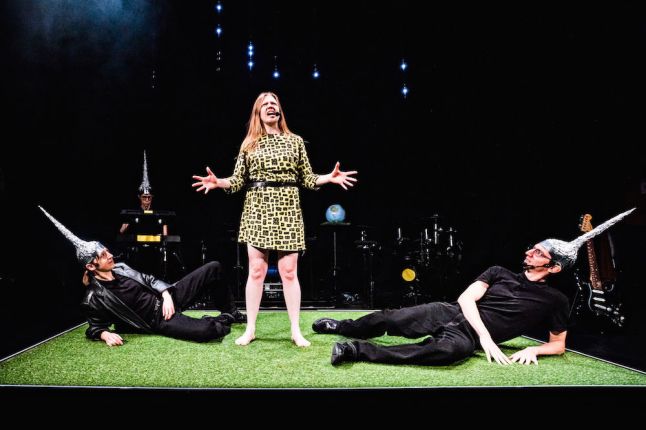
Welcome to the present, where we’re listening to a gig-theatre/TED Talk about the future. Specifically, Little Bulb have drawn on research from the finest minds in science, mathematics and philosophy to look at the potential of Artificial Intelligence (AI) and the impact it could have on us. Will it lead to utopia for the human race, or will we be driven to extinction?
By Gregory Forrest
‘Stonewall was a riot, not a rainbow’ says the placard on my newsfeed.
Fifty years on from that night, riots which poured gasoline onto the gay rights movement, these six short plays in the Royal Court Theatre Upstairs is a sign of how far we have come, and how far we have left to go.
by Laura Kressly
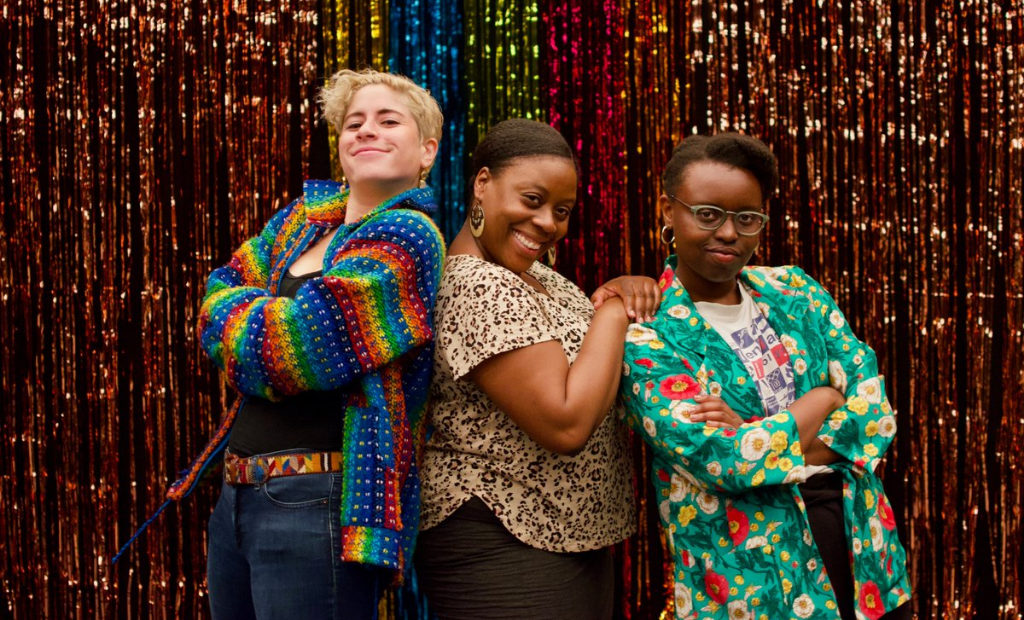
1. What is ‘Exceptional Promise’?
a. Another name for a UK Tier 1 visa
b. An interactive game show-slash-performance piece
c. A critique of the cesspit that is London’s housing market
d. All of the above
If you answered ‘D’, then you win! You’re one step closer to getting the keys to your dream house. But first – you need to survive the rest of the rounds and beat your other two opponents, otherwise you’re doomed to dodgy landlords and housemates forever.

by Maeve Ryan
Citysong contemplates the timeless cycle of life by following three generations of a family on one important day. Writer Dylan Coburn Gray calls this lyrical piece a ‘play for voices’ and indeed the script began its life as spoken word. It won the Verity Bargate Award, which brought it from Ireland’s national theatre, the Abbey, to London. Both inner city theatres are perfect settings for this evocation of life and family narrated by a cab driver in a rain-soaked, streetlamp-lit Dublin.

by Laura Kressly
Jean-Paul Sartre wrote this in 1943, at the height of Nazi occupation of Europe. The adaptation of the Orestes myth centres on the city of Argos, ruled by King Aegisthus, who deposed and killed the previous ruler Agamemnon 15 years previously. Aegisthus then married Agamemnon’s wife Clytemnestra, enslaved their daughter Electra, and sent the young Orestes out into the woods to die. Since then, the city has been plagued by giant flies and the civilians must lead sombre and mournful lives – but Orestes has now returned to exact his revenge. This update is well-staged with a clear aesthetic, but the pace is often too slow for the high-stakes story.

by Laura Kressly
After graduating from City College of New York in the 1960s, Assata Shakur joined the Black Panther Party. In 2014, after enrolling at Washington University in St Louis weeks after unarmed teenager Michael Brown was killed by a white police officer in the same city, Ambrosia starts going to Black Lives Matter rallies. Moved by injustice decades apart, the two Black women are subjected to systemic racism and violence in their pursuit of freedom. Apphia Campbell performs them both, embodying their passion and anger through storytelling and song, in this lightning-strike of a show.
by Laura Kressly
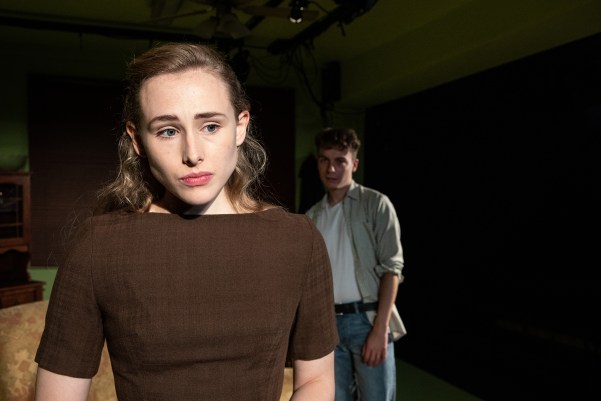
In the programme notes, director Graham Watts states, “there are hundreds of astonishing plays written by women that have never seen the light of day…Let me be clear. These are not ‘lost works’. They’ve never been considered and were simply ignored.” This world premiere by the writer of Machinal proves his point. Though several of Sophie Treadwell’s 39 plays were produced on Broadway, this one from 1954 – one of her last, and demonstrative of her skill and experience – has never before been produced.
 The Play's The Thing UK