
by guest critic Archie Whyld
Co-directors Frauke Requardt and David Rosenberg have created a piece of theatre which might be the closest I have ever felt to being in a dream whilst awake and not under the influence of psychoactive drugs.

by guest critic Archie Whyld
Co-directors Frauke Requardt and David Rosenberg have created a piece of theatre which might be the closest I have ever felt to being in a dream whilst awake and not under the influence of psychoactive drugs.

You’re fast asleep in your bed, in a small English town. Then some mysterious noises outside wake you, and on looking out your window you discover a gang of pirates is trying to steal your family home. What do you do?
Ask to join them, of course!
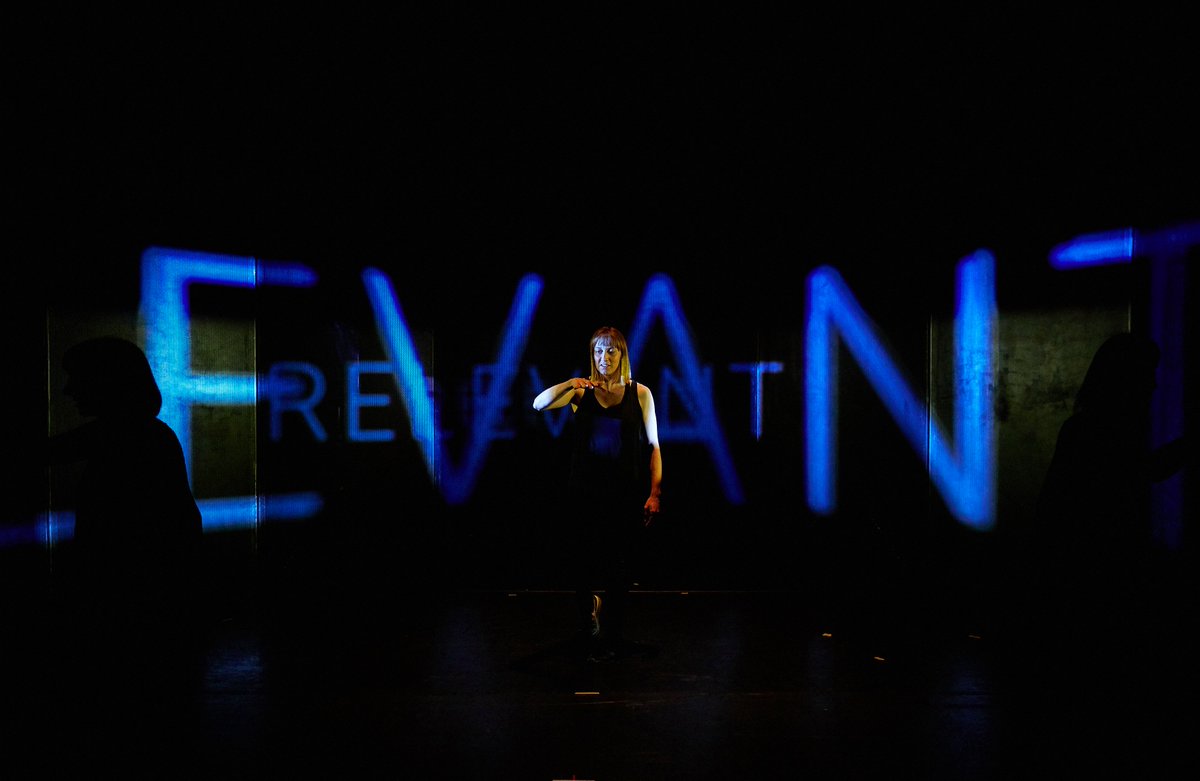
Though the fringe is still often gloriously lo-tech, more shows and venues are embracing and exploring the role technology can play in live performance. New Zealand-based Zanetti Productions’ Jane Doe and China Plate’s The Shape of the Pain are powerful, challenging productions that use tech in different ways from each other, but it is essential to both and enhances the productions’ impact.
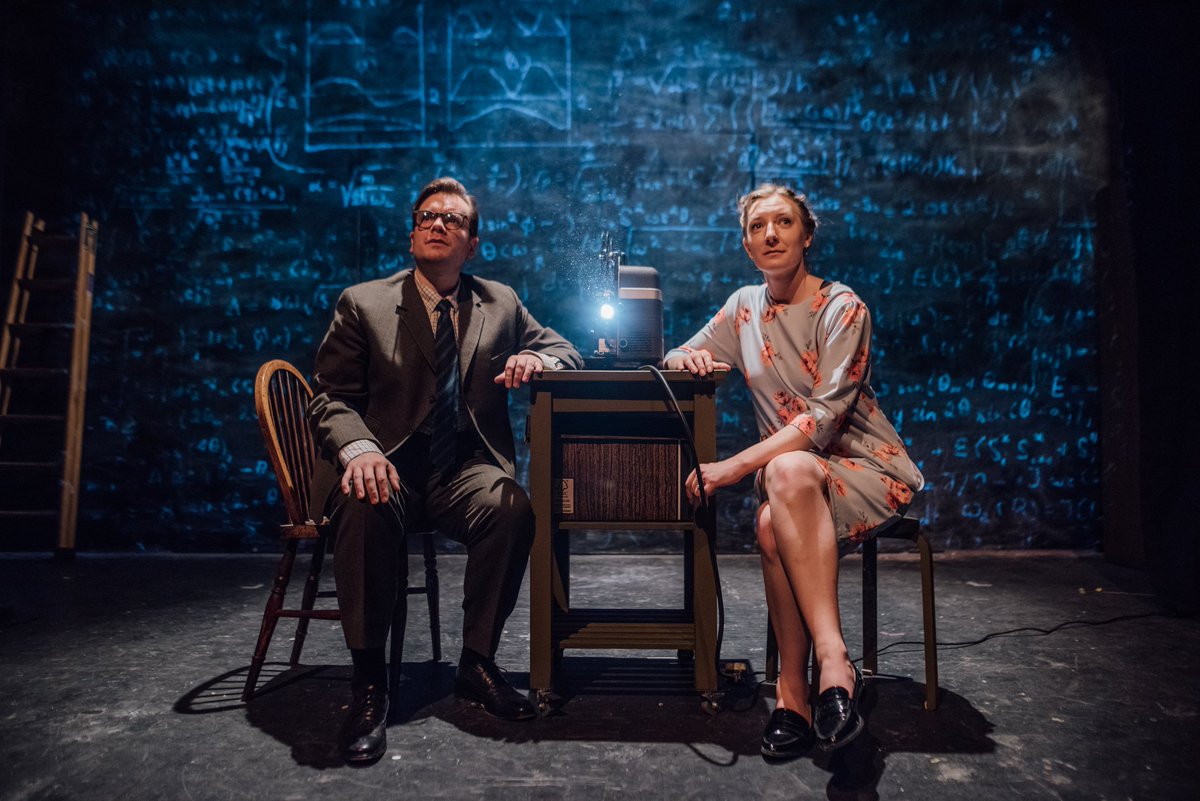
Ava is fascinated by human beings. Not just generally, but in the academic, evolutionary sense. She’s also going through a tough time and needs a break, so she’s on the pull. Jamie’s also after a distraction and the two matched on Tinder, so now, after millions of years of evolution, these two people are having dinner.
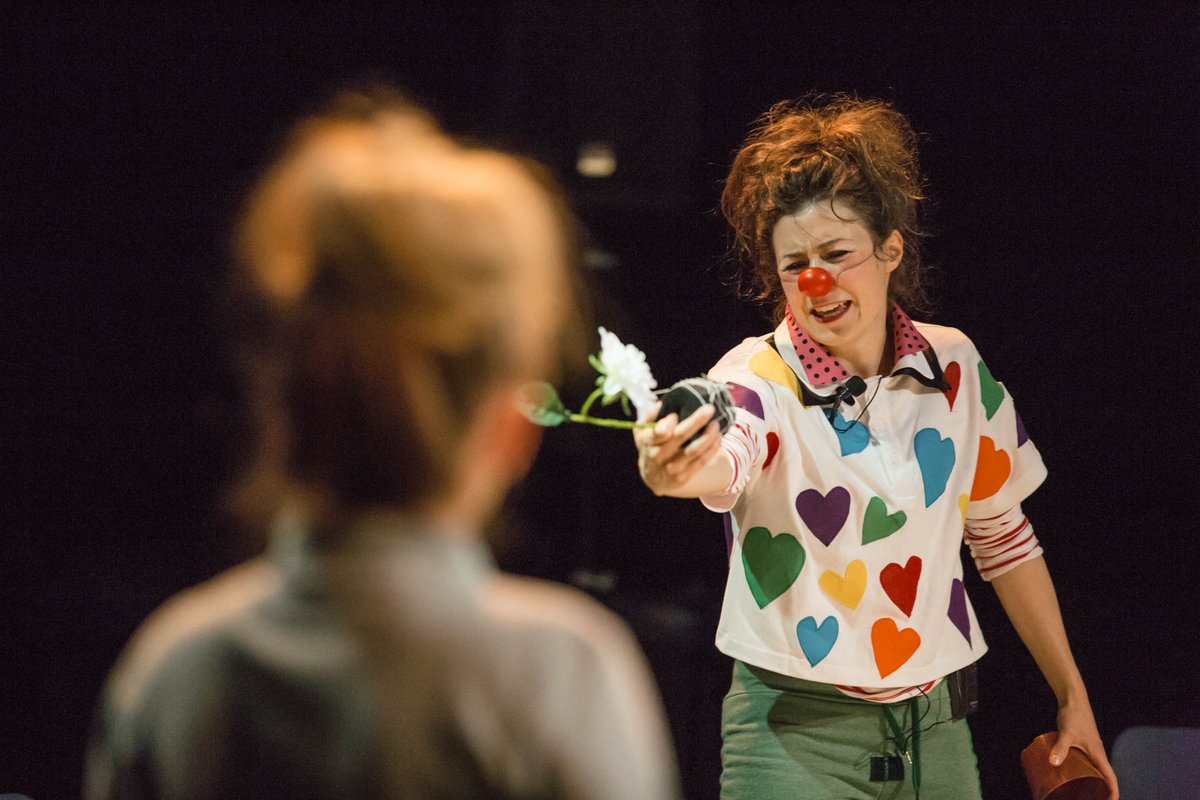
Marnie’s a 22-year-old single mum from Bermondsey and every day is a fight at the moment. Her mum’s harbouring Marnie’s abusive ex, the guy she’s in love with has a new bird who’s using the legal system to keep them apart and her daughter’s dad isn’t around. Marnie currently lives in a woman’s refuge and the shadow of social services is hanging over her.
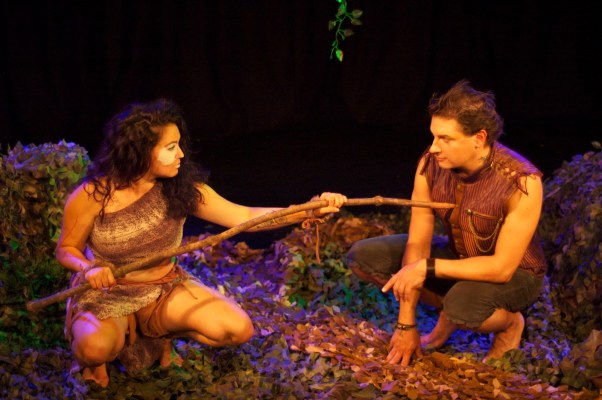
Mowgli, a ferocious boy-child raised by wolves in the jungle, has been kicked out of the pack. He’s trying to figure out what to do next when he meets a mysterious creature from another world – or rather, another story. Puck has been watching Mowgli with unusually keen interest, so the two might be able to help each other out.

Nearly two years ago, Bj McNeill’s torn apart (dissolution) premiered at Theatre N16. Aussie/Polish company No Offence have since developed the feminist show over subsequent runs. But how much have they improved since their first go?

by guest critic Archie Whyld
A dozen or so of us were led to the roof of the Royal Festival Hall where we were told to expect: ‘A multi-sensory encounter of shifting sound, colour and light, which reinvents the gig-going experience as a site-responsive close-up standing performance.’ Whatever that is.
The roof space of the building has a boiler room, pipes and generators claustrophobic submarine feel and we were gently led through it by the actor, performer, musicians The Neutrinos and visual artist Sal Pitman. The guitarist checked his pulse, and then he checked mine, and then he gave me a nod of reassurance.
What was going on? The live music alternated between industrial electronic noise jazz and hypnotic acoustic, haunting lullabies. The projections and colour-scape, provided at points by an old fashioned slide projector, combined with the music and submarine architecture, to create a dreamlike and otherworldly experience. There was no narrative to speak of, other than the mention of breaths – 800 of them. Is this the number of breaths we take in an hour, the length of the performance?
Proceedings culminated with a projection of a cloudscape on the ceiling and the audience being led outside on to the roof of the building to be exposed to the air and the beautiful summer London skies. This is a beautiful moment. Is it theatre, though?
Depends on your definition. Post-dramatic theatre probably, in that there were no discernible characters, nor was there an apparent plot. It favoured feeling and mood rather than action, and in this respect it was hugely successful.
KlangHause: 800 Breaths runs through 23 July.
The Play’s the Thing UK is committed to covering fringe and progressive theatre in London and beyond. It is run entirely voluntarily and needs regular support to ensure its survival. For more information and to help The Play’s the Thing UK provide coverage of the theatre that needs reviews the most, visit its patreon.

by guest critic Tom Brocklehurst
The problems with staging Shakespeare are twofold: Firstly, comprehension. The audience has to be helped to understand the language. The director has to assume that some of the audience will be coming to the play without being overly familiar with it.

Hamlet may or may not be Shakespeare’s magnum opus, but the Dane is unquestionably one of the greatest roles in the English language. Theatre’s pop star Robert Icke, what with his reputation for hot takes on the classics, no doubt found the play’s allure irresistible. This Hamlet, freshly transferred to the West End from the Almeida, is a slick, beast of a production surpassing three hours. Undeniably contemporary, it does its best to smash the restrictions of the proscenium arch with a celebrity cast and achingly cool, Scandi/corporate design. His casting of Andrew Scott in the title role and subsequent character choices makes this a Hamlet for cool young people on the hunt for profundity, depth of meaning and instagrammable aesthetics.
 The Play's The Thing UK