The Broke ‘N’ Beat Collective, Battersea Arts Centre

https://i0.wp.com/www.20storieshigh.org.uk/wp-content/uploads/2016/02/Jack-and-Lateefah-1280x853.jpg

Kids have it tough, especially if they’re poor. Decreasing social mobility, higher costs of education and living, and decreasing welfare are trapping our future generations in inescapable cycles of poverty. They are just as aspirational as young people from more privileged backgrounds and aware of the opportunities they don’t have. They are angry, frustrated and lack the opportunity to constructively express their feelings that often go completely disregarded by more comfortable members of society.

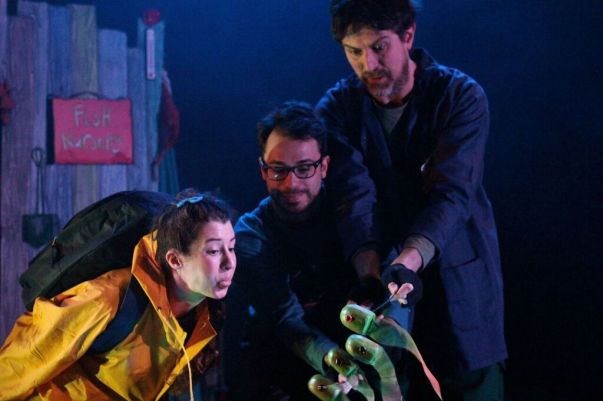
Theatre-Rites and 20 Stories High, seeing validity in their voices, worked with numerous young people in this demographic to devise a gig-theatre show that shares experiences of being a poor teenager in Britain today. The Broke ‘N’ Beat Collective is an empowering, important work that uses fantastic puppetry, mask and music to create a gloriously messy collage of young people’s concerns and issues. Structurally mirroring the rough and ready, fractured existence of urban youth culture, it rebels against theatrical and cultural preconceptions without apology for its flaws.

Elisha Howe’s (aka Elektric) soaring rhymes and Jack Hobbs (aka Hobbit) beatboxing energise the audience and establish a defiant, proud tone that carries through the show. They are not backing down, nor are B-boy Ryan Harson (aka LoGisTics) and puppeteer Mohsen Nouri. They literally zoom in on the tiny model tower blocks and street scenes of urban Britain, replicated in cardboard wonderfully extracted from the plain back wall, creating a landscape of alternating songs with monologues. These set pieces and puppets pass on the otherwise unknown life stories of young people they’ve met.

Omar is an insecure, confrontational grey hoodie that takes the whole show to find his voice. Jack’s a wannabe gangsta who knocks up Latifa (both with cartoonish, cardboard heads) and ditches her and the resulting child that reflects on how that’s shaped his life goals. Joanne is the Papergirl who cuts herself because her mum’s boyfriend abused her. There’s also the incredible Speaker Boy, a rotund, playful chap with a boombox for a head. Each puppet is as unique as the young person behind it, and just as inspiring. (Seriously, go look at the puppets’ photos in the gallery part way down the page; they are some of the most emotionally endowed bits of paper and foam I’ve ever encountered. All of these characters unashamedly demand attention with precise, evocative storytelling and a joyfully visualised presence. These stories are broadcast along side an ever-changing soundtrack with interjections of dance, banter and spoken word, simultaneously creating an atmosphere of celebration and seriousness. Though fun, it never loses the sense of the weight behind the work.

Despite the boldness in the work and the importance of its messages, there are some sloppy transitions that cause the piece to lose momentum. Elektric unnecessarily introduces each number by name, and there are some in-jokes between the performers that, whilst sweet, don’t carry energy with their small scale. This gives the whole piece a choppiness that makes it feel unfinished.

All four performers’ exemplary skillsets and vibrance are fantastic vehicles for the young people of this country seeking escape from the poverty that is so limiting to their ambition. Each moment connects to the next through a theme rather than a storyline, but the effect mirrors modern society: a bit messy, emotional and ambitious for a better life. The fun doesn’t override or trivialize the seriousness, and neither is it too weighty. The unpolished feel is very much ingrained in the gig-theatre style, and though it would be great to learn more about the characters presented, The Broke ‘N’ Beat Collective truly holds a mirror up to nature.

The Broke ‘N’ Beat Collective runs through 2 April.

The Play’s the Thing UK is committed to covering fringe and progressive theatre in London and beyond. It is run entirely voluntarily and needs regular support to ensure its survival. For more information and to help The Play’s the Thing UK provide coverage of the theatre that needs reviews the most, visit its patreon.

Leaper: A Fish Tale, Greenwich Theatre

unspecified

Our oceans are dying. Just yesterday, the news reported that 95% of the Great Barrier Reef has been bleached due to temperature rises. There are huge swathes of sea with high concentrations of microplastics that leach toxins into the water and the food chain. We are overfishing our oceans, causing a myriad of problems to human and sea life.

Tucked In is trying to change that through Leaper: A Fish Tale, an adventure story for families about a young girl’s discoveries in the world’s waterways. The unnamed daughter isn’t particularly interested in her dad’s fish farm and wreaks more havoc than anything else. But after falling into the stream in pursuit of a dropped crisp packet, she makes friends with Leaper the salmon on her journey from stream, to river, to ocean and back again. Good puppetry and movement keep younger ones engaged in this surprisingly complex story, though at times it feels a bit too convoluted and the lack of dialogue is unnaturally forced.

With an impressive array of animal puppets by Claire Harvey and Annie Brooks’ transformative set, there’s plenty to look at in the show’s recycled aesthetic. The larger puppets have an excellent range of movements, particularly the duck, seal and big fish. The rubbish monster is the most wonderfully inventive surprise, and the large jellyfish are poetry in motion. The smaller puppets are understandably simpler, but less dynamic with fewer moving parts. The baby fish, though sweet in the way the human characters treat them, are harder to see and not particularly interesting in and of themselves. The design really comes into its own in the middle of the ocean, with atmospheric lighting and sound to match.

Though the show wants to address both overfishing and ocean pollution, the littering is the primary focus. It makes sense as children may struggle with the concept of overfishing, but the plot points on the topic are consequently less engaging. There aren’t many of them though, and the focus is almost solely on the girl’s (Lizzie Franks) journey.

The performances by Franks, Philip Bosworth and Robert Welling are engaging and precise, though the reason for minimising speech is unclear. There are plenty of vocal effects, but character communication and actor impulses feel unnaturally limited. It doesn’t interfere with the story and the children in the audience aren’t bothered, but it doesn’t contribute to the production style.

Leaper: A Fish Tale is visually compelling with some great puppetry and an engaging story for children and adults alike. The performances are good and the story has all the necessary components of a satisfying adventure tale with a clear moral. Though there are some small issues, they don’t interfere with the overall enjoyment of the piece, and this show could play a powerful role in raising engaged, environmentally conscious young people.

Leaper: A Fish Tale is touring schools and theatres in April.

The Play’s the Thing UK is committed to covering fringe and progressive theatre in London and beyond. It is run entirely voluntarily and needs regular support to ensure its survival. For more information and to help The Play’s the Thing UK provide coverage of the theatre that needs reviews the most, visit its patreon.

These Books Are Made For Walking, Jackson’s Lane

https://farm8.staticflickr.com/7398/15871797584_e5b143b72f_b.jpg

Fabrice Dominici is a solitary librarian who takes great pleasure from the books he tenderly looks after. Gently stroking them, he flips to his favourite passages before giving them a sniff and balancing them on shelves made out of ladders. When a pile of books at the top comes to life, revealing a woman who has no intention of leaving and has a musician friend join her, the librarian tries everything to drive off these nonchalant interlopers. As his attempts continue to fail, this simple storyline of These Books Are Made for Walking starts to wander until it completely loses its way at an anti-climactic ending. Though visually dynamic and a nice premise for its aged 6+ target audience, the lack of distinct characterisation and a simple narrative arc is a disappointment to all ages.

Dominici’s nameless librarian draws on clowning to create a somewhat hapless but caring character who endears himself to the audience with his Wile E. Coyote determination. There are regular laughs, and his performance finds a lovely midpoint between over-exaggerated and underplayed. The other two performers lack personality, and it is never made clear what they want other than to hang out and make music on top of the rickety shelves. A love song gives away that they are a couple, but their relationship has no real bearing on the story.

Whilst the librarian’s attempts to get rid of his uninvited guests are entertaining and draw to a close before they become stale and repetitive, his sudden change of heart is inexplicable. He dashes around the stage with ropes and an audience volunteer to set up for the woman’s slack rope routine; after poking her musician friend in the bum with gardening sheers it simply doesn’t make sense. It’s a strange transition, but not as abrupt and unsatisfying as the show’s conclusion.

The set design, presumably by the three devising artists that also perform, is the highlight These Books Are Made for Walking. It’s instability naturally creates tension, though I would not want to be the person that had to risk assess the freestanding structure with performers clambering along the top. Books create a wonderful aesthetic, though watching them tumble to floor and then be trodden on cause several tiny heartbreaks. Christopher McGhee’s lighting works with the set well to create gentle shadows and focus points, though a moment of bright orange rays made the subjects hard to see as they were too close to the source to be lit evenly.

This second production from Bikes & Rabbits shows a promising use of narration in physical and visual theatre with additional elements of circus, but the spectacle’s temptation proves too much and is not properly integrated into the piece’s structure. It’s a lovely idea that doesn’t manage to follow through to a satisfying, clear conclusion.

These Books Are Made For Walking tours until 2 April at various venues.

The Play’s the Thing UK is committed to covering fringe and progressive theatre in London and beyond. It is run entirely voluntarily and needs regular support to ensure its survival. For more information and to help The Play’s the Thing UK provide coverage of the theatre that needs reviews the most, visit its patreon.

Institute, The Place

rsz_gecko-pcte2pct80pct93-institute-e1423864432429

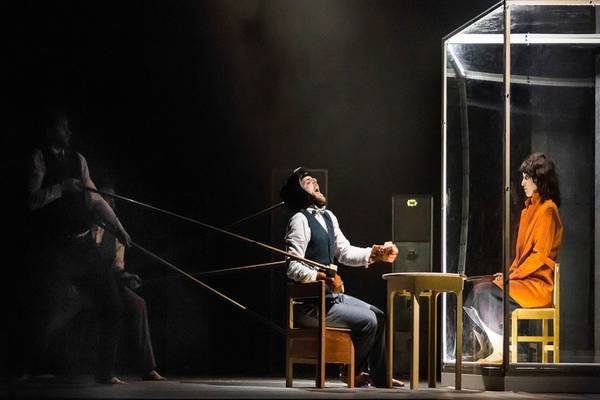
Say your only close friends are people you work with. Can you trust them to help you out if you’re struggling with your health? Martin’s mental health is deteriorating, so Daniel, Louis and Karl try their best to care for him despite their own inner demons and needing to be looked after as well. With a distinctive physical vocabulary and a masculine camaraderie, Gecko’s Institute is an absorbing look at a society made of lonely, needy people without the safety net that family can provide.

Rhys Jarman and Amit Lahav’s deceptively simple set of Victorian wooden filing cabinets is loaded with the possibility of discovery and serves as a convenient place for the characters to store their memories, good and bad. The moments that new items are revealed are a wonderfully surprising juxtaposition to the hulking, boxy structures. Lahav and Chris Swain’s lighting design dark and atmospheric, sharpened by the addition of otherwise unnecessary smoke. Both serve the choreography well, without drawing too much attention onto the design.

Lahav also directs this devised piece, and performs as Martin. Considering he is also the artistic director of the company, it is a true marvel, and a testament to his talent, that none of his production roles suffer. He seemlessly incorporates multiple languages and regular movement sequences that are tightly choreographed and emotive expressions of his characters. The characters puppeteering of each other is a powerfully visualised (and sometimes sinister) metaphor of helplessness at the hands of external forces and the support that peers can offer – or not offer. It’s a visually arresting comment on the support and limitations of others on our individual lives.

The strong sense of brotherhood imbedded in the choreography is a lovely thing to witness. There’s a physical comfort the performers have with each other that blends with the characterisation, making the moments where they treat each other badly all the more shocking. The single female character, Martin’s imaginary girlfriend Margaret, is inventively shown, through costume and movement, but her appearance in a plastic cube is anticlimactic. The whole piece starts to feel too long towards the end, though none of the scenes are gratuitous.

Institute is typical Gecko fare, but the character’s relationships and externalised emotions are the finest features in this physical theatre performance. It’s some of best, most reliable physical theatre work out there at the moment, and Gecko retain the ability to surprise as well as showcase their unique theatrical language.

The Play’s the Thing UK is committed to covering fringe and progressive theatre in London and beyond. It is run entirely voluntarily and needs regular support to ensure its survival. For more information and to help The Play’s the Thing UK provide coverage of the theatre that needs reviews the most, visit its patreon.

What I Learned From Johnny Bevan, Soho Theatre; The Caucasian Chalk Circle, Jack Studio Theatre

Is revolution in the air? Or, are we all so broken and defeated by rising costs and a falling quality of life that all we can do is complain bitterly? Perhaps a bit of both? In any case, this is not the first time that I wonder if theatre is responding to the liberal sense of disaffection recently. Shortly before Christmas I questioned Dominic Cavendish’s assertion that theatre isn’t political enough, and my sentiment still stands, particularly after the coincidence of seeing two highly charged political pieces two nights in a row. Fringe theatre, like grassroots politics, is a place of community, a catalyst for change, and the foundations of revolt, as seen in Lazarus Theatre Company’s The Caucasian Chalk Circle and Luke Wright’s What I Learned From Johnny Bevan.

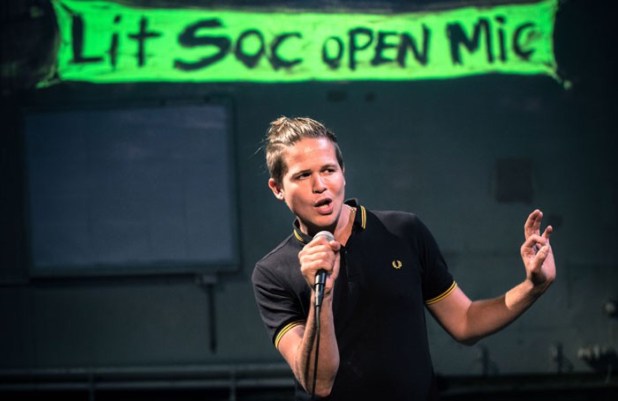
1997. The eve of the general election. Nick, who’s studying English Literature at a nameless uni stays up all night with his best mate, poet Johnny Bevan, to watch Tony Blair win. It’s the dawn of a new era and change is coming for the working class long oppressed by Thatcherite rule.  Fast forward fifteen years and Nick’s a journalist in London, but Johnny’s student aspirations didn’t come to fruition, and neither have Tony Blair’s. The story of these two lads’ friendship, written and performed by Luke Wright in a blaze of fiery spoken word, is an hour long tale of youthful vigour soured by the realities of adult life. Wright’s delivery and writing is fervent, topical and no moment is out of place in the trendy and on-point What I Learned From Johnny Bevan.

South of the river, an older revolution is taking place. In Soviet Russia, a group of peasants stages a play about a servant girl in Georgia raising the governor’s newborn baby that was abandoned during the family’s escape from a war zone. After a perilous journey, sacrifice for the sake of the infant, and a regime change, everything is put right again by a citizen judge. Lazarus Theatre Company, with its trademarks of a large cast and striking visuals, draws parallels between Brecht’s The Caucasian Chalk Circle and the despair of modern life – but “change is hope”. Energetic and in the round, the characters rally the audience to their side like they do in Wright’s monologue.

There’s optimism in both productions as well as despair, and an underlying current of discontent with the state of the UK’s current socio-political trajectory. Both display humanity’s capability for selflessness and selfishness, and the feeling that nothing has changed from Soviet ruled Eastern Europe, to Labour’s late-90’s victory, to present unviable economic conditions and Tory tyranny. We are undeniably flawed with a fickleness vulnerable to power and money, but as a society we are also deeply unhappy and feel that we lack the power to affect change. This sentiment now seems to be emerging in fringe theatre.

Though completely different in form and structure, both What I Learned From Johnny Bevan and The Caucasian Chalk Circle have plenty to say about the contemporary world from similar angles. What I Learned From Johnny Bevan is the better of the two productions, and  the more progressive. A solo performance delivered in spoken word accompanied by charcoal and watercolour landscape projections, most of the imagery in Wright’s language is precise and evocative. Brecht’s well-known play is linguistically stilted and stuffy in contrast, but it’s characters are just as colourful.

Performance poet Luke Wright is a singular tour de force and What I Learned From Johnny Bevan is politically charged and practically flawless. Lazarus Theatre’s performances vary, but of the ten-strong ensemble, no one was particularly strong or weak. Their choreography is well-rehearsed but director Ricky Dukes normally powerful movement sequences  lack impact in the round. The set components take up a lot of space and are used well occasionally, but otherwise clutter the stage with bright, industrial chaos. Neil McKeown’s sound design hints at atmosphere and mood, but is much too quiet to add the impact it could. It’s certainly not a bad production, but neither is it one of Lazarus’ stronger ones.

If theatre is a mirror held up to the world, then evidence is increasing that change is imminent. But what form will it take? Will the people rally as in The Caucasian Chalk Circle or will we either sell out or run away from it all like Nick or Johnny? Only time will tell.

The Play’s the Thing UK is committed to covering fringe and progressive theatre in London and beyond. It is run entirely voluntarily and needs regular support to ensure its survival. For more information and to help The Play’s the Thing UK provide coverage of the theatre that needs reviews the most, visit its patreon.

King & Country, Barbican Centre/RSC

rsz_king-and-country

Shakespeare’s history plays are some of his best. Epic tales with tragedy and comedy, love and war, politics and history are brought to life on stage, with the storyline of some characters spanning years and multiple plays. The RSC and Barbican have, over the last few years, presented the first four as separate productions but to celebrate the 400th anniversary of Shakespeare’s death this year, unite them as a single ticket. King and Country is Richard II, Henry IV part i, Henry IV part ii and Henry V is a marathon package deal of roughly twelve hours of theatre (plus intervals) spread over several days. A large ensemble cast play all roles across the four plays, with the same actors satisfyingly playing the same parts that stretch across multiple productions. Set and design also carry through; this quartet is slick, engaging and brings together original and contemporary practice.

Big names in the cast are an initial draw and live up to their hype (David Tennant, Antony Sher, Julian Glover), but the thirty-strong ensemble are just as good, if not better. Sam Marks as Aumerle, Poins and the Constable of France is excellent, particularly as Prince Hal’s laddish sidekick with a magnetic energy that bounces around the stage and fills the 1,156-seat theatre with youthful vigour. Matthew Needham comically interprets Hotspur; random, extreme outbursts get laughs, making the character’s tragic flaw the reason for his defeat. He also plays Mowbray and Shadow, the latter being a minor role but played with such commendable contrast that he is unrecognisable. Jennifer Kirby is a feisty Lady Percy and a naughty and nice Katherine, endowing both small roles with heaps of personality. The best comedic performances include Oliver Ford Davies as Shallow (also a fantastic Duke of York and Chorus), Emma King as Doll Tearsheet, Sarah Parks as Mistress Quickly and Joshua Gardner as Fluellen.

Tennant is just as exquisite as Richard II as two years ago, and Jasper Britton’s Bolingbroke/Henry IV is endowed with pathos, guilt and an extraordinary character journey. Alex Hassell is delightful as the devil-may-care Prince Hall, but his quieter, matter of fact Henry V is sensitive but less dynamic. He aims for intimacy rather than bombast and arrogance, a unique interpretation but one that is not overly effective due to a lack of power, particularly in his famous speeches. Antony Sher nails Falstaff’s characterisation, but his even, rhythmic delivery lacks variation and harks back to the old fashioned declamatory RSC stage speech – hugely disappointing.

Stephen Bromson Lewis’ set is the same as it was for Richard II’s performance two years ago and has little variation over the four productions. Paired with Tim Mitchell’s lighting, the audience sees austere courts, earthy battlefields and debauched public houses that don’t interfere with the action. The acrylic floor of under lit ploughed furrows is the surprise of the event, not viewable from the stalls closest to the stage but adds a striking dynamic and atmosphere from the gods: a delight for us peasants with the cheapest seats. Costumes (presumably also by Lewis) hint at a time period, but have a contemporary, minimalist touch that please the eye but not dominating.

There are some odd directorial choices by Gregory Doran in these otherwise stunning productions. Rumour (Antony Byrne) is in contemporary dress, accompanied by a projected digital cascade of hashtags and “rumour”. The Chorus (Oliver Ford Davies) is similarly dressed, which makes sense with the text. The token technology reference? Much less so. These are jarring in their modernity, unneeded and contribute nothing to the meaning and aesthetic of the plays. He misses an opportunity to put Henry V on the elevated walkway heavily used in Richard II; instead he lowers him to a wooden cart and diminishes the gravity of the St. Crispan’s Day speech.

It was an utter joy to see Doran incorporate audience interaction; even though there weren’t many of these moments. They unite the audience and actors in a love for Shakespeare’s work, bringing everyone together in a celebration of living, breathing theatre rather than maintaining a distant reverence for it. Henry V’s adorable insecurity in the presence of French princess Katherine leads to asking the audience for advice, and Hassell’s corpsing during a pub scene as Hal (when an audience member loudly blew his nose and another actor acknowledged it within the action) was a delight. His easy confidence with this style of performance clearly stems from his early work with The Factory and The Globe; Doran should have exploited this more, particularly during the character’s youthful exploits. The audience could have easily been his army or his mates down the pub more often.

Though RSC productions have often missed the mark in the past, these four are almost as on it as they can get. They do not force a modern concept that only tenuously relates to the themes in the script, but they are not stuck in a stilted, stuffy style of yore. Doran’s productions are unified, alive and vibrant with stellar design and performances. Here’s hoping they see life in the UK beyond this Barbican run and their international tour this spring.

The Play’s the Thing UK is committed to covering fringe and progressive theatre in London and beyond. It is run entirely voluntarily and needs regular support to ensure its survival. For more information and to help The Play’s the Thing UK provide coverage of the theatre that needs reviews the most, visit its patreon.

Red Riding Hood, Preston Continental

rsz_12299318_10153680692062789_6332526754861081608_n

What makes the story of Red Riding Hood so enduring? Is it the clever heroine? Is it the metaphor for growing up? Is it the violence and gore? Horse & Bamboo choose to focus on the colour red and its symbolism in their touring Red Riding Hood. Two actors, Nix Wood and Alex Kanefsky, are actor-storytellers-puppeteers who endow the story with a richness and life that appeals to their young audience as well as their families. The company’s lo-fi touring aesthetic uses a surprising amount of puppets at different sizes, masks and costume to keep the kids’ attention. It’s a bit hodgepodge on the surface but there’s a good amount of layers to this piece: meta theatre, storytelling, playing at the characters, and embodying them. Wood and Kanefsky fluidly switch between the styles that initially feel excessive in their quantity, but the children are so absorbed in the story that cannot be deemed as anything but highly effective and engaging.

The main focus of the story is the dynamic between Red and the Wolf. Mum and Grandma make appearances, but they don’t waste any time getting to the woods. The deeper Red gets, the larger the characters become – a great device. Initially, a tiny Red and mum are reading bedtime stories in a dolls’ house, eventually Wood plays Red in a full mask and the wolf is a nearly life-sized puppet with excellent movement and expression in the head and neck. Music and animated projections add additional detail to Wood’s controlled, emotional physicality communicating the unspeaking Red’s inner life. The wolf and Red focus results in a reinforcement of the “don’t trust strangers particularly if they seem nice” moral, which works for a children’s show but is quite a shallow interpretation in a production that has such depths of performance technique and style.

Red’s cloak is a dark, rich red that stands out beautifully against the rest of the set. Wood sets up red as her favourite colour as she chats with the entering audience pre-show; it’s lovely to watch. Kanefsky is goofy and warm, and loves cakes. This trait follows his characters through the rest of the story. The set is made of abstract blues and greens, inspired by Paul Klee’s art (my initial association was with Kandinsky’s work). Though the idea of starting with visual art for a way into a concept is a common one, the abstract set design clashes with the concrete realism of the puppets and mask, and the animation style was the starkness of shadow puppetry.

As children’s theatre goes, Horse & Bamboo’s Red Riding Hood is more sophisticated than it appears. Despite the moralizing, the craftsmanship and performance skill can be appreciated and enjoyed by all ages. Knowing that Horse & Bamboo are a touring company with just two actors makes their work all the more impressive. An excellent production for families at any time of year, too.


The Play’s the Thing UK is committed to covering fringe and progressive theatre in London and beyond. It is run entirely voluntarily and needs regular support to ensure its survival. For more information and to help The Play’s the Thing UK provide coverage of the theatre that needs reviews the most, visit its patreon.
Top Ten Shows of 2015

rsz_top10-620x400

  1. Carmen Disruption 

This Simon Stephens deconstruction bore little resemblance to the opera. Instead, we had a cast of dysfunctional, damaged characters unable to connect with the world around them on any meaningful level. They filled the Almeida with an electric loneliness that grasped the desperate humanity residing deep inside us all before chucking us out, exposed and raw, into the London night.

  1. Pomona

Written by a 27-year-old, Pomona captures the millennial generation in a single play. Frantically set over several levels of dystopian reality and never able to settle, this epitomises those who suffer the consequences of  baby boomers’ past choices.

  1. Light

The first show I ever gave five stars to, after more than a year of criticism. Good intentions and government exploitation address increasing surveillance with stunningly precise physical theatre, object manipulation and light.

  1. Tether 

A two-hander about a blind runner and her guide, this piece is refreshingly unromantic and driven by dialogue and characterisation. This is a simple and powerful piece by a promising young writer set in a world rarely considered by non-disabled people.

  1. Shakespeare & the Alchemy of Gender

A solo performance by veteran Shakespearean, Lisa Wolpe, founder of L.A. Women’s Shakespeare Company. Exquisite extracts of Shakespeare’s most celebrated male roles interspersed with her father’s biography raises important points about performance, gender and family.

  1. Town Hall Cherubs

Theatre Ad Infinitum and Battersea Arts Centre team up to create an immersive, site-specific piece for 2-5 year-olds. Gentle and responsive to the children’s attention spans, this is a bit of a winter treasure hunt around the BAC that stimulates all the senses.

  1. Chef 

Another sharp one-woman show, this one by Sabrina Mahfouz and performed by Jade Anouka. Anouka is a Michelin-star chef who runs the prison kitchen. Part fictional memoir/part foodie homage, this character driven piece cuts an unforgettable character.

  1. This is How We Die

An explosive spoken word/music piece by Canadian Chris Brett Bailey, it defies description and instead must be experienced. A marmite production amongst critics but Bailey’s use of imagery within language is incomparable.

  1. Don Q

A warm and lovely adaptation of Cervantes’ novel, Don Q is an old man’s gleeful adventure story. Four actors multi-role through this story that looks at the way we treat the elderly and the joy of play-acting.

  1. Eclipsed

Set during the Liberian Civil War, the all-woman cast of Danai Gurira’s doesn’t hold back on the experience of women in wartime. This is a brutally raw survival story with the power to leave you shaken, guilty and grateful for the benefits of Western comforts.

Honourable mention: Invisible Treasure

This is an interactive experience that is audience-led, with no actors and no plot. Like a game, the audience is led into a hi-tech room and led through a series of tasks in order to escape. Fun, challenging and frustrating, it makes some powerful points about group dynamics and personal approaches to problem solving.


The Play’s the Thing UK is committed to covering fringe and progressive theatre in London and beyond. It is run entirely voluntarily and needs regular support to ensure its survival. For more information and to help The Play’s the Thing UK provide coverage of the theatre that needs reviews the most, visit its patreon.
Goodnight Mister Tom, Duke of York’s Theatre

rsz_5_alex_taylor-mcdowall_william_and_elisa_de_grey_puppeteer_for_sammy_the_dog_in_goodnight_mister_tom_2015_credit_dan_tsantilis

The WWII image of dejected, scrappy children with brown tags around their necks, clutching their most precious belongings as they are re-homed with strangers in the countryside is a powerful one. It’s one that inspired author Michelle Magorian to write Goodnight Mister Tom, adapted by David Wood for the stage, now in London after a successful run at Chichester and before heading off for a national tour. The audience meets little William, who is sent from Deptford to Dorset and assigned to live with the reclusive Tom Oakley. With a focus on Tom more so than the relocated children, this is a story about finding love again after a devastating loss. This part of the production is moving, but the story is slow to develop over a long time period and the flimsy, thin dialogue doesn’t support the large cast of characters, their development and the devastation of wartime.

David Troughton as Tom is a sad and sensitive widower, the complete opposite of the grump that his fellow villagers see. Three Williams, three Zachs (William’s precocious evacuee friend) and a gaggle of children make up half the cast; all are very much child actors. Alex Taylor-McDowall is today’s William, a lanky shy boy poisoned by his fundamentalist Christian single mother, Melle Stewart. We hear a lot about her, but only meet her in one scene. Stewart is unable to show just how evil (and mentally ill) the character is, though she does her best to live up to the previously discussed monster. Most of the other characters have similarly brief stage time, but plenty of multi-rolling and puppetry keeps the generally good ensemble performers busy.

But the first half takes its time to get going. It’s not from a lack of energy in individuals, but the overall pace is languid. It’s lovely and sweet, but flat. The war seems far away from this village, country life is slow, and day-to-day life is filled with routine and little errands. It’s in these small tasks that we see Tom’s affection for William grow: getting “new” clothes for him, teaching him to read and write and fending of bullies who pick on the “townies” and “vaccies” from London.

It’s no wonder the local kids pick on the Londoners. William can’t read or write, sleeps under the bed rather than on it, and his toxic mother skewed his worldview about, well, everything. Zach is well-spoken, attention seeking and flamboyant, the son of actors. It’s interesting that the London children the audience meets are either desperately camp or from the slums in this story; does this reflect Magorian’s preconceptions?

Along with Troughton’s performance, the puppets are outstanding. Tom’s dog, Sammy (Elisa de Grey) is gorgeously constructed, and full of movement and life from de Grey’s work. After the interval, there’s an increase in momentum after an unnecessary subplot involving William’s return to London and the effects of war creep closer, creating more tension and loss. The audience learns more about Tom’s past and the ending is a tearjerker and concise resolution.

For a family show however, the whole thing is too long and convoluted. Tom and William’s story could have easily had more focus with a reduction of other characters, more fleshed out scenes and additional detail about Tom’s life leading up to the point he takes in William. Fortunately, Troughton has enough stage time to keep this otherwise lovely, but flat, production going.

Press ticket for Goodnight Mister Tom is courtesy of theatrebloggers.co.uk.


The Play’s the Thing UK is committed to covering fringe and progressive theatre in London and beyond. It is run entirely voluntarily and needs regular support to ensure its survival. For more information and to help The Play’s the Thing UK provide coverage of the theatre that needs reviews the most, visit its patreon.
Wilde Without the Boy/The Ballad of Reading Gaol, Rose Playhouse

rsz_wilde-without-the-boy-publicity-shot

Near the end of his two-year imprisonment for gross indecency, Oscar Wilde was a man broken from hard labour, isolation and social disgrace. Until a sympathetic warden at Reading Gaol allowed him restricted writing privileges, he hadn’t been able to write at all. Provided with a single sheet of paper that would be collected and replaced when that one was filled, Wilde penned an 80-page letter of 50,000 words to the selfish lover who was his downfall, Lord Alfred ‘Bosie’ Douglas. Heavily edited and published posthumously by Wilde’s friend and former lover Robbie Ross, the chatty letter was titled “De Profundis”. After Wilde’s release, he wrote poem “The Ballad of Reading Gaol” whilst exiled in Paris; this work details the execution of a fellow inmate.

In Wilde Without the Boy/The Ballad of Reading Gaol, actor Gerard Logan and director/writer Gareth Armstrong team up to create a staged version of these two narratives as a one-man show in two acts. Dramatic in structure and reasonably well performed, this is a text-heavy piece that suits the intimate Rose Playhouse. However, the consistent, even tone and pace that Logan employs has a lulling effect and the verbosity overwhelms with details. There is little to watch; though Wilde Without the Boy gives insight into Wilde’s state of mind at this challenging point in his life, it would make more sense as an audio recording and I cannot discern why it was put on the stage. The Ballad of Reading Gaol is performed with more vocal and physical variation so even though it is the shorter part of the event, it is the more compelling piece.

The set is simple: a bare table and two chairs for the first act, with a stack of documents that are occasionally referenced as letters. The red rope lighting that outlines the Rose’s archaeological remains casts a faint red glow on the walls reminiscent of the passion and anger that constantly burns in Wilde’s heart. Whether or not this was intentional, it effectively contributes to the heavy mood of both pieces. In the second piece, the table is covered with summer linen and a sole green carnation rests there. It is another powerful symbol of Wilde’s homosexuality that is repeatedly denied in Wilde Without the Boy. This show completely ignores the vast space beyond the stage, a decision that suits the script, but it’s still a shame to neglect such a unique feature. The musical score, intermittent in Wilde Without the Boy but a constant presence in The Ballad of Reading Gaol, is latterly a character in itself and Logan’s delivery is impeccably timed to its rise and fall. No programme was supplied, but whoever designed or composed this score deserves acknowledgement.

Though both are interesting pieces of text in that they aren’t normally performed or read by anyone other that Wilde enthusiasts or students, their theatrical potential is limited. Even with Armstrong’s adaptation and edit of the letter, as a one-person show it’s still more of a recitation with a thin story arc detailing Wilde’s views of Bosie and his experiences in prison. Logan has some lovely emotional moments, but it’s not enough to keep the mind from drifting. The Ballad of Reading Gaol has an actual storyline, which is an immense boost to Logan’s performance. He has a compelling stage present and vocal agility, but Wilde Without the Boy is not the best showcase of his abilities, the Rose as a venue or theatre itself.


The Play’s the Thing UK is committed to covering fringe and progressive theatre in London and beyond. It is run entirely voluntarily and needs regular support to ensure its survival. For more information and to help The Play’s the Thing UK provide coverage of the theatre that needs reviews the most, visit its patreon.