Torch, Edinburgh Festival Fringe

https://i0.wp.com/www.underbellyedinburgh.co.uk/images/uploads/Torch_updated_for_web.jpg

We’re in a club toilet. Not a nice one, either  – there’s no loo roll, lipstick and graffiti pepper the cubicle walls and door. Jess Mabel Jones is an unnamed woman out with a friend, but after a lot of vodka and some coke, she feels self-conscious, past it and wants to hide. Reflecting on the life choices that brought her to this newly-single moment of remorse, she chronicles past lovers, committed relationships, eating disorders, panic attacks, and youthful exploits. Whilst longing for her youthful, perkier self with thinner legs and a tighter arse, she manages to celebrate the woman she has grown up to be in all of her flawed glory. Jones is an absolute firecracker of a performer who slams herself around a robust script baring lived female experience in all its rawness.

Phoebe-Éclair Powell’s text is an extended monologue of fragmented experiences and memories punctuated with pop songs. It doesn’t shy away from visceral topics, though the transitions from text to music are abrupt with little lead-in. The character she paints alternates between vulnerable and endearing, and ferociously bold. She is an everywoman with experiences that most women can relate to on some level and reminds us that despite going through moments of absolute despair and self-loathing, women are incredible.

It’s not just about girl power, though. The character’s anecdotes are funny, moving and compelling stories that are accessible to any human that has grown up, had sex, been in a relationship or felt they don’t meet society’s expectations. She is haunted by the woman she hasn’t become and simultaneously unapologetic about her.

Director Jessica Edwards incorporates plenty of movement, though some seems gratuitous it prevents the performance from becoming static. Amelia Jane Hankin’s set is both industrial, messy and glittery, an outward expression of the character’s spirit.

Jones’ performance is what makes this production worth seeing. She has a stunning voice, emotional vulnerability, and electric charisma. The songs she covers become the millennial generation’s torch songs as she delivers them with a power and depth. She rallies the audience to her side despite behaviour that could be viewed disapprovingly by more conservative audience members because her commitment and connection to the script is as truthful as it possibly can be. Torch is not one to miss.

Torch runs through 28th August.

The Play’s the Thing UK is committed to covering fringe and progressive theatre in London and beyond. It is run entirely voluntarily and needs regular support to ensure its survival. For more information and to help The Play’s the Thing UK provide coverage of the theatre that needs reviews the most, visit its patreon.

Generation Zero, Edinburgh Festival Fringe

https://i0.wp.com/static.progressivemediagroup.com/uploads/imagelibrary/nri/power/projects/Princess.jpg

A nameless couple meet online, fall in love and build a life together. Their lives are comfortably boring, with day jobs, road trips to the beach, holidays in a Yorkshire cottage and lazy weekends snuggling in bed, listening to records. They are almost identical to any contemporary middle class, suburban couple, but something’s not quite right.

Their world is just a bit off. They run out of gas, but they can’t go to the shop to top up their gas meter – they aren’t allowed to exceed their monthly allocation. There’s talk of restrictions on travel in order to cut pollution levels. He’s ambivalent about the environment, but she’s a political activist who devotes more and more of her time to a local group campaigning for change. He wants to spend more time with her, but she’s always out in the evenings, planning actions with the group, so he takes action of his own.

Becky Owen-Fisher’s debut play Generation Zero looks at the battle over the environment through the lens of a young couple in a poetic, episodic script that unsettles through it’s familiarity and the complacency with which (most? some?) people approach political issues. The story doesn’t viciously attack climate change, but takes a gentle, sinister approach that gets into your bones. Owen-Fisher has a good instinct for dialogue and imagery-laden narration that easily flows in and out of naturalism, adding just enough variation in style to keep the audience lightly unsettled.

Director Tom Fox attacks the script with lightening fast transitions; these could be slowed a bit for the sake of keeping up with the actions and the to-ing and fro-ing through time. Without sound and lighting signifiers, they would be totally unclear. Some important moments are also rushed, particularly towards the end, causing the gravitas they should have to be glossed over.More stylised physicality would also be welcome to coordinate with the stylistic changes in text.

The two actors are excellent; Jordan Turk and Francesca Dolan have a gorgeous chemistry that’s lovely to watch, made more romantic by dream-like lighting. The sheets and pillows covering strip lighting on the stage’s edge creates a lovely ethereal effect, destroyed by their reveal at a pivotal moment that also reveals the truth of their relationship’s dynamic – a great choice.

Perhaps some adjustments could be made to the script to transform it into more of a propaganda piece and place a stronger emphasis on the environmental collapse that is merely hinted at, but to do so would cause the piece to lose its delicacy. This is a promising play from an emerging writer with an important message that deserves to be heard.

Generation Zero runs through 29th August.

The Play’s the Thing UK is committed to covering fringe and progressive theatre in London and beyond. It is run entirely voluntarily and needs regular support to ensure its survival. For more information and to help The Play’s the Thing UK provide coverage of the theatre that needs reviews the most, visit its patreon.

Poena 5×1 and No Horizon, Edinburgh Festival Fringe

https://i0.wp.com/www.underbellyedinburgh.co.uk/images/made/images/uploads/POENA-5X1_1_%C2%A9RichardDavenport_750_500_60_c1.jpg

Science and Mathematics. Vaccinations, space travel, electricity. Nuclear weapons, lethal injections, pollution. Poena 5×1 and No Horizon. One is a new play showing the dark potential of science, the other a new musical celebrating overcoming disadvantage through maths. Radically different in style and story, both productions find inspiration in the potential of science, maths and technology, and both need further development.

Scientist Bryony Adams works for the Department of Justice in Poena 5×1. She’s a typical Tory suit who fully believes her horrifying work benefits the greater good – she invented Poena, a drug that reduces prison populations through humane punishment (whatever that is). Named after the minor goddess of punishment, Poena induces a state of despair and hopelessness that can lead to catastrophic mental consequences for the prisoners that are her voluntary test subjects. Bryony becomes emboldened by praise as she further develops the drug, deciding to test it on an unknowing volunteer.

Bryony is a despicable character that Cathy Conneff plays admirably, particularly as she begins to emotionally deteriorate. Considering this is a solo performance with little visual element, her ability to maintain audience focus through compelling embodiment of the character is excellent. The character presents her work to the audience until a twist reveals all is not what it seems. It’s at this point that Abbie Spallen’s script starts to lose its way. As Bryony’s story becomes more personal and less about her work, the narrative becomes knotty and unclear, having a knock-on effect on the script as a whole that until this point, terrifies through the government’s potential to commit heinous acts. Any themes and messages established about the horror of governmental capital punishment are unfortunately diluted. Reworking the ending to maintain character and plot continuity and clarifying the play’s message would take little work but have great effect.

In contrast to Poena 5×1, No Horizon has a solid, consistent script, but this new musical’s shortcomings are its music and the casting of this particular production. The true story of a remarkable young man in the 1680s looks at the power of mathematics to unite people across social class and ability. Nicholas Saunderson, blinded by Smallpox as an infant, learns to read through his friends’ support and tracing letters on gravestones. His envy and frustration grow as his parents enforce limitations on him because of his disability and his best friend in their tiny Yorkshire village goes to Cambridge. Through sheer determination and an innate aptitude for maths and physics, he eventually proves that in a pre-Braille era, disability is still no barrier to success.

It’s a wonderful, uplifting story with a generally good narrative arc, though most of the cast are gifted singers who struggle to match their acting ability to their voices. There is frustratingly little connection between characters, though George Griffiths as Joshua Dunn is a notable exception. The music is rather samey and repetitive without distinction, though there are some standout numbers amongst the Cambridge students. The music is pre-recorded, which makes it even harder to capture any nuance in tone and volume. There is minimal choreography, making the ensemble numbers more choric than musical theatre.

Theatre can be a powerful vehicle for maths and science, but in the cases of No Horizon and Poena 5×1, the subjects are let down a bit. Some tinkering is definitely needed to whip these productions into shape, but there is much potential in these character-driven stories.

Poena 5×1 runs through 29th August, No Horizon runs through 27th August.

The Play’s the Thing UK is committed to covering fringe and progressive theatre in London and beyond. It is run entirely voluntarily and needs regular support to ensure its survival. For more information and to help The Play’s the Thing UK provide coverage of the theatre that needs reviews the most, visit its patreon.

Happy Dave, Edinburgh Festival Fringe

https://theplaysthethinguk.com/wp-content/uploads/2016/08/7e6e8-happy2bdave.png

Dave’s a middle aged advertising executive from Yorkshire, now living and working in London. Amidst his humdrum life, he longs for his youth as a pioneering rave DJ playing to thousands of people, running events up and down the country with his ex, Molly. An invitation by a well-meaning colleague half his age leads Dave back onto the path he abandoned and his transformation into a cultural messiah to a generation focused on careers, property and conforming.

Oli Forsyth has a great script on his hands, despite a hint of judgmental condescension towards millennials. The script states they waste their lives on jobs they hate, have no cultural or creative identity and surround themselves with material possessions to make their empty lives feel full. Dave first aggressively voices this opinion, but his four comrades eventually agree that their generation is distinctly lacking in rebellion. Though this is certainly true of some people, others may find genuine happiness in their high earning, corporate lifestyles.

The opportunity to see Dave as a young man gives the story and character added depth, and there’s good continuity despite Dave being played by two different actors. The dialogue has a natural flow, though a few spoken word monologues feel out of place even though they are well written. There’s room to extend the story after the well-crafted, current climax that shows Dave hasn’t really changed his attitude since he was a young man willing to sacrifice everything for the scene. Lengthening would solve the issue of the abrupt ending by adding a dénouement that answers any questions about the consequences the present Dave has to face.

The ensemble of five is strong; they capture the anger and frustration innate to those trapped in unsatisfying lives. Andy McLeod as the present day Dave is excellent, with clear character choices and constantly bubbling rage that dissolves into bliss when raving or DJing. There’s little genuine warmth between the present day gang, which, although indicative of how self-absorbed millennials are, is unsatisfying to watch. Younger Dave (Forsyth) and Molly (Helen Coles) have some genuinely lovely moments, though a few are a touch overacted.

Happy Dave is remarkably polished for the Fringe, and a dynamic storyline with plenty of emotional rage effectively maintains attention. It’s certainly worth catching.

Happy Dave runs through 29th August.

The Play’s the Thing UK is committed to covering fringe and progressive theatre in London and beyond. It is run entirely voluntarily and needs regular support to ensure its survival. For more information and to help The Play’s the Thing UK provide coverage of the theatre that needs reviews the most, visit its patreon.

The Inevitable Heartbreak of Gavin Plimsole, Edinburgh Festival Fringe

https://theplaysthethinguk.com/wp-content/uploads/2016/08/05b71-gavin2bplimsole2b252812529.jpg

Gavin Plimsole is a good enough guy. A bit geeky and nervous but well-meaning, maybe even a bit endearing if you like that sort of thing. After he receives a life-altering diagnosis from the cardiologist and realises his days are numbered, the audience (who have all strapped into heart monitors before the show begins), get to decide his fate. Part choose-your-own adventure, part poignant tale of grief morning people and times long lost, The Inevitable Heartbreak of Gavin Plimsole is a messy but touching reminder to make the most of every moment.

An ever-present projection of the audience members heartbeats overlays three energetic performers and a changing landscape of cardboard boxes. Gavin’s the sort that stores his life in tattered boxes labelled with masking tape, and these boxes now contain relics from his life. They aren’t particularly interesting, but a garden shed with a wonderful contraption that releases a large marble down a slide and into a box every 500 collective heartbeats, is ramshackle but dynamic. It cleverly represents our perpetual approach towards death with a drawn out clattering and eventual silence – a dying person’s last breaths.

Gavin monologues most of his thoughts; there are some interruptions by spunky, supporting actors that help break up the speeches but more of these would be welcome. A wiry (literally, as in made of wires) puppet makes one appearance and is similarly underused – a remarkable creature! The structure is understandable chaos that mirrors the the first couple of days after devastating news, though clearer transitions and a distinct style will help make sense of this emotional journey.

The use of the heart monitors and audience interaction unites the audience and performers, creating intimacy and empathy. It’s a sad story that manages to foster hope instead of gloom, and within the clutter there’s a lot of heart.

The Inevitable Heartbreak of Gavin Plimsole runs through 29th August.

The Play’s the Thing UK is committed to covering fringe and progressive theatre in London and beyond. It is run entirely voluntarily and needs regular support to ensure its survival. For more information and to help The Play’s the Thing UK provide coverage of the theatre that needs reviews the most, visit its patreon.

Extravaganza Macabre, Battersea Arts Centre

https://i0.wp.com/static-2.socialgo.com/cache/10668/image/5125.jpg

On 13th March last year, I couldn’t tear myself away from twitter as news of the Battersea Arts Centre fire spread. The night before, I had taken my school’s GCSE Drama students to see Gecko’s Missing. The students had never seen abstract, physical theatre before and though they had mixed reactions, they talked about it for days afterwards and drew on it as they devised their own physical theatre pieces. As someone twice their age who is drama school trained and a seasoned theatregoer, I still rely on the BAC to foster similar reactions in myself. Whilst there are certainly shows that aren’t to my taste, the venue has consistently expanded my knowledge and understanding of the theatre and performance.  To watch the fire unfold in real time over social media was devastating. Thankfully no one was hurt and I’m certain those that work/have worked there were affected much more than I was, but I thought I was losing a chunk of my own theatrical landscape.

As the news broke that the BAC would open the front part of the building the next day, my heart leapt to know that all was not lost. The resourcefulness, determination and camaraderie of theatre people pulled together to reopen and raise funds. Now, a bit more than a year later, parts of the building closed by the fire are reopening. First were the artists’ bedrooms, now the remarkable, new open-air space, The Courtyard, debuts with Little Bulb’s similarly spirited show, Extravaganza Macabre. Spunky, bouncy and full of heart, this Victorian melodrama with heaps of music, audience interaction, and unadulterated love for their work makes for a delightful opening of the new BAC performance space.

The complete lack of hipster irony makes this show a rare treat. Though heavily stylized with narration and over-the-top performances, the trio of performers fully commit to it rather than commenting on it from a distance. Daylight, fluid actor/audience boundaries and interaction wholly engages the audience with the story, and the reasonably complex structure that never fails to surprise. Songs, narration and scenes alternate and incorporate plenty of slapstick; these combined with the casual outdoor environment makes a fantastic example of popular theatre also suitable for family audiences.

None of the three performers can be singled out as weaker than the others. They are multi-talented actor musicians brimming with infectious joy and exuberance. They fearlessly throw themselves around the ground floor and the gallery, down stairs and trap doors. Their use of space and inclusion of the whole audience regardless of what level they were on is fantastic – no one feels left out, and every bit of the Courtyard is utilised.

The script they created is a bit convoluted, but the narration clearly signposts changes in time and location, as does their multi-rolling. It’s complex enough that adults won’t be bored, but young people in the audience enjoy the warm silliness of the physical comedy within the story. A storm is the catalyst for the separation of a family and an unrelated young couple, all of whom endure much peril and crossed paths in order for everything to be right again. There’s love, violence, grief and death, all of which are treated with extravagance and utmost importance. There are still peaks and troughs in the plot and the emotional range is varied enough that, even though overly exaggerated, doesn’t become mundane.

Both the BAC and Little Bulb display immense passion for their work, and the two marry perfectly to inaugurate the courtyard. Warmth and energy and love radiate from Extravaganza Macabre, and a heavy dose of innocent goofiness makes this production truly something special.

Extravaganza Macabre runs through 26th August.

The Play’s the Thing UK is committed to covering fringe and progressive theatre in London and beyond. It is run entirely voluntarily and needs regular support to ensure its survival. For more information and to help The Play’s the Thing UK provide coverage of the theatre that needs reviews the most, visit its patreon.

Rotterdam, Trafalgar Studios

https://i0.wp.com/johnnyfox.co.uk/wp-content/uploads/2015/11/for-webIMG_2634-700x455.jpg

No one stays long in Rotterdam. Boats, goods and people are always on the move in and out of the Dutch port city. Alice is an exception, an English immigrant whose ship washed ashore seven years ago and never took to sea again. She doesn’t like the city, but neither does she want to leave. Her ex-boyfriend Josh came with her, but after meeting his sister Fiona, Alice realised she was gay and left Josh for Fi. The women set up home in Rotterdam, couched in comfortable, domestic bliss for the last several years. Now a few nights before New Year’s Eve, Alice agonises over a coming out email to her parents back home. As she’s about to click send, Fi has her own coming out – she’s not a gay woman, she’s a man called Adrian trapped in a woman’s body.

Alice’s secure life begins to come loose from its moorings as she tries to support Adrian’s transition. Her brave face can only hold up for so long as she is left in his wake in Jon Brittain’s Rotterdam. The fragility of their relationship is much more moving than any televised exposé for the masses. Even though some scenes are a touch overwritten, the ebb and flow of this delicate situation is exquisitely captured.

Brittain’s use of perfectly balanced perspectives makes it impossible to take sides as Adrian and Alice’s issues become increasingly at odds – a commendable decision that’s difficult to execute in writing. Both are inherently self-absorbed, and both have genuine grievances with the other. The nuance in the storyline lies in their interactions, and two minor characters provide a wider view of their microcosm that feels devastatingly huge. All four characters have quietly powerful speeches and moments where they try to understand each other despite their needs being at odds with someone else’s experience. These characters are wonderfully flawed humans trying their best to navigate an unfamiliar situation; Brittain’s ability to foster audience empathy through their spectrum of emotions and occasional bad behaviour is spot on.

Alice McCarthy and Anna Martine as Alice and Fi/Adrian are phenomenal. Jessica Clark is Lelani, Alice’s much younger, distracting lesbian colleague full of energy, life and good intentions. Ed Eales-White as Josh has a lovely, quiet patience and dogged determination to stick by the couple even though he had been hurt so badly all those years ago.

Though some moments are a bit overly explanatory about family relationships and trans experience, they are easily forgiven in light of the fully believable characters. Though this isn’t an “awareness” piece per say, the humanity and insight into transgender transition Rotterdam provides is hugely important and valuable.

Rotterdam runs through 27th July.

The Play’s the Thing UK is committed to covering fringe and progressive theatre in London and beyond. It is run entirely voluntarily and needs regular support to ensure its survival. For more information and to help The Play’s the Thing UK provide coverage of the theatre that needs reviews the most, visit its patreon.


Mumburger, The Archivist’s Gallery

https://i0.wp.com/livetheatreuk.co.uk/wp-content/uploads/2016/07/image-33.jpeg

Tiffany’s mum just died. Hugh’s wife just died. Together, this father and grown daughter that barely know each other anymore need to arrange a funeral. In the midst of their nonfunctional, chalk and cheese miscommunications, a mysterious delivery of uncooked burger patties arrives on the doorstep of their vegan home. The note on the bag makes them question everything they know about grief, each other and dietary choices.

Sarah Kosar’s Mumburger frames grief within an impossibly absurd scenario but rather than exploiting the potential for comedy, Kosar uses it to bring Tiff and Hugh closer and support their journey through grief and Hugh’s reluctance to let his daughter grow up. Though the episodic structure diffuses the day-to-day struggles, the structure snapshots moments of high tension incredibly well. Good performances support the script’s father/daughter tension that’s as much about a parent learning to let a child go as it is about losing a loved one.

Rosie Wyatt plays Tiffany as a gregarious go-getter with little patience for her non-communicative father (Lindon Alexander). Wearing her heart on her sleeve, her turmoil is completely and believably transparent and an excellent contrast to Alexander’s typically masculine introversion. They both have excellent emotional climaxes endowed with truth and keenly felt by those all too familiar with losing a loved one. Hugh is arguably underwritten for much of the play, though Alexander’s fantastically executed and intimate moment with the tiny slab of his wife’s remains is one the best recent moments on a fringe theatre stage.

Kosar’s script focuses more on the characters and their interactions, but just the right amount of external influence drives the action forward. Some moments feel too brief and the amount of time passing from scene to scene isn’t always clear, but the narrative arc is otherwise strong. The contentious burgers, as disturbing as they are, manage to not tip the entire play into absurdity – great work on the part of Kosar and director Tommo Fowler.

Ruta Irbite’s minimalist design is at odds with the naturalistic dialogue and considering the action solely takes place in one location, comes across as oddly sparse. A chest freezer in the middle of a bare, white stage and a few plain curtains on the back wall keep the budget low, but conflict with the text. Occasional bursts of projected video montages make more sense to the characters’ emotional states, but the lack of domestic furnishings is jarringly surreal.

Kosar’s script is without a doubt a good one, and the performances helped to emphasise its conflict. With clearer staging and transitions this promising one-act could really shine.

Mumburger runs through 24 July.

The Play’s the Thing UK is committed to covering fringe and progressive theatre in London and beyond. It is run entirely voluntarily and needs regular support to ensure its survival. For more information and to help The Play’s the Thing UK provide coverage of the theatre that needs reviews the most, visit its patreon.
How to Win Against History, Ovalhouse

rsz_copy_of_©rah_petherbridge_photography_-_how_to_win_against_history-_done_3

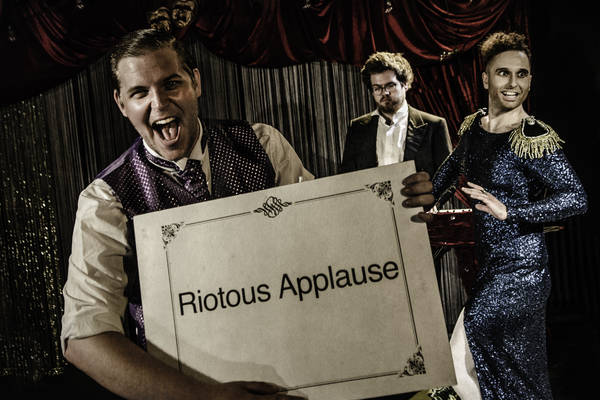
British history is peppered with truly remarkable people. Kings, queens, writers, actors, scientists, athletes and military generals pepper school history books and cultural subconscious. Then there are the people like Henry Paget, fifth Marquis of Anglesey, who are largely forgotten, tucked away in the centuries-old folds of this country’s past. During his brief Victorian life, he became rather infamous for cross-dressing, blowing his family fortune, and turning the chapel of his estate into a 150-seat theatre where he played the leads in his own productions with which he later toured Britain and Europe.

Seiriol Davies’ How to Win Against History chronicles (and fictionalises parts) of Henry’s radical life, focusing on his theatre work and cross dressing, as a fabulous, form-bending cabaret/musical. This little show has a huge heart and needs further script development to smooth out the lumpy narrative, but sequins and silliness, destroying the fourth wall, clowning and contemporary political commentary makes for a powerfully subversive and hilarious production.

The lengthy introduction provides necessary exposition, but as it gives way to a song that focuses on the Marquis’ time at Eton, it becomes too long. The interesting plot points come once the character is of age, and these deserve more attention than they are given. The beginning also sets up the style that’s maintained throughout, of musical theatre songs punctuating scenes that are heavy on the sort of narration and banter that is found in cabaret and drag acts. It’s a wonderful act of genre smashing. Musical theatre, cabaret, vaudeville and pantomime make an engaging, energizing combination that fosters audience participation and celebration. If this is where popular theatre is heading, then bring it on – Seiriol Davies’ script is at the forefront of musical theatre innovation.

Once young Henry finishes school, action starts to pick up. After a mutually beneficial marriage to his cousin (that was reportedly never consummated) and teaming up with a actor Alexander Keith (Matthew Blake), he casts himself in several plays. When no one comes, they take the shows on the road, making hilarious changes as the audience becomes less enamored of his work. More could be made out of his marriage and his increasingly weird theatre productions; they are rushed and little sense of a timescale is provided. Between his awakening as a student to a touring theatre maker, there’s a feeling that a lot of plot is missing. He is suddenly a broken man in Monte Carlo being interviewed by Daily Mail journalist Quentin (a brilliant in-joke!) and whilst this is deliciously funny, there is yet another leap in time and place. More scenes could easily be written to fill in these gaps without disrupting the established style. Even though the cabaret influence comes though in the short sketch-like scenes, as a musical it feels underwritten.

Writer Seiriol Davies plays Henry, the fabulously flamboyant lover of sequined dresses and the theatre. His journey from naïve boy to the ill and impoverished 20-something is lovely and genuine, with songs that in turn capture his enthusiasm and anguish. Energy abounds from the other two performers, making the show feel a lot bigger than it actually is.

Though this new musical needs further development to give it the scale and narrative punch that matches the style, it is fantastically good fun. The political content and deconstructing of style and structure are fly in the face of historical erasure of controversial figures and dramatic conventions. But it evoked engagement and contribution from a willing audience that was eating out of the performers’ hands within the first few minutes and this in and of itself is a huge indicator of excellent work. How to Win Against History could easily have the scale of a West End show, and it deserves the attention that would garner it.

How to Win Against History runs through 28 August in London and Edinburgh.

The Play’s the Thing UK is committed to covering fringe and progressive theatre in London and beyond. It is run entirely voluntarily and needs regular support to ensure its survival. For more information and to help The Play’s the Thing UK provide coverage of the theatre that needs reviews the most, visit its patreon.
 

bare., Courtyard Theatre

rsz_clbw12owyaau3v8

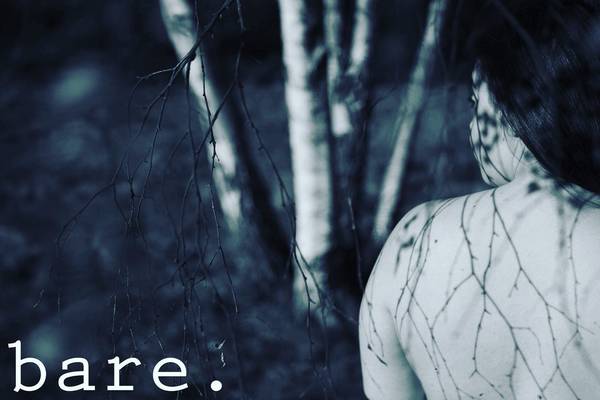
Three young women, three short solo performance pieces, three stories of vulnerability make bare., a thematically linked evening of new writing. Each of the three mini-plays has a distinct style and is performed by the writer. They vary in the quality of writing and inventiveness, and feel very new – more like scratch performances rather than finished pieces. bare. is a lovely concept – short, female solo performances that reveal hopes, fears, aspirations and conflict. It could easily become a regular event, giving women the chance to try out one-person work in front of an audience. As is, these pieces certainly need development but the three writer/performers show much promise and commendable initiative that, with development and experience, will certainly improve their work.

Kat Ronson is first, performing ‘IBZ’. This fragmented work follows a young woman’s journey from singledom into a loving relationship. The wild, drug fueled club nights transform into something more gentle and intimate, but her story does not end happily ever after. The young woman’s transformation is lovely, but the choppy writing makes for an unclear narrative and timeline. Ronson uses comedy punch lines and moments of reflective sincerity effectively, but this doesn’t balance out the vague writing. This piece would benefit from dramaturgical support and a hefty re-write, but the concept and central character are certainly workable.

American Steffanie Freedoff shows that yanks can handle their poetry and spoken word with ‘in the beginning there was Word’, a biographical monologue in verse about hating poetry as a teenager and growing to love it as an adult. This is also a coming-of-age story, but a much more positive one on self-discovery and confidence. It’s a bit cheesy and motivational, but the two stand-alone poems she ends on are angry, provocative and polished. The focus is on these pieces, which feel disconnected from the first part of the performance but add variation in style and tone. This second mini-play also needs development and shaping to find its overarching message, but it feels like it could be lengthened without becoming dull.

Madeleine Dunne brings a strong character piece to the trio with ‘Mind the Gap’, a piece that looks at the struggle of overcoming mental health issues. Lucy is a little girl terrified of breaking the rules and a young adult still limited by these fears. Told in two parts, Dunne’s gift for transformation is revealed in these two naturalistic monologues. It’s not clear who she is talking to and why in either section, but the character is a suitably interesting one. Lucy could also work well as the protagonist in a full play with multiple characters, perhaps even better with others to respond to rather than limited in a solo performance.

A quiet, sung finale wraps up the evening, a nice touch that adds some unity to these unrelated plays. bare. still feels like a scratch or showcase with a range in quality, but as a themed performance event, it is poignant and well curated. All three pieces need refining and/or expansion, though each shows at least some element of promise.

bare. runs through 16 July.

The Play’s the Thing UK is committed to covering fringe and progressive theatre in London and beyond. It is run entirely voluntarily and needs regular support to ensure its survival. For more information and to help The Play’s the Thing UK provide coverage of the theatre that needs reviews the most, visit its patreon.