Mr Incredible and Deal With a Dragon, Edinburgh Festival Fringe

https://files.list.co.uk/images/m/mr-incredible-main-image-print-LST209719.jpg

Solo performances are popular at the Fringe, and there are some good ones this year. So far, the best production I’ve seen this year is one-woman show Torch, celebrating womenhood in all of its flaws and glory. To portray men from such a perspective is much harder what with society already granting men more privilege than women, but Camilla Whitehill’s powerful Mr Incredible does just that in order to highlight male entitlement.

Adam and Holly have recently split up, and Adam hates it. Men like him aren’t meant to be single. He has a good job, owns a flat in London and desperately wants marriage and children. Whilst he loves Holly’s youth and fighting spirit, he was glad when she started to mellow and come round to the idea of settling down. But she wouldn’t be tamed by his sedate nights in front of the telly watching trashy programmes. She wants to write about important issues and change the world for good.

Though Adam’s account of Holly betrays an obvious, fundamental incompatibility between the two, Adam is blind to it and his desire for Holly to conform, and it’s infuriating. As he details moments from their relationship and its unravelling, he blindly transfers all blame onto her. The script cleverly paints Adam as a generally good guy, making his privilege initially subtle, then growing until their relationship reaches a horrible end. His ingrained entitlement to Holly and the belief that she should conform to his ideal life is a good capture of male immovability around women’s goals and desires, and hopefully framed in a way that triggers male reflection.

Alistair Donegan fleshes out Adam with genuine grief for the loss of his relationship and fully believed justification of the character’s choices. Whitehill’s script paints Adam overly-simplistically at times, but Donegan makes the character three-dimensional.

As a solo performance, it is initially unclear who Adam is talking to, but this is revealed in the play’s final moments when the severity of their breakup is horrifyingly revealed.This moment is subtle and takes some processing, so perhaps a bit more obvious spelling out will make the intended message stronger. Overall, this is a strong, polished production with acute comment on male privilege over women’s bodies and choices.

Deal With the Dragon also looks at male entitlement, but likely not deliberately and with a hefty dose of absurd fantasy. Bren is a gay dragon who finds vulnerable gay men that need looking after and offers to help, but not without signing a contract. The Faustian pact between Bren and artist Hunter looks at artistic temperament and dependency in the arts with both comedy and gravitas, though Kevin Rolston’s piece is lacking in a concise storyline and clear message.

Rolston is an excellent performer who distinguishes between Hunter, another artist Gandy and Bren with physical skill that is delightful to watch. With no costume or props, it’s perfectly clear that Rolston is a dragon. The transformation is simple, but utterly delightful.

The script has a nice premise – What if you had a gay, German dragon to help you get through the unpleasantness of life – but it’s never made clear what the premise is trying to communicate. Are people eventually better off with Bren’s assistance? Worse? What does it say about life’s obstacles as a whole? Should men have someone at their disposal to do their dirty work? These questions go unanswered. Though Rolston’s ability as a performer is undeniable, Deal With the Dragon never makes a definitive statement.

Mr Incredible runs through 28th August, Deal With the Dragon runs through 29th August.

The Play’s the Thing UK is committed to covering fringe and progressive theatre in London and beyond. It is run entirely voluntarily and needs regular support to ensure its survival. For more information and to help The Play’s the Thing UK provide coverage of the theatre that needs reviews the most, visit its patreon.

The Verge of Strife, Edinbrugh Festival Fringe

https://s.yimg.com/ny/api/res/1.2/dYMZRbOfigpSinFsDrmM4w--/YXBwaWQ9aGlnaGxhbmRlcjtzbT0xO3c9ODAw/http://media.zenfs.com/en/homerun/feed_manager_auto_publish_494/e8b3b49c0f2b401a3fb7882c92866d28

The Wildean young poet Rupert Brooke revels in the self-absorbed, upper classes of Edwardian Oxford and London at the turn of the twentieth century. He finds virtue in beauty, love, poetry and little else. Vain, pretentious and excessive is his behaviour, he manipulates his friends and lovers, all in the name of art and pleasure. Though not a particularly likeable person, his poetry betrays emotional depth and inner conflict, and his social circle flocks to his talent and intensity. Verge of Strife largely focuses on his young life of frivolity, turbulent relationships and their reflection in his poems. Eventually known for his war poetry, this play celebrates his writing’s evolution through the lens of his life’s eras and the women he loved. The poetic but sedate script needs more action as it meanders through Edwardian summers, and nuanced performances are appropriately restrained, making this a somewhat sleepy aural bath.

Much of the story involves parties, encounters with friends and suitors, and a life of indulgent leisure and writing. The dialogue is pretty and light, with beauty but little substance. The narrative flutters rather than sharply rises and falls, presenting snapshots from his life rather than a continuous plot line. Though this mirrors real life, it does not make for particularly dramatic theatre. There is also a sharp change of direction in the final section of the play, presenting Rupert in a completely different role than that of his carefree youth. The contrast is sudden and not clearly explained; the lack of gradual change from wafting, emotional poet to no-nonsense commander jars and feels like there are scenes missing that explain how his life so dramatically altered. The minor characters and their potential to conflict with Rupert are also underused – Rupert is the sole focus throughout, with everyone else merely supporting.

Jonny Labey takes on the verbose Rupert, meticulously sculpting delicate and flirtatious mannerisms. The character is frustratingly shallow for much of the play, denying Labey much freedom to achieve any depth. He does effectively capture Rupert’s growing instability building up to his remarkable transition into a man of real responsibility, and his chemistry with the female characters is undeniable. Emma Barclay as the solemn intellectual Katherine Cox, and Sam Warren as his openly gay friend, are excellent and full of character.

With most of the cast delivering strong performances and pretty language enveloping the senses, The Verge of Strife certainly has its positives but the script needs further work to add clarity and substance in order to communicate its message about the impact of war on a young artist.

The Verge of Strife runs through 29th August.

The Play’s the Thing UK is committed to covering fringe and progressive theatre in London and beyond. It is run entirely voluntarily and needs regular support to ensure its survival. For more information and to help The Play’s the Thing UK provide coverage of the theatre that needs reviews the most, visit its patreon.


Torch, Edinburgh Festival Fringe

https://i0.wp.com/www.underbellyedinburgh.co.uk/images/uploads/Torch_updated_for_web.jpg

We’re in a club toilet. Not a nice one, either  – there’s no loo roll, lipstick and graffiti pepper the cubicle walls and door. Jess Mabel Jones is an unnamed woman out with a friend, but after a lot of vodka and some coke, she feels self-conscious, past it and wants to hide. Reflecting on the life choices that brought her to this newly-single moment of remorse, she chronicles past lovers, committed relationships, eating disorders, panic attacks, and youthful exploits. Whilst longing for her youthful, perkier self with thinner legs and a tighter arse, she manages to celebrate the woman she has grown up to be in all of her flawed glory. Jones is an absolute firecracker of a performer who slams herself around a robust script baring lived female experience in all its rawness.

Phoebe-Éclair Powell’s text is an extended monologue of fragmented experiences and memories punctuated with pop songs. It doesn’t shy away from visceral topics, though the transitions from text to music are abrupt with little lead-in. The character she paints alternates between vulnerable and endearing, and ferociously bold. She is an everywoman with experiences that most women can relate to on some level and reminds us that despite going through moments of absolute despair and self-loathing, women are incredible.

It’s not just about girl power, though. The character’s anecdotes are funny, moving and compelling stories that are accessible to any human that has grown up, had sex, been in a relationship or felt they don’t meet society’s expectations. She is haunted by the woman she hasn’t become and simultaneously unapologetic about her.

Director Jessica Edwards incorporates plenty of movement, though some seems gratuitous it prevents the performance from becoming static. Amelia Jane Hankin’s set is both industrial, messy and glittery, an outward expression of the character’s spirit.

Jones’ performance is what makes this production worth seeing. She has a stunning voice, emotional vulnerability, and electric charisma. The songs she covers become the millennial generation’s torch songs as she delivers them with a power and depth. She rallies the audience to her side despite behaviour that could be viewed disapprovingly by more conservative audience members because her commitment and connection to the script is as truthful as it possibly can be. Torch is not one to miss.

Torch runs through 28th August.

The Play’s the Thing UK is committed to covering fringe and progressive theatre in London and beyond. It is run entirely voluntarily and needs regular support to ensure its survival. For more information and to help The Play’s the Thing UK provide coverage of the theatre that needs reviews the most, visit its patreon.

A Midsummer Night’s Dream in Gotham, Edinburgh Festival Fringe

https://i0.wp.com/www.gannett-cdn.com/-mm-/fc7f555cbf52fb26543e971d5e28e773dc747515/c%3D428-0-4784-3275%26amp%3Br%3Dx408%26amp%3Bc%3D540x405/local/-/media/2016/07/26/LAGroup/Shreveport/636051373770747955-SHR-caddo-magnet-01.JPG

The American High School Theatre Festival is wonderful. It gives school students from the US and Canada the opportunity to perform at the fringe as well as travel abroad, and is often the first chance participants have to travel outside their home country. Teacher-directors also have a platform for showcasing their skills in front of an international audience, so it’s sad that these student productions are often ignored by press. Shakespeare is regularly produced along with a fairly standard programme of musicals and plays for young people, though the bard gives directors more o to be flexible with the text. Whilst these show are far from the standard you’d expect from professionals, they are enthusiastically executed and sheer joy in performing is evident throughout.

A Midsummer Night’s Dream in Gotham by Caddo Parish Magnet High School in Louisiana is one of the festival’s offerings, and whilst it certainly has its issues, it has plenty of merits. A comic book world could certainly work for the action-driven, over-the-top fights and comedy, but director Patti Reeves only consistently applies it to the fairy world. She changes names and locations from Shakespeare’s original which is hard on the ear to begin with, but soon becomes less so. Adapting pronunciation so syllables fit Shakespeare’s verse would minimise this. The lovers remain unadapted – a lost opportunity for an added layer of humour and clashing with the gritty caped crusaders.

Reeves has innate instinct for physical comedy and a clear skill in developing that in her students. There are plenty of chuckles to be had in the mechanicals’ scenes that steal the show. The performances are hammy and over-the-top, but that’s the sort that works best for these characters who are rooted in Commedia stock characters and slapstick. She has some wonderfully confident pupils in her cast, with Echo Patriquin as Helena and Scott Martin as Flute/Thisby the most consistent examples.

Though most of the performances are typically pedestrian school fare and the concept has potential to be developed with further time and resources (something teachers generally lack), the dedication these young people show for Shakespeare is truly inspiring and a great trip down memory lane for anyone who found their love of theatre whilst at school.

A Midsummer Night’s Dream in Gotham runs through 10th August.

The Play’s the Thing UK is committed to covering fringe and progressive theatre in London and beyond. It is run entirely voluntarily and needs regular support to ensure its survival. For more information and to help The Play’s the Thing UK provide coverage of the theatre that needs reviews the most, visit its patreon.

Generation Zero, Edinburgh Festival Fringe

https://i0.wp.com/static.progressivemediagroup.com/uploads/imagelibrary/nri/power/projects/Princess.jpg

A nameless couple meet online, fall in love and build a life together. Their lives are comfortably boring, with day jobs, road trips to the beach, holidays in a Yorkshire cottage and lazy weekends snuggling in bed, listening to records. They are almost identical to any contemporary middle class, suburban couple, but something’s not quite right.

Their world is just a bit off. They run out of gas, but they can’t go to the shop to top up their gas meter – they aren’t allowed to exceed their monthly allocation. There’s talk of restrictions on travel in order to cut pollution levels. He’s ambivalent about the environment, but she’s a political activist who devotes more and more of her time to a local group campaigning for change. He wants to spend more time with her, but she’s always out in the evenings, planning actions with the group, so he takes action of his own.

Becky Owen-Fisher’s debut play Generation Zero looks at the battle over the environment through the lens of a young couple in a poetic, episodic script that unsettles through it’s familiarity and the complacency with which (most? some?) people approach political issues. The story doesn’t viciously attack climate change, but takes a gentle, sinister approach that gets into your bones. Owen-Fisher has a good instinct for dialogue and imagery-laden narration that easily flows in and out of naturalism, adding just enough variation in style to keep the audience lightly unsettled.

Director Tom Fox attacks the script with lightening fast transitions; these could be slowed a bit for the sake of keeping up with the actions and the to-ing and fro-ing through time. Without sound and lighting signifiers, they would be totally unclear. Some important moments are also rushed, particularly towards the end, causing the gravitas they should have to be glossed over.More stylised physicality would also be welcome to coordinate with the stylistic changes in text.

The two actors are excellent; Jordan Turk and Francesca Dolan have a gorgeous chemistry that’s lovely to watch, made more romantic by dream-like lighting. The sheets and pillows covering strip lighting on the stage’s edge creates a lovely ethereal effect, destroyed by their reveal at a pivotal moment that also reveals the truth of their relationship’s dynamic – a great choice.

Perhaps some adjustments could be made to the script to transform it into more of a propaganda piece and place a stronger emphasis on the environmental collapse that is merely hinted at, but to do so would cause the piece to lose its delicacy. This is a promising play from an emerging writer with an important message that deserves to be heard.

Generation Zero runs through 29th August.

The Play’s the Thing UK is committed to covering fringe and progressive theatre in London and beyond. It is run entirely voluntarily and needs regular support to ensure its survival. For more information and to help The Play’s the Thing UK provide coverage of the theatre that needs reviews the most, visit its patreon.

Poena 5×1 and No Horizon, Edinburgh Festival Fringe

https://i0.wp.com/www.underbellyedinburgh.co.uk/images/made/images/uploads/POENA-5X1_1_%C2%A9RichardDavenport_750_500_60_c1.jpg

Science and Mathematics. Vaccinations, space travel, electricity. Nuclear weapons, lethal injections, pollution. Poena 5×1 and No Horizon. One is a new play showing the dark potential of science, the other a new musical celebrating overcoming disadvantage through maths. Radically different in style and story, both productions find inspiration in the potential of science, maths and technology, and both need further development.

Scientist Bryony Adams works for the Department of Justice in Poena 5×1. She’s a typical Tory suit who fully believes her horrifying work benefits the greater good – she invented Poena, a drug that reduces prison populations through humane punishment (whatever that is). Named after the minor goddess of punishment, Poena induces a state of despair and hopelessness that can lead to catastrophic mental consequences for the prisoners that are her voluntary test subjects. Bryony becomes emboldened by praise as she further develops the drug, deciding to test it on an unknowing volunteer.

Bryony is a despicable character that Cathy Conneff plays admirably, particularly as she begins to emotionally deteriorate. Considering this is a solo performance with little visual element, her ability to maintain audience focus through compelling embodiment of the character is excellent. The character presents her work to the audience until a twist reveals all is not what it seems. It’s at this point that Abbie Spallen’s script starts to lose its way. As Bryony’s story becomes more personal and less about her work, the narrative becomes knotty and unclear, having a knock-on effect on the script as a whole that until this point, terrifies through the government’s potential to commit heinous acts. Any themes and messages established about the horror of governmental capital punishment are unfortunately diluted. Reworking the ending to maintain character and plot continuity and clarifying the play’s message would take little work but have great effect.

In contrast to Poena 5×1, No Horizon has a solid, consistent script, but this new musical’s shortcomings are its music and the casting of this particular production. The true story of a remarkable young man in the 1680s looks at the power of mathematics to unite people across social class and ability. Nicholas Saunderson, blinded by Smallpox as an infant, learns to read through his friends’ support and tracing letters on gravestones. His envy and frustration grow as his parents enforce limitations on him because of his disability and his best friend in their tiny Yorkshire village goes to Cambridge. Through sheer determination and an innate aptitude for maths and physics, he eventually proves that in a pre-Braille era, disability is still no barrier to success.

It’s a wonderful, uplifting story with a generally good narrative arc, though most of the cast are gifted singers who struggle to match their acting ability to their voices. There is frustratingly little connection between characters, though George Griffiths as Joshua Dunn is a notable exception. The music is rather samey and repetitive without distinction, though there are some standout numbers amongst the Cambridge students. The music is pre-recorded, which makes it even harder to capture any nuance in tone and volume. There is minimal choreography, making the ensemble numbers more choric than musical theatre.

Theatre can be a powerful vehicle for maths and science, but in the cases of No Horizon and Poena 5×1, the subjects are let down a bit. Some tinkering is definitely needed to whip these productions into shape, but there is much potential in these character-driven stories.

Poena 5×1 runs through 29th August, No Horizon runs through 27th August.

The Play’s the Thing UK is committed to covering fringe and progressive theatre in London and beyond. It is run entirely voluntarily and needs regular support to ensure its survival. For more information and to help The Play’s the Thing UK provide coverage of the theatre that needs reviews the most, visit its patreon.

Happy Dave, Edinburgh Festival Fringe

https://theplaysthethinguk.com/wp-content/uploads/2016/08/7e6e8-happy2bdave.png

Dave’s a middle aged advertising executive from Yorkshire, now living and working in London. Amidst his humdrum life, he longs for his youth as a pioneering rave DJ playing to thousands of people, running events up and down the country with his ex, Molly. An invitation by a well-meaning colleague half his age leads Dave back onto the path he abandoned and his transformation into a cultural messiah to a generation focused on careers, property and conforming.

Oli Forsyth has a great script on his hands, despite a hint of judgmental condescension towards millennials. The script states they waste their lives on jobs they hate, have no cultural or creative identity and surround themselves with material possessions to make their empty lives feel full. Dave first aggressively voices this opinion, but his four comrades eventually agree that their generation is distinctly lacking in rebellion. Though this is certainly true of some people, others may find genuine happiness in their high earning, corporate lifestyles.

The opportunity to see Dave as a young man gives the story and character added depth, and there’s good continuity despite Dave being played by two different actors. The dialogue has a natural flow, though a few spoken word monologues feel out of place even though they are well written. There’s room to extend the story after the well-crafted, current climax that shows Dave hasn’t really changed his attitude since he was a young man willing to sacrifice everything for the scene. Lengthening would solve the issue of the abrupt ending by adding a dénouement that answers any questions about the consequences the present Dave has to face.

The ensemble of five is strong; they capture the anger and frustration innate to those trapped in unsatisfying lives. Andy McLeod as the present day Dave is excellent, with clear character choices and constantly bubbling rage that dissolves into bliss when raving or DJing. There’s little genuine warmth between the present day gang, which, although indicative of how self-absorbed millennials are, is unsatisfying to watch. Younger Dave (Forsyth) and Molly (Helen Coles) have some genuinely lovely moments, though a few are a touch overacted.

Happy Dave is remarkably polished for the Fringe, and a dynamic storyline with plenty of emotional rage effectively maintains attention. It’s certainly worth catching.

Happy Dave runs through 29th August.

The Play’s the Thing UK is committed to covering fringe and progressive theatre in London and beyond. It is run entirely voluntarily and needs regular support to ensure its survival. For more information and to help The Play’s the Thing UK provide coverage of the theatre that needs reviews the most, visit its patreon.

The Inevitable Heartbreak of Gavin Plimsole, Edinburgh Festival Fringe

https://theplaysthethinguk.com/wp-content/uploads/2016/08/05b71-gavin2bplimsole2b252812529.jpg

Gavin Plimsole is a good enough guy. A bit geeky and nervous but well-meaning, maybe even a bit endearing if you like that sort of thing. After he receives a life-altering diagnosis from the cardiologist and realises his days are numbered, the audience (who have all strapped into heart monitors before the show begins), get to decide his fate. Part choose-your-own adventure, part poignant tale of grief morning people and times long lost, The Inevitable Heartbreak of Gavin Plimsole is a messy but touching reminder to make the most of every moment.

An ever-present projection of the audience members heartbeats overlays three energetic performers and a changing landscape of cardboard boxes. Gavin’s the sort that stores his life in tattered boxes labelled with masking tape, and these boxes now contain relics from his life. They aren’t particularly interesting, but a garden shed with a wonderful contraption that releases a large marble down a slide and into a box every 500 collective heartbeats, is ramshackle but dynamic. It cleverly represents our perpetual approach towards death with a drawn out clattering and eventual silence – a dying person’s last breaths.

Gavin monologues most of his thoughts; there are some interruptions by spunky, supporting actors that help break up the speeches but more of these would be welcome. A wiry (literally, as in made of wires) puppet makes one appearance and is similarly underused – a remarkable creature! The structure is understandable chaos that mirrors the the first couple of days after devastating news, though clearer transitions and a distinct style will help make sense of this emotional journey.

The use of the heart monitors and audience interaction unites the audience and performers, creating intimacy and empathy. It’s a sad story that manages to foster hope instead of gloom, and within the clutter there’s a lot of heart.

The Inevitable Heartbreak of Gavin Plimsole runs through 29th August.

The Play’s the Thing UK is committed to covering fringe and progressive theatre in London and beyond. It is run entirely voluntarily and needs regular support to ensure its survival. For more information and to help The Play’s the Thing UK provide coverage of the theatre that needs reviews the most, visit its patreon.
How to Win Against History, Ovalhouse

rsz_copy_of_©rah_petherbridge_photography_-_how_to_win_against_history-_done_3

British history is peppered with truly remarkable people. Kings, queens, writers, actors, scientists, athletes and military generals pepper school history books and cultural subconscious. Then there are the people like Henry Paget, fifth Marquis of Anglesey, who are largely forgotten, tucked away in the centuries-old folds of this country’s past. During his brief Victorian life, he became rather infamous for cross-dressing, blowing his family fortune, and turning the chapel of his estate into a 150-seat theatre where he played the leads in his own productions with which he later toured Britain and Europe.

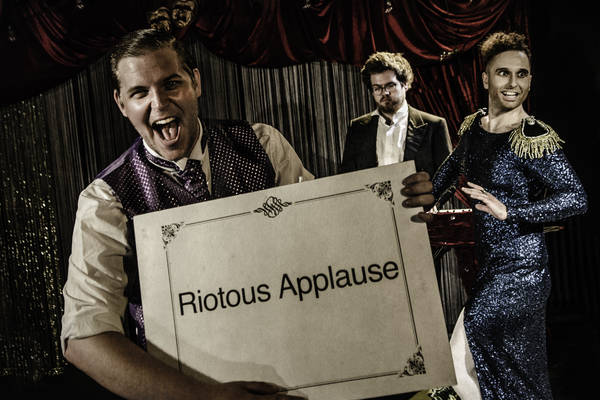
Seiriol Davies’ How to Win Against History chronicles (and fictionalises parts) of Henry’s radical life, focusing on his theatre work and cross dressing, as a fabulous, form-bending cabaret/musical. This little show has a huge heart and needs further script development to smooth out the lumpy narrative, but sequins and silliness, destroying the fourth wall, clowning and contemporary political commentary makes for a powerfully subversive and hilarious production.

The lengthy introduction provides necessary exposition, but as it gives way to a song that focuses on the Marquis’ time at Eton, it becomes too long. The interesting plot points come once the character is of age, and these deserve more attention than they are given. The beginning also sets up the style that’s maintained throughout, of musical theatre songs punctuating scenes that are heavy on the sort of narration and banter that is found in cabaret and drag acts. It’s a wonderful act of genre smashing. Musical theatre, cabaret, vaudeville and pantomime make an engaging, energizing combination that fosters audience participation and celebration. If this is where popular theatre is heading, then bring it on – Seiriol Davies’ script is at the forefront of musical theatre innovation.

Once young Henry finishes school, action starts to pick up. After a mutually beneficial marriage to his cousin (that was reportedly never consummated) and teaming up with a actor Alexander Keith (Matthew Blake), he casts himself in several plays. When no one comes, they take the shows on the road, making hilarious changes as the audience becomes less enamored of his work. More could be made out of his marriage and his increasingly weird theatre productions; they are rushed and little sense of a timescale is provided. Between his awakening as a student to a touring theatre maker, there’s a feeling that a lot of plot is missing. He is suddenly a broken man in Monte Carlo being interviewed by Daily Mail journalist Quentin (a brilliant in-joke!) and whilst this is deliciously funny, there is yet another leap in time and place. More scenes could easily be written to fill in these gaps without disrupting the established style. Even though the cabaret influence comes though in the short sketch-like scenes, as a musical it feels underwritten.

Writer Seiriol Davies plays Henry, the fabulously flamboyant lover of sequined dresses and the theatre. His journey from naïve boy to the ill and impoverished 20-something is lovely and genuine, with songs that in turn capture his enthusiasm and anguish. Energy abounds from the other two performers, making the show feel a lot bigger than it actually is.

Though this new musical needs further development to give it the scale and narrative punch that matches the style, it is fantastically good fun. The political content and deconstructing of style and structure are fly in the face of historical erasure of controversial figures and dramatic conventions. But it evoked engagement and contribution from a willing audience that was eating out of the performers’ hands within the first few minutes and this in and of itself is a huge indicator of excellent work. How to Win Against History could easily have the scale of a West End show, and it deserves the attention that would garner it.

How to Win Against History runs through 28 August in London and Edinburgh.

The Play’s the Thing UK is committed to covering fringe and progressive theatre in London and beyond. It is run entirely voluntarily and needs regular support to ensure its survival. For more information and to help The Play’s the Thing UK provide coverage of the theatre that needs reviews the most, visit its patreon.


Top Ten Shows of 2015

rsz_top10-620x400

  1. Carmen Disruption 

This Simon Stephens deconstruction bore little resemblance to the opera. Instead, we had a cast of dysfunctional, damaged characters unable to connect with the world around them on any meaningful level. They filled the Almeida with an electric loneliness that grasped the desperate humanity residing deep inside us all before chucking us out, exposed and raw, into the London night.

  1. Pomona

Written by a 27-year-old, Pomona captures the millennial generation in a single play. Frantically set over several levels of dystopian reality and never able to settle, this epitomises those who suffer the consequences of  baby boomers’ past choices.

  1. Light

The first show I ever gave five stars to, after more than a year of criticism. Good intentions and government exploitation address increasing surveillance with stunningly precise physical theatre, object manipulation and light.

  1. Tether 

A two-hander about a blind runner and her guide, this piece is refreshingly unromantic and driven by dialogue and characterisation. This is a simple and powerful piece by a promising young writer set in a world rarely considered by non-disabled people.

  1. Shakespeare & the Alchemy of Gender

A solo performance by veteran Shakespearean, Lisa Wolpe, founder of L.A. Women’s Shakespeare Company. Exquisite extracts of Shakespeare’s most celebrated male roles interspersed with her father’s biography raises important points about performance, gender and family.

  1. Town Hall Cherubs

Theatre Ad Infinitum and Battersea Arts Centre team up to create an immersive, site-specific piece for 2-5 year-olds. Gentle and responsive to the children’s attention spans, this is a bit of a winter treasure hunt around the BAC that stimulates all the senses.

  1. Chef 

Another sharp one-woman show, this one by Sabrina Mahfouz and performed by Jade Anouka. Anouka is a Michelin-star chef who runs the prison kitchen. Part fictional memoir/part foodie homage, this character driven piece cuts an unforgettable character.

  1. This is How We Die

An explosive spoken word/music piece by Canadian Chris Brett Bailey, it defies description and instead must be experienced. A marmite production amongst critics but Bailey’s use of imagery within language is incomparable.

  1. Don Q

A warm and lovely adaptation of Cervantes’ novel, Don Q is an old man’s gleeful adventure story. Four actors multi-role through this story that looks at the way we treat the elderly and the joy of play-acting.

  1. Eclipsed

Set during the Liberian Civil War, the all-woman cast of Danai Gurira’s doesn’t hold back on the experience of women in wartime. This is a brutally raw survival story with the power to leave you shaken, guilty and grateful for the benefits of Western comforts.

Honourable mention: Invisible Treasure

This is an interactive experience that is audience-led, with no actors and no plot. Like a game, the audience is led into a hi-tech room and led through a series of tasks in order to escape. Fun, challenging and frustrating, it makes some powerful points about group dynamics and personal approaches to problem solving.


The Play’s the Thing UK is committed to covering fringe and progressive theatre in London and beyond. It is run entirely voluntarily and needs regular support to ensure its survival. For more information and to help The Play’s the Thing UK provide coverage of the theatre that needs reviews the most, visit its patreon.