Songs For the End of the World, Battersea Arts Centre


https://i0.wp.com/www.domcoyote.com/wp-content/uploads/2015/12/millygraphic-2-e1469019899426.jpg

Jim Walters is the first person sent to colonise Mars. But when a global apocalypse occurs, trapping him in the Earth’s orbit and running out of oxygen, he and his guitar are left to broadcast music to the devastation below. Can anyone hear him? Are there any survivors? Will he ever know? Dom Coyote and his band the Bloodmoneys present a post-Brexit apocalypse in the gig-theatre Songs For the End of the World, a piece overly heavy on the ‘gig’ and reliant on a plot constructed of dystopian tropes. Though the story is thin, Dom Coyote’s songs are fantastically varied and plentiful, helping to gloss over any shortcomings in the script.

There’s rockabilly, 90s rock anthems, glam rock, and blues numbers with a touch of connecting story sprinkled in between. Set in Ashley Coombe, the village serves as a window into the attitudes of small, English towns of this dictatorial era – the elderly preacher woman who runs the place condemns foreigners, terrorists and space exploration whilst the rebels put on club nights in an underground bunker. The country is now called New Albion and rather than run by an individual, a corporation dictates all rules and procedures. These plot devices are predictable within a story of a dystopian future, but are simplistic enough to work within the gig-theatre format without needing much explanation. As these two tribes clash, Jim Walters is in space – a symbol of both human progress and arrogant dominion. It’s no surprise which side survives down on Earth, and that the future beyond the end of the show looks particularly bleak.

Though the story is overly familiar, the music is wonderfully varied. David Bowie’s promised influence is clear, but not limiting in style. All of the characters in this Little England kitsch/cold international corporation hybrid are suitably blown out of proportion, but feel eerily familiar in a fundamentalist-driven, isolationist Britain and a world where Donald Trump may become the next leader of its most powerful country. Staging is fairly static as per the usual gig-theatre approach, but there is some variation in movement and costume. The lighting design adds power and hope to the bleak, clinical setting.

A more substantial script and dynamic staging would lend more theatricality to the excellent set of tunes in of Songs For the End of the World; as is, it is overly driven by music and the narrative potential is neglected. That said, it would make a fantastic concept album, and the design is strong – an extra half hour of script would add polish to this fun, vibrant performance piece.

Songs For the End of the World is now closed.

The Play’s the Thing UK is committed to covering fringe and progressive theatre in London and beyond. It is run entirely voluntarily and needs regular support to ensure its survival. For more information and to help The Play’s the Thing UK provide coverage of the theatre that needs reviews the most, visit its patreon.

Kissing the Shotgun Goodnight, Ovalhouse

rsz_kissing_the_shotgun_goodnight_credit_the_other_richard

Along with tickets, we are handed earplugs. Considering Christopher Brett Bailey’s first work This Is How We Die, I’m not surprised. A brilliant, relentless barrage of contemporary American myth followed by an encore of noise and light, Bailey isn’t known for doing things by halves, or even singular wholes. The slight, constantly startled-looking Canadian with gravity defying hair attacks performance making with the energy of a supernova. Kissing the Shotgun Goodnight has the same verve, but is otherwise a rather different beast. Whilst This Is How We Die was dominated by language, Kissing the Shotgun Goodnight has very few words – but the earplugs are definitely needed. This anthemic music and light show fills the room with sound, colour and vibration but is the difficult second album to This Is How We Die. Much more of a gig than a piece of theatre, it lacks the satisfaction of characters and narrative, even a hint of one. Bailey’s mind blowing poetry teases with a few tiny fragments, but otherwise leaves us desperately gagging for more of his words.

Though given earplugs, there is the choice of whether or not to use them. Notices state that the sound level is consistently over 100 decibels and that, “if you wear plugs the whole time you might compromise enjoyment of the show. and if you don’t wear them at all you will take home whistling ear canals”. Being one of those people sensitive to loud noises who constantly asks my other half to turn down the telly, I want to play it safe but I don’t want to miss out. So I opt for one plug in, with the other ready. This choice no doubt effects the experience – if I leave them out the whole time and feel discomfort, would I like the show less? Or would I like it more because it’s not actually ‘that’ loud? I use the plugs in response to the volume level – sometimes I have both in, sometimes none. It’s an interesting premise to consider that the experience and quality of the show hinges on these earplugs, adding an additional level of individual, subjective response.

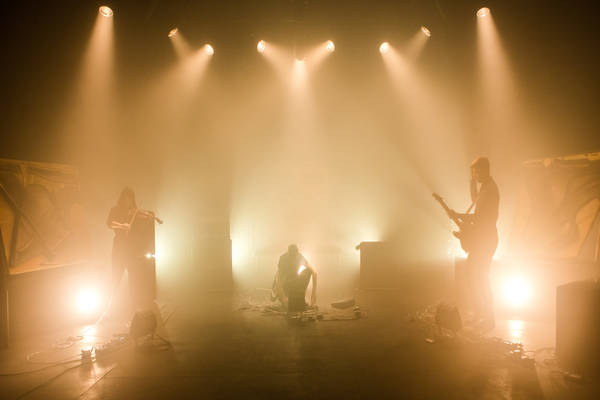
Bailey’s voice, slow and unseen, repeats, “this is a hell dream” in a brief textual introduction. Violinist Alicia Jane Turner uses loop pedals to sculpt a cinematic score reminiscent of mid-90s rock anthems. Her work is wonderfully angry, sweeping and alive. George Percy and Bailey are both on guitar, forming a silhouetted triptych with Bailey soon in the middle – amongst the monolithic speakers and flight cases forming a brutalist, urban landscape, he cuts the figure of a scrappy dystopian overlord. It suits him. If this is what hell is like, it’s fucking glorious.

Behind each performer is a wooden panel of about a metre square made of deconstructed pianos and their strings. These are visually impressive structures in and of themselves; their music evokes the violence and community of tribalism. Combined with excellent sound-responsive lighting (that malfunctioned to the point that the show needing to be stopped briefly), the overall effect is one of epic, soul shaking community.

The title paired with the music evokes the American paradox of a friendly but violent people who love their guns as much as their families. The music’s scale captures the expanse and variation of the North American landscape, and the few words he shares on the experience of waking up from a nightmare to find the world unchanged darkly foreshadow Trump’s America. Whether or not this is an intentional message, it is certainly a powerful one.

Kissing the Shotgun Goodnight is certainly wide open to interpretation and shows Bailey’s ambition and range as a performer of work designed to push the senses to their extremes. His textual dexterity is certainly missed (particularly by the coked up, flailing pair of young women sat next to me commenting on how disappointing this work is compared to his first) and comparatively this piece is somewhat disappointing, but it absolutely has its merits as a visceral, “fuck you/I love you” performance piece.

Kissing the Shotgun Goodnight tours nationally through November.

The Play’s the Thing UK is committed to covering fringe and progressive theatre in London and beyond. It is run entirely voluntarily and needs regular support to ensure its survival. For more information and to help The Play’s the Thing UK provide coverage of the theatre that needs reviews the most, visit its patreon.

Acorn, Courtyard Theatre

acorn-c-hannah-ellis-1

Persephone and Eurydice’s myths are defined by men. What happens when these men are removed and the characters plunged into a modern dreamscape? Maud Dromgoole’s Acorn brings these women and their fates together in a world of fragmented narratives and moments of biting wit, but the worlds that Dromgoole weaves together are so disconnected from each other in this cerebral play that it interferes with its immediacy.

Rather than nurturing plants, this Persephone looks after people – she is a doctor, but one that struggles to connect with her patients. Her opening monologue justifying her disdain for patients’ personal lives is equally hilarious and disturbing, the best scene in the play. Deli Segal brings a simple humanity to this cold character, making her quirky and likeable despite an autistic-like inability to understand others. Lucy Pickles’ Eurydice is a sweet contrast, alternating between a blushing bride and mental health hospital patient. Pickles is no less of a performer, but Persephone has the more dynamic and well-written character.

Dromgoole employs a range of styles, arguably too many for an hour long script. Though this strengthens the ability to relate to the story within individual scenes, the overall effect is one of indecision. An unrelated, recorded dialogue between two men fills transitions unnecessarily and doesn’t link to the women’s stories, then overlapping speech cause dialogue to be missed.

Phil Lindley’s design is simple and precise, allowing for detail and layers to emerge through Jai Morjaria’s lighting and Tom Pearson’s underused projections. The design concepts are most excellently married and add polish to a script that feels under-developed.

Acorn certainly deserves to extending and refining – the characters are excellent, as are the foundations of the stories seen here. Dromgoole uses language well and is clearly confident experimenting with form, style and classical influence, but reinvention with the goal of creating a modern myth doesn’t quite reach the enduring scale of the original material.

Acorn runs through 29 October.

The Play’s the Thing UK is committed to covering fringe and progressive theatre in London and beyond. It is run entirely voluntarily and needs regular support to ensure its survival. For more information and to help The Play’s the Thing UK provide coverage of the theatre that needs reviews the most, visit its patreon.

Undead Bard, Theatre N16

robert-crighton-in-metal-harvest

Professor Ashborn is on a mission to disprove Shakespeare’s existence, but the academics with leather patches on their elbows are trying to stop him. Following Ashborn’s lecture and an interval, Undead Bard creator Robert Crighton summons Shakespeare to talk to him about his life, work and death in an unrelated second half. This two-part show on Shakespeare in the modern world, bardolatry and the authorship debate certainly has some very funny moments of satire, but others are utterly bizarre and the poor execution of an idea. A significantly stronger first act sets up a reasonably enjoyable event, but the second is self-indulgent and anti-climactic in this overly long solo performance.

The paranoid Professor Ashborn’s lecture rips the piss out of Shakespeare academics, those that believe Shakespeare wrote Shakespeare’s works, those that believe someone else did under Shakespeare’s name and anyone with a love for Shakespeare’s plays. Crighton as Ashborn talks the audience through his various ridiculous authorship theories with energy and eccentric humour, evoking plenty of laughs. The script follows a natural rhythm of discovery, disappointment and eventual confession; it’s a story carefully crafted with intuition and skill.

Considering the second act, the first would be better served as a stand-alone piece. After what is quite a good piece of character storytelling, this random, rambling seance on the mundanity of Shakespeare’s life and afterlife is, well, mundane. The inclusion of toilet humour and sexual innuendo do not improve the piece. Shakespeare’s confusion at his legacy is cute, but it absolutely doesn’t warrant nearly an hour of discourse and disconnected pop culture references.

Crighton clearly has an aptitude for crafting a story, as evidenced in the first part of the show. Unfortunately, the rest of it is a muddled letdown that needs to be sent back to the drawing board or discarded completely.

Undead Bard runs through 13 October.

The Play’s the Thing UK is committed to covering fringe and progressive theatre in London and beyond. It is run entirely voluntarily and needs regular support to ensure its survival. For more information and to help The Play’s the Thing UK provide coverage of the theatre that needs reviews the most, visit its patreon.

Father Comes Home From the Wars (Parts 1, 2 & 3), Royal Court

https://i0.wp.com/www.officiallondontheatre.co.uk/servlet/file/store5/item374788/version1/fileservice770/374788_770_preview.jpg

American, Pulitzer Prize-winning playwright Suzan-Lori Parks doesn’t shy away from epic projects. Six years ago, she wrote a play a day to create 365 Days/365 Plays, then went on to write the nine-part Father Comes Home From the Wars. Parts one, two and three centre around Hero, a strapping young slave on a remote Texan farm. Spanning the Civil War, this epic story with influence from Greek myths and contemporary socio-political issues in Parks’ distinctive, poetic language takes its time to develop and has some discordant stylistic choices, but its narrative and historical interpretation is both compelling and important.

Each of the three parts has moments of profound brilliance and devastation, but Parks is in no rush to tell her story. The dialogue-driven script takes its time, meandering around a complex landscape of slavery, loyalty and race within this particular slave family. Though set in war time, there is little action – broader issues drive the conversation more so than current events. This is more of a kitchen sink drama than a wartime adventure story.

Part one solely takes place on the farm as Hero debates whether or not join his master in battle. The rest of the slaves take bets and try to persuade him one way or the other, but in the back of Hero’s mind is a promise from the Boss-Master – but is he likely to keep his end of the deal? Hero’s loyalty is split between his owner and his wife Penny, but the lure of the cast-off but smart uniform proves too much. Though little happens, the domesticity of part one has some of the tension that precedes a huge decision. Seeing a tall, strapping black man in the prime of his life wearing Confederate greys is most unsettling; this paired with the ingrained, accepted attitude that he is the property of his owner is a potent reminder that there has been insufficient progress in America’s attempts at racial equality.

Part two, though set at a particular moment in the midst of the war, has the calm of an eye of a storm and is by far the best of the three parts. Hero and Boss-Master have captured a Yankee prisoner whilst separated from their regiment during a battle. Hero’s loyalty is tested again, this time by his prisoner upon discovery of a secret that’s hidden in plain sight and only skin deep. Racial identity, individuality and freedom intertwine in an intoxicating allure of potential for Hero, who is still doggedly loyal to his owner. The powerful ending devastates in its frank depiction of ingrained attitudes of racial inferiority and liberal frustration with this mentality.

Part three is the more mature sibling to part one. The characters are older, wiser and more world weary in the face of Southern defeat. The pre-war certainty has given way to a chance at the great unknown of freedom, and for the first time they can choose where they live – anywhere in the great, wide world, or on the farm they have known forever. Penny and Hero’s devotion is destabilised in this irrevocably changed world that is now free, but cold and dangerous – and still is for black Americans today. The morality of freedom isn’t black or white here, but the ominous, thought-provoking grey of Hero’s, (now called Ulysses) uniform.

Neil Patel’s unforgiving desert of a set doesn’t have bells and whistles, but it’s sparsity highlights the richness of Park’s language and characterisation. Steve Toussaint is the remarkable Hero, painted with delicate light and shade. The rest of the cast are excellent in their own right, though lack the development of the initially appropriately-named lead.

Parks’ script is almost completely bedded in realism (that’s occasionally heightened), though a talking pet and some contemporary costumes slightly skew reality. Both are used sparingly and without any evident justification across the three parts so their inclusion feels jarring and unnecessary. The onstage musician, though very much a separate commentator, doesn’t clash the way these choices do.

For a play set during a war and a pivotal moment of America’s history, it is oddly detached from violence and conflict. Instead, Parks’ text goes after deeper themes within this transition from slavery to freedom. Though a greater sense of danger and looming dread would add needed further tension in parts one and two, the nuance that flows through the story is undeniably exquisite.

Father Comes Home From the Wars (Parts 1, 2 & 3) run through 22 October.

The Play’s the Thing UK is committed to covering fringe and progressive theatre in London and beyond. It is run entirely voluntarily and needs regular support to ensure its survival. For more information and to help The Play’s the Thing UK provide coverage of the theatre that needs reviews the most, visit its patreon.

Feature: Silent Snacks

https://i0.wp.com/munchies-images.vice.com/wp_upload/Silent-Snacks-theatre-cinema-food.jpg

Rejoice! If you are the sort of theatregoer who has signed the Theatre Charter, and is regularly outraged by the appalling behaviour from other audience members who may not have the same high standard of culture or upbringing as yourself, you will adore Today Tix’ latest initiative, Silent Snacks. No longer will you have to endure the incessant rustling of sweet wrappers, the crunch of crisps, the post-coke burps, the mobile phone lights, the whispers, the fidgeting, the breathing, the poor and the young wreaking utter havoc on your evening of cultural consumption in the proper Victorian fashion (I say, what did those Elizabethans know about theatre!). The selection of sophisticated, upper-middle class, white people snacks come delivered in red cloth pouches so at no point in the consumption process will they make a sound that could offend surrounding ears. They also contain enough elite ingredients to satisfy Whole Food shoppers, and are bland enough to not offend Home Counties and Middle England palates.

Available through the Today Tix app, savvy audience members can pre-order this etiquette cure-all that enables guilt free theatre snacking. It’s only too big of a shame that these snacks cannot be forced onto all audience members that dare to eat during a performance, especially the group of urban teenagers who never attended the theatre before.

First on offer are Quiet Pop(corn) bites. A base of ground popcorn and dates creates a truffle-y texture, but with the dates and coconut blossom nectar, they are more sweet than savoury. They don’t particularly taste of popcorn, but neither does any other flavour dominate. They lack a satisfying crunch, but are indeed silent. The crushed popcorn does tend to get in between the teeth, so there is potential for some discomfort until you are able to pick out the offending particles in private – we can’t have teeth picking in the stalls, obviously!

The flawless, leading lady of Silent Snacks are the Muffled Truffles: rich, dark chocolate indulgence. Instead of popcorn, smooth cocoa powder is blended with chewy dates. They are not one for commoners who prefer sweet, milk chocolate and are more substantial than conventional truffles due to the presence of the dates.Very classy and adult, like theatre audiences should be.

Silent Slices are dainty, soft slices of dried pear. Chewy and subtle, these tiny nibbles have no added ingredients and pear is such a delicate flavour that drying greatly diminishes it. Apple with a sprinkle of cinnamon would have a stronger taste, but the pear is less offensive to those with delicate constitutions and aversion to anything stronger than the blandest of foods.

These snacks would not be complete without a suitably refined beverage. The Anti-Gas Lime and Mint drink is a questionably lurid green concoction of grapefruit, lime, mint and water. Oral and anal gas expulsion is banished, as is the risk of noise in opening the container. A branded silicon cup is a smart vehicle through which to show off your culinary choices, despite terrible mouth feel and the bitter flavour of the drink.

Silent Snacks are available for a limited time only though Today Tix, so we can only hope that the entire theatregoing populace uses the app to procure their theatre tickets and sees the error of their noisily munching ways. Though we will mourn their eventual disappearance, we can hope their legacy lives on by serving to return theatre to it’s rightful, middle class audiences.

The Play’s the Thing UK is committed to covering fringe and progressive theatre in London and beyond. It is run entirely voluntarily and needs regular support to ensure its survival. For more information and to help The Play’s the Thing UK provide coverage of the theatre that needs reviews the most, visit its patreon.

Team Viking, Edinburgh Festival Fringe

https://i0.wp.com/www.pxleyes.com/images/contests/old-camera/fullsize/Viking-Funeral-4ca7e68bcb25e_hires.jpg

How far would you go for your best mate? Are there any limits, any lines, you wouldn’t cross?

What if your best friend was dying?

What if he asked you to ensure he had a viking funeral?

James Rowland does exactly that for his best friend Tom. He grew up as part of a neighbourhood trio that stayed close well into adulthood. As children, their favourite game was to play Vikings (as in the Kirk Douglas film). When Tom is diagnosed with terminal cancer at age 25 and given only a short time to live, he calls in one final favour from James and Sarah, the other third of their childhood gang. Tom doesn’t care about logistics and legalities, and his magnetic charisma convinces Sarah and James to do this for him, and James is here to tell us the story of their friendship through life and death.

Rowland’s engaging, laddish charm makes you laugh loads, then the tiniest change in pace and inflection turns on the tears. His script approaches death and friendship with respectful levity that does not gloss over the reality of grief, but neither is it too weighty. It’s a perfectly balanced emotional journey, and Rowland’s relaxed delivery draws the audience to him and to each other.

Director Daniel Goldman chooses simple staging – Rowland is on a small, bare stage with few props and tech, and the venue’s lighting is barely existent. The piece would work well in the round to foster it’s warmth and inclusivity. It’s simple, storytelling structure would also suit the intimacy of a circle.

Team Viking is an exemplary solo storytelling piece excelling in its honesty and simplicity. It’s a powerful tribute to his friends, but it’s not insular – it’s the complete opposite, and a truly delightful, heartwarming adventure story for those who have loved and lost.

The Play’s the Thing UK is committed to covering fringe and progressive theatre in London and beyond. It is run entirely voluntarily and needs regular support to ensure its survival. For more information and to help The Play’s the Thing UK provide coverage of the theatre that needs reviews the most, visit its patreon.
Skin of the Teeth, Edinburgh Festival Fringe

https://www.thestage.co.uk/wp-content/uploads/2016/08/Skin-of-the-teeth-700x455.jpg

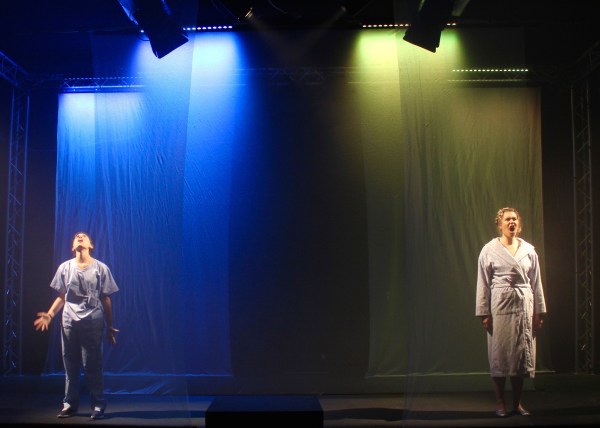
Nick is fearless. Literally, he can’t feel fear. The young man’s father finds this most unsettling and whilst Nick thinks it’s kinda cool, he desperately wants to find his shudder so he can fit in with everyone else in his small coastal town. When a mysterious stranger appears on the beach and offers to help, Nick jumps at the chance. This modern myth by Anna Beecher is a vibrant, young hero’s journey through a dark underworld of a solo performance with good potential.

Daniel Holme tells Nick’s story with sweet, wide-eyed naiveté, making the people he encounters in the big city after his father sends him away all the more threatening. The gang of men with green gloves who claim they will help him find his shudder through increasingly extreme tasks builds suspense and danger to a climax in Beecher’s script that Nick only vaguely understands. An open ending and some unanswered questions are a bit of a letdown, but otherwise her script is a good piece of storytelling.

Holme’s performance does a good job at keeping the audience’s attention, though more dramatic lighting design, projections and/or props would add visual variation and further increase the ebb and flow of his adventure. Beecher’s language contains some gorgeous moments of imagery and dystopia that certainly deserve to be supported further through a strong design concept and a larger space that grants more freedom of movement to Holme.

Skin of the Teeth is a strong character monologue that can work well on its own, but also has scope to develop further into an action-driven, multiple character script. The story is a good concept though in its current incarnation in a small venue, it is limited in its power. Beecher is a promising writer with dynamic ideas who, with more resources, has the power to make even greater impact.

The Play’s the Thing UK is committed to covering fringe and progressive theatre in London and beyond. It is run entirely voluntarily and needs regular support to ensure its survival. For more information and to help The Play’s the Thing UK provide coverage of the theatre that needs reviews the most, visit its patreon.
The Marked, Edinburgh Festival Fringe

https://www.thestage.co.uk/wp-content/uploads/2016/08/THE-MARKED_Theatre-Temoin_image9-700x455.jpg

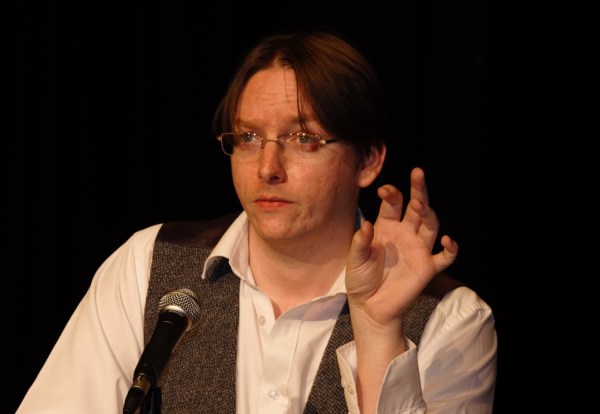
It’s so easy to ignore the homeless people that line the periphery of routine journeys and forget they are just as human as the rest of us, with passions, fears and often troubled pasts. The Marked puts homeless young man Jack at the centre of a desolate, urban landscape populated with pigeons, people who move him on and demons from his past. Masks and puppetry add a richness to his story, but not always warmth. In most of Jack’s encounters, be they real or in his head, he is believably under threat.

Peter Morton’s puppets are sweet and whimsical, with Jack’s pigeon companion being particularly lovely and with an excellent range of movement. Jack as a child has a sadness to him, emphasised further by familial alcoholism that we can assume eventually drives him away from home.

Grotesque masks by Grafted Cede Theatre are skilfully used to differentiate between fantasy and reality, with the haunted, oversized faces ever in the back of Jack’s eyes. Zahra Mansouri’s costumes make these figures larger than life and all the more threatening, rendering Jack helpless in their presence and the audience to empathise.

Devised by the cast of three and presumably with the support of director Allin Conant, the spoken text centres around Jack’s encounters with a homeless couple, Pete and Sophie. Here is where the show falls short: the potential for conflict and tenderness amongst the three isn’t fully realised due to too few, underwritten scenes. Though these human characters ground Jack in reality somewhat, there is also little focus on the dichotomy of reality vs. demons. There is real potential for a fight for Jack’s life or sanity between the two forces, but the script doesn’t capture as much of Jack’s struggle as it could.

Visually, this is a wonderful production that makes some powerful points on the mental health of homeless people. Jack becomes a fully realised person through the creatures that haunt him, but his encounters with other humans don’t do him full justice.

The Marked tours nationally through 2017.

The Play’s the Thing UK is committed to covering fringe and progressive theatre in London and beyond. It is run entirely voluntarily and needs regular support to ensure its survival. For more information and to help The Play’s the Thing UK provide coverage of the theatre that needs reviews the most, visit its patreon.

Love, Lies and Taxidermy and Scorch, Edinburgh Festival Fringe

First loves: awkward, hormonal milestones of young adulthood that make you feel like you’re on top of the world in a bubble that’s just the two of you. That is, unless you’re a trans or gender fluid teen who is still exploring gender identity, or someone with extensive family problems. But issues like these, when married with a youthful story of falling in love, make for some powerful and moving theatre.

Love, Lies and Taxidermy compares falling in love for the first time to living in a film. With narration incorporating stage directions, short scenes reminiscent of quick cuts and a wonderfully ridiculous conclusion, the play feels like a teen romcom, but has enough substance to ensure it isn’t total frivolity. It’s fluffy, sweet and addresses how social class can effect young love.

Set in Myrthyr Tydfil where all road lead to Tesco, Ash and Valentine meet at hospital when they’re both waiting to see if they qualify for paid medical trials. Ash’s dad is on the verge of bankruptcy, and Val’s parents are separated so he wants to send them on a cruise in hope they will fall in love again. The tentatively begin dating, but life has a way of interfering with their time together. Ash has other ideas to earn some quick cash courtesy of an aspiring filmmaker college mate, but devoted Val vehemently opposes them. Cue a mad dash adventure to rescue Ash from her poor choices and live happily ever after.

There are a few lose ends in the narrative that get forgotten in favour of the “boy rescues girl” plot line, like Val’s quest for money for his parents. They could easily be trimmed to get to the point faster, or developed further to make a more fully-formed story.

The cast of three display remarkable energy as they play all the roles. Remy Beasley and Andy Rush are Ash and Val, the young couple who clearly fancy the pants off each other. Rush, though the hero, goes against the stereotypical popular lad who wins the girl through violence and strength. Awkward and geeky, his devotion to the bold and brassy Beasley is utterly adorable. Beasley’s confidence also goes against the romcom trope; she most definitely does not want to be rescued even though she doesn’t want to make the money in the way she has chosen.

The ending, however unrealistic, charms and delights. Though there is no set to portray the described splendour, the text more than makes up for its absence. The intimacy of the Roundabout suits this play well, though a larger venue would give more scope for design.

Scorch takes a different tone from Love, Lies and Taxidermy, though it also has a generous helping of youthful optimism about love. Kez, a bio-girl who dresses as a boy when not at school Orr home, has met Jules online and is smitten despite the “cool dude” exterior. This story has a darker outcome what with the complexities of gender identity and disclosure as it reinterprets the classic coming-of-age tale.

Kez is perky, accepting and generally at peace with her discomfort in a female body. Amy McAllister embodies the role with verve and charisma, making the audience sympathetic to consequences that arise from not telling Jules that she has a female, strap-on wearing body. The character’s good intentions are sweet, but not enough to save her.

Kez grows up quickly over the course of the story, and the Internet gives her a wealth of information to help her explore her gender identity and legal options. Her social media accounts facilitate meeting girls, and it’s all too easy to set up alternative profiles that portray her as a boy. It also helps her find a local support group, so the sword that is growing up in the digital age is well and truly double-sided.

This is a well-formed script with several layers. Whilst it is a powerful piece of storytelling as a solo performance, introducing additional actors to take on other roles would add depth to Kez’s experiences. McAllister uses the space well, though the opportunity to fully engage with the audience is missed.

Both productions are generally excellent examples of storytelling. The differing perspectives on teenage love are delightfully nostalgic and provocative without becoming twee or trite. The Roundabout enhances their intimacy, but limits scope for design and staging. These two plays would be served just as well, if not better, in a larger space that enables them to extend their production values.

The Play’s the Thing UK is committed to covering fringe and progressive theatre in London and beyond. It is run entirely voluntarily and needs regular support to ensure its survival. For more information and to help The Play’s the Thing UK provide coverage of the theatre that needs reviews the most, visit its patreon.