Narcissistic Nativity, Fucking Little Elf Bitch, Rosemary Branch

rsz_nativity-website

After 20 years running the Rosemary Branch, Cecilia Darker and Cleo Sylvestre moved on to pastures new in June this year. Unattended Items, a company with a focus on interactive theatre and design-led work, took over and have been busy programming work that has similar practices to their own.

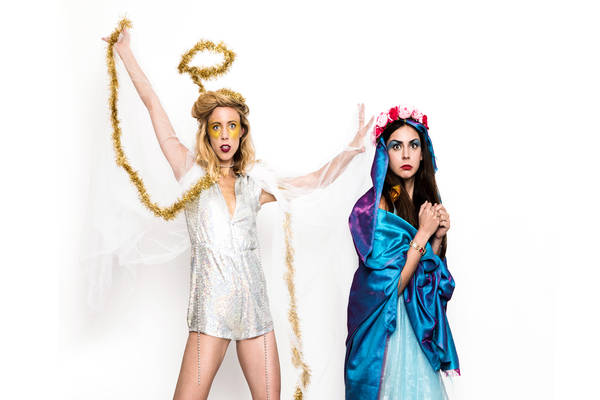
Their Christmas bill of adults-only shows is no different. Urban Foxes Collective’s Narcissistic Nativity is a feminist, live art piece fighting against the patriarchy; Mammalian’s Fucking Little Elf Bitch is a one-woman show on the perils of working in a grotto. Both break down the fourth wall and use non-linear structures, and both need some tweaking for the sake of clarity, but this pair effectively balance current issues and laughs.

Continue reading

Dr Carnesky’s Incredible Bleeding Woman, Soho Theatre

https://cdn0.vox-cdn.com/thumbor/08BLiZi0k-g-w2TYXY9nOkQTz_4=/800x0/filters:no_upscale()/cdn0.vox-cdn.com/uploads/chorus_asset/file/2316126/shutterstock_132379235.0.jpg

From a lectern in the corner of the stage, Dr Marisa Carnesky fights the social taboo of periods. Resembling a character from a Tim Burton film, the PhD holder in menstrual rituals and synchronicity shares her collective research with a group of performance artists she assembled, the Menstruants. Sideshow/cabaret Dr Carnesky’s Incredible Bleeding Woman is a wonderfully quirky manifestation of sisterhood, womanhood and the wonders of the female body.

Every month on the new moon, Dr Carnesky and the Menstruants met on a beach in Southend to develop and performed rituals around their menstrual cycle. The Menstruants come from an array of backgrounds and sexualities, and their rituals are as unique and individual as they are. Through their performances, every woman’s personal experiences with their bodies is validated and celebrated.

The performances on show are distinctive and compelling. There is some spectacle: sword swallower MisSa Blue has a customised set of swords that suit her oesophagus shape each day of her cycle. Some of the work is more reflective and otherwordly, like Nao Nagal’s use of traditional Japanese masked performance. Molly Beth Morossa provides a creepy sideshow element with her twitchy, Victorian high tea. H Plewis performs a visceral movement piece with her menstrual jelly. Rhyannon Styles simply speaks to us directly about her experience of cycles as a trans woman. Fancy Chance, with the rest of the company, performs a phenomenal circus act as a finale, after an empowering, proud sequence of feminine reclamation. All of the acts celebrate female abilities and bodies without aggression.

In between the vulnerable, performative manifestations of female cycles, Dr Carnesky talks to the audience through an array of historical and cultural mores surrounding menstruation. She particularly focuses on myth and symbolism – death and rebirth, shedding of skin and female unity. Her tone is gentle and matter-of-fact; the the content may be revolutionary but she comes across as warm and supportive.

In a show that has the potential to come across as alienating, it is instead welcoming – no one in the audience (men included) seem uncomfortable, and the stories shared on the stage are supported from the house. Instead,this diverse, inclusive variety show is a divine honouring of the feminine mystery and a reclamation of one of the features that defines women, and a showcase of some excellent live artists.

Dr Carnesky’s Incredible Bleeding Woman runs through 7 January.

The Play’s the Thing UK is committed to covering fringe and progressive theatre in London and beyond. It is run entirely voluntarily and needs regular support to ensure its survival. For more information and to help The Play’s the Thing UK provide coverage of the theatre that needs reviews the most, visit its patreon.

Monorogue: Elf Off, Old Red Lion Theatre

https://i0.wp.com/northpoleexperience.com/wp-content/uploads/2014/09/slide-1.jpg

The Salon:Collective’s Monorogue is back again, this time with a Christmas edition. The monologue showcase is now in Santa’s workshop, where perky elf Gingersparkles is interviewing human candidates for a vacancy in the Lapland workshop. Seven lacklustre individuals who can’t otherwise find seasonal employment are created and performed by Salon:Collective actors in this spunky, lighthearted show where the audience gets to vote for the best performer/character. Distinctive characters and good performances are the trademark of this regular event, and the framework around the monologues makes for more palatable viewing.

The set is a simple construction of heaps of brightly wrapped presents, Christmas decorations and toys. It’s easy, cheap and hugely effective in the intimate blackbox theatre. Though perhaps unintended, it is also a lovely juxtaposition to some of the more down-at-heel characters.

The performances are generally good, though some of the characters tend towards stereotypical and miss opportunities for nuance. The standouts are Lucy Gallagher and Louise Devlin’s intense Scottish tomboy Mae, and Angela Harvey’s struggling mum of five Hayley. Rachel Stoneley’s confused but sweet stripper, Jade, is a great way to wrap up the candidates. Laurie Stevens is the adorable Gingersparkles, but she surprises with a ferocious climax that wraps up the evening well.

The scripts have a strong lean towards comedy, which suits the time of year, but some of them lack depth and choose to mock personality traits rather than empathise. Whilst there is nothing overtly offensive and the stereotypes created are identifiable and relatable, there is room for more variation.

Monorogue proves again that they offer an entertaining event that allows actors and playwrights to showcase their talents without taking the more common, in your face approach to self-marketing usually found in showcases. The theme sets the actor/writers a challenge and gives the audiences a needed framing device, and the performances are usually good.

Monorogue: Elf Off is now closed.

The Play’s the Thing UK is committed to covering fringe and progressive theatre in London and beyond. It is run entirely voluntarily and needs regular support to ensure its survival. For more information and to help The Play’s the Thing UK provide coverage of the theatre that needs reviews the most, visit its patreon.
The People Show 124: Fallout, Toynbee Studios

https://i0.wp.com/cdn.paper4pc.com/images/desert-landscape-pictures-wallpaper-2.jpg
Making devised work for the past 50 years, People Show are nothing less than prolific. Their multidisciplinary works are numbered as part of the title; the company’s works now number 132. To celebrate their anniversary, the company’s taken over Toynbee Studios for three days, filling the venue with performances, films and an exhibition celebrating their half a century of work.

People Show 124: Fallout, first performed in 2013, is resurrected here. The piece deconstructs speeches by public figures and adds light, sound and film; the overall effect is one of provocative absurdity – isolated soundbites lose all meaning, even in a world that’s said to be falling apart. This short piece drives its point home quickly and efficiently and stimulates the senses, but with its message emphasising meaninglessness, it soon becomes repetitive.

Everything in the room is white, even the padded floor is powdered with talc to add an additional layer of frost. Pillows attached to the walls evoke a soothing dreamscape. But soon, pulsing colours disturb the peace as the cast of four fiercely deliver snippets of text. The lights are often so bright they are uncomfortable, even though the colours are childlike and fun. The juxtaposition is clever and sharp, and the switch from austere to saturated is an effective one.

The actors’ tone ranges from gentle to antagonistic, with a decidedly post-apocalyptic bent to the text. Projections of sweeping desert landscapes back up the promises of nuclear fallout, though the dreamy atmosphere from the beginning still lingers – what is real, and what is the product of our subconscious? The disconnect from reality diminishes any potential meaning, making the outcome decidedly absurd, even though the intention seems to want to carry more weight.

This colourful world enhanced with gorgeous projections, bright lights and music is integrated  with the text, though there is a lack of development in the core idea of the piece. If real life is has no purpose and we’re better off in a dream because the world is hellbent on destroying us, that’s fine – but a performance telling us that is not an easy thing to execute and in this case, not done fully effectively.

People Show 124: Fallout is now closed.

The Play’s the Thing UK is committed to covering fringe and progressive theatre in London and beyond. It is run entirely voluntarily and needs regular support to ensure its survival. For more information and to help The Play’s the Thing UK provide coverage of the theatre that needs reviews the most, visit its patreon.

Tonight With Donny Stixx, The Bunker

https://i0.wp.com/exeuntmagazine.com/wp-content/uploads/Sean-Michael-Verey-in-Tonight-with-Donny-Stixx-at-The-Bunker-photo-by-savannah-photographic-6.jpg

Donny Stixx is a teenaged magician with boundless dedication to his craft and desperation for fame. Rather than doing things that boys his age normally do, he spends hours honing his skills and tweaking the act he performs at kids’ parties, hospices, churches and for anyone else that will watch. The only thing he ever thinks and talks about is his magic. But Donny’s pretty obviously on the autism spectrum; this combined with his unstable upbringing and lack of an appropriate support system is a particularly deadly combination. Philip Ridley’s 2015 Edinburgh award-winning solo show explodes onto a bare, grey stage in a linguistically vivid documentation of fanaticism and social disorder with a phenomenal performance by Sean Michael Verey.

Verey is an unrelenting force with inimitable energy and charisma that shines through a character who has precious little social intuition. Though Donny is awkward and frustrating, Verey’s performance captivates. Having a totally plain stage that is anywhere and everywhere means it’s entirely on the actor to hold attention – but the performance makes it work and is never, ever boring.

Ridley’s text is dense and Verey races through it; it would otherwise be double the length. Though the pace is exhausting to take in, it’s necessary. The language and imagery richly creates a wonderfully detailed believable world. Director David Mercatali coaxes the nuance from Donny’s biographical story incredibly well despite the speed – the sparsely used pauses are devastating. When the pace finally lets up, it’s like cold air hitting a friction burn.

A clearly foreshadowed conclusion results in awed, uncomfortable silence. After a week that saw the broken American political machine elect an orange fascist for its next president, Ridley’s play is far from comforting. Whilst Verey’s depiction of Donny’s passion is delightful and his performance is nothing short of extraordinary, his vulnerability weighs heavily on bruised and helpless liberal consciences. There is no safety net, and fanaticism is the new normal in this dark play from the innocent days of pre-2016. It’s a hard show to sit through, but absolutely worth it.

Tonight With Donny Stixx runs through 3 December.

The Play’s the Thing UK is committed to covering fringe and progressive theatre in London and beyond. It is run entirely voluntarily and needs regular support to ensure its survival. For more information and to help The Play’s the Thing UK provide coverage of the theatre that needs reviews the most, visit its patreon.

An Inspector Calls, Playhouse Theatre

https://i0.wp.com/www.thegayuk.com/wp-content/uploads/2016/11/An_Inspector_Calls_at_the_Playhouse_Theatre_-Tabitha_Douglas_Ben_Burely_and_James_Hill_-_Photo_by_Mark_Douet-e1479067631695.jpg

Seventy years ago, J B Priestley’s thriller An Inspector Calls was first staged in the UK. Twenty-five years ago, Stephen Daldry’s acclaimed, progressive production opened at the National. His approach shook up the insular, drawing room script in order to highlight the selfish elitism of the middle and upper classes and has been regularly staged since 1992. Now, in a post-Brexit, post-Trump 2016 punctuated by hate crime, polarised political views and gaping social inequality, Daldry’s production about the death of a working class woman known to all members of a posh family still feels relevant. Though there are some clunky moments and miss-matched performance styles, the crusade for accountability and justice that drives the plot keeps this play firmly in the present within a stunning production concept.

Daldry’s interpretation manifests through Ian MacNeil’s design that takes much of the action out of the Birling family home and into the dark, wet street below. Copious fog and treacherous cobbles interfere with their joyous engagement celebrations and ruling class entitlement, endowing the inspector with more power as the Birlings are actually destabilised. The family and their guests are drawn out of the warm comfort of their stilted home that quickly becomes remote and inaccessible, and made to face the dirty secrets that Inspector Goole extracts from each of them in a landscape of damp despair. As their individual facades collapse, so does the home that protects and elevates them from the working classes, the people of the streets. Some of the set transitions are a bit mechanical, but it’s otherwise a powerful visual metaphor and one that’s excellently executed.

The cast’s performances are good, though there are a few different styles. Barbara Marten’s matriarchal Sybil Birling is comedically melodramatic, earning a laugh whenever she speaks. Considering the gravity of the play’s message, this is a strange choice and one that clashes with the largely naturalistic work from the rest. Liam Brennan is an excellent Inspector Goole, earthy and immoveable. Clive Francis is a somewhat frail Arthur Birling, though his vocal power and characterful rage keep him in constant battle with the inspector.

This visually striking production is still relevant what with Priestley’s attacks on the British class system and the casualness with which the upper classes and government treat the lives of the working class and those down at heel. The energy, pace and tension keep it from descending into stale playacting that dances around a real, serious problem and the high production values give it popular appeal and spectacle. With hope, its wide reach will have a big impact and remind audiences that the unseen, working girl in the play is the entire population of impoverished people in this country at the mercy of those with more financial power.

The Inspector Calls runs through 4 February.

The Play’s the Thing UK is committed to covering fringe and progressive theatre in London and beyond. It is run entirely voluntarily and needs regular support to ensure its survival. For more information and to help The Play’s the Thing UK provide coverage of the theatre that needs reviews the most, visit its patreon.

The Beggar’s Opera, Brockley Jack

tbo-006

By guest critic Michaela Clement-Hayes, @_mickychaela

London in 1728 was a dark and dangerous place. Highwaymen, hangmen and harlots roamed the streets and life was hard. John Gay’s satirical musical The Beggar’s Opera steps away from the traditional romanticised stories of heroes and villains, unrequited love, choosing instead to tell a tale of rogues and murderers. And a little bit of love, for good measure.

Polly Peachum (Michaela Bennison) has defied her parents and married the notorious highwayman Macheath (Sherwood Alexander) However, he has most certainly not forsaken all others. Wanted for his crimes, he leaves Polly with a promise to return.

Lazarus Theatre have taken David Gay’s story and brought it into the 21st century with a bang. Literally – there are party poppers. It’s a whirlwind of a tale – quirky and fun, transcending the centuries and combining modern day with the past.

Performances are strong from everyone, with the cast acknowledging the audience with intense stares throughout, involving them discreetly yet hardly breaking the fourth wall. The staging is simple yet effective, with ladders, coloured masking tape and a few pieces of furniture whisked on and off, and the cast adopting masks and a few props as they switch from key character to chorus.

Singing is good, but feels a little strained in places. However, this does not detract from the story (adapted and directed by Ricky Dukes), and the new lyrics (penned by Bobby Locke) are both clever and amusing.

It’s fun, fast-paced and funny – a very enjoyable show.

The Play’s the Thing UK is committed to covering fringe and progressive theatre in London and beyond. It is run entirely voluntarily and needs regular support to ensure its survival. For more information and to help The Play’s the Thing UK provide coverage of the theatre that needs reviews the most, visit its patreon.

The Last Five Years, St James Theatre

https://www.thestage.co.uk/wp-content/uploads/2016/11/Samantha-Barks-as-Cathy-in-THE-LAST-FIVE-YEARS-at-St-James-Theatre.jpg

The most moving performances are often largely removed from our day-to-day lives. But every so often you come across a piece of theatre that, whilst it may not be the objective best thing you’ve seen, encapsulates your life so well that you can’t not fall in love with it.

The Last Five Years is good though, even if it’s been a favourite of mine since I discovered it as a student back in 2002. The Jason Robert Brown musical, now 15 years old, is a wonderfully simple (albeit heteronormative) tale of boy and girl meeting, falling in love and falling apart. Framed by the late 90s NYC arts world (that I watched as a teenager in the suburbs and later joined as a drama school student), his story is told in chronological order and hers in reverse. There are two performers; the only time they interact directly is at their wedding, making the songs function more like reflective monologues. Though there is hardly any book, Brown’s lyrics tell the story clearly and sensitively. Dynamic staging and committed performances, like those in this anniversary production that Brown directs, are necessary to keep this quirky little musical from falling flat. It’s a powerful, disarming show when executed effectively, and this production may well be its new definitive.

Jamie is a writer and Cathy is an actor. They are 23 when they meet; neither has had any success yet but both are wide-eyed, bushy tailed, and ready to fall in love. Jamie quickly becomes a bestselling novelist whilst Cathy is left in his wake, waitressing and doing summer theatre in the depths of the Midwest. It’s within this career disparity that their relationship deteriorates, and I find Cathy painfully echoes my own life as a failed actor. The isolation and jealousy that Brown fosters in his songs is wholly believable and all too familiar.

Both characters are flawed but generally likeable and despite reservoirs of love, it’s not enough to save their marriage. Though both characters can be irritating in their own way, their good intentions and fundamental incompatibility also ring true to anyone that’s endured the heartbreak of an ended relationship or marriage. Here is yet another parallel to my past, but this time I’m more like Jamie – I married young and naive and was divorced by 30 as a result of my own mistakes.

Samantha Barks and Jonathan Bailey are Cathy and Jamie. Barks is a stronger singer, but Bailey’s full of charisma and confidently flirts with the audience – it’s a lovely touch. Both have great emotional range and their chemistry is undeniable. Their performances, layered with Brown’s storytelling, reduces many to tears. Sniffling and eye wiping is plentiful in this intimate house.

The small scale of the show is fleshed out with some delightful video design by Jeff Sugg and Derek McLane’s set. These provide the context that’s missing from the script and grounds their story in a real time and place, though its Gabriella Slade’s costumes that indicate the 1990s setting. The videos are simple and cartoon-like, a sweet and charming addition that Brown underuses.

Though more of a song cycle with hardly any spoken dialogue (if you were to listen to the soundtrack you would hear almost the entire show) and arguably rather insubstantial, this one-act show has the ability to burrow into the depths of your guts. It’s a heartfelt love letter to the countless New York City artists doing their best to get by and find meaning in each other, and to everyone that’s every fallen in and out of love. The poignant, timeless story of youthful love and loss has the sorts of songs that you play on loop whilst crying in bed with a heart broken by your own failures (I’ve done this more than I care to admit), and those you can dance to after a brilliant first date or a career win. With the excellent performances and slick design of this production, it’s not one to miss – even if you cry through it.

The Last Five Years runs through 3 December.

The Play’s the Thing UK is committed to covering fringe and progressive theatre in London and beyond. It is run entirely voluntarily and needs regular support to ensure its survival. For more information and to help The Play’s the Thing UK provide coverage of the theatre that needs reviews the most, visit its patreon.

Possibilities, Theatre N16

https://www.tcmworld.org/wp-content/uploads/2015/12/fork-in-the-road-1.jpg

What if your life has endless parallel possibilities? What if Sliding Doors is true? What if every choice you make leads to your timeline fracturing into endless paths that just keeps multiplying? Possibilities frames this proposal with two people, displaying nearly an hour’s worth of incarnations of their relationship. It’s a nice idea, but one that doesn’t develop any of the individual moments or stories presented. With inconsistent performances and an idea that isn’t fully explored, Possibilities feels like just that – but without the script’s potential coming to fruition.

Jamal Chong and Kate Gwynn take to some scenes better than others. Their intimacy is awkward in some scenes, but their flirtation and sense of play in others is sweetly genuine. The inconsistency is frustrating, as the potential for great performances is there. Chong is also the writer and director – the choice to wear this trio of hats is undoubtedly the root of the issues with this play and production.

The design is minimalistic and functional, with monochromatic chairs and a bench being arranged differently for each scene. Switching on clip-on coloured lights one by one as an introduction is a nice visual touch, but one that doesn’t link to the script in any discernible way.

Other than an interesting question posing as a concept, Possibilities falls short of taking a stance on the impact such a world would have on the individuals that it places under a microscope. The rejection of a narrative arc in favour of a collection of scenes only related through their characters actively prohibits development of this piece, and there is a pronounced absence of dramaturgy. With a bigger creative team and any sort of answer to the concept question, Possibilities would be become a more well-formed reality.

Possibilities runs through 26 October.

The Play’s the Thing UK is committed to covering fringe and progressive theatre in London and beyond. It is run entirely voluntarily and needs regular support to ensure its survival. For more information and to help The Play’s the Thing UK provide coverage of the theatre that needs reviews the most, visit its patreon.
Howl, Rosemary Branch Theatre

https://i0.wp.com/egyptiantheatre.org/wp-content/uploads/2012/08/DSC96451.jpg

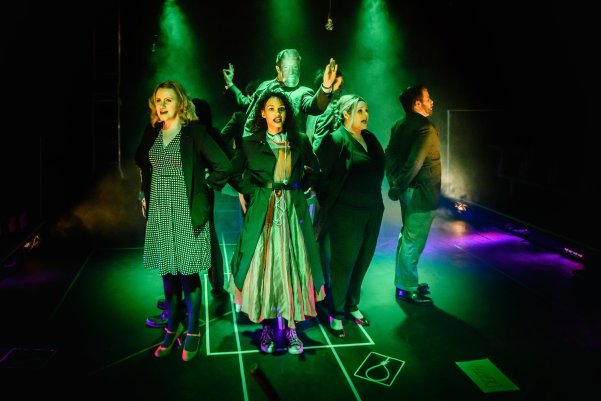
With Halloween becoming more and more popular this side of the pond, horror theatre and live events are proliferating. The London Horror Festival is bigger than ever, new scare attractions appear all over the country every year and independent events like Frissonic’s Howl expand the otherworldly and terrifying offers for thrill seekers this time of year. A site specific, immersive performance for an audience of six, Howl is a considered, effective performance that induces plenty of jumps. Though the story of a disappeared sister and mysterious voices is patchy, it is well delivered, and combines audience manipulation with technology to create a delightfully creepy event.

The choice of a small audience generates fear from the beginning – there is less protection with fewer people, particularly when paranormal investigator Rory places us on isolated chairs around a large, long-abandoned storage room. We are there to help Rory look into a something he heard when he was recently alone in the theatre, and we use sound to try evoke it again. Wireless headphones, increasing pace and anxiety, and customised audio content create heavy tension and uncertainly ripe for scares.

The ending in a different room is too rushed and betrayed by the lack of a full blackout. Though there is a clear resolution, the reasoning leading up to that point is never fully explained. How does this voice connect to Rory’s sister who disappeared all those years ago? How did we find him and decide we want to help? Rory is very much a character of the present, but frustratingly little of his past is revealed.

Frissonic nail the scares in Howl with their tech and small-audience approach, but adding flesh to the skeletal story will hugely improve it. Currently running at 40 minutes, another 15 or 20 minutes of text will make this feel more theatrical and less reliant on the scares.

Howl runs through 31 October.

The Play’s the Thing UK is committed to covering fringe and progressive theatre in London and beyond. It is run entirely voluntarily and needs regular support to ensure its survival. For more information and to help The Play’s the Thing UK provide coverage of the theatre that needs reviews the most, visit its patreon.