The Doctor in Spite of Himself, Drayton Arms Theatre

The Doctor in Spite of Himself (c) Ulysse Beauvois (3)

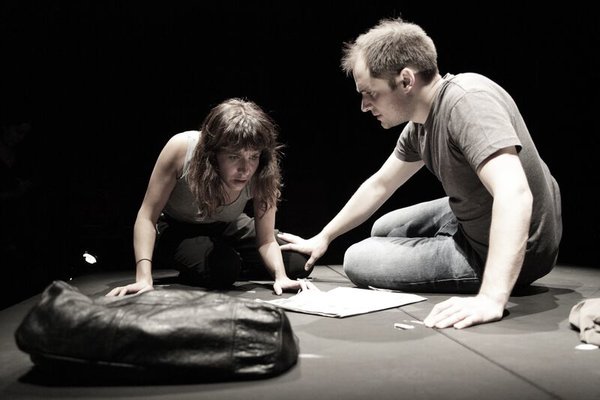
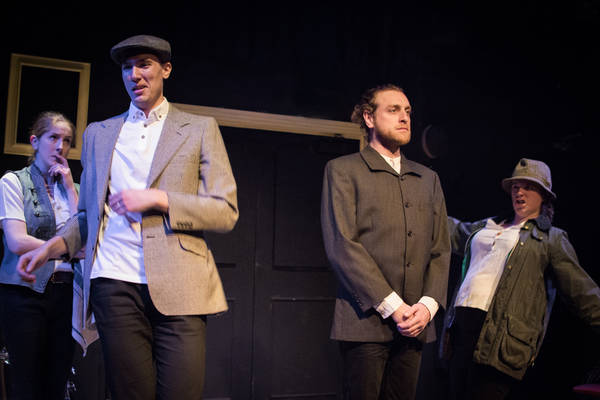
When the abusive, drunken woodcutter Sganarelle beats his wife one time too many, she takes advantage of passing strangers looking for a doctor to cure a young woman’s mysterious illness. Telling them she knows just the man, an eccentric but renowned man of medicine, sets the ball rolling on an absurd adventure of lust, remorse, and blagging it. Exchange Theatre, a French company based in London, have adapted Moliere’s The Doctor In Spite of Himself into a 75-minute contemporary version loaded with metatheatre, energy and good leading performances from a French cast. Plenty of slapstick, detailed design and Shakespearian influence make this a fun, easy to watch adaptation of the French classic.

Actor-director David Furlong plays Sganarelle with a goofy, watchable charm. His undeniable charisma is at odds with the unlikeable character, though his comeuppance and subsequent reform are a somewhat satisfying narrative despite the anti-feminist premise from the 1660s. Furlong is by far the strongest in the cast, but the others are generally good. Anita Adam Gabay as the mostly mute Lucinda exudes a sweet innocence, particularly in the opening montage where she discovers her betrothal to a man she doesn’t love. Matt Mella is the hilariously dumb Lucas, able to evoke laughter with a well-timed pause and a blank look. Some of the actors find it hard to connect to the language in English at times, but these jarring moments are fairly infrequent.

The edited plot occasionally feels rushed and overly compact, though it’s easy to follow and the translation uses relatively modern English. The excused wife beating is uncomfortably old fashioned, but at least it’s ridiculed – along with medicine and the gullibility of the upper classes. These themes translate fairly well to the modern day and English culture, especially considering the Shakespeare-esque comedy sequences that are likely to have drawn on the same commedia del’arte heritage that Shakespeare did. Furlong updates even further by adding in discreetly funny elements of self-reference, even if they don’t always work. The bust of Moliere as a weapon is cute, but characters dictating text to others from an anthology of Moliere plays isn’t as effective and causes energy to drop.

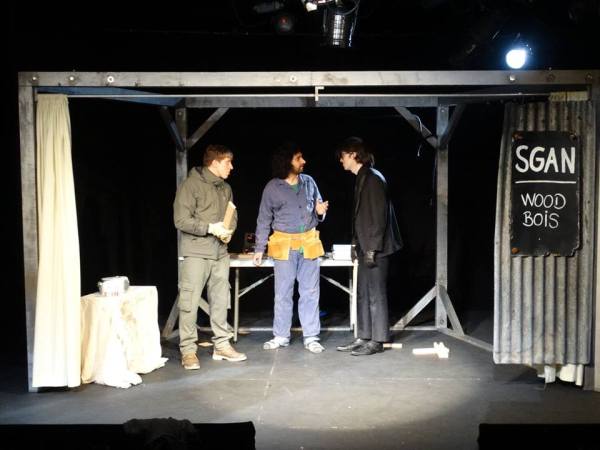
The design, presumably also by Furlong, incorporates an Elizabethan stage-within-a-stage to emphasise the metatheatre and clarify location. It’s clever and looks great, though it causes some difficulties with sightlines and narrows the playing area. Furlong’s overarching concept of using the metatheatre to create distance is a strong one what with its acknowledgment the absurdity of the story and the plot points that don’t work in a present day context.

This production of The Doctor in Spite of Himself is a funny, palatable adaptation of Moliere for London audiences. It’s a good laugh, a good length and has good performances. The company’s talent and vision is highly commendable and deserving of larger production values; their commitment to bringing audiences high quality French theatre in intimate venues makes them one to watch.

The Doctor in Spite of Himself runs through 17 July with performances in both French and English.

The Play’s the Thing UK is committed to covering fringe and progressive theatre in London and beyond. It is run entirely voluntarily and needs regular support to ensure its survival. For more information and to help The Play’s the Thing UK provide coverage of the theatre that needs reviews the most, visit its patreon.

Twelfth Night, Hope Theatre

rsz_web_size-93

Fringe Shakespeare can be terrible, brilliant and everything in between those two ends of the spectrum. The better productions are vivacious and effortlessly handle Shakespeare’s language whether or not they are updated to a more modern setting, edited heavily or otherwise adapted with a concept. Thick as Thieves’ Twelfth Night is one of these good ones. Four versatile actors play all the parts in this bouncy interpretation that incorporates onstage character changes, plenty of music and audience interaction, and some clever character interpretations. At two hours long with an interval, the text doesn’t feel butchered though the interval isn’t particularly needed. With few faults, this is one of the best Twelfth Nights of recent fringe Shakespeare productions.

Company co-founder Nicky Diss, in an act of insightful  casting, plays Viola and Toby Belch. Her Viola is intense and boyish; her Belch is a gruff, posh older man. Diss’ presence and versatility are things of wonder, but she doesn’t outshine the rest of the cast. Her fellow co-founder Thomas Judd gives a Sir Andrew Aguecheek that is hapless and posh, a delightful interpretation that works very well; he doubles as a townie Orsino. Completing the quad are Oliver Lavery, particularly excelling as a hippy Feste and slimy Malvolio, and Madeliene MacMahon as a wonderfully frivolous Olivia. The four are all exceedingly good at creating clear, contrasting characters and have an energy that goes well beyond the walls of the tiny Hope Theatre.

There no set to speak of, which is fine for this play that changes location every scene. Costume pieces and musical instruments pepper the walls instead, giving easy access for changes. Hats, jackets and waistcoats over a uniform of black trousers and white shirts assist with character differentiation. It’s a simple but effective device to give visual variation and the lack of set reflects original practice. Occasional fiddly changes distract from the action on stage, but these moments are rare.

Some interesting alterations occur to facilitate the four actors, particularly the Sir Topas/Malvolio scene. Rather than Feste duping the prisoner, the lines are split between Sir Andrew, Toby and Maria. It’s believable enough despite vocal differences and makes no difference to the story.

Of the fringe Shakespeare that’s playing at the moment, the performances make this shoestring Twelfth Night a great one. Thick As Thieves are a talented, instinctual bunch certainly worth watching.

Twelfth Night runs through 30th April.

The Play’s the Thing UK is committed to covering fringe and progressive theatre in London and beyond. It is run entirely voluntarily and needs regular support to ensure its survival. For more information and to help The Play’s the Thing UK provide coverage of the theatre that needs reviews the most, visit its patreon.

Beetles From the West, Lion & Unicorn Theatre

rsz_img_5808

Half of the UK population born after 1960 will be diagnosed with cancer during their lifetime. Considering this figure, cancer rarely features as the primary subject matter in theatre, though last year there were several productions that put it at the forefront. I caught two of them in Edinburgh: The Eulogy of Toby Peach and Goodstock. James Hartnell’s debut play, Beetles From the West, is also driven by a diagnosis. Set in a hospital waiting room, immature Boyd waits with his girlfriend for news of his father’s health after a sudden collapse that’s left him unconscious. A young doctor’s attempts to explain what’s going on are aggressively questioned as Boyd comes to terms with what it all means. Hartnell’s script, obviously early career from its unwieldy text and underdeveloped characters, spotlights the importance of cancer screenings but it needs more development to have greater impact.

A combination of flowery, metaphor-filled monologues directed to the audience and simplistic scenes between the characters attempts to show range, but they are so dramatically different that they seem spoken by different characters. Dialogue paints Boyd (Ryan Penny) and his girlfriend Jenny (Amy Doyle) as immature and ignorant young teenagers. Their monologues have a more mature gravitas, but these contrasting tones don’t reconcile. The transitions in the writing are abrupt and jarring, creating an unconvincing baseline reality. Hartnell has a sense of dramatic arc and a satisfying ending that suits an awareness piece, but individual scenes and monologues sit clumsily within it. The script does manage not to preach, though.

There’s little subtlety or depth in the characters despite their dialogue, but Penny, Doyle and Matthew Marrs as the doctor attack them with gusto. Penny also directs, and favours heightened performances – though this might suit the language, it clashes with the thematic content. It’s an interesting choice, but not one that consistently works. There are some moments of good chemistry, particularly when the doctor reveals details of his own past – though highly unprofessional and unlikely to happen in the real world.

Beetles From the West shows cancer isn’t a battle, it’s a disease we are just as likely to get as not. It reminds us to monitor our mental and physical health and have symptoms investigated, something men are more likely to neglect than women. This is definitely a men’s health play, though it doesn’t alienate women. It’s just a shame that the script doesn’t do the themes justice or give the performers properly developed, meaty roles.

The Play’s the Thing UK is committed to covering fringe and progressive theatre in London and beyond. It is run entirely voluntarily and needs regular support to ensure its survival. For more information and to help The Play’s the Thing UK provide coverage of the theatre that needs reviews the most, visit its patreon.

Red Riding Hood, Preston Continental

rsz_12299318_10153680692062789_6332526754861081608_n

What makes the story of Red Riding Hood so enduring? Is it the clever heroine? Is it the metaphor for growing up? Is it the violence and gore? Horse & Bamboo choose to focus on the colour red and its symbolism in their touring Red Riding Hood. Two actors, Nix Wood and Alex Kanefsky, are actor-storytellers-puppeteers who endow the story with a richness and life that appeals to their young audience as well as their families. The company’s lo-fi touring aesthetic uses a surprising amount of puppets at different sizes, masks and costume to keep the kids’ attention. It’s a bit hodgepodge on the surface but there’s a good amount of layers to this piece: meta theatre, storytelling, playing at the characters, and embodying them. Wood and Kanefsky fluidly switch between the styles that initially feel excessive in their quantity, but the children are so absorbed in the story that cannot be deemed as anything but highly effective and engaging.

The main focus of the story is the dynamic between Red and the Wolf. Mum and Grandma make appearances, but they don’t waste any time getting to the woods. The deeper Red gets, the larger the characters become – a great device. Initially, a tiny Red and mum are reading bedtime stories in a dolls’ house, eventually Wood plays Red in a full mask and the wolf is a nearly life-sized puppet with excellent movement and expression in the head and neck. Music and animated projections add additional detail to Wood’s controlled, emotional physicality communicating the unspeaking Red’s inner life. The wolf and Red focus results in a reinforcement of the “don’t trust strangers particularly if they seem nice” moral, which works for a children’s show but is quite a shallow interpretation in a production that has such depths of performance technique and style.

Red’s cloak is a dark, rich red that stands out beautifully against the rest of the set. Wood sets up red as her favourite colour as she chats with the entering audience pre-show; it’s lovely to watch. Kanefsky is goofy and warm, and loves cakes. This trait follows his characters through the rest of the story. The set is made of abstract blues and greens, inspired by Paul Klee’s art (my initial association was with Kandinsky’s work). Though the idea of starting with visual art for a way into a concept is a common one, the abstract set design clashes with the concrete realism of the puppets and mask, and the animation style was the starkness of shadow puppetry.

As children’s theatre goes, Horse & Bamboo’s Red Riding Hood is more sophisticated than it appears. Despite the moralizing, the craftsmanship and performance skill can be appreciated and enjoyed by all ages. Knowing that Horse & Bamboo are a touring company with just two actors makes their work all the more impressive. An excellent production for families at any time of year, too.


The Play’s the Thing UK is committed to covering fringe and progressive theatre in London and beyond. It is run entirely voluntarily and needs regular support to ensure its survival. For more information and to help The Play’s the Thing UK provide coverage of the theatre that needs reviews the most, visit its patreon.
Torn Apart (Dissolution), Theatre N16

rsz_1broken_heart_by_chain_saw

Love is one of the best things in the world, or the worst. It feels like floating, butterflies, warmth and fuzziness, or being trapped in a cage with no way out. Everyone wants to love and be loved, but when it backfires, the effects are devastating. For life, sometimes. Torn Apart (Dissolution) presents three interconnected relationships across generations and international borders. These people are broken at worst or dysfunctional at best, which makes for some good dramatic tension but the playwright BJ McNeill’s structure, style and storyline deteriorates towards the end. Some lovely set-piece scenes, a few good performances and a powerful set design help offset these issues, but new company No Offence Theatre need to continue developing their ideas in order to better showcase them.

The international company founded by two actors, Australian Hannah Kerin and Polish Natazja Somers is admirably diverse, and the play suits their strengths well. Complimented by Simon Donohue and Elliott Rogers, they form two couples that are related but never met. Rogers, at only twenty years old, possesses a presence and rich emotional range rare in a performer so young. He is excellent contrast to his carefree girlfriend Casey (Kerin) and the two fill the intimate Theatre N16 wonderfully. Somers and Donohue as Alina and an unnamed soldier have a more mature, world-weary energy that add another layer of contrast. Less developed are scenes with lesbian couple Holly (Katherine Eskenazi) and Erica (Monty Leigh), but they create a rare and commendable female-strong cast. The action flips between these three couples’ stories, revealing their connection at a good pace.

Szymon Ruszczewski’s set is simple but evocative. A bed with white linens sits in the middle of the stage, inside a white cube with threads creating walls the audience can see through – or thin bars, trapping the unhappy couples inside a generic, characterless bedroom. Ruszczewski has also designed the lighting, which is the most successful plot I’ve seen in this low-ceilinged theatre with several nooks and crannies that tend to cast stark shadows.

McNeill also directs. There’s a good use of diagonal lines so all sides can see, but some odd choices as well. Gratuitous female toplessness doesn’t add anything to the story. If the point is that the audience is witnessing private, intimate moments, why isn’t everyone naked when they’re having sex? He also doesn’t include a curtain call; this is incongruent with the naturalistic style of the piece that has a literal fourth wall. Several of the characters toy with the strings that make up the set walls, which makes their meaning jarringly ambiguous – are they walls, or are they bars, or are they just strings? Structurally, the last couple of scenes change style, and neither develops the plot. Ending with the last soldier/Alina scene would be abrupt, but a reinforcement of the horror that lurks in some relationships.

There is definite potential in this new company and their creatives, as well as scope to continue developing and refining their work. Their goal to create truly international work not limited by where their artists are from is a wonderful one that will garner them more attention with the overall increase in quality of their work.


The Play’s The Thing UK is an independent theatre criticism website maintained voluntarily. Whilst donations are never expected, they are hugely appreciated and will enable more time to be spent reviewing theatre productions of all sizes. Click here to make a donation with PayPal.

Claustrophobia, Hope Theatre

rsz_claustrophobia_at_hope_theatre__lgpr

I imagine getting stuck in a lift is pretty high on the list of “Worst Things Ever.” Well, it’s obviously not as horrible as the death of a loved one, terrorism, cancer and a host of other things, but in terms of scary experiences that can ruin your day, it’s definitely up there. And, the longer you’re trapped, the worse it gets. In Claustrophobia, Aidan and Rachel are on their way home when the lift their in stops moving. As minutes turn into hours, their phones run out of battery and they run out of food and water. Mental and emotional deterioration sets in.

Playwright Jason Hewitt cleverly breaks down the play’s structure as the characters do the same, and employs an ending device that creates ambiguity and questions about what is and isn’t real. Though the script addresses the crisis effectively through its structure, the characters lack development and some of the scene transitions are clunky. Director Sharon Burrell does an admirable job with this well-performed two hander in an intimate space, but elements of the script let it down.

Michael Cusick and Natasha Pring play defensive, closed characters that don’t give much away about themselves for most of the show. They’re damaged people and often quite rude to each other, but their language conceals the inner workings of their minds. Their vulnerability comes through in abstract moments later in the play. Both attack the roles with commitment and energy that is amplified on the small, in-the-round stage and are a pleasure to watch.

Lighting by Tom Burgess and his projections (co-designed with Burrell) are rich and visceral during the character’s expressionist and dreaming moments. The projected video is abstract and wonderfully evokes specific moods that the lighting matches. This tech augments the language and adds clarity to sections of the script that veer from the previously established naturalism, but the transitions between these two styles are abrupt, and never fully explained; there is an unsatisfying lack of connection to the characters’ real life.

This is Hewitt’s first full-length play and even though it needs work, it shows his capacity for creative thought and a confidence to play with form. Burrell’s use of the space and staging is excellent and supports the script’s ideas, as do Cusick and Pring’s great performances. Though there are some issues, this is a polished production that shows promise.


The Play’s The Thing UK is an independent theatre criticism website maintained voluntarily. Whilst donations are never expected, they are hugely appreciated and will enable more time to be spent reviewing theatre productions of all sizes. Click here to make a donation with PayPal.

Hello Again, Hope Theatre

https://i0.wp.com/grumpygaycritic.co.uk/wp-content/uploads/2015/10/Hello-Again-1402b.jpg

Knickers, bras and other vintage undergarments (oh my!) dangle from the Hope Theatre ceiling in dim light, the discarded ghosts of sexual encounters long past. Arthur Schnitzler’s 1897 Reigen, or La Ronde as it is more commonly known from the French translation, is reinvented in musical form in Michael John LaChiusa’s early 1990s Hello Again. Not content with the original story, LaChiusa spreads Schnitzler’s shags, blowjobs and wanks over the 21st century, updates some of the characters, includes gay relationships and adds a nearly continuous score mostly of duets, with musical influences from a host of eras. The sex is seen rather than just talked about, but otherwise Schnitzler’s format is replicated. Five actors each takes two characters and accompanied by a solitary keyboard, create an intimately filthy but strangely moving chamber musical in one of London’s newest pub theatres.

Hello Again, though titillating, also looks at the desire for sexual satisfaction through entirely unromantic, desperate scenarios. In ten short scenes, we see an array of social classes, professions and sexualities get their jollies before they run out of time; there’s the married housewife in her affair with a student, the soldier and the nurse before he ships out and the gentleman and cabin boy on the sinking Titanic amongst others. One-off and long-running relationships are accompanied by a range of musical styles on a bare bones set, but the minimalism means nothing is held back and it’s practically in your lap if you’re in the front row. Though there’s plenty of bonking, little is seen – a bum here, cleavage there; the acts themselves are staged realistically rather than stylized or hinted at by director Tania Azevedo. In our porno-fied modern culture where hardcore images and video are a couple of clicks away, to show the grunting and thrusting act without the bits strikes an interesting balance between honesty and discretion. With the audience split over three sides, more diagonals could have been used in the staging to improve sightlines for everyone, but otherwise the small space with no backstage is used well.

LaChiusa keeps the scenes short, but this enhances the immediacy and primal nature of sex. There are some good numbers, but the hodge podge of styles prevents much in the way of recurring motifs. The settings and characters are clear and believable, though their brevity needs the characters to get to the point quickly. As we don’t really get to know these people before us, they become an everyman of their character type: they are us, and we could easily be them. The ensemble cast is consistently good, with newcomer Isabella Messarra and veteran Miles Western giving the most striking vocal performances. Messarra’s Nurse is a wonderful force that literally dominates the posh student she cares for, Western is the smug senator exploiting a beautiful but lonely film star.

This is an excellent and largely faithful adaption of Schnitzler’s play that doesn’t shy away from explicitly prurient moments all sexual human beings can relate to. LaChiusa’s characters speak to all of us, even if his music is less satisfying. Azevedo’s direction and multi-roll casting suits the piece, as the intimate venue fits this infrequently staged and rarely seen musical.


The Play’s The Thing UK is an independent theatre criticism website maintained voluntarily. Whilst donations are never expected, they are hugely appreciated and will enable more time to be spent reviewing theatre productions of all sizes. Click here to make a donation with PayPal.

Boat, Theatre N16

BOAT, Theatre N16 (c) Shawn Soh (1)A lot of firsts are happening in Balham theatre at the moment. Theatre N16 has moved from N16 to a new home in SW12, The Bedford Pub. There is little theatre in the immediate area – Tooting Arts Club is further down the Northern line, Clapham and Stockwell both have venues closer to town, BAC is a bit of a trek and there’s a new theatre tentatively in the works in Streatham, but that’s it. Their inaugural production in their new home is first play Boat by poet Kiran Millwood Hargrave; it’s also producer PIGDOG’s debut production. Hargrave’s text uses thickly layered metaphor to tell 14-year-old Girl’s experience of human trafficking. What starts off as an interactive, childlike show soon reveals the sickening underbelly of cities and towns around the world.

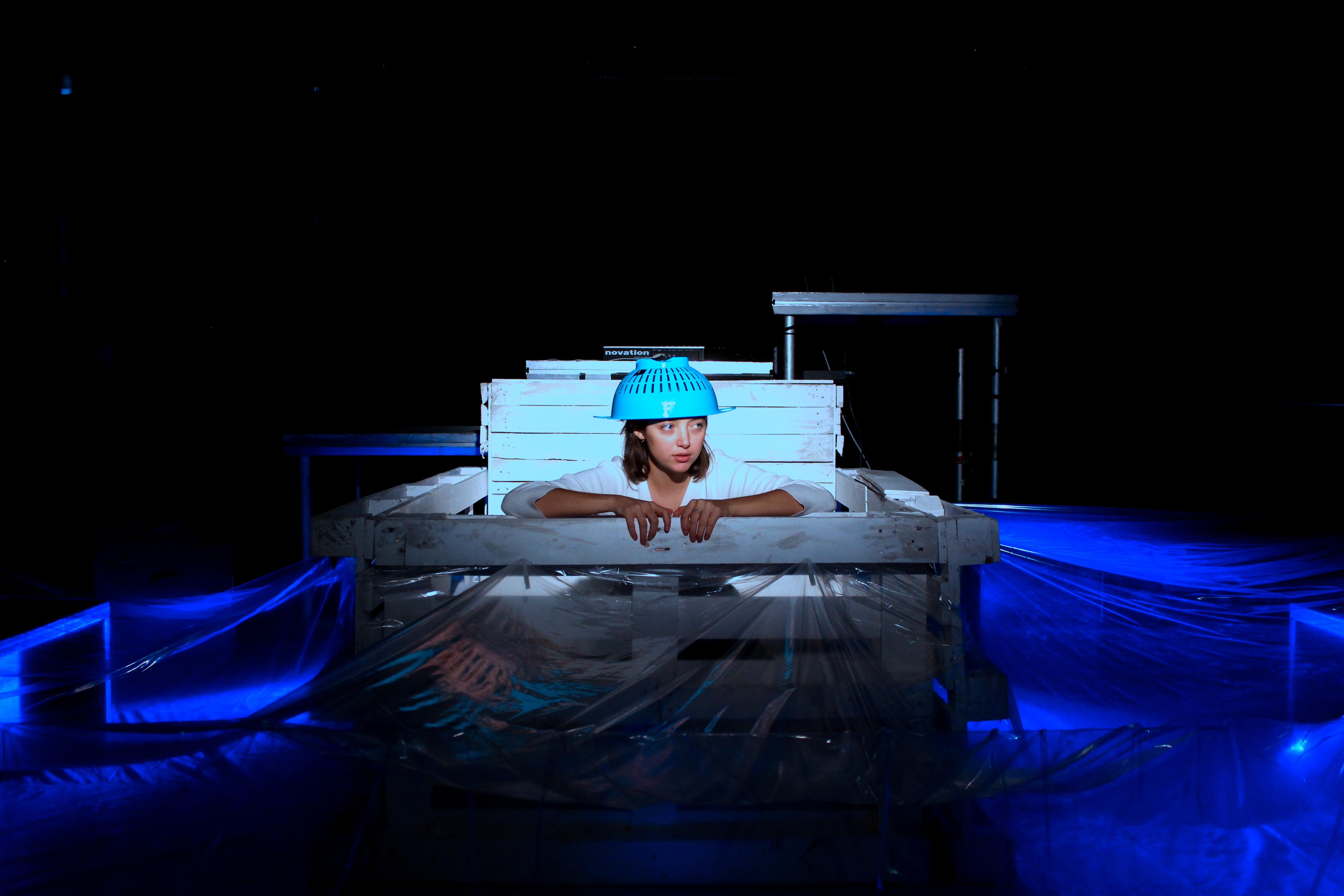
“Jellyfish of Sound” Jethro Cooke opens by asking the audience to create some effects that he proceeds to use with others through live mixing. This beginning should indicate that sound is a dominant feature throughout, but it only appears sporadically, and quietly, for the rest of the performance. Instead, the focus is on the story of Girl (Pia Laborde Noguez), on a Beckettian journey with no apparent beginning or end. She is 14, on a small drifting boat. Her Twin (Cristina Catalina) is with her and she keeps herself entertained with visits from the increasingly possessive Turtle (Matthew Coulton) and challenging Gull (Grabriele Lombardo). As Twin’s appearances become more rare, and Girl measures times in the phases of the moon and plans adventures with Gull to find the moon on the seabed, her boat of white pallets and surrounding sea of plastic sheeting abruptly collapses, transforming into a bedroom. Twin, unspeaking and inert, lays draped across the headboard with clay covering her face. Only the clay represents something else, as do Turtle and Gull, and oh god, the realization of her actual reality is horrifying. Girl reminds us that we can pretend none of this happens in the world, as “you believe what you want to believe” and traumatized people will construct an alternative reality in their heads as an escape, but that doesn’t make sex trafficking, child prostitution and refugees cease to exist.

Hargrave’s language is naturally that of a poet’s, but the transitions are abrupt and obvious, announced by the Jellyfish of Sound. The upstairs space in the Bedford is versatile and a good size, but the low ceilings challenge conventional lighting. As potent as the play’s message is, the script imbeds the real story so deeply that it’s easy to take it at face value, or transpose it onto the refugee boats that fill our oceans and our news. But to do so leaves large, logical holes in their world and dilutes its potency. Though a worthy first production, it feels a bit rough around the edges with some moments of vague writing despite good performances. PIGDOG and N16 clearly have great ideas, and this is a wonderful space to explore and develop them in.


The Play’s The Thing UK is an independent theatre criticism website maintained voluntarily. Whilst donations are never expected, they are hugely appreciated and will enable more time to be spent reviewing theatre productions of all sizes. Click here to make a donation with PayPal.

Home Free!, London Horror Festival

CRvG0L4WwAA3jO7Siblings Joanna and Lawrence live in 1950s New York City, a place brimming with promise and excitement for its younger residents. They don’t take advantage of it, though. Lawrence never leaves their little apartment; instead he lives vicariously through Joanna’s “adventures” to the market and her encounters in the corridor with their landlady “Pruneface” who has said they need to move out soon. Pruneface doesn’t like that Joanna’s pregnant, and with good reason. It’s Lawrence’s baby and the two refer to each other as husband and wife as often as they do brother and sister. Home Free!, whilst not a scary addition to the London Horror Festival, is a disturbing, excellently performed one-act showing the forgotten and invisible underbelly of an otherwise glamourous city. Untreated mental illness and agoraphobia has enormous consequences for these two innocent twenty-somethings, with Home Free! raising bigger questions about societies that let such a pair slide, unnoticed and unsupported, into catastrophe.

Lanford Wilson’s dialogue is deliberately circular and repetitive, serving to emphasise the cycle of fear that dominates Joanna and Lawrence’s lives. Though necessary, the repetition becomes predictable but this is fortunately a play in a single act. Wilson fully forms the imaginary friends the two have, Claypole and Edna, and Lawrence truly believes they are real – an unsettling device with a surprising impact on the play’s climax. Wilson was one of the pioneers of the New York City fringe theatre scene in the 1960s and it shows in this well-formed play, perfect for a tiny venue like the Etcetera.

This two-hander is adeptly handled by Lindsey Huebner and Rob Peacock, with direction by Courtney Larkin. Larkin focuses on Lawrence’s childlike mannerisms and instinct to see everything in his world as something to play with, occasionally emerging as aggressive attempts to get Joanna into bed despite her protestations. The two have some genuinely sweet moments, particularly when they give each other gifts from their “surprise box” that lives on the bookcase, made all the more unnerving by the awareness that they are brother and sister.

International company Theatrum Veritatus seeks to merge North American and British theatre traditions through their productions, a worthwhile effort in this American play performed in a pub theatre – a quintessential British venue. This production of Home Free! is a good one of a play rarely-staged here, but it’s inclusion in the London Horror Festival is an interesting choice. The horror this play contains is not the kind most familiar to Halloween. There are no ghosts, gouls, or things that go bump in the night. Instead, there’s incest, pathology and no support structure for vulnerable young people. Now that’s a truly frightening thing to imagine.


The Play’s The Thing UK is an independent theatre criticism website maintained voluntarily. Whilst donations are never expected, they are hugely appreciated and will enable more time to be spent reviewing theatre productions of all sizes. Click here to make a donation with PayPal.

Greywing House, for everything theatre

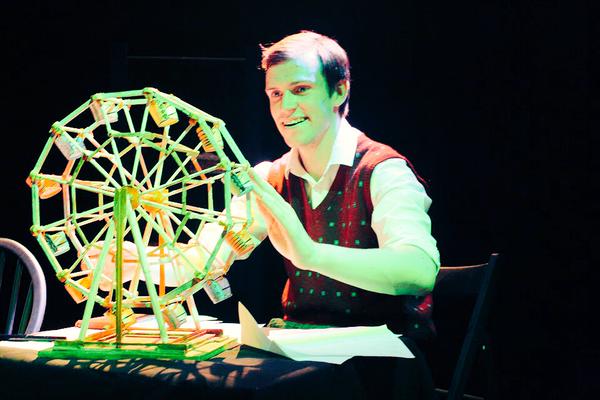
“One-person shows are extremely hard to create and perform effectively. It’s easy for them to be too long, too boring, too bizarre, too indulgent or too lots of other things. Greywing House uses poetic writing and language, puppetry and movement to craft a narrative that gradually exposes the otherworldly realities of coastal Greywing House and its proprietor, Miss Amelia. The audience are the guests staying at this B&B (which doesn’t offer breakfast because it’s too hard for Miss Amelia to keep track of the time) in the fictional coastal village of Cradlehead. There isn’t much to do in Cradlehead, but the local residents and ghostly legends make it unlike any other seaside destination…

“Miss Amelia is the epitome of polite restraint, akin to a 1950’s housewife. She seems quite innocent, but with a hint a melancholic nostalgia. She is warm and friendly, though this gradually deteriorates into desperation and madness. Mary Beth Morossa, the creator of the show, plays her with detail and sensitivity…

“This is a one-person show that is not without potential but still needs development. Having debuted at the London Horror Festival last year, its creepiness works any time of year and I could imagine it in the programme of numerous fringe festivals.”

Intention: ☆☆☆☆

Outcome: ☆☆

Star Rating: ☆☆☆

Read the entire review on everything theatre: http://everything-theatre.co.uk/2015/01/greywing-house-etcetera-theatre-review.html