Politic Man, Ivy House

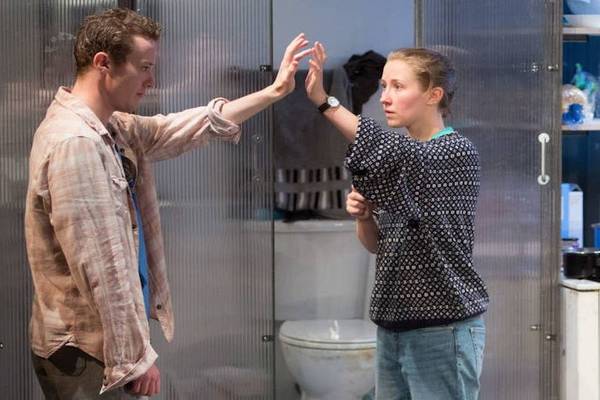
What with growing up outside of the UK, my knowledge of British history is quite patchy. I can tell you a lot about the late Elizabethan and early Jacobean eras when Shakespeare was alive, but outside of these time periods, I know little. I quite like social history, so learning about new-to-me historical figures through theatre is an event of joyous discovery. What with my leftie sentiments currently battered, encountering someone from the past committed to social justice and equality adds to the excitement even if the play has its shortcomings.

Continue reading

Only Bones, Soho Theatre

rsz_11maxresdefault

by guest critic Rebecca JS Nice

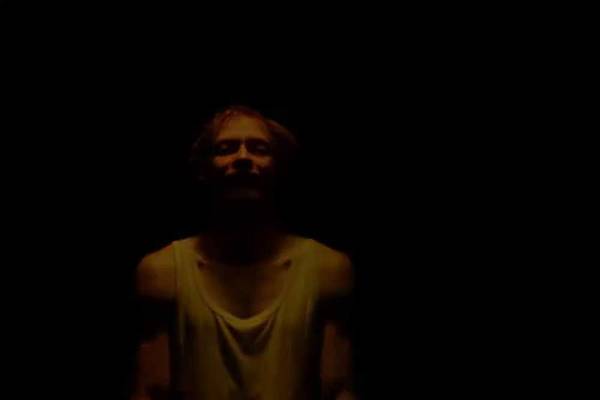
Short and sweet, classic and comical. Thomas Monckton performs a solo piece glued to his spot, centre stage beneath a low hanging lamp, which obscures his body from the shoulders up for at least half of the work. Only Bones is a classic example of body manipulation that playfully explores all the possibilities that a clown can find and make with only his body, one square metre of space, and one light. These creative boundaries have been stretched and tested but remain in performance to give the show a formal identity and context for Monckton’s shenanigans.

Continue reading

Holding the Man, Brockley Jack Studio Theatre

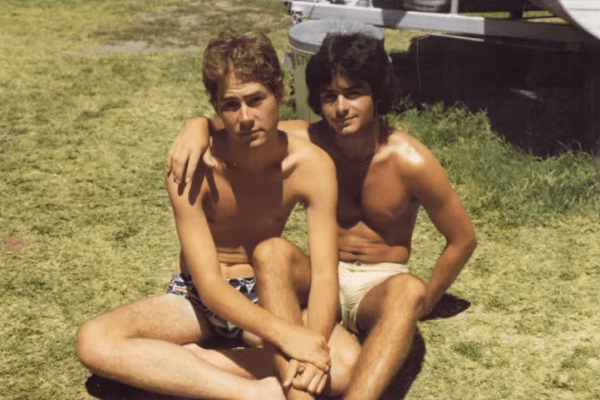
Tim Conigrave and John Caleo’s decade-spanning relationship was undoubtedly a gorgeous thing to behold. Meeting as school boys in 1970s Melbourne and staying together into the 1990s, their relationship was first documented in Conigrave’s memoirs and later adapted by Tommy Murphy for the stage. 

The coming-of-age story, though one that follows a predictable path once Conigrave decides they should sleep with other people, is potentially quite moving. But Murphy’s script is clumsy, with erratic pacing and hackneyed dialogue that lacks nuance. The cast consequently struggle to connect with their characters, making for a stumbling two and a half hours that feels more like the 15 years that Tim and John were together.

Continue reading

Richard III, Rosemary Branch Theatre

https://theblogoftheatrethings.files.wordpress.com/2017/01/elena-clements-buckingham-sam-coulson-richard-c2a9-caroline-galea.jpg

Bill Clinton once told Kevin Spacey that 99% of political thriller ‘House of Cards’ is real – a terrifying thought. Whether true or not, Spacey’s character Frank Underwood has clear parallels with Shakespeare’s Richard III what with the former’s ruthless climb to the US presidency. New company Godot’s Watch picked up on the similarity between the two rulers, taking inspiration from the tv series for their small-scale update to Shakespeare’s popular history play. Though the production has some canny choices, the concept comes across as a generic modern-dress adaptation with some pronounced weaknesses.

Continue reading

The Collector, Greenwich Theatre

https://i0.wp.com/69-degrees.co.uk/wp-content/uploads/2016/10/The-Collector-at-York-Theatre-Royal.-Anna-Riding-Zoya-Olivia-Beardsley-Foster-William-Reay-Kasprowicz.-Credit-Sheila-Burnett-800x533.jpg

by guest critic Maeve Ryan

When the British army arrived in Northern Ireland, beleaguered Catholics came onto the streets offering them tea, biscuits and cake. How long did it take for the story to change to the one that we know today? In The Collector, Naseer joyfully swaps music CDs with the American soldiers who arrive into Iraq in 2003 because he hopes for democracy and change. He learnt his English by listening to American rap music and soon he becomes a valuable translator for the soldiers. The Collector documents the slow brutalization of the occupiers and the occupied through choices they make; choices that, in Henry Naylor’s play, feel inevitable.


Continue reading

Assisted Suicide: The Musical, Royal Festival Hall

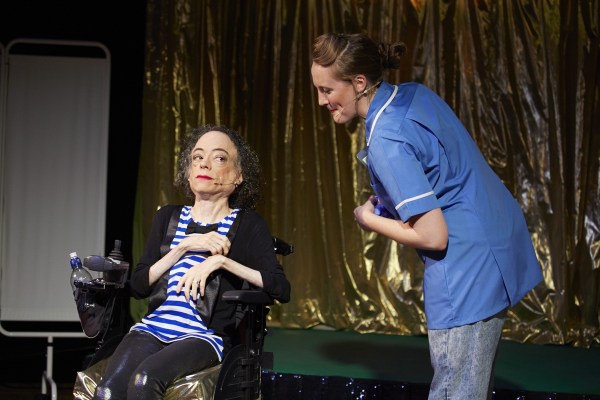
It’s uncomfortable to watch a play that conflicts with your politics or world view, and Liz Carr’s Assisted Suicide: The Musical does just that. The gay actor and comedian aligns with cuddly liberal ideology other than her avowed opposition to legalising assisted suicide in the UK. As a disabled woman, she worries that disabled people will consequently feel pressured to end their lives so they are no longer burdens on their loved ones, especially as many non-disabled people flippantly comment how hard their lives must be. After all, if you’re told the same thing over and over again, it’s too easy to start believing it.

Continue reading

The Doppel Gang, Tristan Bates Theatre

doppel-gang

By an anonymous guest critic

If you’re a Marx Brothers fan like myself, you might go to this production by the company JUST SOME THEATRE with some trepidation. Are these four performers going to do justice to the Brother’s brilliant form of slapstick comedy? It’s nice to report that the answer is yes. The company’s attempt to create new Marx Brothers material is actually the strongest part of this show.

Continue reading

Wish List, Royal Court

rsz_wist-list-image-1000x574

Nineteen-year-old Tamsin wants to be a normal teenager. She wants to go to college, flirt with cute boys and go down the pub. She doesn’t want to be stuck in a cycle of poverty that dictates she’s either doing manual labour at a “fulfilment centre”, or caring for her younger brother with OCD so severe he can’t leave the house. Everyday is a struggle to keep herself together since her mum died and British society has turned against them. To the wider world, she and her brother are tiny, invisible cogs in a brutal machine out to destroy the most vulnerable.

Continue reading

Feature | Barker’s Play Doesn’t Erase Minorities – The Print Room Does

http://www.trbimg.com/img-5296a467/turbine/la-ol-katy-perry-american-music-awards-yellowf-001/600/600x399

by Daniel York

I actually sat down and read In The Depths of Dead Love last night.

If anything, I’m even more angry now. The argument put forth by the Print Room is that, although the play is set in ancient China and the characters have Chinese names, the characters are not “Chinese” and it’s a very “English story”.

Is this true? Well, there are a lot of “deep bows” and talk of emperors but reading the work leaves me wondering just exactly how ethno-specific a play would have to be before the people who programmed and presented this one would consider that, yes, we might just have to cast some actors who aren’t actually Caucasian and middle-class.

The thing that really does disgust me, though, is the Print Room’s argument that they should have the right to cast “the best actors for the roles, independent of ethnic origin”. Leaving aside that being “independent of ethnic origin” appears to be a privilege that only applies to white people, we have the Print Room citing Christopher Hurrell’s defence that, “the characteristics [Barker’s play] seeks in actors are not social, cultural or ethnic—they’re technical, aesthetic and artistic.”

Let’s just pause there. Would it have to be written in pidgin English before the demands were relegated to “social, cultural or ethnic”?

And this is what is utterly despicable about the whole argument I’ve had so many times in the past and, I hope, not too many more in the future: the sheer racial and social snobbery embodied by organisations like the Print Room and the Wrestling School when they assert that they cast “the best actors for the role”. What they’re actually saying is “you little ethnics just aren’t up to the job”.

This would be bad enough but we’re now all pretty much certain that they never met or considered any actors of any other ethnic background other than white Caucasian for this production. This play which was produced on the radio in 2013, which Christopher Hurrell maintains was given a reading at the Print Room in 2013. They’ve had FOUR YEARS to develop this. FOUR YEARS in which it looks as if they never once even considered casting actors who weren’t white. I presume, they never once considered that actors who weren’t white Caucasian were up to the “technical, aesthetic and artistic” demands of the play.

The racial and social snobbery is compounded by the Print Room alleging that the protests have come from “some members of the public” when in fact it’s mainly members of the theatre community. When they argue that the references to China are merely “oblique”. When they give trite lectures about The Great Man being a “fabulist” whose work “is poetic and often difficult to pin down in time or place”.

Yes, we do understand all those things. Because we’ve actually read a few books too. We understand the arguments perfectly because, believe it or not, we’re “artists” as well.
And, as artists, we politely but firmly reject this cultural ethnic elitist high-handedness.

Please join us in in our protest this Thursday Jan 19th. If you can’t physically make it (or even if you can) please partake in the “thunderclap” social media protest.

The Play’s the Thing UK is committed to covering fringe and progressive theatre in London and beyond. It is run entirely voluntarily and needs regular support to ensure its survival. For more information and to help The Play’s the Thing UK provide coverage of the theatre that needs reviews the most, visit its patreon.

Familie Flӧz, Peacock Theatre

https://i0.wp.com/www.festivalcomic.cat/2015/style/images/hotel_paradiso.jpg
by guest reviewer Rebecca Nice

German physical theatre company Teatro Delusio perform a silent comedy accompanied by an array of canonical scores from ballet to opera to a bit of pop. The international show that crosses language barriers through visual tableaus and expressive physicality of character is formed by a series of vignettes starring stock characters. Three performers play stage technicians and alternate to appear as stereotypical theatricals who they encounter backstage. There’s the one who always wants to sit and eat, the one who doesn’t want to be there and the one who’s always flexing his muscles can always be found in a technical team and this trio run the show, set entirely backstage, with haphazard efficiency and human agenda.

Continue reading