Bechdel Testing Life, The Bunker

https://i0.wp.com/citizenshipandsocialjustice.com/wp-content/uploads/2014/12/BechdelTestIdea.jpg

Women don’t always talk about men.

It bears repeating because it’s often forgotten, ignored or not believed. Popular culture is particularly deaf to the sentiment, and theatre still likes to rely on this inaccurate gender trope. Whilst this has been slowly changing for some time, particularly on the fringe, it’s still a problem.
Continue reading

The Misanthrope, Drayton Arms

H74mRZDDOlGEXXG8VZuPe_uDgKoecZIEhSaYLe3v774

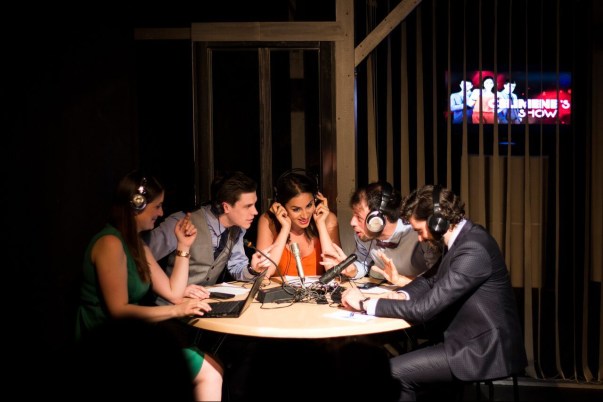
Exchange Theatre sets The Misanthrope in a contemporary newsroom full of gossip, affairs, backstabbing and cocaine-fueled all-nighters. Alceste loathes the way his colleagues behave, but fancies the flirtatious Celimene in spite of his prejudices. His jealousy and inability to be polite to his colleagues causes a litany of issues that play out over their broadcasts, eventually leading to his lonely downfall.

Continue reading

The Enchanted, Bunker Theatre

https://i0.wp.com/exeuntmagazine.com/wp-content/uploads/The-Enchanted-The-Bunker-Corey-Montague-Sholay-Courtesy-of-Dina-T-e1497081364627.jpg

York and Arden are two men on America’s death row waiting to die. An investigator, known to the prisoners as The Lady, works night and day to save their lives. The similarly unnamed chaplain does the same to save their souls. As the two piece together the pasts of the men about to meet their deaths, a physical theatre ensemble and extracts from Rene Denfeld’s poetic novel The Enchanted creates a dreamlike, romanticised view of poverty-stricken rural America and the killers it breeds.

Continue reading

Richard III, Arcola Theatre

https://newimages.bwwstatic.com/upload11/1606434/tn-500_greghicksandsarapowellinrichardiii,dirmehmetergen(c)alexbrenner.jpg

As the audience enters, Richard sits at a pub table on an otherwise bare stage. It’s impossible not to watch him until the house lights dim, and this opening sets the tone for the two and a half hours to come. With generically modern costume and no clear concept, Mehmet Ergen’s interpretation employs a light touch on the design elements. However his focus on the text and story is on point, making this an easy to follow and engaging production. Staged in the Arcola’s main house where the audience closes in on three sides of the stage, this is the sort of space that brings out the best in Shakespeare’s energy and language.

Continue reading

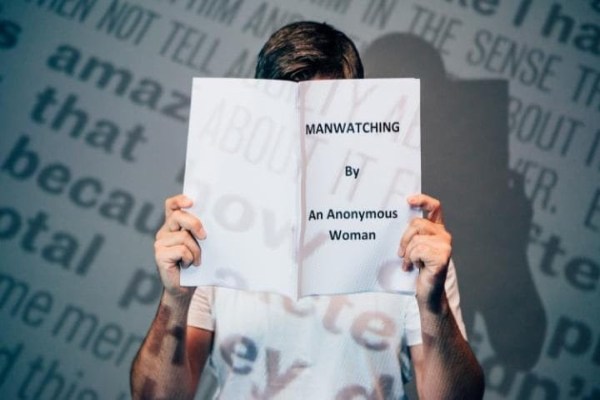
Manwatching, Royal Court

An anonymous woman frankly monologues about taboo sexual fantasies, abortion, orgasms and what turns her on. It’s honest, personal and as a fellow woman, easy to relate to. But rather than a woman performing the text, Funmbi Omotayo is given the script onstage having never read it before. The experiment to explore the effects of a man delivering a woman’s words on female sexuality has good intentions, but it doesn’t work. Most of the content is common female experience, and there is no primary narrative thread. The reading is often clumsy and flat and with little to look at, the piece lacks much of a dynamic.

Continue reading

Disconnect, Ugly Duck

https://entropymag.org/wp-content/uploads/2014/10/outer-space-wallpaper-pictures.jpg

Imagine a production of Waiting for Godot with more characters, set in space, where the audience chooses the outcome of the story. What you are picturing is probably gloriously weird and kitschy. But now add clumsy dialogue, some poor performances and a loosely applied Brexit analogy, performed on a set that looks like it’s built of cardboard and/or they ran out of paint. If your mind’s eye makes a different picture now, it be more accurate.

Continue reading

Dominoes, Tara Theatre

https://i0.wp.com/farm1.static.flickr.com/133/360046773_f06607e09c_o.jpg

There’s a database where you can look up the size of reparations paid to slave owners after slavery was abolished. In Dominoes, History teacher Leila and her fiancé Andy share the same last name – McKinnon. Andy’s white and Scottish, Leila’s half black-Caribbean. When curiosity gets the better of her in the run up to their half term wedding, she makes a discovery that pits family and friends against each other and threatens to destroy her big day.

Continue reading

Room, Theatre Royal Stratford East

https://cdn.thestage.co.uk/wp-content/uploads/2017/05/11091735/Harrison-Wilding-and-Witney-White-Room-Scott-Rylander-1-700x455.jpg

Originally a novel by Emma Donoghue that swept up the award nominations last year after being made into a film, Room is now a play. Adapted by the writer for the stage, it stays true to the original story of a young woman abducted at 19 and imprisoned as a sex slave. After two years in captivity she gives birth to her son Jack. Five years later as they celebrate his fifth birthday, all Jack has ever known is the inside of the shed. To ensure he copes, Ma’s taught him that the only things that are real are what’s inside the room. Everything outside isn’t real, and the pictures on their telly exist only in the small box. But Ma’s had enough and wants Jack to help them escape now that he’s big enough.

Continue reading

Identity Crisis, Ovalhouse

https://i0.wp.com/thenubiantimes.com/wp-content/uploads/2016/07/Identity-crisis-image.png

Phina Oruche has had an extraordinary career. Growing up in Liverpool to Nigerian parents and desperately wanting to see more of the world, she let her best friend Amy talk her into doing a modelling photoshoot as a teenager. Soon she found herself living and working in London, then New York and LA. Eventually tiring of the high fashion world and feeling the pull of her home, she moved back to the UK where he career led her firmly into the film and telly world. Now a mum and conflicted about the cultural pushing and pulling on her life, she examines who she really is the self-penned Identity Crisis. The punchy tapestry of characters and experiences has messy and confusing moments and no clear resolution or story, but it’s brimming with heart and life.

Continue reading

Care, Courtyard Theatre

UFKmRtsrO3wmuDLSNSiFJK-uKmbAFnUYhZURRl1jh18

by guest critic Harry McDonald

Time passes and we pass with it, but how do you measure getting older? Do you read wrinkles or responsibilities? Or did you never learn to read?

The Courtyard’s revival of Roy Mitchell’s Care, last produced in 1983 at the Royal Court Upstairs and now presented by the Angus McKay Foundation, interrogates a fraught young couple living in Birmingham in the 1970s. Childlike in their domestic play – bouncing between football, music,  comic books and sex – each lover attempts to survive the other’s presence over a long Easter weekend. And yet there is a third person present. Don’t children always make the scariest ghosts?

Continue reading