Mumburger, The Archivist’s Gallery

https://i0.wp.com/livetheatreuk.co.uk/wp-content/uploads/2016/07/image-33.jpeg

Tiffany’s mum just died. Hugh’s wife just died. Together, this father and grown daughter that barely know each other anymore need to arrange a funeral. In the midst of their nonfunctional, chalk and cheese miscommunications, a mysterious delivery of uncooked burger patties arrives on the doorstep of their vegan home. The note on the bag makes them question everything they know about grief, each other and dietary choices.

Sarah Kosar’s Mumburger frames grief within an impossibly absurd scenario but rather than exploiting the potential for comedy, Kosar uses it to bring Tiff and Hugh closer and support their journey through grief and Hugh’s reluctance to let his daughter grow up. Though the episodic structure diffuses the day-to-day struggles, the structure snapshots moments of high tension incredibly well. Good performances support the script’s father/daughter tension that’s as much about a parent learning to let a child go as it is about losing a loved one.

Rosie Wyatt plays Tiffany as a gregarious go-getter with little patience for her non-communicative father (Lindon Alexander). Wearing her heart on her sleeve, her turmoil is completely and believably transparent and an excellent contrast to Alexander’s typically masculine introversion. They both have excellent emotional climaxes endowed with truth and keenly felt by those all too familiar with losing a loved one. Hugh is arguably underwritten for much of the play, though Alexander’s fantastically executed and intimate moment with the tiny slab of his wife’s remains is one the best recent moments on a fringe theatre stage.

Kosar’s script focuses more on the characters and their interactions, but just the right amount of external influence drives the action forward. Some moments feel too brief and the amount of time passing from scene to scene isn’t always clear, but the narrative arc is otherwise strong. The contentious burgers, as disturbing as they are, manage to not tip the entire play into absurdity – great work on the part of Kosar and director Tommo Fowler.

Ruta Irbite’s minimalist design is at odds with the naturalistic dialogue and considering the action solely takes place in one location, comes across as oddly sparse. A chest freezer in the middle of a bare, white stage and a few plain curtains on the back wall keep the budget low, but conflict with the text. Occasional bursts of projected video montages make more sense to the characters’ emotional states, but the lack of domestic furnishings is jarringly surreal.

Kosar’s script is without a doubt a good one, and the performances helped to emphasise its conflict. With clearer staging and transitions this promising one-act could really shine.

Mumburger runs through 24 July.

The Play’s the Thing UK is committed to covering fringe and progressive theatre in London and beyond. It is run entirely voluntarily and needs regular support to ensure its survival. For more information and to help The Play’s the Thing UK provide coverage of the theatre that needs reviews the most, visit its patreon.
How to Win Against History, Ovalhouse

rsz_copy_of_©rah_petherbridge_photography_-_how_to_win_against_history-_done_3

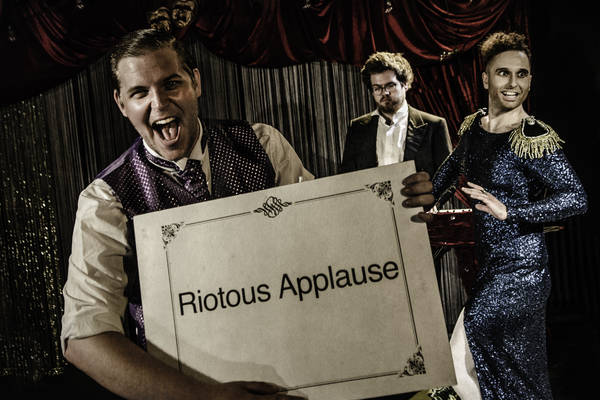
British history is peppered with truly remarkable people. Kings, queens, writers, actors, scientists, athletes and military generals pepper school history books and cultural subconscious. Then there are the people like Henry Paget, fifth Marquis of Anglesey, who are largely forgotten, tucked away in the centuries-old folds of this country’s past. During his brief Victorian life, he became rather infamous for cross-dressing, blowing his family fortune, and turning the chapel of his estate into a 150-seat theatre where he played the leads in his own productions with which he later toured Britain and Europe.

Seiriol Davies’ How to Win Against History chronicles (and fictionalises parts) of Henry’s radical life, focusing on his theatre work and cross dressing, as a fabulous, form-bending cabaret/musical. This little show has a huge heart and needs further script development to smooth out the lumpy narrative, but sequins and silliness, destroying the fourth wall, clowning and contemporary political commentary makes for a powerfully subversive and hilarious production.

The lengthy introduction provides necessary exposition, but as it gives way to a song that focuses on the Marquis’ time at Eton, it becomes too long. The interesting plot points come once the character is of age, and these deserve more attention than they are given. The beginning also sets up the style that’s maintained throughout, of musical theatre songs punctuating scenes that are heavy on the sort of narration and banter that is found in cabaret and drag acts. It’s a wonderful act of genre smashing. Musical theatre, cabaret, vaudeville and pantomime make an engaging, energizing combination that fosters audience participation and celebration. If this is where popular theatre is heading, then bring it on – Seiriol Davies’ script is at the forefront of musical theatre innovation.

Once young Henry finishes school, action starts to pick up. After a mutually beneficial marriage to his cousin (that was reportedly never consummated) and teaming up with a actor Alexander Keith (Matthew Blake), he casts himself in several plays. When no one comes, they take the shows on the road, making hilarious changes as the audience becomes less enamored of his work. More could be made out of his marriage and his increasingly weird theatre productions; they are rushed and little sense of a timescale is provided. Between his awakening as a student to a touring theatre maker, there’s a feeling that a lot of plot is missing. He is suddenly a broken man in Monte Carlo being interviewed by Daily Mail journalist Quentin (a brilliant in-joke!) and whilst this is deliciously funny, there is yet another leap in time and place. More scenes could easily be written to fill in these gaps without disrupting the established style. Even though the cabaret influence comes though in the short sketch-like scenes, as a musical it feels underwritten.

Writer Seiriol Davies plays Henry, the fabulously flamboyant lover of sequined dresses and the theatre. His journey from naïve boy to the ill and impoverished 20-something is lovely and genuine, with songs that in turn capture his enthusiasm and anguish. Energy abounds from the other two performers, making the show feel a lot bigger than it actually is.

Though this new musical needs further development to give it the scale and narrative punch that matches the style, it is fantastically good fun. The political content and deconstructing of style and structure are fly in the face of historical erasure of controversial figures and dramatic conventions. But it evoked engagement and contribution from a willing audience that was eating out of the performers’ hands within the first few minutes and this in and of itself is a huge indicator of excellent work. How to Win Against History could easily have the scale of a West End show, and it deserves the attention that would garner it.

How to Win Against History runs through 28 August in London and Edinburgh.

The Play’s the Thing UK is committed to covering fringe and progressive theatre in London and beyond. It is run entirely voluntarily and needs regular support to ensure its survival. For more information and to help The Play’s the Thing UK provide coverage of the theatre that needs reviews the most, visit its patreon.
 

bare., Courtyard Theatre

rsz_clbw12owyaau3v8

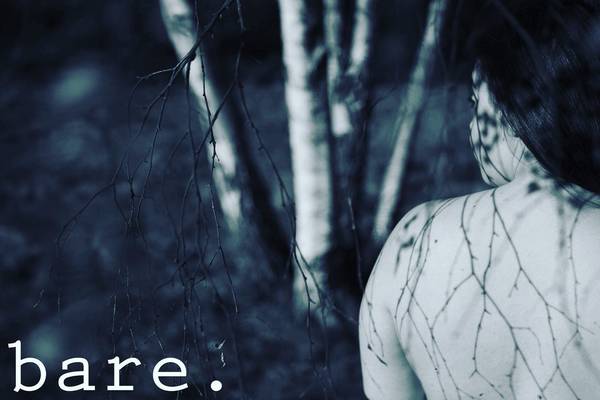
Three young women, three short solo performance pieces, three stories of vulnerability make bare., a thematically linked evening of new writing. Each of the three mini-plays has a distinct style and is performed by the writer. They vary in the quality of writing and inventiveness, and feel very new – more like scratch performances rather than finished pieces. bare. is a lovely concept – short, female solo performances that reveal hopes, fears, aspirations and conflict. It could easily become a regular event, giving women the chance to try out one-person work in front of an audience. As is, these pieces certainly need development but the three writer/performers show much promise and commendable initiative that, with development and experience, will certainly improve their work.

Kat Ronson is first, performing ‘IBZ’. This fragmented work follows a young woman’s journey from singledom into a loving relationship. The wild, drug fueled club nights transform into something more gentle and intimate, but her story does not end happily ever after. The young woman’s transformation is lovely, but the choppy writing makes for an unclear narrative and timeline. Ronson uses comedy punch lines and moments of reflective sincerity effectively, but this doesn’t balance out the vague writing. This piece would benefit from dramaturgical support and a hefty re-write, but the concept and central character are certainly workable.

American Steffanie Freedoff shows that yanks can handle their poetry and spoken word with ‘in the beginning there was Word’, a biographical monologue in verse about hating poetry as a teenager and growing to love it as an adult. This is also a coming-of-age story, but a much more positive one on self-discovery and confidence. It’s a bit cheesy and motivational, but the two stand-alone poems she ends on are angry, provocative and polished. The focus is on these pieces, which feel disconnected from the first part of the performance but add variation in style and tone. This second mini-play also needs development and shaping to find its overarching message, but it feels like it could be lengthened without becoming dull.

Madeleine Dunne brings a strong character piece to the trio with ‘Mind the Gap’, a piece that looks at the struggle of overcoming mental health issues. Lucy is a little girl terrified of breaking the rules and a young adult still limited by these fears. Told in two parts, Dunne’s gift for transformation is revealed in these two naturalistic monologues. It’s not clear who she is talking to and why in either section, but the character is a suitably interesting one. Lucy could also work well as the protagonist in a full play with multiple characters, perhaps even better with others to respond to rather than limited in a solo performance.

A quiet, sung finale wraps up the evening, a nice touch that adds some unity to these unrelated plays. bare. still feels like a scratch or showcase with a range in quality, but as a themed performance event, it is poignant and well curated. All three pieces need refining and/or expansion, though each shows at least some element of promise.

bare. runs through 16 July.

The Play’s the Thing UK is committed to covering fringe and progressive theatre in London and beyond. It is run entirely voluntarily and needs regular support to ensure its survival. For more information and to help The Play’s the Thing UK provide coverage of the theatre that needs reviews the most, visit its patreon.

Cargo, Arcola Theatre

Cargo at the Arcola Theatre, Milly Thomas, Jack Gouldbourne and Debbie Korley,  Photo by Mark Douet

Civil war is raging in the formerly united, newly named Kingdom. Loyalists and rebels have divided up the charred, frightened remains. Religious fundamentalism and capital punishment are the law of the land. There are furtive rumours of a better life across the channel, and there are regular passages to Calais. Money can buy passports, or if you don’t have any of that, there are people who will help you stow away as Cargo that you can pay later. But safety isn’t a given once you’re on board. The holds of these ships are dark and full of desperate people with shady pasts and their own agendas, and a lot can happen in an 80-minute crossing. Tess Berry-Hart’s script is as much a thriller as it is rousing political theatre, and the diverse cast of four effectively capture a snapshot of the population effected by this tragedy. Though the story is overly convoluted by truths and lies, Cargo provides a timely reminder, like other refugee-themed work at the moment, that we are all human beings in need of a safe and secure life.

Joey (Millie Thomas) is there with her younger brother Iz (Jack Gouldbourne). They’re from the loyalist-controlled docks and have lost everything. Joey’s shrewd and resourceful, Iz is an optimistic innocent who dreams of being a waiter and is the only genuinely nice person on board. Gouldbourne is totally believable as the tween who sees the good in everyone, and is nicely balanced by Thomas’ maternal defensiveness. They meet Sarah (Debbie Korley), an elusive northerner played with brilliant intensity. John Schwab is the slippery American Kayffe, who’s ever-changing biography hides horrific experiences. Berry-Hart never fully reveals the objective truths of the world around them, which is frustrating but leaves plenty to the imagination. The fates of these people are a great unknown in a world where desperation forces people to solely look out for themselves.

Tense from the onset from fear of discovery, anxiety builds quickly though there’s little to do except wait to arrive. These characters have seen so many horrors that relaxing is impossible and anyone could be the enemy. The script is conversational, yet guarded, as the characters attempt to get to know each other. Barry-Hart incorporates believable conflict into the narrative that director David Mercatali approaches with varying pace. The unresolved ending is unsatisfying, but no doubt realistic.

The design team Max Dorey (set), Christopher Nairne (lighting) and Max Pappenheim (sound) create an immersive environment of simple pallets and packaging. The boat is a constant aural presence and the seating, whilst as uncomfortable as the play’s circumstances, is probably pretty accurate. The design exquisitely works together with Mercatali to destabilise the audience; married with the script’s uncertainties it is a most unsettling effect.

Cargo could still use some refining and clarity in order to allow the audience to take in the experience without focusing on following the veracity of the character’s experiences, especially towards the end. Despite this small issue, or really because of it, the experience feels all the more truthful to refugee experience. Even though the concept of re-contextualising it to British people is not new, it is certainly effective. Like other plays on the topic, it humanises displaced people, their need for sanctuary and their vulnerability to exploitation. If theatre repeats these messages enough, the world might start to listen.

Cargo runs through 6 August.

The Play’s the Thing UK is committed to covering fringe and progressive theatre in London and beyond. It is run entirely voluntarily and needs regular support to ensure its survival. For more information and to help The Play’s the Thing UK provide coverage of the theatre that needs reviews the most, visit its patreon.

Unreachable, Royal Court

Anthony Neilson didn’t come into Unreachable rehearsals with a script, but an idea – a director obsessed with finding the perfect light. From this starting point, the cast sculpted a modern satire of the film industry and the people that exist in that world. Over a six-week devising and rehearsal period, six actors worked with Neilson to create the play, a rarity in anything other than small-scale and student theatre. The end result is wickedly funny with on-point performances and, whilst the story isn’t anything remarkable, its execution makes for delicious relief from the chaos of modern Britain.

Maxim (Matt Smith) is Palme d’Or winning writer and director of Child of Ashes, currently filming in an unnamed location. He pushes the self-absorbed, whimsical artist stereotype to the limit with full-on strops, totally inappropriate comments and decisions that blow his producer’s budget. He is camp, temperamental and a fantastic physical comedian. His lead actor Natasha (Tamara Lawrence) is an unfeeling, blunt force of a sociopath who clashes with lead actor Ivan “The Brute” (a sidesplitting Jonjo O’Neill in ridiculous hair extensions). On his production team are the pragmatic producer Amanda Drew, frustrated DOP Richard Pyros, and deaf financial backer Genevieve Barr. Their grounded personalities create plenty of friction (literally, in some cases) by clashing with the flamboyant artists as the shoot goes over budget and over time. Some of the arguments are petty, others deserving, but all just as hilarious. Nielson mocks artists’ egos, but it’s not nasty – anyone working in the arts will have met at least a couple of these personalities in real life.

The comedy lies in the exaggerated characters and brilliant one-liners devised by Nielson and the cast. Even though the scenarios are fairly mundane and the story not particularly interesting in itself, it doesn’t matter one bit. There are some moments of poignancy and genuine intimacy, but Unreachable is really about the laughs. Even without familiarity with working in the arts, even the hardest, most cynical of hearts will find the outstanding performances hilarious. The scenes are often short and episodic, and half an hour could easily be trimmed, though the current two hours doesn’t feel overly long.

Chloe Lamford’s set is the reflectors, flight cases and lights of a film set until the final sequence, when she and lighting designer Chahine Yavroyan can pull out all stops in an impressive display of visual mastery. The only issue with this moment is the fox. Instead of a puppet or forgoing the image all together, an animal that should be in the wild or a sanctuary is paraded about on a lead. It’s a totally unnecessary and cruel device.

In these post-Brexit, unelected Torycore prime minister days where cracking a smile takes immense effort, Unreachable is welcome relief. Even though the play itself is nothing special, experiencing devised theatre in anything more than a tiny fringe venue that doesn’t go more than a couple of minutes without triggering a laugh is a welcome escape from real life.

Unreachable runs through 6 August.

The Play’s the Thing UK is committed to covering fringe and progressive theatre in London and beyond. It is run entirely voluntarily and needs regular support to ensure its survival. For more information and to help The Play’s the Thing UK provide coverage of the theatre that needs reviews the most, visit its patreon.
Fury, Soho Theatre

https://i.guim.co.uk/img/media/c255500e31a395db7d5e99d0e22866efcadc2904/0_0_3907_2727/3907.jpg?w=700&q=55&auto=format&usm=12&fit=max&s=24616b52e71621aa153ffabc5805fe48

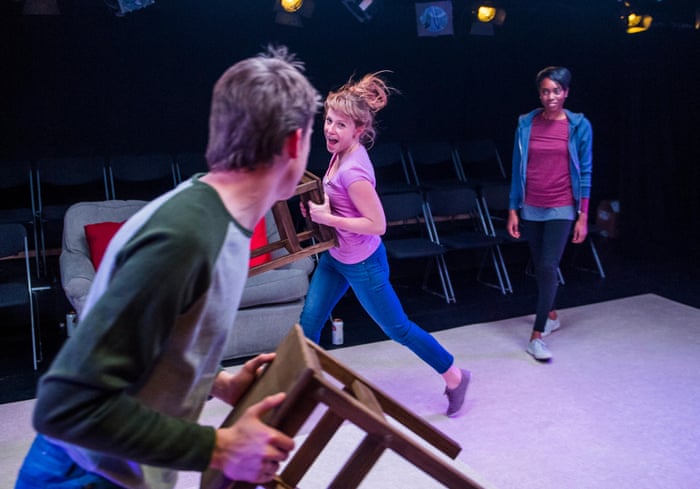
Sam is a young, single mum living in a council flat in Peckham. Having gone through the care system and her boyfriend leaving her after her second son was born, she has no one. When she meets socially inept Tom, an MA student in the flatshare above her, after losing her job as a cleaner, he creates an opportunity for friendship, sex and an escape from her kids. But Sam was born a victim, and a victim she remains. In this discourse on social class, parenting and gaslighting, playwright Phoebe Eclair-Powell incorporates Greek tragedy and a commentating chorus to expose the perils of growing up with no support network.

This is one of the young writer’s first full-length plays, and she’s still finding her feet. Fury has a great concept and characters, and the use of the chorus is a fantastic touch that adds depth and structural variation, but the execution if the ideas isn’t quite there yet. Some sections of the script don’t quite fit the main thread, like her beach outing with an old friend, and others rush the narrative progression. The chorus fills in information left out of the scenes, but this sticking plaster over the gaps is still unsatisfying and overly simplistic. The relationship between Sam (Sarah Ridgeway) and Tom (Alex Austin) escalates a bit too quickly to be plausible, though some slight extending would go far to rectify this.

Ridgeway is excellent as Sam, with a nervous energy and a risk of exploding into violence at any point, making Tom’s manipulation all the more believable to social services. Austin is slimy, awkward and initially seems harmless, but quickly reveals a dark interior. Though he plays the role well, it’s a challenging one because he transforms so quickly. His unlikely behaviour after his initial awkwardness is a powerful reminder that anyone is capable of committing horrendous acts, particularly against vulnerable people. The chorus of three (Naana Agyei-Ampadu, Daniel Kendrick and Anita-Joy Uwajeh) also play additional characters, flipping between them and non-characters with ease and agility.

Director Hannah Hauer-King uses a simple set by Anna Reid to focus on the text. Her in the round staging is a great choice that adds to Sam’s rising paranoia – everyone is indeed watching her every move. The chorus uses seats set into the audience, which although it keeps them ever present, it is unclear why the audience/actor boundary is blurred. She occasionally struggles to clarify space what with the mostly bare stage, but the dialogue usually explains well enough. Hauer-King taps into Eclair-Powell’s poetry with instinctual finesse, making some moments particularly moving.

Though the ended is rather different from the Medea that the show’s marketing compares it to, there is still senseless tragedy brought on by a man’s deliberate actions against a vulnerable woman. Fury shows much potential from the emerging writer and director, and contains some vital messages about growing up poor and female that, with some small adjustments, will be heard loud and clear.

Fury runs through 30 July.

The Play’s the Thing UK is committed to covering fringe and progressive theatre in London and beyond. It is run entirely voluntarily and needs regular support to ensure its survival. For more information and to help The Play’s the Thing UK provide coverage of the theatre that needs reviews the most, visit its patreon.
Ugly Lovely, Old Red Lion

rsz_ffion_jones_and_sophie_hughes_in_ugly_lovely_c_velvet_trumpet_1-1

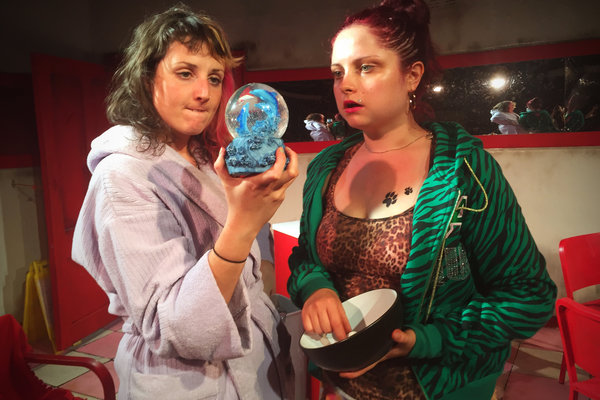
It’s Shell’s 26th birthday and she’s not happy. Her boyfriend Carl is AWOL and probably banging Smelly Kelly, her nan died recently, and she wants to leave Wales for the big city of Liverpool. Her best mate Tash is trying to convince her to stay, but her reasons are far from convincing. Shell is miserable, frustrated and angry. She feels the pull of adventure, but the tug of the sea she knows so well is strong, too. Shell tries to decide what to do as best she can – chatting with the urn that holds her nan’s ashes, going out clubbing and leaving her son Kieran with her mum. Ugly Lovely snapshots down-at-heel but aspirational Swansea with well-rounded characters who are excellently performed within a promising script, but it has a somewhat unsatisfying resolution.

This is writer Ffion Jones’ first play, and as debuts go, it’s a a rather good one. She’s built a sound narrative structure, though some trimming wouldn’t go amiss. The plot isn’t complex enough to warrant the current length or the interval, though too much cutting would rush the climax and dénouement. She has written detailed, nuanced characters with emotional depth that rally the audience’s support, but this leads to disappointment when Shell ignores her ambitions. Jones has an aptitude for sharp dialogue and dark humour, and there are some brilliant comedic moments within the characters’ misery.

Jones plays Shell, endowing the character with emotional truth and lived experience. Sophie Hughes as her best friend Tash is her cheerful sidekick, maintaining a wonderful sense of optimism despite an abusive home life. Oliver Morgan-Thomas rounds out the cast as their laddish schoolmate Robyn who is also doing the best he can to get by, though isn’t the nicest of individuals. His introduction leads to a brutal conflict and adds variation to the individual scenes’ structures, and his rough charm brings a great energy to the dynamic created by the women.

Nikolai Ribnikov’s direction is smooth and instinctive, and Lizzy Leech’s set enhances the gritty naturalism of their day-to-day lives. There is an awkward park bench that doubles as a couch, and the exposed toilet sits unused and exposed in a corner for most of the play, but adds additional dinginess.

This is a great little play that is remarkably polished for a new writer; it shows much promise even though it could use some tweaking. Jones is clearly a skilled theatre maker, and the rest of the creative team serves her script excellently. Production company Velvet Trumpet did exceedingly well in choosing this script, and Jones is certainly one to watch as both an actor and writer.

Ugly Lovely runs through 16 July.

The Play’s the Thing UK is committed to covering fringe and progressive theatre in London and beyond. It is run entirely voluntarily and needs regular support to ensure its survival. For more information and to help The Play’s the Thing UK provide coverage of the theatre that needs reviews the most, visit its patreon.

Savage, Arts Theatre

rsz_gary_fannin_and_bradley_clarkson_in_savage_at_the_arts_theatre_c_roy_tan

Denmark in the mid-1930s was a great place to be if you were gay. Homosexuality was legalized in 1933 and a thriving club scene allowed gay men to meet and socialize publicly. But as the dark cloud of National Socialism swept Europe, safety became more precarious. Dr Carl Vaernet was one of their threats. A practicing GP with an interest in hormone therapy, the Danish Nazi Party member soon captured the attention of party higher ups with his therapies that he claimed cured homosexuality. Hired to cure gay prisoners at Buchenwald late in the war, he experimented on seventeen inmates before the war ended and he escaped to Argentina.

Claudio Macor’s latest play Savage focuses more on the story of Nikolai and his American boyfriend Zack than Dr Vaernet, but the lovers are soon separated and Nik becomes one of the doctor’s victims. The emerging subplot of an SS officer and his secret, gay love slave quickly becomes just as important as Nik and Zack, making Savage more of a play about homosexuality in WWII than specifically about Dr Vaernet and his horrific medical experiments. Spanning several years and multiple narratives, the script, sadly, doesn’t give in-depth attention to any particular character; individual stories are disrupted and incomplete. This would be a much more compelling text if Macor focused attention on one primary character rather than taking a scattergun approach. All of these characters have potential to steer a rich, interesting play that focuses on them, but none of them get the full, individual attention they deserve. There are some great set piece scenes, but the overall structure lacks focus.

Some of the performances are inconsistent and the cast present a range of styles, which distracts from the seriousness of the plot. There are a few good performances, though. Gary Fannin cuts a cold, scientific Dr Vaernet with a clear disgust for gay people; this professional face of homophobia and calm hatred is a most chilling one indeed. Emily Lynne as the doctor’s nurse viciously opposes the Nazis and blatantly defies their rules in a display of ferocious persistence. She’s a great contrast to the doctor’s calm hatred. The two pairs of lovers have moments of genuine care for each other, whereas other times feel forced.

Jamie Attle’s costumes are sharp and detailed, whilst David Shields’ set of rotating panels clarify location but are a bit clumsy. Macor also directs, ensuring his political messages get across but an additional pair of eyes could have developed more intimacy between the couples.

Though the topic is most serious indeed, there’s a distinct lack of joy in the beginning cabaret scene and between Nik and Zack. Macor clearly wants to raise awareness of the horrors of Vaernet’s work, but some lighter moments of exposition would emphasise this further. A dramaturg would not go amiss in order to streamline the script and performance styles in future productions, but this premier still has potential and exposes a historical figure too easily forgotten amidst more prominent Nazi war criminals.

Savage runs through 23 July.

The Play’s the Thing UK is committed to covering fringe and progressive theatre in London and beyond. It is run entirely voluntarily and needs regular support to ensure its survival. For more information and to help The Play’s the Thing UK provide coverage of the theatre that needs reviews the most, visit its patreon.
Karagula, Styx

Karagula at The Styx, courtesy of Lara Genovese @ Naiad Photography, Charmaine Wombwell

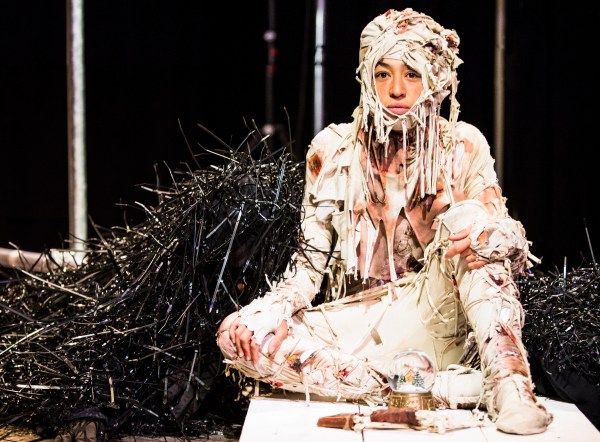
In a former ambulance depot in Tottenham Hale, Philip Ridley’s latest creation comes to life. This epic parallel world of wholly isolated nation states resembles the worst dystopias imaginable in contemporary fiction. Mareka is a 1950s America with laws enforced to the letter by the Grand Marshall, everyone wears pink, and milkshakes are consumed with religious zeal. Cotna is the future, where people are have numbers instead of names, and watching meteor showers without protective eyewear causes you to hear voices. Then, there’s a community of exiles in the mountains, living in caves, wearing skins, and praying to pre-Christian gods. A storyteller/historian in yet another time and place documents these people and their trials.

These kingdoms have a lot of detail, and a lot of emptiness. The story sprawls over three hours, zipping back and forth across time and place, leaving a swirl of slow understanding, further questions and obvious metaphor in its wake. The text is rich and beautiful, fragmentary and challenging, but it’s only partially reinforced by design. A scaffolding base reveals occasional moments of visual detail, but they generally pale against the language. Karagula is equally marvelous and horrible, an experience for all the senses with stories that enthrall and disturb in equal measure. But Ridley’s Tolkien-esque ambition never reaches its full structural potential.

Individual scenes are just as likely to delight as they are to be forgotten. If Karagula was a tapestry, it would be patchy and moth-eaten in some areas, others would have exquisite embroidery, and still others would be completely plain and ill-fitting. The gaping plot holes leave room for interpretation, but the better scenes feel all the more out of place. Ridley either needs to pare the script right back, or add another couple of hours to join up these worlds more fully. The whole experience is equally delightful and frustrating.

Nine actors play all roles in some exemplary multi-rolling. Producing company PigDog is committed to diversity in casting and audiences, and this cast is admirably so. Obi Abili is a terrifying brutal Grand Marshall in Mareka. Emily Forbes is the fiery leader of the mountain outcasts, initially motherly, then ruthless. Lynette Clarke is similarly versatile, as a flamboyant and vicious Marekan and a cold number in Cotna. None of the ensemble ever let their energy drop; their work is just as fantastic as Ridley’s best scenes.

Director Max Barton approaches the text with clear vision and choices that aid clarity, even in the muddiest sections of text. Designer Shawn Soh has moments of brilliance (beasts with coats of cable ties and a throne of gears and propellers for the narrator are fantastic surprises), but the shoestring budget is noticeable in the inconsistent application of detail.

Despite it’s issues, Karagula packs an emotional punch with social commentary and nihilistic fortune telling. Mareka foreshadows a Trump-led America, and Cotna is a land where technology has ushered in the loss of individualism. There are moments of wonder and horror, and sheer bafflement. Philip Ridley’s vision is commendable, but the execution isn’t quite there, leaving the audience partially sighted. It’s a wondrously alive and human production and like any given human being, it has it its faults and its virtues.

Karagula runs through 9 July.

The Play’s the Thing UK is committed to covering fringe and progressive theatre in London and beyond. It is run entirely voluntarily and needs regular support to ensure its survival. For more information and to help The Play’s the Thing UK provide coverage of the theatre that needs reviews the most, visit its patreon.

Human Animals, Royal Court

https://i0.wp.com/www.officiallondontheatre.co.uk/servlet/file/store5/item365300/version1/fileservice770/365300_770_preview.jpg

I adore animals, certainly more than I like humans, and I think I missed my calling to be a zookeeper or conservationist. I can’t bear any depiction of animals being harmed on stage or film; even mentions of animal abuse is hugely upsetting. So, I found Stef Smith’s Human Animals a pretty horrible ordeal. Smith’s frantic, apocalyptic story captures society’s instinctive, “Must. Destroy. Everything.” response to the natural world threatening contemporary human sovereignty. As the government wreaks havoc on the natural world in the name of security, half a dozen civilians have a range of reactions to the animal population’s invasion of their homes. This visceral, destabilising drama blasts the audience with 75 minutes of shocking, reactive action as the infection spreads across species, but with the fast pace and constant suspense, it’s difficult to relate to any of the characters. Canny design avoids much mess and graphic depictions of the described carnage, but the narrated horror is all too easy enough to imagine from most modern nations, and his highly disturbing on several levels.

Lisa (Lisa McGrills) and Jamie (Ashley Zhangazha) are a young couple supposedly very much in love, though lacking chemistry. Lisa doesn’t like animals much, so isn’t fazed when the government starts killing off the wild ones who are trying to invade people’s homes. She’s had enough of birds smashing into her windows and either dying or injuring themselves. Jamie can’t handle the ruthless killing; his collapse is well written and convincingly performed. Lisa’s boss Si (Sargon Yelda) is one of “them”, a vile, slimy little man profiting from the disaster. Young activist Alex (Natalie Dew) has just returned from travelling abroad, but mum Nancy (Stella Gonet) still tries to treat her as a child. There’s a lot of gorgeous intimacy and tension between them, often diffused by their genial family friend John (Ian Gelder), who clashes with Si regularly in the local boozer. Otherwise, there is little contact between these conflicting personalities, but the reactions from each character to the growing destruction are heartfelt and saddening.

Smith’s best writing is her conflict scenes between the characters. The rest certainly isn’t bad at all, but the storyline requires either depicting the violent extermination of animals or copious narration. Her choice is understandable and, though well incorporated into natural dialogue, there’s a lot of describing. The design team (Camilla Clarke, Lizzie Powell and Mark Melville) work with director Hamish Pirie to break up the text effectively, with sound, lighting, projection and jets of paint constantly interrupting and surprising/startling the audience. Being constantly kept on edge for over an hour is exhausting, with the story causing additional trauma. As horrible as it is, the whole effect is intricately constructed and totes a powerful message.

Also of note is the set design. The cast and audience are inside a zoo-style animal enclosure, disempowering the characters and trivialising their problems because the outside world is dominant and ever watching. Though the set does not literally indicate the characters’ world and gives no hints of the government-ordered extermination and arson that they describe, its tranquillity is calmly sinister.

The production elements and dialogue are excellent, through the relentlessness of Human Animals can alienate – but that’s the point. It’s terrible, clever commentary on contemporary environmentalism, fear of social disorder and individuals’ reactions to what is effectively a civil war and its strong effect will be long remembered by this animal lover.

Human Animals runs through 18 June.

The Play’s the Thing UK is committed to covering fringe and progressive theatre in London and beyond. It is run entirely voluntarily and needs regular support to ensure its survival. For more information and to help The Play’s the Thing UK provide coverage of the theatre that needs reviews the most, visit its patreon.