Ionesco/Dinner at the Smiths’, Latvian House

ionesco

By guest critic Archie Whyld

On arriving at the front door of Latvian House I am by a very smart, besuited Italian butler who refuses to let me in and won’t really give me a clear reason as to why. Had the performance begun? He suggests I get a drink at the bar in the basement but won’t allow me to take the most obvious and direct route to said bar; instead I use the tradesman’s outdoor, wrought iron steps entrance. The bar seems to be in Riga, Latvia, what with all its eastern Europe chic. I stand at the bar waiting to order. No one comes. Meanwhile Latvian drinkers enjoy interesting looking beers, chat in hushed tones and completely ignore me. I stand, thirsty, with multi-coloured disco ball lights streaking across my face. Is this all part of the performance? Or am I in a dream?

Continue reading

Familie Flӧz, Peacock Theatre

https://i0.wp.com/www.festivalcomic.cat/2015/style/images/hotel_paradiso.jpg
by guest reviewer Rebecca Nice

German physical theatre company Teatro Delusio perform a silent comedy accompanied by an array of canonical scores from ballet to opera to a bit of pop. The international show that crosses language barriers through visual tableaus and expressive physicality of character is formed by a series of vignettes starring stock characters. Three performers play stage technicians and alternate to appear as stereotypical theatricals who they encounter backstage. There’s the one who always wants to sit and eat, the one who doesn’t want to be there and the one who’s always flexing his muscles can always be found in a technical team and this trio run the show, set entirely backstage, with haphazard efficiency and human agenda.

Continue reading

Three Sisters, Union Theatre

https://i0.wp.com/www.jetsetreport.com/admin2/photos/Moscow_Ritz.jpg

“Nothing turns out the way we planned.”

Though 2016 has been riddled with despair, 2017 looks worse. With the fascist post-truth movement on the rise and Trump taking office in a matter of days, there is little to look forward to. Far-off lands look like alluring utopias, and it’s easy to fall prey to the lingering question of what the point is of carrying on in the face of all this societal disintegration. With existentialism one of the cruxes of the story, this Three Sisters is a bleak echo of present day narcissism and hopelessness. Phil Willmott’s staging of a new, pared back translation doesn’t stagnate, though. Combined with a strong cast, this is production uncannily suits our times.

Continue reading

Glockenspiel, Tristan Bates Theatre

https://i0.wp.com/www.stevendykesplaywright.com/wp-content/uploads/2015/09/glockenspiel-columbia-1-770x513.jpg

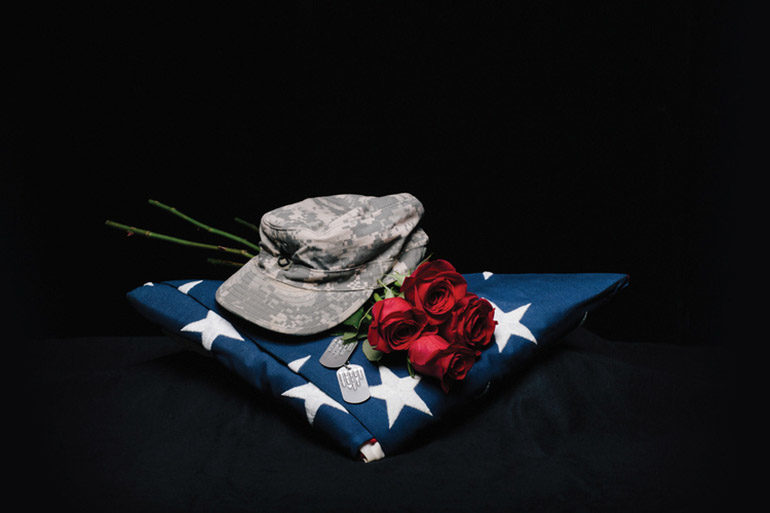
In the programme notes for Steven Dykes’ Glockenspiel, we are told that 40% of current personnel have been deployed more than once, and 27% of those veterans deployed to Iraq and Afghanistan suffer from anxiety disorders and/depression. A fifth of ex-service people are unemployed, and a fifth report cases of domestic violence. Male ex-service members are twice as likely to commit suicide than their non-serving peers. So it’s no secret that the US doesn’t look after its veterans very well. The play tries to look at the effects of service on those now finding their way in the civilian world, but Old Sole Theatre Company’s execution doesn’t deliver the power needed for this slowly-developing script.

Continue reading

Editorial | An Open Letter to the Print Room

https://s3.amazonaws.com/wos-photos-production/89185.jpg

I never make New Year’s resolutions. They work for other people and that’s great, but they aren’t my thing. But Daisy Bowie-Sell’s tweet from a few days ago asking what theatre’s resolutions should be for 2017 resonated with me. An industry making resolutions? Now that’s something I can get behind – people working together for a common goal is what theatre is about on a microcosmic level anyway, and more unity is surely a good thing in a world becoming increasingly polarised.

Continue reading

Dr Carnesky’s Incredible Bleeding Woman, Soho Theatre

https://cdn0.vox-cdn.com/thumbor/08BLiZi0k-g-w2TYXY9nOkQTz_4=/800x0/filters:no_upscale()/cdn0.vox-cdn.com/uploads/chorus_asset/file/2316126/shutterstock_132379235.0.jpg

From a lectern in the corner of the stage, Dr Marisa Carnesky fights the social taboo of periods. Resembling a character from a Tim Burton film, the PhD holder in menstrual rituals and synchronicity shares her collective research with a group of performance artists she assembled, the Menstruants. Sideshow/cabaret Dr Carnesky’s Incredible Bleeding Woman is a wonderfully quirky manifestation of sisterhood, womanhood and the wonders of the female body.

Every month on the new moon, Dr Carnesky and the Menstruants met on a beach in Southend to develop and performed rituals around their menstrual cycle. The Menstruants come from an array of backgrounds and sexualities, and their rituals are as unique and individual as they are. Through their performances, every woman’s personal experiences with their bodies is validated and celebrated.

The performances on show are distinctive and compelling. There is some spectacle: sword swallower MisSa Blue has a customised set of swords that suit her oesophagus shape each day of her cycle. Some of the work is more reflective and otherwordly, like Nao Nagal’s use of traditional Japanese masked performance. Molly Beth Morossa provides a creepy sideshow element with her twitchy, Victorian high tea. H Plewis performs a visceral movement piece with her menstrual jelly. Rhyannon Styles simply speaks to us directly about her experience of cycles as a trans woman. Fancy Chance, with the rest of the company, performs a phenomenal circus act as a finale, after an empowering, proud sequence of feminine reclamation. All of the acts celebrate female abilities and bodies without aggression.

In between the vulnerable, performative manifestations of female cycles, Dr Carnesky talks to the audience through an array of historical and cultural mores surrounding menstruation. She particularly focuses on myth and symbolism – death and rebirth, shedding of skin and female unity. Her tone is gentle and matter-of-fact; the the content may be revolutionary but she comes across as warm and supportive.

In a show that has the potential to come across as alienating, it is instead welcoming – no one in the audience (men included) seem uncomfortable, and the stories shared on the stage are supported from the house. Instead,this diverse, inclusive variety show is a divine honouring of the feminine mystery and a reclamation of one of the features that defines women, and a showcase of some excellent live artists.

Dr Carnesky’s Incredible Bleeding Woman runs through 7 January.

The Play’s the Thing UK is committed to covering fringe and progressive theatre in London and beyond. It is run entirely voluntarily and needs regular support to ensure its survival. For more information and to help The Play’s the Thing UK provide coverage of the theatre that needs reviews the most, visit its patreon.

The Last Five Years, St James Theatre

https://www.thestage.co.uk/wp-content/uploads/2016/11/Samantha-Barks-as-Cathy-in-THE-LAST-FIVE-YEARS-at-St-James-Theatre.jpg

The most moving performances are often largely removed from our day-to-day lives. But every so often you come across a piece of theatre that, whilst it may not be the objective best thing you’ve seen, encapsulates your life so well that you can’t not fall in love with it.

The Last Five Years is good though, even if it’s been a favourite of mine since I discovered it as a student back in 2002. The Jason Robert Brown musical, now 15 years old, is a wonderfully simple (albeit heteronormative) tale of boy and girl meeting, falling in love and falling apart. Framed by the late 90s NYC arts world (that I watched as a teenager in the suburbs and later joined as a drama school student), his story is told in chronological order and hers in reverse. There are two performers; the only time they interact directly is at their wedding, making the songs function more like reflective monologues. Though there is hardly any book, Brown’s lyrics tell the story clearly and sensitively. Dynamic staging and committed performances, like those in this anniversary production that Brown directs, are necessary to keep this quirky little musical from falling flat. It’s a powerful, disarming show when executed effectively, and this production may well be its new definitive.

Jamie is a writer and Cathy is an actor. They are 23 when they meet; neither has had any success yet but both are wide-eyed, bushy tailed, and ready to fall in love. Jamie quickly becomes a bestselling novelist whilst Cathy is left in his wake, waitressing and doing summer theatre in the depths of the Midwest. It’s within this career disparity that their relationship deteriorates, and I find Cathy painfully echoes my own life as a failed actor. The isolation and jealousy that Brown fosters in his songs is wholly believable and all too familiar.

Both characters are flawed but generally likeable and despite reservoirs of love, it’s not enough to save their marriage. Though both characters can be irritating in their own way, their good intentions and fundamental incompatibility also ring true to anyone that’s endured the heartbreak of an ended relationship or marriage. Here is yet another parallel to my past, but this time I’m more like Jamie – I married young and naive and was divorced by 30 as a result of my own mistakes.

Samantha Barks and Jonathan Bailey are Cathy and Jamie. Barks is a stronger singer, but Bailey’s full of charisma and confidently flirts with the audience – it’s a lovely touch. Both have great emotional range and their chemistry is undeniable. Their performances, layered with Brown’s storytelling, reduces many to tears. Sniffling and eye wiping is plentiful in this intimate house.

The small scale of the show is fleshed out with some delightful video design by Jeff Sugg and Derek McLane’s set. These provide the context that’s missing from the script and grounds their story in a real time and place, though its Gabriella Slade’s costumes that indicate the 1990s setting. The videos are simple and cartoon-like, a sweet and charming addition that Brown underuses.

Though more of a song cycle with hardly any spoken dialogue (if you were to listen to the soundtrack you would hear almost the entire show) and arguably rather insubstantial, this one-act show has the ability to burrow into the depths of your guts. It’s a heartfelt love letter to the countless New York City artists doing their best to get by and find meaning in each other, and to everyone that’s every fallen in and out of love. The poignant, timeless story of youthful love and loss has the sorts of songs that you play on loop whilst crying in bed with a heart broken by your own failures (I’ve done this more than I care to admit), and those you can dance to after a brilliant first date or a career win. With the excellent performances and slick design of this production, it’s not one to miss – even if you cry through it.

The Last Five Years runs through 3 December.

The Play’s the Thing UK is committed to covering fringe and progressive theatre in London and beyond. It is run entirely voluntarily and needs regular support to ensure its survival. For more information and to help The Play’s the Thing UK provide coverage of the theatre that needs reviews the most, visit its patreon.

Kissing the Shotgun Goodnight, Ovalhouse

rsz_kissing_the_shotgun_goodnight_credit_the_other_richard

Along with tickets, we are handed earplugs. Considering Christopher Brett Bailey’s first work This Is How We Die, I’m not surprised. A brilliant, relentless barrage of contemporary American myth followed by an encore of noise and light, Bailey isn’t known for doing things by halves, or even singular wholes. The slight, constantly startled-looking Canadian with gravity defying hair attacks performance making with the energy of a supernova. Kissing the Shotgun Goodnight has the same verve, but is otherwise a rather different beast. Whilst This Is How We Die was dominated by language, Kissing the Shotgun Goodnight has very few words – but the earplugs are definitely needed. This anthemic music and light show fills the room with sound, colour and vibration but is the difficult second album to This Is How We Die. Much more of a gig than a piece of theatre, it lacks the satisfaction of characters and narrative, even a hint of one. Bailey’s mind blowing poetry teases with a few tiny fragments, but otherwise leaves us desperately gagging for more of his words.

Though given earplugs, there is the choice of whether or not to use them. Notices state that the sound level is consistently over 100 decibels and that, “if you wear plugs the whole time you might compromise enjoyment of the show. and if you don’t wear them at all you will take home whistling ear canals”. Being one of those people sensitive to loud noises who constantly asks my other half to turn down the telly, I want to play it safe but I don’t want to miss out. So I opt for one plug in, with the other ready. This choice no doubt effects the experience – if I leave them out the whole time and feel discomfort, would I like the show less? Or would I like it more because it’s not actually ‘that’ loud? I use the plugs in response to the volume level – sometimes I have both in, sometimes none. It’s an interesting premise to consider that the experience and quality of the show hinges on these earplugs, adding an additional level of individual, subjective response.

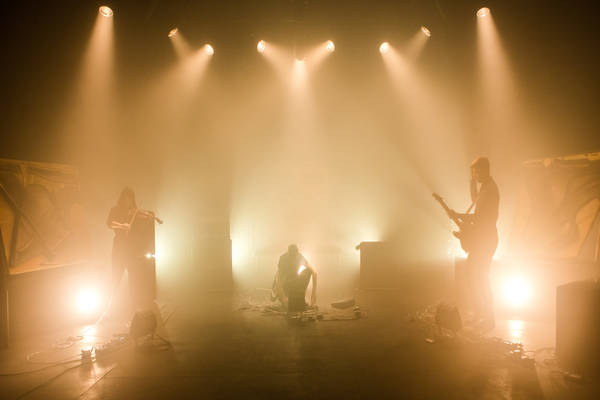
Bailey’s voice, slow and unseen, repeats, “this is a hell dream” in a brief textual introduction. Violinist Alicia Jane Turner uses loop pedals to sculpt a cinematic score reminiscent of mid-90s rock anthems. Her work is wonderfully angry, sweeping and alive. George Percy and Bailey are both on guitar, forming a silhouetted triptych with Bailey soon in the middle – amongst the monolithic speakers and flight cases forming a brutalist, urban landscape, he cuts the figure of a scrappy dystopian overlord. It suits him. If this is what hell is like, it’s fucking glorious.

Behind each performer is a wooden panel of about a metre square made of deconstructed pianos and their strings. These are visually impressive structures in and of themselves; their music evokes the violence and community of tribalism. Combined with excellent sound-responsive lighting (that malfunctioned to the point that the show needing to be stopped briefly), the overall effect is one of epic, soul shaking community.

The title paired with the music evokes the American paradox of a friendly but violent people who love their guns as much as their families. The music’s scale captures the expanse and variation of the North American landscape, and the few words he shares on the experience of waking up from a nightmare to find the world unchanged darkly foreshadow Trump’s America. Whether or not this is an intentional message, it is certainly a powerful one.

Kissing the Shotgun Goodnight is certainly wide open to interpretation and shows Bailey’s ambition and range as a performer of work designed to push the senses to their extremes. His textual dexterity is certainly missed (particularly by the coked up, flailing pair of young women sat next to me commenting on how disappointing this work is compared to his first) and comparatively this piece is somewhat disappointing, but it absolutely has its merits as a visceral, “fuck you/I love you” performance piece.

Kissing the Shotgun Goodnight tours nationally through November.

The Play’s the Thing UK is committed to covering fringe and progressive theatre in London and beyond. It is run entirely voluntarily and needs regular support to ensure its survival. For more information and to help The Play’s the Thing UK provide coverage of the theatre that needs reviews the most, visit its patreon.

Father Comes Home From the Wars (Parts 1, 2 & 3), Royal Court

https://i0.wp.com/www.officiallondontheatre.co.uk/servlet/file/store5/item374788/version1/fileservice770/374788_770_preview.jpg

American, Pulitzer Prize-winning playwright Suzan-Lori Parks doesn’t shy away from epic projects. Six years ago, she wrote a play a day to create 365 Days/365 Plays, then went on to write the nine-part Father Comes Home From the Wars. Parts one, two and three centre around Hero, a strapping young slave on a remote Texan farm. Spanning the Civil War, this epic story with influence from Greek myths and contemporary socio-political issues in Parks’ distinctive, poetic language takes its time to develop and has some discordant stylistic choices, but its narrative and historical interpretation is both compelling and important.

Each of the three parts has moments of profound brilliance and devastation, but Parks is in no rush to tell her story. The dialogue-driven script takes its time, meandering around a complex landscape of slavery, loyalty and race within this particular slave family. Though set in war time, there is little action – broader issues drive the conversation more so than current events. This is more of a kitchen sink drama than a wartime adventure story.

Part one solely takes place on the farm as Hero debates whether or not join his master in battle. The rest of the slaves take bets and try to persuade him one way or the other, but in the back of Hero’s mind is a promise from the Boss-Master – but is he likely to keep his end of the deal? Hero’s loyalty is split between his owner and his wife Penny, but the lure of the cast-off but smart uniform proves too much. Though little happens, the domesticity of part one has some of the tension that precedes a huge decision. Seeing a tall, strapping black man in the prime of his life wearing Confederate greys is most unsettling; this paired with the ingrained, accepted attitude that he is the property of his owner is a potent reminder that there has been insufficient progress in America’s attempts at racial equality.

Part two, though set at a particular moment in the midst of the war, has the calm of an eye of a storm and is by far the best of the three parts. Hero and Boss-Master have captured a Yankee prisoner whilst separated from their regiment during a battle. Hero’s loyalty is tested again, this time by his prisoner upon discovery of a secret that’s hidden in plain sight and only skin deep. Racial identity, individuality and freedom intertwine in an intoxicating allure of potential for Hero, who is still doggedly loyal to his owner. The powerful ending devastates in its frank depiction of ingrained attitudes of racial inferiority and liberal frustration with this mentality.

Part three is the more mature sibling to part one. The characters are older, wiser and more world weary in the face of Southern defeat. The pre-war certainty has given way to a chance at the great unknown of freedom, and for the first time they can choose where they live – anywhere in the great, wide world, or on the farm they have known forever. Penny and Hero’s devotion is destabilised in this irrevocably changed world that is now free, but cold and dangerous – and still is for black Americans today. The morality of freedom isn’t black or white here, but the ominous, thought-provoking grey of Hero’s, (now called Ulysses) uniform.

Neil Patel’s unforgiving desert of a set doesn’t have bells and whistles, but it’s sparsity highlights the richness of Park’s language and characterisation. Steve Toussaint is the remarkable Hero, painted with delicate light and shade. The rest of the cast are excellent in their own right, though lack the development of the initially appropriately-named lead.

Parks’ script is almost completely bedded in realism (that’s occasionally heightened), though a talking pet and some contemporary costumes slightly skew reality. Both are used sparingly and without any evident justification across the three parts so their inclusion feels jarring and unnecessary. The onstage musician, though very much a separate commentator, doesn’t clash the way these choices do.

For a play set during a war and a pivotal moment of America’s history, it is oddly detached from violence and conflict. Instead, Parks’ text goes after deeper themes within this transition from slavery to freedom. Though a greater sense of danger and looming dread would add needed further tension in parts one and two, the nuance that flows through the story is undeniably exquisite.

Father Comes Home From the Wars (Parts 1, 2 & 3) run through 22 October.

The Play’s the Thing UK is committed to covering fringe and progressive theatre in London and beyond. It is run entirely voluntarily and needs regular support to ensure its survival. For more information and to help The Play’s the Thing UK provide coverage of the theatre that needs reviews the most, visit its patreon.

The Marked, Edinburgh Festival Fringe

https://www.thestage.co.uk/wp-content/uploads/2016/08/THE-MARKED_Theatre-Temoin_image9-700x455.jpg

It’s so easy to ignore the homeless people that line the periphery of routine journeys and forget they are just as human as the rest of us, with passions, fears and often troubled pasts. The Marked puts homeless young man Jack at the centre of a desolate, urban landscape populated with pigeons, people who move him on and demons from his past. Masks and puppetry add a richness to his story, but not always warmth. In most of Jack’s encounters, be they real or in his head, he is believably under threat.

Peter Morton’s puppets are sweet and whimsical, with Jack’s pigeon companion being particularly lovely and with an excellent range of movement. Jack as a child has a sadness to him, emphasised further by familial alcoholism that we can assume eventually drives him away from home.

Grotesque masks by Grafted Cede Theatre are skilfully used to differentiate between fantasy and reality, with the haunted, oversized faces ever in the back of Jack’s eyes. Zahra Mansouri’s costumes make these figures larger than life and all the more threatening, rendering Jack helpless in their presence and the audience to empathise.

Devised by the cast of three and presumably with the support of director Allin Conant, the spoken text centres around Jack’s encounters with a homeless couple, Pete and Sophie. Here is where the show falls short: the potential for conflict and tenderness amongst the three isn’t fully realised due to too few, underwritten scenes. Though these human characters ground Jack in reality somewhat, there is also little focus on the dichotomy of reality vs. demons. There is real potential for a fight for Jack’s life or sanity between the two forces, but the script doesn’t capture as much of Jack’s struggle as it could.

Visually, this is a wonderful production that makes some powerful points on the mental health of homeless people. Jack becomes a fully realised person through the creatures that haunt him, but his encounters with other humans don’t do him full justice.

The Marked tours nationally through 2017.

The Play’s the Thing UK is committed to covering fringe and progressive theatre in London and beyond. It is run entirely voluntarily and needs regular support to ensure its survival. For more information and to help The Play’s the Thing UK provide coverage of the theatre that needs reviews the most, visit its patreon.