
A giant moose terrorises a South African village. A fifteen-year-old girl falls victim to her father’s vices. An introverted policeman makes a new friend. A village is changed forever.

A giant moose terrorises a South African village. A fifteen-year-old girl falls victim to her father’s vices. An introverted policeman makes a new friend. A village is changed forever.
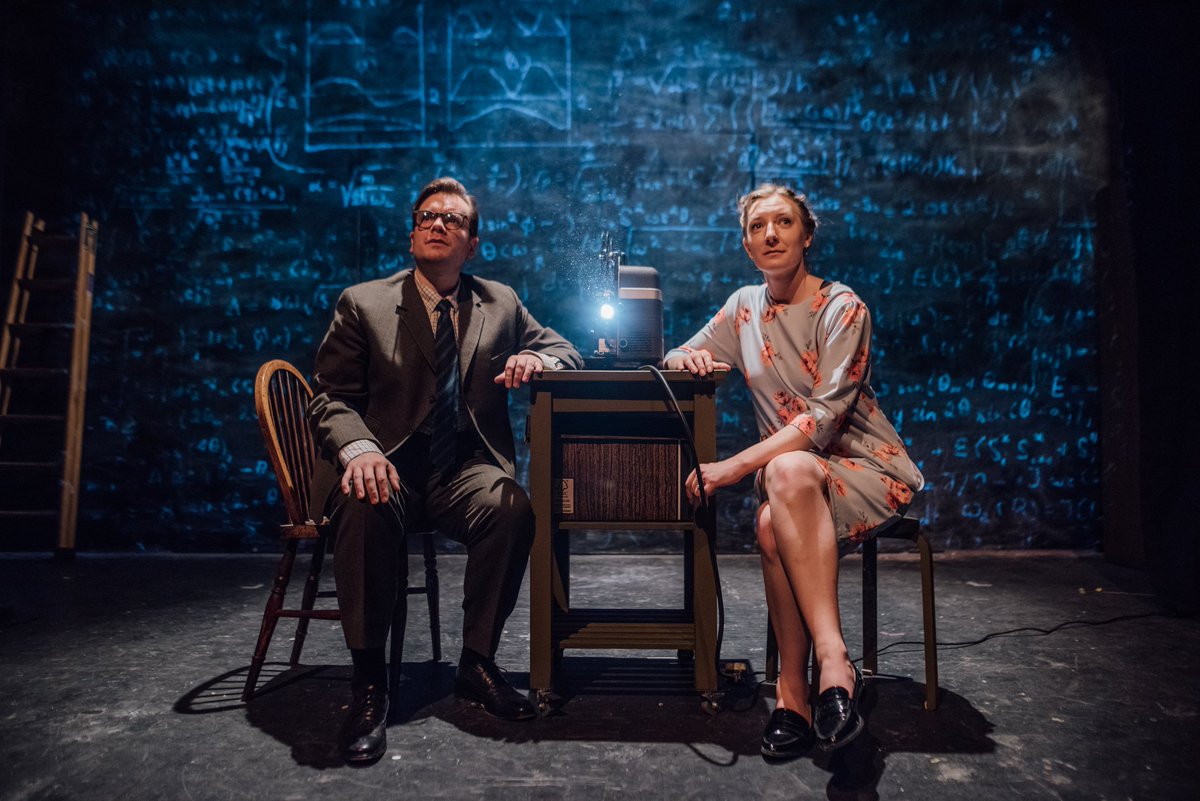
Ava is fascinated by human beings. Not just generally, but in the academic, evolutionary sense. She’s also going through a tough time and needs a break, so she’s on the pull. Jamie’s also after a distraction and the two matched on Tinder, so now, after millions of years of evolution, these two people are having dinner.

Theatre can plumb the depths of despair. It can elevate human glory and achievement. It can stir the heart and still the soul. Or it can throw a fabulous party on a rocket ship full of bearded drag queens in sequinned thongs.

by guest critic Willa O’Brian
Deciding what is best is a tricky thing to do. It’s particularly difficult if you’re trying to do what is best for someone else. How do you know if you’re doing the right thing? Is your aim and end admirable but your means slightly suspect? It’s a constant balancing act and Punts attempts to tackle this fundamental question in myriad ways. Jack is twenty-five and has a learning disability so severe that he lives with his parents and needs constant supervision, or so his mother believes. But it’s difficult growing up under the wing of so protective a maternal eye.
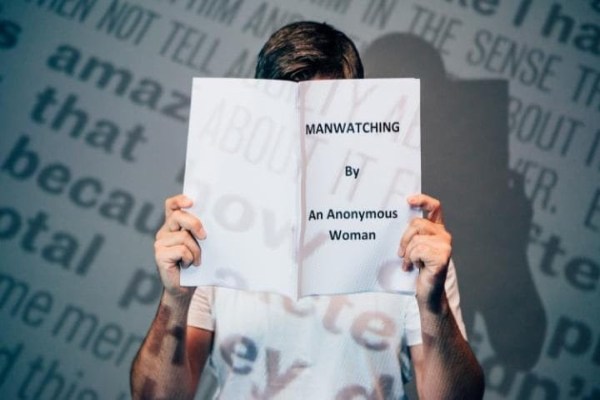
An anonymous woman frankly monologues about taboo sexual fantasies, abortion, orgasms and what turns her on. It’s honest, personal and as a fellow woman, easy to relate to. But rather than a woman performing the text, Funmbi Omotayo is given the script onstage having never read it before. The experiment to explore the effects of a man delivering a woman’s words on female sexuality has good intentions, but it doesn’t work. Most of the content is common female experience, and there is no primary narrative thread. The reading is often clumsy and flat and with little to look at, the piece lacks much of a dynamic.

Some questions for women:
Is it ok to want to be fucked?
Does wanting this oppose feminism?
Is it ok to want to be hit in bed? Will this man expect that from other women?
Is it ok to fantasise about being raped? What does this mean if I’ve been raped?
Louise Orwin is asking big questions about female sexuality and desire, but she doesn’t have the answers. There are no definitive answers anyway, just individual experiences. To make Oh Yes Oh No, she interviewed dozens of women around the country and found some disturbing patterns – about 90% of the women she met had been raped. Many of them developed rape fantasies. Women struggled to reconcile their feminism with wanting men to dominate them in bed.

By guest reviewer Maeve Campbell
Contemporary pop culture is awash with true crime stories: NPR’s Serial, HBO’s The Jinx and Netflix’s Making of a Murder are just a few titles that have recently gripped public imagination. It is therefore not surprising that two plays about the life of Harry Crawford, born Eugenia Falleni in 1875, have been dramatised in the last few years. The Trouble with Harry by Lachlan Philpot played in Melbourne in 2014 and now Christopher Bryant’s The Mutant Man comes to the Space Arts Centre.
Continue reading

Andrea isn’t very well. In solitary confinement at some sort of secure facility, she has no one to talk to other than those who briefly visit and those who live in her head. It’s likely the audience is the latter, as her monologue reveals the story of a young woman unstoppably desperate to love and be loved. This desperate runs so deep that she conjures a past relationship with a vegetative amputee she encounters in passing at a hospital, and goes on to do Very Bad Things that land her in this facility.

There are loads of jokes and stereotypes about life within a heterosexual relationship – women talk too much, men don’t understand the difficulties of pregnancy, LTRs feel like a burden, and so forth. Of course each relationship has its unique aspects, but there are common elements that often make generalisations about love ring true. Writer/director debbie tucker green discards many of the trappings of character specificity to expose universal truths about love and relationships in a powerful, moving script with elemental staging that taps into common experience.

Katie is a fairly average eighteen-year-old living a life busy with A-levels, uni applications and her older boyfriend, Abe. She’s not sure what she wants to do with the rest of her life, but she’s enjoying the here and now of Luton in the springtime. Her fragmented story by Jack Thorne focuses on one afternoon after school that starts out predictably, but soon spirals out of her comfort zone. The action that unfolds tests Katie’s maturity and independence, but the story is not one that is particularly interesting even with good delivery.
 The Play's The Thing UK