Barbarians, Tooting Arts Club

Punks Paul, Jan and Louis are working class lads living in south London. School didn’t do much for them and unemployment is high, so they hang around and smoke, nick cars and try to pull girls. They’re bored, angry and frustrated at the lack of opportunities available to poor kids like them. They want to improve their quality of life and feel like they belong in society, but society’s too busy fighting terrorism and racism to pay them any attention so they do their best to get by, or not. It sounds like the present, right? Nope. Barrie Keeffe’s Barbarians premiered in 1977. As London battles the National Front, striking unions and IRA bombs to a soundtrack of The Clash and The Sex Pistols, audiences can’t help but draw parallels between life then and now. It’s unsurprising this Tooting Arts Club/Soho Theatre production will soon be followed by the Young Vic’s, a completely different production of the same play, what with its contemporary social relevance and three fantastic roles for young actors to get stuck into. Though close to three hours long and composed of three self-contained plays at different points in the boys’ lives, the excellent performances, atmospheric venue and socio-political comment make the time well spent.

The long-vacant uni building on Tottenham Court Road used as the performance space for this production is the defining feature of this production, fostering intimacy, interaction and that overused catch-all word, “immersion”. The decaying interior surrounding the audience reinforces the poverty in the the lads’ and how grim it is for them day in and day out. We are in this world too, rather than just observing. Political slogans and graffiti cover the walls. The ceiling’s falling in above the youth club tables and chairs. Barriers herd spectators like cattle at a football match. Discarded furniture lines Notting Hill’s streets during carnival. The audience doesn’t sit on comfortable theatre seats, but on the items that make up the set. We aren’t comfortable, but nor should we be as neither are these guys. The three rooms that are used for the three separate plays contained in Barbarians are small and crowded with people; the actors’ energy rushes around the room, occasionally making contact with those of us watching but we never feel threatened despite the regularly erupting violence. There’s a feeling of claustrophobia created by this space, but also the possibility for the walls to be blown away by all rage. It’s a wonderful, angry whirlwind that encourages our inner “fuck the establishment” punk anarchists and empathy with the characters even though their actions are often abhorrent.

The cast is outstanding. Josh Williams is the aspirational black Louis; his skin colour is often unseen by his mates, and also makes him the victim of their racist “banter” and violence. Williams captures his inner strength and good intentions that eventually grow large enough to stand up for his beliefs. Whilst all of the characters want their lives to have a purpose, Louis doesn’t let leader Paul (Thomas Coombes) turn him into one of his violent minions as they grow up. Coombes’ terrifying Paul still manages to evoke sympathy when he is younger. His need to fit in always tends towards mob violence; the character reminds me of troubled young people from dysfunctional homes with little love around and no other knowledge of how to express frustration. Jake Davies is Jan, the shy mousy one who also tries to make something of himself but doesn’t have the inner strength that Louis does. Unsurprisingly, all three lads come to a horrible end when they meet again after going their separate ways, in the summer heat at Notting Hill Carnival.

Keeffe’s script is excellent and each of the playlets can stand alone and still make their point, but to present all three really drives the message home as the audience can see the effect of a poor quality of life on young people over a longer period of time. I would love to see a female equivalent of this play, as much of what’s contained in Barbarians is stereotypically male, and working class young women’s lives would have been no easier during the late 70s. Regardless, Tooting Arts Club’s production is worth seeing for its use of space and the effects it has on characterization and the energy of the piece. Director Bill Buckhurst’s work here is certainly to be commended in one of my theatrical highlights of this year.


The Play’s The Thing UK is an independent theatre criticism website maintained voluntarily. Whilst donations are never expected, they are hugely appreciated and will enable more time to be spent reviewing theatre productions of all sizes. Click here to make a donation with PayPal.

Rise Up, Theatre Centre

Kimisha Lewis in Rise UpMay, 1961. The American south. Segregation has been ruled unconstitutional, but southern states ignore the legislation and the federal government does nothing to enforce it. Activists of all ages and races, sponsored by civil rights organizations, challenge this non-enforcement on public transport and customer services by sending groups of riders, black and white, on interstate bus journeys from Washington DC to New Orleans.

They never get to New Orleans. Over the next several months, in Alabama and Mississippi one bus after another is brutally attacked. The activists, who believe in passive protest, are terribly injured and eventually arrested. President Kennedy, embarrassed by their actions on an international level, urges them to stop but they continue to fight for equality. Rise Up by Lisa Evans uses spoken word, storytelling and multi-rolling to inspire young people to fight for equality in their everyday lives and pay homage to these brave people fighting for justice. A cast of four actor-storytellers with boundless energy plays all the characters with minimal set and props, inciting enthusiasm from both adults and young people alike.

Three metal panels on wheels are the old silver Greyhound buses. A few matching metal stools cleverly create bus seats, jail cells, shop counters and so on. Actors Emma Dennis-Edwards, Sam Kacher, Kimisha Lewis and Edward Nkom set the scenes with an array of accents and physicalities under their belts, plus a few hats and small props to help. The audience consisting mostly of children from the local girls’ school immediately warm to them, both during the production and the post-show “revolution”.

The script is narration-heavy, perhaps too much so, but these monologues feature sections of poetry delivered with a hint of spoken word, but not so much so that the performance style changes and does a disservice to production style continuity. Though more showing than telling would have been welcome, the incidents described are quite graphic and not appropriate to vividly show to school children. This isn’t a particularly visual show, so the students’ attention is a testament to the script and performers’ strength.

Theatre for young people continues to develop in leaps and bounds, creating rich stories and detailed characterization that can appeal to all ages. Rise Up is an example of this, telling a clear story that although set in another era and country, manages to relate to the lives of contemporary young people in Britain feeling the effects of inequality. The staging is simple as is the design, but this serves to focus the audience’s attention on Evans’ excellent script.


The Play’s The Thing UK is an independent theatre criticism website maintained voluntarily. Whilst donations are never expected, they are hugely appreciated and will enable more time to be spent reviewing theatre productions of all sizes. Click here to make a donation with PalPal.

Empty Vessels, Rosemary Branch

Bethany runs a work-in-progress writers’ retreat on an idyllic Greek island. Her current guests are realty TV star lad’s lad Travis who is paying her to ghostwrite his autobiography, and Eric, a hippie idealist who chucked in his comfortable life to write a fantasy novel set in the present day based in Greek mythology. When mysterious biker chick Athena turns up looking for username Ferryman4 in response to his online advert of souls for sale, Eric’s fantasy starts to look rather like reality.

This dark comedy by Greg Freeman directed by Ken McClymont has an interesting premise and is chocka with witty one-liners. A couple of the characters could use a bit more detail and the dialogue can be a bit clunky, sometimes obviously spelling out plot development unnecessarily. The main thread of the plot is quickly predictable, but doesn’t interfere with enjoyment of the character-driven comedy. With nods to online identity vs. real life, narcissistic selfie culture, and the relevance of ancient history in the modern day, Empty Vessels shares socially relevant messages with a hefty dose of humour and without being preachy.

Travis (Tobias Deacon) is the most entertaining of the four characters, an amusingly abhorrent young man epitomizing the self-obsessed who determine the value of the life by the number of followers they have on social media. He and Eric (Ben Warwick) have some frustratingly funny opening clashes that resemble Christmas dinner with your UKIP voting cousin. Deacon gleefully gets stuck into Travis’s despicable character, but Warwick has less to work with as Eric, who comes across as well-intentioned but confused much of the time, which is less interesting to watch.

The set is simple but not sparse, probably quite cheap, and clearly indicates the setting with a couple of pillars, an army of potted plants, and concrete blocks. Constructed by Jules Darker and presumably designed by McClymont, it immediately evokes Greece. It’s a lesson in how fringe theatre sets don’t have to be sparse to save money, unless there really is no budget for one. Leo Steele’s lighting is warm and inviting, with sharp transitions to show change in time of day and mood. These transitions are wonderfully quick, with no lost momentum.

This one-act also looks at humanity in a positive light despite the mocking of Narcissus’ descendants. The final scene’s revelation is both funny and endearing after the Comedy of Errors-esque soul swapping. It also gives Sophia Hannides (Athena) a chance to showcase her range. Even with the self-obsession of today’s society fostered by the dominance of online presence, there are still gods amongst us who have the power to wake us up and refocus attention onto the real here and now rather than on a smartphone screen.


The Play’s The Thing UK is an independent theatre criticism website maintained voluntarily. Whilst donations are never expected, they are hugely appreciated and will enable more time to be spent reviewing theatre productions of all sizes. Click here to make a donation with PalPal.

Reckless, Rose Playhouse

The pool preserving the remains of The Rose Playhouse is the sea surrounding a nameless, remote island. Fascinating, dangerous, wild or wonderful, all of the island dwellers have lengthy, close relationships with the sea, for better or worse. These intertwining, turbulent histories meet and join each other at the Old Man and his Boy, a story of a new, young love and a past love, long lost. Heady Conduct’s Reckless unfolds a timeless tale of love, truth and community dictated by the sea using narration, site-specific influences and direct address interspersed with conventional performance. The story is both sweet and saddening, but the play’s structure is disjointed and thin, occasionally unclear in time and place, causing the story to lose support and clarity. Fortunately, the scenes between characters are endowed with honesty and intimacy, and the unique performance venue is fantastically utilized by director/actor Rebecca Rogers.

Rogers is the central narrator figure, the Harbour Master. She is the all-seeing and all-knowing, performing with a reserved omniscience. Rogers also plays the Old Man’s dead wife, a quiet enigmatic character often referenced but rarely seen. She’s a wonderful, etherial presence when she does eventually appear. The other living characters have more energy, particularly Alison Tennant as feisty, confident Girl that shy Boy falls in love with, and Blake Kubena as the Old Man, father of Boy. Kubena’s Old Man is a ball of pent up mourning that’s become a threatening obsessive, controlling his son’s every move. Though there is no issue with their performance, Kubena and Simon Rodda’s Boy look like they could be brothers in their late 20s or early 30s, not an elderly man and his teenaged son. The lighthouse keeper, played by Edward Bijl, is a watchful outsider trying to engage with the native islanders though never succeeds, resorting to desperate measures to fit in. Though the character provides some comic relief, he contributes little to the story and provides minimal plot progression.

The general atmosphere is good; atmosphere is vital to make a successful show in such a vast and unusual performance space. It gives productions here specificity of location and time period, otherwise the dark emptiness beyond the stage dwarfs the play. Nautical elements deck the back wall of the site, a hut perches precariously on the water’s edge, seagull puppets and some good sound design add specificity. The lighting isn’t fully utilized to create mood, nor does it do much to counter the sweeping grey ceiling and walls, but this island could be in a location that’s perpetually cloudy.

The use of ritual and tradition gives the story gravitas; the Harbour Master’s Festival of the Lost is a moving tribute to those drowned at sea. It connects the characters to each other and to the island, helping to counteract the loosely fitting scene structure. It also emphasizes the seriousness of the small twist at the end where the audience learns the details of the Wife’s death, and the gradual muddying of the truth with the passage of time. The most moving plot point is Boy giving a ring of his mother’s to Girl, inscribed with a medieval French saying, “pences pour moye du” or “think of me, God willing”. Historically, this ring was found during the Rose’s excavations and now lives in the Museum of London (The Rose sells replicas in its giftshop). This is a delightful nugget of Rose history bonding the theatre to this particular production.

Though Reckless is in the early stages of its expansion into a full production from a one-person show, it still needs more flesh on its skeletal frame. There are great characters and the love story at its core is wonderful, but its dreamlike atmosphere needs more detail to make the world of the play truly believable. It’s most certainly achievable, and this play will develop its sea legs as it continues its development.


The Play’s The Thing UK is an independent theatre criticism website maintained voluntarily. Whilst donations are never expected, they are hugely appreciated and will enable more time to be spent reviewing theatre productions of all sizes. Click here to make a donation with PalPal.

Edinburgh Festival Fringe, 13 August: Part Two

Camilla Whitehill’s Where Do Little Birds Go? tells the true story of Lisa Prescott, an 18-year-old nightclub hostess kidnapped by the Kray twins in 1966. Re-named Lucy Fuller, Jessica Butcher tells Prescott’s story through this harrowing solo performance. Humour and music are used to break up the horror of Fuller’s imprisonment with an escaped murderer who rapes her for hours on end, but some of the music transitions feel forced. Lucy loves singing; Butcher shares this love with gusto. She also wonderfully and ever so slowly transitions from the bright eyed, bushy tailed girl from Hastings who moved to London with hopes, dreams and £5 in her pocket, to a quietly streetwise, mature young woman.

Whitehill’s script contains some witty one-liners but doesn’t shy away from graphic incidents, like Lucy adventures as a nightclub hostess who offers “afters” to her best clients, and her experiences at the hands of the Krays. Justin Nardella’s set is Winston’s, the Mayfair club where Lucy worked before her capture and after her release. It cleverly uses sturdy levels to break up Fuller’s movements, but some of director Sarah Meadows’ blocking feels arbitrary. Meadows does have a good sense of storytelling, but struggles with the script’s abrupt ending. The audience never learns the how Lucy regained her freedom, though Butcher’s excellent performance draws attention away from this issue. Overall, this is a good offering from Duckdown Theatre and Heavy Weather Theatre that with further script development could be an excellent play.

https://i0.wp.com/lovelettershome.org/wp-content/uploads/2015/08/Love-Letters-Summerhall.jpgMy last production of the day is Katharine Rose Williams Radojičić’s Love Letters to the Home Office, which receives a one-off table reading at Summerhall. This is one of the most important plays of contemporary British theatre. Not because of innovation or style, but content: it exposes the consequences of the 2012 Home Office legislation that breaches the human rights of an estimated 50,000 families in the UK.
This new ruling states that in order for a UK citizen to bring their non-European spouse into the country, the UK partner must earn a minimum of £18,600 a year or have £62,500 in savings. With travel and technology connecting people unlike that in past generations, couples forming from all corners of the globe are becoming more and more common. The income requirement discriminates against the working poor, though. It means that if the UK partner earns the minimum wage, they must work 60 hours a week. People who work in many jobs vital to UK societal function would not be able to living in the UK with their non-EEA partners. Such roles include teaching assistants, cleaners, caretakers, administrators, technicians, support workers, receptionists, and so on. The non-EEA partner’s income and savings are not considered in the application. Basically, if you are poor, you better fall in love with someone that is a European citizen or you will not be able to live together as a married couple unless you leave the UK.

Love Letters to the Home Office uses verbatim theatre from real-life people affected by this ruling. It is a politically charged play with a clear agenda: to spread the word about this home-wrecking Tory ruling. The stories are heart rending. A little boy stranded with his mum in America calls his Samsung tablet Dada. A single mum who can’t earn the required income because she is caring for her daughter must wait until her daughter’s old enough to go to school before increasing her working hours. A woman from the Philippines is unable to attend her husband’s funeral in the UK because her visa application had been rejected. These stories go on and on. There’s also a lot of factual information in the script that quotes from government legislation and academic studies amongst the actual stories. I struggle to imagine a dynamic staging and want to hear more first-hand accounts, but the script content is still hugely powerful and a motivational call to action.

The programme contains advice on how to engage politically if you are moved to act. It also has links to the project’s website, with many more accounts from people affected by this law. The website also allows for contributions, which opens the play to potential of constant change. The script could alter with every performance in order to provide a voice for these oppressed people who did nothing more than fall in love with a non-European whilst earning less than £18,600 a year.


The Play’s The Thing UK is an independent theatre criticism website maintained voluntarily. Whilst donations are never expected, they are hugely appreciated and will enable more time to be spent reviewing theatre productions of all sizes. Click here to make a donation with PalPal.

Catalpa, Edinburgh Festival Fringe

tumblr_inline_nrvc51lXq21ty6pcm_500In 1876, Captain George Anthony was hired to sail The Catalpa from Massachusetts to Freemantle, Australia to rescue six Irish prisoners. Numerous difficulties nearly scuppered the mission, creating fascinating narrative potential for songwriters and playwrights. Actor/writer Donal O’Kelly frames this nautical tale with a frustrated screenwriter who keeps being rejected by Hollywood producers. After the latest, “no”, he returns to his flat alone and enacts the entire story he sees in his head that no one appreciates. Youthful American company 35 Brookline brings this one-man show from Boston to Edinburgh with a great performance by Joseph Freeman, but some script issues and production choices prevent this play from reaching its full potential.

There are some wonderful moments. Freeman’s ability to embody honest tenderness as George saying goodbye to wife Greta and daughter Pearl, and later imagining them on his journey, are the best in the play. The model Catalapa at sea on the screenwriter’s bed with a small torch sun is simple but effective object manipulation. Freeman’s energy and commitment to the role are excellent and unwavering. In a play written 20 years ago, Freeman feels too young for the screenwriter character, though. The language doesn’t sit organically in a contemporary character of his age and a man reaching that level of bitterness is usually middle-aged rather than early-to-mid twenties, though his youth suits the characters in the Catalpa story.

The introduction of O’Kelly’s script is rushed, not giving the performer enough time to suitably build to the desperation required to carry him through the enactment of his script alone in his flat. It’s also an unconvincing scenario, and one that feels plausible with the addition of copious amounts of alcohol. The script also fails to return to the screenwriter at the end of the play, creating an abrupt ending and the feeling of incompletion.

Though the pace and energy are generally good with suitable attention paid to the more intimate moments, other climactic moments could have been slowed down more. The story depicted in lengthy and complicated, which can be hard to follow at pace. I’m unsure whether this is a script or directorial issue, but it’s easy to lose track of the story. There is much more potential for sound and lighting detail to add even more atmosphere, but this is underused. What is there is supportive of the story with the exception of a few blackouts.

This is certainly a quirky and endearing piece of theatre, but one that does not manage to fully satisfy. The story is wonderful as is Freeman’s performance, but other elements of the production don’t knit together as smoothly as they could.


The Play’s The Thing UK is an independent theatre criticism website maintained voluntarily. Whilst donations are never expected, they are hugely appreciated and will enable more time to be spent reviewing theatre productions of all sizes. Click here to make a donation with PalPal.

Heresy of Love, Shakespeare’s Globe

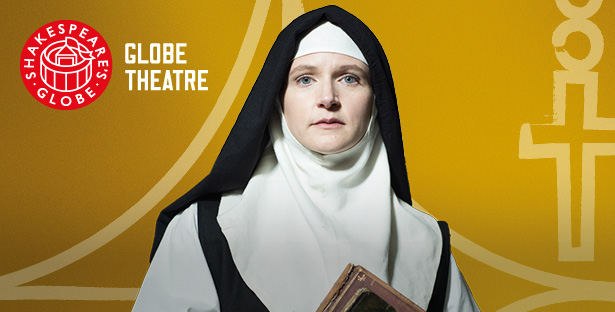
web.phpSor Juana is a great writer of plays and poetry known throughout Mexico, or ‘New Spain’ as it’s called in the 1600s. She is a scholar with progressive views on women’s rights and unafraid of expressing them. Juana has also committed herself to the prayerful life of a convent nun. Newly appointed Bishop Santa Cruz seems supportive of her unconventional activities, but the older, more conservative Archbishop Aguiar y Sejas from Spain adamantly opposes her. Her father confessor, Fray Antonio, balances precariously between the two men’s views as Juana faces the risk of a heresy charge and the Inquisition. Outside the convent walls, there is conflict between the church and the secular court and within the convent and the plague is coming. Heresy of Love is a play that operates on many levels both microcosmic and globally. It is blatantly feminist but also looks at how horribly women can treat each other, male conflicting attitudes towards women, and confronts issues within the Catholic church. The script captures the style of Spanish Golden Age plays: deception, politics, religion, danger, love and downfall are present in this intimate and moving play by Helen Edmundson.

An austere, black, metal structure partitions the length of The Globe’s stage between its dominating columns, hinting at the demure, ever-present convent walls. Against the richly detailed paintwork of The Globe and giant canvas prints of a religious painting I probably ought to know, it creates an ominous clash. It also blocks off the back of the stage and access around one of the pillars, but director John Dove and designer Michael Taylor have extended the thrust well into the audience to compensate. Though the set looked lovely and delicate despite its size, there is no need to cover and block off the back of the stage; it is a set in and of itself. Modifying the stage space, while able to give directors more freedom, alters the unique features of this playing space. In this case, the figure-of-eight path around the columns that supports conflict and tension is lost and the actors are placed deep into the round space. The actors are often stationary and so far forward that energy occasionally dips.

Nevertheless, all performances are excellent and, typical of Globe casts, the ensemble is close and completely in tune to each other. Naomi Frederick is a bold, confident Juana with the grounded calm of unwavering faith. Her reduction to a broken victim is heart rending. Her slave Juanita (Sophia Nomvete) provides wonderful comic relief though deliciously funny one-liners. The priests (Patrick Driver as Antonio, Anthony Howell as Bishop and Phil Whitchurch’s Archbishop) complement each other well, embodying distinct characters that capture the humanity behind the robes and inspire hatred from their treatment of Juana. Howell’s duplicity is unpredicted, creating a deeply conflicted character you love to hate. The only casting issue is a blatant lack of diversity. In a play set in Mexico with characters both native and Spanish, there is a glaring lack of Hispanic actors.

Heresy of Love premiered in 2012 at the RSC, but this is its first production in London. It is an accessible, relevant, gem of a play paying homage to Sor Juana, a genuine historical figure. These characters from the past with contemporary relevance are at home at The Globe and remind us that despite the progress we have made in women’s rights, there is still work to be done and we would do well to treat each other nicely along the way, despite any inner demons we battle.

Note: the performance reviewed was a preview.


The Play’s The Thing UK is an independent theatre criticism website maintained voluntarily. Whilst donations are never expected, they are hugely appreciated and will enable more time to be spent reviewing theatre productions of all sizes. Click here to make a donation with PalPal.


Shakespeare & The Alchemy of Gender, Rose Playhouse

At 19 years old, Lisa Wolpe fell in love with Shakespeare. She’s now performed more of Shakespeare’s male roles than any woman in history after founding Los Angeles Women’s Shakespeare Company twenty years ago. She is currently touring the world with her solo show, Shakespeare & The Alchemy of Gender. Although it sounds like an academic lecture, it contains some of the best Shakespeare performances I have seen. The play pays homage to her father, telling the man’s story and how he affected her life. The man who killed himself when Wolpe was four is brought to life in a deceptively simple show that finds hope in a history of suicide, abuse and war.

Though to say the show is about her father’s life oversimplifies the content. Yes, a large portion is about him, but it also covers her life after he had gone, her relationship to specific Shakespeare characters, gender, performance, religion, Elizabethan society, family and alchemy – the transformation of a base material into something precious. These themes intertwine, with no moment unrelated or superfluous and the 55-minute show amazingly manages to not feel overloaded with messages. As she works through her life and her father’s, she relates Shakespeare’s characters to individual moments in time. As she reflects on her relationship with him now, she becomes Hamlet remembering his father’s ghost, in the best performance of the role I’ve encountered. Her father’s WWII escape and joining up with the Canadian forces as a double agent lead into Henry V. We also meet Richard III, Hermione, Shylock and others in relation to herself and her family’s history. Wolpe is not only adept as any man at embodying the male roles, she excels. She also effortlessly switches between men, women and herself, functioning in an androgynous state when addressing us out of character.

Wolpe is comfortable addressing us with an open honesty about difficult episodes in her life without coming across as confessional or masturbatory, as one-person shows run the risk of being when used to come to terms with the performer’s or writer’s issues, whatever they may be. The show is relaxed and conversational with the audience nodding, laughing, even verbally agreeing. The intimate venue helps, but she certainly has the energy to fill a huge theatre. She had a profound effect on the audience, particularly when sharing moments about her relationship with her family and dressing in boys’ clothes to defend herself against her predatory stepfather.

Her interpretation of the characters she performs seems rooted in physical and vocal distinctions, with her General American accent capturing the visceral-ness of the language that the more recently created RP/Standard English. These characters come from her gut, and she explains how she is able to relate to each one and perform them with truth. This is evidence of Shakespeare’s continuing relevance to modern life. Not only is Shakespeare: An Alchemy of Gender an excellent piece of solo theatre, it is also a lesson in performing the great Shakespearean roles of both genders and an encouragement for all to defy gender boundaries dictated by society.

Because this is a woman that must be experienced, here is an extract from her Iago. Enjoy.


The Play’s The Thing UK is an independent theatre criticism website maintained voluntarily. Whilst donations are never expected, they are hugely appreciated and will enable more time to be spent reviewing theatre productions of all sizes. Click here to make a donation with PalPal.

Killed: July 17th, 1916 for everything theatre

“…On first impressions, the superior set evoked the patriotic idealism of small town England at the start of WWI. It was so well-designed and well made by the talented Dave Benson, that it would easily have been at home on West End stage…

“The play uses a non-linear structure to tell the story of Billy Dean, a volunteer solider from Bradford, sentenced for cowardice in the face of the enemy…The best element of this production is the script and story…Even though the ending is rather abrupt, to alter it would take away from the harsh circumstances.

“The performances are good, but not outstanding. This is mostly because the characters were written without a great deal of depth but they still suit the story as they are…

“The costumes were of a high calibre for fringe theatre…costume designer Lorena Sanchez’ creative talent certainly shined through. Sound designer Max Thompson’s relentless bomb blasts during scene transitions became predictable…We certainly never forgot the world of the play was amidst the front lines of WWI.

“This is a story that definitely needs to be performed again. Director Elizabeth Elstub handled it clearly and simply, without any complex directing trickery…”

Read the entire review on everything theatre here.

Shooting With Light, Greenwich Theatre

1930s Paris. Jewish Europeans are moving west to escape the rise of Nazism. Two of them meet: one of them is a Hungarian photographer, the other is a German activist. Both are full of youthful confidence and fearless in pursuit of their goals. Emerging company Idle Motion uses physical theatre, light, sound to tell the story of these young lovers, their legacy and the importance of photography.

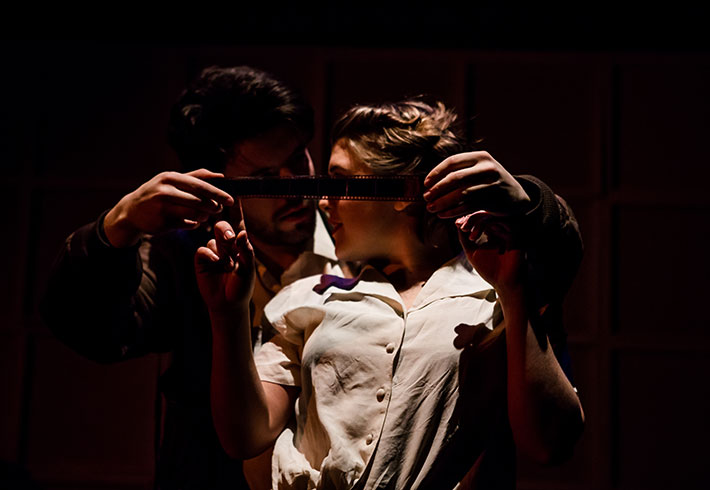
Firstly, Shooting With Light is a loveShooting-With-Light_018 story. Two young people meet, fall in love and take the world by storm before ending in tragedy. These young people are Gerda Taro and partner Robert Capa (after they changed their names), pioneering photojournalists of the Spanish Civil War. Gerda and Robert start working together; Gerda is initially his assistant who supports him in reinventing his persona in order to make the professional contacts he needs to succeed. Her talent overcomes this role however, and she eventually develops an independent reputation for honest, brave documentation. Partly fictionalized but based on Gerta’s brief life, we see Robert teach her to use a camera followed by her passionate rise to renowned photojournalist needing to show the world the reality of life on the front lines. Alternating with this storyline is the time-jumping subplot of Robert’s brother Cornell and his assistant June, seeking to amalgamate Robert’s work after his death. They are frantically searching for a mysterious red suitcase Robert once spoke of in order to complete the archive of Robert’s work.

Interspersing the scenes of historical naturalism are transitions using visual and physical theatre, similar in style to Frantic Assembly. This is an on-trend performance aesthetic, but one that is visually appealing and provides another level of insight into the characters and their struggles. The most effective of these sequences show Taro and Capa falling in love over rolls of negatives towards the beginning, and Taro’s fight to access the front lines with her camera towards the end. The set is simple in appearance as several blocks and a white screen, but they transform using projections, light and a series of doors. Like their narrative, the structure is simple but highly effective and tells an excellent story. Projections of Taro’s work add further historical context and support the world of the play – the audience sees what she sees and experiences.

The company of five twenty-somethings work wonderfully together, and so they should as they met in secondary school. Shooting With Light captures the infectious enthusiasm and ambition of youth, no doubt mirroring their own attitudes that the world is theirs to have and success is a given if they work hard enough. It will be interesting to see how their work develops as they age and experience the challenges and hardships of working in the arts. As visually appealing as their work in now, it needs more depth of human experience. June and Cornell’s quest to locate Capa’s missing work is arguably the more interesting side of the story, but neglected in favour of Taro’s and Capa’s exciting lives and career progression. The ensemble also lacks diversity of age and ethnicity, something that I hope they increase in the future. Idle Motion have an obvious gift for storytelling and integrating various performance styles at this young age, so the world really could be their oyster as they continue to grow.

Intention: ☆ ☆ ☆ ☆

Outcome: ☆ ☆ ☆

Star Rating: ☆ ☆ ☆ 1/2


The Play’s The Thing UK is an independent theatre criticism website maintained voluntarily. Whilst donations are never expected, they are hugely appreciated and will enable more time to be spent reviewing theatre productions of all sizes. Click here to make a donation with PalPal.