by Grace Bouchard
As I stand to leave, my foot lands on something soft as it squashes into the ground. I pick up my shoe to see a glistening, pink strawberry, now jam, on the floor. That’s a shame, I think to myself. I could have eaten that.

by Grace Bouchard
As I stand to leave, my foot lands on something soft as it squashes into the ground. I pick up my shoe to see a glistening, pink strawberry, now jam, on the floor. That’s a shame, I think to myself. I could have eaten that.

by Grace Bouchard
Heart-thumping music blaring, performers Ayden Brouwers and Lizzie Morris take the stage. As they dance towards each other, vibrant disco lights hitting their slow moving bodies, they ask “How do we look?” and “How do you look?”. It is at this point that we realise why we are here. We are here to look, and to observe. Simply through the act of being in the room with them, I am complicit in demonstrating the impact the cis gaze has on transgender bodies.

by Matthew McGregor-Morales
What’s the cost of progress? Are big, shiny, new-building complexes really progression at all? These questions are at the heart of a raging battle for London’s soul, and Frankie Foxstone couldn’t give a shit about the answers.

by Stephanie Hartland
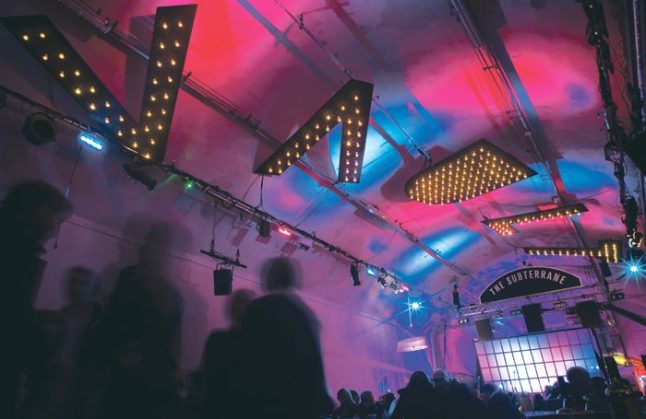
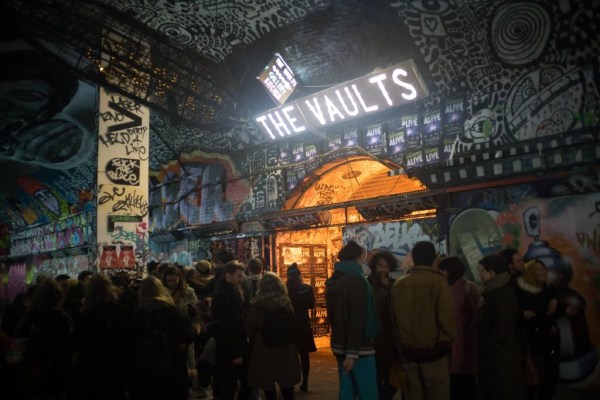
The Vaults houses some of the most quirky and innovative new work on the fringe scene, making it an ideal host for Eleanor Colville: Google Me, the first comedy show written by an algorithm-generating, quick-witted robot.
by Evangeline Cullingworth
Yes, this is my first time in Dingle – no, I’ve not been out on the peninsula yet and yes, I’ll make sure to say hello to Fungie. The next thing I know we’re splitting a bag of Taytos with the row in front and cheering along to a traditional song that has risen up. And the play hasn’t even started yet.
by Isabel Becker
For newly formed theatre company Afkar, their debut play is a strong and creative response to Edward Said’s concept of Orientalism in modern-day Britain, but not something extraordinarily fresh or unique. Drawing from duplicate Orientalist accounts by Western men of Kuchuk Hanem – a famous dancer in Egypt in the mid-nineteenth century and subsequent symbol of the male Orientalist gaze – the play draws interesting parallels between Victorian depictions of Middle Eastern women and the lived experience of these women today.

by Bryony Rae Taylor
In a manic pre-show ‘welcome’, Nathaniel Hall greets the audience with recently sniffed white powder falling down his face, dressing gown on, and in a bedroom strewn with the detritus from a recently concluded party. He’s overslept and he’s addressing his post-party headache with a heck of a lot of cocaine. It’s alarming.
‘We’re not in the Vauxhall Tavern anymore are we, Toto?’
By Evangeline Cullingworth
Jack is hurtling forwards, desperately striving to fix mistakes from their childhood, arguments with their girlfriend, and now climate change. This movement needs them, and they need an excuse to keep moving. We meet Jack in the middle of the London Rebellion, the 10 days of peaceful civil disobedience organised by Extinction Rebellion in April last year. They jump onto their bicycle late at night and begin to hurtle forward, away from the scrutiny they’re under at home.
By Tayo Olowo-okere
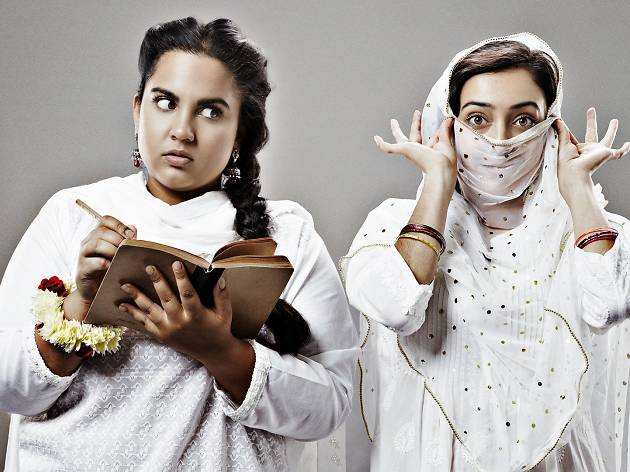
Santi and Naz are best friends living in a small Indian village just before the partition of India takes place. The story follows their relationship, and how the country’s political situation affects them both.

by Laura Kressly
In 1831, Mary Prince’s autobiography was the first book published in the UK about a Black woman. Her straightforward, emotive prose shares her lived experience of being an enslaved woman in the West Indies and England in great detail, including numerous accounts of abuse. This two-woman show embraces it all, packing this story of family separation, numerous masters, and a quest for freedom into an hour. Dance, music and ritual are embedded into the dramaturgy, too – this is a dense show, but one telling an important story that’s exquisitely performed.
 The Play's The Thing UK