How to Win Against History, Ovalhouse

rsz_copy_of_©rah_petherbridge_photography_-_how_to_win_against_history-_done_3

British history is peppered with truly remarkable people. Kings, queens, writers, actors, scientists, athletes and military generals pepper school history books and cultural subconscious. Then there are the people like Henry Paget, fifth Marquis of Anglesey, who are largely forgotten, tucked away in the centuries-old folds of this country’s past. During his brief Victorian life, he became rather infamous for cross-dressing, blowing his family fortune, and turning the chapel of his estate into a 150-seat theatre where he played the leads in his own productions with which he later toured Britain and Europe.

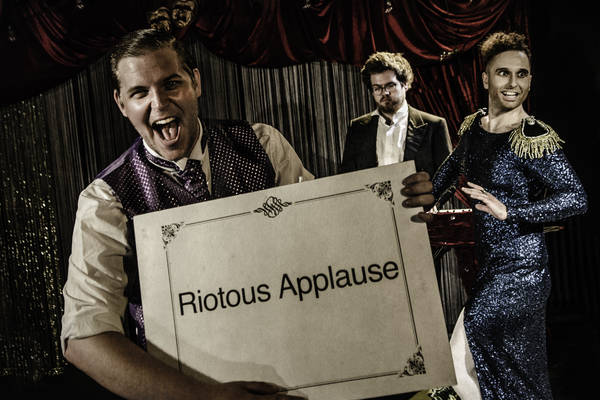
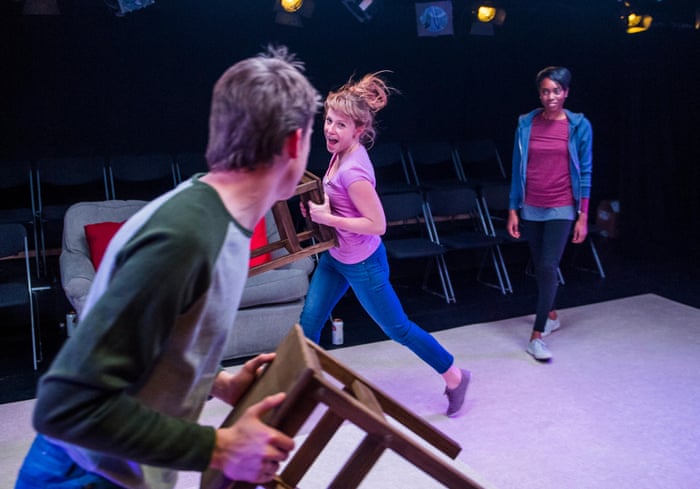
Seiriol Davies’ How to Win Against History chronicles (and fictionalises parts) of Henry’s radical life, focusing on his theatre work and cross dressing, as a fabulous, form-bending cabaret/musical. This little show has a huge heart and needs further script development to smooth out the lumpy narrative, but sequins and silliness, destroying the fourth wall, clowning and contemporary political commentary makes for a powerfully subversive and hilarious production.

The lengthy introduction provides necessary exposition, but as it gives way to a song that focuses on the Marquis’ time at Eton, it becomes too long. The interesting plot points come once the character is of age, and these deserve more attention than they are given. The beginning also sets up the style that’s maintained throughout, of musical theatre songs punctuating scenes that are heavy on the sort of narration and banter that is found in cabaret and drag acts. It’s a wonderful act of genre smashing. Musical theatre, cabaret, vaudeville and pantomime make an engaging, energizing combination that fosters audience participation and celebration. If this is where popular theatre is heading, then bring it on – Seiriol Davies’ script is at the forefront of musical theatre innovation.

Once young Henry finishes school, action starts to pick up. After a mutually beneficial marriage to his cousin (that was reportedly never consummated) and teaming up with a actor Alexander Keith (Matthew Blake), he casts himself in several plays. When no one comes, they take the shows on the road, making hilarious changes as the audience becomes less enamored of his work. More could be made out of his marriage and his increasingly weird theatre productions; they are rushed and little sense of a timescale is provided. Between his awakening as a student to a touring theatre maker, there’s a feeling that a lot of plot is missing. He is suddenly a broken man in Monte Carlo being interviewed by Daily Mail journalist Quentin (a brilliant in-joke!) and whilst this is deliciously funny, there is yet another leap in time and place. More scenes could easily be written to fill in these gaps without disrupting the established style. Even though the cabaret influence comes though in the short sketch-like scenes, as a musical it feels underwritten.

Writer Seiriol Davies plays Henry, the fabulously flamboyant lover of sequined dresses and the theatre. His journey from naïve boy to the ill and impoverished 20-something is lovely and genuine, with songs that in turn capture his enthusiasm and anguish. Energy abounds from the other two performers, making the show feel a lot bigger than it actually is.

Though this new musical needs further development to give it the scale and narrative punch that matches the style, it is fantastically good fun. The political content and deconstructing of style and structure are fly in the face of historical erasure of controversial figures and dramatic conventions. But it evoked engagement and contribution from a willing audience that was eating out of the performers’ hands within the first few minutes and this in and of itself is a huge indicator of excellent work. How to Win Against History could easily have the scale of a West End show, and it deserves the attention that would garner it.

How to Win Against History runs through 28 August in London and Edinburgh.

The Play’s the Thing UK is committed to covering fringe and progressive theatre in London and beyond. It is run entirely voluntarily and needs regular support to ensure its survival. For more information and to help The Play’s the Thing UK provide coverage of the theatre that needs reviews the most, visit its patreon.


Monorogue: Seven Deadly Sins, Old Red Lion Theatre

The Salon: Collective are a grassroots group of artists that offer classes, workshops and produce work. United by American practitioner Sanford Meisner’s post-Stanislavskian technique, they have amassed a network of actors, teachers, directors and writers dedicated to supporting each other’s creative development. Monorogue is one of their latest endeavours, an evening of new writing linked by a prominent central theme. This month’s is Seven Deadly Sins, chaired by a judge and voted ‘guilty’ or ‘not guilty’ by the audience jury. It’s a simple, effective format that allows actors to showcase characterisation skills and develop their writing, with a clear through line that makes it feel like more of a production than a showcase. Potential for variation in style and tone make this new writing night worth catching again.

John Jesper has created Judge Frank Goody, an east London geezer who blagged his way to the top of the courts. Whether or not it’s intentional, the character is a powerful comment on contemporary judicial corruption as he orders a trio of prostitutes between acts, drinks and falls asleep. He is supported in court by religious fundamentalist PD Callie Carter (written and performed by Rachel Stoneley) who killed her husband for committing sins against God and marriage. These two characters provide much needed levity in between more serious characters, though some of the people we encounter are more amusingly bizarre than encountered in real life.

Of the seven sinners on trial, the most interesting stories belong to Angela Harvey’s Mel, a business woman obsessed with the homeless man who camps out near her work, and the reverend who tirelessly fundraisers not for her church, but for local poor people. Helen Rose-Hampton’s character is easily forgiven by the audience even though she lost her job. These two feel like they could be central characters of bigger stories. The others are mostly fine, but only one of the seven didn’t work particularly well. Wrath is embodied by a Sun reader cracking formulaic jokes akin to a stand-up set culminating in a display of aggression that isn’t worthy of the sinful qualification.

The full theatre has a strong moral compass but one that is easily swayed by the grotesque. Almost unanimously condemning Edmund (Kim Hardy) for being in a consensual feeder relationship with Tammy and making a living through amateur porn, they then decide the young wife disappointed with her post-mastectomy boob job is free of pride. Neither is breaking any law, but the socially taboo is condemned in this arena. It makes for a social experiment that’s as interesting as it is a piece of theatre.

This new writing showcase and scratch night is certainly a unique one in its polish and format. Though each one so far has had a distinct theme and some will be more effective than others, it makes for a fun, interactive night out and a great showcase of emerging talent.

Monorogue: Seven Deadly Sins ran for 1 night only.

The Play’s the Thing UK is committed to covering fringe and progressive theatre in London and beyond. It is run entirely voluntarily and needs regular support to ensure its survival. For more information and to help The Play’s the Thing UK provide coverage of the theatre that needs reviews the most, visit its patreon.

Expectations, Theatre N16

Tate and Max live in Tate’s nan’s flat above The Bedford pub in Balham. They’re awkward, posh boys with little life experience, though they’d like to believe otherwise. When Tate brings Billie, a woman twice their age who falls in the pub, upstairs to get cleaned up, her carefree spirit captivates the two lads. Billie rents their spare room, resulting in learning experiences for the three and their travelling housemate who returns unannounced. In Matilda Curtis’ first full-length play, there’s an interesting premise but the follow through is weak. With underdeveloped and underplayed characters, the full potential for both comedy and conflict is present, but Curtis sticks too close to the mundanity of real life, preventing the idea from developing into a truly compelling story.

Of the cast of four, Dan Furlonger as socially inept to the point of autistic Tate is excellent. Furlonger captures Tate’s emotional turmoil and various levels of discomfort with empathy and ease, and he has a more pronounced journey than the others. Curtis has invested more depth and internal conflict in the character. In contrast, Billie has the potential to be a disruptive, life changing force for better or worse, but this power is denied her. Denise Stephenson does her best to inject the character with life, but the noncommittal, conversational dialogue lacks punch. Laddish Max is a dull stereotype with little emotional depth, and Evie (sensitively played by Adele James) is also not provided with the opportunity for profound change. The lack of character development and mostly flat narrative arc is incredibly frustrating, but easily changed with a script overhaul.

Director Grace Joseph uses the irregularly-shaped room well, and her set has some lovely details that accurately reflect a posh nan’s flat that hasn’t changed in decades. She has a good instinct for pace and timing in naturalistic work, but the final sequence feels forced – though this could be a script issue as well.

Expectations shows good potential; Joseph is a competent early-career director with a good instinct for space and casting. Curtis clearly has good ideas, but her execution needs refining. It’s a good attempt from emerging artists, but not a great one.

Expectations runs through 28th July.

The Play’s the Thing UK is committed to covering fringe and progressive theatre in London and beyond. It is run entirely voluntarily and needs regular support to ensure its survival. For more information and to help The Play’s the Thing UK provide coverage of the theatre that needs reviews the most, visit its patreon.
Valiant, So & So Arts Club

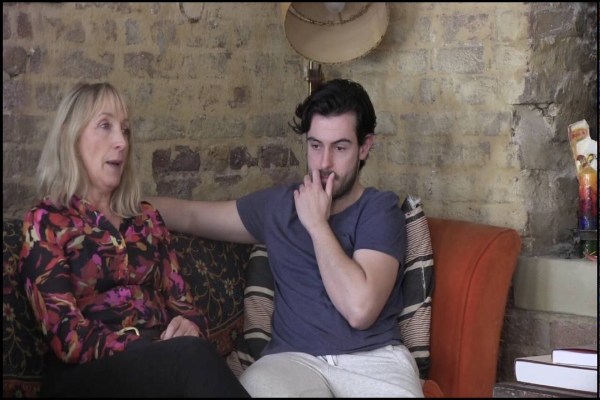
“War has changed, but it’s effect on generations of women hasn’t,” writes Sarah Berger, founder and artistic director of So & So Arts Club. Military history is mostly dominated by men, but Sally Hayton-Keeva gives voice to disregarded but valid female experiences of conflict. Valiant Women in War and Exile is her collection of stories spanning the generations of global conflict from El Salvador to Germany to the Philippines. Adapted for the stage by Lanna Joffrey, Valiant interweaves verbatim monologues that director Alexandra Rensetti places on a bare stage with intermittent textual projections. It’s so simple, but fantastic performances by four multi-rolling actors and a script that’s equally riveting and horrifying serves to educate, advocate and protest. This production is a vital contribution to women’s history, giving voice to those ignored in favour of patriarchal experiences of human suffering in times of war.

Lanna Joffrey, Diana Bermudes, Catherine Fowles and Gemma Clough each play several characters, at least three or four each. As impressive as their work is, much credit is due to their accent coaches, Joy Lanceta and Nicola Redman. There were hardly any lapses in accent and the actors integrated them in their performance rather than be inhibited by them. 

All text is delivered to the audience in a first-person narrative. Sometimes this is a lengthy section by one person, other parts are fragmented and shared to emphasise shared experience. These women are wholly uncensored and overflowing with emotion, whether that is violence towards the Nazis by the youngest ever Russian sniper, passion from a radical Afghani teacher teaching her students revolutionary poetry, or the numb devastation of a Northern Irish wife who watched her husband and daughter die in a car bomb. There are so many more, each as powerful and moving as the next. The pain and torture these women have endured is incomprehensible to most people, as is their strength. The actors’ ability to evoke empathy through complete commitment to these women and their stories gives this production its power.

Renzetti’s direction is simple and uses large text blocks of projection to add visual variation, but the actors acknowledgement of it before speaking unnecessarily breaks character. Joffrey’s script is a relentless barrage, but It should be – it drives the message home again and again. These stories are not isolated across space and time, they are everywhere. The amount of women introduced in the short space of time reinforces that women and children are often neglected in the wake of stories of wartime male heroism and that history’s narrative must change.

There is little to fault in this production and its message is loud and clear. If only Valiant were required viewing for politicians the world over who grunt and preen in luxurious, remote palaces like overweight performing monkeys, perhaps they may learn that war has an unimaginable but very real impact on the 99 percent. Soldier casualties are clear, mostly male numbers thrown about in political rhetoric but the often unseen consequences on women and girls must be acknowledged.

 Valiant runs through 31 July.

The Play’s the Thing UK is committed to covering fringe and progressive theatre in London and beyond. It is run entirely voluntarily and needs regular support to ensure its survival. For more information and to help The Play’s the Thing UK provide coverage of the theatre that needs reviews the most, visit its patreon.
The Tiger Lillies: Love for Sale, Soho Theatre

https://i0.wp.com/theupcoming.flmedialtd.netdna-cdn.com/wp-content/uploads/2016/07/the-tiger-lillies-picture.jpg

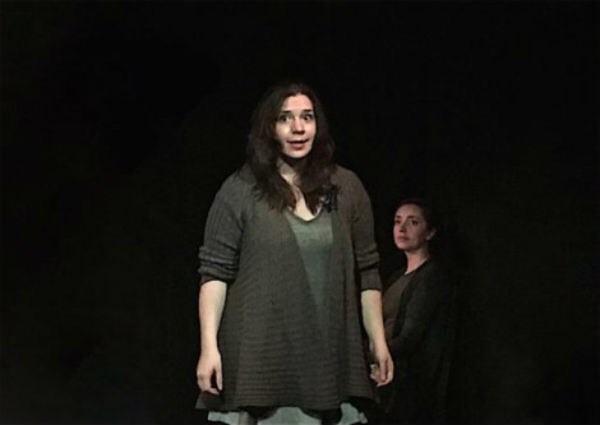
Founded in 1989, dark cabaret act The Tiger Lillies are still going strong. For their current show, in conjunction with Opera North, two of the current members reinterpret Cole Porter songs in a distinctive, understated style. The Tiger Lillies: Love for Sale is a quietly twisted affair, with two suited gents in grotesque face paint delivering Porter’s numbers with subtle bite. Martyn Jacques leads on vocals with a pursed, almost falsetto tone, backed by Adrian Stout. Both play multiple instruments under a projected moon and a cluster of filament bulbs reminiscent of a constellation, creating a sedate, relaxed mood with a sinister undertone. Though slightly too long without incorporating any major change in style or format, The Tiger Lillies: Love for Sale is still an enjoyable event.

Jacques’ draggy, pinched sarcasm is amusingly judgmental, giving upbeat tunes a whole new meaning – ‘You’re the Top’ being the best example of this from their set. Alternating these perkier songs with ballads makes a good, if formulaic mix. The slower songs are more heartfelt, but still have a bit of an edge to them, maintaining a unique interpretation on these vintage classics. The set has a mix of jolly innuendo, genuine mournfulness, comedy and joy – a great combination, though there is minimal exuberance. This isn’t an issue per say, but it feels off in a traditional theatre layout. Their style would be more suited to a relaxed cabaret venue instead of a space where bold theatricality is the norm.

That’s not to say that the visual they create isn’t striking. The rippling moon gives way to various other projections: leaves, headless mannequins, a fighting fish in a tank and others. Whilst there must be reasons for these particular images at the points they appear, it’s not obvious. The variation is welcome, though. The garish makeup and vintage suits shows Weimar and circus influence, a clownish manifestation of their music. An array of instruments is always pleasing to the eye and the lighting beautifully replicates a summer night under the stars.

Even with a more engaged encore that dialogues with the audience, The Tiger Lillies: Love for Sale lacks enthusiasm, but has plenty of skill and distinctive style. Perfect for a low key evening, this unique interpretation of classic songs is a welcome one.

The Tiger Lillies: Love for Sale runs through 30 July.

The Play’s the Thing UK is committed to covering fringe and progressive theatre in London and beyond. It is run entirely voluntarily and needs regular support to ensure its survival. For more information and to help The Play’s the Thing UK provide coverage of the theatre that needs reviews the most, visit its patreon.

bare., Courtyard Theatre

rsz_clbw12owyaau3v8

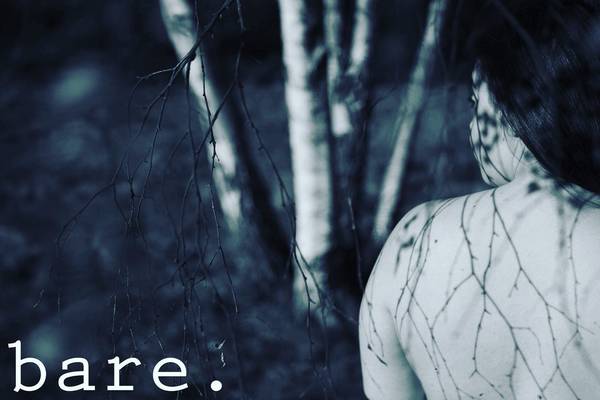
Three young women, three short solo performance pieces, three stories of vulnerability make bare., a thematically linked evening of new writing. Each of the three mini-plays has a distinct style and is performed by the writer. They vary in the quality of writing and inventiveness, and feel very new – more like scratch performances rather than finished pieces. bare. is a lovely concept – short, female solo performances that reveal hopes, fears, aspirations and conflict. It could easily become a regular event, giving women the chance to try out one-person work in front of an audience. As is, these pieces certainly need development but the three writer/performers show much promise and commendable initiative that, with development and experience, will certainly improve their work.

Kat Ronson is first, performing ‘IBZ’. This fragmented work follows a young woman’s journey from singledom into a loving relationship. The wild, drug fueled club nights transform into something more gentle and intimate, but her story does not end happily ever after. The young woman’s transformation is lovely, but the choppy writing makes for an unclear narrative and timeline. Ronson uses comedy punch lines and moments of reflective sincerity effectively, but this doesn’t balance out the vague writing. This piece would benefit from dramaturgical support and a hefty re-write, but the concept and central character are certainly workable.

American Steffanie Freedoff shows that yanks can handle their poetry and spoken word with ‘in the beginning there was Word’, a biographical monologue in verse about hating poetry as a teenager and growing to love it as an adult. This is also a coming-of-age story, but a much more positive one on self-discovery and confidence. It’s a bit cheesy and motivational, but the two stand-alone poems she ends on are angry, provocative and polished. The focus is on these pieces, which feel disconnected from the first part of the performance but add variation in style and tone. This second mini-play also needs development and shaping to find its overarching message, but it feels like it could be lengthened without becoming dull.

Madeleine Dunne brings a strong character piece to the trio with ‘Mind the Gap’, a piece that looks at the struggle of overcoming mental health issues. Lucy is a little girl terrified of breaking the rules and a young adult still limited by these fears. Told in two parts, Dunne’s gift for transformation is revealed in these two naturalistic monologues. It’s not clear who she is talking to and why in either section, but the character is a suitably interesting one. Lucy could also work well as the protagonist in a full play with multiple characters, perhaps even better with others to respond to rather than limited in a solo performance.

A quiet, sung finale wraps up the evening, a nice touch that adds some unity to these unrelated plays. bare. still feels like a scratch or showcase with a range in quality, but as a themed performance event, it is poignant and well curated. All three pieces need refining and/or expansion, though each shows at least some element of promise.

bare. runs through 16 July.

The Play’s the Thing UK is committed to covering fringe and progressive theatre in London and beyond. It is run entirely voluntarily and needs regular support to ensure its survival. For more information and to help The Play’s the Thing UK provide coverage of the theatre that needs reviews the most, visit its patreon.
Cargo, Arcola Theatre

Cargo at the Arcola Theatre, Milly Thomas, Jack Gouldbourne and Debbie Korley,  Photo by Mark Douet

Civil war is raging in the formerly united, newly named Kingdom. Loyalists and rebels have divided up the charred, frightened remains. Religious fundamentalism and capital punishment are the law of the land. There are furtive rumours of a better life across the channel, and there are regular passages to Calais. Money can buy passports, or if you don’t have any of that, there are people who will help you stow away as Cargo that you can pay later. But safety isn’t a given once you’re on board. The holds of these ships are dark and full of desperate people with shady pasts and their own agendas, and a lot can happen in an 80-minute crossing. Tess Berry-Hart’s script is as much a thriller as it is rousing political theatre, and the diverse cast of four effectively capture a snapshot of the population effected by this tragedy. Though the story is overly convoluted by truths and lies, Cargo provides a timely reminder, like other refugee-themed work at the moment, that we are all human beings in need of a safe and secure life.

Joey (Millie Thomas) is there with her younger brother Iz (Jack Gouldbourne). They’re from the loyalist-controlled docks and have lost everything. Joey’s shrewd and resourceful, Iz is an optimistic innocent who dreams of being a waiter and is the only genuinely nice person on board. Gouldbourne is totally believable as the tween who sees the good in everyone, and is nicely balanced by Thomas’ maternal defensiveness. They meet Sarah (Debbie Korley), an elusive northerner played with brilliant intensity. John Schwab is the slippery American Kayffe, who’s ever-changing biography hides horrific experiences. Berry-Hart never fully reveals the objective truths of the world around them, which is frustrating but leaves plenty to the imagination. The fates of these people are a great unknown in a world where desperation forces people to solely look out for themselves.

Tense from the onset from fear of discovery, anxiety builds quickly though there’s little to do except wait to arrive. These characters have seen so many horrors that relaxing is impossible and anyone could be the enemy. The script is conversational, yet guarded, as the characters attempt to get to know each other. Barry-Hart incorporates believable conflict into the narrative that director David Mercatali approaches with varying pace. The unresolved ending is unsatisfying, but no doubt realistic.

The design team Max Dorey (set), Christopher Nairne (lighting) and Max Pappenheim (sound) create an immersive environment of simple pallets and packaging. The boat is a constant aural presence and the seating, whilst as uncomfortable as the play’s circumstances, is probably pretty accurate. The design exquisitely works together with Mercatali to destabilise the audience; married with the script’s uncertainties it is a most unsettling effect.

Cargo could still use some refining and clarity in order to allow the audience to take in the experience without focusing on following the veracity of the character’s experiences, especially towards the end. Despite this small issue, or really because of it, the experience feels all the more truthful to refugee experience. Even though the concept of re-contextualising it to British people is not new, it is certainly effective. Like other plays on the topic, it humanises displaced people, their need for sanctuary and their vulnerability to exploitation. If theatre repeats these messages enough, the world might start to listen.

Cargo runs through 6 August.

The Play’s the Thing UK is committed to covering fringe and progressive theatre in London and beyond. It is run entirely voluntarily and needs regular support to ensure its survival. For more information and to help The Play’s the Thing UK provide coverage of the theatre that needs reviews the most, visit its patreon.

Unreachable, Royal Court

Anthony Neilson didn’t come into Unreachable rehearsals with a script, but an idea – a director obsessed with finding the perfect light. From this starting point, the cast sculpted a modern satire of the film industry and the people that exist in that world. Over a six-week devising and rehearsal period, six actors worked with Neilson to create the play, a rarity in anything other than small-scale and student theatre. The end result is wickedly funny with on-point performances and, whilst the story isn’t anything remarkable, its execution makes for delicious relief from the chaos of modern Britain.

Maxim (Matt Smith) is Palme d’Or winning writer and director of Child of Ashes, currently filming in an unnamed location. He pushes the self-absorbed, whimsical artist stereotype to the limit with full-on strops, totally inappropriate comments and decisions that blow his producer’s budget. He is camp, temperamental and a fantastic physical comedian. His lead actor Natasha (Tamara Lawrence) is an unfeeling, blunt force of a sociopath who clashes with lead actor Ivan “The Brute” (a sidesplitting Jonjo O’Neill in ridiculous hair extensions). On his production team are the pragmatic producer Amanda Drew, frustrated DOP Richard Pyros, and deaf financial backer Genevieve Barr. Their grounded personalities create plenty of friction (literally, in some cases) by clashing with the flamboyant artists as the shoot goes over budget and over time. Some of the arguments are petty, others deserving, but all just as hilarious. Nielson mocks artists’ egos, but it’s not nasty – anyone working in the arts will have met at least a couple of these personalities in real life.

The comedy lies in the exaggerated characters and brilliant one-liners devised by Nielson and the cast. Even though the scenarios are fairly mundane and the story not particularly interesting in itself, it doesn’t matter one bit. There are some moments of poignancy and genuine intimacy, but Unreachable is really about the laughs. Even without familiarity with working in the arts, even the hardest, most cynical of hearts will find the outstanding performances hilarious. The scenes are often short and episodic, and half an hour could easily be trimmed, though the current two hours doesn’t feel overly long.

Chloe Lamford’s set is the reflectors, flight cases and lights of a film set until the final sequence, when she and lighting designer Chahine Yavroyan can pull out all stops in an impressive display of visual mastery. The only issue with this moment is the fox. Instead of a puppet or forgoing the image all together, an animal that should be in the wild or a sanctuary is paraded about on a lead. It’s a totally unnecessary and cruel device.

In these post-Brexit, unelected Torycore prime minister days where cracking a smile takes immense effort, Unreachable is welcome relief. Even though the play itself is nothing special, experiencing devised theatre in anything more than a tiny fringe venue that doesn’t go more than a couple of minutes without triggering a laugh is a welcome escape from real life.

Unreachable runs through 6 August.

The Play’s the Thing UK is committed to covering fringe and progressive theatre in London and beyond. It is run entirely voluntarily and needs regular support to ensure its survival. For more information and to help The Play’s the Thing UK provide coverage of the theatre that needs reviews the most, visit its patreon.

Fury, Soho Theatre

https://i.guim.co.uk/img/media/c255500e31a395db7d5e99d0e22866efcadc2904/0_0_3907_2727/3907.jpg?w=700&q=55&auto=format&usm=12&fit=max&s=24616b52e71621aa153ffabc5805fe48

Sam is a young, single mum living in a council flat in Peckham. Having gone through the care system and her boyfriend leaving her after her second son was born, she has no one. When she meets socially inept Tom, an MA student in the flatshare above her, after losing her job as a cleaner, he creates an opportunity for friendship, sex and an escape from her kids. But Sam was born a victim, and a victim she remains. In this discourse on social class, parenting and gaslighting, playwright Phoebe Eclair-Powell incorporates Greek tragedy and a commentating chorus to expose the perils of growing up with no support network.

This is one of the young writer’s first full-length plays, and she’s still finding her feet. Fury has a great concept and characters, and the use of the chorus is a fantastic touch that adds depth and structural variation, but the execution if the ideas isn’t quite there yet. Some sections of the script don’t quite fit the main thread, like her beach outing with an old friend, and others rush the narrative progression. The chorus fills in information left out of the scenes, but this sticking plaster over the gaps is still unsatisfying and overly simplistic. The relationship between Sam (Sarah Ridgeway) and Tom (Alex Austin) escalates a bit too quickly to be plausible, though some slight extending would go far to rectify this.

Ridgeway is excellent as Sam, with a nervous energy and a risk of exploding into violence at any point, making Tom’s manipulation all the more believable to social services. Austin is slimy, awkward and initially seems harmless, but quickly reveals a dark interior. Though he plays the role well, it’s a challenging one because he transforms so quickly. His unlikely behaviour after his initial awkwardness is a powerful reminder that anyone is capable of committing horrendous acts, particularly against vulnerable people. The chorus of three (Naana Agyei-Ampadu, Daniel Kendrick and Anita-Joy Uwajeh) also play additional characters, flipping between them and non-characters with ease and agility.

Director Hannah Hauer-King uses a simple set by Anna Reid to focus on the text. Her in the round staging is a great choice that adds to Sam’s rising paranoia – everyone is indeed watching her every move. The chorus uses seats set into the audience, which although it keeps them ever present, it is unclear why the audience/actor boundary is blurred. She occasionally struggles to clarify space what with the mostly bare stage, but the dialogue usually explains well enough. Hauer-King taps into Eclair-Powell’s poetry with instinctual finesse, making some moments particularly moving.

Though the ended is rather different from the Medea that the show’s marketing compares it to, there is still senseless tragedy brought on by a man’s deliberate actions against a vulnerable woman. Fury shows much potential from the emerging writer and director, and contains some vital messages about growing up poor and female that, with some small adjustments, will be heard loud and clear.

Fury runs through 30 July.

The Play’s the Thing UK is committed to covering fringe and progressive theatre in London and beyond. It is run entirely voluntarily and needs regular support to ensure its survival. For more information and to help The Play’s the Thing UK provide coverage of the theatre that needs reviews the most, visit its patreon.
A Midsummer Night’s Dream, Jack Studio Theatre

Shakespeare often seems to come in cycles, with several productions of the same play on at once in different venues. At the moment, it’s A Midsummer Night’s Dream though it’s a common summer favourite anyway. With so much competition, individual productions need to distinguish themselves from the rest as well as have a distinctive concept, even if that concept is to stick to tradition. New company Wildcard takes a modern approach to the play and adds quite a bit of music, but a range of performance abilities, homogenous delivery and few unique elements make this production feel like a student or recent graduate production. There is a lack of confidence in the direction and the concept is not new or exciting, apart from the use of music. Though it has some good performances, this production isn’t awful, but is largely forgettable.

Amongst the thirteen actors, a few distinguish themselves from the rest of the company. Natasha Killam is a fantastic Hermia, in love, expressive and fully committed to the role. The hipster has an emo best friend in Helena, who plays the character with a dull indifference. Whilst this makes sense to the character stereotype, it’s boring to watch – though this is likely to be a directorial choice. Peter Dewhurst as a townie Demetrius is also very good, eventually matched by Joshua Leese’s hippie Lysander after Puck drugs him in the forest. As representatives from four distinct social tribes, the likelihood of them being in love in real life, let alone friends, is rather implausible, though. A sulking Helena dressed all in black in love with a polo shirted, jumper round the shoulders, Demetrius? Really? This is another of director James Meteyard’s inexperienced and unjustified decisions. 

The most inspired casting is Theseus and Oberon as a woman (both played by Abi McLoughlin), a nice touch but still shows the power imbalance between them and Titania and Hippolyta (Rhiannon Sommers). There are a few female mechanicals (Elly Lowney as Starveling, Christie Peto as Snug and Harriet Ruffer as Quince), which is also great to see. With seven of the thirteen actors women, it goes some way in adding diversity in the entirely white cast of whom nearly all have identical, Home Counties accents and all look to be about the same age. The character types represented are also generally associated with white, middle class people, further showing a blatant lack of diversity in race or social class. Whilst this isn’t an issue in and of itself, it is most definitely a sign of the lack of diversity in theatre.

Some of the lighting design is pretty to look at, though some of the changes are so dramatic that attention is drawn to the lights rather than the performance. There are some pretty strings of fairy lights, but these add to the studenty feel of the piece. There are a couple of retro easy chairs that initially look out of place, but are used well to comedic effect later in the play.

Meteyard tries to further update by adding off-text dialogue and heaps of verbal pauses, Most of which cause the energy and pace to drop. There’s also a lot of slow, even delivery, particularly in the first half, across most of the characters. Fortunately, it picks up up in the lovers’ best scene, which is played well and gets plenty of laughs. He seems to have little experience directing Shakespeare, though he excels with the music. Puck sings most of his monologues, which is really lovely (though why is he in leather trousers, topless and covered in glitter?) and the mechanicals accompany both onstage and off, creating a rich soundscape.

With the music the strongest element of the production, particularly at the end with a delightfully surprising jig, it’s not all pedestrian. But this young company is still very much finding their feet with classical work.

A Midsummer Night’s Dream runs through 23 July.

The Play’s the Thing UK is committed to covering fringe and progressive theatre in London and beyond. It is run entirely voluntarily and needs regular support to ensure its survival. For more information and to help The Play’s the Thing UK provide coverage of the theatre that needs reviews the most, visit its patreon.