Declaration, Edinburgh Festival Fringe

rsz_cpgj-xixyaaoghq

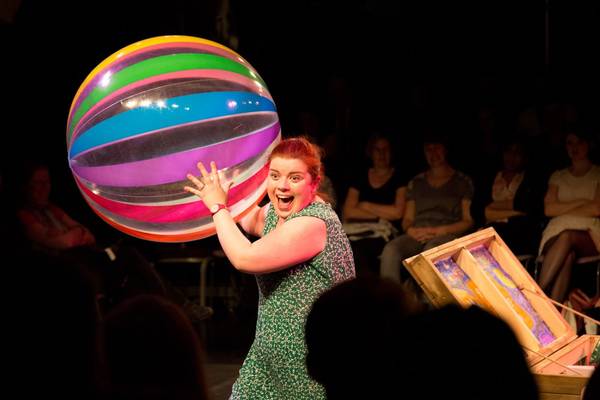
Sarah wants to know everything. She’s inquisitive, gregarious and energetic, the life and soul of any party. But now that she’s in her thirties and wants to start a family, she needs to sort out some of her issues. So, she goes to a doctor to talk through all the behaviour quirks she’s had since childhood – the trouble sleeping, the irrational impulses, the disorganisation, the obsessions.

Diagnosis: ADHD.

Now that she knows what the problem is, does it really solve anything? Will a label help, or hinder? Will medication change the person that she’s always been and actually quite likes? Declaration is an honest, heartwarming solo performance that resonates with those of us who have always felt a bit different or care about people who are a bit weird or quirky. Written and performed by Sarah Emmott, with energy and charisma that’s undeniable, Declaration needs a few minor adjustments to make it an even slicker show.

Emmott’s script has the consistent theme of wanting to please but pesky impulses to do all sorts of irrational things get in the way. As an adult, she has developed coping mechanisms (which she marvelously demonstrates with audience help), but as a child, she was a loose cannon. The story of her childhood picks up once she introduces the superhero personal she invented for herself and a doll, Samantha, who is everything that she never could be. The opening exposition, though having important information, lacks the punch and the belly laughs that these sections have. Additionally, some of her transitions need clarity; consistent use of sound, lighting or changing props would help indicate a scene change.

Emmott develops a marvellous rapport with the audience from the moment they enter the theatre. She has the sort of natural magnetism that cannot be taught in any drama school, an innate quality that actors either have or don’t. Laughing and chatting, her stated need to know everything and everyone is evident. The audience rallies to her wide-eyed wonder, and snarky comments about school, doctors and other frustrations get plenty of laughs.

As Sarah works out how to get through life and a diagnosis has the potential to either change everything or nothing, the audience is with her the entire way. She uses props and audience interaction effectively, though she could use tech to further enhance the theatrical experience. Her lovable on-stage persona is a charming reminder that anyone we know may be struggling with mental health, learning or behaviour issues, and even though a few tweaks could be made to improve the show, she dares us to accept her, flaws and all.

Declaration was a one-off performance.

The Play’s the Thing UK is committed to covering fringe and progressive theatre in London and beyond. It is run entirely voluntarily and needs regular support to ensure its survival. For more information and to help The Play’s the Thing UK provide coverage of the theatre that needs reviews the most, visit its patreon.
Bucket List, Edinburgh Festival Fringe

rsz_cpf9rwlwgaagznb

The North American Free Trade Agreement (NAFTA) between Canada, the US and Mexico came into effect on 1 January, 1994. I was eleven years old. The agreement ushered in a degree of national prosperity for all three countries, but Mexico’s low minimum wage, lax environmental regulations and corrupt officials made a perfect storm for sweatshop conditions in the US-owned factories (maquiladoras) taking advantage of the exchange rate and unemployment in Mexican border towns. The maquiladora owners favoured female workers for their diligence and precision and employed girls as young as fourteen, who were better suited for working 12-hour days in harsh environments than older women or clumsy men. These girls, only a few years older than me, were assembling electronics and convenience items out of toxic materials for 39 cents an hour.

I’m American. Though I hide it well with a deliberately constructed accent and uniquely British habits and mannerisms that I’ve developed in the nearly twelve years that I’ve lived here, I still have the passport, the cultural history and the guilt to prove it. Normally that guilt is shaped like guns, healthcare or Trump, but it occasionally takes on other forms. This time it’s privilege. That privilege/guilt pours down my cheeks in hot, angry tears during Theatre Ad Infinitum’s Bucket List. The story of the women and girls’ lives dictated by the maquiladoras, some as young as me, is a horrifying contrast to the suburban middle-class upbringing I had, kept busy with school and music lessons and theatre rehearsals and ambitions. I may have had something that these girls made, some frivolous object bought without thinking in order to make my life easier or better, and I was totally oblivious to their hardship. I did not have to worry about my mother being killed for protesting the maquiladoras’ pollution, or about my auntie being raped by her manager, or getting cancer from the chemicals I encountered on a daily basis.

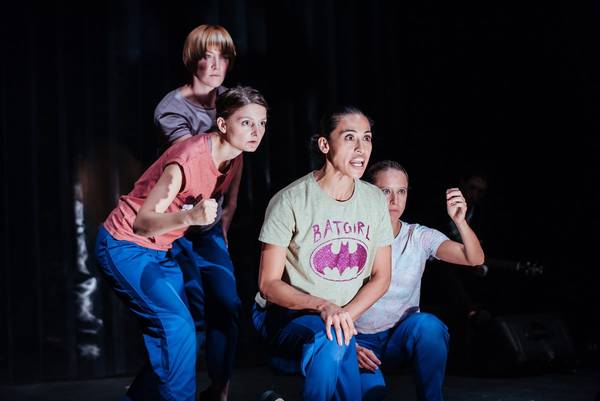
But for the women and girls in Bucket List, that is their life. The all-female, international cast, directed by Nir Paldi, devised a magical realism story of these desperate factory towns based on an idea from Mexican company member Vicky Araico Casas. Incorporating George Mann’s distinctive choreography and live music, Bucket List tells the story of Milagros (played by Casas), a girl growing up in one of these towns dominated by maquiladoras. Her generation’s experiences and those of her mother’s interweave, creating a landscape of labour, political protests, coming of age and revenge. It is a dense story covering a decade of these women’s lives, but Paldi’s script is easy to follow. Magical realism creeps in stealthily, and only at the end of the performance do certain events seem untenable and raise the question of whether or not they actually happened. Regardless of this fuzzy line between reality and fantasy, Bucket List is an anthem of strength that roars with political agenda and gives voice to the disregarded victims of developed nations.

Initially more of a montage of life experiences, Milagros’ story slowly begins to emerge. This could shift slightly earlier in the piece, but the exposition at the beginning gives wider context and does not feel extraneous. Paldi maintains a careful balance of these women’s lives and a wider, North American political picture that slightly tips in favour of the women, but there is enough of the outside world’s oppression and token assistance to inspire the characters’ rage and passion. Milagros’ tragic end adds fuel to the production’s fury against exploitation that comes out as a roar rather than a whimper.

There is hardly any set and technology on display, a dramatic change from their last adult show, Light. Instead, costume plays a bright but subtle role in the story – the five women playing the girls and their family wear coloured t-shirts with cartoon characters often idealised by young girls. Disney princesses, Batgirl and Alice in Wonderland offer them an American-created fantasy that they can strive for but will most certainly never achieve.

Juxtaposed against these pastel tops are quite vicious games demonising the powerful politicians and corporations that shape their lives. They also mock their working conditions, daily violence at the hands of men and threats to their lives. Milagros’ mother (Deborah Pugh) is a vocal political protester, demonstrating a ferocity also contrasting her character’s clothing. The excellent live score by Amy Nostbakken is more of a direct expression of the fighting spirit and sadness within these women.

Though a text-driven piece, Mann uses a series of motifs that soon become recognisable, indicating specific actions and locations. They enhance the understanding and often act as a substitute for words. Though used regularly, Mann’s choreography is one of the company’s trademarks and is unfortunately underused, especially considering the lack of set.

Even though NAFTA is over twenty years old, the maquiladoras are still there, employing women for long hours, polluting local rivers and creating environments ripe for exploitation. Paldi’s script aggressively demands awareness which may be unpalatable to some, but should be required viewing for every American blissfully unaware of their brothers and sisters across the border that are so often looked down upon with racist disgust. Bucket List is truly vital theatre in our age of disposable, thoughtless consumerism.

Bucket List runs through 29th August.

The Play’s the Thing UK is committed to covering fringe and progressive theatre in London and beyond. It is run entirely voluntarily and needs regular support to ensure its survival. For more information and to help The Play’s the Thing UK provide coverage of the theatre that needs reviews the most, visit its patreon.

Hamlet, Ophelia – Part One, Edinburgh Festival Fringe

rsz_121

What would Hamlet have been like as a child? Ophelia? Were they close? Did they squabble or were they the best of friends? Shakespearian Lovers, a new female-led company from Italy, attempt to answer these questions in Hamlet, Ophelia – Part One. In this version Hamlet is played by a woman, bringing a quiet, feminine sensitivity to the role considered one of Shakespeare’s greatest. Despite performing in their second language, the two women have a sound connection with the contemporary English text that shows the two grow from playful children to adults at Gertrude’s wedding to her second husband. There are some major issues with staging and the ending needs work, but this gentle, little play stays true to Hamlet’s personality as reflected in Shakespeare’s text and has the strong foundations of a good script.

Of the two performers, the perky Ophelia is the stronger. She has a natural curiosity and handles the English script comfortably. Hamlet is much more reserved and often too quiet to easily hear, but she has an intellectual intensity that suits the character. Though Hamlet’s femininity is not disguised, masculine pronouns are used throughout – the relationship in this piece wouldn’t differ from one gender to the other, Ophelia is clearly female but Hamlet’s ambiguity interferes with any potential statement about his gender.

The script has a sensible progression through childhood and into adulthood. They play as equals but as they grow, the difference between the son of a king and the daughter of a minister informs their interactions. The affection they have for each other is genuine and heartwarming, though the circumstances life deals them requires formal restraint, even through teenage hormones. The ending needs development and resolution in order to emphasise why the it is where it is, and the reason why this story is being told needs clarification, but the characterisation is sound.

The staging is the primary issue with this production. The venue is too small to allow space to be clearly differentiated through either distance or lighting and there is no backstage. Private moments lose their intimacy and physical expression is restricted, particularly when they are playing, and Hamlet tries to express his grief for his father’s death.

This is some promising work from a new international company. Even though a native English speaker’s advice would be useful to sort out a few minor mispronunciations, the confidence and ability both actors display in performing in a foreign language is impressive. With additional work on the script and fully realised staging, this has potential to be a great two-hander.

Hamlet, Ophelia – Part One runs through 28th August.

The Play’s the Thing UK is committed to covering fringe and progressive theatre in London and beyond. It is run entirely voluntarily and needs regular support to ensure its survival. For more information and to help The Play’s the Thing UK provide coverage of the theatre that needs reviews the most, visit its patreon.

A Dream of Dying, Edinburgh Festival Fringe

https://files.list.co.uk/images/2016/08/07/dsc3677-lst214126.jpg

On 16th June 2009, the body of a man was found dead on a beach near Sligo, Ireland. He had given his name as Peter Bergmann at his hotel, but postmortem investigations determined that was an alias. In the days running up to his death, CCTV recorded the man methodically moving around Sligo but taking advantage of cameras’ blind spots, he disposed of all items that could possibly be used to identify him. Monologue A Dream of Dying creates a young man who plans such a death in his future in an attempt to justify why Bergmann might have died the way he did. This quiet, reflective piece may not be the most exciting theatre at the fringe, but its subject matter is a sensitive look at life’s inevitability and the desire to control these final moments.

Lawrence Boothman embodies the fictionalised Bergmann, his friends and family from childhood through to recent graduate on the cusp of the rest of his life. As he contemplates what life will bring him – career, wife, children, grandchildren – he expresses the lingering fear that it could all go wrong. In either case, because life is so unpredictable despite the best laid plans, he is able to plan his death with mechanical precision. The calm rationale is both understandable and unsettling.

Boothman attacks the role with vigour, perhaps too much so in transitions that become rushed. Treasa Nealon’s text follows a natural narrative progression and Boothman tells it with instinct for its rises and falls, lingering over moments of tenderness and celebrating milestones. There’s an anti-theatricality to the piece, but it’s a good story well told.

Peter Bergmann’s true identity was never discovered. His remains evidenced late stage prostate and bone cancer so it is easy to draw conclusions as to why Bergmann chose to end his life. The saddest thing to consider is that whilst he worked hard to make himself unidentifiable, there may have been no one to look for him when he disappeared. A Dream of Dying, though not particularly theatrical, feels like a fitting homage to those that have died unknown and unclaimed the world over.

A Dream of Dying runs through 27th August.

The Play’s the Thing UK is committed to covering fringe and progressive theatre in London and beyond. It is run entirely voluntarily and needs regular support to ensure its survival. For more information and to help The Play’s the Thing UK provide coverage of the theatre that needs reviews the most, visit its patreon.
Life According to Saki, Edinburgh Festival Fringe

CpVFTsMXYAA1jSg

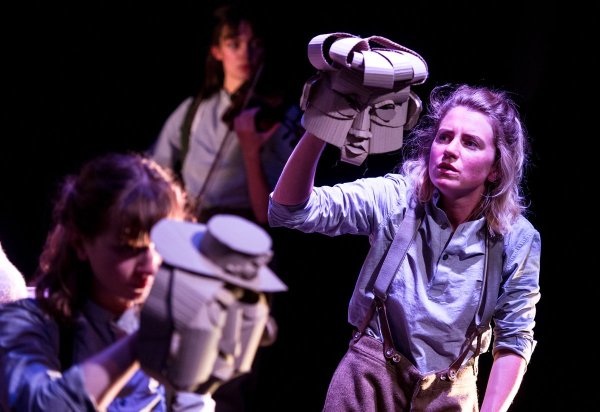
Author Hector Hugh Munro, otherwise known as Saki, is in WWI’s trenches. He and his men been out there for nearly a year, and they are long fed up with life on the front. To entertain his fellow troops, he tells the stories that have already made him a well-known writer. Life According to Saki mixes biography and fiction as Saki tells the audience about his life, interspersed with silly and bizarre anecdotes. The cast of six play both soldiers and the character’s in Saki’s stories with fantastic energy and physical commitment, but the structure of the play and Saki’s pontificating soon grows repetitive. An excessively long ending and too many stories ushers in eventual tedium despite a polished show with high production values.

Anna Lewis’ design is excellent; it clearly indicates the trenches and is flexible for the imagined worlds elsewhere. Costumes are WWI uniforms that fit the cast of women and men smartly – they are not frumpy, unaltered hire costumes. The puppets by Claire Roi Harvey and Suzi Battersby are also very good, with the cock being particularly charming with a great range of realistic movement.

The script is where it begins to fall flat a few stories in. Each one is very short, some only a few minutes long. There are about eight or ten altogether, and the constant shift from tale to tale is exhausting. The are performed with great physical comedy, accents and verge on the fantastical; each one is lovely but there are way too many. Episodes from Saki’s life are bland and dry filler, and the two styles feel forced to miserably cohabit in the same structure. The tacked-on conclusion preaches about how to live one’s life, then drags on even longer into a song and a poem. Though it blatantly states its message of living life to its fullest, the connection to the hour of stories preceding it is tenuous.

Three or four longer stories with depth and detail, and less of Saki’s biography (if any at all) would make this a much more engaging play. The premise of a soldier entertaining his troops is a fine one, but The Life of Saki comes across as self-centred and lecture-y with some silly, disconnected interludes.

Life According to Saki runs through 29th August.

The Play’s the Thing UK is committed to covering fringe and progressive theatre in London and beyond. It is run entirely voluntarily and needs regular support to ensure its survival. For more information and to help The Play’s the Thing UK provide coverage of the theatre that needs reviews the most, visit its patreon.

“Just let the wind untie my perfumed hair…” or, Who Is Tahirih?, Edinburgh Festival Fringe

https://i0.wp.com/www.ridikulmagazin.hu/cuccok/storages/thumbnails/2014-06-06/153cc8eec7af4dc9e7fe3737d2192f41/680x0.jpg

A woman sings behind a gauzy white curtain. We cannot see her face, but in her soaring cries we hear her passion. This is Tahirih, born in what is now Iran in the early 1800’s (we don’t know her exact date of birth because authorities burned these documents after her execution). She is a poet, theologist and women’s rights activist, and she has enough followers that the country views her as a national threat to the patriarchal Islam that requires women to be veiled in public.

In the days leading up to her execution, Delia Olam plays people from Tahirih’s life, unfolding her biography, teachings and radical actions. These we see plainly, but Tahirih is always behind the curtain, playing and singing. As the revered and reviled woman is sculpted through the accounts of others whilst her face remains hidden, she becomes mythical and hugely powerful, a revolutionary who’s life is tragically cut short.

Olam’s script and performance meld into a fluid solo performance that is a fitting tribute to such a remarkable woman. Her physical and vocal distinction between the handful of characters she plays is detailed and precise. A servant, Tahirih’s father, an executioner, and a female follower are crafted in detail, and all visited by the audience who go to these people to discover more about this woman who is revolutionary, dangerous, or both. This is excellent clarification of the audience/character relationship in solo performance format – it makes sense with the play’s circumstances and embeds the audience in the action. There is none of the talking out into undefined space or invisible characters that alienates the audience and removes the character from reality, something that often occurs in solo performance. Across these characters in different places and with different relationships to Tahirih, there is still a clear, well-proportioned narrative arc building to an awful end.

The scenes themselves are well-crafted and provide a snapshot of the landscape of attitudes towards women in Iran at the time. They are simply staged and prettily enhanced with candlelight, their simple, calming beauty juxtaposes the inevitable prospect of her death. Transitions are a touch slow; some are smoothed with recorded music whereas others have silent gaps as Olam transforms in and out of Tahirih, who sings and plays between characters. The silences make for a choppy disruption, but this is a minor issue easily forgiven in view of the story’s excellent construction and execution.

To learn about such a remarkable woman through a strong show and performance feels as much of a privilege as it is an education. Olam has fantastic instinct for storytelling and character development, and this detailed show needs hardly any improvement. Do not miss it.

“Just let the wind untie my perfumed hair…” or, Who Is Tahirih? runs through 29th August.

The Play’s the Thing UK is committed to covering fringe and progressive theatre in London and beyond. It is run entirely voluntarily and needs regular support to ensure its survival. For more information and to help The Play’s the Thing UK provide coverage of the theatre that needs reviews the most, visit its patreon.

Feature/Review: Children & Shakespeare, Edinburgh Festival Fringe

https://i0.wp.com/unknownmagazine.co.uk/wp-content/uploads/2015/07/York-3-credit-Rob-Freeman-1-1024x683.jpg

Whilst there’s plenty of Shakespeare at the fringe, it doesn’t get much coverage. It’s understandable – the Bard doesn’t count as a potential Next Big Thing, and he’s favoured by student and international groups that usually have short runs and are deemed less worthy of critical attention. It’s obviously necessary to recalibrate expectations and vocabulary when evaluating children and young people’s performances, but directors and teachers can and should be held accountable for the quality of their own creative work and bringing out the best in their students or young cast. They do have the additional pressure of incorporating an educational element and ensuring that their work is suitable for the children and young people they are working with, but that specialism is no more or less different than any other in the performing arts.

To completely ignore young people’s work at the Fringe when sampling the Shakespeare on offer cuts out a large segment of the Shakespeare productions on offer, and considering that these are often international schools as well, the cultural differences can be considered when critiquing. Over one day at the fringe, I watched three distinctly different Shakespeare adaptations – a Scottish stage school including children approximately aged eight through sixteen that looks at Twelfth Night, an American university’s analysis of Shakespeare’s baddies and a Notts young people’s dance-theatre company’s deconstruction of Macbeth.

Admirable Fooling or What You Will by Little Shakespeare School’s Michelle van Rensburg had the most challenging remit in that it is a show suitable for performers over a big age range, but the show she invents is a nonsensical mess. When she sticks to her simplified script with sections of original text more the more able students, it is standard children’s fare – able to be followed, giving the kids a chance to show their skills and including everyone. The random sections from Titanic, though? Inexplicable. None of the children on that stage or in the audience would have even been alive when the film came out, so crowbarring in pop culture references that they wouldn’t understand is gratuitous and self-absorbed. There are also numerous off-text clowning sequences that are unconnected to the story, and a lengthy exposition setting up a storytelling premise that isn’t consistently followed through. The one, shining moment of kitschy, creative inspiration that epitomises fringe Shakespeare is the tiny blond girl who plays the letter Malvolio finds in the garden. She wears a bright yellow sack with felted letters on either side and enthusiastically delivers the text that Malvolio reads from the letter in Shakespeare’s original. She looks about eight years old, maybe nine, certainly no more than ten, and it is an adorable thing of wonder. There are some good actors who are confident and speak well, particularly the eldest girl who plays Olivia, but the show itself is a baffling construction with little through-line or sense.

Bad Shakespeare, by Oklahoma State University drama students, isn’t bad, but it’s just as much of a lecture as it is a performance. Showcasing their intensive summer Shakespeare studies, they work their way though Shakespeare’s development of his villains. The exposition that sets up their five act structure is too long, but the acts’ increasing complexity is a nice touch. Most of the ethnically diverse ensemble are good performers, and all bar one are women – great work towards increasing diversity from the programme director. They handle the language and verse with muscularity and confidence, though there is no evidence of work towards convincingly playing men. Their emotions tend to read more as upset rather than angry or vindictive, and their physicalities are distinctly feminine. The show’s director has chosen faux-period costume; some are in dresses and some in doublet and hose. Neutral, modern dress would suit much better, especially considering the large amount of instructing the audience with contemporary language and pop culture references. Bad Shakespeare is great for learning more about Shakespeare’s characters and some of the scholarship behind them in a relaxed, easy to follow format, but it’s more of a learning experience than a show. However, they wear their confidence and passion for Shakespeare on their sleeves, which is a wonderful thing to see.

Fortitude Dance Theatre’s Macbeth has potential to be the most promising of these three adaptations, and whilst it certainly has some great moments, there are also some misguided creative choices and interpretations, and an inconsistent application of style. The young company demonstrates competence in their dance and verse delivery, though as a whole, they struggle with achieving moments of emotional intensity and staging on a  thrust. The pace was great, but tone consistently conversational. Their opening sequence was a great capture of the 90’s club scene with text and contemporary dance obviously inspired by Frantic Assembly, but the dance element is absent until the discovery of Duncan’s body, about half way through this abrupt edit. There are missed opportunities to incorporate movement into Macbeth and Lady Macbeth’s scenes showing their fluctuating power struggle. This dynamic between characters later between Macbeth and the witches inspires some good tribal, threatening choreography. Macduff’s monologue on hearing of his wife and children’s deaths is a stunning blend of movement and text that the company could to stylistically inspire their future work. They could also do with a stronger director, or dramaturg familiar with Shakespeare pronunciation, to confirm any line interpretations – “Out, damn spot” is not referring to blemishes on her face.

It’s brilliant to see young artists finding their way through making work and discovering styles and forms that work for what they want to communicate in their Shakespeare interpretations. Even though they won’t be up to professional performance standard unless they are extraordinarily gifted, their teachers and directors should be strive for clarity. Though none of these three productions quite reached that point, they each had their merits and watching children and young people discover and explore the joy of performing is a marvelous thing.

The Play’s the Thing UK is committed to covering fringe and progressive theatre in London and beyond. It is run entirely voluntarily and needs regular support to ensure its survival. For more information and to help The Play’s the Thing UK provide coverage of the theatre that needs reviews the most, visit its patreon.


Agent of Influence: The Secret Life of Pamela More, Edinburgh Festival Fringe

https://i0.wp.com/www.underbellyedinburgh.co.uk/images/made/images/uploads/pamela_more_750_500_60_c1.jpg

Lady Pamela More covers fashion and socialites for The Times and she has no interest in any other topic. As Britain’s involvement in the war becomes certain, her disinterest in politics and international affairs wanes, and her social circles are split into those who support Germany and those who believe the whispered stories coming across the channel. With newfound purpose and contacts, the use of her journalistic skills changes direction to a more practical use – she is recruited to spy on Britain’s elite.

Sarah Sigal reinvents Pamela from her 2014 Park Theatre play World Enough and Time, now making the character the primary subject of a solo performance. Reprised by Rebecca Dunn, Pamela recounts her wartime adventures through past-tense narration and dialogue between herself and impersonated peers. She meets and watches real people from British history, moulding a clear perspective of their wartime activities – this is the most interesting aspect of the narrative. Who the audience is, or why she is telling us her story is never made clear, though. Her tale is interesting enough, but what is it’s point?

The scenes Dunn enacts are more dynamic than the stretches of narration that span the years surrounding the war. She employs accents and an impressive vocal range to differentiate between herself and those she converses with, often with charm and humour. Her storytelling is good enough to maintain attention, but as no moral or message emerges from the text, the ambiguity of the script dwarfs Dunn’s ability.

Agent of Influence: The Secret Life of Pamela More suits a written format much more so than a staged one – it would make a lovely novella what with its detailed description of the setting and characters involved. Though its well performed and a good story in and of itself, theatricality gets in the way, making this solo performance piece fall flat.

Agent of Influence: The Secret Life of Pamela More runs through 28th August.

The Play’s the Thing UK is committed to covering fringe and progressive theatre in London and beyond. It is run entirely voluntarily and needs regular support to ensure its survival. For more information and to help The Play’s the Thing UK provide coverage of the theatre that needs reviews the most, visit its patreon.

Mr Incredible and Deal With a Dragon, Edinburgh Festival Fringe

https://files.list.co.uk/images/m/mr-incredible-main-image-print-LST209719.jpg

Solo performances are popular at the Fringe, and there are some good ones this year. So far, the best production I’ve seen this year is one-woman show Torch, celebrating womenhood in all of its flaws and glory. To portray men from such a perspective is much harder what with society already granting men more privilege than women, but Camilla Whitehill’s powerful Mr Incredible does just that in order to highlight male entitlement.

Adam and Holly have recently split up, and Adam hates it. Men like him aren’t meant to be single. He has a good job, owns a flat in London and desperately wants marriage and children. Whilst he loves Holly’s youth and fighting spirit, he was glad when she started to mellow and come round to the idea of settling down. But she wouldn’t be tamed by his sedate nights in front of the telly watching trashy programmes. She wants to write about important issues and change the world for good.

Though Adam’s account of Holly betrays an obvious, fundamental incompatibility between the two, Adam is blind to it and his desire for Holly to conform, and it’s infuriating. As he details moments from their relationship and its unravelling, he blindly transfers all blame onto her. The script cleverly paints Adam as a generally good guy, making his privilege initially subtle, then growing until their relationship reaches a horrible end. His ingrained entitlement to Holly and the belief that she should conform to his ideal life is a good capture of male immovability around women’s goals and desires, and hopefully framed in a way that triggers male reflection.

Alistair Donegan fleshes out Adam with genuine grief for the loss of his relationship and fully believed justification of the character’s choices. Whitehill’s script paints Adam overly-simplistically at times, but Donegan makes the character three-dimensional.

As a solo performance, it is initially unclear who Adam is talking to, but this is revealed in the play’s final moments when the severity of their breakup is horrifyingly revealed.This moment is subtle and takes some processing, so perhaps a bit more obvious spelling out will make the intended message stronger. Overall, this is a strong, polished production with acute comment on male privilege over women’s bodies and choices.

Deal With the Dragon also looks at male entitlement, but likely not deliberately and with a hefty dose of absurd fantasy. Bren is a gay dragon who finds vulnerable gay men that need looking after and offers to help, but not without signing a contract. The Faustian pact between Bren and artist Hunter looks at artistic temperament and dependency in the arts with both comedy and gravitas, though Kevin Rolston’s piece is lacking in a concise storyline and clear message.

Rolston is an excellent performer who distinguishes between Hunter, another artist Gandy and Bren with physical skill that is delightful to watch. With no costume or props, it’s perfectly clear that Rolston is a dragon. The transformation is simple, but utterly delightful.

The script has a nice premise – What if you had a gay, German dragon to help you get through the unpleasantness of life – but it’s never made clear what the premise is trying to communicate. Are people eventually better off with Bren’s assistance? Worse? What does it say about life’s obstacles as a whole? Should men have someone at their disposal to do their dirty work? These questions go unanswered. Though Rolston’s ability as a performer is undeniable, Deal With the Dragon never makes a definitive statement.

Mr Incredible runs through 28th August, Deal With the Dragon runs through 29th August.

The Play’s the Thing UK is committed to covering fringe and progressive theatre in London and beyond. It is run entirely voluntarily and needs regular support to ensure its survival. For more information and to help The Play’s the Thing UK provide coverage of the theatre that needs reviews the most, visit its patreon.

Torch, Edinburgh Festival Fringe

https://i0.wp.com/www.underbellyedinburgh.co.uk/images/uploads/Torch_updated_for_web.jpg

We’re in a club toilet. Not a nice one, either  – there’s no loo roll, lipstick and graffiti pepper the cubicle walls and door. Jess Mabel Jones is an unnamed woman out with a friend, but after a lot of vodka and some coke, she feels self-conscious, past it and wants to hide. Reflecting on the life choices that brought her to this newly-single moment of remorse, she chronicles past lovers, committed relationships, eating disorders, panic attacks, and youthful exploits. Whilst longing for her youthful, perkier self with thinner legs and a tighter arse, she manages to celebrate the woman she has grown up to be in all of her flawed glory. Jones is an absolute firecracker of a performer who slams herself around a robust script baring lived female experience in all its rawness.

Phoebe-Éclair Powell’s text is an extended monologue of fragmented experiences and memories punctuated with pop songs. It doesn’t shy away from visceral topics, though the transitions from text to music are abrupt with little lead-in. The character she paints alternates between vulnerable and endearing, and ferociously bold. She is an everywoman with experiences that most women can relate to on some level and reminds us that despite going through moments of absolute despair and self-loathing, women are incredible.

It’s not just about girl power, though. The character’s anecdotes are funny, moving and compelling stories that are accessible to any human that has grown up, had sex, been in a relationship or felt they don’t meet society’s expectations. She is haunted by the woman she hasn’t become and simultaneously unapologetic about her.

Director Jessica Edwards incorporates plenty of movement, though some seems gratuitous it prevents the performance from becoming static. Amelia Jane Hankin’s set is both industrial, messy and glittery, an outward expression of the character’s spirit.

Jones’ performance is what makes this production worth seeing. She has a stunning voice, emotional vulnerability, and electric charisma. The songs she covers become the millennial generation’s torch songs as she delivers them with a power and depth. She rallies the audience to her side despite behaviour that could be viewed disapprovingly by more conservative audience members because her commitment and connection to the script is as truthful as it possibly can be. Torch is not one to miss.

Torch runs through 28th August.

The Play’s the Thing UK is committed to covering fringe and progressive theatre in London and beyond. It is run entirely voluntarily and needs regular support to ensure its survival. For more information and to help The Play’s the Thing UK provide coverage of the theatre that needs reviews the most, visit its patreon.