The Collector, Greenwich Theatre

https://i0.wp.com/69-degrees.co.uk/wp-content/uploads/2016/10/The-Collector-at-York-Theatre-Royal.-Anna-Riding-Zoya-Olivia-Beardsley-Foster-William-Reay-Kasprowicz.-Credit-Sheila-Burnett-800x533.jpg

by guest critic Maeve Ryan

When the British army arrived in Northern Ireland, beleaguered Catholics came onto the streets offering them tea, biscuits and cake. How long did it take for the story to change to the one that we know today? In The Collector, Naseer joyfully swaps music CDs with the American soldiers who arrive into Iraq in 2003 because he hopes for democracy and change. He learnt his English by listening to American rap music and soon he becomes a valuable translator for the soldiers. The Collector documents the slow brutalization of the occupiers and the occupied through choices they make; choices that, in Henry Naylor’s play, feel inevitable.


Continue reading

Wish List, Royal Court

rsz_wist-list-image-1000x574

Nineteen-year-old Tamsin wants to be a normal teenager. She wants to go to college, flirt with cute boys and go down the pub. She doesn’t want to be stuck in a cycle of poverty that dictates she’s either doing manual labour at a “fulfilment centre”, or caring for her younger brother with OCD so severe he can’t leave the house. Everyday is a struggle to keep herself together since her mum died and British society has turned against them. To the wider world, she and her brother are tiny, invisible cogs in a brutal machine out to destroy the most vulnerable.

Continue reading

Abigail, The Bunker

abigail
Amongst the vocal campaigns fighting domestic violence against women and male rights’ activists misogynist responses, the fact that at least 4% of men are victims themselves is often overlooked. That 4% is reported abuse and no doubt there are many more cases that are never logged with authorities.

Fiona Doyle’s unnamed couple in Abigail aims to capture the universal potential for male domestic abuse, but misses the mark. Their relationship unfolds in non-linear episodes, but much is missed out and the fragmented structure causes a lack of variation in pace and energy.

Continue reading

The Last Five Years, St James Theatre

https://www.thestage.co.uk/wp-content/uploads/2016/11/Samantha-Barks-as-Cathy-in-THE-LAST-FIVE-YEARS-at-St-James-Theatre.jpg

The most moving performances are often largely removed from our day-to-day lives. But every so often you come across a piece of theatre that, whilst it may not be the objective best thing you’ve seen, encapsulates your life so well that you can’t not fall in love with it.

The Last Five Years is good though, even if it’s been a favourite of mine since I discovered it as a student back in 2002. The Jason Robert Brown musical, now 15 years old, is a wonderfully simple (albeit heteronormative) tale of boy and girl meeting, falling in love and falling apart. Framed by the late 90s NYC arts world (that I watched as a teenager in the suburbs and later joined as a drama school student), his story is told in chronological order and hers in reverse. There are two performers; the only time they interact directly is at their wedding, making the songs function more like reflective monologues. Though there is hardly any book, Brown’s lyrics tell the story clearly and sensitively. Dynamic staging and committed performances, like those in this anniversary production that Brown directs, are necessary to keep this quirky little musical from falling flat. It’s a powerful, disarming show when executed effectively, and this production may well be its new definitive.

Jamie is a writer and Cathy is an actor. They are 23 when they meet; neither has had any success yet but both are wide-eyed, bushy tailed, and ready to fall in love. Jamie quickly becomes a bestselling novelist whilst Cathy is left in his wake, waitressing and doing summer theatre in the depths of the Midwest. It’s within this career disparity that their relationship deteriorates, and I find Cathy painfully echoes my own life as a failed actor. The isolation and jealousy that Brown fosters in his songs is wholly believable and all too familiar.

Both characters are flawed but generally likeable and despite reservoirs of love, it’s not enough to save their marriage. Though both characters can be irritating in their own way, their good intentions and fundamental incompatibility also ring true to anyone that’s endured the heartbreak of an ended relationship or marriage. Here is yet another parallel to my past, but this time I’m more like Jamie – I married young and naive and was divorced by 30 as a result of my own mistakes.

Samantha Barks and Jonathan Bailey are Cathy and Jamie. Barks is a stronger singer, but Bailey’s full of charisma and confidently flirts with the audience – it’s a lovely touch. Both have great emotional range and their chemistry is undeniable. Their performances, layered with Brown’s storytelling, reduces many to tears. Sniffling and eye wiping is plentiful in this intimate house.

The small scale of the show is fleshed out with some delightful video design by Jeff Sugg and Derek McLane’s set. These provide the context that’s missing from the script and grounds their story in a real time and place, though its Gabriella Slade’s costumes that indicate the 1990s setting. The videos are simple and cartoon-like, a sweet and charming addition that Brown underuses.

Though more of a song cycle with hardly any spoken dialogue (if you were to listen to the soundtrack you would hear almost the entire show) and arguably rather insubstantial, this one-act show has the ability to burrow into the depths of your guts. It’s a heartfelt love letter to the countless New York City artists doing their best to get by and find meaning in each other, and to everyone that’s every fallen in and out of love. The poignant, timeless story of youthful love and loss has the sorts of songs that you play on loop whilst crying in bed with a heart broken by your own failures (I’ve done this more than I care to admit), and those you can dance to after a brilliant first date or a career win. With the excellent performances and slick design of this production, it’s not one to miss – even if you cry through it.

The Last Five Years runs through 3 December.

The Play’s the Thing UK is committed to covering fringe and progressive theatre in London and beyond. It is run entirely voluntarily and needs regular support to ensure its survival. For more information and to help The Play’s the Thing UK provide coverage of the theatre that needs reviews the most, visit its patreon.

Love, Lies and Taxidermy and Scorch, Edinburgh Festival Fringe

First loves: awkward, hormonal milestones of young adulthood that make you feel like you’re on top of the world in a bubble that’s just the two of you. That is, unless you’re a trans or gender fluid teen who is still exploring gender identity, or someone with extensive family problems. But issues like these, when married with a youthful story of falling in love, make for some powerful and moving theatre.

Love, Lies and Taxidermy compares falling in love for the first time to living in a film. With narration incorporating stage directions, short scenes reminiscent of quick cuts and a wonderfully ridiculous conclusion, the play feels like a teen romcom, but has enough substance to ensure it isn’t total frivolity. It’s fluffy, sweet and addresses how social class can effect young love.

Set in Myrthyr Tydfil where all road lead to Tesco, Ash and Valentine meet at hospital when they’re both waiting to see if they qualify for paid medical trials. Ash’s dad is on the verge of bankruptcy, and Val’s parents are separated so he wants to send them on a cruise in hope they will fall in love again. The tentatively begin dating, but life has a way of interfering with their time together. Ash has other ideas to earn some quick cash courtesy of an aspiring filmmaker college mate, but devoted Val vehemently opposes them. Cue a mad dash adventure to rescue Ash from her poor choices and live happily ever after.

There are a few lose ends in the narrative that get forgotten in favour of the “boy rescues girl” plot line, like Val’s quest for money for his parents. They could easily be trimmed to get to the point faster, or developed further to make a more fully-formed story.

The cast of three display remarkable energy as they play all the roles. Remy Beasley and Andy Rush are Ash and Val, the young couple who clearly fancy the pants off each other. Rush, though the hero, goes against the stereotypical popular lad who wins the girl through violence and strength. Awkward and geeky, his devotion to the bold and brassy Beasley is utterly adorable. Beasley’s confidence also goes against the romcom trope; she most definitely does not want to be rescued even though she doesn’t want to make the money in the way she has chosen.

The ending, however unrealistic, charms and delights. Though there is no set to portray the described splendour, the text more than makes up for its absence. The intimacy of the Roundabout suits this play well, though a larger venue would give more scope for design.

Scorch takes a different tone from Love, Lies and Taxidermy, though it also has a generous helping of youthful optimism about love. Kez, a bio-girl who dresses as a boy when not at school Orr home, has met Jules online and is smitten despite the “cool dude” exterior. This story has a darker outcome what with the complexities of gender identity and disclosure as it reinterprets the classic coming-of-age tale.

Kez is perky, accepting and generally at peace with her discomfort in a female body. Amy McAllister embodies the role with verve and charisma, making the audience sympathetic to consequences that arise from not telling Jules that she has a female, strap-on wearing body. The character’s good intentions are sweet, but not enough to save her.

Kez grows up quickly over the course of the story, and the Internet gives her a wealth of information to help her explore her gender identity and legal options. Her social media accounts facilitate meeting girls, and it’s all too easy to set up alternative profiles that portray her as a boy. It also helps her find a local support group, so the sword that is growing up in the digital age is well and truly double-sided.

This is a well-formed script with several layers. Whilst it is a powerful piece of storytelling as a solo performance, introducing additional actors to take on other roles would add depth to Kez’s experiences. McAllister uses the space well, though the opportunity to fully engage with the audience is missed.

Both productions are generally excellent examples of storytelling. The differing perspectives on teenage love are delightfully nostalgic and provocative without becoming twee or trite. The Roundabout enhances their intimacy, but limits scope for design and staging. These two plays would be served just as well, if not better, in a larger space that enables them to extend their production values.

The Play’s the Thing UK is committed to covering fringe and progressive theatre in London and beyond. It is run entirely voluntarily and needs regular support to ensure its survival. For more information and to help The Play’s the Thing UK provide coverage of the theatre that needs reviews the most, visit its patreon.

Milk, Edinburgh Festival Fringe

https://i0.wp.com/7210-presscdn-0-59.pagely.netdna-cdn.com/wp-content/uploads/2016/08/milk.jpg

Everyone has a relationship with food. For some its straightforward, for others it’s complex. Food in terms of nourishment isn’t just that which we eat, either. Love, security, and all sorts of other things make us feel full. In Milk, three generations of couples in the same town negotiate what matters most to them and makes their lives feel complete. This is a slowly burning script that comes into its own towards the end when conflict becomes so high that the six characters lives cross outside of their partner’s. There is some good character detail, but writer Ross Dunsmore’s first play shows promise but needs further development.

Steph and Ash are fourteen. Ash is a fairly typical teen boy, but Steph, from a dysfunctional home, has a pathological need to be sexually desired. When Ash doesn’t satisfy, she finds a new, more dangerous target. Danny and Nicole are young marrieds expecting their first child. When the baby arrives, unforeseen complications and postpartum hormones challenge Nicole’s preconceptions about motherhood and open a divide between the couple. Cyril and May are in their 90s and homebound, too scared of the changing landscape of architecture and aggressive young people to go out. As they fantasise about past Sunday roasts, their hermetic existence takes its toll.

The storylines that Dunsmore unfolds are all believable though in their kinship to real life, they take most of the play to reach any level of compelling conflict. Cyril and May’s story has hardly any, rendering it the least interesting and most forced plotline. Whilst the other two are more dynamic, they are underserved in this intertwining format. The two younger couples could each easily have an entire play devoted to them; to force them all into one feels indecisive in the face of several ideas.

Fred Meller’s design is cold and utilitarian, though has some lovely surprises that are gradually unveiled. Director Orla O’Loughlin delineates the three couple’s worlds well and captures the easy rhythm of Dunsmore’s dialogue without adding any forced stylisation.

Without a doubt, Dunsmore’s couples all have compelling stories to tell (though all are heteronormative, white and skew towards female dependency on men), but the format he uses to tell them is not the most effective. Too much exposition interferes with the empathy for the characters and whilst the ending is a satisfying payoff, the build to it is too little and too late.

Milk runs through 28th August.

The Play’s the Thing UK is committed to covering fringe and progressive theatre in London and beyond. It is run entirely voluntarily and needs regular support to ensure its survival. For more information and to help The Play’s the Thing UK provide coverage of the theatre that needs reviews the most, visit its patreon.
In Fidelity, Edinburgh Festival Fringe

https://www.thestage.co.uk/wp-content/uploads/2016/08/In-Fidelity-Image-10-by-Rob-Drummond-at-Traverse-Photo-Credit-Sally-Jubb.jpg

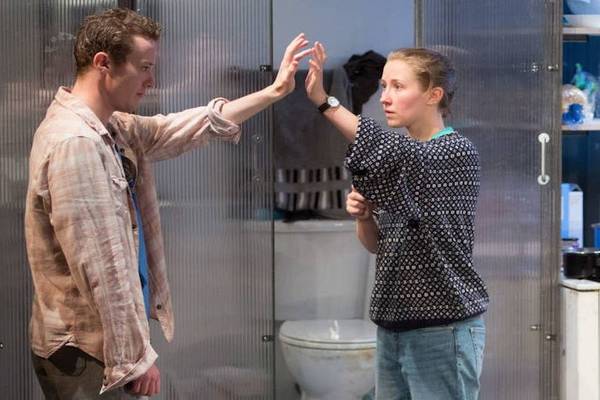
Rob Drummond and his wife Lucy are celebrating their fifteenth anniversary. As a gift to her, he made a show where two single audience members have the opportunity to go on a first date there and then in the hope of finding the sort of love he has with Lucy. Though the bulk of the production centres around the selected couple on stage, there is plenty of audience interaction as we guide them down the path of getting to know each other. Part TED talk, part talk show, part slumber party, In Fidelity is as informative as it is heartwarming and fun.

Drummond’s extensive research on brain activity, hormones and psychology drives the framework around the first date and is consistently present throughout the show. The pop-science is easy to understand and his presentation style makes this content all the more engaging. After a series of questions he selects the two audience members who will have their first date, the focus becomes on facilitating the introduction of these two people. Each performance will undoubtedly be different and have varying degrees of successful matchmaking, but this makes it all the more exciting.

There’s a gleeful voyeurism that In Fidelity satisfies and even though Drummond gives the audience and the pair on their date quite a lot of freedom, he keeps a tight grip on discussion and interaction so it never feels that he will lose control of the show’s progression. This restriction ensures that everyone in the room feels safe, and its remarkable how quickly people feel comfortable answering very personal questions about their love life. Drummond’s onstage persona is warm and strong, a great balance that encourages the audience to open up. His incorporation of personal anecdotes, adventures in the research process and his own relationship’s journey also help.

The show ends happily the day I see it, with the couple clearly having some degree of chemistry between them. Even if that doesn’t happen, Drummond ends with some fantastic news of his own, leaving the audience with a warm, fuzzy feeling as they leave the theatre. This theatrical experiment is a wonderful exploration of form and its benevolence is a wonderful thing to be a part of.

In Fidelity ends 28th August.

The Play’s the Thing UK is committed to covering fringe and progressive theatre in London and beyond. It is run entirely voluntarily and needs regular support to ensure its survival. For more information and to help The Play’s the Thing UK provide coverage of the theatre that needs reviews the most, visit its patreon.
A Midsummer Night’s Dreaming, Edinburgh Festival Fringe

https://i0.wp.com/www.pci.leeds.ac.uk/files/2016/08/MJ42723_news.jpg

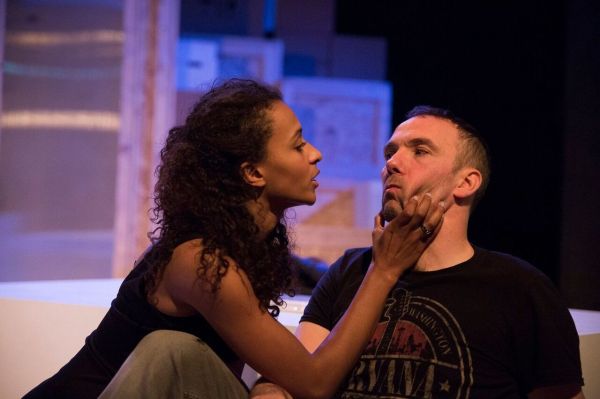
Tang Xianu and Shakespeare were writing about similar themes at the same time, on opposite sides of the world but never met. Teaming up to create a cross cultural performance, Leeds University and International Business and Economics University (UIBE) in China each took a play from each other’s culture and created a new play inspired by the foreign text. Inspired by the Chinese legend of Sophora, a spirit of the woods associated with visions and dreams, UIBE chose A Midsummer Night’s Dream. Adding multiple levels of reinterpretation, they swap the lovers’ genders and who fancies who in order to comment on gender roles in China and the pressures young people face. Performed in English, the students struggle to connect to the emotion behind the words but their adaptation is a complex and clever commentary on relationships and social expectations.

The Sophora Nest Hotel, run by three nameless staff members with otherworldly powers, is an escape from university studies for glamorous young couple Lysander and Hermia. They are followed by their friend Helena, who’s in love with Lysander, and Helena brings along Demetrius, the geeky, shy boy who will do anything for her. Helena is blind to his love, and instead uses him more as servant than a friend. Mostly in contemporary language, the lovers’ plot thread from the original unfolds but rather than the boys being drugged, its the girls, who then both fall in love with Demetrius. Lysander, who orders Hermia around to no end, needs to learn to not take advantage of her. Helena needs to do the same with her devoted sidekick.

All the chopping and changing from the original is wonderfully refreshing, and effectively communicates our need to open our eyes to those right in front of us rather than focusing on our own wants. Other themes emerge as well, particularly the pressure on women that results from being under their father’s thumb, then their husband’s. All four characters also have the drive to be the sexiest, cleverest and have the fanciest gadgets. Though China is so far away, it’s both comforting and disconcerting that young people feel this the world over.

The three hotel staff add a lovely dynamic. One is purely logical and analyses the hotel guests’ behaviour. A second wants to play tricks, and the third tries to maintain harmony between the first two. The emphasis on balance between this trio and the lovers feels distinctly eastern, and one worth worth considering in the west.

Though still maintaining an amount of student-level execution, the insight these Chinese young people provide through their script is provocative, relevant and culturally eye-opening.

A Midsummer Night’s Dreaming runs through 13th August.

The Play’s the Thing UK is committed to covering fringe and progressive theatre in London and beyond. It is run entirely voluntarily and needs regular support to ensure its survival. For more information and to help The Play’s the Thing UK provide coverage of the theatre that needs reviews the most, visit its patreon.

Mr Incredible and Deal With a Dragon, Edinburgh Festival Fringe

https://files.list.co.uk/images/m/mr-incredible-main-image-print-LST209719.jpg

Solo performances are popular at the Fringe, and there are some good ones this year. So far, the best production I’ve seen this year is one-woman show Torch, celebrating womenhood in all of its flaws and glory. To portray men from such a perspective is much harder what with society already granting men more privilege than women, but Camilla Whitehill’s powerful Mr Incredible does just that in order to highlight male entitlement.

Adam and Holly have recently split up, and Adam hates it. Men like him aren’t meant to be single. He has a good job, owns a flat in London and desperately wants marriage and children. Whilst he loves Holly’s youth and fighting spirit, he was glad when she started to mellow and come round to the idea of settling down. But she wouldn’t be tamed by his sedate nights in front of the telly watching trashy programmes. She wants to write about important issues and change the world for good.

Though Adam’s account of Holly betrays an obvious, fundamental incompatibility between the two, Adam is blind to it and his desire for Holly to conform, and it’s infuriating. As he details moments from their relationship and its unravelling, he blindly transfers all blame onto her. The script cleverly paints Adam as a generally good guy, making his privilege initially subtle, then growing until their relationship reaches a horrible end. His ingrained entitlement to Holly and the belief that she should conform to his ideal life is a good capture of male immovability around women’s goals and desires, and hopefully framed in a way that triggers male reflection.

Alistair Donegan fleshes out Adam with genuine grief for the loss of his relationship and fully believed justification of the character’s choices. Whitehill’s script paints Adam overly-simplistically at times, but Donegan makes the character three-dimensional.

As a solo performance, it is initially unclear who Adam is talking to, but this is revealed in the play’s final moments when the severity of their breakup is horrifyingly revealed.This moment is subtle and takes some processing, so perhaps a bit more obvious spelling out will make the intended message stronger. Overall, this is a strong, polished production with acute comment on male privilege over women’s bodies and choices.

Deal With the Dragon also looks at male entitlement, but likely not deliberately and with a hefty dose of absurd fantasy. Bren is a gay dragon who finds vulnerable gay men that need looking after and offers to help, but not without signing a contract. The Faustian pact between Bren and artist Hunter looks at artistic temperament and dependency in the arts with both comedy and gravitas, though Kevin Rolston’s piece is lacking in a concise storyline and clear message.

Rolston is an excellent performer who distinguishes between Hunter, another artist Gandy and Bren with physical skill that is delightful to watch. With no costume or props, it’s perfectly clear that Rolston is a dragon. The transformation is simple, but utterly delightful.

The script has a nice premise – What if you had a gay, German dragon to help you get through the unpleasantness of life – but it’s never made clear what the premise is trying to communicate. Are people eventually better off with Bren’s assistance? Worse? What does it say about life’s obstacles as a whole? Should men have someone at their disposal to do their dirty work? These questions go unanswered. Though Rolston’s ability as a performer is undeniable, Deal With the Dragon never makes a definitive statement.

Mr Incredible runs through 28th August, Deal With the Dragon runs through 29th August.

The Play’s the Thing UK is committed to covering fringe and progressive theatre in London and beyond. It is run entirely voluntarily and needs regular support to ensure its survival. For more information and to help The Play’s the Thing UK provide coverage of the theatre that needs reviews the most, visit its patreon.

The Verge of Strife, Edinbrugh Festival Fringe

https://s.yimg.com/ny/api/res/1.2/dYMZRbOfigpSinFsDrmM4w--/YXBwaWQ9aGlnaGxhbmRlcjtzbT0xO3c9ODAw/http://media.zenfs.com/en/homerun/feed_manager_auto_publish_494/e8b3b49c0f2b401a3fb7882c92866d28

The Wildean young poet Rupert Brooke revels in the self-absorbed, upper classes of Edwardian Oxford and London at the turn of the twentieth century. He finds virtue in beauty, love, poetry and little else. Vain, pretentious and excessive is his behaviour, he manipulates his friends and lovers, all in the name of art and pleasure. Though not a particularly likeable person, his poetry betrays emotional depth and inner conflict, and his social circle flocks to his talent and intensity. Verge of Strife largely focuses on his young life of frivolity, turbulent relationships and their reflection in his poems. Eventually known for his war poetry, this play celebrates his writing’s evolution through the lens of his life’s eras and the women he loved. The poetic but sedate script needs more action as it meanders through Edwardian summers, and nuanced performances are appropriately restrained, making this a somewhat sleepy aural bath.

Much of the story involves parties, encounters with friends and suitors, and a life of indulgent leisure and writing. The dialogue is pretty and light, with beauty but little substance. The narrative flutters rather than sharply rises and falls, presenting snapshots from his life rather than a continuous plot line. Though this mirrors real life, it does not make for particularly dramatic theatre. There is also a sharp change of direction in the final section of the play, presenting Rupert in a completely different role than that of his carefree youth. The contrast is sudden and not clearly explained; the lack of gradual change from wafting, emotional poet to no-nonsense commander jars and feels like there are scenes missing that explain how his life so dramatically altered. The minor characters and their potential to conflict with Rupert are also underused – Rupert is the sole focus throughout, with everyone else merely supporting.

Jonny Labey takes on the verbose Rupert, meticulously sculpting delicate and flirtatious mannerisms. The character is frustratingly shallow for much of the play, denying Labey much freedom to achieve any depth. He does effectively capture Rupert’s growing instability building up to his remarkable transition into a man of real responsibility, and his chemistry with the female characters is undeniable. Emma Barclay as the solemn intellectual Katherine Cox, and Sam Warren as his openly gay friend, are excellent and full of character.

With most of the cast delivering strong performances and pretty language enveloping the senses, The Verge of Strife certainly has its positives but the script needs further work to add clarity and substance in order to communicate its message about the impact of war on a young artist.

The Verge of Strife runs through 29th August.

The Play’s the Thing UK is committed to covering fringe and progressive theatre in London and beyond. It is run entirely voluntarily and needs regular support to ensure its survival. For more information and to help The Play’s the Thing UK provide coverage of the theatre that needs reviews the most, visit its patreon.