Shakespeare as You (Might) Like It, Rosemary Branch Theatre

rsz_b551c7178d1c33dd1b480aca6c14387c3b89b05f2301913df15fd10fc38737bf

Four hundred years ago this April, Shakespeare died. A bunch of academics decided to take advantage of this bizarre anniversary and launched Shakespeare 400. It’s a great excuse for a nationwide Shakespeare celebration, but few of the involved events appear to acknowledge that the celebration is of his death and that he most definitely would write no more. Shook Up Shakespeare hasn’t let this fact bypass them, though. Their 45-minute Shakespearian cabaret mash up, Shakespeare As You (Might) Like It, is a quad centenary wake celebrating some of the Bard’s best female roles and the chaotic spirit of Elizabethan and Jacobean performance conventions.

Performer/creators Roseanna Morris and Helen Watkinson energetically and easily flip from Shakespeare’s verse to contemporary audience banter. Their show doesn’t have a plot, but involves party games, cakes, wine, singing and audience interaction as well as some cracking excerpts. In the intimate Rosemary Branch Theatre, it’s hard to hide but after the initial refreshments, party bags and taking a register, it feels more like a group of friends out for a laugh so people willingly volunteer. There’s a hint of The Complete Works of William Shakespeare (abridged) but with less structure, though it doesn’t feel like it needs it at such a short length.

Morris and Watkinson, as well as being friendly, charismatic and unintimidating, are excellent performers. They perform three scenes and at a push, the Desdemona/Emilia scene is the best but the other two are still fantastically endowed with a seemingly-easy commitment. Though not the best of singers, they confidently carry the Willow song. They switch their tone on a pin, which is truly lovely to watch.

Shakespeare As You (Might) Like It is their debut show as a company and as fun as it is, it could use some developing. With more material it will probably need more shaping and a more clearly outlined purpose/message, but Morris and Watkinson are natural talents with clear passion for sharing Shakespeare’s work with joy rather than quiet reverence.

The Play’s the Thing UK is committed to covering fringe and progressive theatre in London and beyond. It is run entirely voluntarily and needs regular support to ensure its survival. For more information and to help The Play’s the Thing UK provide coverage of the theatre that needs reviews the most, visit its patreon.

Macbeth, Young Vic Theatre

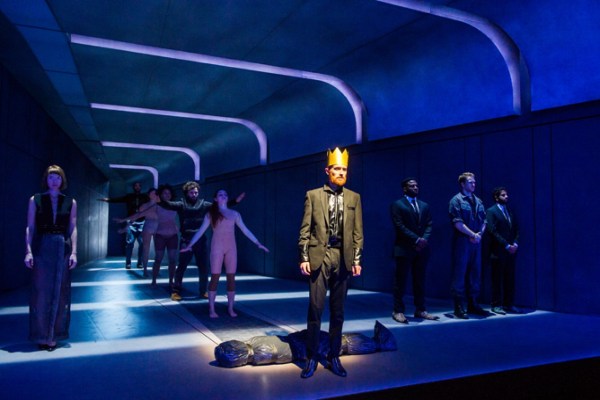
Though drastic re-imaginings of Shakespeare’s plays can show the contemporary relevance of his workgroups the use of a clear, justifiable concept, randomly slapping on cool ideas has the opposite effect. Alienating and confusing, the audience can go away with no more understanding of the story than they came in with, and the director’s decisions look masturbatory and self-indulgent. If a new perspective or insight isn’t provided on a play that the audience is likely to already know or have seen, then there is absolutely no point to adding a concept at all. Such is the case with Carrie Cracknell and Lucy Guerin’s Macbeth. With a text cut to ribbons, lengthy contemporary dance sequences inserted, generically quirky witches and inexplicable doubling, this production is a fine example of how contemporary Shakespeare concepts for the sake of edginess fails to communicate anything to the audience.

An optical illusion of a set by Lizzie Clachan and Neil Austin’s lighting ensures every moment could make a stunning photograph with stark shadows and forced perspective. This isn’t an art exhibition, though. The cold, industrial feel supports the mood of the play but lacks the sumptuousness that the Macbeths kill for. The rarely changing set doesn’t delineate space or place well, merging this world with the next. In some scenes this works, but it’s hard to follow where the characters are, particularly with the liberal cuts to the text. A home or a Heath? Scotland or England? Bedroom or banquet? It’s easy to lose track, even knowing the play well.

The witches, wearing beige dance wear, twitch and spasm around the space, sometimes with other characters joining in to create a repetitive, robotic movement machine. Why? I genuinely don’t know. There’s a hint of a lack of self-control but the repetition counters that effect. They also double for the child characters, which causes them to lose their power and inhuman-ness. Their movement sequences are entirely too long and lack any support for the narrative, though they are distinct from the other characters.

Fortunately, some of the performances are quite good. John Heffernan as Macbeth is a flawed man we see unravel, though this process is forced due to the cuts in the first half of the play. Anna Maxwell Martin on the other hand is rushed and deadpan, completely disregarding the verse and therefore flattening it. Prasanna Puwanarajah is a good Banquo, though the choice to have his ghost narrate the “out, damn spot” monologue was completely ineffective and nonsensical. Despite a disempowerment of the smaller roles due to the textual edits, the rest of the cast perform with energy and commitment.

There is a litany of further poor choices that show a value of style over substance in this production, and despite the directors’ need for weirdness, the whole thing comes across as generic and pointless. The stylised, lengthy movement sequences make no comment on the world of the play or its inhabitants, and with so much of the text removed, this Macbeth is very much “a tale…full of sound a fury, signifying nothing”.

The Play’s the Thing UK is committed to covering fringe and progressive theatre in London and beyond. It is run entirely voluntarily and needs regular support to ensure its survival. For more information and to help The Play’s the Thing UK provide coverage of the theatre that needs reviews the most, visit its patreon.

Big Brother Blitzkrieg, King’s Head Theatre

Lots of things seem like a great idea at uni. Some of them are genuinely good ideas. A great deal more aren’t. Writing a play about Hitler in the Big Brother House is one of the latter. In 2014, Newcastle University students Hew Rous Eyre and Max Elton founded Bitter Pill Theatre to produce their debut play, Big Brother Blitzkrieg, at Edinburgh Fringe that year. With a couple of other shows now under their belt, they bring their popular first production to London. Meant to somehow satirise Big Brother and Hitler, this stereotype-driven piece doesn’t follow any sort of consistent narrative logic and doesn’t manage to rise to satirical humour. The performances are very good despite the character limitations, but the script comes across as a drunks, nonsensical idea that would have been better off forgotten.

When Hitler fails to kill himself after his final rejection from art school, he wakes up in the garden of the Big Brother House during its final season. True to life, no one watches the programme anymore and the contestants are just in it for the money. Bafflingly, none of them no who Hitler is, even the educated, middle class housemates. Clearly this is a world where WWII never happened, but I’m not sure what point that’s meant to make. Similarly, the plot follows what I imagine to be standard Big Brother events: evictions, competitions, surprises and character clashes that are largely unfunny and offer no new perspective on the show or reality TV format. Though the story defies the laws of Physics through the use of time travel, this element is wholly neglected.

The cast are very good, or at least at playing their respective stereotypes. Stephen Chance is an expressive, quick-witted Hitler with no idea of how to deal with charming, bouncy Essex lad M-Cat (Kit Loyd) and ageing queen Felix (Neil Summerville). He finds kinship in corporate PR and Tory Lucy (Jenny Johns), a delightfully despicable Katie Hopkins homage. The house is completed with femi-gendered Charlie (Hannah Douglas) who has some cracking exchanges with Lucy, and the bland as plain toast housewife Rachel (Tracey Ann Wood), who Hitler immediately distrusts. The combinations invites inevitable situation comedy but again, it’s not sophisticated enough to count as satire, or have any sort of message at all. A shame, as the actors all seem to have great potential but are stuck playing two dimensions.

The show would suit a much smaller format, like a reoccurring sketch as part of a comedy show limiting each slot to ten minutes. About half an hour in, Big Brother Blitzkrieg already feels too long. There were a few good lines, but in 75 minutes, a few isn’t enough to save this play even with the hardworking cast. Despite the commendation these young practitioners deserve for setting up a company whilst still studying and keeping it going for nearly two years, part of artistic development is knowing when to let an idea go. This is a production that needs to retire in favour of more advanced, relevant work.

The Play’s the Thing UK is committed to covering fringe and progressive theatre in London and beyond. It is run entirely voluntarily and needs regular support to ensure its survival. For more information and to help The Play’s the Thing UK provide coverage of the theatre that needs reviews the most, visit its patreon.

Amaluna, Cirque du Soleil at Royal Albert Hall

rsz_bol4

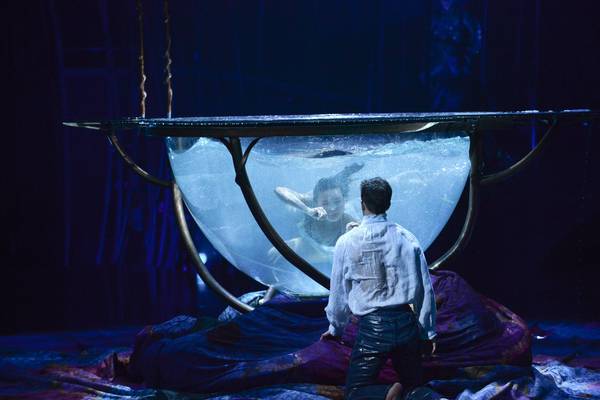
Nearly twenty years ago, I went to my first Cirque du Soleil show in New York. A young teenager and already obsessed with theatre and performance, I was blown away by the colour and spectacle, having never seen anything like it before in the fourteen years that I’d been on this earth. I have no concrete memories of the show, just flashes of light and colour, and feeling impressed. I looked forward to see if Amaluna, inspired by Shakespeare’s The Tempest, would live up to my juvenile memories.

It took a while to find out. First, I had to meet my critic friend, who had invited me as her guest, at door 6 at 7:30. I approached Royal Albert Hall from the side closest to Exhibition Road and found myself at door 3. Not being familiar with the venue, I picked a direction and soon found I was going the wrong way. Considering it’s a circular building and I was early, I carried on and found myself at door 6.

WHAT SHEER HELL IS THIS? At door 6 was Cirque’s version of a red carpet (it was blue), a queue of luxury cars out of which vaguely familiar people emerged in black tie and evening gowns, bright lights and hordes of shouting paparazzi. A few cold looking performers in costume posed for photographs, film crews conducted interviews and vicious looking security guards hovered, ready to move on anyone that looked like they didn’t belong.

I’ve been to a lot of press nights, but this was incomparable. More like a film premiere or awards ceremony, Cirque at some point took the circus outside the venue and into the media and celebrity world. When did this happen? Or more importantly, why? Does Cirque really need the publicity so badly that they pander to the vapid world of Big Brother contestants and paparazzi? And how was I supposed to find my friend in this mess?

Giving wide berth to this bright and shiny, “OK Magazine Live!” shitshow, I carried on to the other side of the large foyer that the blue carpet led to. Fortunately door 6 was duplicated opposite and the nice usher on the door let me wait in the warm. I still managed to be early. The performers across the foyer still looked cold; it dawned on me that they had to be onstage doing acrobatics in less than an hour and that they were either understudies/doubles or Cirque is more interested in photo ops with celebs than the wellbeing of their performers. I desperately hope it’s the former.

Anyway, the show itself. Nearly. We had great seats in a box allocated for press but I didn’t realise at first just how good they were. Or rather, how expensive, until critic friend informed me what they were retailing for. My initial reaction was an inner explosion of flabbergast, “people around us paid HOW MUCH for this show?” Then I realised: press get their tickets free, as does the wafting, gormless army of famous people, so how much is Cirque actually making out of this press gala? Especially considering the post-show reception (we declined our invitation to attend) and the swathes of empty seats in the upper galleries. These are the cheapest seats, but on a press night, why are they empty? Were they marked up so much that they weren’t bought? Are people not interested in Cirque anymore? (In which case, they desperately need the media attention.) Or, did Cirque keep them vacant so plebs didn’t gawp over their famous fellow audience members? Regardless of the reason, none of the prospective answers are positive.

NOW for the show. Really.

I love when theatre and performance makers mess about with Shakespeare. It can prove his work is still relevant and opens the possibility of a new perspective or insight. The programme states that this is a female-driven show: Prospero is now Prospera, and Amaluna is Miranda’s empowering coming-of-age story. The band is entirely female, as is most of the cast. A feminist adaptation of a Shakespeare play for circus? It should be brilliant, and exceed my youthful memories of my last Cirque show.

It’s not brilliant. Sure, it’s bright, colourful and a consistent sensory overload. The skill-set of the performers is top notch. There are acrobats, aerialists of all kinds, clowns, Chinese pole performers, and juggling. It’s technically impressive. It’s easy to get swept away by the spectacle of the whole thing.

There’s little substance, though. They story is a vague framework for the circus acts and spectacle. Most importantly, the supposedly empowering female narrative is anything but. Prospera throws a party for her daughter Miranda, who then bathes in the light of the aerial hoop performing Moon Goddess who bestows her with a gift of a glass sphere. It’s an obvious metaphor for Miranda’s  womanhood/menstrual cycle, and a cringy one at that which doesn’t contribute anything to The Tempest aspect story. Miranda also meets a prince who has washed up on their island in a storm. Called Romeo rather than Ferdinand (dear god, why???), Miranda immediately falls in love with his sculpted, often shirtless body. Her best friend Cali, a half-lizard-half-man creature, is jealous of the man who’s taking away Miranda’s attention from him. The two male characters compete for young Miranda’s attention and the pretty, shipwrecked Romeo was always going to win, gifted with a wedding and all. It was like an old school Disney film. Empowering to women? No, no, NO. The narrative presented was about as disempowering as you can get, particularly when you factor in the creepy plot points of an unseen Romeo watching Miranda bathe and hand balance in white shorts that become nearly transparent from the water (You can see EVERYTHING. I’m pretty sure I could see up into her stomach during the splits.), and Cali abducting her into the heavens to keep her to himself. Also consider for a moment that in Shakespeare’s version, Caliban raped Miranda and is enslaved by her father as consequence. Plus, if this is Miranda’s coming-of-age celebration, she’s how old? Sixteen AT THE OLDEST. And she get married at the end of a story that spans no more than a couple of days? This is supposed to be a piece of performance that empowers women.

There’s also plenty of creeping elsewhere in the show. The two clowns, one a nanny to the young Miranda and one a washed up sea captain. Mainha and Papulya are overtly sexual, and as cringy as the Moon Goddess. There’s classical Commedia influence in the pratfalls and lazzi-like sketches full of groping, arse kissing and manipulation. I get that circus performers have to wear tight clothes for their work, but the men are often topless for no apparent reason and there’s more female flesh on display than needs be.

Ignoring the narrative and theme, the individual acts and the show of it is celebratory, fun and a showcase of skill. However, Cirque as a vast, commercial institution raises some concerns, and the perception of female empowerment and celebration by their creative and marketing team when the reality is the opposite is not only highly disturbing, but a sign of endemic patriarchal complacency about what is an acceptable lens to view womanhood through in the performing arts.

The Play’s the Thing UK is committed to covering fringe and progressive theatre in London and beyond. It is run entirely voluntarily and needs regular support to ensure its survival. For more information and to help The Play’s the Thing UK provide coverage of the theatre that needs reviews the most, visit its patreon.

Botallack O’Clock, Old Red Lion Theatre

Roger Hilton was an abstract artist working in Cornwall until his death in 1975. As alcoholism and ill health took hold, he confined himself to a basement bedroom and studio, prolifically churning out work in the middle of the night. Modelling Hilton’s experimental work, playwright Eddie Elks (of Mugs Arrows acclaim) has crafted an unconventional dialogue between an ageing, ill man finding late-night solace in his art, and his radio. Elks begins in naturalism, then surreal expressionism sets in like a lucid dream. The mind of an artist is an unusual, hard to pin down thing inventively captured and well performed in Botallack O’Clock, accompanied by the sadness of approaching death and the need to leave a legacy.

Ken McClymont’s set recreates Hilton’s studio/bedroom with excellent accuracy and detail, and a bit of theatre trickery further enhances the surrealism and absurdity. Photographic projections reinforce the authenticity of the set, complete with drying paintings strung around the periphery and paintbrushes everywhere. A 1960’s radio benignly sits centre stage next to a desk with paper and paints. With Dan Frost as an angular Roger folded on the corner of a mattress and the radio next to him, they become equals. The wardrobe on the back wall is also more than it appears, as are the walls themselves. Particularly bizarre but wonderful moments include the old man struggling to be reborn through the wall and Roger’s energetic bogey with a surprise visitor.

The power in this script is the juxtaposition of the profundity and truth in Roger’s dialogue with his radio, and the veering away from reality that happens soon after insomnia slowly wakes him. It surprises and disarms; Roger’s negotiation of this alteration is charming and confessional, provoking reflection on one’s own mortality. But it’s also deliciously funny and sweet, though begins to feel too long about fifteen minutes before the end.

Dan Frost is not an old man, but endows his physicality with the creaky weight of age. This is simply cast off, like his glasses, when he gleefully reflects on his art school days in Paris. Frost’s vocal rhythm is quick and short, forcing the audience to really listen to and process Elks’ script. Frost is complimented by the dulcet tones of George Haynes as the Radio. 

Botallack O’Clock is, in essence, a simple conversation between a man and his subconscious but Elks’ creativity and skill makes it seem like more than that.  There are some delightful surprises along the way and a range of styles are used to examine our intimate relationships with our work, our possessions and our inevitable deaths – a thoughtful, reflective piece is thinly veiled under the humour and Frost’s abrupt delivery. Though we empathise with Roger throughout, all of us are alone in our twilight years, and we are the sole leading players in our own narratives.

The Play’s the Thing UK is committed to covering fringe and progressive theatre in London and beyond. It is run entirely voluntarily and needs regular support to ensure its survival. For more information and to help The Play’s the Thing UK provide coverage of the theatre that needs reviews the most, visit its patreon.

Inkheart, HOME

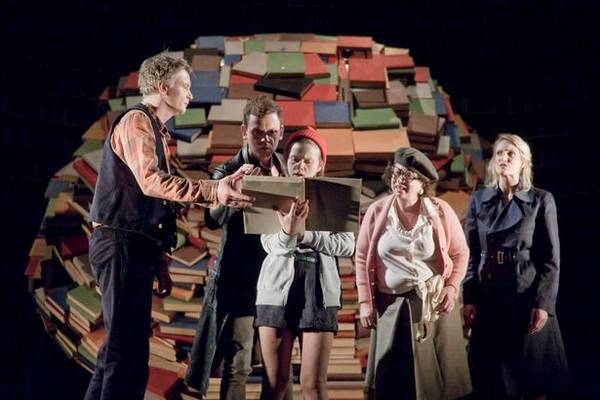
rsz_js78563653Meggie (Katherine Carlton) and her bookbinder father Mo (Paul McEwan) love books. They also share a fantastical gift that’s causing them to be chased all over the world (or Europe, at least) by fictional characters that aren’t very nice at all. Cornelia Funke’s young adult novel Inkheart is adapted for the stage by director Walter Meierjohann in a high-spirited production with inventive staging. The mountain of books and projections that make the set effectively reinforce the importance of the stories that drive the action. The plot is rushed and over-complicated though, particularly for a family show. Books generally have way more content than will fit into a reasonable timeframe, and Inkheart feels like Meierjohann tries to fit the entire novel into two hours on stage.

This is a great play for villains: Will Irvine is Capricorn, a ruthless, Dr Evil-like pursuer who needs Mo to help him bring his assassin, The Shadow, into this world. His stooges Basta (Darryl Clark) and Flatnose (Griffin Stevens) provide excellent comic relief with a dash of audience interaction. Rachel Atkins is the intimidating, book collecting Great Aunt Elinor and the nonspeaking figure draped in black, Mortola. They all provide an excellent foil to the protagonists, even though Meggie is feisty and temperamental (a fantastic role model for young girls struggling to assert themselves). Mo is gentle and kind, with a warm heart and an inner secret – a complex, developed character that adults can relate to.

The pace in the first act ticks along nicely but after the interval, there seem to be leaps in time and space caused by huge chunks cut from the original novel. There are several twists and reveals, making the second act crowded with information. The character development from the first act is neglected in favour of chucking plot points at us, one after the other. Though, this is a story about a long love affair with books and their power, as well as the power we have to write the stories of our own lives. It’s an adventure, a love story and a coming of age tale with great performances, and a flawed, unexpected narrative. Much like our own lives.


The Play’s the Thing UK is committed to covering fringe and progressive theatre in London and beyond. It is run entirely voluntarily and needs regular support to ensure its survival. For more information and to help The Play’s the Thing UK provide coverage of the theatre that needs reviews the most, visit its patreon.

Red Riding Hood, Preston Continental

rsz_12299318_10153680692062789_6332526754861081608_n

What makes the story of Red Riding Hood so enduring? Is it the clever heroine? Is it the metaphor for growing up? Is it the violence and gore? Horse & Bamboo choose to focus on the colour red and its symbolism in their touring Red Riding Hood. Two actors, Nix Wood and Alex Kanefsky, are actor-storytellers-puppeteers who endow the story with a richness and life that appeals to their young audience as well as their families. The company’s lo-fi touring aesthetic uses a surprising amount of puppets at different sizes, masks and costume to keep the kids’ attention. It’s a bit hodgepodge on the surface but there’s a good amount of layers to this piece: meta theatre, storytelling, playing at the characters, and embodying them. Wood and Kanefsky fluidly switch between the styles that initially feel excessive in their quantity, but the children are so absorbed in the story that cannot be deemed as anything but highly effective and engaging.

The main focus of the story is the dynamic between Red and the Wolf. Mum and Grandma make appearances, but they don’t waste any time getting to the woods. The deeper Red gets, the larger the characters become – a great device. Initially, a tiny Red and mum are reading bedtime stories in a dolls’ house, eventually Wood plays Red in a full mask and the wolf is a nearly life-sized puppet with excellent movement and expression in the head and neck. Music and animated projections add additional detail to Wood’s controlled, emotional physicality communicating the unspeaking Red’s inner life. The wolf and Red focus results in a reinforcement of the “don’t trust strangers particularly if they seem nice” moral, which works for a children’s show but is quite a shallow interpretation in a production that has such depths of performance technique and style.

Red’s cloak is a dark, rich red that stands out beautifully against the rest of the set. Wood sets up red as her favourite colour as she chats with the entering audience pre-show; it’s lovely to watch. Kanefsky is goofy and warm, and loves cakes. This trait follows his characters through the rest of the story. The set is made of abstract blues and greens, inspired by Paul Klee’s art (my initial association was with Kandinsky’s work). Though the idea of starting with visual art for a way into a concept is a common one, the abstract set design clashes with the concrete realism of the puppets and mask, and the animation style was the starkness of shadow puppetry.

As children’s theatre goes, Horse & Bamboo’s Red Riding Hood is more sophisticated than it appears. Despite the moralizing, the craftsmanship and performance skill can be appreciated and enjoyed by all ages. Knowing that Horse & Bamboo are a touring company with just two actors makes their work all the more impressive. An excellent production for families at any time of year, too.


The Play’s the Thing UK is committed to covering fringe and progressive theatre in London and beyond. It is run entirely voluntarily and needs regular support to ensure its survival. For more information and to help The Play’s the Thing UK provide coverage of the theatre that needs reviews the most, visit its patreon.
Top Ten Shows of 2015

rsz_top10-620x400

  1. Carmen Disruption 

This Simon Stephens deconstruction bore little resemblance to the opera. Instead, we had a cast of dysfunctional, damaged characters unable to connect with the world around them on any meaningful level. They filled the Almeida with an electric loneliness that grasped the desperate humanity residing deep inside us all before chucking us out, exposed and raw, into the London night.

  1. Pomona

Written by a 27-year-old, Pomona captures the millennial generation in a single play. Frantically set over several levels of dystopian reality and never able to settle, this epitomises those who suffer the consequences of  baby boomers’ past choices.

  1. Light

The first show I ever gave five stars to, after more than a year of criticism. Good intentions and government exploitation address increasing surveillance with stunningly precise physical theatre, object manipulation and light.

  1. Tether 

A two-hander about a blind runner and her guide, this piece is refreshingly unromantic and driven by dialogue and characterisation. This is a simple and powerful piece by a promising young writer set in a world rarely considered by non-disabled people.

  1. Shakespeare & the Alchemy of Gender

A solo performance by veteran Shakespearean, Lisa Wolpe, founder of L.A. Women’s Shakespeare Company. Exquisite extracts of Shakespeare’s most celebrated male roles interspersed with her father’s biography raises important points about performance, gender and family.

  1. Town Hall Cherubs

Theatre Ad Infinitum and Battersea Arts Centre team up to create an immersive, site-specific piece for 2-5 year-olds. Gentle and responsive to the children’s attention spans, this is a bit of a winter treasure hunt around the BAC that stimulates all the senses.

  1. Chef 

Another sharp one-woman show, this one by Sabrina Mahfouz and performed by Jade Anouka. Anouka is a Michelin-star chef who runs the prison kitchen. Part fictional memoir/part foodie homage, this character driven piece cuts an unforgettable character.

  1. This is How We Die

An explosive spoken word/music piece by Canadian Chris Brett Bailey, it defies description and instead must be experienced. A marmite production amongst critics but Bailey’s use of imagery within language is incomparable.

  1. Don Q

A warm and lovely adaptation of Cervantes’ novel, Don Q is an old man’s gleeful adventure story. Four actors multi-role through this story that looks at the way we treat the elderly and the joy of play-acting.

  1. Eclipsed

Set during the Liberian Civil War, the all-woman cast of Danai Gurira’s doesn’t hold back on the experience of women in wartime. This is a brutally raw survival story with the power to leave you shaken, guilty and grateful for the benefits of Western comforts.

Honourable mention: Invisible Treasure

This is an interactive experience that is audience-led, with no actors and no plot. Like a game, the audience is led into a hi-tech room and led through a series of tasks in order to escape. Fun, challenging and frustrating, it makes some powerful points about group dynamics and personal approaches to problem solving.


The Play’s the Thing UK is committed to covering fringe and progressive theatre in London and beyond. It is run entirely voluntarily and needs regular support to ensure its survival. For more information and to help The Play’s the Thing UK provide coverage of the theatre that needs reviews the most, visit its patreon.

Goodnight Mister Tom, Duke of York’s Theatre

rsz_5_alex_taylor-mcdowall_william_and_elisa_de_grey_puppeteer_for_sammy_the_dog_in_goodnight_mister_tom_2015_credit_dan_tsantilis

The WWII image of dejected, scrappy children with brown tags around their necks, clutching their most precious belongings as they are re-homed with strangers in the countryside is a powerful one. It’s one that inspired author Michelle Magorian to write Goodnight Mister Tom, adapted by David Wood for the stage, now in London after a successful run at Chichester and before heading off for a national tour. The audience meets little William, who is sent from Deptford to Dorset and assigned to live with the reclusive Tom Oakley. With a focus on Tom more so than the relocated children, this is a story about finding love again after a devastating loss. This part of the production is moving, but the story is slow to develop over a long time period and the flimsy, thin dialogue doesn’t support the large cast of characters, their development and the devastation of wartime.

David Troughton as Tom is a sad and sensitive widower, the complete opposite of the grump that his fellow villagers see. Three Williams, three Zachs (William’s precocious evacuee friend) and a gaggle of children make up half the cast; all are very much child actors. Alex Taylor-McDowall is today’s William, a lanky shy boy poisoned by his fundamentalist Christian single mother, Melle Stewart. We hear a lot about her, but only meet her in one scene. Stewart is unable to show just how evil (and mentally ill) the character is, though she does her best to live up to the previously discussed monster. Most of the other characters have similarly brief stage time, but plenty of multi-rolling and puppetry keeps the generally good ensemble performers busy.

But the first half takes its time to get going. It’s not from a lack of energy in individuals, but the overall pace is languid. It’s lovely and sweet, but flat. The war seems far away from this village, country life is slow, and day-to-day life is filled with routine and little errands. It’s in these small tasks that we see Tom’s affection for William grow: getting “new” clothes for him, teaching him to read and write and fending of bullies who pick on the “townies” and “vaccies” from London.

It’s no wonder the local kids pick on the Londoners. William can’t read or write, sleeps under the bed rather than on it, and his toxic mother skewed his worldview about, well, everything. Zach is well-spoken, attention seeking and flamboyant, the son of actors. It’s interesting that the London children the audience meets are either desperately camp or from the slums in this story; does this reflect Magorian’s preconceptions?

Along with Troughton’s performance, the puppets are outstanding. Tom’s dog, Sammy (Elisa de Grey) is gorgeously constructed, and full of movement and life from de Grey’s work. After the interval, there’s an increase in momentum after an unnecessary subplot involving William’s return to London and the effects of war creep closer, creating more tension and loss. The audience learns more about Tom’s past and the ending is a tearjerker and concise resolution.

For a family show however, the whole thing is too long and convoluted. Tom and William’s story could have easily had more focus with a reduction of other characters, more fleshed out scenes and additional detail about Tom’s life leading up to the point he takes in William. Fortunately, Troughton has enough stage time to keep this otherwise lovely, but flat, production going.

Press ticket for Goodnight Mister Tom is courtesy of theatrebloggers.co.uk.


The Play’s the Thing UK is committed to covering fringe and progressive theatre in London and beyond. It is run entirely voluntarily and needs regular support to ensure its survival. For more information and to help The Play’s the Thing UK provide coverage of the theatre that needs reviews the most, visit its patreon.
The Xmas Carol, Old Red Lion Theatre

rsz_2cc9d33d00000578-3250546-i_ve_never_doubted_that_mr_cameron_like_most_of_his_generation_w-m-2_1443338742165Dominic Cavendish thinks this year’s theatre lacks relevance to current affairs. He’s probably been working under a commercial and subsidized theatre-shaped rock (as mainstream critics are prone to), citing Anders Lustgarten’s Lampedusa as, “number one in a field of one” where, “nothing stood out as ‘the’ play for today.” Matt Trueman defends theatre’s ability to respond at the speed Cavendish would like, and also cites several examples Cavendish neglected: “The Fear of Breathing by Zoe Lafferty and Lucien Bourjeily’s 66 Minutes in Damascus, part of the 2012 LIFT festival, spring to mind, though Cordelia Lynn’s Lela & Co was set in an unnamed country gripped by a similar civil war.” Also springing to mind and not set in Syria but Liberia, Danai Gurira’s Eclipsed starkly presents the victims of another civil war.

The nightmare in Syria driving tens of thousands of people to flee their homeland in search of safety demands global action and aid, of course. But there were numerous other hotbed issues addressed in British theatre over the past year, even the last couple of weeks. Theatre Ad Infinitum’s Light looked at government surveillance, As Is reminded us that AIDS diagnoses are on the rise, Goodstock describes the uncertain life as a young woman with a high risk of breast cancer. Down & Out in Paris and London rallies support for the working poor, The State vs. John Hayes gives us the last night of a schizophrenic woman on death row, and Skyline is a relentless attack on the London housing crisis. There are many others as well, and that’s just in the past year of one critic’s theatregoing.

Within the past week, The Old Red Lion opened Arthur Miller’s first play, No Villain, a love letter to communism and the strikers of 1936 New York City. Accomplished theatre critic and author T L Wiswell also offered her latest work for two nights only, a satirical update of Dickens’ classic Christmas novel to the current 10 Downing Street, The Xmas Carol. That’s just at one venue, not specifically known for political theatre. The Xmas Carol has a dig at pop culture/The X-Factor to frame the consequences of David Cameron’s legislation on everyday, working people after his annual Christmas party, similar to Miller’s use of the strikes to focus on the life of one family out of millions. Both plays need further development (though it’s obviously too late for Miller), but both brashly and fearlessly confront the politics of their day.

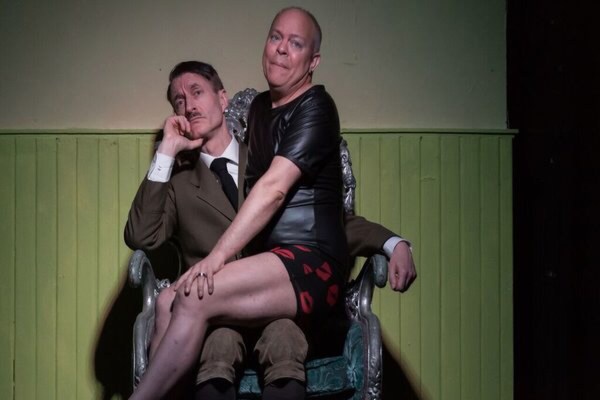
In The Xmas Carol, Simon Cowell (Chris Royds) introduces his latest programme that’s sure to be a ratings hit; it’s an interesting meta-theatrical device that works towards justifying Cameron’s (Warren Brooking) travels through his past, present and future. Jason Meininger’s lighting and Keri Danielle Chesser’s sound effectively evoke transitions in time and space. Some more exposition to set up the television show that Cowell is steering would have clarified Cameron’s complicity and aim to improve his ratings, but the device itself is a creative deviation from having Cameron fall asleep and dream the whole thing.

There are some great impressions in the cast, particularly from Luke Theobald as Ghost of Christmas Past Margaret Thatcher. Brooking could have been a louder, bolder Cameron but he captures an element of the man in his gestures and general lack of humanity. Will Bridges is an amusing, though not particularly accurate Jeremy Corbyn but as this is a satire, his punditry can be excused. Jenny Wills as Cameron’s PA Bob Cratchett brings some grounded naturalism to this piece. She’s a lovely character, warm and family focused, with some good dialogue, but her performance style jars with the heightened delivery from the rest of the cast. It works to ground Cameron’s devastating policies in reality, but she could use some backup from other characters. As the play’s currently just under on hour, more down-at-heel, working people could easily be brought in to further emphasise the battle between the ridiculous politicians and celebrities, and the everyday man.

Having gone to a reading of The Xmas Carol about a month ago, the concept has developed quite a bit since then, but the structure could still use additional tightening and detail. More dialogue and exposition will help, particularly in the beginning and end. There are some genuinely funny moments and well-crafted scenes, but a brief resolution. The Tory criticism is relentless and mocking but also pointed and moving. Wiswell is certainly in the process of striking a good balance within the piece, but it needs just a bit more shaping.

Both The Xmas Carol and No Villain are highly political, but in very different ways; the same can be said of many of the aforementioned productions. Sure, they’re not about Syrian civil war and refugees, but they focus on diverse, divisive issues relevant to contemporary life. Perhaps Cavendish needs to visit the fringe more: it’s where angry voices can express their views unfettered, without the burden of corporate sponsors and other such bureaucratic obstacles. These shows don’t have the high production values or years of development and funding that commercial theatre does, but political theatre on the fringe is some of the most raw, honest, relevant theatre I have seen this year.


The Play’s the Thing UK is committed to covering fringe and progressive theatre in London and beyond. It is run entirely voluntarily and needs regular support to ensure its survival. For more information and to help The Play’s the Thing UK provide coverage of the theatre that needs reviews the most, visit its patreon.