
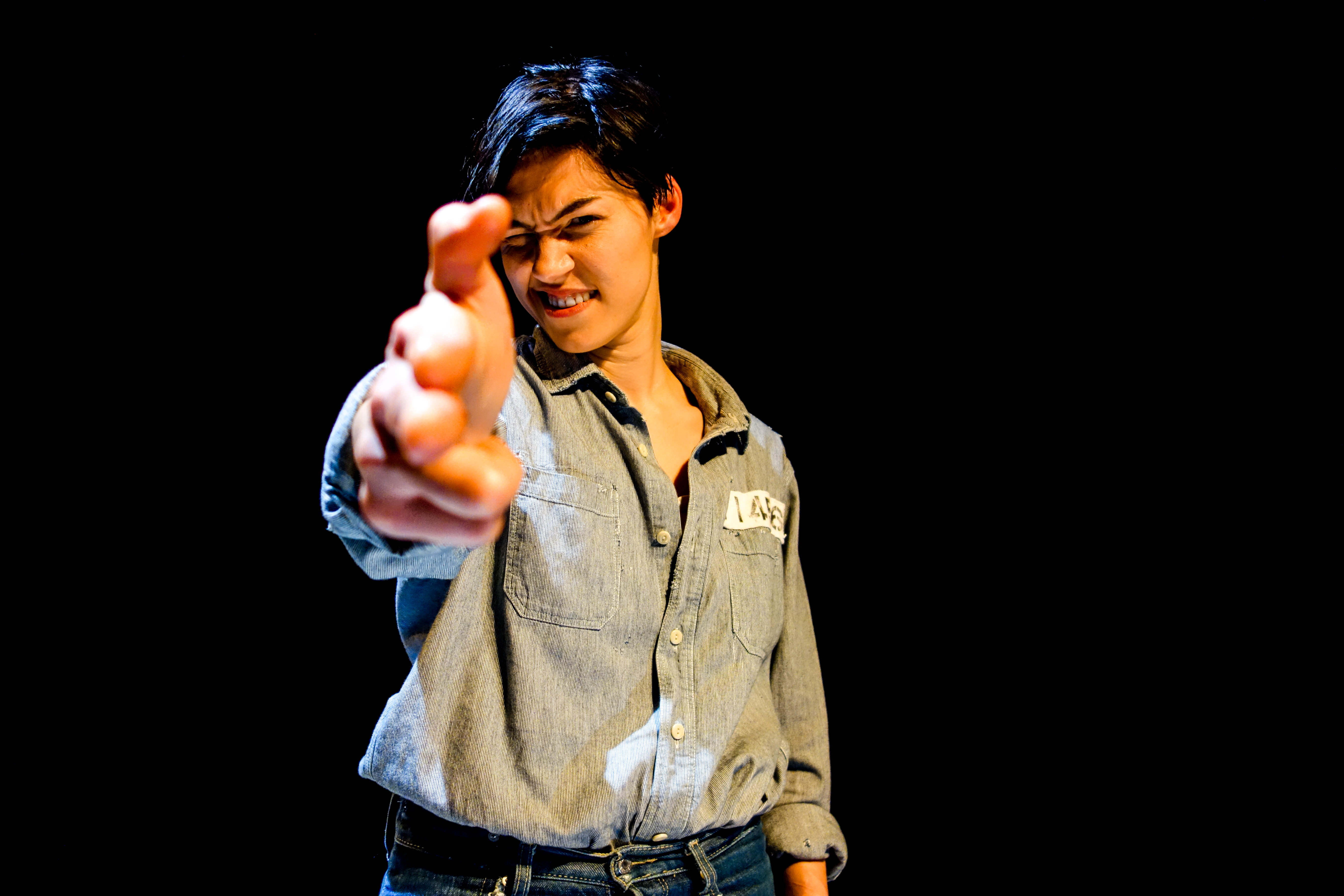
 Elyese Dukie is going to die tomorrow. Though she needs to get through tonight first, at least she’s not alone. We’re in there with her, in her cell on Texas’ Death Row in 1959, as is John Hayes. But we’re not really there, and neither is John. We’re all in Elyese’s head, a figment of her very ill mind, but she’s still going to get the chair in the morning because “they would never send John…but they would send me.” For one of fictional Elyese/John’s last hours, we join her on an exquisitely performed journey akin to riding a rollercoaster handcuffed and blindfolded as Elyese reviews the dark corners and glowing intimacies of her past that led her to this moment.
Epsilon Productions continues to mature with this topical, one-woman show that’s part of The King’s Head Theatre’s new, new writing festival, #Festival45. Lucy Roslyn’s script unfolds Elyese’s troubled past spiraling towards the moment she murders her husband Dale, lover Lorraine and births John Hayes, her killer alter-ego spawned from Schizophrenia, Multiple Personality Disorder or severe childhood trauma. Elyese certainly isn’t alone in her struggle against those that live inside her head but take over her body, what with 73% of female inmates in America currently diagnosed with mental health issues; the percentage of mentally ill prisoners in the less-aware 1950s is unimaginable.
Roslyn, who also performs, begins the piece as John. We only meet Elyese later. She embodies him with perfectly sculpted hand movements and a southern redneck accent, deep as John, light and fragile as Elyese. His/her charm and charisma is unquestionable but can turn to violence and grief on a hair trigger, showing Elyese as a victim of the system unable or unwilling to provide her with the care she needs. As such, it’s a powerful critique of the US justice system.
Lighting designer Sherry Coenen reminds us of John’s threatening presence with greenish pulses when Elyese is struck with a crippling back spasm, a symbol of the control he has over her. The subtle heartbeat in dangling filament lights is Elyese’s, which will cease all too soon as electricity surges through her slender, fragile-looking body. The current seating arrangement, irregular and with a thrust so deep it’s nearly in the round, didn’t quite work with the lighting – those sat along the back wall of the stage had lights in their eyes.
The script begins as a straightforward monologue to the audience, with John flirting and joking. The structure becomes fragmented as her mental state breaks down; though she evokes sympathy she also evokes fear. If John will kill those Elyese loves the most, anyone is at risk, though it’s understandable how people immediately fall for his charms. There are times where the text rambles, but these moments are few and lead up to important story points; Roslyn’s performance adds light and shade that keeps the momentum going. Her performance consistently captivates with its commitment and intensity as well as using high levels of detail to differentiate the two characters from each other. A political firecracker with a stellar performance and numerous layers, this Argus Angel winner packs one hell of a punch.
The Play’s The Thing UK is an independent theatre criticism website maintained voluntarily. Whilst donations are never expected, they are hugely appreciated and will enable more time to be spent reviewing theatre productions of all sizes. Click here to make a donation with PayPal.
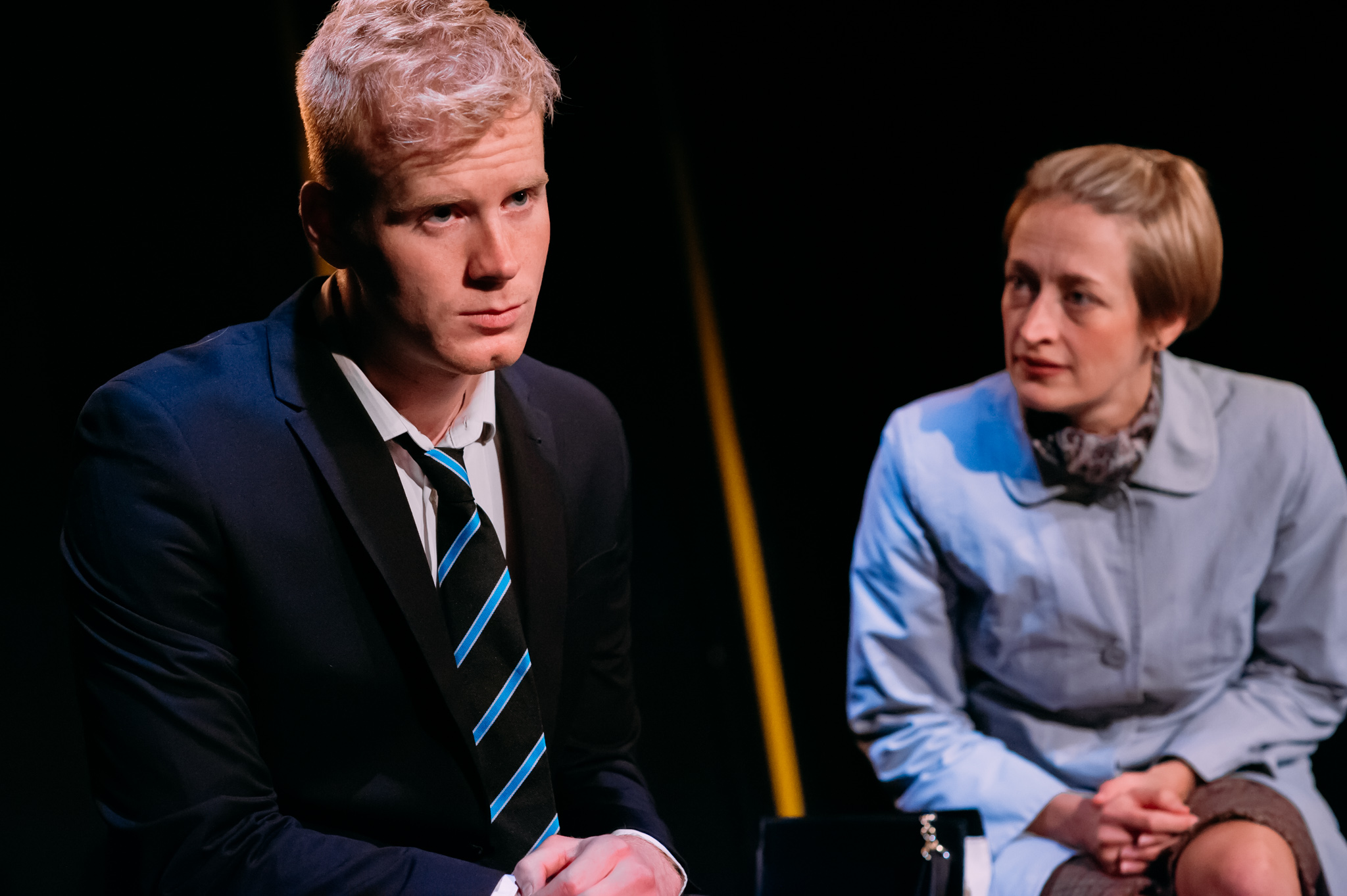
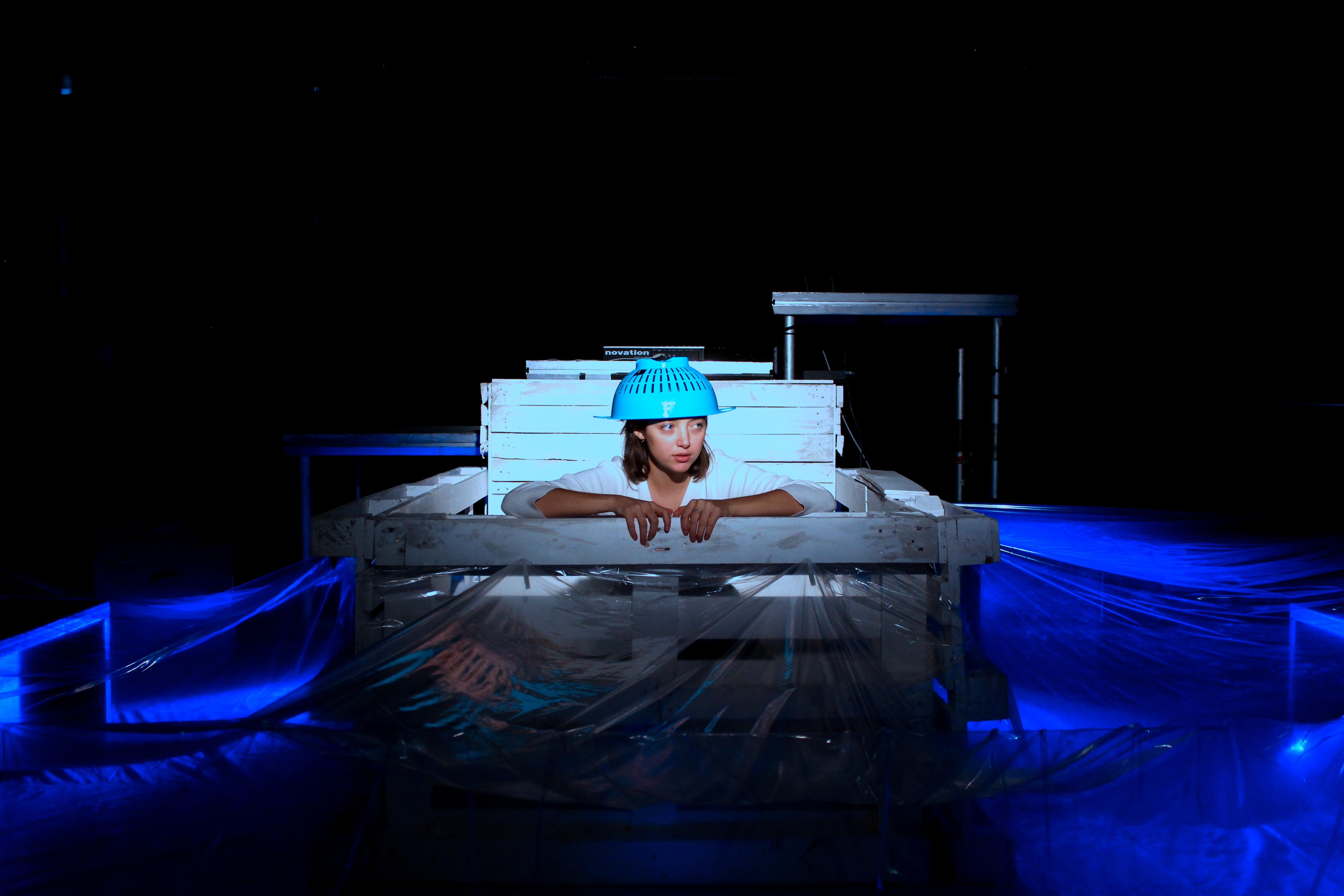
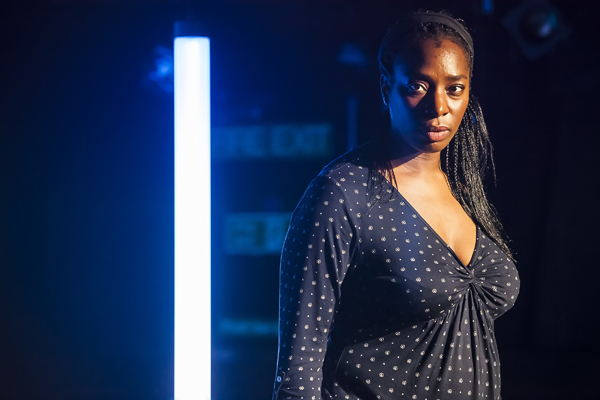
 Punks Paul, Jan and Louis are working class lads living in south London. School didn’t do much for them and unemployment is high, so they hang around and smoke, nick cars and try to pull girls. They’re bored, angry and frustrated at the lack of opportunities available to poor kids like them. They want to improve their quality of life and feel like they belong in society, but society’s too busy fighting terrorism and racism to pay them any attention so they do their best to get by, or not. It sounds like the present, right? Nope. Barrie Keeffe’s Barbarians premiered in 1977. As London battles the National Front, striking unions and IRA bombs to a soundtrack of The Clash and The Sex Pistols, audiences can’t help but draw parallels between life then and now. It’s unsurprising this Tooting Arts Club/Soho Theatre production will soon be followed by the Young Vic’s, a completely different production of the same play, what with its contemporary social relevance and three fantastic roles for young actors to get stuck into. Though close to three hours long and composed of three self-contained plays at different points in the boys’ lives, the excellent performances, atmospheric venue and socio-political comment make the time well spent.
 May, 1961. The American south. Segregation has been ruled unconstitutional, but southern states ignore the legislation and the federal government does nothing to enforce it. Activists of all ages and races, sponsored by civil rights organizations, challenge this non-enforcement on public transport and customer services by sending groups of riders, black and white, on interstate bus journeys from Washington DC to New Orleans.
 A male photographer is photographing a female celebrity who is tired of being so superficial. She wants this photo shoot to show her “true self”. She wants to be “real”, and we’re all hanging out in the studio with them in Action Hero’s Wrecking Ball. Audience expectations are immediately challenged on entry when invited to grab a beer from a cooler onstage, and this boundary remains blurred for the duration. Communication is attempted between the two characters, but neither is really listening and what they say doesn’t really have any meaning, pointedly ironic in characters striving for stripped back honestly. The performance is both funny and uncomfortable as the audience watches their professional relationship cross into the manipulative personal. This is a text-based performance with imagery rich language highlighting the absurdity of their encounter, but it triggers a good amount of reflection on our own behaviour. We all carefully construct our images, particularly in social media, yet at the same time we want to be genuine (whatever that means). This is an excellent, polished piece that is provocative in subject and the actor-audience relationship.
 Search Party’s My Son & Heir is without question the funniest thing I’ve seen this year in Edinburgh. Real-life couple Pete Phillips and Jodie Hawkes playfully examine the prospects of their young son, born in the same year as ‘baby Cambridge.’ The two little boys have little in common, though. Pete and Jodie share their hopes for their son in a cheerful, pink chaos that soon disintegrates into relentless judgments on their parenting methods and a stream of ‘what ifs’ capturing the anxiety and pressure to raise a perfect child. The message evokes sympathy and reflection, even from those without children. It’s an outstanding blend of comedy and social commentary on the perils of being an ordinary parent without heaps of cash to throw at your child. Their gleeful, child-like anarchy quickly turns vicious, creating pointed contrast between the haves and have-nots, but ends in a message of love. Perhaps the ending tends towards sentimental, but in a world where money is a large factor in success and a good life, it is also an ending of hope.
 Last up is Christopher Brett Bailey’s This Is How We Die, a spoken word and music performance that is deceptively simple but leaves you with overloaded senses and a feeling of having traveled around the world at a million miles a second. When I first saw This Is How We Die at Battersea Arts Centre several months ago, I was so moved that I wrote two responses:
  Eight, 5-minutes plays by established playwrights in response to these event cancellations, followed by a panel discussion with rotating guests, create Walking the Tightrope: The Tension Between Art and Politics. Today’s panel was Jonathan Mills (Former Director, Edinburgh International Festival), Fergus Linehan (Director, Edinburgh International Festival) and Tim Fountain (writer). A cast of four excellently performs the mini-plays; the scripts are powerful and constructively contribute to the debate, and the discussion itself can become a piece of one-off theatre once the audience is handed the microphones.
 The Play's The Thing UK