Day Three at Buzzcut Festival

Image 4

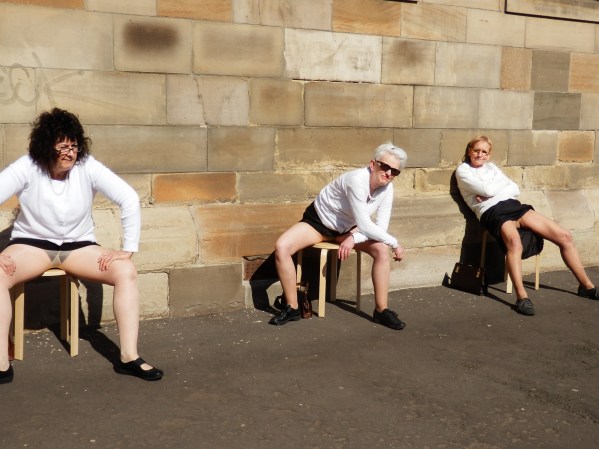
One of the durational works on Saturday afternoon is the six-hour Silent Dinner, where a group of D/deaf and hearing performers prepare a large meal without communicating in their native languages. There isn’t the rush of a professional kitchen, and sunlight streaming through the windows and lighting the rich colours of fresh ingredients is stunning in it’s peaceful simplicity. Watching them is a meditative exercise as they move around the rows of tables, silently and slowly preparing food that they will then eat together. It would be easy to sit with them all day as they take pleasure from the communal experience of cooking and eating.

Continue reading

Day Two at Buzzcut Festival

https://pbs.twimg.com/media/C8UuAQSXcAEF4tC.jpg

Part of the reason I wanted to come to Buzzcut is that I find it hard to write about live art. I don’t dislike it, far from it – I have a broad but uninformed appreciation of it. But my theatrical home is built from Shakespeare, text-based narratives and the great American playwrights. I’m no Megan Vaughan or Rosie Curtis – I see performance art every now and again, but not nearly enough as I should. So the goal is to see a lot of live art, and write about. The range in styles and approaches is vast and the festival draws live artists from around the country, so it’s a great place to experience this form of performance.

Continue reading

Day One at Buzzcut Festival

https://files.list.co.uk/images/2017/03/01/buzzcut-festival-py-lst234928_thumb.jpg

Actually, it’s the second day of the live art festival at the Pearce Institute in Glasgow but due to work, I couldn’t make the opening day. So in order to save travel time, I lost by Megabus Gold virginity and took the overnight sleeper coach. Unceremoniously dumped in Buchanan bus station at 6:30 am after an intermittent night’s sleep, I chugged a coffee (after being laughed at for attempting to order a flat white) in the station caf before heading to my digs, then navigating an unfamiliar city’s public transport across town to the Pearce Institute.

Continue reading

Celebration, Florida, The Albany

https://i0.wp.com/exeuntmagazine.com/wp-content/uploads/Greg-Wohead-The-Ted-Bundy-Project-c-Alex-Brenner-600x399.jpeg

by guest critic Tom Brocklehurst

Shows incorporating technology have become more and more common recently. This experimental show, Celebration, Florida, features two unrehearsed performers wearing headphones. Greg Wohead, the creator of the show gives them instructions, dictates to them what to say and where to stand, and what accent to speak in. Most of the time they are speaking as him – they have to imitate his American accent (badly) and ask us to picture them as him, standing in his hotel room in his pants, thinking up ideas for this show.

Continue reading

We Are Ian, VAULT Festival

in-bed-with-my-brother-68weareian160321mattaustin

by guest critic Martin Pettitt

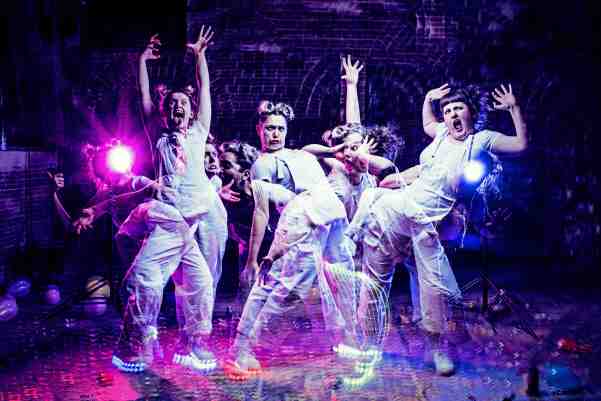
We enter into a long damp and dingy chamber, in the distance there is a flashing screen with 3 sets of legs beneath, feet bedecked in shoes with multi-coloured lights, gyrating and popping to the pronounced beat of the music. The screen blinks with various versions of the words: We Are Ian. In terms of stage set, that was it apart from a bulb hanging from the ceiling and a vast amount of digestive biscuits.

Continue reading

Assisted Suicide: The Musical, Royal Festival Hall

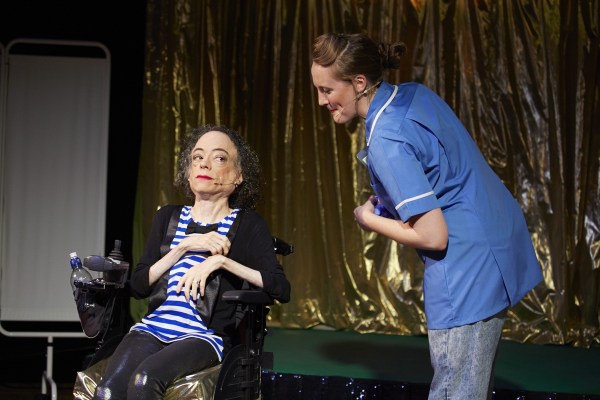
It’s uncomfortable to watch a play that conflicts with your politics or world view, and Liz Carr’s Assisted Suicide: The Musical does just that. The gay actor and comedian aligns with cuddly liberal ideology other than her avowed opposition to legalising assisted suicide in the UK. As a disabled woman, she worries that disabled people will consequently feel pressured to end their lives so they are no longer burdens on their loved ones, especially as many non-disabled people flippantly comment how hard their lives must be. After all, if you’re told the same thing over and over again, it’s too easy to start believing it.

Continue reading

Narcissistic Nativity, Fucking Little Elf Bitch, Rosemary Branch

rsz_nativity-website

After 20 years running the Rosemary Branch, Cecilia Darker and Cleo Sylvestre moved on to pastures new in June this year. Unattended Items, a company with a focus on interactive theatre and design-led work, took over and have been busy programming work that has similar practices to their own.

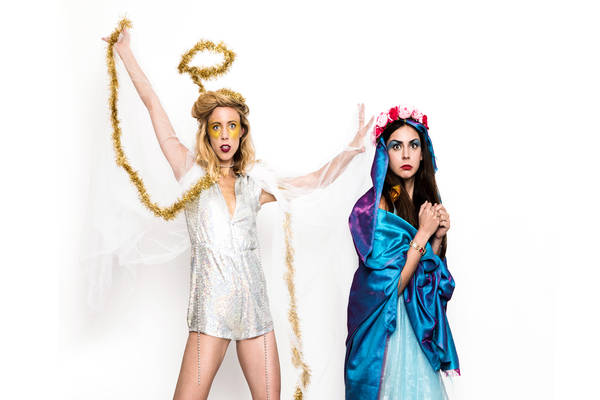
Their Christmas bill of adults-only shows is no different. Urban Foxes Collective’s Narcissistic Nativity is a feminist, live art piece fighting against the patriarchy; Mammalian’s Fucking Little Elf Bitch is a one-woman show on the perils of working in a grotto. Both break down the fourth wall and use non-linear structures, and both need some tweaking for the sake of clarity, but this pair effectively balance current issues and laughs.

Continue reading

Dr Carnesky’s Incredible Bleeding Woman, Soho Theatre

https://cdn0.vox-cdn.com/thumbor/08BLiZi0k-g-w2TYXY9nOkQTz_4=/800x0/filters:no_upscale()/cdn0.vox-cdn.com/uploads/chorus_asset/file/2316126/shutterstock_132379235.0.jpg

From a lectern in the corner of the stage, Dr Marisa Carnesky fights the social taboo of periods. Resembling a character from a Tim Burton film, the PhD holder in menstrual rituals and synchronicity shares her collective research with a group of performance artists she assembled, the Menstruants. Sideshow/cabaret Dr Carnesky’s Incredible Bleeding Woman is a wonderfully quirky manifestation of sisterhood, womanhood and the wonders of the female body.

Every month on the new moon, Dr Carnesky and the Menstruants met on a beach in Southend to develop and performed rituals around their menstrual cycle. The Menstruants come from an array of backgrounds and sexualities, and their rituals are as unique and individual as they are. Through their performances, every woman’s personal experiences with their bodies is validated and celebrated.

The performances on show are distinctive and compelling. There is some spectacle: sword swallower MisSa Blue has a customised set of swords that suit her oesophagus shape each day of her cycle. Some of the work is more reflective and otherwordly, like Nao Nagal’s use of traditional Japanese masked performance. Molly Beth Morossa provides a creepy sideshow element with her twitchy, Victorian high tea. H Plewis performs a visceral movement piece with her menstrual jelly. Rhyannon Styles simply speaks to us directly about her experience of cycles as a trans woman. Fancy Chance, with the rest of the company, performs a phenomenal circus act as a finale, after an empowering, proud sequence of feminine reclamation. All of the acts celebrate female abilities and bodies without aggression.

In between the vulnerable, performative manifestations of female cycles, Dr Carnesky talks to the audience through an array of historical and cultural mores surrounding menstruation. She particularly focuses on myth and symbolism – death and rebirth, shedding of skin and female unity. Her tone is gentle and matter-of-fact; the the content may be revolutionary but she comes across as warm and supportive.

In a show that has the potential to come across as alienating, it is instead welcoming – no one in the audience (men included) seem uncomfortable, and the stories shared on the stage are supported from the house. Instead,this diverse, inclusive variety show is a divine honouring of the feminine mystery and a reclamation of one of the features that defines women, and a showcase of some excellent live artists.

Dr Carnesky’s Incredible Bleeding Woman runs through 7 January.

The Play’s the Thing UK is committed to covering fringe and progressive theatre in London and beyond. It is run entirely voluntarily and needs regular support to ensure its survival. For more information and to help The Play’s the Thing UK provide coverage of the theatre that needs reviews the most, visit its patreon.

The People Show 124: Fallout, Toynbee Studios

https://i0.wp.com/cdn.paper4pc.com/images/desert-landscape-pictures-wallpaper-2.jpg
Making devised work for the past 50 years, People Show are nothing less than prolific. Their multidisciplinary works are numbered as part of the title; the company’s works now number 132. To celebrate their anniversary, the company’s taken over Toynbee Studios for three days, filling the venue with performances, films and an exhibition celebrating their half a century of work.

People Show 124: Fallout, first performed in 2013, is resurrected here. The piece deconstructs speeches by public figures and adds light, sound and film; the overall effect is one of provocative absurdity – isolated soundbites lose all meaning, even in a world that’s said to be falling apart. This short piece drives its point home quickly and efficiently and stimulates the senses, but with its message emphasising meaninglessness, it soon becomes repetitive.

Everything in the room is white, even the padded floor is powdered with talc to add an additional layer of frost. Pillows attached to the walls evoke a soothing dreamscape. But soon, pulsing colours disturb the peace as the cast of four fiercely deliver snippets of text. The lights are often so bright they are uncomfortable, even though the colours are childlike and fun. The juxtaposition is clever and sharp, and the switch from austere to saturated is an effective one.

The actors’ tone ranges from gentle to antagonistic, with a decidedly post-apocalyptic bent to the text. Projections of sweeping desert landscapes back up the promises of nuclear fallout, though the dreamy atmosphere from the beginning still lingers – what is real, and what is the product of our subconscious? The disconnect from reality diminishes any potential meaning, making the outcome decidedly absurd, even though the intention seems to want to carry more weight.

This colourful world enhanced with gorgeous projections, bright lights and music is integrated  with the text, though there is a lack of development in the core idea of the piece. If real life is has no purpose and we’re better off in a dream because the world is hellbent on destroying us, that’s fine – but a performance telling us that is not an easy thing to execute and in this case, not done fully effectively.

People Show 124: Fallout is now closed.

The Play’s the Thing UK is committed to covering fringe and progressive theatre in London and beyond. It is run entirely voluntarily and needs regular support to ensure its survival. For more information and to help The Play’s the Thing UK provide coverage of the theatre that needs reviews the most, visit its patreon.
Songs For the End of the World, Battersea Arts Centre


https://i0.wp.com/www.domcoyote.com/wp-content/uploads/2015/12/millygraphic-2-e1469019899426.jpg

Jim Walters is the first person sent to colonise Mars. But when a global apocalypse occurs, trapping him in the Earth’s orbit and running out of oxygen, he and his guitar are left to broadcast music to the devastation below. Can anyone hear him? Are there any survivors? Will he ever know? Dom Coyote and his band the Bloodmoneys present a post-Brexit apocalypse in the gig-theatre Songs For the End of the World, a piece overly heavy on the ‘gig’ and reliant on a plot constructed of dystopian tropes. Though the story is thin, Dom Coyote’s songs are fantastically varied and plentiful, helping to gloss over any shortcomings in the script.

There’s rockabilly, 90s rock anthems, glam rock, and blues numbers with a touch of connecting story sprinkled in between. Set in Ashley Coombe, the village serves as a window into the attitudes of small, English towns of this dictatorial era – the elderly preacher woman who runs the place condemns foreigners, terrorists and space exploration whilst the rebels put on club nights in an underground bunker. The country is now called New Albion and rather than run by an individual, a corporation dictates all rules and procedures. These plot devices are predictable within a story of a dystopian future, but are simplistic enough to work within the gig-theatre format without needing much explanation. As these two tribes clash, Jim Walters is in space – a symbol of both human progress and arrogant dominion. It’s no surprise which side survives down on Earth, and that the future beyond the end of the show looks particularly bleak.

Though the story is overly familiar, the music is wonderfully varied. David Bowie’s promised influence is clear, but not limiting in style. All of the characters in this Little England kitsch/cold international corporation hybrid are suitably blown out of proportion, but feel eerily familiar in a fundamentalist-driven, isolationist Britain and a world where Donald Trump may become the next leader of its most powerful country. Staging is fairly static as per the usual gig-theatre approach, but there is some variation in movement and costume. The lighting design adds power and hope to the bleak, clinical setting.

A more substantial script and dynamic staging would lend more theatricality to the excellent set of tunes in of Songs For the End of the World; as is, it is overly driven by music and the narrative potential is neglected. That said, it would make a fantastic concept album, and the design is strong – an extra half hour of script would add polish to this fun, vibrant performance piece.

Songs For the End of the World is now closed.

The Play’s the Thing UK is committed to covering fringe and progressive theatre in London and beyond. It is run entirely voluntarily and needs regular support to ensure its survival. For more information and to help The Play’s the Thing UK provide coverage of the theatre that needs reviews the most, visit its patreon.