RED Women’s Theatre Awards, Greenwich Theatre

red women logo

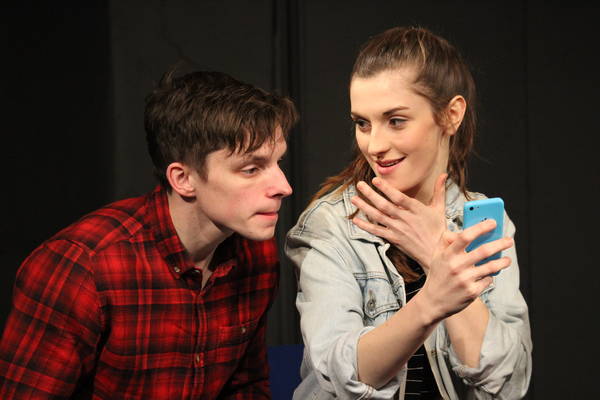
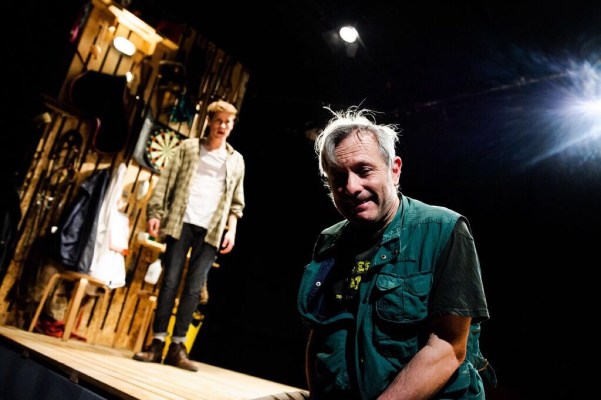
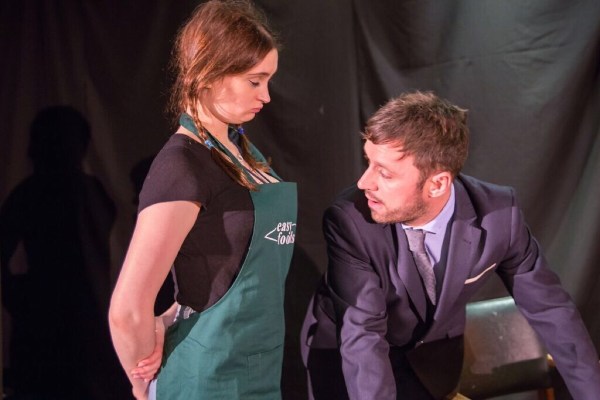
This year sees the launch of a new playwriting competition, RED Women’s Theatre Awards. Co- produced by Edinburgh-based academic and playwright Effie Samara, Greenwich Theatre and Female Arts, the awards are “aimed at anyone who identifies as female who has an inspirational, questioning and challenging social and political voice.” There are three regional heats in the competition; the first was at Greenwich Theatre with staged readings of four plays. Completely differing in tone and style and at various stages of development, this heat showcases the huge variety of female voices in English playwriting.

I spoke to founder Effie Samara about the awards and her reason for founding them.

What do you hope to achieve with these awards?

When I first spoke about RED to James Haddrell, Artistic Director of Greenwich Theatre, I must admit, I was dreading that it was going to achieve absolutely nothing. As a theatre artist, he engages with that female-led theatre aesthetic by producing Broken Leg, Smooth-Faced Gents and now RED. Is he a revolutionary? I think he is. Is he an exception? He is a valiant exception but we are actually witnessing the beginning of an epoch in politics and in theatre. They follow each other. My view is that the State, its governance, its justice, its policing, its education and its performativity are about to undergo a female-authored revolution. RED positions itself at the forefront of this development.

What criteria did you use when selecting plays for the heat?

The award is for political theatre. Our first concern was to ensure the writer’s engagement with the notions of justice, resistance and her ability to problematise those dramatically.

RED Theatre Awards currently cover the south of England, Wales and Scotland. What are your plans for expansion in the rest of England? Is N. Ireland a goal as well?

Northern Ireland is absolutely a goal. In the first instance, we’re including N. Ireland in the Scottish round. We can’t wait to hear some loud Irish voices! Scotland is also underrepresented on a national level.      

What can theatre makers do now to counteract the gender disparity?

The solution is very simple and I’m afraid it begins with us women. Us, being able to handle our own freedom: express it in the ownership of our person, define it in politics, and dramatise it in our consciousness and on stage. Women who robotically follow institutional missions fuel that gender disparity through their own complicity with these structures. Numbers are on our side in this argument: There are a lot of us. Over 3 billion. If we meant business, if we did this together, actioning solidarity within our cause, this injustice could be culled in no time.

What message do you want to communicate with the RED awards?

Words are loaded pistols. And we, women, can cock a gun way better than any establishment pointing one at us. Throughout the history of humankind we have been told we’re not allowed to fathom our own course, to govern our own person, our own body, its production and reproduction. RED is here to provide a platform for women.

The four plays selected for this heat are Under My Thumb by Cassiah Joski-Jethi, Spurn the Dust by Sian Rowland, Dissonance by Isabella Javor and Gone by Kate Webster. Some are more blatantly topical that others, some look at broader female issues and group dynamics. All are short plays with potential for development and by female voices that have a lot to say.

The Play’s the Thing UK is committed to covering fringe and progressive theatre in London and beyond. It is run entirely voluntarily and needs regular support to ensure its survival. For more information and to help The Play’s the Thing UK provide coverage of the theatre that needs reviews the most, visit its patreon.
Something Something Lazarus, King’s Head Theatre

rsz_unspecified

Musical theatre is growing rapidly on the fringe, thanks to venues that focus on small-scale shows and producers staging lesser-known works. New British musicals are seen less often, with only a handful of producers focusing on bringing audiences this new musical writing. Broken Cabaret, around since 1997, aim to create new kind of musical. Something Something Lazarus is part cabaret, part backstage/play-within-a-play dark comedy, part surreal fantasy. The structure is the most interesting part of the show, with a plot and songs that are sometimes surreally nonsensical. Performances are consistently excellent and whilst there isn’t always the sense that Something Something Lazarus is radically innovative, it has a British quirkiness that US imports, the most commonly produced musicals on the fringe and commercially, lack.

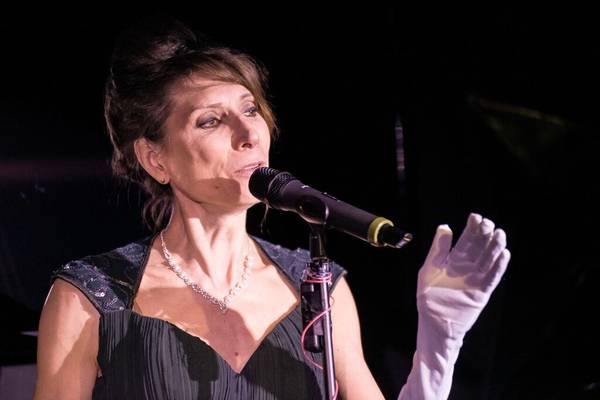
Four characters based on contrasting musical theatre and cabaret stereotypes generate plenty of conflict and more than a few laughs. Daisy Amphlett as Della is a no-nonsense musical director and accompanist with no patience for, well, anything. Amphlett’s powerful voice and ferocious presence is a joy to watch along with her ability to play several instruments. Valerie Cutko as fading star Vee is glamourous, seductive and rather useless, belonging somewhere more than the Midnight Sun cabaret. Daniel (Ralph Bogard) runs the venue with his twink bartender boyfriend and aspiring singer, Jay (Daniel Cech-Lucas). Daniel and Jay don’t have much love for each other; it’s a relationship of boredom and convenience amusingly played by both. When an unexpected delivery from Daniel’s ex arrives, his freewheeling emotions cause a violent eruption that moves the action, and the real cabaret, into Jay’s mind.

Much of the story takes place in real-time before the evening’s show starts. It’s pretty typical meta, backstage fare but with music and dialogue flowing into each other like an actual rehearsal – a lovely change from standard musical theatre structure. Though not innovative, it’s nice to see a more low-key, Kiss Me, Kate type of musical. The action is continuous and the dialogue feels natural, though the characters are more heightened versions of those you typically encounter in this environment. John Myatt’s dialogue is punchy and fun, with plenty of bitchiness. The cabaret-in-my-head section is both surreal and more like an actual cabaret performance – a disorientating but more interesting outcome, and with more memorable songs by Simon Arrowsmith than the first part of the show.

Accompanying the show is Simon and Jonny Arrowsmith’s transmedia, three websites that add further detail to the world of Something Something Lazarus that isn’t clarified within the dialogue and plot. Whilst it’s a great extension of the performances, I’m uncertain how much audiences engage with the work. I expect transmedia will come to be used more and more, what with the legacy it creates and an easy way to further engage with audiences.

Though Something Something Lazarus isn’t as innovative as it makes itself out to be, there are a lot of great elements. The performances are excellent, the transmedia is a nice touch and it’s great to see British theatre makers creating new musical theatre that doesn’t follow American trends.

Something Something Lazarus is at the King’s Head Theatre until 2nd April.

The Play’s the Thing UK is committed to covering fringe and progressive theatre in London and beyond. It is run entirely voluntarily and needs regular support to ensure its survival. For more information and to help The Play’s the Thing UK provide coverage of the theatre that needs reviews the most, visit its patreon.

Eggs, Vault Festival

rsz_eggs_florence_keith-roach_and_amarni_zardoe_courtesy_simon_annand_1

Women get the raw end of the deal no matter how young or old they are, how mainstream or alternative. Two late twenty-somethings, acquaintances through a mutual late friend but with completely opposite personalities, end up bonding over important issues but with dry humour and restrained emotion. Despite the content, Eggs avoids catering purely to women. The frank honesty is stereotypically blokey, covering topics such as masturbation, one-night stands and careers – issues that are obviously relevant to women, just not often spotlighted so directly – as well as fertility, marriage and the fear of aging. Structurally episodic and a bit clunky, Eggs is also bitingly funny and poignant, particularly for those of us in our 20s and 30s feeling like we don’t really fit into the world.

Playwright Florence Keith-Roach uses the versatile symbolism of eggs throughout, albeit obviously. Even the set and costume by Clementine Keith-Roach and Lily Ashley are all white and yellowy-orange. It’s an interesting catalyst for written material, and Keith-Roach riffs in numerous directions from that starting point. Fertility is an obvious path, but egg shaped vibrators less so. This makes the events in the story nicely unpredictable, but Keith-Roach does a great job tying up the issues into a satisfying end.

Keith-Roach and Amani Zardoe are girl 1 and girl 2. Girl 1 is a hippy artist fighting the status quo; Girl 2 loves her corporate job and can’t wait to marry and have children. Both performances are heighted and somewhat ‘Sex in the City’-esque, particularly at the beginning, where they feel like chick lit but on stage. Fortunately, both actors settle into more naturalistic performances after a couple of scenes. Unlike the terrible television series, these unnamed women develop depth and genuine conflict, even though they are not the most likeable of characters. Their insecurities and flaws are believably human, as are their prickly, awkward encounters that evolve into a genuine care for each other.

Eggs is heart-warming without being cheesy, and substantial but does not preach. It provides gentle solidarity to women who feel like their lives aren’t everything they’re supposed to be, and even though the earlier scenes feel disconnected from each other, the last third of the play really rings true. It’s a good piece of theatre for a second play and is a pointed reminder of the fact that no one really has their life together.

The Play’s the Thing UK is committed to covering fringe and progressive theatre in London and beyond. It is run entirely voluntarily and needs regular support to ensure its survival. For more information and to help The Play’s the Thing UK provide coverage of the theatre that needs reviews the most, visit its patreon.
What I Learned From Johnny Bevan, Soho Theatre; The Caucasian Chalk Circle, Jack Studio Theatre

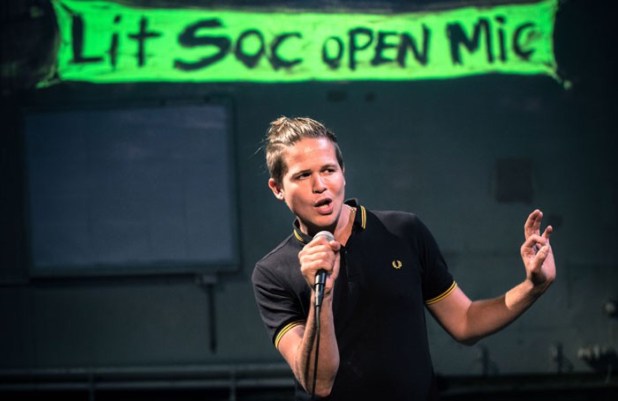
Is revolution in the air? Or, are we all so broken and defeated by rising costs and a falling quality of life that all we can do is complain bitterly? Perhaps a bit of both? In any case, this is not the first time that I wonder if theatre is responding to the liberal sense of disaffection recently. Shortly before Christmas I questioned Dominic Cavendish’s assertion that theatre isn’t political enough, and my sentiment still stands, particularly after the coincidence of seeing two highly charged political pieces two nights in a row. Fringe theatre, like grassroots politics, is a place of community, a catalyst for change, and the foundations of revolt, as seen in Lazarus Theatre Company’s The Caucasian Chalk Circle and Luke Wright’s What I Learned From Johnny Bevan.

1997. The eve of the general election. Nick, who’s studying English Literature at a nameless uni stays up all night with his best mate, poet Johnny Bevan, to watch Tony Blair win. It’s the dawn of a new era and change is coming for the working class long oppressed by Thatcherite rule.  Fast forward fifteen years and Nick’s a journalist in London, but Johnny’s student aspirations didn’t come to fruition, and neither have Tony Blair’s. The story of these two lads’ friendship, written and performed by Luke Wright in a blaze of fiery spoken word, is an hour long tale of youthful vigour soured by the realities of adult life. Wright’s delivery and writing is fervent, topical and no moment is out of place in the trendy and on-point What I Learned From Johnny Bevan.

South of the river, an older revolution is taking place. In Soviet Russia, a group of peasants stages a play about a servant girl in Georgia raising the governor’s newborn baby that was abandoned during the family’s escape from a war zone. After a perilous journey, sacrifice for the sake of the infant, and a regime change, everything is put right again by a citizen judge. Lazarus Theatre Company, with its trademarks of a large cast and striking visuals, draws parallels between Brecht’s The Caucasian Chalk Circle and the despair of modern life – but “change is hope”. Energetic and in the round, the characters rally the audience to their side like they do in Wright’s monologue.

There’s optimism in both productions as well as despair, and an underlying current of discontent with the state of the UK’s current socio-political trajectory. Both display humanity’s capability for selflessness and selfishness, and the feeling that nothing has changed from Soviet ruled Eastern Europe, to Labour’s late-90’s victory, to present unviable economic conditions and Tory tyranny. We are undeniably flawed with a fickleness vulnerable to power and money, but as a society we are also deeply unhappy and feel that we lack the power to affect change. This sentiment now seems to be emerging in fringe theatre.

Though completely different in form and structure, both What I Learned From Johnny Bevan and The Caucasian Chalk Circle have plenty to say about the contemporary world from similar angles. What I Learned From Johnny Bevan is the better of the two productions, and  the more progressive. A solo performance delivered in spoken word accompanied by charcoal and watercolour landscape projections, most of the imagery in Wright’s language is precise and evocative. Brecht’s well-known play is linguistically stilted and stuffy in contrast, but it’s characters are just as colourful.

Performance poet Luke Wright is a singular tour de force and What I Learned From Johnny Bevan is politically charged and practically flawless. Lazarus Theatre’s performances vary, but of the ten-strong ensemble, no one was particularly strong or weak. Their choreography is well-rehearsed but director Ricky Dukes normally powerful movement sequences  lack impact in the round. The set components take up a lot of space and are used well occasionally, but otherwise clutter the stage with bright, industrial chaos. Neil McKeown’s sound design hints at atmosphere and mood, but is much too quiet to add the impact it could. It’s certainly not a bad production, but neither is it one of Lazarus’ stronger ones.

If theatre is a mirror held up to the world, then evidence is increasing that change is imminent. But what form will it take? Will the people rally as in The Caucasian Chalk Circle or will we either sell out or run away from it all like Nick or Johnny? Only time will tell.

The Play’s the Thing UK is committed to covering fringe and progressive theatre in London and beyond. It is run entirely voluntarily and needs regular support to ensure its survival. For more information and to help The Play’s the Thing UK provide coverage of the theatre that needs reviews the most, visit its patreon.

Mirrors, Rosemary Branch Theatre

rsz_tim_smyth-mirrors-siobhan_mcmillan_54

Photography © Tim Smyth

Maybe the witch in Snow White isn’t that bad. Or, maybe her badness is justified, like she had a traumatic childhood or suffers from a mental illness. Siobhan McMillan proposes just that: Shivvers realizes she’s past her prime and, with insecurity taking over rational thought, she decides to hunt down the young woman who dethroned her from her position as the fairest in the land. This quest takes shape as a solo performance told in the third person, like a fairytale. McMillan regularly interjects with contemporary references and using sarcastic humour to great advantage, makes a strong comment on women’s insecurity about aging.

The use of third person narration is one of the more interesting features of Mirrors; it distances McMillan from the audience and herself. Her physicality and energy cannot be denied as she embodies the characters she simultaneously describes. The audience is told her story but has plenty to watch, and a liberal use of sound and vocal effects create a dynamic aural landscape, even if a touch too loud at times.

The use of an occasional live feed adds another visual layer by which the audience scrutinises Shivvers, but a backlight interferes. The intention shows good instinct by director Jesse Raiment. The set isn’t particularly dyanmic with its black flats and mirrors, save for the ornate frame mounted on a table centre stage – a symbol of modern obsession with female appearance and its dominance in Shivver’s life.

This feminist solo show is an excellent display of performance storytelling and a witty comment on modern life as a woman. Not just about aging, it also looks at female competition, the need to be desired and the perils of dating. With the opportunity of a longer run, Mirrors could upgrade its tech and design to create a more polished production matching its content, creating a piece great for touring small to mid-scale venues.

The Play’s the Thing UK is committed to covering fringe and progressive theatre in London and beyond. It is run entirely voluntarily and needs regular support to ensure its survival. For more information and to help The Play’s the Thing UK provide coverage of the theatre that needs reviews the most, visit its patreon.

One Under, Vault Festival

rsz_img_6902[1]

Amy Fleming’s dad committed suicide when she was four years old. Fleming struggles with mood swings and wonders if she’s “mental,” like her dad. Luckily, she studied Molecular Medicine before becoming an actor so she understands how genetics dictates our characteristics. She also knows that talking about our problems and developing positive habits helps us overcome them. Combining her science and performance backgrounds, Fleming’s One Under is part conversational lecture, part interactive game. She relies on narration, humour and audience involvement to share her message, but the piece as a whole feels unfinished. It’s a nice idea, but it lacks theatricality and detail.

There’s no character, just Fleming and her generally cheerful honesty. She relaxes the audience straight away and easily facilitates discussion. After a frank introduction about her childhood and how genes are passed from parents to child; there’s some framing by her biography and a multi-round game/quiz with easily answerable mental health questions. These two elements aren’t solidly connected to each other, and the piece’s message isn’t spelled out until the very end. Structurally, it’s weak. By that point though, the message is less interesting that the journey we took to get there and the camaraderie that emerges en route.

This solo show isn’t very theatrical, but it’s lovely for its warm cuddliness and playful approach to form. Fleming is clearly passionate about helping people improve their quality of life and their mental health, which is a commendable mission. Her openness and her anti-performance make me feel uncomfortable writing any sort of negative judgement – it’s such a personal piece. But at an hour long, glossing over parts of her past with some audience debate over quiz questions about how to approach mental health issues at work, there’s a noticeable lack of depth.

The Play’s the Thing UK is committed to covering fringe and progressive theatre in London and beyond. It is run entirely voluntarily and needs regular support to ensure its survival. For more information and to help The Play’s the Thing UK provide coverage of the theatre that needs reviews the most, visit its patreon.

Beetles From the West, Lion & Unicorn Theatre

rsz_img_5808

Half of the UK population born after 1960 will be diagnosed with cancer during their lifetime. Considering this figure, cancer rarely features as the primary subject matter in theatre, though last year there were several productions that put it at the forefront. I caught two of them in Edinburgh: The Eulogy of Toby Peach and Goodstock. James Hartnell’s debut play, Beetles From the West, is also driven by a diagnosis. Set in a hospital waiting room, immature Boyd waits with his girlfriend for news of his father’s health after a sudden collapse that’s left him unconscious. A young doctor’s attempts to explain what’s going on are aggressively questioned as Boyd comes to terms with what it all means. Hartnell’s script, obviously early career from its unwieldy text and underdeveloped characters, spotlights the importance of cancer screenings but it needs more development to have greater impact.

A combination of flowery, metaphor-filled monologues directed to the audience and simplistic scenes between the characters attempts to show range, but they are so dramatically different that they seem spoken by different characters. Dialogue paints Boyd (Ryan Penny) and his girlfriend Jenny (Amy Doyle) as immature and ignorant young teenagers. Their monologues have a more mature gravitas, but these contrasting tones don’t reconcile. The transitions in the writing are abrupt and jarring, creating an unconvincing baseline reality. Hartnell has a sense of dramatic arc and a satisfying ending that suits an awareness piece, but individual scenes and monologues sit clumsily within it. The script does manage not to preach, though.

There’s little subtlety or depth in the characters despite their dialogue, but Penny, Doyle and Matthew Marrs as the doctor attack them with gusto. Penny also directs, and favours heightened performances – though this might suit the language, it clashes with the thematic content. It’s an interesting choice, but not one that consistently works. There are some moments of good chemistry, particularly when the doctor reveals details of his own past – though highly unprofessional and unlikely to happen in the real world.

Beetles From the West shows cancer isn’t a battle, it’s a disease we are just as likely to get as not. It reminds us to monitor our mental and physical health and have symptoms investigated, something men are more likely to neglect than women. This is definitely a men’s health play, though it doesn’t alienate women. It’s just a shame that the script doesn’t do the themes justice or give the performers properly developed, meaty roles.

The Play’s the Thing UK is committed to covering fringe and progressive theatre in London and beyond. It is run entirely voluntarily and needs regular support to ensure its survival. For more information and to help The Play’s the Thing UK provide coverage of the theatre that needs reviews the most, visit its patreon.

Weald, Finborough Theatre

As picturesque as agrarian life may be with it’s rustic farmhouses, sweeping land and livestock, it is not an easy one for older and younger generations who just want to make a decent living. Faded and weather worn, Sam looks after his horses as he’s done his whole life; the younger Jim is all bouncy, boyish banter. The two clearly have much affection for each other in this emotive story of a tragic hero’s fall. But Daniel Foxsmith’s Weald, though full of poetry, passion and the ability to find the audience’s raw nerves, at just over an hour it sells itself short and lacks the sweat and earthiness of farm labour.

Sam (David Crellin) and Jim (Dan Parr) spend most of their time in a barn surrounded by riding tack and looking after horses. Though everything seems well, dramatic revelations are eventually confessed, bringing fiery conflict between the two. Crellin and Parr’s performances are exemplary, with emotional journeys that are the kind actors dream of. They both relish Foxsmith’s rich language and have a wonderfully watchable presence. Their character journeys feel rushed, though; this is wholly down to the script. It’s too short to justify Sam’s final, sudden deterioration that harks of Shakespeare’s Henry V should he have failed at Agincourt.

Bryony Shanahan’s direction taps into the poetic and powerful heart of the script that addresses coming to terms with personal failure, life choices and platonic male relationships that span decades. Her regular use of the audience space shows this is a story that won’t be contained. Though a masculine play, it’s still accessible to female audience members what with the themes that transcend gender. As a failed actor having to adapt to a new and totally unplanned for life, Sam’s struggles particularly resonate and left me feeling exposed and vulnerable, but the grit endemic to farming is glaringly absent. Linguistically heady, Weald lacks a visceral-ness. Even Sam’s final actions when faced with his own ruin are stylised, distancing the audience from the characters’ emotional life.

This is still a beautiful play with fine performances and painfully relevant to present day economic uncertainty, but it’s a sanitised version of real life. Though Sam and Jim mock the wealthy city family that bought the farm house, covering it in solar panels and driving a spotless Range Rover, their daily routine as depicted in the script bears more resemblance to the unseen city man with his shiny wellies than the true life of yard workers.

The Play’s the Thing UK is committed to covering fringe and progressive theatre in London and beyond. It is run entirely voluntarily and needs regular support to ensure its survival. For more information and to help The Play’s the Thing UK provide coverage of the theatre that needs reviews the most, visit its patreon.

Goodnight Polly Jones, Theatre N16

The wonderful thing about new writing is the potential for discovering unknown gems, perfectly formed and ready for a transfer or a tour, or a piece that is still finding its shape but its promise is evident. There’s also the chance of having to endure work that, though trying its hardest, isn’t ready to be put in front of critics. Goodnight Polly Jones is the latter. In its current state, Andrew Sharpe’s script bears more resemblance to a GCSE issue-based devised piece than a play suited to a professional small-scale theatre. Isolated scenes at key plot points and painfully long transitions with busy sound design and terrible voiceovers turn sexual assault and rape into a banal one hour, exacerbated by a performance matching the script’s clunkiness.

Ben Keenan as the jumped up, inappropriately hired Peter provides some redemption. He handles the awkward dialogue and tenuous circumstances extraordinarily well, adding gravitas and emotional truth to the HR manager with a disgustingly flippant disregard for sexual consent. Polly (Victoria Morrison) at her youngest and most immature supermarket clerk manages to match him, but as the older accountant taking that supermarket into administration, she is self-conscious and awkward.

The root problem of this production is the script. Composed solely of four distinct scenes at different times, they show dramatic change in tone and character development, but the story is neglected. This is potentially an important, character-driven play, but there’s no subtlety to the plot – every progression is beaten to death with dialogue rather than shown. The transitions attempt to fill in some gaps, but they too are overt, too long and too cringy, with am dram worthy voice acting. The resolution is half-baked, and Sharpe’s propensity for signposting (that treats the audience as if they were children with ADHD and learning difficulties) misses a glaring, albeit predictable, opportunity to tie up loose ends in the final moments of the play. The scenes as individual units aren’t awful, but the connective thread between them is most thin indeed.

Goodnight Polly Jones doesn’t completely lack potential, but it is in such an early stage of development that it feels wholly inappropriate to stage it in front of a judging audience. A scratch night or a workshop? Absolutely. Though it needs extensive work, it addresses an important issue with some isolated nice moments.

The Play’s the Thing UK is committed to covering fringe and progressive theatre in London and beyond. It is run entirely voluntarily and needs regular support to ensure its survival. For more information and to help The Play’s the Thing UK provide coverage of the theatre that needs reviews the most, visit its patreon.

Skin A Cat, Vault Festival

rsz_skin-a-cat-main-image-digital

Without question, my best new writing discovery of 2015 was young writer Isley Lynn’s play Tether at Edinburgh Fringe. This surprising, diverse two-hander also made it into the top five of my Top 10 Shows of 2015 so I was excited to receive an invitation to her autobiographical play Skin A Cat at Vault Festival. Having been so blown away by Tether, I worried I would find her other work underwhelming, but Skin A Cat is driven by the same sort of quick-witted, emotionally honest characters on a path of discovery that Tether boasts. Skin A Cat’s not about sport, though. It’s a tale of a stubborn vagina and an epic journey of self-acceptance in a world obsessed with sex. Phenomenal performances and humour tell Alana’s struggle with vaginismus and vaginal penetration with refreshingly frank, honest writing.

Theatre (and Western culture) doesn’t shy away from heteronormative sex, but a main character that hates it due to a psychosexual disorder is most rare indeed. Beginning with her first period on holiday at age nine, we see Alana (Lydia Larson) navigate teenage sexual exploits, several boyfriends, university and her twenties as a heterosexual young woman who finds vaginal penetration excruciating to the point of impossible. Try as she might, it doesn’t happen and the older she gets, the more burdensome and upsetting her virginity becomes. Alana tells her story directly to the audience with support by the excellent Jessica Clark and Jassa Ahluwalia, who play everyone else she encounters along the way, sometimes on mics and sometimes in conventional dialogue scenes, seamlessly switching between the two styles. Larson’s fantastic, perky Alana is genuine, funny and grows up before the audience’s eyes; that and Lynn’s unfettered dialogue cause us to feel like we know her inside and out (#sorrynotsorry) at the end of the 90 minutes.

Lynn’s gift for dialogue and detailed characters within a cleverly framed style shines here, and is generally well supported by director Blythe Stewart. Despite the serious subject matter and the control vaginismus has over Alana’s life, Lynn and Stewart use humour delightfully and liberally in both the writing and staging. Sex, attempted sex and orgasms hilariously abound, along with poignancy, tenderness and dogged desperation. It’s a beautiful balance.

Holly Pigott’s set solely consists of a bed; the pressure of its associated activities dominates Alana’s life. Some of the costume choices puzzle, though. The dungarees that Clark and Ahluwalia wear are androgynous and childlike, and rather old fashioned. Larson wears layers of undergarments that creates a simultaneously sexy and exposing, and completely unsexy and concealing effect – a great manifestation of Alana’s inner conflict.

Skin A Cat evokes belly laughs and empathy, nostalgia and wonder. Though it raises awareness of a psychosexual condition, Lynn manages to not make this an “awareness” play. Instead, it’s a story about growing up, loving yourself and making friends with your body’s quirks. Excellent writing and committed performances in Skin A Cat prove Isley Lynn and the cast are ones to watch.

The Play’s the Thing UK is committed to covering fringe and progressive theatre in London and beyond. It is run entirely voluntarily and needs regular support to ensure its survival. For more information and to help The Play’s the Thing UK provide coverage of the theatre that needs reviews the most, visit its patreon.