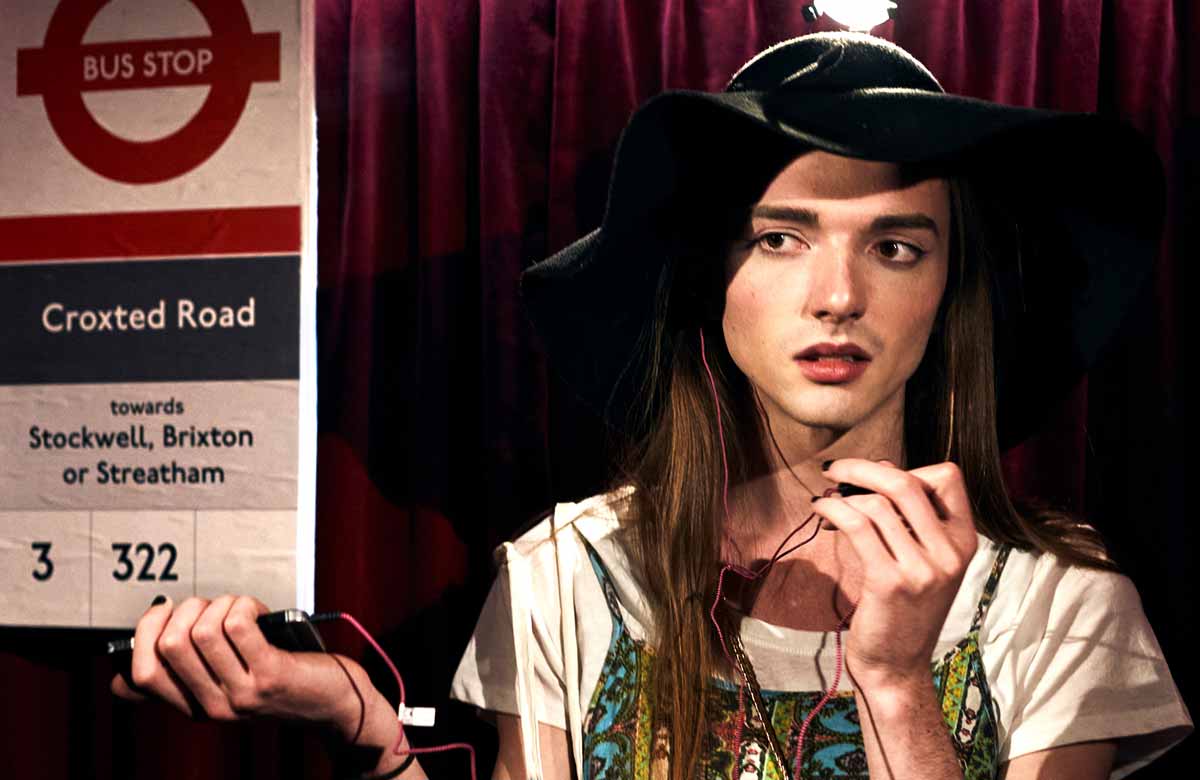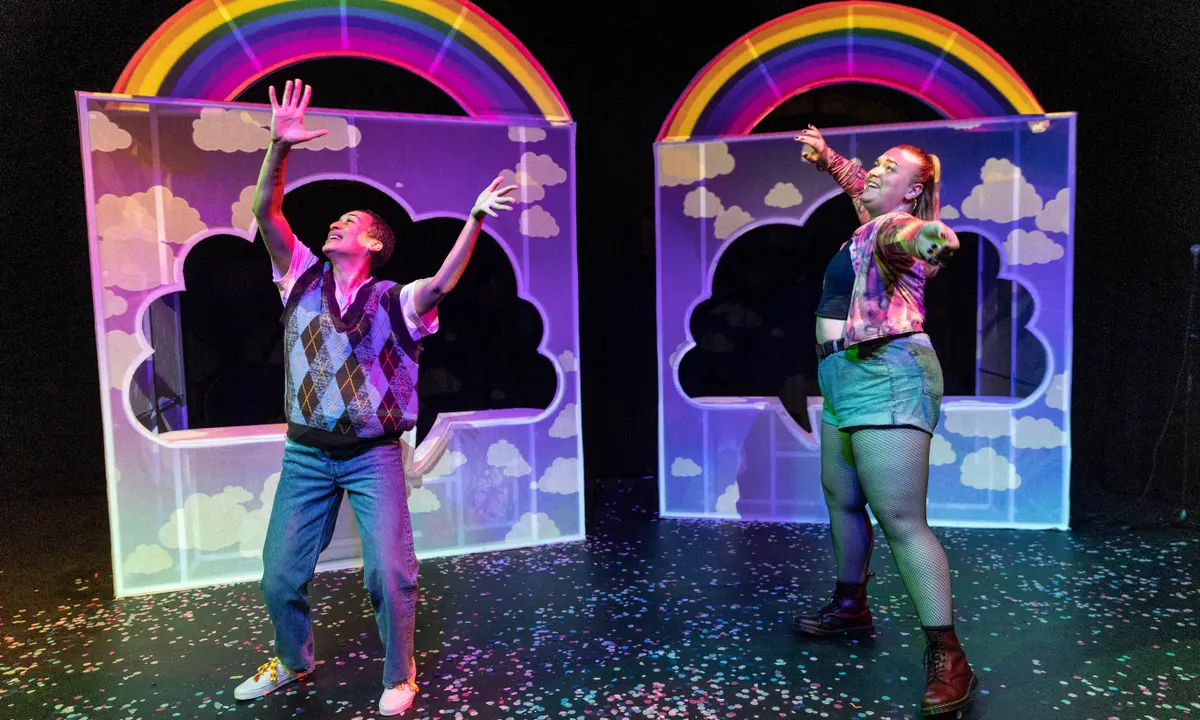
Happy Meal, Edinburgh Festival Fringe

by Laura Kressly

Bette and Alex first meet as young teenagers in the early-00s on the kids’ online gaming platform, Club Penguin. As they grow up, they move to MySpace and Neopets, then Facebook, Twitter and Reddit. As much as older generations are quick to criticise young people being terminally online, the anonymity of these platforms allow them to safely be their authentic selves. In Alex’s case, he’s a closeted trans guy living as a lesbian. Bette, also trans, appears to be a gay boy. As their relationship develops and they navigate their transitions, the pressures of cisnormativity cause tension that risks the collapse of their long-term, online friendship.

Continue reading
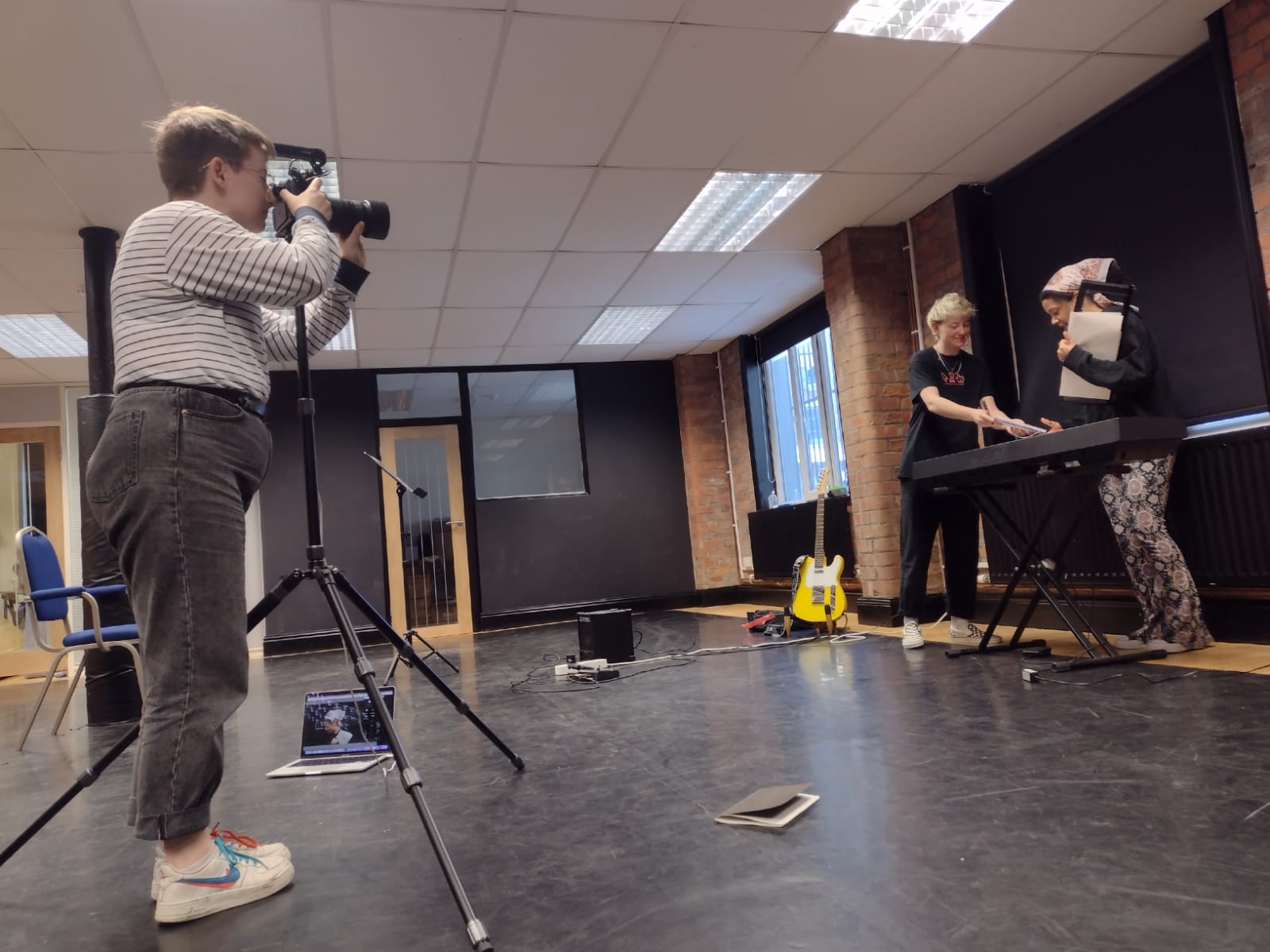
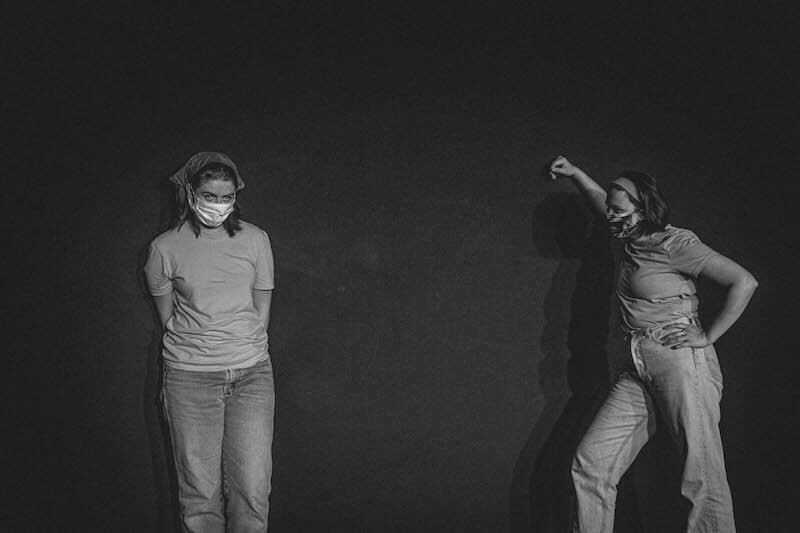
Feature | Building (Hi)stories: Ladyfriends in Rehearsals

by Diana Miranda

Period dramas have become the ultimate weekend watch according to trending British media. And while Ladyfriends, written and directed by Clodagh Chapman, is pretty much suffragettes Christabel Pankhurst and Annie Kenney’s story, this isn’t one of those dramas. Ladyfriends starts from the premise that Annie and Christabel are dating. Though historians dispute this based on ‘lack of scholastic rigour’, Chapman’s take doesn’t engage in these controversies and sees Chris and Annies’ dating as a fact. To her, a more exciting endeavour is to explore how people relate to history, and what lays behind re-visiting it and pursuing new readings.

Continue reading

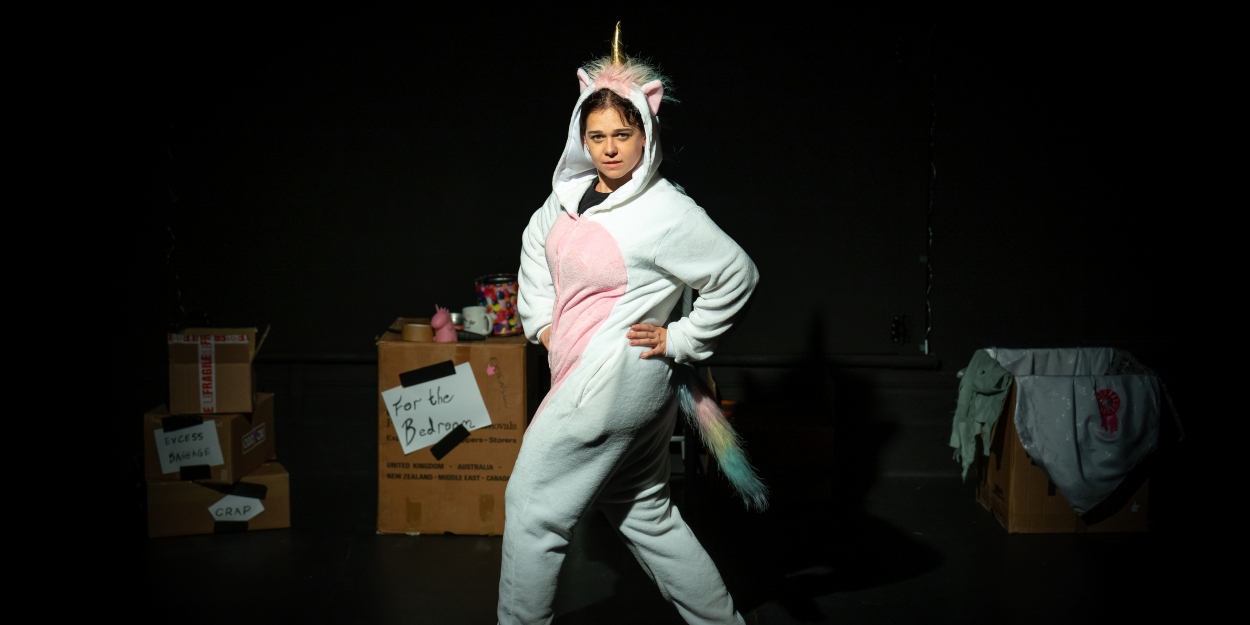
CONCHA, Brixton House

by Diana Miranda

As part of The Housemates Festival, City Lighthouse Theatre Company presents CONCHA, a one-person show (written and performed by Carly Fernandez) telling a semi-autobiographical story about intersectionality of queer and immigrant experiences in the UK. After the protagonist finds out they’ve contracted an STD, they navigate past and current relationships interacting with multiple characters through voice-overs.

Continue reading

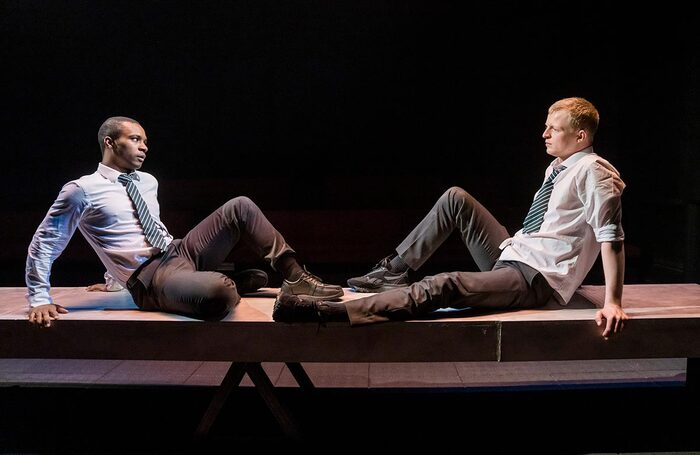
Bacon, Finborough Theatre

by Laura Kressly

Toxic masculinity is entrenched in contemporary life, from wider political and social systems to the minutiae of our daily interactions. It doesn’t just harm women; it also broadly shapes men and boys’ relationships with each other. One way this manifests is through displays of overt heterosexuality and other stereotypically masculine behaviour particularly in places like schools, where teenage boys constantly scuffle for power and try to fit in. Any new students need to quickly find their place in the hierarchy, preferably near the top. However, those who are already there sense their position is precarious so they bully anyone that could be perceived as a threat. Darren is one such lad who senses weakness in the quiet and bookish Mark who just joined their year 10 cohort, but Darren also senses something in himself that he believes must be kept in check.

Continue reading

Feature | Bringing Characters to Life

https://images.cm.archant.co.uk/resource/responsive-image/8290230/article-lead-image/lg/4/image5.jpg

by Laura Kressly

Passion Fruit is very much Dior Clarke’s story, but it’s not a solo performance. Though the first rehearsal I observed consisted of the director Melina Namdar solely working with Clarke, the second included actor Hayden Mampasi, who takes on a varied collection of supporting characters. In this rehearsal, director Melina Namdar uses a range of exercises to develop Mampasi’s characterisations and ensure the people he plays are distinct from each other. It’s an intense day full of work on the details that bring characters to life on stage, showcases Namdar’s expansive director toolkit, and the techniques that actors use to bring characters to life.

Continue reading

Madhouse, Edinburgh Festival Fringe

Edinburgh Fringe set to return for 2021 festival

by Diana Miranda

Welcome to the madhouse, a place of chaos and confusion, typical of student house-sharing. A group of six friends gives a bittersweet glimpse of early adulthood, a path as messy as the kitchen table around which they party, study, and share their stories.

Continue reading

If We Ended This, Camden People’s Theatre

By Laura Kressly

Emotional connections with others – or lack thereof – can feel all-consuming. In this expressionistic montage, mini-scenes exploring the essence of how we relate to and with others culminate in a sense of isolation that comes with growing up and growing apart from friends and loved ones. However, this channeling of big ideas through characters who are only onstage for the briefest of moments doesn’t give either the ideas or the characters space to grow.

Continue reading

Somewhere to Belong, Lion & Unicorn Theatre

Photos: Sycorax Collective Presents SOMEWHERE TO BELONG

by Laura Kressly

As writer and performer Kim Scopes points out, bisexual representation on our stages and screens is limited. When a bisexual character appears at all, they are usually defined by their sexual activity and reduced to shallow, biphobic stereotypes. So a whole show about being attracted to more than one gender, made by a bisexual/queer person, is hugely exciting. Unfortunately, despite many great ideas and individual moments of excellent execution, this production feels like a disjointed work-in-progress with sections that only tenuously connect to each other.

Continue reading

seven methods of killing kylie jenner, The Royal Court

Seven Methods of Killing Kylie Jenner at the Royal Court Theatre | Theatre  review – The Upcoming

by Laura Kressly

Cleo has finally had enough of Kylie Jenner’s celebrity and with nowhere else to safely vent her frustrations, she takes to her anonymous Twitter account. After her first couple of tweets critiquing Kylie’s appropriation of Black culture, Cleo’s best friend Kara busts in when her concerned Whatsapps are ignored. Their ensuing discussion – that often descends into argument – also covers queerness, friendship, teenage offenses and indiscretions, and the long history of violence Black people have suffered at the hands of whites.

Continue reading

Theatre for Two, Stanley Arts

Theatre for Two

by Laura Kressly

In the middle of a dark room, I am ushered into what looks like a largish, stand-alone cupboard. With a spotlight above a single chair facing a perspex sheet covered with a window blind, there is an immediate sense of the audience becoming the performer. Given that the four mini-plays making up this event are semi-improvised character pieces relying on audience interaction, this feeling is apt. As much the playlets are highly theatrical and often disarming, they are also intimate and conversational. In a time where many of us are learning how to just be in the same space as another person, unmediated by a computer screen, Theatre for Two is comforting and familiar as well as challenging what has become normal disconnect from people and the world we live in.

Continue reading