Next Lesson, Pleasance Theatre

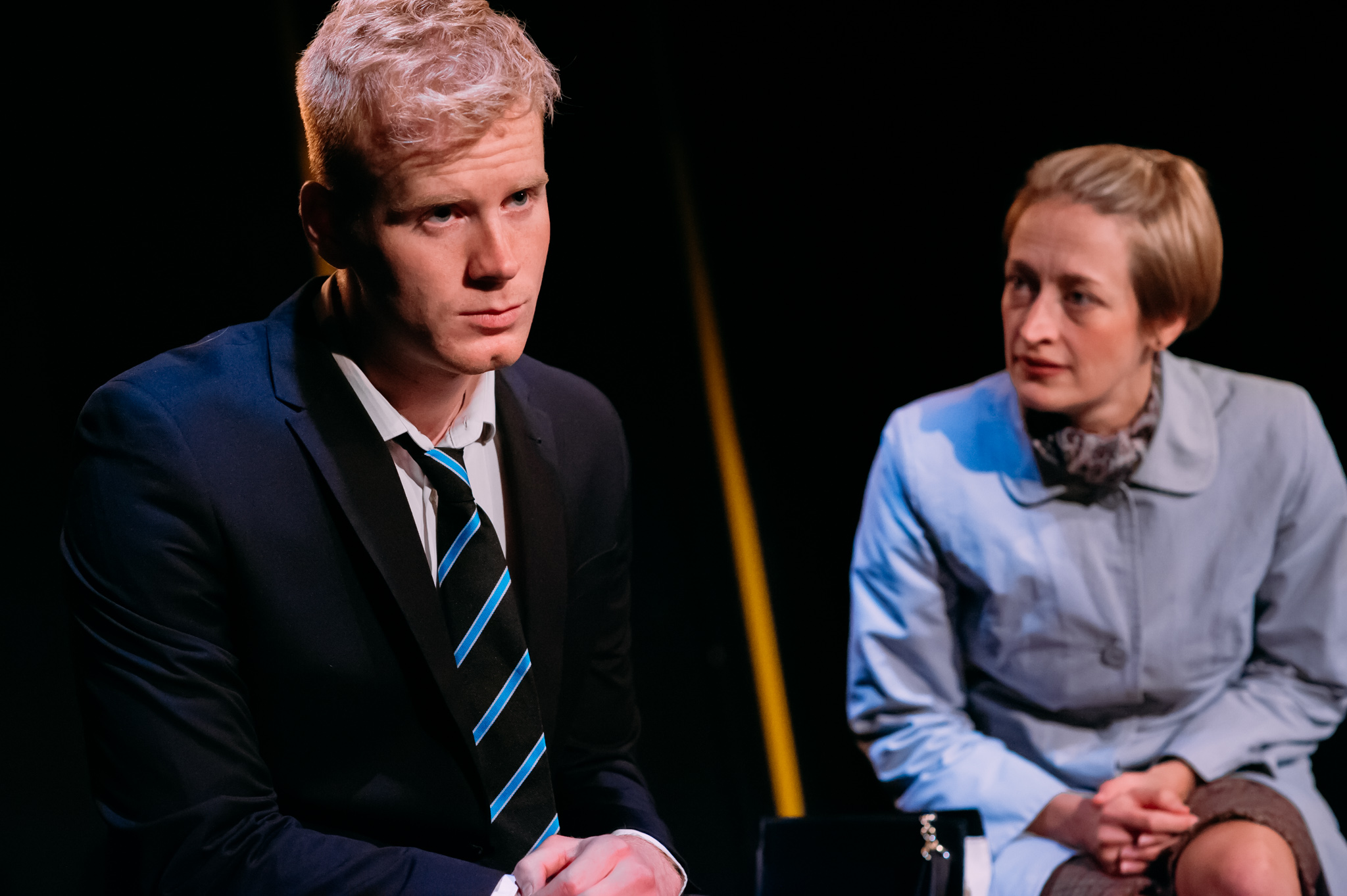
image1In 1998, Thatcher introduced controversial Section 28 that banned promotion of homosexuality, publishing materials that supported it and teaching its acceptability in schools. Playwright Chris Woodley, fascinated by the change in schools’ attitudes towards homosexuality in pupils and staff between his student years in the 1980s and his teaching career in the 2000s, documents the effects of Section 28 on those affiliated with schools: pupils, teachers, and staff and parents alike. The play loosely centres on the character Michael, a GCSE student at Beckenham High School in 1988, who returns to teach there in 1996. Though Section 28 was not repealed in England until 2003, difference becomes more acceptable as time passes but Woodley still shows the impact on individual lives through such bigoted legislation.

A diverse cast of characters populates Beckenham High over nearly 20 years with their day-to-day battles and victories of being gay during and after Section 28. Superbly acted and well-written, Woodley’s script contains excellent scenes but the story as a whole could use more focus on Michael, as his journey is partially eclipsed by episodes from the lives of other gay people working and studying at Beckenham High. Though their stories are equally valid, if this play were to be lengthened Michael’s character arc should move to the forefront to give the whole piece a stronger focus. The early part of the play shows Michael coming out to his mother, but the audience doesn’t see him again until years later as an English teacher. In the meantime, teachers battle against curriculum restrictions and the stigma of being out at work. Not that these are issues that ever disappear completely, but these early scenes capture the stress of being gay in a Section 28 world. During his teaching career, we meet other gay teachers and students who become increasingly comfortable with expressing their sexuality.

An ensemble of six adeptly play several roles each, except Stanley Eldridge as Michael. Director Andrew Beckett uses costume, small set changes, the year written on a chalkboard and music to indicate scene and character changes. Within the scenes, the direction is otherwise wonderfully unnoticeable. The cast is balanced, with no one standing out as stronger or weaker than the others and I’m hard-pressed to choose a personal favourite.

Some particularly good moments include Michael’s estranged mother surprising him at work on his birthday; the brightly coloured helium balloon and gift bag juxtapose his rage and her half-hearted apologies. The scenes discussing the impact of the Admiral Duncan bombing in 1999 on Michael’s life are powerfully moving and a reminder that the individuals cannot always speak for the entire gay community. Student Chloe (Anne Odeke) hilariously defends punching a male student after bullying her for being a lesbian to her form tutor. The script is filled with other great moments, but there was no singular moment of climax.

This is without a doubt an important play and introduces Woodley’s gift for creating excellent character-driven scripts. There is easily scope for this play to develop and it also deserves to be seen for its documentation of a moment in history that we have mercifully moved past, but its scars are still present in homophobia in and out of the classroom.


The Play’s The Thing UK is an independent theatre criticism website maintained voluntarily. Whilst donations are never expected, they are hugely appreciated and will enable more time to be spent reviewing theatre productions of all sizes. Click here to make a donation with PayPal.
Infection, London Horror Festival

https://theplaysthethinguk.com/wp-content/uploads/2015/10/830f1-imgp2396.jpg

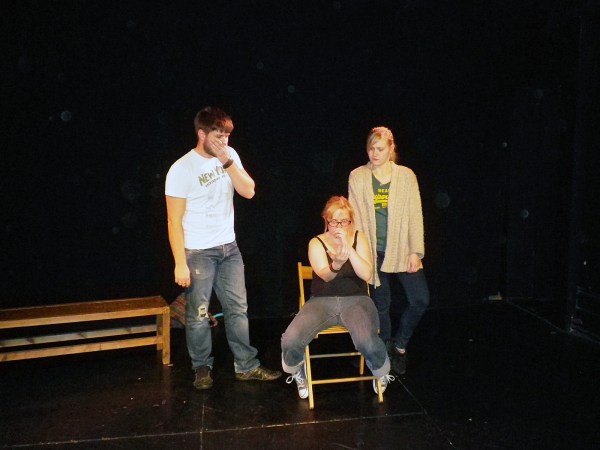
Sam, Dominique and Will don’t always get on with each other. It doesn’t help that they’re under a lot of stress due to a zombie-alien invasion, and can’t work out if any other people survive in their town. Dom and Will are brother and sister who don’t have much in common, and Will has no patience with Dom’s bestie Sam, a vegan, weed-smoking student. Considering all of that, they do quite well for most of Infection, a new play by the Brighton-based Bath Street Productions. With scenes alternating between the past and the present and clear transitions making this is easy to follow, but performances vary according to emotional intensity, and some of the writing is similarly overwrought. There are some witty one-liners and moving moments that, with the absence of the zombie-aliens, prevents Infection from becoming too much like a zombie film, even with strong parallels to Shawn of the Dead.

The script by Faye Woodbridge has a clear dramatic arc and climax, with a format that facilitates suspense by starting in the present, than jumping back to the beginning of the invasion two weeks previously, moving the plot forward by jumping back and forth until we’re back in present. The story itself isn’t particularly inventive, especially as we never properly see the zombie aliens or learn about how the invasion started. Other survivors communicate through graffiti on the supermarket walls, but these are never seen either. Infection is a microcosm but lacks the scope present in zombie films, despite all of the references the characters bandy around. It suits a small-scale theatre space, but doesn’t quite capture the fear of the situation what with exclusively showing such a small group of characters. There’s no sense of scale. There are some minor anomalies – though the attacks are actually seen once, the three keep getting injured without clear explanation. How do zombie aliens sprain the girls’ ankles and dislocate their shoulders? Surely they’d go for something a bit more deadly? Despite the supermarket messages, the characters comment on the town’s emptiness. Even with these issues, it wouldn’t take much development to expand the play and make the invasion’s impact more widely felt, even without adding the invaders.

Writer Woodbridge also plays Dom, giving the most consistent and believable performance from the cast of three. Direction was occasionally obvious through mechanical blocking with no clear purpose; no individual director was credited in the programme, instead directorial credit lies with the production company. A designated outside eye not part of the cast would be able to provide more unity in movement. Martin Wright’s transition sound design is excellent, providing clarity and reinforcing the gravity of their situation.

The most interesting aspect of this script is the gender dynamics that emerge during a time of crisis. Will (Michael Williams) feels obligated to protect his young sister Dom, even though they’ve grown apart as adults and don’t really know each other anymore. He treats Sam (Katie Newman) more like a bloke than he does his sister, despite her diminutive size and more girlish tendencies. Will revels in being the big, strong man even though his foolhardiness and bravado cause further problems, and Dom’s insistence of proving that she can look after herself exacerbates the danger in their situation. The girls’ comic one-liners help draw attention to the ridiculousness of Will’s old-fashioned mindset, as well as add levity to the script.

Though this certainly is not a bad production, but in order to stand out in the zombie field something dramatically different needs to be done. It’s easy to go with a popular formula for success and this is a good representation of it, but not a particularly inventive one.


The Play’s The Thing UK is an independent theatre criticism website maintained voluntarily. Whilst donations are never expected, they are hugely appreciated and will enable more time to be spent reviewing theatre productions of all sizes. Click here to make a donation with PayPal.
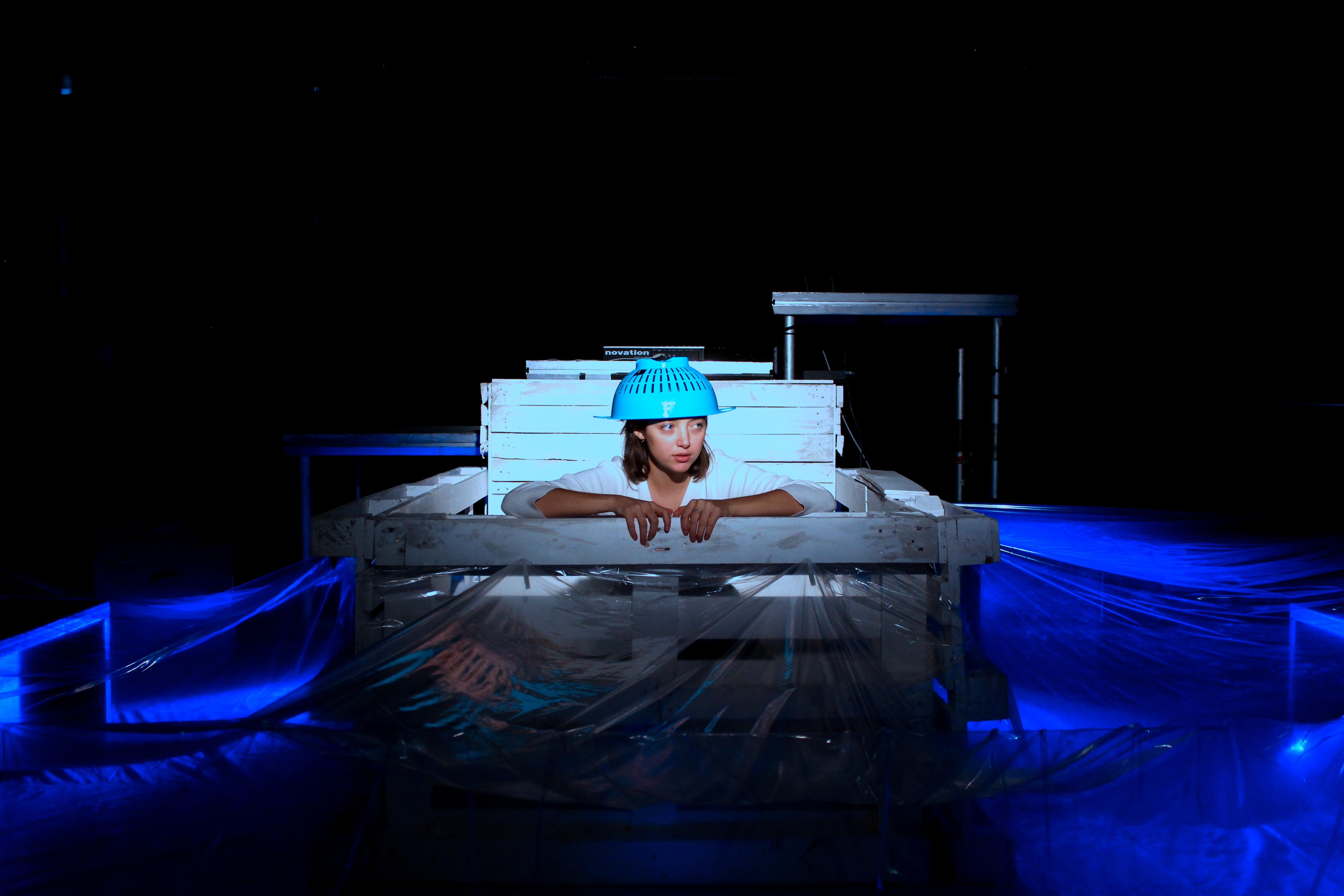
Boat, Theatre N16

BOAT, Theatre N16 (c) Shawn Soh (1)A lot of firsts are happening in Balham theatre at the moment. Theatre N16 has moved from N16 to a new home in SW12, The Bedford Pub. There is little theatre in the immediate area – Tooting Arts Club is further down the Northern line, Clapham and Stockwell both have venues closer to town, BAC is a bit of a trek and there’s a new theatre tentatively in the works in Streatham, but that’s it. Their inaugural production in their new home is first play Boat by poet Kiran Millwood Hargrave; it’s also producer PIGDOG’s debut production. Hargrave’s text uses thickly layered metaphor to tell 14-year-old Girl’s experience of human trafficking. What starts off as an interactive, childlike show soon reveals the sickening underbelly of cities and towns around the world.

“Jellyfish of Sound” Jethro Cooke opens by asking the audience to create some effects that he proceeds to use with others through live mixing. This beginning should indicate that sound is a dominant feature throughout, but it only appears sporadically, and quietly, for the rest of the performance. Instead, the focus is on the story of Girl (Pia Laborde Noguez), on a Beckettian journey with no apparent beginning or end. She is 14, on a small drifting boat. Her Twin (Cristina Catalina) is with her and she keeps herself entertained with visits from the increasingly possessive Turtle (Matthew Coulton) and challenging Gull (Grabriele Lombardo). As Twin’s appearances become more rare, and Girl measures times in the phases of the moon and plans adventures with Gull to find the moon on the seabed, her boat of white pallets and surrounding sea of plastic sheeting abruptly collapses, transforming into a bedroom. Twin, unspeaking and inert, lays draped across the headboard with clay covering her face. Only the clay represents something else, as do Turtle and Gull, and oh god, the realization of her actual reality is horrifying. Girl reminds us that we can pretend none of this happens in the world, as “you believe what you want to believe” and traumatized people will construct an alternative reality in their heads as an escape, but that doesn’t make sex trafficking, child prostitution and refugees cease to exist.

Hargrave’s language is naturally that of a poet’s, but the transitions are abrupt and obvious, announced by the Jellyfish of Sound. The upstairs space in the Bedford is versatile and a good size, but the low ceilings challenge conventional lighting. As potent as the play’s message is, the script imbeds the real story so deeply that it’s easy to take it at face value, or transpose it onto the refugee boats that fill our oceans and our news. But to do so leaves large, logical holes in their world and dilutes its potency. Though a worthy first production, it feels a bit rough around the edges with some moments of vague writing despite good performances. PIGDOG and N16 clearly have great ideas, and this is a wonderful space to explore and develop them in.


The Play’s The Thing UK is an independent theatre criticism website maintained voluntarily. Whilst donations are never expected, they are hugely appreciated and will enable more time to be spent reviewing theatre productions of all sizes. Click here to make a donation with PayPal.
Fred Strangebone’s Freakshow, London Horror Festival

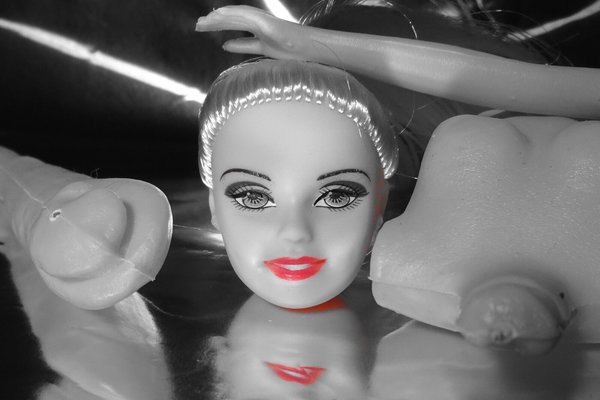
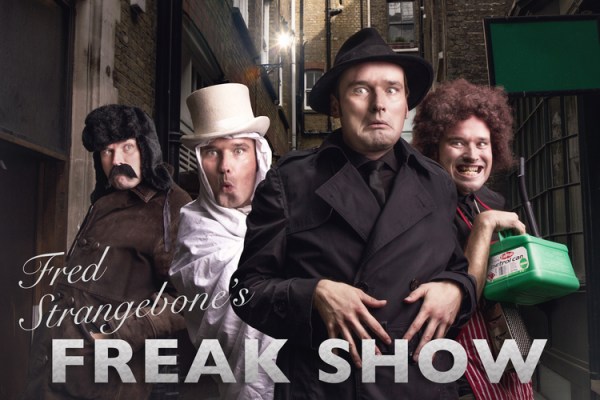
Freak Show by Chris BrockI’m watching Ben Whitehead play a socially inept Victorian playing a half-walrus/half-man creature, indicated by the wearing of a hooded grey sleeping bag, blue swimming flippers on his hands, and paper tusks precariously attached to his face with a false moustache. I’m pondering the life choices I’ve made that led me to this moment as well as whether or not the character-based stand up/absurd solo performance/live art/Victorian freakshow satire/old-fashioned variety show that unfolds before me is one of the greatest pieces of theatre I’ve ever encountered, or the worst. It may possibly be both. I still haven’t decided, and may not ever do so, let alone by the time I finish this review. Fred Strangebone’s Freakshow violently mashes up genres in a bizarre yet often-hilarious piece that manages to be both straightforward and bafflingly random.
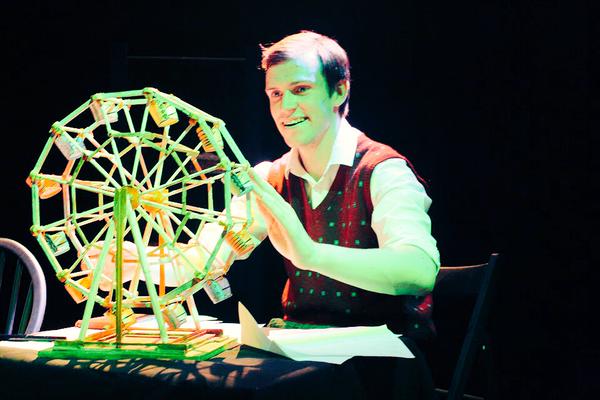
Whitehead’s narrator Fred Strangebone cuts an imposing figure in a dinner suit, black shirt, and velvet bowtie. His rigidity and demeanor remind me of Lurch in the original The Addams Family series from the 1960s, but more well spoken and deadpan. Fred tells us exactly what’s going to happen: he will perform some comedy, then tell us a tale of unspeakable horror, and then, time permitting, he’s going to kill himself. His tale of unspeakable horror is more of a speakable mystery (so he says), where Strangebone goes to the freakshow and meets the walrus man and other oddities affiliated with the travelling show. These characters are a fantastic platform for accomplished voice actor Whitehead to get stuck into, and an enjoyably grotesque one at that. After a failed attempt to impress the freakshow to the point that they invite him to join them, he fulfills his initial promise…or does he? The meta-theatre from the stand-up clouds the levels of reality within Fred’s world.

Each of Whitehead’s creations could be a piece in itself, but he connects them through an overarching storyline. This structure could do with some work, as the narration between characters is often thin, with a tenuous link from one character to the next. The dwarfish property developer with pink wellies chewing on a cigar made of chorizo, whilst hilarious, only loosely fits into the established story. A scriptwriter or script consultant could have a positive influence on the story. His comedy is achingly funny, using absurdity and grotesque imagery to generate laughter mixed with disgust. Like when the demon bin-babies vomit all over mute clown cleaner, Sid, after he breast-feeds them to a monstrous soundtrack. (That was another one of those existential moments for me I mentioned earlier.)

Despite the rough structure and the script with predetermined characters crowbarred in, Whitehead has a fantastic sense for the absurdly funny and Fred Strangebone’s Freakshow manages to pay homage to several earlier popular performance forms – including the freakshow (obviously), variety, cabaret and travelling circus. There’s some audience participation, but the piece is more presentational than interactive. The event is a baffling, bizarre and uniquely wonderful one that refuses to be classified into one particular performance genre and certainly a one-of-a-kind contribution to the London Horror Festival this year.


The Play’s The Thing UK is an independent theatre criticism website maintained voluntarily. Whilst donations are never expected, they are hugely appreciated and will enable more time to be spent reviewing theatre productions of all sizes. Click here to make a donation with PayPal.

Home Free!, London Horror Festival

CRvG0L4WwAA3jO7Siblings Joanna and Lawrence live in 1950s New York City, a place brimming with promise and excitement for its younger residents. They don’t take advantage of it, though. Lawrence never leaves their little apartment; instead he lives vicariously through Joanna’s “adventures” to the market and her encounters in the corridor with their landlady “Pruneface” who has said they need to move out soon. Pruneface doesn’t like that Joanna’s pregnant, and with good reason. It’s Lawrence’s baby and the two refer to each other as husband and wife as often as they do brother and sister. Home Free!, whilst not a scary addition to the London Horror Festival, is a disturbing, excellently performed one-act showing the forgotten and invisible underbelly of an otherwise glamourous city. Untreated mental illness and agoraphobia has enormous consequences for these two innocent twenty-somethings, with Home Free! raising bigger questions about societies that let such a pair slide, unnoticed and unsupported, into catastrophe.

Lanford Wilson’s dialogue is deliberately circular and repetitive, serving to emphasise the cycle of fear that dominates Joanna and Lawrence’s lives. Though necessary, the repetition becomes predictable but this is fortunately a play in a single act. Wilson fully forms the imaginary friends the two have, Claypole and Edna, and Lawrence truly believes they are real – an unsettling device with a surprising impact on the play’s climax. Wilson was one of the pioneers of the New York City fringe theatre scene in the 1960s and it shows in this well-formed play, perfect for a tiny venue like the Etcetera.

This two-hander is adeptly handled by Lindsey Huebner and Rob Peacock, with direction by Courtney Larkin. Larkin focuses on Lawrence’s childlike mannerisms and instinct to see everything in his world as something to play with, occasionally emerging as aggressive attempts to get Joanna into bed despite her protestations. The two have some genuinely sweet moments, particularly when they give each other gifts from their “surprise box” that lives on the bookcase, made all the more unnerving by the awareness that they are brother and sister.

International company Theatrum Veritatus seeks to merge North American and British theatre traditions through their productions, a worthwhile effort in this American play performed in a pub theatre – a quintessential British venue. This production of Home Free! is a good one of a play rarely-staged here, but it’s inclusion in the London Horror Festival is an interesting choice. The horror this play contains is not the kind most familiar to Halloween. There are no ghosts, gouls, or things that go bump in the night. Instead, there’s incest, pathology and no support structure for vulnerable young people. Now that’s a truly frightening thing to imagine.


The Play’s The Thing UK is an independent theatre criticism website maintained voluntarily. Whilst donations are never expected, they are hugely appreciated and will enable more time to be spent reviewing theatre productions of all sizes. Click here to make a donation with PayPal.

Joanne, Soho Theatre

Joanne2We never meet Joanne. We do however, meet four women who encounter her at different points over a crucial 24-hour period of her life, and one that remembers her as a child. We learn that she cuts a tall, striking figure, makes immediate impact on those she meets and she doesn’t seem to fit in anywhere the world. Joanne is homeless and has just been released from prison. Production company Clean Break, founded by 2 female prisoners in 1979 and still producing, recognizes the importance of sharing stories from vulnerable women prone to falling through society’s cracks. Joanne, written by five female playwrights, has some wonderful writing and is skillfully performed in an intimate space but the brevity of the monologues and talking around Joanne distances rather than fully engages.

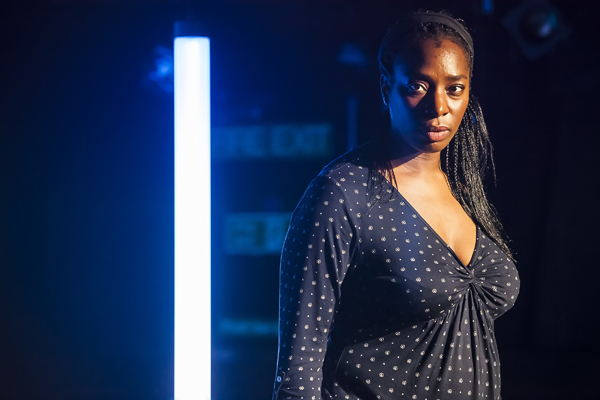
Tanya Moodie first plays a key worker, then easily slips into a police officer, an NHS receptionist, a hostel cleaner and a teacher. All were moved by Joanne’s plight and wanted to help her, innately sensing her need for support. These women related to something within Joanne, humanizing her and the thousands of other female prisoners like her. Moodie captures the genuine care these women feel, as well as their conflict – police officer Grace isn’t supposed to get attached to her cases, but alludes to her own struggle with finding a place in the world for her and her daughter. I am particularly touched by Kathleen, on the front line of an NHS hospital for 28 years. She makes some pointed critiques of government legislation’s effects on her workplace and its effects on those most needing care. These stories are much more engrossing than Joanne’s because they’re in front of us, as Joanne herself is a shadowy puzzle that we slowly and satisfyingly piece together.

Through written by five different writers, the monologues seamlessly connect but remain stylistically distinct. Told in the past tense through the sharing of memories, they are fine examples of storytelling that Moodie makes active and varied rather than nostalgic. She owns the distinct characterization of these women, skillfully masking Róisín McBrinn’s direction. Colour changing light-up columns and panels add visual variation, but don’t contribute towards meaning or location. Their presence is unimposing, but unnecessary. The otherwise minimal, black set draws all attention onto Moodie, as it should in this production. Audience focus is on Joanne’s attempted helpers and their capacity to empathise; they are more solid and demanding of immediate attention than the silhouetted subject of their stories who leaves nothing but a memory.


The Play’s The Thing UK is an independent theatre criticism website maintained voluntarily. Whilst donations are never expected, they are hugely appreciated and will enable more time to be spent reviewing theatre productions of all sizes. Click here to make a donation with PayPal.

The Devil Without, London Horror Festival

rsz_1devilHiding in a room above a pub in Camden, John is on the run from an archdemon that he initially believed was the angel Madimi, with whom he did a dodgy deal for his soul. This archdemon is so powerful that being in his presence is enough to kill a mortal. But don’t worry, everyone is safe as long as we follow John’s instructions and don’t go through the door. Arcane symbols and a circle of salt help protect us from harm, as does his wisdom and hundreds of years of life experience. We are there for a workshop of sorts, to learn how to augment our realities through the power of the liminal space that exists between realities and just happen to be caught up in the demon chase, so the audience must sign a waiver before entering the theatre. Part séance, part hypnotism show, part magic and part theatre, The Devil Without seamlessly merges genres and the occult in a frighteningly unpredictable show loaded with audience interaction.

It’s difficult to say much about this show’s details without giving away the elements that generate the near-constant surprise and suspense, but there is a storyline and a structure that definitely makes this a piece of highly effective theatre. Ian Harvey-Stone plays the character of the 500-year-old immortal, performing feats of mind control and magic that rely on audience participation, including four people taken on an out-of-body journey to see if it’s safe to emerge from the room. There are also guided meditations that are meant to reduce phobias and demonstrate the power of our own minds, which are uncomfortably successful. It’s certainly impressive as Harvey-Stone manages to fully convinces and disarms the audience. Logically I believe what he does must be trickery involving audience plants, but he’s so convincing that the seeds of doubts are there, especially with Harvey-Stone’s assurance that they aren’t and the show changes nightly – could it be real? After all, “magic features the power of words…speak something and it exists,” says John. This uncertainty contributes to the scare factor of the show; we are unsettled when logic cannot explain an occurrence.

Smoothly directed by John-David Henshaw, the use of light and sound emphasizes the paranormal with resonant tones and pulsing lights. Henshaw’s direction combined with Harvey-Stone’s performance makes them an impressive pair of suspense masters. As a former scare attraction performer and an aficionado of horror, it takes a lot to rattle me but The Devil Without is hugely unsettling. The fluid genre mash-up and Harvey-Stone’s committed performance combine to create a show that extends the genre of horror theatre in a wonderfully frightening direction.


The Play’s The Thing UK is an independent theatre criticism website maintained voluntarily. Whilst donations are never expected, they are hugely appreciated and will enable more time to be spent reviewing theatre productions of all sizes. Click here to make a donation with PayPal.

The Sandman, London Horror Festival

rsz_sandmanThe sandman doesn’t throw sand in your eyes to help you sleep, oh no. That’s just what parents want children to believe so they aren’t scared of the real sandman. The real sandman is horrible. If you’re still awake, he steals your eyes and puts them into his little bag and takes them up to his little, bald bird-children who live on the moon. Then they eat them.

T. A. Hoffmann, celebrated German gothic horror author, wrote short story “The Sandman” in 1816. Featuring automatons, folklore, love, childhood trauma and obsession, it tells the tragic downfall of Nathaniel, who couldn’t let go of his boyhood fear of the sandman, personified in his father’s malformed colleague, Coppelius. Adie Mueller and Mike Carter adapt and modernise this short story into a one-woman show of the same name that eschews linear narrative in favour of a disturbing, extremely fragmented chaos. Mueller skillfully performs the eight characters that appear in the story, but the show requires a lot of thinking and patience to decipher the truth behind the numerous perspectives.

In the programme, Mueller and Carter state, “The woman knows that this story is too much for her and she needs you, the audience. The story bursts out of her and comes at you in fragments, randomly and out of chronological sequence. You will have to play your part in piecing them together, finding the overarching narrative, and search beyond reason to make meaning from them.” This is a nice idea to draw the audience into a one-person show and make them feel needed, but for the tired and those that want to sit back and be entertained/scared, it’s hard work. It also serves as a distraction from the lack of clarity of the audience’s function and relationship to the performer, a vital element of one-person performance. Requiring us to sift through the pieces of story strewn before us has no benefit to the performance or the piece; it would be delivered identically whether the audience understands or not. Director Carter chooses to keep the house lights on so Meuller can make eye contact, but there is no direct dialogue. What does she want from us? Why are we hearing this story? It is never revealed.

Mueller’s performance draws attention away from these shortcomings, and it’s an excellent one. Her use of physical storytelling and character differentiation comes easily, and shows a high level of skill and training. Clad in white, she cuts a powerful image in the Etcetera’s small black box, adding to the chaos with her violent use of creepy props.

The story modernizes well, with a focus on sexual dysfunction, technology and its grim intersection. The characters evoke empathy, particularly Nathaniel, who we see as a scared child and an adult obsessed with his lecturer’s “daughter” Olympia. Though his behaviour is appalling, he is a victim of his past rather than a calculating psychopath. His attempts to maintain a normal relationship with human being Clara are thwarted by reoccurring psychotic episodes…or are they real? The prospect of an alternative, tormenting reality that haunts Nathaniel is deliciously spooky. The Sandman is creepily unsettling and despite the effort needed to work out what is happening, the performances and characters make up for the jagged structure.


The Play’s The Thing UK is an independent theatre criticism website maintained voluntarily. Whilst donations are never expected, they are hugely appreciated and will enable more time to be spent reviewing theatre productions of all sizes. Click here to make a donation with PayPal.

In the Heights, Kings Cross Theatre

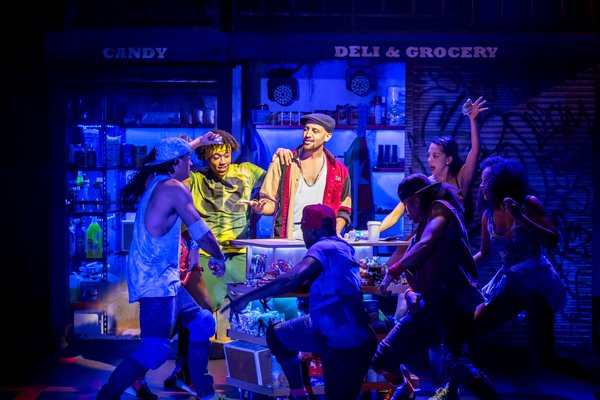
rsz_sam_mackay_as_usnavi_and_the_cast_of_in_the_heights_photo_credit_johan_persson

Way up in Manhattan, so far north that it’s nearly the Bronx, is Washington Heights. You take the A or the 1 train to 181 Street to find this primarily Hispanic neighbourhood that’s not on any tourist radar. In the Heights shows the day-to-day struggles and celebrations of a group of residents on one block far removed from downtown prosperity with a soundtrack of salsa, hip-hop and poppy musical theatre.

The songs are the most innovative aspect of this mostly-sung musical with a stellar cast, but the book is rather sparse and the large cast of characters means it’s a cracking ensemble performance with frustratingly little development for any one character. The book and lyrics rely on stereotypes of Latino immigrants in New York City, though it both fulfills and destroys them within the diverse array of characters. The story feels rather tenuously squeezed around the songs with the dialogue serving as a plot point connector; most, of the scenes aren’t substantial enough to stand on their own. But, going back to the music, the songs make up the bulk of this musical and create a fabulous atmosphere complimented by excellent design. The Latin and hip-hop tunes are the best and most original, resulting in a fun evening and a memorable soundtrack.

This production is the same one that received numerous accolades and award nominations last year at Southwark Playhouse, and deservedly so. The Kings Cross Theatre suits this show well, with a wide traverse stage and audiences on either side, creating intimacy and suiting Drew McOnie’s circular, street party choreography. There are still design relics from The Railway Children, but Takis’ urban set and Gabriella Slade’s bright, revealing costumes pull the focus onto this completely contrasting world. With the performances practically in the laps of the front rows, it’s hard not to get up and dance. Some people do during the curtain call.

It’s not all a party, though. Nina (Lily Frazer), the first of the neighbourhood to go to university, has dropped out after her first year. Her father Kevin (David Bedella) hates her boyfriend Benny (Joe Aaron Reid) and is furious about Nina’s deceitful behaviour. Corner shop (or “bodega” in NYC lingo) owner Usnavi (Sam Mackay) and salon owner Daniela (Victoria Hamilton-Barritt) are getting priced out due to rising rents. Others came here for a better life only to find themselves cleaning houses and pigeonholed by poverty. The joy in this show comes in the characters’ ability to party and find solace in each other in the face of adversity – a powerful message for modern times.

I wanted to know more about these characters, though. This is a “slice of life” show that tries to fit in a lot of big personalities and backstories in a short amount of time, so the main characters and their tales have little space to grow. The storyline feels rushed and the ending, though a happy resolution, is a bit too “musical theatre twee” for a world that’s poor and gritty, albeit one soaked with colour and excellent music. It’s still possible to be pulled into this little stretch of Washington Heights in the height of summer and to want to dance the night away to this extraordinary blend of Latino, rap and musical theatre.


The Play’s The Thing UK is an independent theatre criticism website maintained voluntarily. Whilst donations are never expected, they are hugely appreciated and will enable more time to be spent reviewing theatre productions of all sizes. Click here to make a donation with PayPal.

Twelfth Night: A Gender Experiment (opposite gender cast), The Rose Playhouse

Most Shakespeare I see is performed with the actors’ genders matching that of the characters they play. Sometimes I see token cross-gender or gender-blind casting within an own-gender cast, sometimes all-male productions and less often, all-female productions (I wrote about the scarcity of all-female Shakespeare companies in the UK for The Shakespeare Standard last month). What I hadn’t seen however, was a completely cross-gendered production. As part of a gender experiment, actor/director Natasha Rickman stages Twelfth Night: A Gender Experiment four ways: all-female, all-male, same gendered and cross-gendered. Rather than seeing all four, I went for the most rare of the options out of curiosity, which was satisfied by excellent performances and a 90-minute edit with plenty of fun and energy. I’m now tempted to see the remaining three as I can’t decipher quite what Rickman seeks to prove or disprove with her experiment, but the questions surrounding the nature of the experiment did not dampen the enjoyment of the evening.

A cast of seven, three men, three women and a sock puppet, play all parts. There are the same number of men and women in all four versions, supporting Equity’s goal for 50/50 gender representation in theatre. Rickman is a RADA grad, as are most of her cast so handle Shakespeare’s text easily. Julia Goulding is an outstanding, versatile Orsino, Sir Andrew and Feste, using accents to clearly differentiate her characters. Shauna Snow is, hands down, the best Malvolio I have ever seen – serpentine and androgynous, but utterly buffoonish upon discovery of Maria’s planted letter and vulnerable after her release from prison. Henry Gilbert is a lovely Olivia, feminine but not helpless. Christopher Logan’s Viola has a hard, threatening edge when fending off Olivia’s advances, rare in a female playing the role. There is a notable lack of racial diversity, though. This cast is all white and the actors that make up the rest of the company appear to be as well, or at least look like it in the small, black & white photographs in the copied programme.

Sorcha Corcoran clothes the women in costumes inspired by Smooth Faced Gentlemen’s skinny jeans, shirts and braces, showing masculinity without hiding feminine features. The men wear dresses, but don’t hide their short hair with wigs. Though they still play the gender of the characters, Rickman doesn’t strive for realism in design or performance, which works well for this play that has such a heavy focus on gender. She indicates gender with the costume rather than playing it, creating a self-referential style more in keeping with Shakespeare’s original performance practice than contemporary productions that seek total naturalism. Also, she draws on stereotypes to create the roles; there is a heavy dose of Commedia dell’arte in the characters’ movements, which would have been a large influence on Shakespeare’s comedic characters in both writing and performance. The overall feel is light, funny and camp from both the men and women, with any references to the characters’ genders heightened due to the reversed casting. Combined with a good sense for pace and timing, the 90 minutes feel more like a relaxed hour filled with laughter and music.

Rickman uses diagonals well on the small stage, but doesn’t place much action around the rest of the Rose’s site despite the tea lights scattered around the pool and back wall. Sir Andrew and Viola’s almost-fight is oddly conducted with tree branches, which feel out of place. There’s a good dose of music and a jig during Feste’s final song, ending the evening with a flourish and reinforcing the sheer joy of Shakespeare’s comedies. This is one of The Rose Playhouse’s stronger offerings, and a rare opportunity to see a cast with impressive credits perform Shakespeare in an intimate space, regardless of any gender “experiments” the production seeks to conduct.


The Play’s The Thing UK is an independent theatre criticism website maintained voluntarily. Whilst donations are never expected, they are hugely appreciated and will enable more time to be spent reviewing theatre productions of all sizes. Click here to make a donation with PayPal.