The Wild Party, Hope Theatre

rsz_wildparty_afphotography-529-1000x600

By guest reviewer Martin Pettitt

The Wild Party, a simple and to-the-point title, perfectly describes the show as well as the evening I experienced. There was so much to like about this performance. Adapted into a performance piece here by Mingled Yarn Theatre Company, The Wild Party was originally a book-length narrative poem by Joseph Moncure March in the roaring twenties. Initially deemed too racy to publish, it has since become a seminal work finding ever more relevance as we venture further into the 2000s.

Continue reading

The Trackers of Oxyrhynchus, Finborough Theatre

trackers

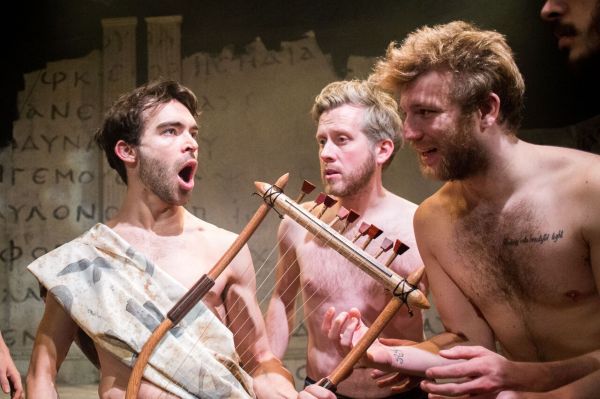
In the first part of Tony Harrison’s The Trackers of Oxyrhynchus, Victorian archaeologist Grenfell struts and frets around a group of silent Egyptians sifting through scraps of papyrus. He maniacally monologues on his quest to find Sophocles’ lost plays and works himself into such a frenzy that he begins to hallucinate. This triggers an inexplicable leap to ancient Greece where a satyr play is acted out and cloth phalluses abound, then another transition to a modern day street populated by homeless men.

Though there is some thematic consistency, the three stories are otherwise unrelated by plot and style. What initially appears to be a play-within-a-play turns out to be a disjointed and disappointing triptych, much like the fragments of papyrus that litter the stage.

Continue reading

Kissing the Shotgun Goodnight, Ovalhouse

rsz_kissing_the_shotgun_goodnight_credit_the_other_richard

Along with tickets, we are handed earplugs. Considering Christopher Brett Bailey’s first work This Is How We Die, I’m not surprised. A brilliant, relentless barrage of contemporary American myth followed by an encore of noise and light, Bailey isn’t known for doing things by halves, or even singular wholes. The slight, constantly startled-looking Canadian with gravity defying hair attacks performance making with the energy of a supernova. Kissing the Shotgun Goodnight has the same verve, but is otherwise a rather different beast. Whilst This Is How We Die was dominated by language, Kissing the Shotgun Goodnight has very few words – but the earplugs are definitely needed. This anthemic music and light show fills the room with sound, colour and vibration but is the difficult second album to This Is How We Die. Much more of a gig than a piece of theatre, it lacks the satisfaction of characters and narrative, even a hint of one. Bailey’s mind blowing poetry teases with a few tiny fragments, but otherwise leaves us desperately gagging for more of his words.

Though given earplugs, there is the choice of whether or not to use them. Notices state that the sound level is consistently over 100 decibels and that, “if you wear plugs the whole time you might compromise enjoyment of the show. and if you don’t wear them at all you will take home whistling ear canals”. Being one of those people sensitive to loud noises who constantly asks my other half to turn down the telly, I want to play it safe but I don’t want to miss out. So I opt for one plug in, with the other ready. This choice no doubt effects the experience – if I leave them out the whole time and feel discomfort, would I like the show less? Or would I like it more because it’s not actually ‘that’ loud? I use the plugs in response to the volume level – sometimes I have both in, sometimes none. It’s an interesting premise to consider that the experience and quality of the show hinges on these earplugs, adding an additional level of individual, subjective response.

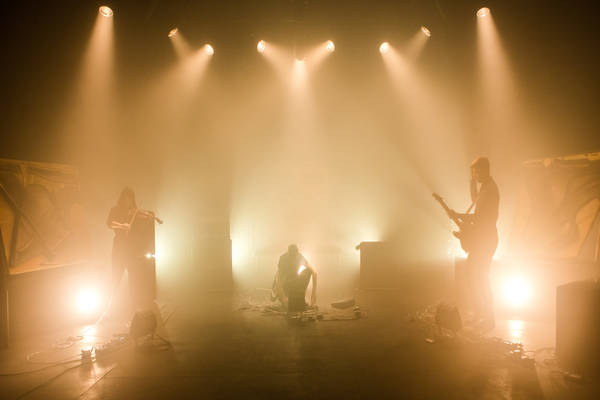
Bailey’s voice, slow and unseen, repeats, “this is a hell dream” in a brief textual introduction. Violinist Alicia Jane Turner uses loop pedals to sculpt a cinematic score reminiscent of mid-90s rock anthems. Her work is wonderfully angry, sweeping and alive. George Percy and Bailey are both on guitar, forming a silhouetted triptych with Bailey soon in the middle – amongst the monolithic speakers and flight cases forming a brutalist, urban landscape, he cuts the figure of a scrappy dystopian overlord. It suits him. If this is what hell is like, it’s fucking glorious.

Behind each performer is a wooden panel of about a metre square made of deconstructed pianos and their strings. These are visually impressive structures in and of themselves; their music evokes the violence and community of tribalism. Combined with excellent sound-responsive lighting (that malfunctioned to the point that the show needing to be stopped briefly), the overall effect is one of epic, soul shaking community.

The title paired with the music evokes the American paradox of a friendly but violent people who love their guns as much as their families. The music’s scale captures the expanse and variation of the North American landscape, and the few words he shares on the experience of waking up from a nightmare to find the world unchanged darkly foreshadow Trump’s America. Whether or not this is an intentional message, it is certainly a powerful one.

Kissing the Shotgun Goodnight is certainly wide open to interpretation and shows Bailey’s ambition and range as a performer of work designed to push the senses to their extremes. His textual dexterity is certainly missed (particularly by the coked up, flailing pair of young women sat next to me commenting on how disappointing this work is compared to his first) and comparatively this piece is somewhat disappointing, but it absolutely has its merits as a visceral, “fuck you/I love you” performance piece.

Kissing the Shotgun Goodnight tours nationally through November.

The Play’s the Thing UK is committed to covering fringe and progressive theatre in London and beyond. It is run entirely voluntarily and needs regular support to ensure its survival. For more information and to help The Play’s the Thing UK provide coverage of the theatre that needs reviews the most, visit its patreon.

The Verge of Strife, Edinbrugh Festival Fringe

https://s.yimg.com/ny/api/res/1.2/dYMZRbOfigpSinFsDrmM4w--/YXBwaWQ9aGlnaGxhbmRlcjtzbT0xO3c9ODAw/http://media.zenfs.com/en/homerun/feed_manager_auto_publish_494/e8b3b49c0f2b401a3fb7882c92866d28

The Wildean young poet Rupert Brooke revels in the self-absorbed, upper classes of Edwardian Oxford and London at the turn of the twentieth century. He finds virtue in beauty, love, poetry and little else. Vain, pretentious and excessive is his behaviour, he manipulates his friends and lovers, all in the name of art and pleasure. Though not a particularly likeable person, his poetry betrays emotional depth and inner conflict, and his social circle flocks to his talent and intensity. Verge of Strife largely focuses on his young life of frivolity, turbulent relationships and their reflection in his poems. Eventually known for his war poetry, this play celebrates his writing’s evolution through the lens of his life’s eras and the women he loved. The poetic but sedate script needs more action as it meanders through Edwardian summers, and nuanced performances are appropriately restrained, making this a somewhat sleepy aural bath.

Much of the story involves parties, encounters with friends and suitors, and a life of indulgent leisure and writing. The dialogue is pretty and light, with beauty but little substance. The narrative flutters rather than sharply rises and falls, presenting snapshots from his life rather than a continuous plot line. Though this mirrors real life, it does not make for particularly dramatic theatre. There is also a sharp change of direction in the final section of the play, presenting Rupert in a completely different role than that of his carefree youth. The contrast is sudden and not clearly explained; the lack of gradual change from wafting, emotional poet to no-nonsense commander jars and feels like there are scenes missing that explain how his life so dramatically altered. The minor characters and their potential to conflict with Rupert are also underused – Rupert is the sole focus throughout, with everyone else merely supporting.

Jonny Labey takes on the verbose Rupert, meticulously sculpting delicate and flirtatious mannerisms. The character is frustratingly shallow for much of the play, denying Labey much freedom to achieve any depth. He does effectively capture Rupert’s growing instability building up to his remarkable transition into a man of real responsibility, and his chemistry with the female characters is undeniable. Emma Barclay as the solemn intellectual Katherine Cox, and Sam Warren as his openly gay friend, are excellent and full of character.

With most of the cast delivering strong performances and pretty language enveloping the senses, The Verge of Strife certainly has its positives but the script needs further work to add clarity and substance in order to communicate its message about the impact of war on a young artist.

The Verge of Strife runs through 29th August.

The Play’s the Thing UK is committed to covering fringe and progressive theatre in London and beyond. It is run entirely voluntarily and needs regular support to ensure its survival. For more information and to help The Play’s the Thing UK provide coverage of the theatre that needs reviews the most, visit its patreon.


bare., Courtyard Theatre

rsz_clbw12owyaau3v8

Three young women, three short solo performance pieces, three stories of vulnerability make bare., a thematically linked evening of new writing. Each of the three mini-plays has a distinct style and is performed by the writer. They vary in the quality of writing and inventiveness, and feel very new – more like scratch performances rather than finished pieces. bare. is a lovely concept – short, female solo performances that reveal hopes, fears, aspirations and conflict. It could easily become a regular event, giving women the chance to try out one-person work in front of an audience. As is, these pieces certainly need development but the three writer/performers show much promise and commendable initiative that, with development and experience, will certainly improve their work.

Kat Ronson is first, performing ‘IBZ’. This fragmented work follows a young woman’s journey from singledom into a loving relationship. The wild, drug fueled club nights transform into something more gentle and intimate, but her story does not end happily ever after. The young woman’s transformation is lovely, but the choppy writing makes for an unclear narrative and timeline. Ronson uses comedy punch lines and moments of reflective sincerity effectively, but this doesn’t balance out the vague writing. This piece would benefit from dramaturgical support and a hefty re-write, but the concept and central character are certainly workable.

American Steffanie Freedoff shows that yanks can handle their poetry and spoken word with ‘in the beginning there was Word’, a biographical monologue in verse about hating poetry as a teenager and growing to love it as an adult. This is also a coming-of-age story, but a much more positive one on self-discovery and confidence. It’s a bit cheesy and motivational, but the two stand-alone poems she ends on are angry, provocative and polished. The focus is on these pieces, which feel disconnected from the first part of the performance but add variation in style and tone. This second mini-play also needs development and shaping to find its overarching message, but it feels like it could be lengthened without becoming dull.

Madeleine Dunne brings a strong character piece to the trio with ‘Mind the Gap’, a piece that looks at the struggle of overcoming mental health issues. Lucy is a little girl terrified of breaking the rules and a young adult still limited by these fears. Told in two parts, Dunne’s gift for transformation is revealed in these two naturalistic monologues. It’s not clear who she is talking to and why in either section, but the character is a suitably interesting one. Lucy could also work well as the protagonist in a full play with multiple characters, perhaps even better with others to respond to rather than limited in a solo performance.

A quiet, sung finale wraps up the evening, a nice touch that adds some unity to these unrelated plays. bare. still feels like a scratch or showcase with a range in quality, but as a themed performance event, it is poignant and well curated. All three pieces need refining and/or expansion, though each shows at least some element of promise.

bare. runs through 16 July.

The Play’s the Thing UK is committed to covering fringe and progressive theatre in London and beyond. It is run entirely voluntarily and needs regular support to ensure its survival. For more information and to help The Play’s the Thing UK provide coverage of the theatre that needs reviews the most, visit its patreon.

Nude, Hope Theatre

Nude- a play by Paul Hewitt - ©HelenMurray-156

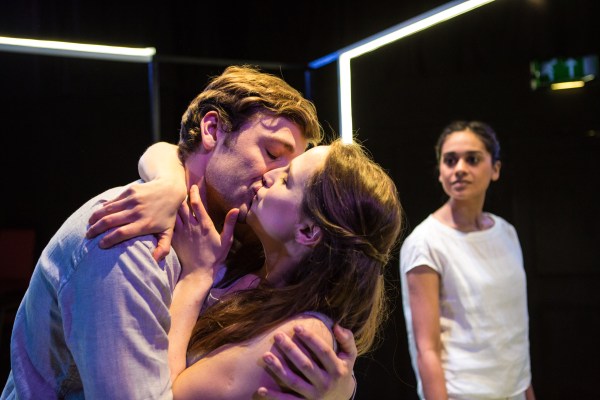
A young couple meet, the relationship blooms, then goes through a rough patch and eventually ends when they are much older. Was it meant to be? Are the events in our lives accidental or controlled by outside forces? Within a standard love story, Nude boldly states that fate has the final word over life, death and love. Playwright Paul Hewitt relies on poetry and narration to tell this tiny, intimate tragedy that feels sadly familiar, like flicking through a dusty photo album of mostly forgotten family members whose memories thrive through stories. Poignant and competently executed, with gaps in the narrative that raise plenty of questions, Hewitt’s script skilfully uses language to depict this couple’s journey and the heavy hand that the personified Fate employs to convince us that we have free will.

Hewitt doesn’t rely on metaphors or overly flowery vocabulary in his rhyming poetry. His language is simple, almost pedestrian, but prettily structured and flows easily from the actors’ mouths. There are a lot of words though, and it’s delivered so quickly that there isn’t much time for in-depth processing. The narrative is a bit chunky with large sections missing and the length of time passing is consequently unclear. His characters are lovely and easy to relate to, though the heteronormative, white, middle class casting of the nameless everyman and woman, that are the focal point of this story, uncomfortably captures the lack of diversity theatre still struggles with. This is countered by a diverse production team and Fate, but romantic leads still lack diversity all to often.

Michelle Fahrenheim and Edward Nash are the charismatic couple controlled by Roshni Rathore as Fate. The three have a relaxed, watchable confidence and natural chemistry, though Fate clearly has the upper hand at all times, even when watching from the peripheral shadows. It creates a great dynamic that’s reminiscent of Prospero or a serious Puck.

Minglu Wang’s minimalist cube that contains the couple in the middle of the space is used well by director Ian Nicholson. Nicholson also incorporates some symbolic black thread, creating a sinister web that further traps the Woman and Man inside their box. This device could have been used more heavily to create a stronger sculptural effect, but was still a nice touch. Creating a space in the round emphasises the idea that the couple are constantly watched and controlled by outside forces – a canny choice.

Though Hewitt’s intention is to focus on a wider philosophical idea, his couple’s story steals the spotlight. Their timeless romance is achingly tragic and well executed textually and through Nicholson’s staging. Nude manages to move the heart even with its small faults, and taps into timeless truths about love, fear and loss.

The Play’s the Thing UK is committed to covering fringe and progressive theatre in London and beyond. It is run entirely voluntarily and needs regular support to ensure its survival. For more information and to help The Play’s the Thing UK provide coverage of the theatre that needs reviews the most, visit its patreon.


in/out (a feeling), Hope Theatre

rsz_in_-_out_-_a_feeling-5

Sometimes, simplicity in narrative structure is more effective than twists, heaps of characters and subplots. Storytelling has been a powerful medium for time immemorial. in/out (a feeling) starkly depicts young, Eastern European woman Blue working in a London brothel after promised a cleaning job. Her client Ollie is a coked-up, suburban lad out for his mate’s stag do, but their encounter changes both their lives, at least for a little while. This two-hander is a brutal depiction of sex trafficking and its uncomfortable nearness to us all, but unblinkingly focuses on the delicate humanity of these two characters through interweaving, storytelling monologues. Excellent performances and Andrew Maddock’s sophisticated wordplay and use of rhythm both captivates and horrifies in this outstanding production with few, if any, faults.

Nicholas Clarke and Alex Reynolds are Ollie and Blue. Though rarely addressing each other directly, their chemistry is still tangible. Clarke’s character has a more interesting journey, from lad’s lad to articulate romantic to devoted boyfriend; Reynolds’ is subtler but more devastating. Both have fearless, vulnerable presences and expressive eyes that pierce the audience to the core during extended sequences of direct address. This is a small, intimate play in a similarly sized venue, but these performers fill the room with intensity and then some. The audience feels like they really know them by the end: a remarkable feat.

Director Niall Phillips and lighting designer Çağla Temizsoy put the stage/bed in the round with harsh blue and red lighting. The set design, presumably by Phillips, is similarly harsh and animalistic: white paint slashes the black walls, strips of red fabric hang from the ceiling like intestines. It’s a nightmare to us, but it’s Blue’s reality. Small buckets, like the kind children play with at the beach, dangle at head height. They aren’t filled with sand, though. It’s Ollie’s perpetual supply of cocaine that he lovingly shares with Blue and frantically sniffs during descriptions of his all-night binges. By the end of this 70-minute play, there’s white powder everywhere.

Along with the performances, Maddock’s language is the star of the play. Evocative rhyme hints at spoken word at times, at others his prose dances with colours, imagery and Blue’s memories of a happier life. We meet several other characters through their storytelling: Blue’s pimp, Ollie’s friend Connell, and others. The double meaning and repetition of “in, out” innocuously describes breathing, then the other bodily function that dictates the rhythms of Blue’s existence. Maddock’s ability to wow the audience with his facility of word choice, sentence structure, rhyme and repetition easily tips into the terror that these characters experiences; this is proof of an extraordinary gift with words and evocative storytelling.

Though building awareness of the closeness of human trafficking is clearly the primary purpose of this piece (Do you actually know your neighbours’ isn’t a brothel? I don’t.), in/out (a feeling) could be about anything at all and the language would still have it’s power. This is a production that needs to be seen, but it feels it would lose its intensity in a larger venue. A good portion of the actors’ power hinges on eye contact, which is easily lost in a bigger space. But in/out (a feeling) needs to be seen by more people – by everyone. And it’s a stunning piece of theatre as well as a vital one.

The Play’s the Thing UK is committed to covering fringe and progressive theatre in London and beyond. It is run entirely voluntarily and needs regular support to ensure its survival. For more information and to help The Play’s the Thing UK provide coverage of the theatre that needs reviews the most, visit its patreon.

Wilde Without the Boy/The Ballad of Reading Gaol, Rose Playhouse

rsz_wilde-without-the-boy-publicity-shot

Near the end of his two-year imprisonment for gross indecency, Oscar Wilde was a man broken from hard labour, isolation and social disgrace. Until a sympathetic warden at Reading Gaol allowed him restricted writing privileges, he hadn’t been able to write at all. Provided with a single sheet of paper that would be collected and replaced when that one was filled, Wilde penned an 80-page letter of 50,000 words to the selfish lover who was his downfall, Lord Alfred ‘Bosie’ Douglas. Heavily edited and published posthumously by Wilde’s friend and former lover Robbie Ross, the chatty letter was titled “De Profundis”. After Wilde’s release, he wrote poem “The Ballad of Reading Gaol” whilst exiled in Paris; this work details the execution of a fellow inmate.

In Wilde Without the Boy/The Ballad of Reading Gaol, actor Gerard Logan and director/writer Gareth Armstrong team up to create a staged version of these two narratives as a one-man show in two acts. Dramatic in structure and reasonably well performed, this is a text-heavy piece that suits the intimate Rose Playhouse. However, the consistent, even tone and pace that Logan employs has a lulling effect and the verbosity overwhelms with details. There is little to watch; though Wilde Without the Boy gives insight into Wilde’s state of mind at this challenging point in his life, it would make more sense as an audio recording and I cannot discern why it was put on the stage. The Ballad of Reading Gaol is performed with more vocal and physical variation so even though it is the shorter part of the event, it is the more compelling piece.

The set is simple: a bare table and two chairs for the first act, with a stack of documents that are occasionally referenced as letters. The red rope lighting that outlines the Rose’s archaeological remains casts a faint red glow on the walls reminiscent of the passion and anger that constantly burns in Wilde’s heart. Whether or not this was intentional, it effectively contributes to the heavy mood of both pieces. In the second piece, the table is covered with summer linen and a sole green carnation rests there. It is another powerful symbol of Wilde’s homosexuality that is repeatedly denied in Wilde Without the Boy. This show completely ignores the vast space beyond the stage, a decision that suits the script, but it’s still a shame to neglect such a unique feature. The musical score, intermittent in Wilde Without the Boy but a constant presence in The Ballad of Reading Gaol, is latterly a character in itself and Logan’s delivery is impeccably timed to its rise and fall. No programme was supplied, but whoever designed or composed this score deserves acknowledgement.

Though both are interesting pieces of text in that they aren’t normally performed or read by anyone other that Wilde enthusiasts or students, their theatrical potential is limited. Even with Armstrong’s adaptation and edit of the letter, as a one-person show it’s still more of a recitation with a thin story arc detailing Wilde’s views of Bosie and his experiences in prison. Logan has some lovely emotional moments, but it’s not enough to keep the mind from drifting. The Ballad of Reading Gaol has an actual storyline, which is an immense boost to Logan’s performance. He has a compelling stage present and vocal agility, but Wilde Without the Boy is not the best showcase of his abilities, the Rose as a venue or theatre itself.


The Play’s the Thing UK is committed to covering fringe and progressive theatre in London and beyond. It is run entirely voluntarily and needs regular support to ensure its survival. For more information and to help The Play’s the Thing UK provide coverage of the theatre that needs reviews the most, visit its patreon.

Boat, Theatre N16

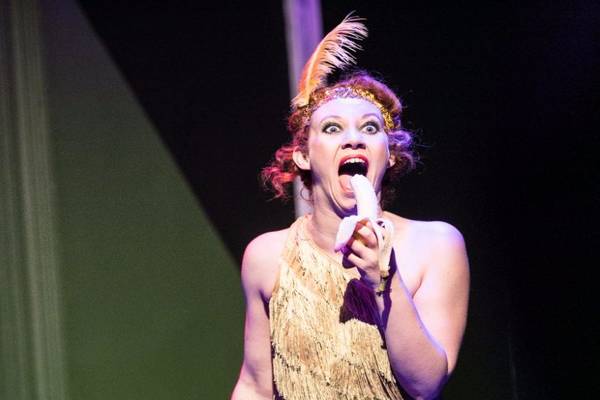
BOAT, Theatre N16 (c) Shawn Soh (1)A lot of firsts are happening in Balham theatre at the moment. Theatre N16 has moved from N16 to a new home in SW12, The Bedford Pub. There is little theatre in the immediate area – Tooting Arts Club is further down the Northern line, Clapham and Stockwell both have venues closer to town, BAC is a bit of a trek and there’s a new theatre tentatively in the works in Streatham, but that’s it. Their inaugural production in their new home is first play Boat by poet Kiran Millwood Hargrave; it’s also producer PIGDOG’s debut production. Hargrave’s text uses thickly layered metaphor to tell 14-year-old Girl’s experience of human trafficking. What starts off as an interactive, childlike show soon reveals the sickening underbelly of cities and towns around the world.

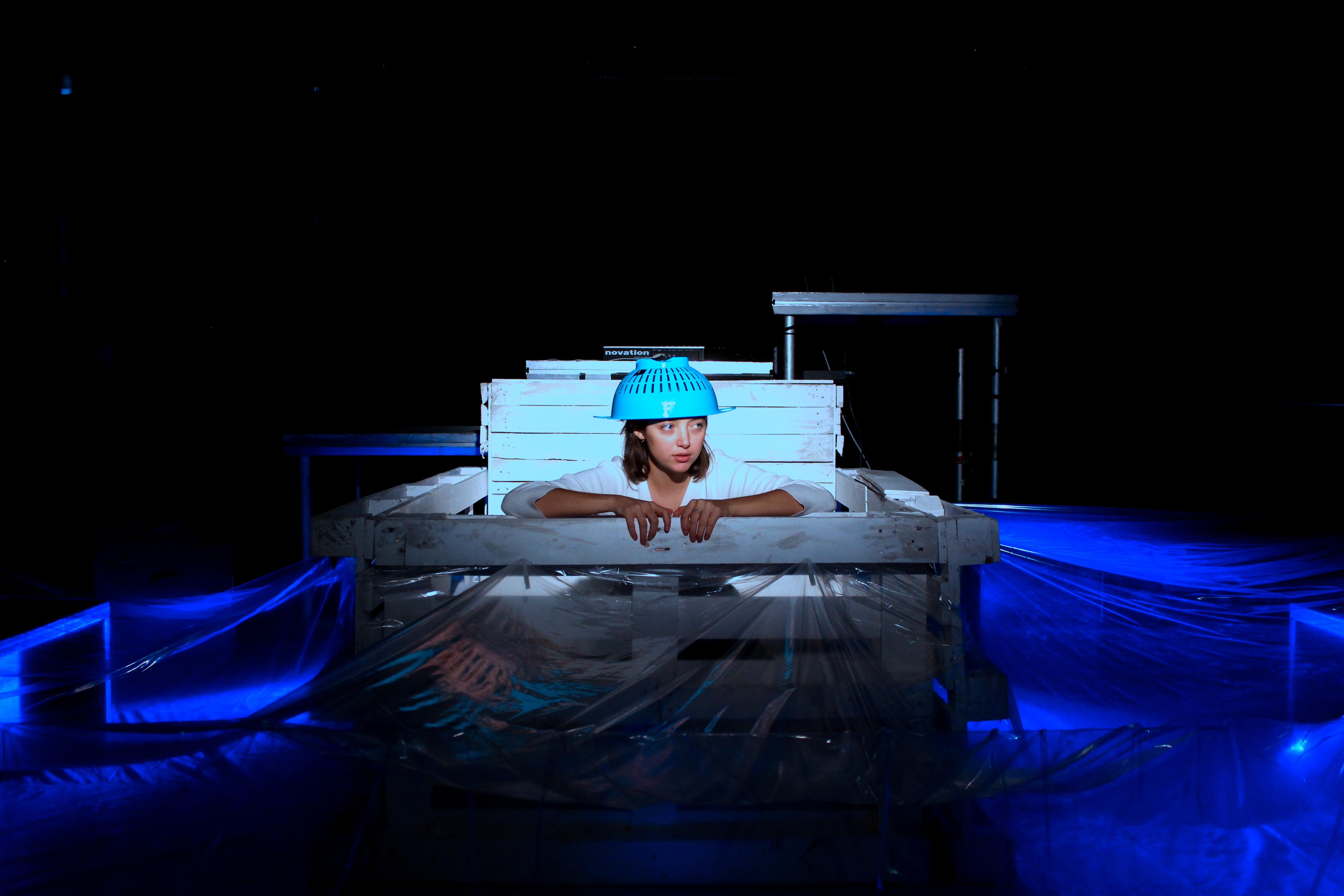
“Jellyfish of Sound” Jethro Cooke opens by asking the audience to create some effects that he proceeds to use with others through live mixing. This beginning should indicate that sound is a dominant feature throughout, but it only appears sporadically, and quietly, for the rest of the performance. Instead, the focus is on the story of Girl (Pia Laborde Noguez), on a Beckettian journey with no apparent beginning or end. She is 14, on a small drifting boat. Her Twin (Cristina Catalina) is with her and she keeps herself entertained with visits from the increasingly possessive Turtle (Matthew Coulton) and challenging Gull (Grabriele Lombardo). As Twin’s appearances become more rare, and Girl measures times in the phases of the moon and plans adventures with Gull to find the moon on the seabed, her boat of white pallets and surrounding sea of plastic sheeting abruptly collapses, transforming into a bedroom. Twin, unspeaking and inert, lays draped across the headboard with clay covering her face. Only the clay represents something else, as do Turtle and Gull, and oh god, the realization of her actual reality is horrifying. Girl reminds us that we can pretend none of this happens in the world, as “you believe what you want to believe” and traumatized people will construct an alternative reality in their heads as an escape, but that doesn’t make sex trafficking, child prostitution and refugees cease to exist.

Hargrave’s language is naturally that of a poet’s, but the transitions are abrupt and obvious, announced by the Jellyfish of Sound. The upstairs space in the Bedford is versatile and a good size, but the low ceilings challenge conventional lighting. As potent as the play’s message is, the script imbeds the real story so deeply that it’s easy to take it at face value, or transpose it onto the refugee boats that fill our oceans and our news. But to do so leaves large, logical holes in their world and dilutes its potency. Though a worthy first production, it feels a bit rough around the edges with some moments of vague writing despite good performances. PIGDOG and N16 clearly have great ideas, and this is a wonderful space to explore and develop them in.


The Play’s The Thing UK is an independent theatre criticism website maintained voluntarily. Whilst donations are never expected, they are hugely appreciated and will enable more time to be spent reviewing theatre productions of all sizes. Click here to make a donation with PayPal.