The Monkey, Theatre 503

The Monkey - Theatre 503, George Whitehead and Morgan Watkins, photos by Simon Annand 2

Tel and Dal are two Sarf London geezas who grew up together on a Bermondsey estate. Dapper and ambitious Tel has moved up in the criminal underworld, away from Dal’s small-scale thieving so they don’t see each other much. Dal’s less aspirational, still robbing people on the street with his mate Becks. When they’re not out working, Dal and Becks get their drugs from young dealer Al, who lives upstairs. Life’s ticking along as normal until Tel shows up unannounced looking for the money he leant to Al a month ago. Tel’s volatile temperament, sharp intelligence and vanity mean the other three are no match for the increasing danger.

Continue reading

Save + Quit, VAULT Festival

http://res.cloudinary.com/jpress/image/fetch/w_620,f_auto,ar_3:2,c_fill/http://www.scotsman.com/webimage/1.4213540.1472207418!/image/image.jpg

Joe and Steph are two lonely Londoners, and Cara and Dylan are dealing with grief in Dublin. The four young people, in two pairs of intertwined stories, disclose their anxieties and struggles in narrative monologues that are strong examples of moving storytelling. But they are only loosely linked thematically, and there is little that conveys a wider reason for placing these characters within the same work. The stories command attention as do the performances, but the question of why they are presented together never disappears.

Continue reading

This Must Be the Place, VAULT Festival

by guest critic Nastazja Somers

“Home, is where I want to be / Pick me up and turn around / I feel numb, born with a week heart/ I guess I must be having fun”

David Byrne’s lyrics to ‘This Must Be the Place’, one of the biggest hits from Talking Heads, can be easily seen as the inspiration for the production of This Must Be the Place which, after playing at the Latitude Festival, is now at VAULT Festival. Acclaimed playwrights Brad Birch and Kenneth Emson target the themes of loneliness and belonging in a moving and captivating way. However, whilst the piece is also beautifully acted and directed, it lacks a certain precision in conveying its message.

Continue reading

Lines, Edinburgh Festival Fringe

http://www.emmanently.com/wp-content/uploads/2015/03/tubemap-2012-12.png

Every Londoner has strong feelings about the tube. They love it, hate it, love to hate it, depend on it, avoid it, sometimes all at once. In Lines, Rose Bruford students pay homage to the underground by extracting individuals from the millions of faces that blur through stations each day. A collage of movement, narration and dialogue captures the diversity of the city with a lovely affection, but the tangled, underdeveloped plot threads that emerge aren’t followed through.

Writer Ian Horgan has numerous lovely ideas but none of them, even the fictional disaster that has the power to unite passengers, is chosen as the narrative spine. Whilst this adds to the montage effect of individual moments, it’s a format that only works for short periods of time. There are certainly some great stories of individual characters and any of them could be short plays in and of themselves, but here they are unsatisfying. The sections of spoken word vary in the quality of delivery, but this is a style that Horgan uses inconsistently. The use of live music is much more regular, and a great contribution to the piece.

There are some great performances, as should be expected from drama school students. No one stands out as a weak link and their time training together has formed a seamless ensemble. Lines also has the distinction of one of the more ethnically diverse productions of the fringe, which in and of itself is hugely commendable.

Though this affectionate tribute to London transport has plenty of potential, it falls short of true excitement or innovation in its current form.

Lines runs through 15th August.

The Play’s the Thing UK is committed to covering fringe and progressive theatre in London and beyond. It is run entirely voluntarily and needs regular support to ensure its survival. For more information and to help The Play’s the Thing UK provide coverage of the theatre that needs reviews the most, visit its patreon.

in/out (a feeling), Hope Theatre

rsz_in_-_out_-_a_feeling-5

Sometimes, simplicity in narrative structure is more effective than twists, heaps of characters and subplots. Storytelling has been a powerful medium for time immemorial. in/out (a feeling) starkly depicts young, Eastern European woman Blue working in a London brothel after promised a cleaning job. Her client Ollie is a coked-up, suburban lad out for his mate’s stag do, but their encounter changes both their lives, at least for a little while. This two-hander is a brutal depiction of sex trafficking and its uncomfortable nearness to us all, but unblinkingly focuses on the delicate humanity of these two characters through interweaving, storytelling monologues. Excellent performances and Andrew Maddock’s sophisticated wordplay and use of rhythm both captivates and horrifies in this outstanding production with few, if any, faults.

Nicholas Clarke and Alex Reynolds are Ollie and Blue. Though rarely addressing each other directly, their chemistry is still tangible. Clarke’s character has a more interesting journey, from lad’s lad to articulate romantic to devoted boyfriend; Reynolds’ is subtler but more devastating. Both have fearless, vulnerable presences and expressive eyes that pierce the audience to the core during extended sequences of direct address. This is a small, intimate play in a similarly sized venue, but these performers fill the room with intensity and then some. The audience feels like they really know them by the end: a remarkable feat.

Director Niall Phillips and lighting designer Çağla Temizsoy put the stage/bed in the round with harsh blue and red lighting. The set design, presumably by Phillips, is similarly harsh and animalistic: white paint slashes the black walls, strips of red fabric hang from the ceiling like intestines. It’s a nightmare to us, but it’s Blue’s reality. Small buckets, like the kind children play with at the beach, dangle at head height. They aren’t filled with sand, though. It’s Ollie’s perpetual supply of cocaine that he lovingly shares with Blue and frantically sniffs during descriptions of his all-night binges. By the end of this 70-minute play, there’s white powder everywhere.

Along with the performances, Maddock’s language is the star of the play. Evocative rhyme hints at spoken word at times, at others his prose dances with colours, imagery and Blue’s memories of a happier life. We meet several other characters through their storytelling: Blue’s pimp, Ollie’s friend Connell, and others. The double meaning and repetition of “in, out” innocuously describes breathing, then the other bodily function that dictates the rhythms of Blue’s existence. Maddock’s ability to wow the audience with his facility of word choice, sentence structure, rhyme and repetition easily tips into the terror that these characters experiences; this is proof of an extraordinary gift with words and evocative storytelling.

Though building awareness of the closeness of human trafficking is clearly the primary purpose of this piece (Do you actually know your neighbours’ isn’t a brothel? I don’t.), in/out (a feeling) could be about anything at all and the language would still have it’s power. This is a production that needs to be seen, but it feels it would lose its intensity in a larger venue. A good portion of the actors’ power hinges on eye contact, which is easily lost in a bigger space. But in/out (a feeling) needs to be seen by more people – by everyone. And it’s a stunning piece of theatre as well as a vital one.

The Play’s the Thing UK is committed to covering fringe and progressive theatre in London and beyond. It is run entirely voluntarily and needs regular support to ensure its survival. For more information and to help The Play’s the Thing UK provide coverage of the theatre that needs reviews the most, visit its patreon.

Skyline, Ugly Duck

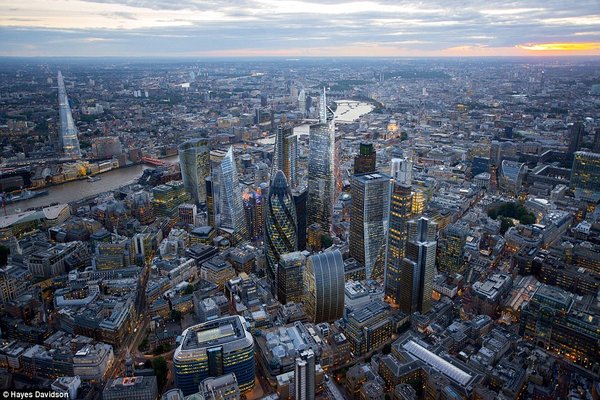
rsz_278df7cf00000578-3032452-image-m-8_1429115791409It’s panto season, and our stages are filled with villains, heroes and dames. Playwright David Bottomley’s new work-in-progress has some passing resemblance to the characters in Britain’s traditional seasonal offerings, but his new play on the London housing crisis is darker, angering fare. Capturing its victims’ lack of power and its perpetuators’ greed, Skyline doesn’t offer a solution but still states a clear opinion on the issue. With a cast of five playing seven characters, the audience sees a microcosmic cross section of social classes who, with poetic and pointed language, are a powerful reminder of the importance of secure housing. There is still some work to be done on the script, but the staged reading in conjunction with a pre-show talk and an exhibition by Alternative Press makes a powerful point that something needs to change to prevent social cleaning through housing policy in London.

Bottomley has a clear gift with words. There’s a subtle poetry that effectively captures his characters’ feelings, laying them exposed and raw for the taking. There could be more differentiation between their rhythms and word choices, though. Drag queen Roxanne’s (Paul L. Martin) closing monologue is similar to that of unemployed single dad and grandfather from Africa, Rex (Kevin Golding). His 28-year-old daughter Tanya occasionally sounds like her Tory MP Francesca (Karen Hill). He does well to go against stereotypes, but there’s a middle ground between them and homogenisation that hasn’t been completely reached yet.

His most complex character is Francesca. Despite being a Tory who’s having an affair with villainous property developer Jasper (Cameron Robertson), the favours she grants him directly conflict with her instinct to do right by her constituents, and values the old London that Jasper desperately wants to demolish. Her dialogue is occasionally overwritten, but she otherwise feels like a real, well-rounded individual. Jasper does as well, though not to the same extent. He could perhaps do with a touch more humanity to make him less cartoonish, even though there must be people out there as horrible as he is. Rex’s inner anguish erupts in balance to the calmer Tanya, who satisfyingly shows her true feelings in Francesca’s surgery. An interesting experiment would be to explore further integration of these characters: what if Rex and Jasper meet? Tanya and Roxanne? There’s space for more scenes without the play feeling too long.

Skyline has plenty of excellent moments, like the only scene between Jasper and Roxanne (a colourful character that’s underused) that shows how truly horrible Jasper is, and Roxanne’s need for a place she can put down roots. Rex’s desperation and Tanya’s resignation come to a head in a climactic final scene, just after Francesca and Jasper do the same. Even though there’s resolution, Bottomley skilfully alludes to the wider landscape and the struggles countless Londoners face due to the housing crisis in these final scenes. Roxanne’s gorgeous monologue that serves as an epilogue underlines the entire play, but dilutes the power in Tanya and Rex’s scene. It would work well earlier, maybe in the scene between her and Jasper.

Though Skyline is still in its development stage, it is remarkably polished and well-structured. A good cast own Bottomley’s rich language and the call for change is clear but not preachy. Some gentle development will whip this story into an even more powerful piece of political theatre.


The Play’s The Thing UK is an independent theatre criticism website maintained voluntarily. Whilst donations are never expected, they are hugely appreciated and will enable more time to be spent reviewing theatre productions of all sizes. Click here to make a donation with PayPal.