Inkheart, HOME

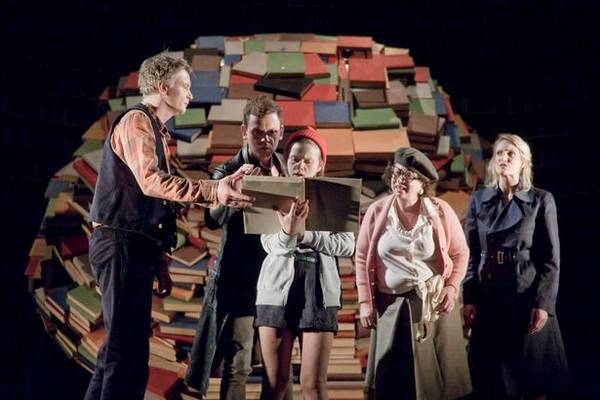
rsz_js78563653Meggie (Katherine Carlton) and her bookbinder father Mo (Paul McEwan) love books. They also share a fantastical gift that’s causing them to be chased all over the world (or Europe, at least) by fictional characters that aren’t very nice at all. Cornelia Funke’s young adult novel Inkheart is adapted for the stage by director Walter Meierjohann in a high-spirited production with inventive staging. The mountain of books and projections that make the set effectively reinforce the importance of the stories that drive the action. The plot is rushed and over-complicated though, particularly for a family show. Books generally have way more content than will fit into a reasonable timeframe, and Inkheart feels like Meierjohann tries to fit the entire novel into two hours on stage.

This is a great play for villains: Will Irvine is Capricorn, a ruthless, Dr Evil-like pursuer who needs Mo to help him bring his assassin, The Shadow, into this world. His stooges Basta (Darryl Clark) and Flatnose (Griffin Stevens) provide excellent comic relief with a dash of audience interaction. Rachel Atkins is the intimidating, book collecting Great Aunt Elinor and the nonspeaking figure draped in black, Mortola. They all provide an excellent foil to the protagonists, even though Meggie is feisty and temperamental (a fantastic role model for young girls struggling to assert themselves). Mo is gentle and kind, with a warm heart and an inner secret – a complex, developed character that adults can relate to.

The pace in the first act ticks along nicely but after the interval, there seem to be leaps in time and space caused by huge chunks cut from the original novel. There are several twists and reveals, making the second act crowded with information. The character development from the first act is neglected in favour of chucking plot points at us, one after the other. Though, this is a story about a long love affair with books and their power, as well as the power we have to write the stories of our own lives. It’s an adventure, a love story and a coming of age tale with great performances, and a flawed, unexpected narrative. Much like our own lives.


The Play’s the Thing UK is committed to covering fringe and progressive theatre in London and beyond. It is run entirely voluntarily and needs regular support to ensure its survival. For more information and to help The Play’s the Thing UK provide coverage of the theatre that needs reviews the most, visit its patreon.

Red Riding Hood, Preston Continental

rsz_12299318_10153680692062789_6332526754861081608_n

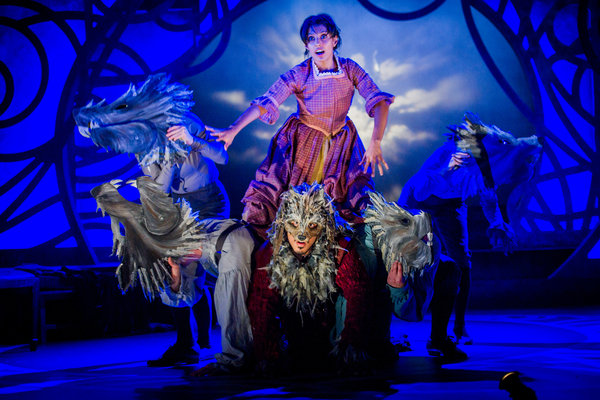
What makes the story of Red Riding Hood so enduring? Is it the clever heroine? Is it the metaphor for growing up? Is it the violence and gore? Horse & Bamboo choose to focus on the colour red and its symbolism in their touring Red Riding Hood. Two actors, Nix Wood and Alex Kanefsky, are actor-storytellers-puppeteers who endow the story with a richness and life that appeals to their young audience as well as their families. The company’s lo-fi touring aesthetic uses a surprising amount of puppets at different sizes, masks and costume to keep the kids’ attention. It’s a bit hodgepodge on the surface but there’s a good amount of layers to this piece: meta theatre, storytelling, playing at the characters, and embodying them. Wood and Kanefsky fluidly switch between the styles that initially feel excessive in their quantity, but the children are so absorbed in the story that cannot be deemed as anything but highly effective and engaging.

The main focus of the story is the dynamic between Red and the Wolf. Mum and Grandma make appearances, but they don’t waste any time getting to the woods. The deeper Red gets, the larger the characters become – a great device. Initially, a tiny Red and mum are reading bedtime stories in a dolls’ house, eventually Wood plays Red in a full mask and the wolf is a nearly life-sized puppet with excellent movement and expression in the head and neck. Music and animated projections add additional detail to Wood’s controlled, emotional physicality communicating the unspeaking Red’s inner life. The wolf and Red focus results in a reinforcement of the “don’t trust strangers particularly if they seem nice” moral, which works for a children’s show but is quite a shallow interpretation in a production that has such depths of performance technique and style.

Red’s cloak is a dark, rich red that stands out beautifully against the rest of the set. Wood sets up red as her favourite colour as she chats with the entering audience pre-show; it’s lovely to watch. Kanefsky is goofy and warm, and loves cakes. This trait follows his characters through the rest of the story. The set is made of abstract blues and greens, inspired by Paul Klee’s art (my initial association was with Kandinsky’s work). Though the idea of starting with visual art for a way into a concept is a common one, the abstract set design clashes with the concrete realism of the puppets and mask, and the animation style was the starkness of shadow puppetry.

As children’s theatre goes, Horse & Bamboo’s Red Riding Hood is more sophisticated than it appears. Despite the moralizing, the craftsmanship and performance skill can be appreciated and enjoyed by all ages. Knowing that Horse & Bamboo are a touring company with just two actors makes their work all the more impressive. An excellent production for families at any time of year, too.


The Play’s the Thing UK is committed to covering fringe and progressive theatre in London and beyond. It is run entirely voluntarily and needs regular support to ensure its survival. For more information and to help The Play’s the Thing UK provide coverage of the theatre that needs reviews the most, visit its patreon.

Goodnight Mister Tom, Duke of York’s Theatre

rsz_5_alex_taylor-mcdowall_william_and_elisa_de_grey_puppeteer_for_sammy_the_dog_in_goodnight_mister_tom_2015_credit_dan_tsantilis

The WWII image of dejected, scrappy children with brown tags around their necks, clutching their most precious belongings as they are re-homed with strangers in the countryside is a powerful one. It’s one that inspired author Michelle Magorian to write Goodnight Mister Tom, adapted by David Wood for the stage, now in London after a successful run at Chichester and before heading off for a national tour. The audience meets little William, who is sent from Deptford to Dorset and assigned to live with the reclusive Tom Oakley. With a focus on Tom more so than the relocated children, this is a story about finding love again after a devastating loss. This part of the production is moving, but the story is slow to develop over a long time period and the flimsy, thin dialogue doesn’t support the large cast of characters, their development and the devastation of wartime.

David Troughton as Tom is a sad and sensitive widower, the complete opposite of the grump that his fellow villagers see. Three Williams, three Zachs (William’s precocious evacuee friend) and a gaggle of children make up half the cast; all are very much child actors. Alex Taylor-McDowall is today’s William, a lanky shy boy poisoned by his fundamentalist Christian single mother, Melle Stewart. We hear a lot about her, but only meet her in one scene. Stewart is unable to show just how evil (and mentally ill) the character is, though she does her best to live up to the previously discussed monster. Most of the other characters have similarly brief stage time, but plenty of multi-rolling and puppetry keeps the generally good ensemble performers busy.

But the first half takes its time to get going. It’s not from a lack of energy in individuals, but the overall pace is languid. It’s lovely and sweet, but flat. The war seems far away from this village, country life is slow, and day-to-day life is filled with routine and little errands. It’s in these small tasks that we see Tom’s affection for William grow: getting “new” clothes for him, teaching him to read and write and fending of bullies who pick on the “townies” and “vaccies” from London.

It’s no wonder the local kids pick on the Londoners. William can’t read or write, sleeps under the bed rather than on it, and his toxic mother skewed his worldview about, well, everything. Zach is well-spoken, attention seeking and flamboyant, the son of actors. It’s interesting that the London children the audience meets are either desperately camp or from the slums in this story; does this reflect Magorian’s preconceptions?

Along with Troughton’s performance, the puppets are outstanding. Tom’s dog, Sammy (Elisa de Grey) is gorgeously constructed, and full of movement and life from de Grey’s work. After the interval, there’s an increase in momentum after an unnecessary subplot involving William’s return to London and the effects of war creep closer, creating more tension and loss. The audience learns more about Tom’s past and the ending is a tearjerker and concise resolution.

For a family show however, the whole thing is too long and convoluted. Tom and William’s story could have easily had more focus with a reduction of other characters, more fleshed out scenes and additional detail about Tom’s life leading up to the point he takes in William. Fortunately, Troughton has enough stage time to keep this otherwise lovely, but flat, production going.

Press ticket for Goodnight Mister Tom is courtesy of theatrebloggers.co.uk.


The Play’s the Thing UK is committed to covering fringe and progressive theatre in London and beyond. It is run entirely voluntarily and needs regular support to ensure its survival. For more information and to help The Play’s the Thing UK provide coverage of the theatre that needs reviews the most, visit its patreon.
Red Riding Hood, Pleasance Theatre

rsz_red_riding_hood_artwork

As it’s the run up to Christmas, pantos are saturating our stages. There are the traditional ones and plenty that give themselves another label in the hope of getting attention: boutique, adult and gay spring to mind. Then there are other shows that are close to panto in that they’re family friendly and/or based on fairytales, like Polka Theatre’s Beauty & the Beast. New musical Red Riding Hood, by the team that brought audiences the stage adaptation of The Secret Diary of Adrian Mole, Jake Brunger and Pippa Cleary, also falls into this category. The largely excellent, Disney-style songs are this production’s strongest feature, but unfortunately the cheap-looking set, and now-antiquated style of children’s theatre prevent this show from being a stand-out option this holiday season.

Nazarene Williams excels as Little Red. Clever and feisty, she’s a wonderfully pro-active character for young girls to identify with. Her charming sidekick William the Woodcutter (Matthew Jay-Ryan) is dopey and fun, but a good enabler and supports Red on her quest to save her family’s bakery. Matthew Barrow has more character as the wolf; his dad lacks energy in comparison. Mum Holly-Anna Lloyd is a strong singer, but she looks the same age as her daughter and the character lacks maturity. Patsy Blower completes the cast of five as the witty grandma. All of them are strong singers with that powerful, modern American Broadway tone that kids recognize from Disney films.

The book and design are a let down, though. Brunger’s writing is simplistic and not suitable for children in the upper years of primary school, and there are some unnecessary scenes that seem like they were written to add length rather than the main storyline. Three schools were there, and on several occasions the children got bored and started talking amongst themselves: a powerful indicator of this production’s issues. The story has a well-shaped structure and an interesting plot, but the dialogue isn’t far off that in Town Hall Cherubs, which is pitched to 2-5 year olds. This makes the actors perform in that exaggerated style of performance that used to be the signature of all children’s theatre, but many productions have now become much more sophisticated, even for very young children. The design looks great in dim light and the patchwork tree leaves are a particularly lovely idea, but with the lights up, they look like cheap, enlarged photocopies and the flats themselves are flimsy. The birds in the forest are origami paper cranes that the actors fly around, but there is no movement within the birds themselves. The paper rabbit on a stick slid across the floor has the same disappointing lack of impact. Grandma’s pet parrot, an actual puppet, is a much better use of puppetry. There are obvious budget constraints here, but a simpler approach may have been more effective rather than trying to make the set look grand but not having the materials available to do so.

The songs are excellent though, and there are plenty of them. From moving duets to powerful solos and whole-cast numbers, they pull back the attention every time. There are some trite lyrics here and there, but Pippa Cleary’s music is great. The show isn’t beyond rescue, though. With some re-writes and additional invention (like William’s wonderful magic book) to make it more distinctive and develop the characters, this could be an excellent example of modern children’s theatre.


The Play’s the Thing UK is committed to covering fringe and progressive theatre in London and beyond. It is run entirely voluntarily and needs regular support to ensure its survival. For more information and to help The Play’s the Thing UK provide coverage of the theatre that needs reviews the most, visit its patreon.
Town Hall Cherubs, Battersea Arts Centre

rsz_c_alex_brenner_strictly_no_usage_without_credit_town_hall_cherubs__battersea_arts_centre__dsc5380

Dear Town Hall Cherubs,

I know we only met yesterday afternoon but I haven’t been able to stop thinking about you since then. Concentrating at work today has been really hard – I couldn’t wait to leave so I could pen this missive, and I’ve been fighting the tiredness that comes with broken sleep filled with golden apples, inflatable little friends, snow and glitter. I’m off somewhere else tonight, but I’m still smiling at the memories of your gentle journey of discovery around Battersea Arts Centre. I’d love to keep you all to myself, but your warm, generous nature shouldn’t be caged, nor is it fair of me to prevent others, young and old, from experiencing the wonderful joy you evoke. So here’s a review for you to share with families far and wide:

❄ ❄ ❄ ❄ ❄ ❄ ❄ ❄ ❄ ❄ ❄ ❄ ❄ ❄ ❄ ❄ ❄ ❄ ❄ ❄ ❄ ❄

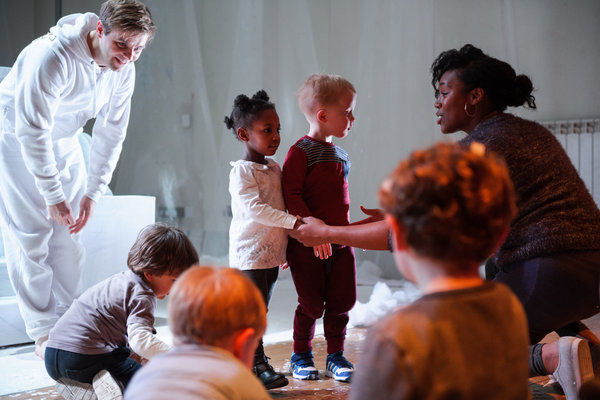
The first generation of immersive theatre fans are growing up. The twenty-somethings who discovered Punchdrunk in their early days are 30-somethings. Now immersed in nappies and temper tantrums as well as non-traditional theatre, these new parents will have high expectations of children’s theatre. Pros arch, run-of-the-mill theatre isn’t enough for them, or their progeny. Fortunately, that first wave of immersive theatre makers is also starting families of their own. Merging interactive, immersive and promenade theatre to create a site-specific adventure for 2-5 year olds, Theatre Ad Infinitum and Sarah Golding from Battersea Arts Centre team up to create children’s show Town Hall Cherubs, a winter adventure that brings the building’s distinctive architecture to life among a landscape of sensory-focused design elements.

Dani (Danielle Marshall) gently rallies a group of children, parents and early years teachers in a cozy corner next to the BAC’s grand staircase. Soothing music and colouring in a drawing of a cherub warms the children to her before they head up the stairs to a discovery on the landing. They find a cherub (joyful and wide eyed Barra Collins) and a fabric garland that continues their music-accompanied journey through several rooms; each contains interactive, sturdy set and design. My favourite is a room full of “little friends”, inflatable blobs by Amy Pennington that the children can dance and climb cardboard mounts with, roll, cuddle and any other imaginative play they can create. The children also discover a giant kaleidoscope by Ted Barnes and Amy Pitt, and a replica of the BAC staircase that Deborah Pugh brings to life as Sarah, a dragon-seahorse creature that’s scared of falling down.

Though the kids won’t notice or care, the moral tacked onto the end feels unnecessarily teacher-y, and Cherub’s plan to go on an adventure and then return home could have been clearer at the beginning. These tiny potential improvements certainly don’t detract from the quiet, calming joy of the event.

This isn’t a high energy, raucous performance. It’s intimate, gentle and encouraging with the pace dictated by the group. As an adult without a child there, it was a joy to observe the children’s reactions to their discoveries and freedom to engage with their new surroundings without fear. It’s a powerful reminder to notice the tiny details around us and enjoy the pleasure of experiencing something new beyond our regular routines.

❄ ❄ ❄ ❄ ❄ ❄ ❄ ❄ ❄ ❄ ❄ ❄ ❄ ❄ ❄ ❄ ❄ ❄ ❄ ❄ ❄ ❄

Thank you again, Town Hall Cherubs, for having me along on your gorgeous little adventure.


The Play’s The Thing UK is an independent theatre criticism website maintained voluntarily. Whilst donations are never expected, they are hugely appreciated and will enable more time to be spent reviewing theatre productions of all sizes. Click here to make a donation with PayPal.

Beauty & the Beast, Polka Theatre

Beauty and the Beast - Polka Theatre - 20 November 2015 Writer - Charles Way Director - Roman Stefanski Designer - Laura McEwen Music - Julian Butler

Cold, dark days make me want to see feel-good theatre, especially in the run up to the holidays. Bonus points if it’s colourful, has some depth and at least some non-formulaic elements, even in a classic story. Polka Theatre’s Beauty & the Beast for ages 6-12 meets these criteria with a surprisingly complex storyline that keeps adult attention as well as kids’. Despite the target age range, there is some great humour and a touch of innuendo adults will appreciate (kids definitely won’t get it), sumptuous set and lighting and an adapted, relevant script. Some of the performances are wooden from the dated language and there are some dodgy movement-based transitions, but the school group audience was quiet and focused for most of the nearly two hours with interval.

Charles Way’s adaptation of the traditional story gives a much wider context than the Disney film and is more relatable to a modern, young audience. Belle is still the main character, but we get to know her father, Mr Godwin (Simon Holmes) and sister Cassandra (Géhane Strehler) well. Belle and Cassandra are complete opposites: Belle’s bookish, a visionary and frightened by most things; Cassandra loves boys, pretty dresses and adventures. The two bicker regularly and their money-driven merchant father is tired of it, a family dynamic that many children will recognize. Beginning in London and moving to the remote countryside when Mr Godwin loses his fortune, the girls also have to cope with big life changes and overcome adversity.

The women’s performances are consistently stronger than the men’s. Ritu Arya’s Belle is convincingly performed with a wonderfully dry sense of humour and an excellent character arc that isn’t overly saccharine. She carries the story and its energy well without being a stereotypical children’s performer, dealing with the old fashioned language brilliantly. Géhane Strehler is great contrast, giving young girls two opposite ideals to potentially relate to. Both have flaws, virtues and detail. Emma Cater is a sinister housekeeper for Jason Eddy’s Beast, a gentle man with stylized physicality and an imposing presence. Eddy doesn’t quite manage to carry that through after his transformation, but it’s so close to the end that it doesn’t matter much.

The set is layers of swirling panels that change colour and glow according to location, with the Beast’s castle the richest of them all. Laura McEwen’s set and Ian Scott’s lighting work together in wonderful harmony, with the occasional addition of puppets. Stage combat from RC Annie also adds a visual component, but the fights are slower that fight speed and brief. Some of the transitions lag and have abstract movement to fill the time, but this doesn’t contribute to the story and usually look pretty naff. Costumes, also by McEwen indicate the characters’ circumstances and changes in social class, but the highlight is the headdress and mask for the Beast.

Though there are still age and gender stereotypes, the adapted script empowers the young female characters. The detail and length will occupy adults as well as children and Way’s story is excellently constructed. With wonderfully visual design and a stirring score by Julian Butler, this is a lovely production harking back to the classical story without the glitz of Disney-fication or the panto cheese, and a solid option for a family holiday show.


The Play’s The Thing UK is an independent theatre criticism website maintained voluntarily. Whilst donations are never expected, they are hugely appreciated and will enable more time to be spent reviewing theatre productions of all sizes. Click here to make a donation with PayPal.

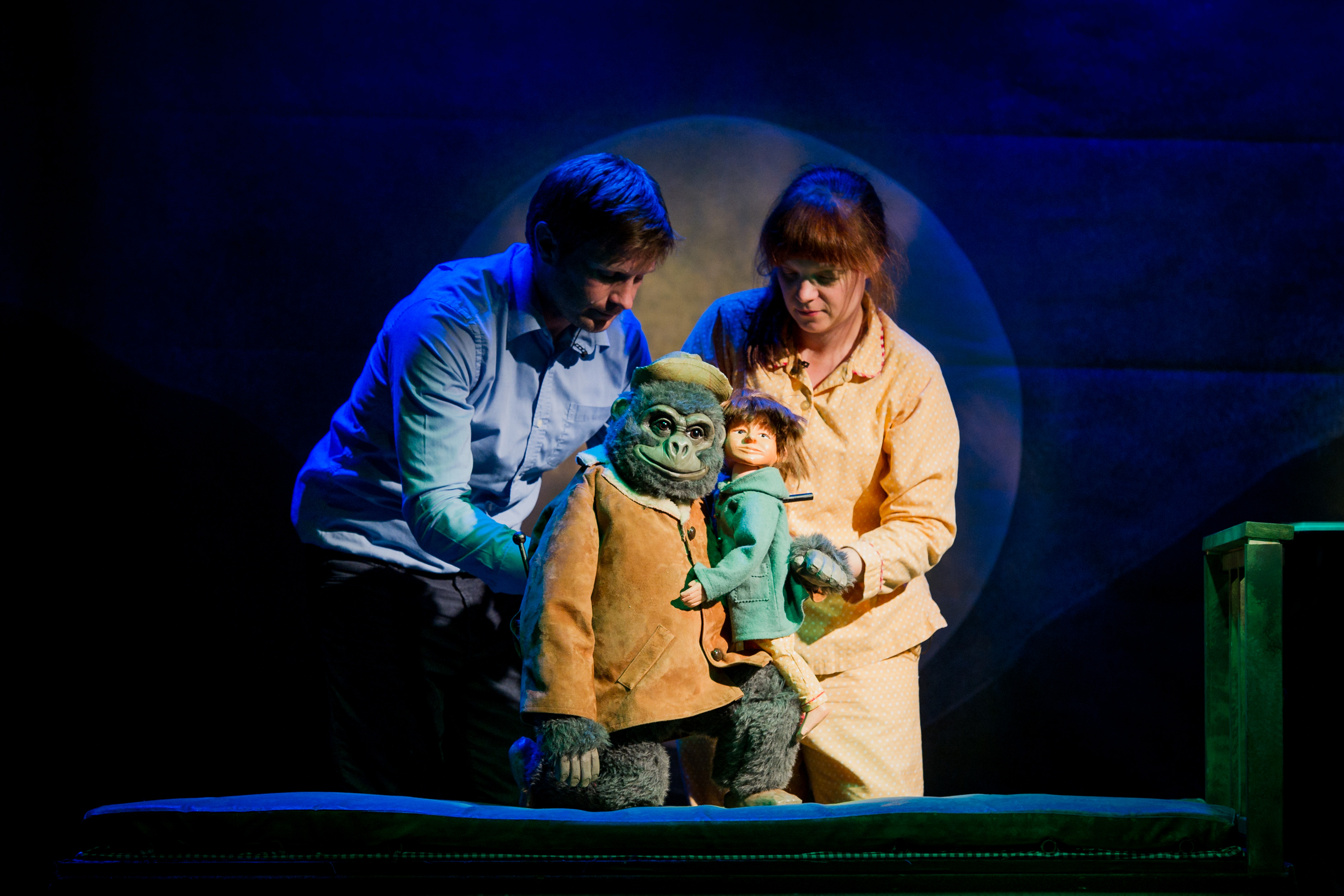
Gorilla, Polka Theatre

Gorilla Revival - Polka TheatreHannah is a little girl that loves gorillas. She spends all day drawing them, watching programmes about them, and talking about them. She tries to share her love for these wonderful animals with her dad, but he’s too busy. Then, on the night of her birthday she received a small toy gorilla that comes to life and takes her on an adventure, teaching her about kindness and gratitude, and her dad then gives her the best birthday ever. This classic children’s book, Gorilla, is charmingly brought to life with two actors, two puppets and a detailed but lo-tech set for children aged four to eight at Polka Theatre.

The story is a wonderful little adventure, executed quietly and calmly, without special effects and updating to reflect present day. Even the music sounds like it comes from a 1970s lounge bar. Initially I found it all terribly old fashioned, but considering the technology children are bombarded with today, it makes a refreshing change and reminds us that children don’t need an ipad and hi-tech toys to entertain them by the time they’re 3. After Hannah’s introduction, the sequence to establish her day-to-day routine and dad’s busyness is rather repetitive; the children in the audience became a bit fidgety and chatty. Once Hannah’s birthday arrives and the adventure begins through puppet versions of the characters, the audience of little ones becomes quiet and focused. Set changes tend towards the lengthy side, but the reveals that come from the set flips, rope tugs and lighting changes are choreographic in and of themselves.

The puppets suit the design of the set, old fashioned but still detailed and expressive. Actors Ceri Ashcroft and Phil Yarrow are good, with lovely chemistry, though at times it was hard to hear Ashcroft during the songs. The barometer for children’s theatre is the children in the audience though, and these maintained a steady focus once Hannah and her gorilla friend meet. They took some time to settle and weren’t grasped by the beginning exposition, but the rest of the play more than compensated.

There were some lovely staging choices by director Roman Stefanski. Particularly notable are the puppets coming into the audience as it transformed into a cinema and watching the audience as zoo animals from outside the bars of the cage. Transforming the human sized set into a puppet sized one also enchanted the audience, both adult and child. This is particularly praise-worthy as the transitions were quite lengthy and all changes (or most of them) looked operated solely by the performers.

This was my first visit to the Polka. What I found most disappointing was that the house was only half full. The theatre could certainly do with the revenue full houses generate, and this production makes a refreshing change from the fancy bells and whistles of West End family shows. The building emanates a warm sense of community that local families should enjoy more often, and it’s a break from fast and loud modern life. After all, people my age and older thrived in a childhood without the internet and handheld gadgets. Gorilla not only tells a sweet story with a strong female child as a lead, it proves that children today can enjoy live entertainment that quietly focuses on old fashioned adventure storytelling.


The Play’s The Thing UK is an independent theatre criticism website maintained voluntarily. Whilst donations are never expected, they are hugely appreciated and will enable more time to be spent reviewing theatre productions of all sizes. Click here to make a donation with PalPal.

How Nigeria Became, everything theatre

“It’s 1914. The British government has merged the tribes and kingdoms to create modern Nigeria. King George V has sent Charles (Christian Roe) to visit Herbert Ogunde (Tunji Falana) to ask him and his theatre troupe to perform at the unity celebrations…

“The story the theatre troupe shares with Charles follows young girl Jenrola (Rita Balogun) on her quest to find the spear of Shango…Also looking for the spear are Aguzani (Stephanie Levi-John) and Obaze (Rebecca Omogbehin). The three women engage in a battle of wit and strength to see who can get to the spear first…

“The story of Charles, Herbert and his actors is framed by a Yoruba creation myth that starts and finishes the production…As lovely as this story was, it felt disconnected from the main plotline, even though it provided the background to the spear…

“All of the actors except Roe play multiple roles, and they do so incredibly skillfully. Falana…employs great physical skill to differentiate these characters and shows the inherent misogyny of 1914 Nigeria through comedy rather than nastiness…

“The set is simple but colourful and effective. The stage is a painting of a river delta and coast, forming the natural curve of the stage. There are mats and cushions on the front of the stage for young children, which gives them more of an opportunity to engage with the interactive elements of the production…

“This production is highly polished and engages the young members of the audience as well as the older ones. It was a great experience…seeing numerous young people engage with the action unfolding before them.”

Read the entire everything theatre review here.