He(art), Theatre N16

jack-gogarty-alex-reynolds-by-jesse-night

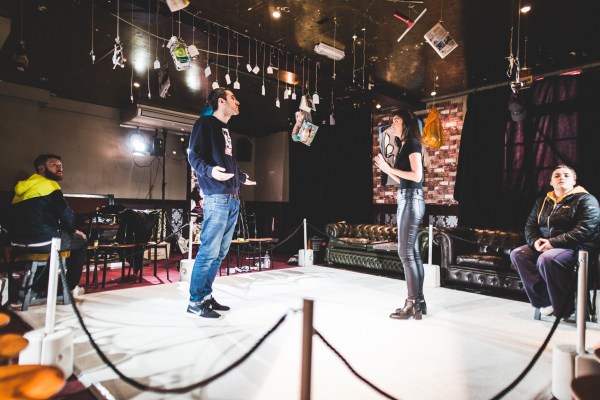
Chalk and cheese Alice and Rhys debate whether to purchase a painting in an art gallery. Simultaneously, siblings Kev and Sam hatch a plan to fund a life-saving procedure for their ill mum that the NHS won’t cover. Running at just over an hour, writer Andrew Maddock fits in the nature of art and its criticism, public health, social class, poverty and loyalty across two very different sets of characters in the same neighbourhood. It’s a lot for 65 minutes and whilst it’s not enough time to fully explore these themes, the play doesn’t feel crowded. Though the direction and performances are intuitive and finely tuned, Maddock’s outstanding verse poetry and use of non-naturalism is sorely missed in this surprising diversion from his trademark style.

Continue reading

Three Sisters, Union Theatre

https://i0.wp.com/www.jetsetreport.com/admin2/photos/Moscow_Ritz.jpg

“Nothing turns out the way we planned.”

Though 2016 has been riddled with despair, 2017 looks worse. With the fascist post-truth movement on the rise and Trump taking office in a matter of days, there is little to look forward to. Far-off lands look like alluring utopias, and it’s easy to fall prey to the lingering question of what the point is of carrying on in the face of all this societal disintegration. With existentialism one of the cruxes of the story, this Three Sisters is a bleak echo of present day narcissism and hopelessness. Phil Willmott’s staging of a new, pared back translation doesn’t stagnate, though. Combined with a strong cast, this is production uncannily suits our times.

Continue reading

Glockenspiel, Tristan Bates Theatre

https://i0.wp.com/www.stevendykesplaywright.com/wp-content/uploads/2015/09/glockenspiel-columbia-1-770x513.jpg

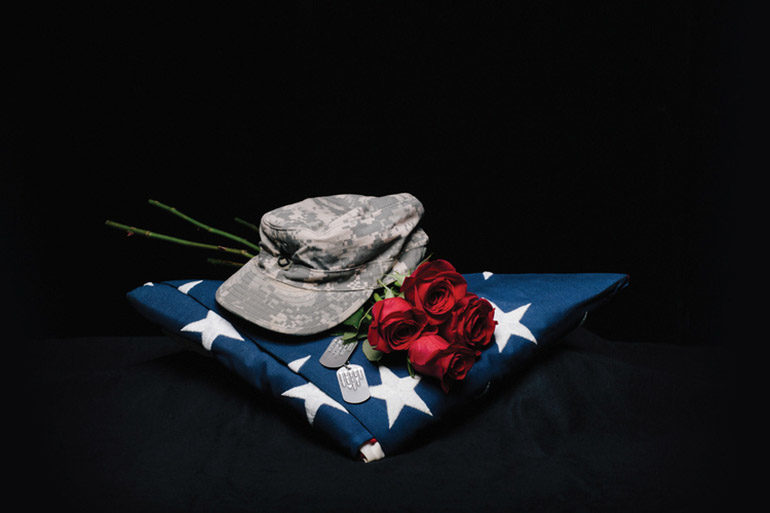
In the programme notes for Steven Dykes’ Glockenspiel, we are told that 40% of current personnel have been deployed more than once, and 27% of those veterans deployed to Iraq and Afghanistan suffer from anxiety disorders and/depression. A fifth of ex-service people are unemployed, and a fifth report cases of domestic violence. Male ex-service members are twice as likely to commit suicide than their non-serving peers. So it’s no secret that the US doesn’t look after its veterans very well. The play tries to look at the effects of service on those now finding their way in the civilian world, but Old Sole Theatre Company’s execution doesn’t deliver the power needed for this slowly-developing script.

Continue reading

The Trackers of Oxyrhynchus, Finborough Theatre

trackers

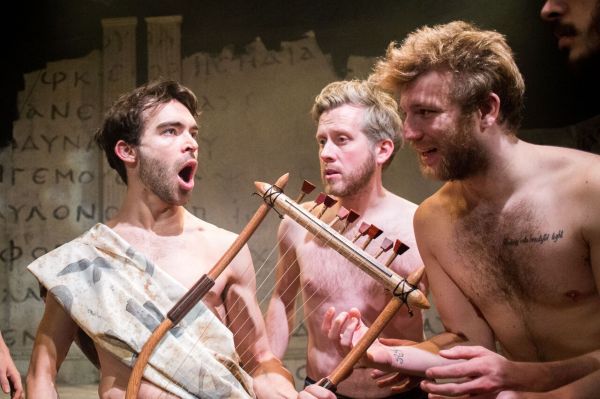
In the first part of Tony Harrison’s The Trackers of Oxyrhynchus, Victorian archaeologist Grenfell struts and frets around a group of silent Egyptians sifting through scraps of papyrus. He maniacally monologues on his quest to find Sophocles’ lost plays and works himself into such a frenzy that he begins to hallucinate. This triggers an inexplicable leap to ancient Greece where a satyr play is acted out and cloth phalluses abound, then another transition to a modern day street populated by homeless men.

Though there is some thematic consistency, the three stories are otherwise unrelated by plot and style. What initially appears to be a play-within-a-play turns out to be a disjointed and disappointing triptych, much like the fragments of papyrus that litter the stage.

Continue reading

Editorial | An Open Letter to the Print Room

https://s3.amazonaws.com/wos-photos-production/89185.jpg

I never make New Year’s resolutions. They work for other people and that’s great, but they aren’t my thing. But Daisy Bowie-Sell’s tweet from a few days ago asking what theatre’s resolutions should be for 2017 resonated with me. An industry making resolutions? Now that’s something I can get behind – people working together for a common goal is what theatre is about on a microcosmic level anyway, and more unity is surely a good thing in a world becoming increasingly polarised.

Continue reading

Narcissistic Nativity, Fucking Little Elf Bitch, Rosemary Branch

rsz_nativity-website

After 20 years running the Rosemary Branch, Cecilia Darker and Cleo Sylvestre moved on to pastures new in June this year. Unattended Items, a company with a focus on interactive theatre and design-led work, took over and have been busy programming work that has similar practices to their own.

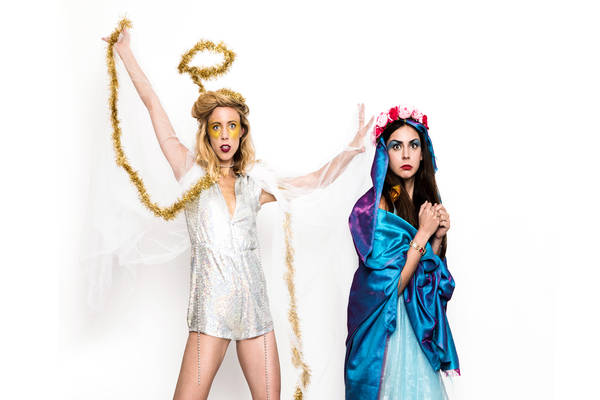
Their Christmas bill of adults-only shows is no different. Urban Foxes Collective’s Narcissistic Nativity is a feminist, live art piece fighting against the patriarchy; Mammalian’s Fucking Little Elf Bitch is a one-woman show on the perils of working in a grotto. Both break down the fourth wall and use non-linear structures, and both need some tweaking for the sake of clarity, but this pair effectively balance current issues and laughs.

Continue reading

Dr Carnesky’s Incredible Bleeding Woman, Soho Theatre

https://cdn0.vox-cdn.com/thumbor/08BLiZi0k-g-w2TYXY9nOkQTz_4=/800x0/filters:no_upscale()/cdn0.vox-cdn.com/uploads/chorus_asset/file/2316126/shutterstock_132379235.0.jpg

From a lectern in the corner of the stage, Dr Marisa Carnesky fights the social taboo of periods. Resembling a character from a Tim Burton film, the PhD holder in menstrual rituals and synchronicity shares her collective research with a group of performance artists she assembled, the Menstruants. Sideshow/cabaret Dr Carnesky’s Incredible Bleeding Woman is a wonderfully quirky manifestation of sisterhood, womanhood and the wonders of the female body.

Every month on the new moon, Dr Carnesky and the Menstruants met on a beach in Southend to develop and performed rituals around their menstrual cycle. The Menstruants come from an array of backgrounds and sexualities, and their rituals are as unique and individual as they are. Through their performances, every woman’s personal experiences with their bodies is validated and celebrated.

The performances on show are distinctive and compelling. There is some spectacle: sword swallower MisSa Blue has a customised set of swords that suit her oesophagus shape each day of her cycle. Some of the work is more reflective and otherwordly, like Nao Nagal’s use of traditional Japanese masked performance. Molly Beth Morossa provides a creepy sideshow element with her twitchy, Victorian high tea. H Plewis performs a visceral movement piece with her menstrual jelly. Rhyannon Styles simply speaks to us directly about her experience of cycles as a trans woman. Fancy Chance, with the rest of the company, performs a phenomenal circus act as a finale, after an empowering, proud sequence of feminine reclamation. All of the acts celebrate female abilities and bodies without aggression.

In between the vulnerable, performative manifestations of female cycles, Dr Carnesky talks to the audience through an array of historical and cultural mores surrounding menstruation. She particularly focuses on myth and symbolism – death and rebirth, shedding of skin and female unity. Her tone is gentle and matter-of-fact; the the content may be revolutionary but she comes across as warm and supportive.

In a show that has the potential to come across as alienating, it is instead welcoming – no one in the audience (men included) seem uncomfortable, and the stories shared on the stage are supported from the house. Instead,this diverse, inclusive variety show is a divine honouring of the feminine mystery and a reclamation of one of the features that defines women, and a showcase of some excellent live artists.

Dr Carnesky’s Incredible Bleeding Woman runs through 7 January.

The Play’s the Thing UK is committed to covering fringe and progressive theatre in London and beyond. It is run entirely voluntarily and needs regular support to ensure its survival. For more information and to help The Play’s the Thing UK provide coverage of the theatre that needs reviews the most, visit its patreon.

Feature: Scenes From A Yellowface Execution

https://girlsdofilm.files.wordpress.com/2014/09/breakfast-at-tiffanys-mickey-rooney-3.jpg?w=800

By Daniel York

Before we go any further, let me lay a couple of things out there:

Howard Barker is a first-rate dramatist.

The Print Room in Notting Hill is a great small-scale theatre.

But they have epically and catastrophically screwed up their casting choices in Barker’s latest offering, In The Depths Of Dead Love. According to the theatre’s website, the play is set in “Ancient China”, concerns an “Emperor” and “Imperial Court” and features characters called “Chin” and “Mrs. Hu”, with an entirely white cast who (without wishing to sound too ironically stereotypical) one would normally expect to see on TV taking tea with Lady Mary Crawley in Downton Abbey.

It’s also doubly ironic that in post-referendum, post-truth Brexit Britain, we’ve spent the last few months being told that you simply cannot call people stupid or racist.

Well, here’s the deal. We don’t actually have to be stupid to do stupid things and we’re all perfectly capable of perpetuating systemic racism without actually being consciously racist. Yes, it’s a subtle one, folks, and interestingly, I can honestly say, hand on heart, I have never once heard the immortal words “I don’t have a racist bone in my body” said by any person of colour. Not one. Because people of colour are ten times as aware of racism as white people. It’s just a fact.

Now, what that hotbed of London fringe theatre that is the Print Room have done, in a play by one of Britain’s most eminent playwrights, is perpetuate the practice of “yellowface,” i.e. when a person who is not of East Asian descent plays a character of East Asian descent. Yellowface, like blackface and brownface, is a remnant of a time when actors of colour were simply not allowed on our stages.

There’s often confusion about a couple of things here. People like to kid themselves that blackface only ever happened in some bygone Edwardian hinterland and only then because there were no black actors around to play Othello. However, this isn’t actually true. The last blacked up Moor of Venice on our stages was as recently as 1990. The practice was only ended by protest from black actors.

Yellowface has lingered on a lot longer, unfortunately. We did however think we’d finally laid the culturally appropriated beast to rest (on British stages at least) in 2012 when, after the Royal Shakespeare Company elected to cast only 3 (out of a cast of 17) East Asian actors in minor roles (including a dog and a maid) in the Chinese classic, The Orphan Of Zhao, a mass social media protest that went viral globally caused considerable embarrassment to both the RSC and the British theatre industry as a whole.

Since then we have seen a whole slew of productions in major theatres: Chimerica, #AiWeiWei, The World Of Extreme Happiness, Yellowface, You For Me For You, P’yongyang, Shangrila, The Sugar-Coated Bullets Of The Bourgeoisie-in major venues, achieving enormous success with casts of real-life East Asian actors, not Caucasians doing an “ethnic turn”. We will also shortly see Snow In Midsummer, at the RSC no less, and Chinglish at the Park Theatre. These are cast with actors who can actually trace their roots to Eastern Asia.

The other confusion that lingers about yellow (and black and brown) face is that if you don’t have the make-up on, the taped eyelids and the dodgy Mickey Rooney in Breakfast At Tiffany’s accent, this somehow ceases to be dodgy theatre practice and magically becomes instead a perfectly valid form of “colour-blind casting”.

But this is the deal. If you take an East Asian character and cast it with a white actor, you’re effectively saying there is no East Asian actor who was good enough/clever enough/talented enough/capable enough to play it.

Or they simply did not exist.

In other words: erasure.

 Daniel York (sometimes known as Daniel York Loh) is a mixed-race British East Asian actor, writer, filmmaker and musician. As an actor he has appeared at the RSC, National Theatre and Royal Court, as well as in the feature films The Beach and Rogue Trader. His short films have been seen in major film festivals where they have been nominated for awards. His first full-length play, The Fu Manchu Complex, ran at Ovalhouse in 2013. Along with composer Craig Adams, he won the 2016 Perfect Pitch award to create an original stage musical, Sinking Water, based on events around the 2004 Morecambe Bay Chinese cockle-picker tragedy, which is currently being developed under commission by Theatre Royal Stratford East. He is one of 21 writers of colour featured in the collection of essays, The Good Immigrant, which won the 2016 Books Are My Bag Reader’s Choice award. He is one-third of the alt-folk trio Wondermare whose self-titled debut album is available to buy on itunes. He has served on the Equity Minority Ethnic Members Committee, is a founder member of British East Asian Artists and has worked with Act For Change to promote diversity in UK media.

Monorogue: Elf Off, Old Red Lion Theatre

https://i0.wp.com/northpoleexperience.com/wp-content/uploads/2014/09/slide-1.jpg

The Salon:Collective’s Monorogue is back again, this time with a Christmas edition. The monologue showcase is now in Santa’s workshop, where perky elf Gingersparkles is interviewing human candidates for a vacancy in the Lapland workshop. Seven lacklustre individuals who can’t otherwise find seasonal employment are created and performed by Salon:Collective actors in this spunky, lighthearted show where the audience gets to vote for the best performer/character. Distinctive characters and good performances are the trademark of this regular event, and the framework around the monologues makes for more palatable viewing.

The set is a simple construction of heaps of brightly wrapped presents, Christmas decorations and toys. It’s easy, cheap and hugely effective in the intimate blackbox theatre. Though perhaps unintended, it is also a lovely juxtaposition to some of the more down-at-heel characters.

The performances are generally good, though some of the characters tend towards stereotypical and miss opportunities for nuance. The standouts are Lucy Gallagher and Louise Devlin’s intense Scottish tomboy Mae, and Angela Harvey’s struggling mum of five Hayley. Rachel Stoneley’s confused but sweet stripper, Jade, is a great way to wrap up the candidates. Laurie Stevens is the adorable Gingersparkles, but she surprises with a ferocious climax that wraps up the evening well.

The scripts have a strong lean towards comedy, which suits the time of year, but some of them lack depth and choose to mock personality traits rather than empathise. Whilst there is nothing overtly offensive and the stereotypes created are identifiable and relatable, there is room for more variation.

Monorogue proves again that they offer an entertaining event that allows actors and playwrights to showcase their talents without taking the more common, in your face approach to self-marketing usually found in showcases. The theme sets the actor/writers a challenge and gives the audiences a needed framing device, and the performances are usually good.

Monorogue: Elf Off is now closed.

The Play’s the Thing UK is committed to covering fringe and progressive theatre in London and beyond. It is run entirely voluntarily and needs regular support to ensure its survival. For more information and to help The Play’s the Thing UK provide coverage of the theatre that needs reviews the most, visit its patreon.

The People Show 124: Fallout, Toynbee Studios

https://i0.wp.com/cdn.paper4pc.com/images/desert-landscape-pictures-wallpaper-2.jpg
Making devised work for the past 50 years, People Show are nothing less than prolific. Their multidisciplinary works are numbered as part of the title; the company’s works now number 132. To celebrate their anniversary, the company’s taken over Toynbee Studios for three days, filling the venue with performances, films and an exhibition celebrating their half a century of work.

People Show 124: Fallout, first performed in 2013, is resurrected here. The piece deconstructs speeches by public figures and adds light, sound and film; the overall effect is one of provocative absurdity – isolated soundbites lose all meaning, even in a world that’s said to be falling apart. This short piece drives its point home quickly and efficiently and stimulates the senses, but with its message emphasising meaninglessness, it soon becomes repetitive.

Everything in the room is white, even the padded floor is powdered with talc to add an additional layer of frost. Pillows attached to the walls evoke a soothing dreamscape. But soon, pulsing colours disturb the peace as the cast of four fiercely deliver snippets of text. The lights are often so bright they are uncomfortable, even though the colours are childlike and fun. The juxtaposition is clever and sharp, and the switch from austere to saturated is an effective one.

The actors’ tone ranges from gentle to antagonistic, with a decidedly post-apocalyptic bent to the text. Projections of sweeping desert landscapes back up the promises of nuclear fallout, though the dreamy atmosphere from the beginning still lingers – what is real, and what is the product of our subconscious? The disconnect from reality diminishes any potential meaning, making the outcome decidedly absurd, even though the intention seems to want to carry more weight.

This colourful world enhanced with gorgeous projections, bright lights and music is integrated  with the text, though there is a lack of development in the core idea of the piece. If real life is has no purpose and we’re better off in a dream because the world is hellbent on destroying us, that’s fine – but a performance telling us that is not an easy thing to execute and in this case, not done fully effectively.

People Show 124: Fallout is now closed.

The Play’s the Thing UK is committed to covering fringe and progressive theatre in London and beyond. It is run entirely voluntarily and needs regular support to ensure its survival. For more information and to help The Play’s the Thing UK provide coverage of the theatre that needs reviews the most, visit its patreon.