Beetles From the West, Lion & Unicorn Theatre

rsz_img_5808

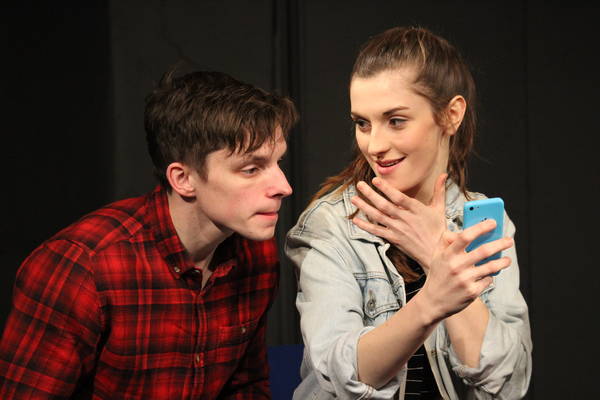
Half of the UK population born after 1960 will be diagnosed with cancer during their lifetime. Considering this figure, cancer rarely features as the primary subject matter in theatre, though last year there were several productions that put it at the forefront. I caught two of them in Edinburgh: The Eulogy of Toby Peach and Goodstock. James Hartnell’s debut play, Beetles From the West, is also driven by a diagnosis. Set in a hospital waiting room, immature Boyd waits with his girlfriend for news of his father’s health after a sudden collapse that’s left him unconscious. A young doctor’s attempts to explain what’s going on are aggressively questioned as Boyd comes to terms with what it all means. Hartnell’s script, obviously early career from its unwieldy text and underdeveloped characters, spotlights the importance of cancer screenings but it needs more development to have greater impact.

A combination of flowery, metaphor-filled monologues directed to the audience and simplistic scenes between the characters attempts to show range, but they are so dramatically different that they seem spoken by different characters. Dialogue paints Boyd (Ryan Penny) and his girlfriend Jenny (Amy Doyle) as immature and ignorant young teenagers. Their monologues have a more mature gravitas, but these contrasting tones don’t reconcile. The transitions in the writing are abrupt and jarring, creating an unconvincing baseline reality. Hartnell has a sense of dramatic arc and a satisfying ending that suits an awareness piece, but individual scenes and monologues sit clumsily within it. The script does manage not to preach, though.

There’s little subtlety or depth in the characters despite their dialogue, but Penny, Doyle and Matthew Marrs as the doctor attack them with gusto. Penny also directs, and favours heightened performances – though this might suit the language, it clashes with the thematic content. It’s an interesting choice, but not one that consistently works. There are some moments of good chemistry, particularly when the doctor reveals details of his own past – though highly unprofessional and unlikely to happen in the real world.

Beetles From the West shows cancer isn’t a battle, it’s a disease we are just as likely to get as not. It reminds us to monitor our mental and physical health and have symptoms investigated, something men are more likely to neglect than women. This is definitely a men’s health play, though it doesn’t alienate women. It’s just a shame that the script doesn’t do the themes justice or give the performers properly developed, meaty roles.

The Play’s the Thing UK is committed to covering fringe and progressive theatre in London and beyond. It is run entirely voluntarily and needs regular support to ensure its survival. For more information and to help The Play’s the Thing UK provide coverage of the theatre that needs reviews the most, visit its patreon.

Hamlet Peckham, Bussey Building

What happens when a director completely disregards age, gender and nationality in a Shakespeare production, then stages it in a former cricket bat factory with a stripped-back aesthetic and fantastic performers? Shakespeare Peckham. Founded by actor/director/producer Anthony Green, Hamlet Peckham bears more resemblance to the vibrancy and gender bending of Shakespeare’s original productions than most modern conceptual interpretations. Green incorporates several aspects of original practice, which prove that embracing the conventions of Shakespeare’s theatre with a fearless cast is a winning combination.

There are a few concepts that Green adds, such as casting three actors as Hamlet to highlight “the problem, the plan and the solution” of Hamlet’s narrative. He also empowers Polonius, making the father of Laertes and Ophelia the strongest character in the play. There’s loads of direct address and audience interaction, as there was in Elizabethan and Jacobean theatre and as there should always be. The ghost is just a man rather than ethereal or otherworldly, and when Hamlet is played by a woman, he changes all gender pronouns to “she” and “her.” These choices, proving Green’s instinct for excellent theatre and Shakespeare performance, either work well or, at the very least, don’t not work. The only one of these approaches that jars is the textual changes according to gender, but it will have little impact on a viewer who doesn’t know the play well.

The Bussey Building, here configured with the audience on three sides, also has three slender poles along the front of the stage. Though their position prohibits the curving movement that the Globe’s pillars creates, the actors use them – as supports, to hide behind and to propel them. Sight lines are occasionally blocked, but never for long. There is no backstage, so the actors hang out in the dark behind the audience. No feature of this space goes unused, though there are no specific adaptations that warrant the addition of “Peckham” to the show title. This isn’t a site-specific production, but it is certainly wonderfully site-responsive as well as being sensitive to the audience’s energy. Set designer Michael Leopold and lighting designer Adam King create a subtle, harmonising impact on the space with wooden crates, white curtains and colour. The actors’ black and white contemporary costumes looks like their own clothing, but rather than appearing cheap, it comes across as relaxed and accessible.

The cast is phenomenal. Nine of them take on all roles, with only a few not doubling, tripling or more. It’s impossible to chose a few standout performances, but the three Hamlets (Sharon Singh, Max Calandrew and Izabella Urbanowicz) seamlessly blend their interpretations whilst making each moment their own. Gil Sutherland as Polonius is the driving force behind manipulative Claudius (Pete Collis), Daniel Rusteau is a warm, grounded Horatio. Eva Savage is half a dozen characters, particularly excelling as the joyful singing gravedigger. As a whole, they are a well-oiled, energetic and charismatic bunch who have the talent for the world’s biggest stages. Working with Green, each moment is crafted with care and detail, but the effort only shows in the performers’ ease.

Both progressive and ancient, Hamlet Peckham is what contemporary Shakespeare should be – striving for equality in cast and crew, respecting core performance techniques from original Shakespearian theatre practice, and a relaxed, flexible concept that focuses on telling the story with passion and muscularity. This production creates opportunities, showcases great talent and tells Shakespeare’s story with all the energy and life of new play. Don’t miss it.

The Play’s the Thing UK is committed to covering fringe and progressive theatre in London and beyond. It is run entirely voluntarily and needs regular support to ensure its survival. For more information and to help The Play’s the Thing UK provide coverage of the theatre that needs reviews the most, visit its patreon.

Dress Rehearsal, OSO Barnes

image
A performer’s life is far from glamorous, particularly for those managing to eke out some sort of living in the business. Corporate gigs, theatre-in-education, skin work and small-scale touring is better than working in a call centre or bar, but this work is exhausting and usually demoralising. I remember similar days in my past life as an actor, particularly that panto tour to schools and social clubs in South Wales. The schools were fine; teachers kept order. But the social clubs were all loud, drunk adults, and kids hyped up on e-numbers who thought hitting the actors was the most hilarious thing ever. With two shows a day, six days a week for a month and a half, I keenly feel the anguish of opera troupe The Overtones’ pub booking in AJ Evans’ Dress Rehearsal, even though those days are long behind me. Despite kinship with the characters’ aspirations and conflicts, and fantastic singing, the clunky script, poor performances, and undeveloped characters make this a missed opportunity to showcase opera within the structure of a play.

The concept reads well on paper and it could be a great way to make opera approachable as well as demystify life as a performer: flipping between the pub floor gig, the dressing room and reserved mezzo Steph’s past, we see trouble within The Overtones cast and career goals clashing with reality, and some cracking opera numbers. There’s certainly scope for situation comedy as well as character-driven dramatic conflict. However, Evans’ script hovers in the liminal space between these styles, creating something that manages to be both unfunny and quite flat with hackneyed dialogue. Subplots and the flashbacks are neglected and left incomplete, making them feel gratuitous to the main plot thread. The first half is slow and little happens other than exposition, but after the interval, both tension and pace picks up. The final moment even has genuine emotional connection between two characters, something that is pointedly absent in the script up to this point.

The singing is excellently emotive, however. There’s enough book (albeit a poorly written one) to make Dress Rehearsal a play with music, but there’s enough music to suitably break up the simplistic dialogue. Five of the eight actors are opera singers, one is a pianist who sings and two are “just” actors. The singers are certainly good at their primary craft, but lack in their acting ability. Director Paola Cuffolo focuses more on staging than coaching truthful performances from her cast. There is some stylisation that, as a conceptual break from realism, is under used and lacks punch.

If Dress Rehearsal was a single act composed mainly of the current second half, it would be a much stronger play. As it is, it wanders aimlessly for quite some time before finding its purpose and conviction. Fortunately, the songs are welcome respite in what feels like something that well precedes a dress rehearsal.

The Play’s the Thing UK is committed to covering fringe and progressive theatre in London and beyond. It is run entirely voluntarily and needs regular support to ensure its survival. For more information and to help The Play’s the Thing UK provide coverage of the theatre that needs reviews the most, visit its patreon.
Shifter, Crick Crack Club at Soho Theatre

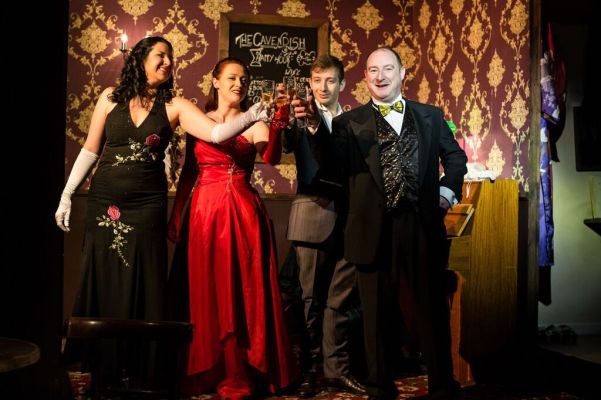
Going to a Crick Crack Club storytelling event is a bit like joining a private members’ club. This club doesn’t have strict entry criteria, nor is it cold and exclusive – quite the opposite. A welcoming spirit of community and the use of ritual enhance Jan Blake’s and TUUP’s four globe spanning stories. The first half of the two-hour, four-story Shifter has sturdier narratives, but the tales of trickery and metamorphosis interspersed with simple call and response create a magical, engrossing evening despite a few structural shortcomings.

We begin in Scotland, where young prince Raymond on a hunting trip meets a beautiful woman in the depths of the forest. He takes her home and the two soon marry. After many years and the births of their ten children who all have some sort of foreshadowing deformity, the prince makes a surprising discovery after spying on his wife whilst she bathes one evening. After a public reveal, the myth quickly relocates to a chateau in France, where inexplicable marks on a high window ledge are made clear. The prince is very much the victim of his bride’s deceit, but their love is also held up for admiration. Told by TUUP, this story is particularly male focused, demonising the female but also giving her power. It would be an interesting experiment to see what a woman storyteller could bring to this story. The climax and denouement are rushed, but the final line satisfies. TUUP has a relaxed, magnetic presence and his delivery of this warped love story is endowed with empathy and respect.

Blake now takes us to the Gulla Islands off the coast of America, one of the first settlements by African slaves. This is a another love story, again with a man who falls in love with a powerful, shape-shifting woman. Mary is less friendly than Raymond’s wife, and the threat to hew new husband John is tangible in Blake’s telling. This unnamed tale alludes to Rumpelstiltskin and Sleeping Beauty with the prominence of a spinning wheel and mysterious nighttime happenings. The strongest of the four stories in Shifter, its madness and imminent danger give this story a thrill, heightened by the various percussive instruments TUUP uses to accompany.

After the interval, two tribal, pre-Christian tales evoke the savannahs of Africa and the prestige that comes with being a successful hunter. The morals in these stories aren’t about the fear of powerful women in the Christian West; they more broadly apply to all humanity – don’t allow yourself to lose sight of your life goals, and practice rather than magic will bring you success. This half has a more epic sense of coverage, but the narrative arcs are less familiar to Western stories. They are more rounded, with a greater sense of the world outside of the characters; this makes them initially unsatisfying, but more universal.

TUUP and Blake both have natural warmth and charisma that draws in the audience like a hug. They are energetic but not ostentatious, simply relying on the rhythms and language of their stories. Much of the pleasure from Shifter comes from their presence, though hearing these stories grants a comfortable sense of inclusiveness despite some rocky moments in the stories themselves.

The Play’s the Thing UK is committed to covering fringe and progressive theatre in London and beyond. It is run entirely voluntarily and needs regular support to ensure its survival. For more information and to help The Play’s the Thing UK provide coverage of the theatre that needs reviews the most, visit its patreon.
Hamlet, The Rose Bankside

The Rose, the tiny fringe theatre built on the remains of its Elizabethan original, is one of the most unique theatres in London. It has its issues, though. Rather than the hierarchy with an artistic director at the top, it is managed by a team of artistic associates, all volunteers. Due to the lack of  an individual’s clear programming vision, the productions here are hit and miss. Their current production of Hamlet, though it has a few moments of invention and effectiveness, largely misses the mark due to poor performances and a huge reduction in length, which hacks the dramatic arc and character journeys to bits.

Of the cast of seven, Luke Jasztal as Horatio is the only one with completely consistent characterisation and stage presence. As the confident, loyal friend and member of the court’s inner circle, he holds the plot together and picks up the energy in lagging scenes with warmth and charisma. Chris Clynes in the title role is more believable once Hamlet decides to feign madness. His ‘to be, or not to be’ is simple and honest, and he is full of energy whilst deeming Polonius a fishmonger. Clynes’ initial sullen sulk casts him as an overgrown, spoils teenager rather than a grieving young adult, but fortunately he gets over that quickly. The remaining cast tended towards either completely flat, monotone delivery or overwrought melodrama, with little light and shade between the two performance styles. The verse handling is also hugely inconsistent amongst this cast.

At nearly three hours if left intact, to reduce Shakespeare’s script to 90 minutes removes a lot of action. Though director Diana Vucane’s edit is linguistically seamless, major plot points are inevitably lost. The focus on Hamlet is maintained, but with so much of his dialogue cut, his character choices come across as unjustified. With The Rose’s 90-minute limit on productions, perhaps Hamlet isn’t the most suitable for this venue.

Some of Vucane’s choices were strong, whilst others questionable. Hamlet’s use of puppets in the players’ scene was inventive, but the impact of the scene was diminished with the murder reveal coming from Hamlet rather than strangers. Contemporary dress also worked in this casual, reduced version of the original but the number of costume changes was excessive and pointless. I stopped counting after Ophelia’s dresses numbered four, in as many different scenes. The rich sound design that stood in for the ghost and scene transitions was rich and spooky, but inexplicably gave way to vintage show tunes. (I’ll never know why “The Lonely Goatherd” made an appearance, or Judi Dench’s rendition of “Send in the Clowns” after the evocative introduction.) She utilises the rear of the The Rose rarely, but it is striking and powerful when she does. If she cast the play, she ought to look at her audition process in order to secure more consistent talent. No lighting designer or fight choreographer is credited, but both of these elements are well done and can count towards Vucane’s strengths as a director.

Though the abbreviated length works against the original play, with the performances given it largely goes in this production’s favour. Diana Vucane shows some promise as an emerging director, but her choices need more clarity in their justification. Luke Jasztal is a pleasure to watch, and Chris Clynes gets closer to his level eventually, but this Hamlet, like the Midsummer mechanicals, is tedious brief.

The Play’s the Thing UK is committed to covering fringe and progressive theatre in London and beyond. It is run entirely voluntarily and needs regular support to ensure its survival. For more information and to help The Play’s the Thing UK provide coverage of the theatre that needs reviews the most, visit its patreon.
Weald, Finborough Theatre

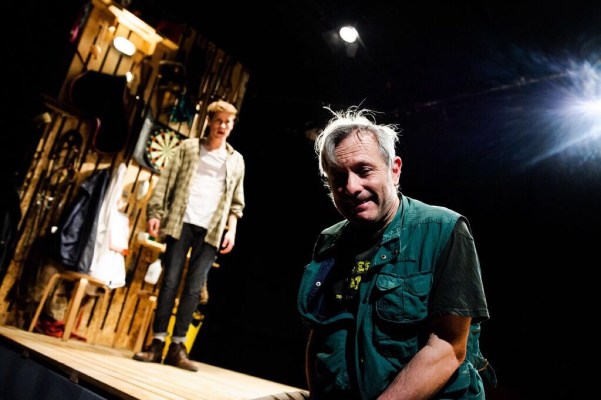
As picturesque as agrarian life may be with it’s rustic farmhouses, sweeping land and livestock, it is not an easy one for older and younger generations who just want to make a decent living. Faded and weather worn, Sam looks after his horses as he’s done his whole life; the younger Jim is all bouncy, boyish banter. The two clearly have much affection for each other in this emotive story of a tragic hero’s fall. But Daniel Foxsmith’s Weald, though full of poetry, passion and the ability to find the audience’s raw nerves, at just over an hour it sells itself short and lacks the sweat and earthiness of farm labour.

Sam (David Crellin) and Jim (Dan Parr) spend most of their time in a barn surrounded by riding tack and looking after horses. Though everything seems well, dramatic revelations are eventually confessed, bringing fiery conflict between the two. Crellin and Parr’s performances are exemplary, with emotional journeys that are the kind actors dream of. They both relish Foxsmith’s rich language and have a wonderfully watchable presence. Their character journeys feel rushed, though; this is wholly down to the script. It’s too short to justify Sam’s final, sudden deterioration that harks of Shakespeare’s Henry V should he have failed at Agincourt.

Bryony Shanahan’s direction taps into the poetic and powerful heart of the script that addresses coming to terms with personal failure, life choices and platonic male relationships that span decades. Her regular use of the audience space shows this is a story that won’t be contained. Though a masculine play, it’s still accessible to female audience members what with the themes that transcend gender. As a failed actor having to adapt to a new and totally unplanned for life, Sam’s struggles particularly resonate and left me feeling exposed and vulnerable, but the grit endemic to farming is glaringly absent. Linguistically heady, Weald lacks a visceral-ness. Even Sam’s final actions when faced with his own ruin are stylised, distancing the audience from the characters’ emotional life.

This is still a beautiful play with fine performances and painfully relevant to present day economic uncertainty, but it’s a sanitised version of real life. Though Sam and Jim mock the wealthy city family that bought the farm house, covering it in solar panels and driving a spotless Range Rover, their daily routine as depicted in the script bears more resemblance to the unseen city man with his shiny wellies than the true life of yard workers.

The Play’s the Thing UK is committed to covering fringe and progressive theatre in London and beyond. It is run entirely voluntarily and needs regular support to ensure its survival. For more information and to help The Play’s the Thing UK provide coverage of the theatre that needs reviews the most, visit its patreon.
The Master Builder, The Old Vic


Halvard Solness is afraid. He’s afraid of young people displacing him, and heights. But he is revered as the master builder of his town, a self-made man with luck on his side. The middle aged, unwell Halvard is surrounded by similarly unwell people: a wife who never recovered from past losses, a dying employee and a lovesick clerk. When a young woman he met ten years before arrives on his doorstep and disrupts his routine, the Everyman’s life goes into free fall. This dense, wordy production of Ibsen’s late work is a tightly coiled spring with exquisite design, but David Hare’s adaptation could use a good trim.

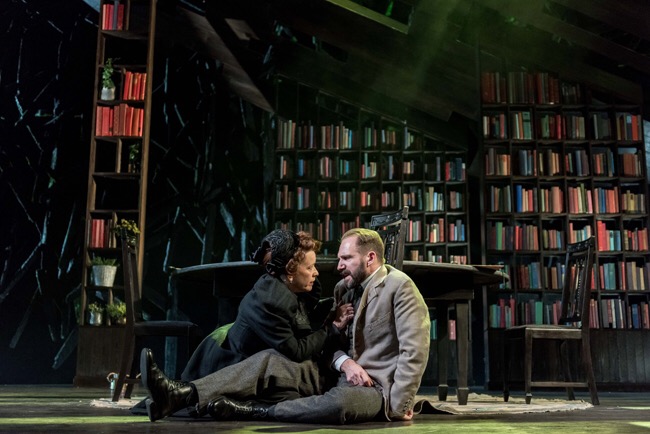
Luckily, Ralph Fiennes’ stage presence has been found some time between now and his Prospero at The Haymarket several years ago; Master Builder Halvard Solness flits around the edge of exploding for for nearly three hours and makes for captivating viewing. His tension isn’t alone, though. Linda Emond plays his wife Aline, a woman haunted by traumatic events in her past. Their cold, loveless marriage adds to the despair that hangs over the play. Even with bright spark Hilde Wangel (Sarah Snook), the foreboding and gloom still lurks on the edge of their existence.

Despite the grand performances, the set steals the show. Rob Howell’s design is grand and imposing, with symbolic elements that complement the play’s mood and tone. Curves and lines blend to create contemporary forms, but with a weight and scale that implies the architecture is not of this era. Hugh Vanstone’s lighting adds atmosphere and shadow, further emphasising plot points, but it could be used more often to create more visual variation. Though there are changes in both of the two intervals, the dominant elements remain until the climactic final moments; the sudden disintegration proves more surprising than the characters’ actions in the story itself.

Hare doesn’t skimp on language, but even though the two intervals prevent this production from feeling like its two hours and forty-five minutes, some of the scenes begin to lose momentum. Hare doesn’t attempt to make the language contemporary and maintains the script’s intellect, but neither is it hard to follow. There are just a lot of words, more than are actually needed. Snook uses her physicality most effectively, but the rest of the cast stick to the constraints of the text when extracting characterisation. Fiennes’ Halvard visibly relaxes in the presence of a younger woman, but outside of these infrequent moments, it’s all about the words.

Despite Matthew Warchus’ modern update of the Old Vic’s interior, this production of The Master Builder is firmly rooted in old fashioned realism. It’s a real treat for the senses with wonderful performances and a huge scope for interpretation – a most excellent production of a classic, despite its length.

The Play’s the Thing UK is committed to covering fringe and progressive theatre in London and beyond. It is run entirely voluntarily and needs regular support to ensure its survival. For more information and to help The Play’s the Thing UK provide coverage of the theatre that needs reviews the most, visit its patreon.
Goodnight Polly Jones, Theatre N16

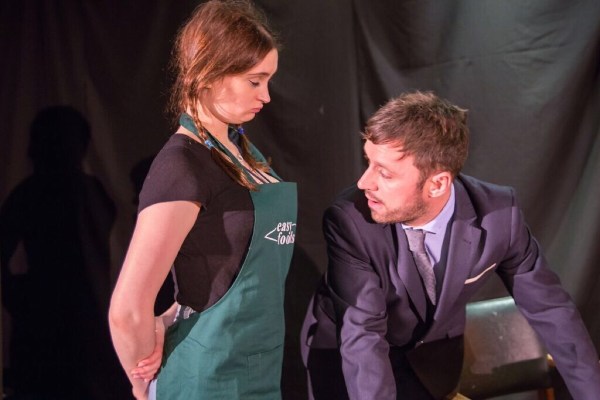
The wonderful thing about new writing is the potential for discovering unknown gems, perfectly formed and ready for a transfer or a tour, or a piece that is still finding its shape but its promise is evident. There’s also the chance of having to endure work that, though trying its hardest, isn’t ready to be put in front of critics. Goodnight Polly Jones is the latter. In its current state, Andrew Sharpe’s script bears more resemblance to a GCSE issue-based devised piece than a play suited to a professional small-scale theatre. Isolated scenes at key plot points and painfully long transitions with busy sound design and terrible voiceovers turn sexual assault and rape into a banal one hour, exacerbated by a performance matching the script’s clunkiness.

Ben Keenan as the jumped up, inappropriately hired Peter provides some redemption. He handles the awkward dialogue and tenuous circumstances extraordinarily well, adding gravitas and emotional truth to the HR manager with a disgustingly flippant disregard for sexual consent. Polly (Victoria Morrison) at her youngest and most immature supermarket clerk manages to match him, but as the older accountant taking that supermarket into administration, she is self-conscious and awkward.

The root problem of this production is the script. Composed solely of four distinct scenes at different times, they show dramatic change in tone and character development, but the story is neglected. This is potentially an important, character-driven play, but there’s no subtlety to the plot – every progression is beaten to death with dialogue rather than shown. The transitions attempt to fill in some gaps, but they too are overt, too long and too cringy, with am dram worthy voice acting. The resolution is half-baked, and Sharpe’s propensity for signposting (that treats the audience as if they were children with ADHD and learning difficulties) misses a glaring, albeit predictable, opportunity to tie up loose ends in the final moments of the play. The scenes as individual units aren’t awful, but the connective thread between them is most thin indeed.

Goodnight Polly Jones doesn’t completely lack potential, but it is in such an early stage of development that it feels wholly inappropriate to stage it in front of a judging audience. A scratch night or a workshop? Absolutely. Though it needs extensive work, it addresses an important issue with some isolated nice moments.

The Play’s the Thing UK is committed to covering fringe and progressive theatre in London and beyond. It is run entirely voluntarily and needs regular support to ensure its survival. For more information and to help The Play’s the Thing UK provide coverage of the theatre that needs reviews the most, visit its patreon.
Skin A Cat, Vault Festival

rsz_skin-a-cat-main-image-digital

Without question, my best new writing discovery of 2015 was young writer Isley Lynn’s play Tether at Edinburgh Fringe. This surprising, diverse two-hander also made it into the top five of my Top 10 Shows of 2015 so I was excited to receive an invitation to her autobiographical play Skin A Cat at Vault Festival. Having been so blown away by Tether, I worried I would find her other work underwhelming, but Skin A Cat is driven by the same sort of quick-witted, emotionally honest characters on a path of discovery that Tether boasts. Skin A Cat’s not about sport, though. It’s a tale of a stubborn vagina and an epic journey of self-acceptance in a world obsessed with sex. Phenomenal performances and humour tell Alana’s struggle with vaginismus and vaginal penetration with refreshingly frank, honest writing.

Theatre (and Western culture) doesn’t shy away from heteronormative sex, but a main character that hates it due to a psychosexual disorder is most rare indeed. Beginning with her first period on holiday at age nine, we see Alana (Lydia Larson) navigate teenage sexual exploits, several boyfriends, university and her twenties as a heterosexual young woman who finds vaginal penetration excruciating to the point of impossible. Try as she might, it doesn’t happen and the older she gets, the more burdensome and upsetting her virginity becomes. Alana tells her story directly to the audience with support by the excellent Jessica Clark and Jassa Ahluwalia, who play everyone else she encounters along the way, sometimes on mics and sometimes in conventional dialogue scenes, seamlessly switching between the two styles. Larson’s fantastic, perky Alana is genuine, funny and grows up before the audience’s eyes; that and Lynn’s unfettered dialogue cause us to feel like we know her inside and out (#sorrynotsorry) at the end of the 90 minutes.

Lynn’s gift for dialogue and detailed characters within a cleverly framed style shines here, and is generally well supported by director Blythe Stewart. Despite the serious subject matter and the control vaginismus has over Alana’s life, Lynn and Stewart use humour delightfully and liberally in both the writing and staging. Sex, attempted sex and orgasms hilariously abound, along with poignancy, tenderness and dogged desperation. It’s a beautiful balance.

Holly Pigott’s set solely consists of a bed; the pressure of its associated activities dominates Alana’s life. Some of the costume choices puzzle, though. The dungarees that Clark and Ahluwalia wear are androgynous and childlike, and rather old fashioned. Larson wears layers of undergarments that creates a simultaneously sexy and exposing, and completely unsexy and concealing effect – a great manifestation of Alana’s inner conflict.

Skin A Cat evokes belly laughs and empathy, nostalgia and wonder. Though it raises awareness of a psychosexual condition, Lynn manages to not make this an “awareness” play. Instead, it’s a story about growing up, loving yourself and making friends with your body’s quirks. Excellent writing and committed performances in Skin A Cat prove Isley Lynn and the cast are ones to watch.

The Play’s the Thing UK is committed to covering fringe and progressive theatre in London and beyond. It is run entirely voluntarily and needs regular support to ensure its survival. For more information and to help The Play’s the Thing UK provide coverage of the theatre that needs reviews the most, visit its patreon.
Kite, Soho Theatre

Grief doesn’t need words to communicate. Music and movement are much better mediums for the relentless, gut ripping echo that is losing someone you love. The Wrong Crowd’s latest work Kite depicts the simple, family friendly tale of Girl’s move to her grandmother’s home in the city after her mother’s death. Puppetry, movement and music completely replace words in this visual theatre piece that quietly charms in its simplicity.

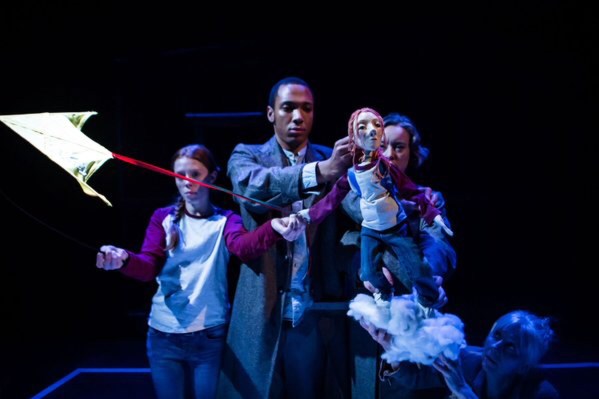
We first meet Girl (Charlotte Croft) poring through boxes labelled, “mum’s stuff” and reliving her memories through perfume, clothes and a photograph. In this sadly beautiful sequence, she rebuilds her mother out of these items, but her grandmother (Liz Crowther) eventually interrupts. Girl is often alone but for the constant wind the audience hears, personified by two strangers in grey trench coats, Linden Walcott-Burton and Nicola Blackwell. They are an ominous presence initially but once their purpose is made clear, they lose their threatening presence. These two also functionally serve as stagehands, moving and shifting the set and props in tightly choreographed neutrality that’s entrancing to watch. They never judge, just eternally observe and manipulate the world around them. 

Suddenly, a small, yellow kite interrupts Girl’s melancholy and refusal to eat at her grandmother’s house, and everything changes. The colour is a bright splash across the dark set and its constant movement takes on its own personality, like the wind that propels it. The quiet, calm atmosphere gains a refreshing energy as Girl bonds with the kite mid-air. Puppetry is introduced and adds additional charm, but could be incorporated more and earlier in the piece.

Though movement and sound are the primary features conveying mood and tone here, the choreography by Eddie Kay is simple. Polished, but simple – and it works. Dealing with grief is a repetitive process, making everyday routine even more meaningless. Girl has little expression until she finds the kite, drawing even more attention to the movement. The audience can see Grandmother’s exasperation in unembellished, repeated gestures. Crowther counters her with a warm, expressive face that betrays her love for girl; rare moments where she can focus on her own grief are some of the saddest in the show.

The design, like the choreography, is simple and effective. Director Rachel Canning takes charge of this element, integrating it well with the action. Domestic items seem mundane but are transformed into a skyline when Girl flies high above the city. A similar transformation happens to Grandmother’s umbrella with the addition of some rope lighting. 

The piece as a whole doesn’t have a huge “wow” factor, but that’s ok. It has a gentle warmth, plenty of pathos and feels like a soothing bath after a long day. Its quietness suits the very young and those prone to sensory overload, but the story of a young girl’s journey through grief resonates with all ages.

The Play’s the Thing UK is committed to covering fringe and progressive theatre in London and beyond. It is run entirely voluntarily and needs regular support to ensure its survival. For more information and to help The Play’s the Thing UK provide coverage of the theatre that needs reviews the most, visit its patreon.