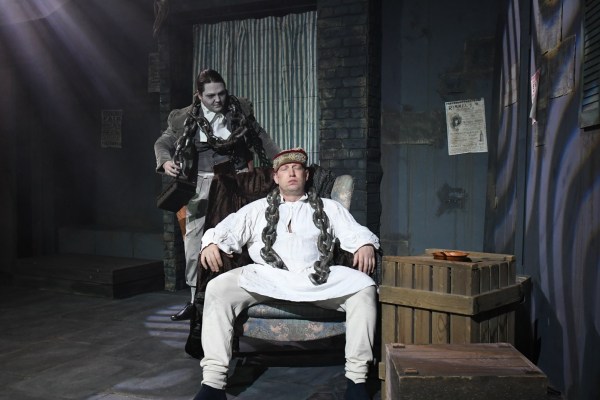
He(art), Theatre N16

jack-gogarty-alex-reynolds-by-jesse-night

Chalk and cheese Alice and Rhys debate whether to purchase a painting in an art gallery. Simultaneously, siblings Kev and Sam hatch a plan to fund a life-saving procedure for their ill mum that the NHS won’t cover. Running at just over an hour, writer Andrew Maddock fits in the nature of art and its criticism, public health, social class, poverty and loyalty across two very different sets of characters in the same neighbourhood. It’s a lot for 65 minutes and whilst it’s not enough time to fully explore these themes, the play doesn’t feel crowded. Though the direction and performances are intuitive and finely tuned, Maddock’s outstanding verse poetry and use of non-naturalism is sorely missed in this surprising diversion from his trademark style.

Continue reading

Three Sisters, Union Theatre

https://i0.wp.com/www.jetsetreport.com/admin2/photos/Moscow_Ritz.jpg

“Nothing turns out the way we planned.”

Though 2016 has been riddled with despair, 2017 looks worse. With the fascist post-truth movement on the rise and Trump taking office in a matter of days, there is little to look forward to. Far-off lands look like alluring utopias, and it’s easy to fall prey to the lingering question of what the point is of carrying on in the face of all this societal disintegration. With existentialism one of the cruxes of the story, this Three Sisters is a bleak echo of present day narcissism and hopelessness. Phil Willmott’s staging of a new, pared back translation doesn’t stagnate, though. Combined with a strong cast, this is production uncannily suits our times.

Continue reading

Glockenspiel, Tristan Bates Theatre

https://i0.wp.com/www.stevendykesplaywright.com/wp-content/uploads/2015/09/glockenspiel-columbia-1-770x513.jpg

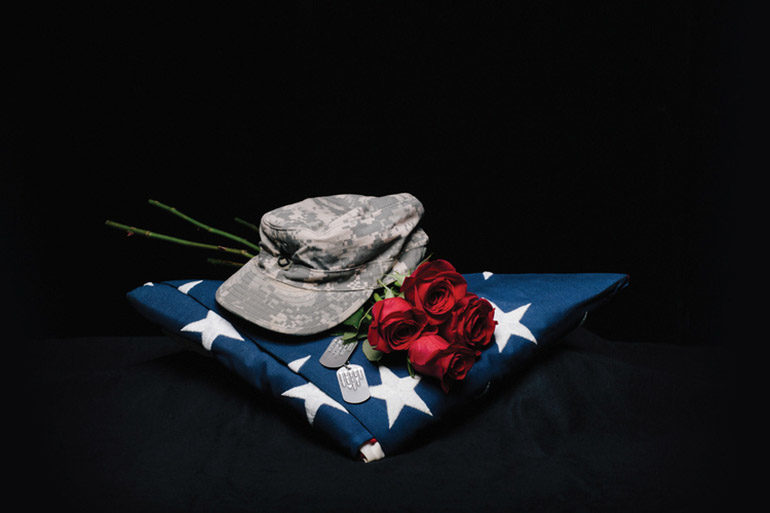
In the programme notes for Steven Dykes’ Glockenspiel, we are told that 40% of current personnel have been deployed more than once, and 27% of those veterans deployed to Iraq and Afghanistan suffer from anxiety disorders and/depression. A fifth of ex-service people are unemployed, and a fifth report cases of domestic violence. Male ex-service members are twice as likely to commit suicide than their non-serving peers. So it’s no secret that the US doesn’t look after its veterans very well. The play tries to look at the effects of service on those now finding their way in the civilian world, but Old Sole Theatre Company’s execution doesn’t deliver the power needed for this slowly-developing script.

Continue reading

The Trackers of Oxyrhynchus, Finborough Theatre

trackers

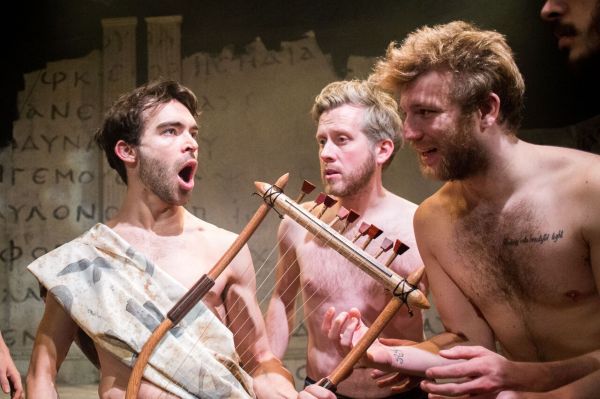
In the first part of Tony Harrison’s The Trackers of Oxyrhynchus, Victorian archaeologist Grenfell struts and frets around a group of silent Egyptians sifting through scraps of papyrus. He maniacally monologues on his quest to find Sophocles’ lost plays and works himself into such a frenzy that he begins to hallucinate. This triggers an inexplicable leap to ancient Greece where a satyr play is acted out and cloth phalluses abound, then another transition to a modern day street populated by homeless men.

Though there is some thematic consistency, the three stories are otherwise unrelated by plot and style. What initially appears to be a play-within-a-play turns out to be a disjointed and disappointing triptych, much like the fragments of papyrus that litter the stage.

Continue reading

Editorial | An Open Letter to the Print Room

https://s3.amazonaws.com/wos-photos-production/89185.jpg

I never make New Year’s resolutions. They work for other people and that’s great, but they aren’t my thing. But Daisy Bowie-Sell’s tweet from a few days ago asking what theatre’s resolutions should be for 2017 resonated with me. An industry making resolutions? Now that’s something I can get behind – people working together for a common goal is what theatre is about on a microcosmic level anyway, and more unity is surely a good thing in a world becoming increasingly polarised.

Continue reading

Narcissistic Nativity, Fucking Little Elf Bitch, Rosemary Branch

rsz_nativity-website

After 20 years running the Rosemary Branch, Cecilia Darker and Cleo Sylvestre moved on to pastures new in June this year. Unattended Items, a company with a focus on interactive theatre and design-led work, took over and have been busy programming work that has similar practices to their own.

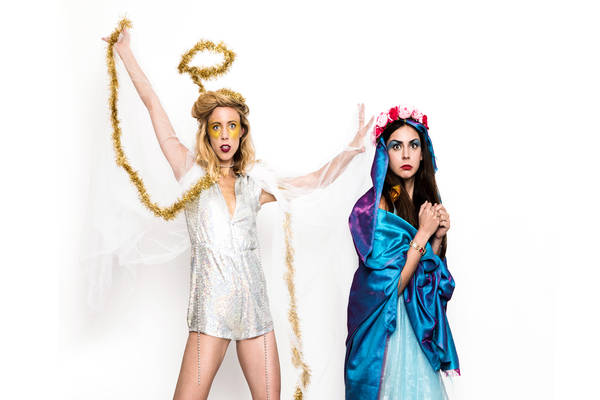
Their Christmas bill of adults-only shows is no different. Urban Foxes Collective’s Narcissistic Nativity is a feminist, live art piece fighting against the patriarchy; Mammalian’s Fucking Little Elf Bitch is a one-woman show on the perils of working in a grotto. Both break down the fourth wall and use non-linear structures, and both need some tweaking for the sake of clarity, but this pair effectively balance current issues and laughs.

Continue reading

Feature: Top Ten of 2016

rsz_top-10-films

Though 2016 has been far from kind, seeing roughly 250 productions mostly in fringe and off-West End venues has made for a fruitful year in theatre. Choosing ten hasn’t been easy, but these productions had an impact that sets them apart from the rest.

10. Hamlet Peckham

A totally race, age and gender-blind production in found space The Bussey Building, this Hamlet focuses on storytelling and was executed with energy, undeniable passion and exceptional skill that puts it leagues ahead of most small-scale Shakespeare.

9. A Girl and A Gun

Louise Orwin’s unapologetic live art piece looks at sexualised female violence, gaze and control. The sophisticated work incorporates live technology and a different male actor each night who hasn’t seen the script until he sets foot onstage.

8. Lucy McCormick: Triple Threat

Lewd, rude and in your face, live artist Lucy McCormick takes on celebrities and their causes, the Bible and its women, and female sexuality. Be prepared to be shocked and amazed when she brings the show to the Soho theatre in 2017.

7. Extravaganza Macabre

Little Bulb’s Victorian music hall inauguration of the outdoor courtyard space at Battersea Arts Centre is filled with heart. The talented trio expertly use the space in the family show that approaches form and style with dedication and invention.

6. in/out (a feeling)

Isley Lynn was my new writing discovery of 2015; this year brought Andrew Maddock. The actor/writer/facilitator writes modern stories of everyday heroes, but in exquisite verse. in/out (a feeling) tells the story of sex worker Blue and one of her customers with poignancy and pathos.

5. Us/Them

Belgian company Bronks brought this unconventional telling of the Beslan school massacre to Edinburgh, and returns to the UK in 2017 at the National. This devastating two-hander replays the story from the perspective of two children taken hostage.

4. People, Places and Things

I missed this at the National, but the West End transfer captured the intricacies of depression with Denise Gough’s inimitable performance. It’s astonishing work that gets into the bones.

3. Counting Sheep

The immersive gypsy punk opera by Lemon Bucket Orkestra was one of the highlights of this year’s Edinburgh Fringe. Recreating the Maidan revolution in the Ukraine, the audience join in to recreate the people’s demand for change.

2. Bucket List

The extraordinary Theatre Ad Infinitum make my yearly list again, this time with their all-famle show attacking the US-made maquiladoras in Mexico’s border towns. Their distinctive physical theatre technique is showcased alongside an aggressive, unapologetic political agenda

  1. Imogen

Matthew Dunster’s extraordinary reimagining of Cymbeline under Emma Rice’s Globe leadership appealed to young urbanites and anyone who likes their Shakespeare fresh and alive. Dunster’s approach was thoroughly embedded into the text and story and tapped into the energy of Early Modern theatregoing.

Honourable Mentions: Skin a Cat, Tomorrow I Was Always a Lion, Wendy Hoose

These three narrowly missed out of making it into the top ten, but all are powerful pieces of theatre that are no less deserving of the accolade. All are driven by important socio-political issues and tell incredible human stories.

The Play’s the Thing UK is committed to covering fringe and progressive theatre in London and beyond. It is run entirely voluntarily and needs regular support to ensure its survival. For more information and to help The Play’s the Thing UK provide coverage of the theatre that needs reviews the most, visit its patreon.

Why the Whales Came, Ovalhouse

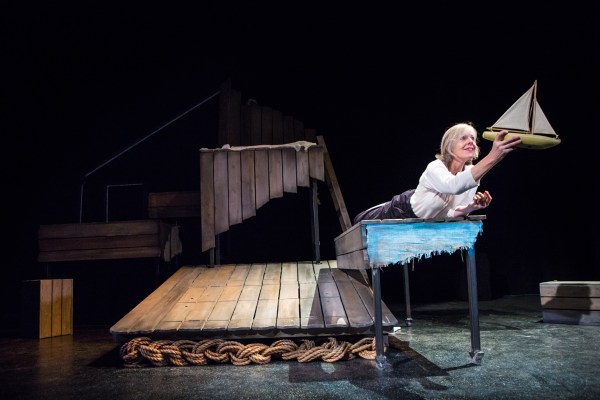
In 1914 on one of the Scilly Isles, young Gracie and Daniel defy their parents’ rules and local rumours by befriending the Birdman. He’s an ancient fellow known for carving sea birds and cursing the people he encounters. Though he lives alone on nearby Samson, their chance encounter with him that begins in fear evolves into friendship. 

There’s more to Why the Whales Came than this, though. Coming of age, grief, overcoming prejudice and the creation of myth are dominant themes in Danyah Miller’s solo adaptation of Michael Morpurgo’s novel for young people. Though geared towards children, the complexity of the story and Miller’s engagement with the audience is infectious and appeals to all ages.

Miller begins her story with Gracie and Daniel, who love building model boats on their island home. It’s the search for a quiet place away from the bigger fishing vessels and Daniel’s nasty older brother Big Tim that leads them to bigger adventures. Their time with the Birdman teaches them lessons about both the kindness of strangers and doing good in the face of mob rule – inspiring messages for children and young people, even if not easy ones to execute in real life.

Miller’s grandmotherly warmth is engaging, and she’s an excellent storyteller. Her delivery is slick and confident; the children in the audience are focused throughout. Combined with Kate Bunce’s multi-level set packed with surprising doors and reveals, Why the Whales Came is far from quiet, sedate storytelling, though neither does it rely on energy alone to hold audience attention. The script is easy to follow but has enough threads to be interesting, but not so many that it becomes a mess.

Theatrical storytelling can be a difficult form to get right, especially with children who are now used to endless supplies of content across numerous devices. Michael Morpurgo’s stories are fantastic sources of material, and Miller truly makes this one her own.

Why the Whales Came runs through 31 December.

The Play’s the Thing UK is committed to covering fringe and progressive theatre in London and beyond. It is run entirely voluntarily and needs regular support to ensure its survival. For more information and to help The Play’s the Thing UK provide coverage of the theatre that needs reviews the most, visit its patreon.

A Christmas Carol – The Musical, LOST Theatre

Providing opportunities for aspiring and emerging actors is no doubt a wonderful thing. LOST Theatre has been doing exactly this since its founding in 1979 through its stage school and regular in-house productions. Their current production of A Christmas Carol – The Musical captures LOST’s ethos and the spirt of Christmas in all of its joyful, communal and tacky glory with a cast composed of both amateurs and pros, including children. Though the finished product is more like a child’s finger painting than the Mona Lisa, their joy in performing is undeniable.

Alan Menken’s 1994 musical is typical of its era – a big cast, barnstorming numbers and a commitment to musicalise the most non-musical of stories. There are some great ensemble numbers, though the mixed ability cast and unreliable sound levels diminish their power. Songs with fewer characters have more emotional reach, even though the sound still isn’t great. Choreography is inconsistent, with some songs tightly choreographed whilst others look like aimless wandering about. Co-directors Martin John Bristol and Mark Magill otherwise use the space well, though there is a fair bit of lengthy filler movement.

Though there is a blatant lack of racial diversity, the cast of 22 has 13 women and girls. The ghosts of Christmas Past (Katrina Winters), Present (Rebecca Westberry) and Future (Jessica Finn) are all women, and strong performers at that. Though Scrooge is the weak link out of the leads, he has a good voice in spite of a lack of emotion. Of the child actors, Kyrana Shea’s West End experience sets her apart from the rest of the kids, even though the tiny, Tiny Tim (Arthur Tidbury) is absolutely adorable. Richard Lounds and Toby Joyce are also excellent as Marley and Bob Cratchett.

The lighting and costume are the most glaring signposts of the semi-professionalism of the production. There’s an Edwardian dress here, a modern sleeveless top there, and a ruffled polyester blouse straight out of the 1980’s amongst the otherwise Victorian-ish garb. All the colours of the rainbow and smart-lighting gobos are used pretty much constantly, like a kids’ school disco from the 90s. It distracts from the performances and clashes with the undertone of the story.

Though A Christmas Carol – A Musical lacks polish and professionalism, it compensates with love for the work. This is great to watch, even if the final product isn’t notable in and of itself.

 A Christmas Carol – A Musical runs through 31 December.

The Play’s the Thing UK is committed to covering fringe and progressive theatre in London and beyond. It is run entirely voluntarily and needs regular support to ensure its survival. For more information and to help The Play’s the Thing UK provide coverage of the theatre that needs reviews the most, visit its patreon.
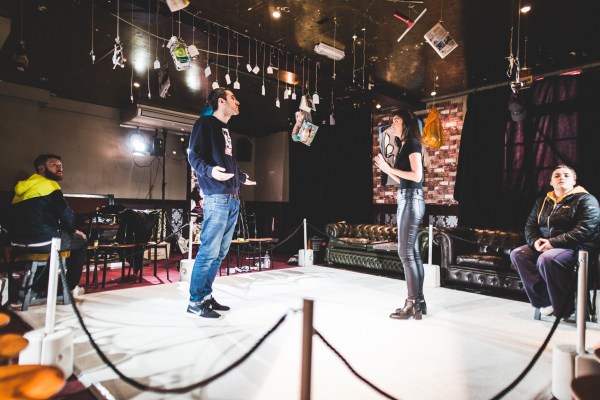
Dr Carnesky’s Incredible Bleeding Woman, Soho Theatre

https://cdn0.vox-cdn.com/thumbor/08BLiZi0k-g-w2TYXY9nOkQTz_4=/800x0/filters:no_upscale()/cdn0.vox-cdn.com/uploads/chorus_asset/file/2316126/shutterstock_132379235.0.jpg

From a lectern in the corner of the stage, Dr Marisa Carnesky fights the social taboo of periods. Resembling a character from a Tim Burton film, the PhD holder in menstrual rituals and synchronicity shares her collective research with a group of performance artists she assembled, the Menstruants. Sideshow/cabaret Dr Carnesky’s Incredible Bleeding Woman is a wonderfully quirky manifestation of sisterhood, womanhood and the wonders of the female body.

Every month on the new moon, Dr Carnesky and the Menstruants met on a beach in Southend to develop and performed rituals around their menstrual cycle. The Menstruants come from an array of backgrounds and sexualities, and their rituals are as unique and individual as they are. Through their performances, every woman’s personal experiences with their bodies is validated and celebrated.

The performances on show are distinctive and compelling. There is some spectacle: sword swallower MisSa Blue has a customised set of swords that suit her oesophagus shape each day of her cycle. Some of the work is more reflective and otherwordly, like Nao Nagal’s use of traditional Japanese masked performance. Molly Beth Morossa provides a creepy sideshow element with her twitchy, Victorian high tea. H Plewis performs a visceral movement piece with her menstrual jelly. Rhyannon Styles simply speaks to us directly about her experience of cycles as a trans woman. Fancy Chance, with the rest of the company, performs a phenomenal circus act as a finale, after an empowering, proud sequence of feminine reclamation. All of the acts celebrate female abilities and bodies without aggression.

In between the vulnerable, performative manifestations of female cycles, Dr Carnesky talks to the audience through an array of historical and cultural mores surrounding menstruation. She particularly focuses on myth and symbolism – death and rebirth, shedding of skin and female unity. Her tone is gentle and matter-of-fact; the the content may be revolutionary but she comes across as warm and supportive.

In a show that has the potential to come across as alienating, it is instead welcoming – no one in the audience (men included) seem uncomfortable, and the stories shared on the stage are supported from the house. Instead,this diverse, inclusive variety show is a divine honouring of the feminine mystery and a reclamation of one of the features that defines women, and a showcase of some excellent live artists.

Dr Carnesky’s Incredible Bleeding Woman runs through 7 January.

The Play’s the Thing UK is committed to covering fringe and progressive theatre in London and beyond. It is run entirely voluntarily and needs regular support to ensure its survival. For more information and to help The Play’s the Thing UK provide coverage of the theatre that needs reviews the most, visit its patreon.