Undead Bard, Theatre N16

robert-crighton-in-metal-harvest

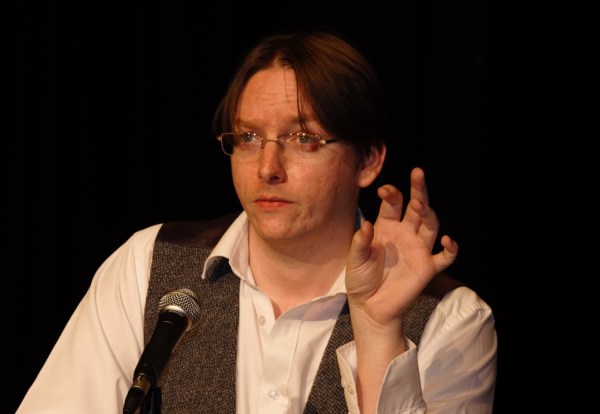
Professor Ashborn is on a mission to disprove Shakespeare’s existence, but the academics with leather patches on their elbows are trying to stop him. Following Ashborn’s lecture and an interval, Undead Bard creator Robert Crighton summons Shakespeare to talk to him about his life, work and death in an unrelated second half. This two-part show on Shakespeare in the modern world, bardolatry and the authorship debate certainly has some very funny moments of satire, but others are utterly bizarre and the poor execution of an idea. A significantly stronger first act sets up a reasonably enjoyable event, but the second is self-indulgent and anti-climactic in this overly long solo performance.

The paranoid Professor Ashborn’s lecture rips the piss out of Shakespeare academics, those that believe Shakespeare wrote Shakespeare’s works, those that believe someone else did under Shakespeare’s name and anyone with a love for Shakespeare’s plays. Crighton as Ashborn talks the audience through his various ridiculous authorship theories with energy and eccentric humour, evoking plenty of laughs. The script follows a natural rhythm of discovery, disappointment and eventual confession; it’s a story carefully crafted with intuition and skill.

Considering the second act, the first would be better served as a stand-alone piece. After what is quite a good piece of character storytelling, this random, rambling seance on the mundanity of Shakespeare’s life and afterlife is, well, mundane. The inclusion of toilet humour and sexual innuendo do not improve the piece. Shakespeare’s confusion at his legacy is cute, but it absolutely doesn’t warrant nearly an hour of discourse and disconnected pop culture references.

Crighton clearly has an aptitude for crafting a story, as evidenced in the first part of the show. Unfortunately, the rest of it is a muddled letdown that needs to be sent back to the drawing board or discarded completely.

Undead Bard runs through 13 October.

The Play’s the Thing UK is committed to covering fringe and progressive theatre in London and beyond. It is run entirely voluntarily and needs regular support to ensure its survival. For more information and to help The Play’s the Thing UK provide coverage of the theatre that needs reviews the most, visit its patreon.

Team Viking, Edinburgh Festival Fringe

https://i0.wp.com/www.pxleyes.com/images/contests/old-camera/fullsize/Viking-Funeral-4ca7e68bcb25e_hires.jpg

How far would you go for your best mate? Are there any limits, any lines, you wouldn’t cross?

What if your best friend was dying?

What if he asked you to ensure he had a viking funeral?

James Rowland does exactly that for his best friend Tom. He grew up as part of a neighbourhood trio that stayed close well into adulthood. As children, their favourite game was to play Vikings (as in the Kirk Douglas film). When Tom is diagnosed with terminal cancer at age 25 and given only a short time to live, he calls in one final favour from James and Sarah, the other third of their childhood gang. Tom doesn’t care about logistics and legalities, and his magnetic charisma convinces Sarah and James to do this for him, and James is here to tell us the story of their friendship through life and death.

Rowland’s engaging, laddish charm makes you laugh loads, then the tiniest change in pace and inflection turns on the tears. His script approaches death and friendship with respectful levity that does not gloss over the reality of grief, but neither is it too weighty. It’s a perfectly balanced emotional journey, and Rowland’s relaxed delivery draws the audience to him and to each other.

Director Daniel Goldman chooses simple staging – Rowland is on a small, bare stage with few props and tech, and the venue’s lighting is barely existent. The piece would work well in the round to foster it’s warmth and inclusivity. It’s simple, storytelling structure would also suit the intimacy of a circle.

Team Viking is an exemplary solo storytelling piece excelling in its honesty and simplicity. It’s a powerful tribute to his friends, but it’s not insular – it’s the complete opposite, and a truly delightful, heartwarming adventure story for those who have loved and lost.

The Play’s the Thing UK is committed to covering fringe and progressive theatre in London and beyond. It is run entirely voluntarily and needs regular support to ensure its survival. For more information and to help The Play’s the Thing UK provide coverage of the theatre that needs reviews the most, visit its patreon.

Skin of the Teeth, Edinburgh Festival Fringe

https://www.thestage.co.uk/wp-content/uploads/2016/08/Skin-of-the-teeth-700x455.jpg

Nick is fearless. Literally, he can’t feel fear. The young man’s father finds this most unsettling and whilst Nick thinks it’s kinda cool, he desperately wants to find his shudder so he can fit in with everyone else in his small coastal town. When a mysterious stranger appears on the beach and offers to help, Nick jumps at the chance. This modern myth by Anna Beecher is a vibrant, young hero’s journey through a dark underworld of a solo performance with good potential.

Daniel Holme tells Nick’s story with sweet, wide-eyed naiveté, making the people he encounters in the big city after his father sends him away all the more threatening. The gang of men with green gloves who claim they will help him find his shudder through increasingly extreme tasks builds suspense and danger to a climax in Beecher’s script that Nick only vaguely understands. An open ending and some unanswered questions are a bit of a letdown, but otherwise her script is a good piece of storytelling.

Holme’s performance does a good job at keeping the audience’s attention, though more dramatic lighting design, projections and/or props would add visual variation and further increase the ebb and flow of his adventure. Beecher’s language contains some gorgeous moments of imagery and dystopia that certainly deserve to be supported further through a strong design concept and a larger space that grants more freedom of movement to Holme.

Skin of the Teeth is a strong character monologue that can work well on its own, but also has scope to develop further into an action-driven, multiple character script. The story is a good concept though in its current incarnation in a small venue, it is limited in its power. Beecher is a promising writer with dynamic ideas who, with more resources, has the power to make even greater impact.

The Play’s the Thing UK is committed to covering fringe and progressive theatre in London and beyond. It is run entirely voluntarily and needs regular support to ensure its survival. For more information and to help The Play’s the Thing UK provide coverage of the theatre that needs reviews the most, visit its patreon.

World Without Us, Edinburgh Festival Fringe

https://www.thestage.co.uk/wp-content/uploads/2016/08/World-Without-Us-700x455.jpg

Imagine the world if the entire human population disappeared suddenly, without a trace. What would it look like after a day, a month, a century, an era? A lone performer from Belgian company Ontroerend Goed methodically describes how the theatre space we sit in would change as a focal point within the wider world’s transformation. Delivered in a near monotone on a stage bare except for a grey obelisk, World Without Us is a meditative account of our solar system’s lifespan, and humanity’s inconsequence in the great scheme of planetary existence.

Karolien De Bleser quietly narrates this epoch-spanning journey of our planet with matter of fact coolness. What she describes really is remarkable in its compressed state, but the almost total lack of inflection makes the text pedestrian even in its most dramatic moments. Her movement around the space is relaxed and random, to look for meaning in it feels silly what with the story she tells.

With the ability to focus on the story without the mind drifting to topics such as what to have for lunch, the overall effect is a sense of calm acceptance that our lives, whilst impacting the planet immediately, really don’t matter. Our absence has little effect other than the gradual decay and burial of the artefacts we leave behind. Even in periods of environmental turmoil such as we see in the planet’s history, the impact is meaningless.

Even though the sun eventually swells and engulfs the Earth before it dies, all is not lost. Lightyears away, a single human artefact remains with a friendly but assumptive purpose. Its contents are, depending on one’s world view, absurd or incredibly beautiful. Perhaps they are both.The whimsy of human invention is particularly poignant at this moment.

World Without Us is a lovely, contemplative piece of performance and would work particularly well as an audio recording. As theatre, it could come across as flat, or upsetting or remarkable, depending each individual’s world view. Calmly provocative, it is wonderfully wide open to interpretation and effect.

World Without Us is now closed.

The Play’s the Thing UK is committed to covering fringe and progressive theatre in London and beyond. It is run entirely voluntarily and needs regular support to ensure its survival. For more information and to help The Play’s the Thing UK provide coverage of the theatre that needs reviews the most, visit its patreon.


Be Prepared, JOAN, Edinburgh Festival Fringe

https://www.thestage.co.uk/wp-content/uploads/2016/05/Joan-Brighton-700x455.jpg

This year, four companies are receiving support from Underbelly to produce and market their latest work. Two of those are Milk Presents and Corner Shop Events, both offering solo performances but radically different in content and style. Each distinctive piece is vibrant and immediate, with moments of power and poignancy. Typical of new work at the fringe, both feel a bit rough and ready but they have a raw, honest emotionality that plucks the heartstrings.

Be Prepared transports the audience to a Quaker funeral for Mr Matthew Chambers, where a man who never actually met him has been invited to speak. Struggling with his own grief, writer/performer Ian Bonar takes on the awkward, unprepared man reduced to a child by his inner turmoil. The character’s biography interweaves with his unconventional encounters with Mr Chambers, spinning a muddled web of good intention that is sweetly moving and honest.

Bonar’s performance is excellent. There’s a simmering anxiety that drives him forward and erupts through the characters ideas that aren’t particularly well-thought through. His underlying focus on his father’s recent death is a constant presence that bubbles through his attempts to talk about Mr Chambers. His pace becomes more frenetic as his stories become increasingly muddled, though this textual choice occasionally interferes with understanding. The script has a seeping rawness that effectively captures the chaos of grief, though there are numerous loose ends that aren’t fully developed.

JOAN addresses rather different themes but has just as much intensity as Be Prepared. This modern Joan of Arc story resonates through it’s father/daughter relationship, and teenaged optimism and arrogance that backfires despite her intentions to save France. Her struggle with gender identity also gets hold of the audience’s empathy and doesn’t release its grip until the curtain call.

Lucy Jane Parkinson’s performance is exquisite. Joan’s hope, determination in the face of adversity and ultimate desperation is skilfully crafted by writer Lucy J Skilbeck. Parkinson fully embodies Joan’s emotional journey and has the audience in the palm of her hand from her initial impersonation of her father, to her final pleas for Saint Catherine’s help.

Though there is an element of drag in the show when Parkinson plays other characters, her depiction of Joan doesn’t come across as drag at all. The character is not sent up, and her struggle with taking on female behaviour and dress is wholly genuine.

Though JOAN is the stronger production of the two, Be Prepared is still a solid production with plenty of merit. Both are moving reflections of aspects of the human condition and powerful pieces of theatre in their own right.

The Play’s the Thing UK is committed to covering fringe and progressive theatre in London and beyond. It is run entirely voluntarily and needs regular support to ensure its survival. For more information and to help The Play’s the Thing UK provide coverage of the theatre that needs reviews the most, visit its patreon.

Lucy, Lucy and Lucy Barfield, Edinburgh Festival Fringe

https://theplaysthethinguk.com/wp-content/uploads/2016/08/e379c-dsc_03212b2528courtesy2bmichelle2bwormleighton2529.jpg

The dedication at the front of The Lion, The Witch and the Wardrobe reads:

My Dear Lucy,

I wrote this story for you, but when I began it I had not realized that girls grow quicker than books. As a result you are already too old for fairy tales, and by the time it is printed and bound you will be older still. But some day you will be old enough to start reading fairy tales again. You can then take it down from some upper shelf, dust it, and tell me what you think of it. I shall probably be too deaf to hear, and too old to understand a word you say but I shall still be, your affectionate Godfather,

C. S. Lewis.

Lucy Grace, long feeling a strong kinship with the book’s protagonist Lucy Pevensie, clung onto the belief in Narnia well into adulthood. When she was 26, the dawning realisation that she would never reach Narnia suddenly hit her. With a sense of crushing loss, she turned to her well-thumbed copy of the book to search for clues that might refresh her once-dependable escape from life’s hardships. Previously skipped pages were poured over for clues, leading to the discovery of the book’s dedication – a revelatory moment for Lucy Grace. There’s a real Lucy! Perhaps she knows more about Narnia and can help her rediscover its wonder as an adult! But who is she?

Lucy, Lucy and Lucy Barfield sweetly documents Grace’s search for the real Lucy, about whom there is little information. This quest leads her down the rabbit hole of contacting Lucy’s father’s estate, researching at the Bodleian Library and interviewing Lucy’s best friend. A research project doesn’t sound like it would make dynamic, compelling theatre, but Grace manages to do so with great success on this solo show.

Grace’s performance is excellent. She has a gleeful charisma and innate sense for storytelling that keeps the audience’s attention. Her childlike wonder at each discovery is infectious. Hints of her background and struggle come through somewhat, though the script is far from self-indulgent.The design, mostly piles of cardboard boxes, lacks the delicacy of the story even though they allude to the archives Grace trawls through searching for details about Lucy’s life.

Lucy Barfield died in 2003 from MS. There is still some mystery around her life, and some of Grace’s findings directly conflict each other. But the creative young woman who danced, wrote poetry and music who inspired one of the country’s greatest writers and academics helps Lucy Grace renew her belief. Lucy, Lucy and Lucy Barfield is a lovely little story of adventure and discovery.

Lucy, Lucy and Lucy Barfield runs through 29th August.

The Play’s the Thing UK is committed to covering fringe and progressive theatre in London and beyond. It is run entirely voluntarily and needs regular support to ensure its survival. For more information and to help The Play’s the Thing UK provide coverage of the theatre that needs reviews the most, visit its patreon.

Remember to Breathe, Equations for a Moving Body, Edinburgh Festival Fringe

https://s3.amazonaws.com/wos-photos-production/107110.jpg

Two women, in two different shows set on opposite sides of the world, swim as if their lives depend on it. One is training for an ironman-length triathlon, the other never learnt to swim and is doing so to overcome a fear of water. Equations for a Moving Body is Hannah Nicklin’s solo performance telling the story of her decision to complete an ironman and the research she did to discover what would happen to her body as she trains. Remember to Breathe follows fictional Maeve away from the safety of family and a secure job in Ireland, to world travels that eventually find her in New Zealand. Though Hannah and Maeve approach swimming completely differently, the sport shapes who they are and how they deal with obstacles that come their way.

Maeve and her kiwi husband Grant are back in Ireland when the Christchurch earthquake hits. The Celtic Tiger has been and gone, and their business is struggling so they decide to head to the southern hemisphere to help rebuild. It’s here that Maeve discovers a pool in the wreckage, staffed by the relentlessly perky Doreen. In that pool, Maeve gently catalogues her life through her relationship to her father. He and Doreen fade in and out again like memories in this quiet, reflective piece on family and finding your place in the world.

Liz Fitzgibbon as Maeve has a calm strength and enigmatic presence. This everywoman of a character with relatable struggles trying to find peace is a reassuring story to witness, though the lack of outright conflict between characters makes for a sleepy pace.

Julie Sharkey as Doreen and David Heap has Maeve’s earthy, grounded father are great foils constructed by writer Orla Murphy. As well as Maeve’s personal journey that she comes to terms with through swimming, there’s a pointed throughline of the effects of the economy on the common man – a clever inclusion making the script universally relevant.

Maeve swims and came to it in her adult life, but Hannah is a swimmer and has been doing so since she was four. Hannah explains the difference between “I swim” and “I’m a swimmer” and the role goals and life events have in shaping one’s identity. Her decision to complete an ironman in the year she turned 30 becomes a part of who she is and how she lives her life, and Equations for a Moving Body is the moving story of the ups and downs of pushing your body to its limits.

The most engaging focus of Hannah’s story is the people she meets along her training journey. She has a gift for making John, Tom and the various scientists she meets along the way come alive, even if they only feature for brief moments. These encounters provide landmarks that make her story stand out from anyone else’s and excellent focal points of her narrative structure.

The story’s climax is the triathlon, with peaks and troughs that are magnified versions of those in her training. It’s a hugely satisfying and emotional end to a story of struggle, grief and triumph. Those who aren’t much for sport or fitness who find her initial goal baffling are on side at by the finish line.

Nicklin uses live internet use to support her story and add a visual element to the production. Though simple, it’s a great choice. These are almost all accompanied by her narrative, though one section is poignant in its silence and elucidates the source of the show’s name.

Hannah cements her sense of self through her training and its end goal, and Maeve finally finds the peace she is searching for. Both productions are lovely, if very different stories of personal discovery at Summerhall.

The Play’s the Thing UK is committed to covering fringe and progressive theatre in London and beyond. It is run entirely voluntarily and needs regular support to ensure its survival. For more information and to help The Play’s the Thing UK provide coverage of the theatre that needs reviews the most, visit its patreon.

Exactly Like You, Edinburgh Festival Fringe

https://i0.wp.com/www.underbellyedinburgh.co.uk/images/made/images/uploads/1000w-x-640h-px_750_500_60_c1.jpg

Things have never been easy for Abby. She doesn’t get on with her mum, she’s didn’t do well in school, she drifts from one shitty job to another without any purpose or goals. She misses her Nana, with whom she would spend long hours writing fantastical stories and listening to music. Nina Simone was their favourite. In Exactly Like You, Lotte Rice tells Abby’s story through a moving, passionate spoken word monologue on losing her way and finding it again.

Rice’s way with words makes Abby funny and relatable, the sort of woman you could sit down with over a pint or a cup of tea and natter about all and sundry going on in the world. She would always have a story or an anecdote to share that would make you laugh or think, or both. Her decision to make Abby a working class, down-at-heel character so expressive and articulate through spoken word is a fantastic choice rather than catering to the stereotype of working class young people as grunting cokeheads who only live for nights out on the piss. The piece is punctuated with soulful renditions of Nina Simone’s songs, effectively breaking up the dense text. Though Abby’s story isn’t remarkable in itself, the mode of telling it is hugely refreshing.

Designer Elouise Farley and lighting designer Zanna Woodgate work together to create a landscape of glowing bookcases, the sort that fit vinyl records. Though simple and subtle, they capture the inner warmth of Abby’s Nana who lived for music of all sorts. They are her memories of her time with Nana, always present and always driving her forward, and a lovely addition that makes the piece feel more polished than a bare stage.

When Abby hits rock bottom after yet another night out drowning her painful memories with too much whiskey, an unexpected helping hand appears. Fortunately, this is not some benevolent, condescending force sent to save her. Abby’s journey is one of reflective self-discovery told in an engaging, lively format with fantastic music to boot.

Exactly Like You runs through 28th August.

The Play’s the Thing UK is committed to covering fringe and progressive theatre in London and beyond. It is run entirely voluntarily and needs regular support to ensure its survival. For more information and to help The Play’s the Thing UK provide coverage of the theatre that needs reviews the most, visit its patreon.
Declaration, Edinburgh Festival Fringe

rsz_cpgj-xixyaaoghq

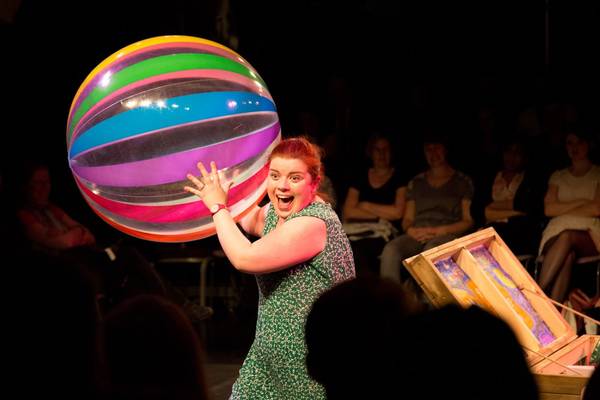
Sarah wants to know everything. She’s inquisitive, gregarious and energetic, the life and soul of any party. But now that she’s in her thirties and wants to start a family, she needs to sort out some of her issues. So, she goes to a doctor to talk through all the behaviour quirks she’s had since childhood – the trouble sleeping, the irrational impulses, the disorganisation, the obsessions.

Diagnosis: ADHD.

Now that she knows what the problem is, does it really solve anything? Will a label help, or hinder? Will medication change the person that she’s always been and actually quite likes? Declaration is an honest, heartwarming solo performance that resonates with those of us who have always felt a bit different or care about people who are a bit weird or quirky. Written and performed by Sarah Emmott, with energy and charisma that’s undeniable, Declaration needs a few minor adjustments to make it an even slicker show.

Emmott’s script has the consistent theme of wanting to please but pesky impulses to do all sorts of irrational things get in the way. As an adult, she has developed coping mechanisms (which she marvelously demonstrates with audience help), but as a child, she was a loose cannon. The story of her childhood picks up once she introduces the superhero personal she invented for herself and a doll, Samantha, who is everything that she never could be. The opening exposition, though having important information, lacks the punch and the belly laughs that these sections have. Additionally, some of her transitions need clarity; consistent use of sound, lighting or changing props would help indicate a scene change.

Emmott develops a marvellous rapport with the audience from the moment they enter the theatre. She has the sort of natural magnetism that cannot be taught in any drama school, an innate quality that actors either have or don’t. Laughing and chatting, her stated need to know everything and everyone is evident. The audience rallies to her wide-eyed wonder, and snarky comments about school, doctors and other frustrations get plenty of laughs.

As Sarah works out how to get through life and a diagnosis has the potential to either change everything or nothing, the audience is with her the entire way. She uses props and audience interaction effectively, though she could use tech to further enhance the theatrical experience. Her lovable on-stage persona is a charming reminder that anyone we know may be struggling with mental health, learning or behaviour issues, and even though a few tweaks could be made to improve the show, she dares us to accept her, flaws and all.

Declaration was a one-off performance.

The Play’s the Thing UK is committed to covering fringe and progressive theatre in London and beyond. It is run entirely voluntarily and needs regular support to ensure its survival. For more information and to help The Play’s the Thing UK provide coverage of the theatre that needs reviews the most, visit its patreon.
Scorched, Edinburgh Festival Fringe

rsz_cn0idouxgaazjdi

Jack, feeble in body and mind, wiles away the days watching news broadcasts from operation Desert Storm. The former WWII soldier, now safe and looked after in a care home, vividly recounts memories from his youth and on the front line. He may not be aware of the present, but his past is ever present and will not let me rest. Solo show Scorched is a moving and honest look at veterans’ experiences of combat and ageing, leaving the troubling feeling that society is not fulfilling its responsibility to this vulnerable demographic.

Lisle Turner’s script, inspired by her grandfather’s life, is an expressionistic snapshot of his thoughts at the twilight of his life. Stationed in Egypt during the war, we hear tales of heat, explosions, and beautiful women interspersed with memories from his childhood. The storyline is loosely constructed; it is episodic rather than wholly linear. This structure works well considering that these are Jack’s memories he plays out for himself rather than for an audience arbitrarily included in the action without being allocated any clear identity.

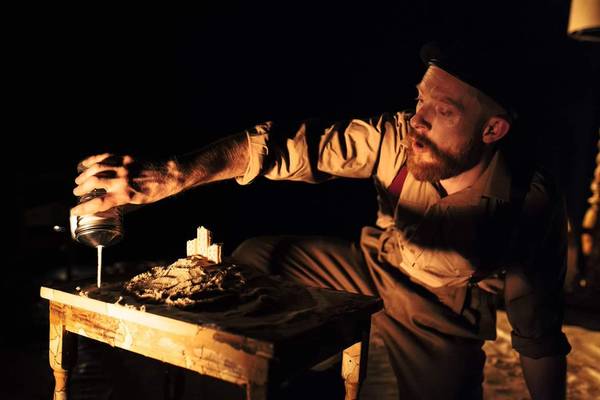
There are some beautiful design elements: Jack remembers tattooing himself and this is projected on his arm rather than shown with makeup. To see something normally considered permanent conveyed through an ephemeral form is a fitting reminder that nothing truly lasts forever and Jack is nearly at the end of his life. The loveliest of other whimsical projections is on a cascade of sand poured from a dinner tray. This sand is everywhere, like the memories that cling onto Jack’s deteriorating mind and are constantly discovered in unsuspecting places – a clever device either by Turner or director Claire Coache. A simple puppet is used well but not enough, as are mundane objects that transform into others more exciting – an umbrella becomes a fishing rod, a footstool is a motorbike. This object manipulation is a lovely surprise and suits Jack’s mental state well, so it could be utilised further to comment on the childhood of old age.

Robin Berry plays Jack with power and pathos, initially with a delicate frailty that gives way to a younger, more powerful man who enjoys boxing, horse riding, dancing and defending his country. Berry has a strong physical presence that is eminently watchable and a range that makes him believe both as the older and younger Jack.

Strengthening and streamlining the staging and theatrical devices will help make the script feel less like a random collection of memories, and reordering some of scenes would also have the same effect. Jack is a fantastic character and the play is a fitting tribute to elderly veterans, though also serves to pay homage to a generation that soon will no longer be with us.

Scorched runs through 29th August.

The Play’s the Thing UK is committed to covering fringe and progressive theatre in London and beyond. It is run entirely voluntarily and needs regular support to ensure its survival. For more information and to help The Play’s the Thing UK provide coverage of the theatre that needs reviews the most, visit its patreon.