A Nation’s Theatre: Wail and The Beanfield, Battersea Arts Centre

For two months, theatre makers from across the country are coming to London to celebrate the state of British theatre. One of the A Nation’s Theatre venues is Battersea Arts Centre, currently hosting the double bill of Little Bulb’s Wail and Breach Theatre’s The Beanfield. Wail is an exuberant cabaret about whales and human expression; The Beanfield uses multimedia to examine the impact of police violence on peaceful people and the need to fit in. Though different from each other in content and tone, both Little Bulb and Breach play with performance conventions to create innovative new structures that are at the forefront of theatre performance.

WAIL_Little Bulb Theatre

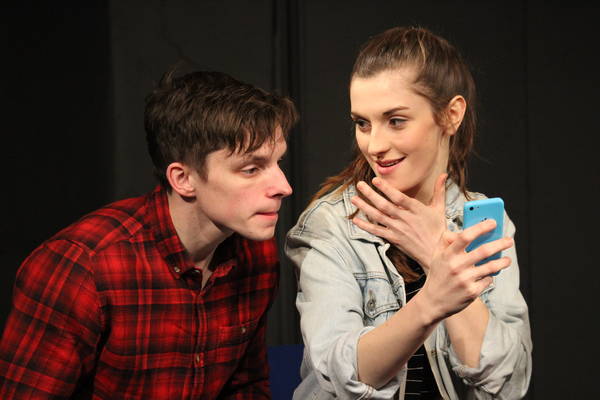
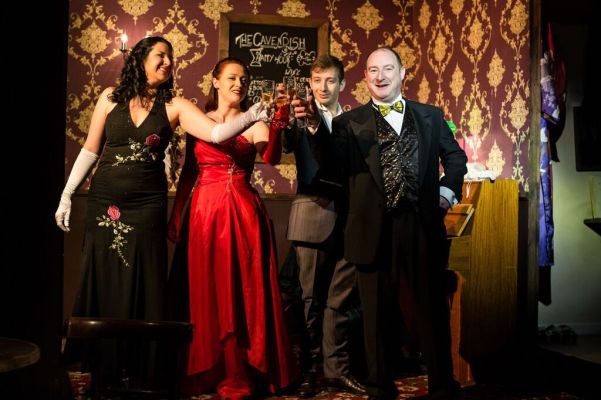
There’s a lot of science in Wail, and a lot of musical instruments. Actor-musicians Clare Beresford and Dominic Conway, performing as themselves, also have boundless enthusiasm and impressive music repertoires. With material ranging from folk to metal, they share their enthusiasm for whales through songs alternating with monologues of scientific facts. Their charisma and cheer keeps these sections engaging, particularly with the addition of audience interaction. Though the overall energy is light and positive, Beresford’s melancholy for never actually seeing a whale in the flesh provides a bit of contrast to the Male Whale Choir, a hilarious whole-audience exploration of whale songs that males use when on the pull in the coastal waters of Madagascar.

There isn’t as much material on the promised exploration of why humans wail, but a song about why they sing songs is a tender, poignant homage to feeling fragile. This fun, frivolous show is light on the gravitas that a bit more time on this topic could bring, but Wail is still a wonderful, joyful piece as is. The symphonic final number is a fantastic climax wrapping up an excellent contribution to A Nation’s Theatre.
The Beanfield_014_please credit Richard Davenport

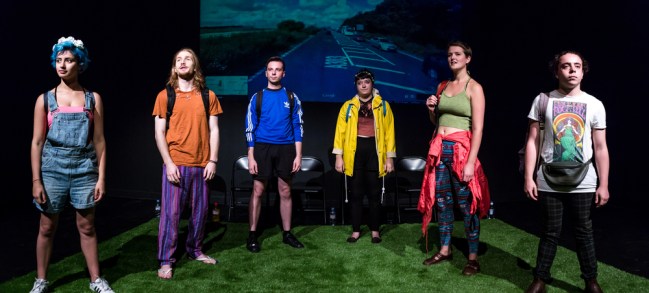
The Beanfield by Warwick University’s Breach Theatre wowed audiences at Edinburgh last summer, and understandably so. Drawing on the historic clash between new age travelers heading to Stonehenge and police fresh from the miners’ strikes, they add the framing device of a uni reenactment group researching the event in order to recreate it, and a counter narrative of a group of students going to Solstice. It’s a sophisticated script with plenty of absurdity to lighten the bleak depiction of police violence against unarmed civilians, but still serves as a potent reminder that this happens today in the UK and abroad. Part documentary, interview footage with witnesses on both sides is broadcast liberally; even though the inclusion of police is sympathetic, The Beanfield firmly supports the travelers. Rightly so – pregnant women and children were among the 600 or so attacked with truncheons and projectiles by 1000-odd police.

There is no explicit link between the Beanfield story and that of the contemporary, skeptical students at Solstice, but the inclusion of the latter provides some necessary humour. It’s not a needed subplot though, and detracts from the power behind the political statement of the Beanfield standoff. The script is a great collage of experiences past and present, the sweet naivety of students juxtaposing the atrocities that happened at thirty years previously. The Beanfield, a bit less polished than Wail, is still an excellent piece of theatre with some important thoughts on police brutality.

With multimedia at its forefront, The Beanfield captures the rapid-fire sensory bombardment of present day youth and the desire to instigate change as well as fit in with our peers. Wail, mostly analogue and much less angry, implies the importance of conservation and sympathy for all creatures, human and not. Both shows excellently address concerns of people in this country and experiment with performance, fitting contributions to A Nation’s Theatre.

Wail runs until 23 April, The Beanfield until 21 April then touring.

The Play’s the Thing UK is committed to covering fringe and progressive theatre in London and beyond. It is run entirely voluntarily and needs regular support to ensure its survival. For more information and to help The Play’s the Thing UK provide coverage of the theatre that needs reviews the most, visit its patreon.

The Broke ‘N’ Beat Collective, Battersea Arts Centre

https://i0.wp.com/www.20storieshigh.org.uk/wp-content/uploads/2016/02/Jack-and-Lateefah-1280x853.jpg

Kids have it tough, especially if they’re poor. Decreasing social mobility, higher costs of education and living, and decreasing welfare are trapping our future generations in inescapable cycles of poverty. They are just as aspirational as young people from more privileged backgrounds and aware of the opportunities they don’t have. They are angry, frustrated and lack the opportunity to constructively express their feelings that often go completely disregarded by more comfortable members of society.

Theatre-Rites and 20 Stories High, seeing validity in their voices, worked with numerous young people in this demographic to devise a gig-theatre show that shares experiences of being a poor teenager in Britain today. The Broke ‘N’ Beat Collective is an empowering, important work that uses fantastic puppetry, mask and music to create a gloriously messy collage of young people’s concerns and issues. Structurally mirroring the rough and ready, fractured existence of urban youth culture, it rebels against theatrical and cultural preconceptions without apology for its flaws.

Elisha Howe’s (aka Elektric) soaring rhymes and Jack Hobbs (aka Hobbit) beatboxing energise the audience and establish a defiant, proud tone that carries through the show. They are not backing down, nor are B-boy Ryan Harson (aka LoGisTics) and puppeteer Mohsen Nouri. They literally zoom in on the tiny model tower blocks and street scenes of urban Britain, replicated in cardboard wonderfully extracted from the plain back wall, creating a landscape of alternating songs with monologues. These set pieces and puppets pass on the otherwise unknown life stories of young people they’ve met.

Omar is an insecure, confrontational grey hoodie that takes the whole show to find his voice. Jack’s a wannabe gangsta who knocks up Latifa (both with cartoonish, cardboard heads) and ditches her and the resulting child that reflects on how that’s shaped his life goals. Joanne is the Papergirl who cuts herself because her mum’s boyfriend abused her. There’s also the incredible Speaker Boy, a rotund, playful chap with a boombox for a head. Each puppet is as unique as the young person behind it, and just as inspiring. (Seriously, go look at the puppets’ photos in the gallery part way down the page; they are some of the most emotionally endowed bits of paper and foam I’ve ever encountered. All of these characters unashamedly demand attention with precise, evocative storytelling and a joyfully visualised presence. These stories are broadcast along side an ever-changing soundtrack with interjections of dance, banter and spoken word, simultaneously creating an atmosphere of celebration and seriousness. Though fun, it never loses the sense of the weight behind the work.

Despite the boldness in the work and the importance of its messages, there are some sloppy transitions that cause the piece to lose momentum. Elektric unnecessarily introduces each number by name, and there are some in-jokes between the performers that, whilst sweet, don’t carry energy with their small scale. This gives the whole piece a choppiness that makes it feel unfinished.

All four performers’ exemplary skillsets and vibrance are fantastic vehicles for the young people of this country seeking escape from the poverty that is so limiting to their ambition. Each moment connects to the next through a theme rather than a storyline, but the effect mirrors modern society: a bit messy, emotional and ambitious for a better life. The fun doesn’t override or trivialize the seriousness, and neither is it too weighty. The unpolished feel is very much ingrained in the gig-theatre style, and though it would be great to learn more about the characters presented, The Broke ‘N’ Beat Collective truly holds a mirror up to nature.

The Broke ‘N’ Beat Collective runs through 2 April.

The Play’s the Thing UK is committed to covering fringe and progressive theatre in London and beyond. It is run entirely voluntarily and needs regular support to ensure its survival. For more information and to help The Play’s the Thing UK provide coverage of the theatre that needs reviews the most, visit its patreon.
Leaper: A Fish Tale, Greenwich Theatre

unspecified

Our oceans are dying. Just yesterday, the news reported that 95% of the Great Barrier Reef has been bleached due to temperature rises. There are huge swathes of sea with high concentrations of microplastics that leach toxins into the water and the food chain. We are overfishing our oceans, causing a myriad of problems to human and sea life.

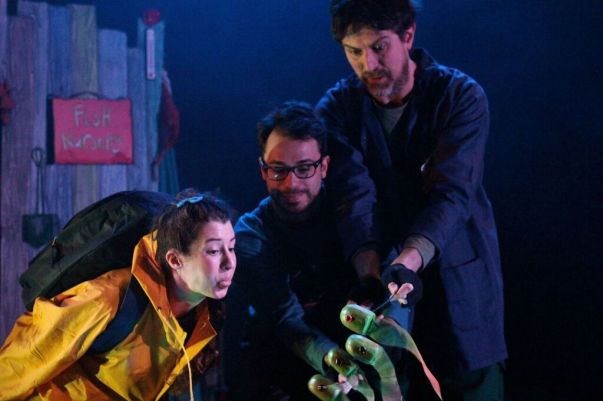
Tucked In is trying to change that through Leaper: A Fish Tale, an adventure story for families about a young girl’s discoveries in the world’s waterways. The unnamed daughter isn’t particularly interested in her dad’s fish farm and wreaks more havoc than anything else. But after falling into the stream in pursuit of a dropped crisp packet, she makes friends with Leaper the salmon on her journey from stream, to river, to ocean and back again. Good puppetry and movement keep younger ones engaged in this surprisingly complex story, though at times it feels a bit too convoluted and the lack of dialogue is unnaturally forced.

With an impressive array of animal puppets by Claire Harvey and Annie Brooks’ transformative set, there’s plenty to look at in the show’s recycled aesthetic. The larger puppets have an excellent range of movements, particularly the duck, seal and big fish. The rubbish monster is the most wonderfully inventive surprise, and the large jellyfish are poetry in motion. The smaller puppets are understandably simpler, but less dynamic with fewer moving parts. The baby fish, though sweet in the way the human characters treat them, are harder to see and not particularly interesting in and of themselves. The design really comes into its own in the middle of the ocean, with atmospheric lighting and sound to match.

Though the show wants to address both overfishing and ocean pollution, the littering is the primary focus. It makes sense as children may struggle with the concept of overfishing, but the plot points on the topic are consequently less engaging. There aren’t many of them though, and the focus is almost solely on the girl’s (Lizzie Franks) journey.

The performances by Franks, Philip Bosworth and Robert Welling are engaging and precise, though the reason for minimising speech is unclear. There are plenty of vocal effects, but character communication and actor impulses feel unnaturally limited. It doesn’t interfere with the story and the children in the audience aren’t bothered, but it doesn’t contribute to the production style.

Leaper: A Fish Tale is visually compelling with some great puppetry and an engaging story for children and adults alike. The performances are good and the story has all the necessary components of a satisfying adventure tale with a clear moral. Though there are some small issues, they don’t interfere with the overall enjoyment of the piece, and this show could play a powerful role in raising engaged, environmentally conscious young people.

Leaper: A Fish Tale is touring schools and theatres in April.

The Play’s the Thing UK is committed to covering fringe and progressive theatre in London and beyond. It is run entirely voluntarily and needs regular support to ensure its survival. For more information and to help The Play’s the Thing UK provide coverage of the theatre that needs reviews the most, visit its patreon.

The Rules of Inflation, Theatre N16

I hate balloons. Well, not balloons themselves, but the noise they make when they burst. After more than three years as a children’s entertainer that does balloon modelling, you’d think I’d be used to them, but no – if anything, it’s worse. When I walked into Theatre N16 to discover a floor covered with balloons and four actors gleefully throwing themselves around the space, I nearly left. I’m glad I didn’t though, despite numerous explosions. Rules of Inflation, a new performance art piece by Balloons Theatre, confronts socio-political issues by setting them at a children’s birthday party, complete with a deranged entertainer who demands his audience of four child characters participate in increasingly disturbing activities. Though my immediate violent revulsion towards the balloons and the job I know all too well intensified as time went on, the messages contained therein are cleverly presented. Even though they are not particularly unique to the stage, the kids’ party framework draws attention to how disturbing these global problems are.

From the start, it is clear this is not a normal children’s party. The creepy music, dark lighting and clown in a ripped, dirty costume (a disturbing Joshua Webb) create a distinctly foreboding, horror film-esque atmosphere, along with all those balloons that could burst at any moment. It’s not a unique landscape but it’s highly unsettling, and relentlessly so. As innocent childhood games become not so innocent, it’s a reminder of how seriously little ones take their play. Getting “out” actually makes them feel like they died, or that they’re gagged and bound. It also calls to mind child’s play in war torn countries, where games in a dangerous environment can result in injury, trauma or death, and the way the world’s politicians play at war without experiencing any direct consequences.

Four actors play four children with varying levels of maturity, who are prone to varying levels of exploitation. Clown targets serious and mature Blue (Nastazja Somers), and finally abandons her in a harrowing, violent end. It’s horrific to witness. Yellow (Bryony Cole) and Green (Emily Sitch) are too similar of characters, and Pink (Bj McNeill) also aligns with them. Whilst this could create an effective gang against Blue, who has a wonderfully defiant presence, this opportunity is missed and she is neither particularly isolated or supported by the kids as Clown abuses her. Instead, their youthfulness draws them to the clown, who eventually proclaims a party  winner even from their indistinctness. The piece is also a bit too long considering the straightforward format, but more abstract moments help add variation and a break from the relentless violence, abuse and manipulation. The actors’ vocal and physical energy was quite adult at times and would be more potent if the actors consistently kept to obvious depictions of children.

Rules of Inflation may not evoke such a visceral reaction in most people, but it’s aggressive displays of sexual abuse and objectification are still incredibly powerful. The piece needs a few tweaks to enhance its potency and theatricality, but not many. The balloons and kids’ party context can play on a fear of clowns as well, but this live art performance is a potent examination of power and child abuse in its own right.

The Rules of Inflation runs until 24th March.

The Play’s the Thing UK is committed to covering fringe and progressive theatre in London and beyond. It is run entirely voluntarily and needs regular support to ensure its survival. For more information and to help The Play’s the Thing UK provide coverage of the theatre that needs reviews the most, visit its patreon.

How To Survive a Swarm of Bees, Bread & Roses Theatre

The heaps of white pillows that cover most of the stage make How To Survive a Swarm of Bees look like a slumber party or a kids’ fort, something with a lot of fun and giggles. But Anna Crace’s short play is far from the happy cuddliness implied by the set. With a Scandi aesthetic in both design and dialogue, this austere piece of new writing gives little away except for the looming apocalypse Of a massive storm and a swarm of bees that threatens the existence of two young couples barricaded into their homes. The minimalist text bears more than a passing resemblance to Beckett, but it’s so sparse that there isn’t much depth or substance despite the interesting premise.

The unnamed hetero couples in their early 20s live separately, but their lives and conflicts parallel each other in the moment. Rather than the somewhat disappointing story, the most interesting feature is the intertwining scenes where the characters occasionally swap partners (not that way, pervert) without acknowledging the change. The device is gently disorientating, aiding the distance from reality that creates a state of reflection in the audience. These four are Every Men in the face of a crisis, with fear, anxiety and need that manifest in four different ways. We can relate to them all, but know they are not of our world.

The lack of action and a threadbare story is frustrating, through. The only thing the four do is talk around the problem and argue, and shift pillows around in their confinement. What exactly is going on in the world? Disappearing news broadcasters and friends choosing to live underground are never fully explained. Why is the world reacting so strongly to a storm? Why are these couples fighting about staying in their homes with the buzzing growing ever louder? They allude to consequences of nature creeping into the house and “the nets” failing, but what are these consequences? It’s never revealed, but easily could be by lengthening this script by another twenty minutes or so.

There is some distinction between the different characters, but other than Laurie Ogden’s agoraphobic young woman, the rest are very similar. Should we stay or go? How long can we realistically eat the soup we’ve stockpiled? How will our relationship hold up with our choice? What do we do if one stays and the other leaves? These questions are debated, but never really answered. The end of the play is abrupt and feels like an interval; some audience hang around for a while and then, confused, head into the night.

The four performances are fine, but tend towards minimalist reflection as well. Though inherently theatrical in structure, elements of this script would be great for telly. The intimacy works well in small fringe theatres, but would most likely come across as flat anywhere larger.

Anna Crace is certainly onto some interesting ideas and design concepts in How To Survive a Swarm of Bees, but the need further development and clearer means of communication.

How To Survive a Swarm of Bees runs until 20th March.

The Play’s the Thing UK is committed to covering fringe and progressive theatre in London and beyond. It is run entirely voluntarily and needs regular support to ensure its survival. For more information and to help The Play’s the Thing UK provide coverage of the theatre that needs reviews the most, visit its patreon.
Something Something Lazarus, King’s Head Theatre

rsz_unspecified

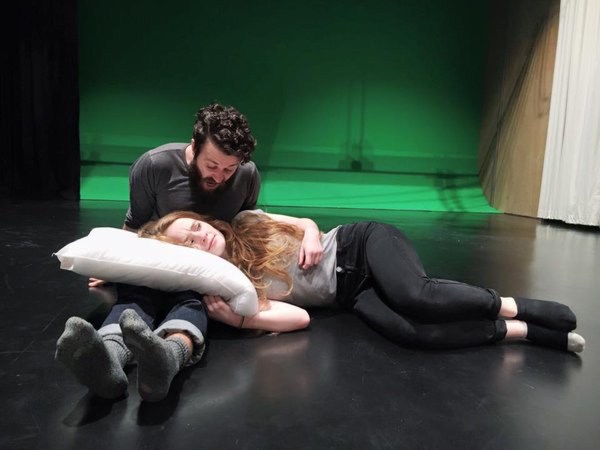
Musical theatre is growing rapidly on the fringe, thanks to venues that focus on small-scale shows and producers staging lesser-known works. New British musicals are seen less often, with only a handful of producers focusing on bringing audiences this new musical writing. Broken Cabaret, around since 1997, aim to create new kind of musical. Something Something Lazarus is part cabaret, part backstage/play-within-a-play dark comedy, part surreal fantasy. The structure is the most interesting part of the show, with a plot and songs that are sometimes surreally nonsensical. Performances are consistently excellent and whilst there isn’t always the sense that Something Something Lazarus is radically innovative, it has a British quirkiness that US imports, the most commonly produced musicals on the fringe and commercially, lack.

Four characters based on contrasting musical theatre and cabaret stereotypes generate plenty of conflict and more than a few laughs. Daisy Amphlett as Della is a no-nonsense musical director and accompanist with no patience for, well, anything. Amphlett’s powerful voice and ferocious presence is a joy to watch along with her ability to play several instruments. Valerie Cutko as fading star Vee is glamourous, seductive and rather useless, belonging somewhere more than the Midnight Sun cabaret. Daniel (Ralph Bogard) runs the venue with his twink bartender boyfriend and aspiring singer, Jay (Daniel Cech-Lucas). Daniel and Jay don’t have much love for each other; it’s a relationship of boredom and convenience amusingly played by both. When an unexpected delivery from Daniel’s ex arrives, his freewheeling emotions cause a violent eruption that moves the action, and the real cabaret, into Jay’s mind.

Much of the story takes place in real-time before the evening’s show starts. It’s pretty typical meta, backstage fare but with music and dialogue flowing into each other like an actual rehearsal – a lovely change from standard musical theatre structure. Though not innovative, it’s nice to see a more low-key, Kiss Me, Kate type of musical. The action is continuous and the dialogue feels natural, though the characters are more heightened versions of those you typically encounter in this environment. John Myatt’s dialogue is punchy and fun, with plenty of bitchiness. The cabaret-in-my-head section is both surreal and more like an actual cabaret performance – a disorientating but more interesting outcome, and with more memorable songs by Simon Arrowsmith than the first part of the show.

Accompanying the show is Simon and Jonny Arrowsmith’s transmedia, three websites that add further detail to the world of Something Something Lazarus that isn’t clarified within the dialogue and plot. Whilst it’s a great extension of the performances, I’m uncertain how much audiences engage with the work. I expect transmedia will come to be used more and more, what with the legacy it creates and an easy way to further engage with audiences.

Though Something Something Lazarus isn’t as innovative as it makes itself out to be, there are a lot of great elements. The performances are excellent, the transmedia is a nice touch and it’s great to see British theatre makers creating new musical theatre that doesn’t follow American trends.

Something Something Lazarus is at the King’s Head Theatre until 2nd April.

The Play’s the Thing UK is committed to covering fringe and progressive theatre in London and beyond. It is run entirely voluntarily and needs regular support to ensure its survival. For more information and to help The Play’s the Thing UK provide coverage of the theatre that needs reviews the most, visit its patreon.
Eggs, Vault Festival

rsz_eggs_florence_keith-roach_and_amarni_zardoe_courtesy_simon_annand_1

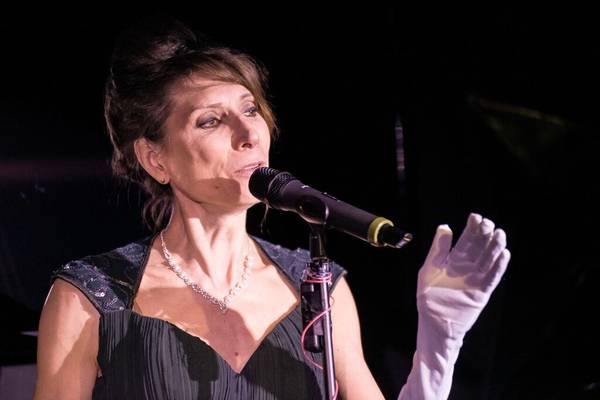
Women get the raw end of the deal no matter how young or old they are, how mainstream or alternative. Two late twenty-somethings, acquaintances through a mutual late friend but with completely opposite personalities, end up bonding over important issues but with dry humour and restrained emotion. Despite the content, Eggs avoids catering purely to women. The frank honesty is stereotypically blokey, covering topics such as masturbation, one-night stands and careers – issues that are obviously relevant to women, just not often spotlighted so directly – as well as fertility, marriage and the fear of aging. Structurally episodic and a bit clunky, Eggs is also bitingly funny and poignant, particularly for those of us in our 20s and 30s feeling like we don’t really fit into the world.

Playwright Florence Keith-Roach uses the versatile symbolism of eggs throughout, albeit obviously. Even the set and costume by Clementine Keith-Roach and Lily Ashley are all white and yellowy-orange. It’s an interesting catalyst for written material, and Keith-Roach riffs in numerous directions from that starting point. Fertility is an obvious path, but egg shaped vibrators less so. This makes the events in the story nicely unpredictable, but Keith-Roach does a great job tying up the issues into a satisfying end.

Keith-Roach and Amani Zardoe are girl 1 and girl 2. Girl 1 is a hippy artist fighting the status quo; Girl 2 loves her corporate job and can’t wait to marry and have children. Both performances are heighted and somewhat ‘Sex in the City’-esque, particularly at the beginning, where they feel like chick lit but on stage. Fortunately, both actors settle into more naturalistic performances after a couple of scenes. Unlike the terrible television series, these unnamed women develop depth and genuine conflict, even though they are not the most likeable of characters. Their insecurities and flaws are believably human, as are their prickly, awkward encounters that evolve into a genuine care for each other.

Eggs is heart-warming without being cheesy, and substantial but does not preach. It provides gentle solidarity to women who feel like their lives aren’t everything they’re supposed to be, and even though the earlier scenes feel disconnected from each other, the last third of the play really rings true. It’s a good piece of theatre for a second play and is a pointed reminder of the fact that no one really has their life together.

The Play’s the Thing UK is committed to covering fringe and progressive theatre in London and beyond. It is run entirely voluntarily and needs regular support to ensure its survival. For more information and to help The Play’s the Thing UK provide coverage of the theatre that needs reviews the most, visit its patreon.

One Under, Vault Festival

rsz_img_6902[1]

Amy Fleming’s dad committed suicide when she was four years old. Fleming struggles with mood swings and wonders if she’s “mental,” like her dad. Luckily, she studied Molecular Medicine before becoming an actor so she understands how genetics dictates our characteristics. She also knows that talking about our problems and developing positive habits helps us overcome them. Combining her science and performance backgrounds, Fleming’s One Under is part conversational lecture, part interactive game. She relies on narration, humour and audience involvement to share her message, but the piece as a whole feels unfinished. It’s a nice idea, but it lacks theatricality and detail.

There’s no character, just Fleming and her generally cheerful honesty. She relaxes the audience straight away and easily facilitates discussion. After a frank introduction about her childhood and how genes are passed from parents to child; there’s some framing by her biography and a multi-round game/quiz with easily answerable mental health questions. These two elements aren’t solidly connected to each other, and the piece’s message isn’t spelled out until the very end. Structurally, it’s weak. By that point though, the message is less interesting that the journey we took to get there and the camaraderie that emerges en route.

This solo show isn’t very theatrical, but it’s lovely for its warm cuddliness and playful approach to form. Fleming is clearly passionate about helping people improve their quality of life and their mental health, which is a commendable mission. Her openness and her anti-performance make me feel uncomfortable writing any sort of negative judgement – it’s such a personal piece. But at an hour long, glossing over parts of her past with some audience debate over quiz questions about how to approach mental health issues at work, there’s a noticeable lack of depth.

The Play’s the Thing UK is committed to covering fringe and progressive theatre in London and beyond. It is run entirely voluntarily and needs regular support to ensure its survival. For more information and to help The Play’s the Thing UK provide coverage of the theatre that needs reviews the most, visit its patreon.

Beetles From the West, Lion & Unicorn Theatre

rsz_img_5808

Half of the UK population born after 1960 will be diagnosed with cancer during their lifetime. Considering this figure, cancer rarely features as the primary subject matter in theatre, though last year there were several productions that put it at the forefront. I caught two of them in Edinburgh: The Eulogy of Toby Peach and Goodstock. James Hartnell’s debut play, Beetles From the West, is also driven by a diagnosis. Set in a hospital waiting room, immature Boyd waits with his girlfriend for news of his father’s health after a sudden collapse that’s left him unconscious. A young doctor’s attempts to explain what’s going on are aggressively questioned as Boyd comes to terms with what it all means. Hartnell’s script, obviously early career from its unwieldy text and underdeveloped characters, spotlights the importance of cancer screenings but it needs more development to have greater impact.

A combination of flowery, metaphor-filled monologues directed to the audience and simplistic scenes between the characters attempts to show range, but they are so dramatically different that they seem spoken by different characters. Dialogue paints Boyd (Ryan Penny) and his girlfriend Jenny (Amy Doyle) as immature and ignorant young teenagers. Their monologues have a more mature gravitas, but these contrasting tones don’t reconcile. The transitions in the writing are abrupt and jarring, creating an unconvincing baseline reality. Hartnell has a sense of dramatic arc and a satisfying ending that suits an awareness piece, but individual scenes and monologues sit clumsily within it. The script does manage not to preach, though.

There’s little subtlety or depth in the characters despite their dialogue, but Penny, Doyle and Matthew Marrs as the doctor attack them with gusto. Penny also directs, and favours heightened performances – though this might suit the language, it clashes with the thematic content. It’s an interesting choice, but not one that consistently works. There are some moments of good chemistry, particularly when the doctor reveals details of his own past – though highly unprofessional and unlikely to happen in the real world.

Beetles From the West shows cancer isn’t a battle, it’s a disease we are just as likely to get as not. It reminds us to monitor our mental and physical health and have symptoms investigated, something men are more likely to neglect than women. This is definitely a men’s health play, though it doesn’t alienate women. It’s just a shame that the script doesn’t do the themes justice or give the performers properly developed, meaty roles.

The Play’s the Thing UK is committed to covering fringe and progressive theatre in London and beyond. It is run entirely voluntarily and needs regular support to ensure its survival. For more information and to help The Play’s the Thing UK provide coverage of the theatre that needs reviews the most, visit its patreon.

Dress Rehearsal, OSO Barnes

image
A performer’s life is far from glamorous, particularly for those managing to eke out some sort of living in the business. Corporate gigs, theatre-in-education, skin work and small-scale touring is better than working in a call centre or bar, but this work is exhausting and usually demoralising. I remember similar days in my past life as an actor, particularly that panto tour to schools and social clubs in South Wales. The schools were fine; teachers kept order. But the social clubs were all loud, drunk adults, and kids hyped up on e-numbers who thought hitting the actors was the most hilarious thing ever. With two shows a day, six days a week for a month and a half, I keenly feel the anguish of opera troupe The Overtones’ pub booking in AJ Evans’ Dress Rehearsal, even though those days are long behind me. Despite kinship with the characters’ aspirations and conflicts, and fantastic singing, the clunky script, poor performances, and undeveloped characters make this a missed opportunity to showcase opera within the structure of a play.

The concept reads well on paper and it could be a great way to make opera approachable as well as demystify life as a performer: flipping between the pub floor gig, the dressing room and reserved mezzo Steph’s past, we see trouble within The Overtones cast and career goals clashing with reality, and some cracking opera numbers. There’s certainly scope for situation comedy as well as character-driven dramatic conflict. However, Evans’ script hovers in the liminal space between these styles, creating something that manages to be both unfunny and quite flat with hackneyed dialogue. Subplots and the flashbacks are neglected and left incomplete, making them feel gratuitous to the main plot thread. The first half is slow and little happens other than exposition, but after the interval, both tension and pace picks up. The final moment even has genuine emotional connection between two characters, something that is pointedly absent in the script up to this point.

The singing is excellently emotive, however. There’s enough book (albeit a poorly written one) to make Dress Rehearsal a play with music, but there’s enough music to suitably break up the simplistic dialogue. Five of the eight actors are opera singers, one is a pianist who sings and two are “just” actors. The singers are certainly good at their primary craft, but lack in their acting ability. Director Paola Cuffolo focuses more on staging than coaching truthful performances from her cast. There is some stylisation that, as a conceptual break from realism, is under used and lacks punch.

If Dress Rehearsal was a single act composed mainly of the current second half, it would be a much stronger play. As it is, it wanders aimlessly for quite some time before finding its purpose and conviction. Fortunately, the songs are welcome respite in what feels like something that well precedes a dress rehearsal.

The Play’s the Thing UK is committed to covering fringe and progressive theatre in London and beyond. It is run entirely voluntarily and needs regular support to ensure its survival. For more information and to help The Play’s the Thing UK provide coverage of the theatre that needs reviews the most, visit its patreon.