The Beggar’s Opera, Brockley Jack

tbo-006

By guest critic Michaela Clement-Hayes, @_mickychaela

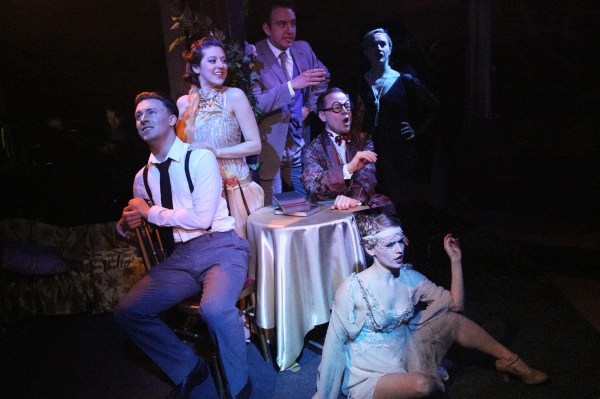
London in 1728 was a dark and dangerous place. Highwaymen, hangmen and harlots roamed the streets and life was hard. John Gay’s satirical musical The Beggar’s Opera steps away from the traditional romanticised stories of heroes and villains, unrequited love, choosing instead to tell a tale of rogues and murderers. And a little bit of love, for good measure.

Polly Peachum (Michaela Bennison) has defied her parents and married the notorious highwayman Macheath (Sherwood Alexander) However, he has most certainly not forsaken all others. Wanted for his crimes, he leaves Polly with a promise to return.

Lazarus Theatre have taken David Gay’s story and brought it into the 21st century with a bang. Literally – there are party poppers. It’s a whirlwind of a tale – quirky and fun, transcending the centuries and combining modern day with the past.

Performances are strong from everyone, with the cast acknowledging the audience with intense stares throughout, involving them discreetly yet hardly breaking the fourth wall. The staging is simple yet effective, with ladders, coloured masking tape and a few pieces of furniture whisked on and off, and the cast adopting masks and a few props as they switch from key character to chorus.

Singing is good, but feels a little strained in places. However, this does not detract from the story (adapted and directed by Ricky Dukes), and the new lyrics (penned by Bobby Locke) are both clever and amusing.

It’s fun, fast-paced and funny – a very enjoyable show.

The Play’s the Thing UK is committed to covering fringe and progressive theatre in London and beyond. It is run entirely voluntarily and needs regular support to ensure its survival. For more information and to help The Play’s the Thing UK provide coverage of the theatre that needs reviews the most, visit its patreon.

The Last Five Years, St James Theatre

https://www.thestage.co.uk/wp-content/uploads/2016/11/Samantha-Barks-as-Cathy-in-THE-LAST-FIVE-YEARS-at-St-James-Theatre.jpg

The most moving performances are often largely removed from our day-to-day lives. But every so often you come across a piece of theatre that, whilst it may not be the objective best thing you’ve seen, encapsulates your life so well that you can’t not fall in love with it.

The Last Five Years is good though, even if it’s been a favourite of mine since I discovered it as a student back in 2002. The Jason Robert Brown musical, now 15 years old, is a wonderfully simple (albeit heteronormative) tale of boy and girl meeting, falling in love and falling apart. Framed by the late 90s NYC arts world (that I watched as a teenager in the suburbs and later joined as a drama school student), his story is told in chronological order and hers in reverse. There are two performers; the only time they interact directly is at their wedding, making the songs function more like reflective monologues. Though there is hardly any book, Brown’s lyrics tell the story clearly and sensitively. Dynamic staging and committed performances, like those in this anniversary production that Brown directs, are necessary to keep this quirky little musical from falling flat. It’s a powerful, disarming show when executed effectively, and this production may well be its new definitive.

Jamie is a writer and Cathy is an actor. They are 23 when they meet; neither has had any success yet but both are wide-eyed, bushy tailed, and ready to fall in love. Jamie quickly becomes a bestselling novelist whilst Cathy is left in his wake, waitressing and doing summer theatre in the depths of the Midwest. It’s within this career disparity that their relationship deteriorates, and I find Cathy painfully echoes my own life as a failed actor. The isolation and jealousy that Brown fosters in his songs is wholly believable and all too familiar.

Both characters are flawed but generally likeable and despite reservoirs of love, it’s not enough to save their marriage. Though both characters can be irritating in their own way, their good intentions and fundamental incompatibility also ring true to anyone that’s endured the heartbreak of an ended relationship or marriage. Here is yet another parallel to my past, but this time I’m more like Jamie – I married young and naive and was divorced by 30 as a result of my own mistakes.

Samantha Barks and Jonathan Bailey are Cathy and Jamie. Barks is a stronger singer, but Bailey’s full of charisma and confidently flirts with the audience – it’s a lovely touch. Both have great emotional range and their chemistry is undeniable. Their performances, layered with Brown’s storytelling, reduces many to tears. Sniffling and eye wiping is plentiful in this intimate house.

The small scale of the show is fleshed out with some delightful video design by Jeff Sugg and Derek McLane’s set. These provide the context that’s missing from the script and grounds their story in a real time and place, though its Gabriella Slade’s costumes that indicate the 1990s setting. The videos are simple and cartoon-like, a sweet and charming addition that Brown underuses.

Though more of a song cycle with hardly any spoken dialogue (if you were to listen to the soundtrack you would hear almost the entire show) and arguably rather insubstantial, this one-act show has the ability to burrow into the depths of your guts. It’s a heartfelt love letter to the countless New York City artists doing their best to get by and find meaning in each other, and to everyone that’s every fallen in and out of love. The poignant, timeless story of youthful love and loss has the sorts of songs that you play on loop whilst crying in bed with a heart broken by your own failures (I’ve done this more than I care to admit), and those you can dance to after a brilliant first date or a career win. With the excellent performances and slick design of this production, it’s not one to miss – even if you cry through it.

The Last Five Years runs through 3 December.

The Play’s the Thing UK is committed to covering fringe and progressive theatre in London and beyond. It is run entirely voluntarily and needs regular support to ensure its survival. For more information and to help The Play’s the Thing UK provide coverage of the theatre that needs reviews the most, visit its patreon.

Poena 5×1 and No Horizon, Edinburgh Festival Fringe

https://i0.wp.com/www.underbellyedinburgh.co.uk/images/made/images/uploads/POENA-5X1_1_%C2%A9RichardDavenport_750_500_60_c1.jpg

Science and Mathematics. Vaccinations, space travel, electricity. Nuclear weapons, lethal injections, pollution. Poena 5×1 and No Horizon. One is a new play showing the dark potential of science, the other a new musical celebrating overcoming disadvantage through maths. Radically different in style and story, both productions find inspiration in the potential of science, maths and technology, and both need further development.

Scientist Bryony Adams works for the Department of Justice in Poena 5×1. She’s a typical Tory suit who fully believes her horrifying work benefits the greater good – she invented Poena, a drug that reduces prison populations through humane punishment (whatever that is). Named after the minor goddess of punishment, Poena induces a state of despair and hopelessness that can lead to catastrophic mental consequences for the prisoners that are her voluntary test subjects. Bryony becomes emboldened by praise as she further develops the drug, deciding to test it on an unknowing volunteer.

Bryony is a despicable character that Cathy Conneff plays admirably, particularly as she begins to emotionally deteriorate. Considering this is a solo performance with little visual element, her ability to maintain audience focus through compelling embodiment of the character is excellent. The character presents her work to the audience until a twist reveals all is not what it seems. It’s at this point that Abbie Spallen’s script starts to lose its way. As Bryony’s story becomes more personal and less about her work, the narrative becomes knotty and unclear, having a knock-on effect on the script as a whole that until this point, terrifies through the government’s potential to commit heinous acts. Any themes and messages established about the horror of governmental capital punishment are unfortunately diluted. Reworking the ending to maintain character and plot continuity and clarifying the play’s message would take little work but have great effect.

In contrast to Poena 5×1, No Horizon has a solid, consistent script, but this new musical’s shortcomings are its music and the casting of this particular production. The true story of a remarkable young man in the 1680s looks at the power of mathematics to unite people across social class and ability. Nicholas Saunderson, blinded by Smallpox as an infant, learns to read through his friends’ support and tracing letters on gravestones. His envy and frustration grow as his parents enforce limitations on him because of his disability and his best friend in their tiny Yorkshire village goes to Cambridge. Through sheer determination and an innate aptitude for maths and physics, he eventually proves that in a pre-Braille era, disability is still no barrier to success.

It’s a wonderful, uplifting story with a generally good narrative arc, though most of the cast are gifted singers who struggle to match their acting ability to their voices. There is frustratingly little connection between characters, though George Griffiths as Joshua Dunn is a notable exception. The music is rather samey and repetitive without distinction, though there are some standout numbers amongst the Cambridge students. The music is pre-recorded, which makes it even harder to capture any nuance in tone and volume. There is minimal choreography, making the ensemble numbers more choric than musical theatre.

Theatre can be a powerful vehicle for maths and science, but in the cases of No Horizon and Poena 5×1, the subjects are let down a bit. Some tinkering is definitely needed to whip these productions into shape, but there is much potential in these character-driven stories.

Poena 5×1 runs through 29th August, No Horizon runs through 27th August.

The Play’s the Thing UK is committed to covering fringe and progressive theatre in London and beyond. It is run entirely voluntarily and needs regular support to ensure its survival. For more information and to help The Play’s the Thing UK provide coverage of the theatre that needs reviews the most, visit its patreon.

How to Win Against History, Ovalhouse

rsz_copy_of_©rah_petherbridge_photography_-_how_to_win_against_history-_done_3

British history is peppered with truly remarkable people. Kings, queens, writers, actors, scientists, athletes and military generals pepper school history books and cultural subconscious. Then there are the people like Henry Paget, fifth Marquis of Anglesey, who are largely forgotten, tucked away in the centuries-old folds of this country’s past. During his brief Victorian life, he became rather infamous for cross-dressing, blowing his family fortune, and turning the chapel of his estate into a 150-seat theatre where he played the leads in his own productions with which he later toured Britain and Europe.

Seiriol Davies’ How to Win Against History chronicles (and fictionalises parts) of Henry’s radical life, focusing on his theatre work and cross dressing, as a fabulous, form-bending cabaret/musical. This little show has a huge heart and needs further script development to smooth out the lumpy narrative, but sequins and silliness, destroying the fourth wall, clowning and contemporary political commentary makes for a powerfully subversive and hilarious production.

The lengthy introduction provides necessary exposition, but as it gives way to a song that focuses on the Marquis’ time at Eton, it becomes too long. The interesting plot points come once the character is of age, and these deserve more attention than they are given. The beginning also sets up the style that’s maintained throughout, of musical theatre songs punctuating scenes that are heavy on the sort of narration and banter that is found in cabaret and drag acts. It’s a wonderful act of genre smashing. Musical theatre, cabaret, vaudeville and pantomime make an engaging, energizing combination that fosters audience participation and celebration. If this is where popular theatre is heading, then bring it on – Seiriol Davies’ script is at the forefront of musical theatre innovation.

Once young Henry finishes school, action starts to pick up. After a mutually beneficial marriage to his cousin (that was reportedly never consummated) and teaming up with a actor Alexander Keith (Matthew Blake), he casts himself in several plays. When no one comes, they take the shows on the road, making hilarious changes as the audience becomes less enamored of his work. More could be made out of his marriage and his increasingly weird theatre productions; they are rushed and little sense of a timescale is provided. Between his awakening as a student to a touring theatre maker, there’s a feeling that a lot of plot is missing. He is suddenly a broken man in Monte Carlo being interviewed by Daily Mail journalist Quentin (a brilliant in-joke!) and whilst this is deliciously funny, there is yet another leap in time and place. More scenes could easily be written to fill in these gaps without disrupting the established style. Even though the cabaret influence comes though in the short sketch-like scenes, as a musical it feels underwritten.

Writer Seiriol Davies plays Henry, the fabulously flamboyant lover of sequined dresses and the theatre. His journey from naïve boy to the ill and impoverished 20-something is lovely and genuine, with songs that in turn capture his enthusiasm and anguish. Energy abounds from the other two performers, making the show feel a lot bigger than it actually is.

Though this new musical needs further development to give it the scale and narrative punch that matches the style, it is fantastically good fun. The political content and deconstructing of style and structure are fly in the face of historical erasure of controversial figures and dramatic conventions. But it evoked engagement and contribution from a willing audience that was eating out of the performers’ hands within the first few minutes and this in and of itself is a huge indicator of excellent work. How to Win Against History could easily have the scale of a West End show, and it deserves the attention that would garner it.

How to Win Against History runs through 28 August in London and Edinburgh.

The Play’s the Thing UK is committed to covering fringe and progressive theatre in London and beyond. It is run entirely voluntarily and needs regular support to ensure its survival. For more information and to help The Play’s the Thing UK provide coverage of the theatre that needs reviews the most, visit its patreon.


Gatsby, Union Theatre

Gatsby (c) Roy Tan (4)

Jay Gatsby’s distinctive yellow car is an iconic image in The Great Gatsby. Power, wealth and charisma emanate from its shimmering, custom paint job as it rolls between Long Island and Manhattan in the decadent 1920s. It’s eye catching and demands attention, like the enigmatic man who owns it. Adaptations of The Great Gatsby are plentiful, but good ones need the same characteristics as Gatsby’s car, along with a generous, heady mix of self-indulgence and extravaganza. Linnie Reedman and Joe Evans’ musical incarnation of F. Scott Fitzgerald’s iconic novel manages to avoid incorporating any these. Bland music, lazy performances and design and a book with numerous shortcomings makes Gatsby a stuttering, third-hand Ford Fiesta rather than a customized, purring Rolls Royce.

Reality TV celeb Ferne McCann makes her theatre debut in this production, bringing a lot of negative publicity with her as consequence. She’s also incredibly surprising – alone in a theatre-trained cast, she is the only one consistently able to be heard over the live actor-musos with her Amy Winehouse-influenced performance. Of the 13-strong cast, most are weak, some terribly so. They are either grotesquely overacted cartoons, or underplayed so much that their performances are flat. There’s no sense of danger or excitement, or EVERYTHING IS EXCITING ALL THE TIME FOR OVER TWO HOURS. It’s exhausting to take in. In either case, the characters are no more than stereotypes; this is more of an issue with Reedman’s book as it certainly doesn’t give the actors much depth to work with. Accents drift around the 50 states and then some, with the only consistent one coming from an actual American.

Reedman also directs, with little comprehension of the narrative arc she constructed from the novel. Other than the Plaza hotel scene late in the play when Daisy and Jay confess all to Tom, there is a pronounced lack of tension. Myrtle’s tragic end is anticlimactic and rushed, as is her husband George’s retaliation. She neglects characterization and seems to focus solely on staging. If that.

There are 21 musical numbers (including a couple of reprises), but none of Joe Evans’ tunes stands out from the rest. Even with a mix of smaller and larger numbers, there is little  musical variation. Transitions from book to song are often abrupt and forced for the sake of fitting in another tune rather than naturally reaching a point in the story where music is necessary to accentuate a plot point or emotion. Nick Pack’s choreography, without much to work with, is similarly unvaried with a bit of a Charleston every now and then.

There are few positives to pull from this production. Reedman and Evans’ interpretation is a choppy hatchet job of Fitzgerald’s work and few, if any, features deem it a worthy adaptation. If Gatsby’s goal is for the audience to “feel…the heat, sweat and life” of the euphoric, post-war American decade, it barely comes close. Tepid, cool and laconic is what actually comes across, in a wheezy motorcar threatening to cut out at any moment.

Gatsby runs through 30th April.

The Play’s the Thing UK is committed to covering fringe and progressive theatre in London and beyond. It is run entirely voluntarily and needs regular support to ensure its survival. For more information and to help The Play’s the Thing UK provide coverage of the theatre that needs reviews the most, visit its patreon.

Something Something Lazarus, King’s Head Theatre

rsz_unspecified

Musical theatre is growing rapidly on the fringe, thanks to venues that focus on small-scale shows and producers staging lesser-known works. New British musicals are seen less often, with only a handful of producers focusing on bringing audiences this new musical writing. Broken Cabaret, around since 1997, aim to create new kind of musical. Something Something Lazarus is part cabaret, part backstage/play-within-a-play dark comedy, part surreal fantasy. The structure is the most interesting part of the show, with a plot and songs that are sometimes surreally nonsensical. Performances are consistently excellent and whilst there isn’t always the sense that Something Something Lazarus is radically innovative, it has a British quirkiness that US imports, the most commonly produced musicals on the fringe and commercially, lack.

Four characters based on contrasting musical theatre and cabaret stereotypes generate plenty of conflict and more than a few laughs. Daisy Amphlett as Della is a no-nonsense musical director and accompanist with no patience for, well, anything. Amphlett’s powerful voice and ferocious presence is a joy to watch along with her ability to play several instruments. Valerie Cutko as fading star Vee is glamourous, seductive and rather useless, belonging somewhere more than the Midnight Sun cabaret. Daniel (Ralph Bogard) runs the venue with his twink bartender boyfriend and aspiring singer, Jay (Daniel Cech-Lucas). Daniel and Jay don’t have much love for each other; it’s a relationship of boredom and convenience amusingly played by both. When an unexpected delivery from Daniel’s ex arrives, his freewheeling emotions cause a violent eruption that moves the action, and the real cabaret, into Jay’s mind.

Much of the story takes place in real-time before the evening’s show starts. It’s pretty typical meta, backstage fare but with music and dialogue flowing into each other like an actual rehearsal – a lovely change from standard musical theatre structure. Though not innovative, it’s nice to see a more low-key, Kiss Me, Kate type of musical. The action is continuous and the dialogue feels natural, though the characters are more heightened versions of those you typically encounter in this environment. John Myatt’s dialogue is punchy and fun, with plenty of bitchiness. The cabaret-in-my-head section is both surreal and more like an actual cabaret performance – a disorientating but more interesting outcome, and with more memorable songs by Simon Arrowsmith than the first part of the show.

Accompanying the show is Simon and Jonny Arrowsmith’s transmedia, three websites that add further detail to the world of Something Something Lazarus that isn’t clarified within the dialogue and plot. Whilst it’s a great extension of the performances, I’m uncertain how much audiences engage with the work. I expect transmedia will come to be used more and more, what with the legacy it creates and an easy way to further engage with audiences.

Though Something Something Lazarus isn’t as innovative as it makes itself out to be, there are a lot of great elements. The performances are excellent, the transmedia is a nice touch and it’s great to see British theatre makers creating new musical theatre that doesn’t follow American trends.

Something Something Lazarus is at the King’s Head Theatre until 2nd April.

The Play’s the Thing UK is committed to covering fringe and progressive theatre in London and beyond. It is run entirely voluntarily and needs regular support to ensure its survival. For more information and to help The Play’s the Thing UK provide coverage of the theatre that needs reviews the most, visit its patreon.

Red Riding Hood, Pleasance Theatre

rsz_red_riding_hood_artwork

As it’s the run up to Christmas, pantos are saturating our stages. There are the traditional ones and plenty that give themselves another label in the hope of getting attention: boutique, adult and gay spring to mind. Then there are other shows that are close to panto in that they’re family friendly and/or based on fairytales, like Polka Theatre’s Beauty & the Beast. New musical Red Riding Hood, by the team that brought audiences the stage adaptation of The Secret Diary of Adrian Mole, Jake Brunger and Pippa Cleary, also falls into this category. The largely excellent, Disney-style songs are this production’s strongest feature, but unfortunately the cheap-looking set, and now-antiquated style of children’s theatre prevent this show from being a stand-out option this holiday season.

Nazarene Williams excels as Little Red. Clever and feisty, she’s a wonderfully pro-active character for young girls to identify with. Her charming sidekick William the Woodcutter (Matthew Jay-Ryan) is dopey and fun, but a good enabler and supports Red on her quest to save her family’s bakery. Matthew Barrow has more character as the wolf; his dad lacks energy in comparison. Mum Holly-Anna Lloyd is a strong singer, but she looks the same age as her daughter and the character lacks maturity. Patsy Blower completes the cast of five as the witty grandma. All of them are strong singers with that powerful, modern American Broadway tone that kids recognize from Disney films.

The book and design are a let down, though. Brunger’s writing is simplistic and not suitable for children in the upper years of primary school, and there are some unnecessary scenes that seem like they were written to add length rather than the main storyline. Three schools were there, and on several occasions the children got bored and started talking amongst themselves: a powerful indicator of this production’s issues. The story has a well-shaped structure and an interesting plot, but the dialogue isn’t far off that in Town Hall Cherubs, which is pitched to 2-5 year olds. This makes the actors perform in that exaggerated style of performance that used to be the signature of all children’s theatre, but many productions have now become much more sophisticated, even for very young children. The design looks great in dim light and the patchwork tree leaves are a particularly lovely idea, but with the lights up, they look like cheap, enlarged photocopies and the flats themselves are flimsy. The birds in the forest are origami paper cranes that the actors fly around, but there is no movement within the birds themselves. The paper rabbit on a stick slid across the floor has the same disappointing lack of impact. Grandma’s pet parrot, an actual puppet, is a much better use of puppetry. There are obvious budget constraints here, but a simpler approach may have been more effective rather than trying to make the set look grand but not having the materials available to do so.

The songs are excellent though, and there are plenty of them. From moving duets to powerful solos and whole-cast numbers, they pull back the attention every time. There are some trite lyrics here and there, but Pippa Cleary’s music is great. The show isn’t beyond rescue, though. With some re-writes and additional invention (like William’s wonderful magic book) to make it more distinctive and develop the characters, this could be an excellent example of modern children’s theatre.


The Play’s the Thing UK is committed to covering fringe and progressive theatre in London and beyond. It is run entirely voluntarily and needs regular support to ensure its survival. For more information and to help The Play’s the Thing UK provide coverage of the theatre that needs reviews the most, visit its patreon.

Mirror Mirror: A Snow White Pantomime, King’s Head Theatre

rsz_tpw3-k1hri_f6bbtm3nyb5zo_ieq3wud5gnorjqw1hmth7eapkugyw_g9qolxtc-nh9sl6jp3piyv_ekam1gf0

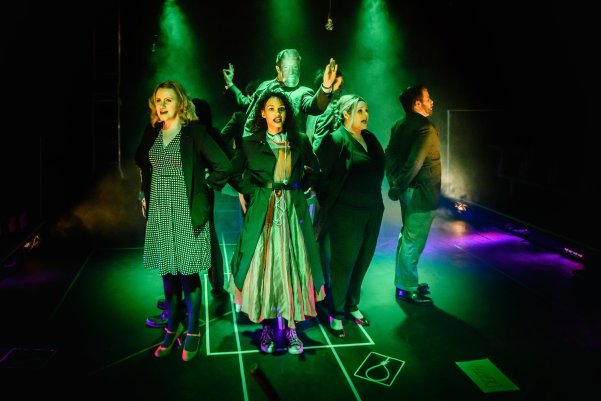
They are new to the King’s Head, but Charles Court Opera aren’t new to pantomime. This year’s Mirror Mirror: A Snow White Pantomime is their ninth “boutique” panto. Though an opera company, this show and cast of six are anything but stereotypical opera fare. John Savournin’s script is fresh and witty, the performances are camp and vibrant, and the re-written pop song soundtrack is so well sung that it deserves a cast recording. There’s plenty of typical panto interaction, made easier and more personal in a fringe venue but doesn’t overwhelm the space, either. Though the costumes are detailed and fun, the set is a bit analog and takes up a lot of playing space, restricting movement and choreography. Some of the performances were more genuine than others, but this remains a wonderfully current panto with excellent writing.

Savournin also directs and plays Snow White, the ditzy, ingénue widow of Barry White living with the seven dwarfs, all distinctly and energetically played by Matthew Kellet. Greedy queen Andrea Tweedale uses her mirror (Simon Masterton-Smith) to help her search for a husband, but her plans are thwarted when prince Larry Black (Amy J Payne) and his valet Harry (Nichola Jolly) show up looking for a bride and instead of being impressed by her beauty, Larry falls for Snow. The traditional story veers off in numerous contemporary directions from there, which adds to the audience’s delight and prevents the show from becoming stale or generic. The music is mostly cleverly reworked pop songs, but there’s a bit of musical theatre thrown in and the Act one Finale numbers are fantastic.

No individual performer overshadows the others, instead they are a balanced lot with clear strengths. Payne and Jolly are a charismatic pair, with Kellett’s range of dwarves a hilarious counterpoint to the leads. Savournin’s Snow is shallow but sweet and doesn’t fall short in any of the creative roles he takes on. Tweedale stokes the audiences’ booing and aww-ing brilliantly. The height difference between Savournin and Payne supports the comedy heavily peppering the dialogue, as does the cross-gender casting that goes beyond the dame and principal boy. There is some lovely chemistry between some of the characters but even though it’s a panto, there could be more between Payne and Savournin.

There’s loads of audience interaction and mess, the best being a Great British Bake Off-style competition that results in dough everywhere. Of course, there’s your usual panto call and response but not so much so that the script is otherwise flimsy. The unique visual gags Savournin employs are much more satisfying, anyway (pro tip: look out for Barry). A few give a nod to tradition, but this is definitely a language-focused script. This gives the performance a richness and depth missing from more traditional fare, hence the “boutique” label. Charles Court Opera is certainly onto a winning formula here within London pantomime offerings and is not one panto fans should miss.


The Play’s the Thing UK is committed to covering fringe and progressive theatre in London and beyond. It is run entirely voluntarily and needs regular support to ensure its survival. For more information and to help The Play’s the Thing UK provide coverage of the theatre that needs reviews the most, visit its patreon.

Piaf, Charing Cross Theatre

rsz_eventgallery-7928

Icon Edith Piaf inspired numerous films and plays, including 1978 play with music, Piaf. The four foot, 8 inches tall chanteuse from a broken home died at just 47, but left a songbook often heard in popular culture. These songs, which feature heavily, epitomize the defiant spirit of a France under attack, painfully relevant today. Addicted to drink and painkillers, the little sparrow must have struggled immensely with her inner demons but Pam Gems’ script avoids such nuance, for her or any of the other characters. Cameron Leigh’s belter of a voice reveals Piaf’s passion and turmoil through her songs, and the rest of the cast provide good vocal support, but Gems’ diabolically awful book manages to be rushed, tedious and two-dimensional all at once.

Portrayed as a selfish, junkie nymphomaniac who treats people as commodities, there is little room for audience sympathy in the first half. The scenes are short and delivered with an even, speedy pace; it’s as if director Jari Laakso feels uncomfortable with Piaf’s poor characterization and the gaping jumps in time that leave even the most important of events glossed over, and he wants to get to the interval ASAP. The second half marginally improves as Piaf’s health declines and she is seen as frail, vulnerable and poor. A few of the lines get laughs, as the humour is less distasteful than earlier in the play.

Cameron Leigh is an explosive barrage of rudeness as Edith Piaf and clearly struggles to find any decency in the script’s portrayal. Instead, she wisely focuses on revealing the character’s emotional life in her songs, the best feature of this play. Backed up by her best friend Toine (Samantha Spurgin), Marlene Dietrich (the imposingly glam Valerie Cutko) and an array of multi-rolling men and actor-musos, their vocal prowess makes this production bearable. It’s a small cast for the number of characters, but there is some good physical multi-rolling and costume indications help make up for scarcity in the dialogue.

Laakso and the cast energetically do their best, but the overwhelming issue in Piaf is Gems’ atrocious script. Otherwise, the songs are well sung, the production suits the theatre well and the set (Phillipa Batt) and lighting (Chris Randall) are well considered and often striking. It’s just a shame Gems isn’t alive to re-write it.


The Play’s The Thing UK is an independent theatre criticism website maintained voluntarily. Whilst donations are never expected, they are hugely appreciated and will enable more time to be spent reviewing theatre productions of all sizes. Click here to make a donation with PayPal.

Hello Again, Hope Theatre

https://i0.wp.com/grumpygaycritic.co.uk/wp-content/uploads/2015/10/Hello-Again-1402b.jpg

Knickers, bras and other vintage undergarments (oh my!) dangle from the Hope Theatre ceiling in dim light, the discarded ghosts of sexual encounters long past. Arthur Schnitzler’s 1897 Reigen, or La Ronde as it is more commonly known from the French translation, is reinvented in musical form in Michael John LaChiusa’s early 1990s Hello Again. Not content with the original story, LaChiusa spreads Schnitzler’s shags, blowjobs and wanks over the 21st century, updates some of the characters, includes gay relationships and adds a nearly continuous score mostly of duets, with musical influences from a host of eras. The sex is seen rather than just talked about, but otherwise Schnitzler’s format is replicated. Five actors each takes two characters and accompanied by a solitary keyboard, create an intimately filthy but strangely moving chamber musical in one of London’s newest pub theatres.

Hello Again, though titillating, also looks at the desire for sexual satisfaction through entirely unromantic, desperate scenarios. In ten short scenes, we see an array of social classes, professions and sexualities get their jollies before they run out of time; there’s the married housewife in her affair with a student, the soldier and the nurse before he ships out and the gentleman and cabin boy on the sinking Titanic amongst others. One-off and long-running relationships are accompanied by a range of musical styles on a bare bones set, but the minimalism means nothing is held back and it’s practically in your lap if you’re in the front row. Though there’s plenty of bonking, little is seen – a bum here, cleavage there; the acts themselves are staged realistically rather than stylized or hinted at by director Tania Azevedo. In our porno-fied modern culture where hardcore images and video are a couple of clicks away, to show the grunting and thrusting act without the bits strikes an interesting balance between honesty and discretion. With the audience split over three sides, more diagonals could have been used in the staging to improve sightlines for everyone, but otherwise the small space with no backstage is used well.

LaChiusa keeps the scenes short, but this enhances the immediacy and primal nature of sex. There are some good numbers, but the hodge podge of styles prevents much in the way of recurring motifs. The settings and characters are clear and believable, though their brevity needs the characters to get to the point quickly. As we don’t really get to know these people before us, they become an everyman of their character type: they are us, and we could easily be them. The ensemble cast is consistently good, with newcomer Isabella Messarra and veteran Miles Western giving the most striking vocal performances. Messarra’s Nurse is a wonderful force that literally dominates the posh student she cares for, Western is the smug senator exploiting a beautiful but lonely film star.

This is an excellent and largely faithful adaption of Schnitzler’s play that doesn’t shy away from explicitly prurient moments all sexual human beings can relate to. LaChiusa’s characters speak to all of us, even if his music is less satisfying. Azevedo’s direction and multi-roll casting suits the piece, as the intimate venue fits this infrequently staged and rarely seen musical.


The Play’s The Thing UK is an independent theatre criticism website maintained voluntarily. Whilst donations are never expected, they are hugely appreciated and will enable more time to be spent reviewing theatre productions of all sizes. Click here to make a donation with PayPal.