
Theatre can plumb the depths of despair. It can elevate human glory and achievement. It can stir the heart and still the soul. Or it can throw a fabulous party on a rocket ship full of bearded drag queens in sequinned thongs.

Theatre can plumb the depths of despair. It can elevate human glory and achievement. It can stir the heart and still the soul. Or it can throw a fabulous party on a rocket ship full of bearded drag queens in sequinned thongs.

by guest critic Maeve Campbell
Liza Minnelli should have starred in the original Sound of Music, Gypsy and Les Miserables, but somehow things got in her way. That’s Trevor Ashley’s vision, and he is giving her some of those classic Broadway moments in this hour and a half show. Direct from rehab, Ashley’s Liza is suitably glittery, lispy and pant-suited. This is not a subtle impersonation, but the receptive London audience certainly don’t want that.
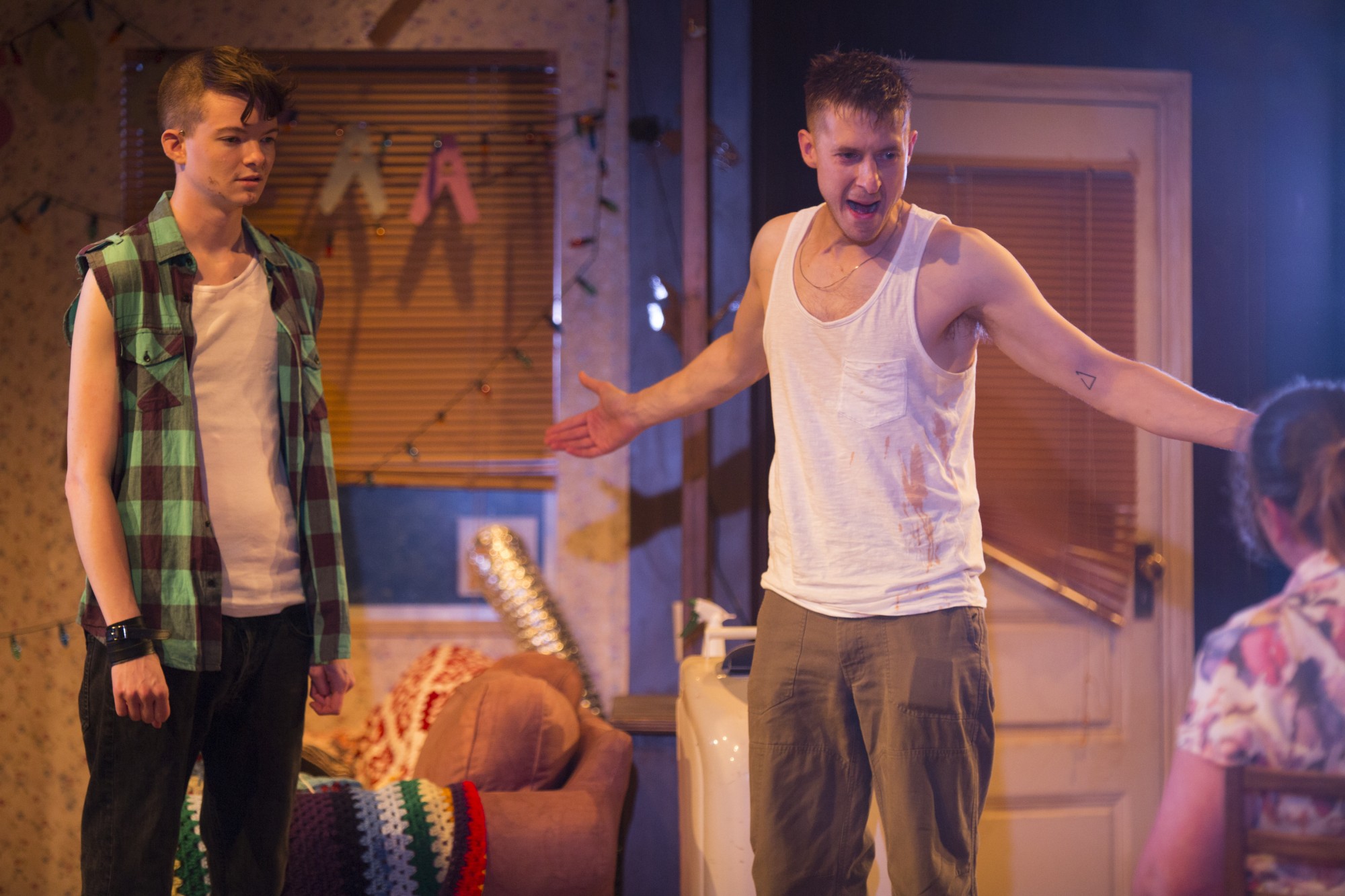
Issac is returning home after a three-year stint as a US marine where his job was to pick up body parts after front line attacks. He longs for the peace and quiet of his nuclear family and the familiarity of middle America so he can make peace with the demons of war. But on opening the door of the house he grew up in, he discovers a revolution has taken place on the home front. After a stroke turned his father into a near vegetable, his mother is avenging years of abuse. His sister Maxine has transitioned to Max. Both mom and Max have rejected social conventions and are living in an anarchic mess of laundry, dishes and socio-political soundbites.

Charlotte von Mahlsdorf was a collector and museum curator in East Berlin who survived WWII and the the Stasis, and murdered her abusive father when she was a teenager. More remarkably, she was transgender. I Am My Own Wife is primarily her biography and a tribute to her achievements, but also the research process by playwright Doug Wright. Wright set out to make a play about her, but was so affected by her stories that his reactions make their way into the text. It deservedly won all major American theatre awards after its Broadway premier in 2003, but Unusual Theatre Company’s production doesn’t serve the text as well as it could.

James and Daniel are chalk and cheese, and very much in love. The unemployed photographer and Canary Wharf stockbroker are adorably domestic, but both are hiding secrets. When James’ uni mate and ex-girlfriend Olivia vengefully reveals one of them, this irrevocably opens the floodgates to the rest. Excellent performances give this domestic drama its punch. Whilst the script is far from groundbreaking, it’s an accurate reflection of human intentions and fallibility.

By guest critic Alistair Wilkinson
Fly to the front line. Sing some songs. Win the war. Live happily ever after. Sounds easy, right? That’s the idyllic goal that two queers, an unmarried mother and an unborn child feel in Matthew Bugg’s dreamy production of Miss Nightingale. This gorgeous depiction of 1940’s Britain hits you right in the feels and pulls on all heartstrings. The set provides an intimate cabaret club vibe, decorated with posters stating memorable lines from the wonderful songs that are performed throughout.

By guest reviewer Maeve Campbell
Contemporary pop culture is awash with true crime stories: NPR’s Serial, HBO’s The Jinx and Netflix’s Making of a Murder are just a few titles that have recently gripped public imagination. It is therefore not surprising that two plays about the life of Harry Crawford, born Eugenia Falleni in 1875, have been dramatised in the last few years. The Trouble with Harry by Lachlan Philpot played in Melbourne in 2014 and now Christopher Bryant’s The Mutant Man comes to the Space Arts Centre.
Continue reading

By guest critic Jo Trainor
Diagnosis, dread, death, devotion, Patrick Cash has written five interlocking, thoughtful monologues that explore HIV from the most human perspective.
Alex isn’t wearing his power bottom singlet, but his James Dean swagger and Nick’s beautiful eyes are the making of a dream Tinder date. Until Nick reveals he’s HIV positive. Alex legs it, but his audition for Barney the next day forces him to re-evaluate his behaviour.
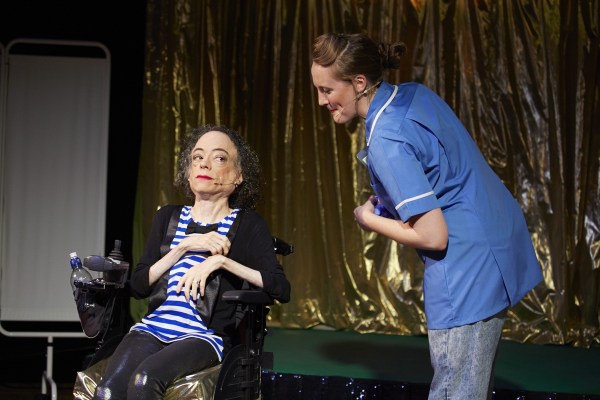
It’s uncomfortable to watch a play that conflicts with your politics or world view, and Liz Carr’s Assisted Suicide: The Musical does just that. The gay actor and comedian aligns with cuddly liberal ideology other than her avowed opposition to legalising assisted suicide in the UK. As a disabled woman, she worries that disabled people will consequently feel pressured to end their lives so they are no longer burdens on their loved ones, especially as many non-disabled people flippantly comment how hard their lives must be. After all, if you’re told the same thing over and over again, it’s too easy to start believing it.

First loves: awkward, hormonal milestones of young adulthood that make you feel like you’re on top of the world in a bubble that’s just the two of you. That is, unless you’re a trans or gender fluid teen who is still exploring gender identity, or someone with extensive family problems. But issues like these, when married with a youthful story of falling in love, make for some powerful and moving theatre.
Love, Lies and Taxidermy compares falling in love for the first time to living in a film. With narration incorporating stage directions, short scenes reminiscent of quick cuts and a wonderfully ridiculous conclusion, the play feels like a teen romcom, but has enough substance to ensure it isn’t total frivolity. It’s fluffy, sweet and addresses how social class can effect young love.
Set in Myrthyr Tydfil where all road lead to Tesco, Ash and Valentine meet at hospital when they’re both waiting to see if they qualify for paid medical trials. Ash’s dad is on the verge of bankruptcy, and Val’s parents are separated so he wants to send them on a cruise in hope they will fall in love again. The tentatively begin dating, but life has a way of interfering with their time together. Ash has other ideas to earn some quick cash courtesy of an aspiring filmmaker college mate, but devoted Val vehemently opposes them. Cue a mad dash adventure to rescue Ash from her poor choices and live happily ever after.
There are a few lose ends in the narrative that get forgotten in favour of the “boy rescues girl” plot line, like Val’s quest for money for his parents. They could easily be trimmed to get to the point faster, or developed further to make a more fully-formed story.
The cast of three display remarkable energy as they play all the roles. Remy Beasley and Andy Rush are Ash and Val, the young couple who clearly fancy the pants off each other. Rush, though the hero, goes against the stereotypical popular lad who wins the girl through violence and strength. Awkward and geeky, his devotion to the bold and brassy Beasley is utterly adorable. Beasley’s confidence also goes against the romcom trope; she most definitely does not want to be rescued even though she doesn’t want to make the money in the way she has chosen.
The ending, however unrealistic, charms and delights. Though there is no set to portray the described splendour, the text more than makes up for its absence. The intimacy of the Roundabout suits this play well, though a larger venue would give more scope for design.
Scorch takes a different tone from Love, Lies and Taxidermy, though it also has a generous helping of youthful optimism about love. Kez, a bio-girl who dresses as a boy when not at school Orr home, has met Jules online and is smitten despite the “cool dude” exterior. This story has a darker outcome what with the complexities of gender identity and disclosure as it reinterprets the classic coming-of-age tale.
Kez is perky, accepting and generally at peace with her discomfort in a female body. Amy McAllister embodies the role with verve and charisma, making the audience sympathetic to consequences that arise from not telling Jules that she has a female, strap-on wearing body. The character’s good intentions are sweet, but not enough to save her.
Kez grows up quickly over the course of the story, and the Internet gives her a wealth of information to help her explore her gender identity and legal options. Her social media accounts facilitate meeting girls, and it’s all too easy to set up alternative profiles that portray her as a boy. It also helps her find a local support group, so the sword that is growing up in the digital age is well and truly double-sided.
This is a well-formed script with several layers. Whilst it is a powerful piece of storytelling as a solo performance, introducing additional actors to take on other roles would add depth to Kez’s experiences. McAllister uses the space well, though the opportunity to fully engage with the audience is missed.
Both productions are generally excellent examples of storytelling. The differing perspectives on teenage love are delightfully nostalgic and provocative without becoming twee or trite. The Roundabout enhances their intimacy, but limits scope for design and staging. These two plays would be served just as well, if not better, in a larger space that enables them to extend their production values.
The Play’s the Thing UK is committed to covering fringe and progressive theatre in London and beyond. It is run entirely voluntarily and needs regular support to ensure its survival. For more information and to help The Play’s the Thing UK provide coverage of the theatre that needs reviews the most, visit its patreon.
 The Play's The Thing UK