The Kid Stays in the Picture, Royal Court

https://cdn.thestage.co.uk/wp-content/uploads/2017/03/22163612/Kid-Stays-In-The-Picture-Royal-Court-4291.jpg

By guest critic Willa O’Brian

The American dream is a tantalising thing. Even the grubbiest kid from New York, the son of a nobody dentist, can become a film star and producer. This is Robert Evans’ story, the man responsible for pictures like ‘The Godfather’. Complicité’s Simon McBurney adapted the show from Evans’ autobiography, which paints a picture from a better time: when movies were pictures and hard boiled men tacked “see?” on the ends of sentences wreathed in cigarette smoke. It is visually sumptuous and the cast of eight are a constantly churning ensemble that whip the story into a froth and delivery a sensory overload of American tropes and history and multi-media tricks. Given the subject matter, the desire to incorporate all of these elements makes sense.

Continue reading

The Toll, Half Moon

https://cdn.onthewight.com/wp-content/2017/03/luke-wright.jpg

Luke Wright’s jovial demeanour and impressive word hoard sit at odds with his smudged eyeliner and black leather jacket. The unassuming performance poet skulks to the mic, breathes, then unleashes a torrent of verbal acrobatics snapshotting British everymen and women. From a Georgian dine and dasher, to a bloke from Essex who swears he saw a lion roaming a campground, Wright’s depictions bring these characters to life. His dexterity and character-driven performance has a theatricality missing from most performance poetry, but the polished story present in What I Learned From Johnny Bevan is notably absent in The Toll.

Continue reading

The Mutant Man, Space Arts Centre

315_The Mutant Man @ The Space. Photo by Greg Goodale

By guest reviewer Maeve Campbell

Contemporary pop culture is awash with true crime stories: NPR’s Serial, HBO’s The Jinx and Netflix’s Making of a Murder are just a few titles that have recently gripped public imagination. It is therefore not surprising that two plays about the life of Harry Crawford, born Eugenia Falleni in 1875, have been dramatised in the last few years. The Trouble with Harry by Lachlan Philpot played in Melbourne in 2014 and now Christopher Bryant’s The Mutant Man comes to the Space Arts Centre.
Continue reading

One Last Thing (For Now), Old Red Lion

https://theblogoftheatrethings.files.wordpress.com/2017/02/one-last-thing-for-now-credit-of-laurie-field-14.jpg

Families separated by war and conflict have kept in touch one way or another for time immemorial. Recently giving way to skype, texts and emails, letter writing is now largely neglected – but surviving relics betray heartache, fear and longing. International theatre company Althea Theatre draw on choral physical theatre and the intimate communications between family members from a range of global conflicts to create a moving tribute to love and patriotism.

Continue reading

The Lock In, VAULT Festival

https://i0.wp.com/www.vaultfestival.com/wp-content/uploads/2016/11/Oran-Doyle-THE-LOCK-IN-OTL-Main-Image-1024x579.jpg

It’s St Patrick’s Day at an Irish pub in London. We’ve been there for awhile, but the night is young. There’s a five-strong band more focused on arguing the facts of Irish history than playing music. This becomes the story – drunken frontman Eamonn (Ian Horgan) attempts to tell us the story of the venerable saint. Numerous diversions, interaction, songs and plenty of banter follows a convoluted path through the power of storytelling, national identity and the veracity of history.

Continue reading

On the Crest of a Wave, VAULT Festival

https://c1.staticflickr.com/7/6151/6256944614_f60d68027b_b.jpg

Camilla Whitehill’s grandmother died when her dad was 10 years old. He never talked much about her, but Camilla is fascinated by this woman she never met. Inspired by familial memory and grief, Whitehill and five other theatre makers draw on their own histories to create a playful homage to the endurance of family stories. It’s a joyful experience with a retro seaside aesthetic and a big heart, though lacking in polish and a consistent throughline.

Continue reading

Droll, VAULT Festival

img_0177By guest critic Jo Trainor

“Let’s all dance ‘round the shitty faced baby.”

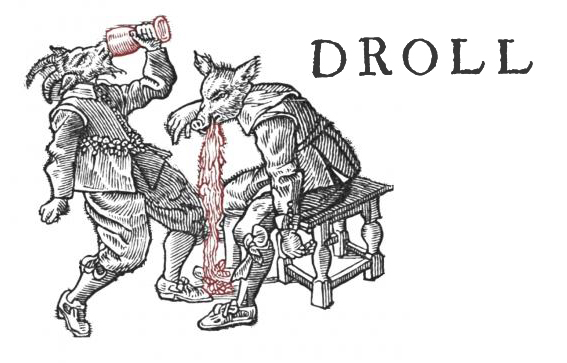
Drolls (director Brice Stratford explains) were short, raucous, illegal plays from the 17th Century. Oliver Cromwell and the Puritan interregnum banned theatre from 1642, but drolls were performed in pubs and alley ways to keep theatrical traditions going. Stratford says no one has put on a droll for 400 years, and boy, have companies been missing a trick because these sketches provide a hilarious evening of entertainment. There’s sex, there’s adultery, and you’re given a shot of whisky when you come in the door.

Continue reading

Interview: Mark Brailsford on Staging Shakespeare’s Stories

https://i0.wp.com/www.brightonandhovenews.org/wp-content/uploads/2016/04/DSC01425.jpeg

When Brighton Shakespeare Company’s press release for their Macbeth tour of historical churches in Brighton and Sussex landed in my inbox, I was sorry I couldn’t make it. Shakespeare productions in churches and cathedrals wonderfully hark back to the grandeur of private performances for noblemen and royalty in the 16th century. Shakespeare’s epic stories sit well in the sweeping architecture of these ancient buildings, and on a practical level it’s a great way for companies to save money on sets and reach audiences in rural locations.

Used to the plethora of venues that showcase small-scale, fringe and progressive approaches to Shakespeare in London, I was curious about BSC’s unusually traditional approach. I spoke to artistic director and founder of this new regional company, Mark Brailsford, about the company’s work.

Tell me a bit about Brighton Shakespeare Company and its mission.

The BSC’s ethos takes a character-led approach inspired by Ron Moody and Stephen Berkoff. The company’s aims are to bring individual, characterful actors to the classics in the style of the time the plays were written.

How do you approach Shakespeare? What concepts to you employ?

We are apparently called radical because we set our productions in the period, something not many companies seem to do these days and we’re happy with this label. Many companies, but not all, like to have directors impose their directorial vision onto the plays whereas my approach is to be true to the story and genius of the Bard himself. [I aim] to bring them to life by allowing the story to stand on its own terms. After all, it seems to have worked for 400 years.

Why stage Shakespeare for audiences today?

[The] story. The themes and narratives are as relevant today as they have ever been. Love and loss, pain and laughter, war and peace and the slings and arrows of outrageous fortune. These exist in day-to-day lives all over the world.

What are some of the obstacles you and the company face?

Lack of money! We’re unfunded and back our shows via crowdfunding and box office.

Shakespeare is known for not supporting diversity. What steps are you taking to redress the balance?

This is a myth as there was more diversity in Shakespeare than commonly thought, especially for his time. His women are very strong characters, Othello was black and one of the best take-downs of antisemitism was Shylock’s speech in Merchant of Venice. He also gave prominent parts to working class characters, not a theme of Elizabethan life at the time.*

What do you hope audiences take away from your productions?

Joy, a tingling spine and a thrilling comprehension of the play.

*These views are not representative of those held by The Play’s the Thing UK or its writers.

The Play’s the Thing UK is committed to covering fringe and progressive theatre in London and beyond. It is run entirely voluntarily and needs regular support to ensure its survival. For more information and to help The Play’s the Thing UK provide coverage of the theatre that needs reviews the most, visit its patreon.

Father Comes Home From the Wars (Parts 1, 2 & 3), Royal Court

https://i0.wp.com/www.officiallondontheatre.co.uk/servlet/file/store5/item374788/version1/fileservice770/374788_770_preview.jpg

American, Pulitzer Prize-winning playwright Suzan-Lori Parks doesn’t shy away from epic projects. Six years ago, she wrote a play a day to create 365 Days/365 Plays, then went on to write the nine-part Father Comes Home From the Wars. Parts one, two and three centre around Hero, a strapping young slave on a remote Texan farm. Spanning the Civil War, this epic story with influence from Greek myths and contemporary socio-political issues in Parks’ distinctive, poetic language takes its time to develop and has some discordant stylistic choices, but its narrative and historical interpretation is both compelling and important.

Each of the three parts has moments of profound brilliance and devastation, but Parks is in no rush to tell her story. The dialogue-driven script takes its time, meandering around a complex landscape of slavery, loyalty and race within this particular slave family. Though set in war time, there is little action – broader issues drive the conversation more so than current events. This is more of a kitchen sink drama than a wartime adventure story.

Part one solely takes place on the farm as Hero debates whether or not join his master in battle. The rest of the slaves take bets and try to persuade him one way or the other, but in the back of Hero’s mind is a promise from the Boss-Master – but is he likely to keep his end of the deal? Hero’s loyalty is split between his owner and his wife Penny, but the lure of the cast-off but smart uniform proves too much. Though little happens, the domesticity of part one has some of the tension that precedes a huge decision. Seeing a tall, strapping black man in the prime of his life wearing Confederate greys is most unsettling; this paired with the ingrained, accepted attitude that he is the property of his owner is a potent reminder that there has been insufficient progress in America’s attempts at racial equality.

Part two, though set at a particular moment in the midst of the war, has the calm of an eye of a storm and is by far the best of the three parts. Hero and Boss-Master have captured a Yankee prisoner whilst separated from their regiment during a battle. Hero’s loyalty is tested again, this time by his prisoner upon discovery of a secret that’s hidden in plain sight and only skin deep. Racial identity, individuality and freedom intertwine in an intoxicating allure of potential for Hero, who is still doggedly loyal to his owner. The powerful ending devastates in its frank depiction of ingrained attitudes of racial inferiority and liberal frustration with this mentality.

Part three is the more mature sibling to part one. The characters are older, wiser and more world weary in the face of Southern defeat. The pre-war certainty has given way to a chance at the great unknown of freedom, and for the first time they can choose where they live – anywhere in the great, wide world, or on the farm they have known forever. Penny and Hero’s devotion is destabilised in this irrevocably changed world that is now free, but cold and dangerous – and still is for black Americans today. The morality of freedom isn’t black or white here, but the ominous, thought-provoking grey of Hero’s, (now called Ulysses) uniform.

Neil Patel’s unforgiving desert of a set doesn’t have bells and whistles, but it’s sparsity highlights the richness of Park’s language and characterisation. Steve Toussaint is the remarkable Hero, painted with delicate light and shade. The rest of the cast are excellent in their own right, though lack the development of the initially appropriately-named lead.

Parks’ script is almost completely bedded in realism (that’s occasionally heightened), though a talking pet and some contemporary costumes slightly skew reality. Both are used sparingly and without any evident justification across the three parts so their inclusion feels jarring and unnecessary. The onstage musician, though very much a separate commentator, doesn’t clash the way these choices do.

For a play set during a war and a pivotal moment of America’s history, it is oddly detached from violence and conflict. Instead, Parks’ text goes after deeper themes within this transition from slavery to freedom. Though a greater sense of danger and looming dread would add needed further tension in parts one and two, the nuance that flows through the story is undeniably exquisite.

Father Comes Home From the Wars (Parts 1, 2 & 3) run through 22 October.

The Play’s the Thing UK is committed to covering fringe and progressive theatre in London and beyond. It is run entirely voluntarily and needs regular support to ensure its survival. For more information and to help The Play’s the Thing UK provide coverage of the theatre that needs reviews the most, visit its patreon.

World Without Us, Edinburgh Festival Fringe

https://www.thestage.co.uk/wp-content/uploads/2016/08/World-Without-Us-700x455.jpg

Imagine the world if the entire human population disappeared suddenly, without a trace. What would it look like after a day, a month, a century, an era? A lone performer from Belgian company Ontroerend Goed methodically describes how the theatre space we sit in would change as a focal point within the wider world’s transformation. Delivered in a near monotone on a stage bare except for a grey obelisk, World Without Us is a meditative account of our solar system’s lifespan, and humanity’s inconsequence in the great scheme of planetary existence.

Karolien De Bleser quietly narrates this epoch-spanning journey of our planet with matter of fact coolness. What she describes really is remarkable in its compressed state, but the almost total lack of inflection makes the text pedestrian even in its most dramatic moments. Her movement around the space is relaxed and random, to look for meaning in it feels silly what with the story she tells.

With the ability to focus on the story without the mind drifting to topics such as what to have for lunch, the overall effect is a sense of calm acceptance that our lives, whilst impacting the planet immediately, really don’t matter. Our absence has little effect other than the gradual decay and burial of the artefacts we leave behind. Even in periods of environmental turmoil such as we see in the planet’s history, the impact is meaningless.

Even though the sun eventually swells and engulfs the Earth before it dies, all is not lost. Lightyears away, a single human artefact remains with a friendly but assumptive purpose. Its contents are, depending on one’s world view, absurd or incredibly beautiful. Perhaps they are both.The whimsy of human invention is particularly poignant at this moment.

World Without Us is a lovely, contemplative piece of performance and would work particularly well as an audio recording. As theatre, it could come across as flat, or upsetting or remarkable, depending each individual’s world view. Calmly provocative, it is wonderfully wide open to interpretation and effect.

World Without Us is now closed.

The Play’s the Thing UK is committed to covering fringe and progressive theatre in London and beyond. It is run entirely voluntarily and needs regular support to ensure its survival. For more information and to help The Play’s the Thing UK provide coverage of the theatre that needs reviews the most, visit its patreon.