
 Romeo and Juliet gets a modern, interspecies remix by Rita Kalnejais in the south London-set First Love is the Revolution. Awkward, lonely Basti (James Tarpey) is trying to make the best of his teen years in a broken home when he meets Rdeca (Emily Burnett), a sassy fox cub hunting on her own for the first time. With Rdeca’s family not the most functional either, the two black sheep find solace in each other when they discover they understand each other’s speech. Using a bold metaphor for the deliberate choice to alienate or accept of The Other, this urban adventure through back gardens and fox dens is simultaneously funny, brave and disturbing, whilst excellently performed and with writing that keeps the audience on its toes.
The cast of six with a 50/50 gender split is also commendably diverse in age and ethnicity. Hayley Carmichael leads the pack as the fox family’s fierce matriarch. Tarpey and Burnett are the only cast members who do not play multiple roles, though the skill in these young actors is evident in their charming chemistry. Lucy McCormack of performance art acclaim plays a wide array of roles from Rdeca’s hyper but affectionate sister, to the neighbourhood cat that taunts thuggish guard dog Rovis (Samson Kayo) and the prozzie who lives upstairs from Basti. Basti’s dad (Simon Kunz) who wants his meek son to uphold the fighting, womanizing “ideal man” is also Gregor mole and a delightfully gossipy old hen in a cardigan, tweed skirt and wellies on a never ending search for grass seed. Director Steve Marmion’s choice to use animalistic physicalities is just enough of a reminder that not everyone in this play is human, but the movement is not so overpowering that it interferes with the characters’ relationships.
Anthony Lamble’s set design is almost post-apocalyptic; it is certainly grim enough to reinforce the lack of comfort in all of the characters’ lives, human or animal. Human domesticity precariously sits on rolling black slopes that the actors nimbly climb over and tunnels they scurry through. Philip Gladwell’s lighting smoothly morphs through sunsets and sunrises that dictate the wild rhythm of Rdeca and Basti’s all-night adventures.
Kalnejais’ use of the animal/human relationship is a lovely idea, with Basti paralleling the open minds of those willing to see The Other as themselves; he is a citizen opening his home to a refugee rather than labeling her as a pest. The concept harks back to ancient fables and folktales, connecting our often-disconnected present from the rich heritage of our storytelling past. However, whilst I certainly don’t believe she is advocating bestiality, it is the first thing that springs to mind when Basti and Rdeca are caught in a compromising position. It’s not revolutionary, just gross. Maybe it makes me a prude, but I find fox and human sex damages the metaphor rather than reinforces it.
Regardless of acts that would have the RSPCA up in arms, this is a stunning production in Soho Theatre’s main house that brings the emotional scale of Shakespeare to modern day London, with a visceral fervor that celebrates the magic of young love and accepting those that are different from us.
The Play’s The Thing UK is an independent theatre criticism website maintained voluntarily. Whilst donations are never expected, they are hugely appreciated and will enable more time to be spent reviewing theatre productions of all sizes. Click here to make a donation with PayPal.
 “Netflix and chill” takes on new meaning in Five Guys Chillin’. Well, the “chill” part does, and is also substituted with “chill out”. Rather than awkward hetero teenagers using the word to arrange a sexual encounter, in this context it’s multiplied by whatever factor the host fancies to make a drug fuelled sex party, usually in someone’s home. The verbatim play, carved out of more than 50 hours of interview transcript, graphically details typical chill out behaviour as well as frank discussion of issues within the gay community. Despite many funny moments, some great staging, and the raising of important points, there is precious little plot; this makes the production more of a live interview with the questions omitted rather than a play that tells a story.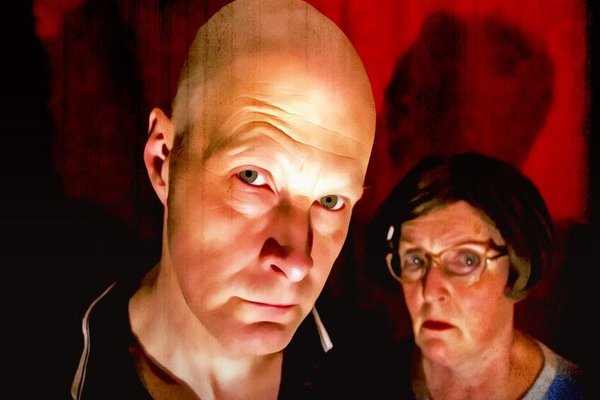

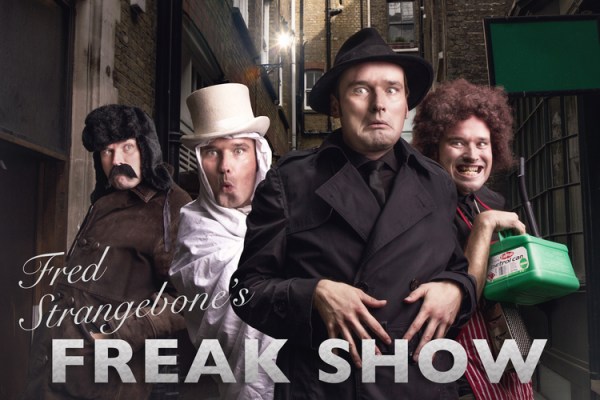 I’m watching Ben Whitehead play a socially inept Victorian playing a half-walrus/half-man creature, indicated by the wearing of a hooded grey sleeping bag, blue swimming flippers on his hands, and paper tusks precariously attached to his face with a false moustache. I’m pondering the life choices I’ve made that led me to this moment as well as whether or not the character-based stand up/absurd solo performance/live art/Victorian freakshow satire/old-fashioned variety show that unfolds before me is one of the greatest pieces of theatre I’ve ever encountered, or the worst. It may possibly be both. I still haven’t decided, and may not ever do so, let alone by the time I finish this review. Fred Strangebone’s Freakshow violently mashes up genres in a bizarre yet often-hilarious piece that manages to be both straightforward and bafflingly random.
 Most Shakespeare I see is performed with the actors’ genders matching that of the characters they play. Sometimes I see token cross-gender or gender-blind casting within an own-gender cast, sometimes all-male productions and less often, all-female productions (
 New writing based on classical literature, with the audience being served Italian food as part of the performance, sounds like a cracking way to spend an evening. The Gastronomical Comedy tells Dante’s story as he tries to be an actor in London but ends up working in his wife’s uncle’s restaurant, The Inferno, to pay the bills. It’s a timeless story of artistic struggle meant to parallel Dante Alighieri’s journey through hell, though the connection between the two stories was tenuous at best as the modern day Dante didn’t encounter particularly difficult opposition to his dreams. Despite good performances, it’s a concept that is good in principle but feels very much like a work-in-progress in need of quite a lot of script development before being a completed piece of theatre.
 Bethany runs a work-in-progress writers’ retreat on an idyllic Greek island. Her current guests are realty TV star lad’s lad Travis who is paying her to ghostwrite his autobiography, and Eric, a hippie idealist who chucked in his comfortable life to write a fantasy novel set in the present day based in Greek mythology. When mysterious biker chick Athena turns up looking for username Ferryman4 in response to his online advert of souls for sale, Eric’s fantasy starts to look rather like reality.
 The Play's The Thing UK