
Now-defunct Ideas Tap lives on at Underbelly with solo shows selected from shortlisted applicants to one of their funding briefs. The Eulogy of Toby Peach is a witty, hopeful autobiography of a young man diagnosed with Hodgkin’s Lymphoma at age 20. Brute darkly reflects back to writer/performer Izzy Tennyson’s school days at a low-performing girls’ school in a nameless English town. Much Further Out Than You Thought is the slow-burning delusion of a veteran suffering from PTSD. Wildly different in tone but with some excellent moments and good performances, these shows are good representatives of emerging solo performance at the Fringe.
 The Eulogy of Toby Peach, by Toby Peach, is a eulogy in that it celebrates his life and continued survival after two bouts of cancer that could return at any time. He speaks to us quietly with numbers, statistics and anecdotes from his life with cancer in between episodes of The Cancer Club, of which half of us will eventually become members. “Cancer is you,” he explains, like, “a terrible one-man show where you play all the parts.” At The Cancer Club there are all sorts of complicated cocktails and the constant threat of remission, but Toby is lucky that his girlfriend Kristy is always by his side. The Cancer Club gets a lot of laughs, but it is equally horrifying.
The audience also discovers the NHS “wank room”, the Willy Wonka-esque magical machine that facilitates stem cell treatment, and the biological consequences of his chemotherapy. Peach is a charming, confident performer who is able to confront the awfulness of cancer with humour, hope and warmth. He switches back and forth between his everyday self and heightened versions of Toby, which maintains audience focus, a clear narrative and varied performance styles. The fear and anger that eventually emerge are truthful and fully justified without coming across as ranting or indulgent. His show is hopeful rather than wallowing, and his infectious enthusiasm leaves the audience completely on his side and reminded to appreciate those closest to them.
Brute takes an entirely diffe rent tone and has less of an emphasis on narrative, sticking to one constant character who reenacts excerpts from day-to-day life. Some of her monologues are connected, some are isolated. Poppy is in year 11, exams are looming and her friendship group is small and constantly in flux. It’s easy for adults to brush off teenage relationships, but Brute is a reminder of just how horrible kids can be to each other, particularly girls.
Izzy Tennyson is Poppy’s creator/performer, speaking to us directly about her friends, teachers and family. It is never clear what her relationship is with the audience, but they are treated like a diary or confidante. As over-dramatic as some her stories can be, Tennyson employs a stark honesty that demonstrates the complexity and viciousness of teenage friendships. She also brings up self-image; Poppy is not one of the Pretty Girls, but a troll and a virgin, like the other girls in her group. They regularly engage in bullying, isolation and bitchiness as a way of joking or communicating how they feel about each other. It’s pretty horrible to watch, but countered with a good deal of humour. Tennyson’s performance is relentlessly energetic and committed; teenaged sarcasm alternates with hurt and anger that builds to a violent climax on the last day of school. There is no performance style variation, but the power of this piece lies in the content. It’s a stark reminder of how tough it is to be a kid, even more so now with the role of technology in teenager’s lives.
 So we’ve covered cancer and horrible teenage behaviour. To continue with Serious Issues, Giles Roberts’ Much Further Out Than You Thought presents a lonely veteran who has lost everything. Lance Corporal James Randall lives in a dusty flat and talks to his young son, Danny, about the experiences in Afghanistan that have left him a quivering husk of a man. The set is a simple living room, but the floor is covered in gravel and sand, the desert that James has not been able to leave behind. The first half of the play is an evenly delivered and reflective monologue about his desire to serve, enlistment and more mundane aspects of life with the British army. As it starts to feel on the lengthy side and lacking development, James abruptly relives a pivotal mission supported by powerful lighting design by Elliot Griggs. The audience sees the man he once was, a stark contrast the man he is now.
From this scene the script continues to grow, ending with a disarming revelation about Danny, and James’ plans for the future. The character develops rapidly in the second half of the play, showing Roberts’ range and emotional depth as an actor. It’s hard to empathise with James at first, but as his laddish, South London boy exterior breaks down, so does the audience. The beginning of the script could do with some editing, but the end redeems the production and sends the message home. Society is simply not doing enough to take care of our veterans.
None of these new plays take on buoyant subject matter, but all three convey important social messages. The performances are excellent and clearly demonstrate the conviction of emerging theatre artists to catalyze social change through their work. These shows could use further development and refining, but show promising developments in solo performance and carry Ideas Tap’s legacy.
The Play’s The Thing UK is an independent theatre criticism website maintained voluntarily. Whilst donations are never expected, they are hugely appreciated and will enable more time to be spent reviewing theatre productions of all sizes. Click here to make a donation with PalPal.
 Who knew a block of yellow foam could be such fun? Bruce is the not very bright, cop-turned-novelist-turned-astronaut, stuck in a time warp, lead character of Bruce. Created and controlled by Tim Watts and Wyatt Nixon-Lloyd, Bruce is a rectangular, Sponge Bob-like head with a white pair of hands. All of the other characters are played by the same head and hands, but Watts and Nixon-Lloyd use an array of voices to effectively distinguish them from each other.
 script is some of the best new writing I’ve seen in a long time. The characters are intricately detailed and exquisitely sculpted with enough contrasting goals to create natural dramatic conflict without excess. Using Mark’s girlfriend and Becky’s running club mate as a point of reference in their conversation prevents the play from becoming just about Mark and Becky, placing it in the real world even though we only ever see the two of them. The story’s dramatic arc is textbook, but hugely effective with a satisfying resolution. My only issue is the length – this play simply must be lengthened so the story can be continued. I was so engrossed that the abrupt ending was frustrating.
 Camilla Whitehill’s Where Do Little Birds Go? tells the true story of Lisa Prescott, an 18-year-old nightclub hostess kidnapped by the Kray twins in 1966. Re-named Lucy Fuller, Jessica Butcher tells Prescott’s story through this harrowing solo performance. Humour and music are used to break up the horror of Fuller’s imprisonment with an escaped murderer who rapes her for hours on end, but some of the music transitions feel forced. Lucy loves singing; Butcher shares this love with gusto. She also wonderfully and ever so slowly transitions from the bright eyed, bushy tailed girl from Hastings who moved to London with hopes, dreams and £5 in her pocket, to a quietly streetwise, mature young woman.
 My last production of the day is Katharine Rose Williams Radojičić’s Love Letters to the Home Office, which receives a one-off table reading at Summerhall. This is one of the most important plays of contemporary British theatre. Not because of innovation or style, but content: it exposes the consequences of the 2012 Home Office legislation that breaches the human rights of an estimated 50,000 families in the UK.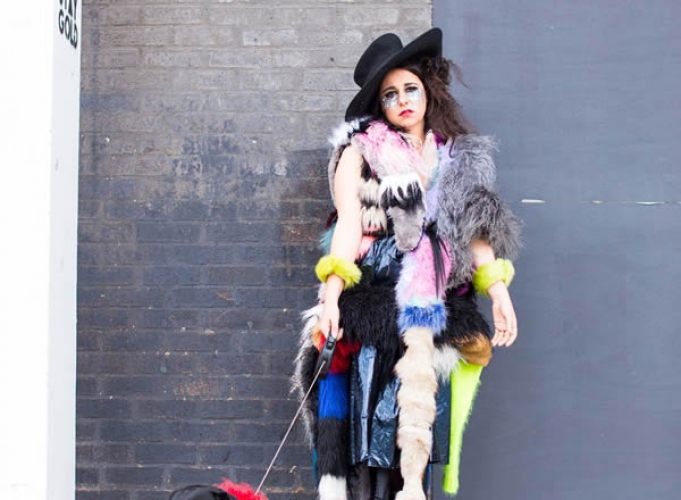


 The Play's The Thing UK