The Awakening, Jack Studio Theatre

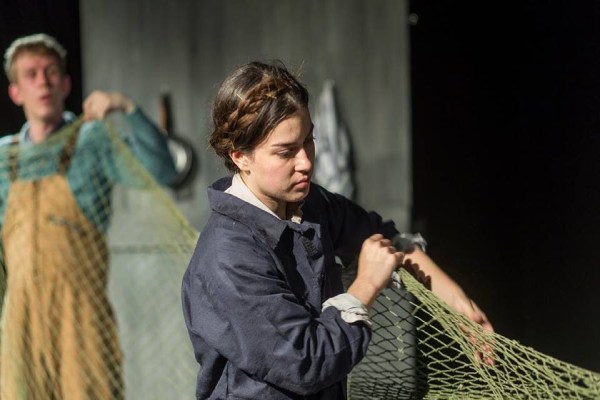
Johannes, a young man with pronounced learning difficulties, is in solitary confinement for raping and murdering a young girl. The prison captain Agnes, seeing goodness in the boy, introduces him to Christianity and gains permission for him to live and work on a remote island farm. Sadly, her good intentions don’t come to fruition in this story that disintegrates as quickly as its moral compass does. A strong cast of four help ease the discomfort that abuse and structural weakness encourages, though good performances aren’t enough to redeem The Awakening.

Unn (Joana Nastari) lives alone on the farm she runs whilst her brother is at sea fishing most of the year. Keen to have help, she seeks out Agnes for help finding a suitable farmhand. Nastari is the highlight of the show as she delicately guides Unn’s transformation from cold dictator to accommodating teacher; it’s a marvellous transformation despite the character’s questionable ethics. Alex Dowding’s Johannes is charming and innocent, with the added depth of a violent edge that could emerge at any moment. 

Despite the performances, Julian Garner’s script is the problem here. The plot becomes more and more choppy as it goes on, as if Garner cut entire scenes in the last third in order to meet a running time restriction, leaving the whole thing to collapse at sea. The ending offers no resolution or explanation for Unn’s choices, and supporting character Iversen is underwritten and implausible. An interval serves to fragment the story even further and the initial work on relationships to disappear.

The minimalist set by Florence Watts is versatile and indicative of the Scandinavian setting, complimented by Jennifer Rose’s sleek lighting. Director Medelaine Moore captures the rhythm of the scenes well, though she makes some questionable staging choices in the routes through and around the space – they become comical rather than indicative of a location change.

The Awakening feels like the work of an inexperienced playwright, though the production does a fairly good job at realising the characters and ideas that are lightly sketched in the script. It has the potential to be a challenging story; instead it drifts away into nothingness.

The Awakening runs through 24 September.

The Play’s the Thing UK is committed to covering fringe and progressive theatre in London and beyond. It is run entirely voluntarily and needs regular support to ensure its survival. For more information and to help The Play’s the Thing UK provide coverage of the theatre that needs reviews the most, visit its patreon.

Burning Doors, Soho Theatre

I can’t imagine living in a country where theatre is censored for criticising the government, and theatre makers who create politically subversive work risk arrest, torture and death. But this is the reality of Belarus Free Theatre. Its three founders, now refugees living and working in London, risk imprisonment if they return to their home country. They stubbornly continue to make work that’s ferociously critical of the Belarusian and Russian governments, and aggressively eye-opening for audiences like us who do not live under an oppressive dictatorship. 

Unadulterated rage and brutal experiences at the hands of the Belarusian and Russian judicial systems underpins Burning Doors, a nearly two-hour long collage of striking visual theatre. BFT tries to do too much here though, and it’s totally overwhelming. Though the show will undoubtedly linger for some time, a narrower selection of content and narratives explored more in-depth would have more personal impact.

Featuring Pussy Riot member Maria Alyokhina and her experiences in prison, the piece has a focus on the true stories of activists at the hands of the government. Dostoyevsky and Foucault also inform the piece, though there is the sense that there is much more at play than three individuals’ stories. There is a disconnect between the experiences shown, making them feel like isolated incidents rather than a sample of widespread persecution. Some wider context is provided, but there is little sense of the world these activists live in. It feels like it would be helpful to have more knowledge of Russian and Belarusian politics, and not having this knowledge is somewhat alienating.

That’s not to say that the show isn’t powerful. The company’s fearlessness in using extreme physical performance to show the brutality of the regimes is admirable and courageous. The final half hour or so is an extended movement sequence using acrobatics, rope work and combat utterly  horrifies – there is no doubt that the depicted of torture and abuse has happened and continues to do so in prisons all over Russia and Belarus. This section is by far the strongest. 

The ensemble cast of seven work together seamlessly and have a fantastically watchable rapport. Their unwavering commitment and passion makes for compelling viewing. Their precision is enhanced through Joshua Pharo, Nicolai Khalezin and Richard Hammarton’s design. 

Though Burning Doors huge ambition and absence of a through line ultimately do the show a disservice, it’s bold portrayal of government sanctioned torture against its own people is radical, challenging and necessary.

Burning Doors runs through 24 September, then tours nationally and internationally through 3 December.

The Play’s the Thing UK is committed to covering fringe and progressive theatre in London and beyond. It is run entirely voluntarily and needs regular support to ensure its survival. For more information and to help The Play’s the Thing UK provide coverage of the theatre that needs reviews the most, visit its patreon.

E15, Edinburgh Festival Fringe

Focus E15 Hostel in east London isn’t the lap of luxury. Far from it – it’s the last resort of dozens of people who would otherwise end up on the streets. The dedicated mother and baby unit is a particular refuge for young women and their babies with no where else to go. That is, until the council serves them an eviction notice so they can sell the land to property developers. Promises of rehousing have been undermined by stories of families being moved outside of the borough, sometimes hours outside of London and away from everything they know. Angered by the unfeeling power government officials wield over their lives, the mothers from Focus E15 organise and launch an attack on those that favour profit over people. Their campaign is captured in verbatim play E15, a piece that is part political rally and part documentary.

One of the drawbacks to verbatim performance is that material is usually sourced in one-to-one interviews, so dialogue between characters is either limited or artificially constructed. Though this is evident here, placing much of the action within a protest or occupation keeps energy up, and monologuing makes more sense in this context. It would be great to see more in-depth character interaction though, particularly between the mothers, in order to develop a greater sense of the community their work hinges on.

The cast’s confidence and conviction are infectious, and the DIY-style set design lends a further sense of grassroots unity. The party that’s going on when the audience enters sets an upbeat, relaxed tone that soon shifts to the tenants’ grim reality – an excellent contrast.

Fortunately, the Focus E15 residents have some effect, but their campaign must on – what happened to them is happening to others. E15 successfully brings the audience to their side and encourages awareness and campaigning, but the verbatim text lacks the anger that is kept in check in the interview process. This is a story that would have more emotional immediacy with a script informed by their testimony rather than constructed from it. The production certainly has plenty of merit and is well performed by the ensemble cast but in this instance, the verbatim script serves to distance rather than bring these people fully to life.

The Play’s the Thing UK is committed to covering fringe and progressive theatre in London and beyond. It is run entirely voluntarily and needs regular support to ensure its survival. For more information and to help The Play’s the Thing UK provide coverage of the theatre that needs reviews the most, visit its patreon.

House + Amongst the Reeds, Yard Theatre

For better or worse so much of our life, personality and choices are shaped by relationships with family. A stable, loving upbringing can equip an individual with the same traits, and the opposite often ushers in a lifetime of hardship. House + Amongst the Reeds are two short plays presented as a double bill by Clean Break showing the consequences of family disruption on the lives of young people. Different in content and tone, both have their faults in their execution but lay bare a selection of issues in Western social and familial fabrics.

Oni and Gillian are two undocumented, homeless teenagers in Chino Odimba’s Amongst the Reeds. The two girls are the same age, and both ran away from abusive family members who their parents trusted to raise and educate in the UK. Nigerian Oni and Vietnamese Gillian are chalk and cheese, but when Oni promises of a house of their own where they can raise Gillian’s soon-to-be-born baby, education and good jobs once she receives her leave to remain, Gillian can’t resist. Tragically, youthful optimism and ignorance leads them to a very different place. 

An ambiguous ending leads to questions of what is and isn’t real, but the story is a powerful reminder that there are young people in similar situations hiding in plain sight up and down the country. They don’t need to be deported, they need to be placed with a caring family who can help them achieve the education and quality of life they deserve. 

The characterisation of both girls tends to generalise, but actors Rebecca Omogbehin and Jan Le endow them with heart. There are too many stereotypes present that blockpotential pathos, but the story is a strong one that needs to be refined and heard. 

House is structurally more developed with well-rounded characters, though there is a pronounced lack of background information that is alluded to in this mini kitchen sink drama. Mama is seeing her estranged, eldest daughter for the first time in years, and her younger daughter, the good devoted one, has a secret she needs to share. 

Writer Somalia Seaton tries to fit an overly tangled web into too short of a time for her characters to properly confront their issues, but the cast of three deliver some lovely performances. Shvorne Marks and Rebecca Omogbehin as sisters Patricia and Jemima have a fantastic chemistry, combining to amusingly wind up their traditional, Nigerian mum. There’s enough humour to lighten the complexity of the character’s volatile relationships, though the story is incomplete and patchy.

Though House is the more sophisticated piece, the execution of Amongst the Reeds is marginally better. The latter is simpler and with issues that leave more lasting impact, though the former has more scope for development into a stunning piece of contemporary naturalism.

Even though there are problems with both short plays, this double bill gives voice to sorely underrepresented demographics. Clean Break’s work is an absolutely vital contribution to the UK theatre landscape, and more companies need to follow suit.

House + Amongst the Reeds runs through 17 September.

The Play’s the Thing UK is committed to covering fringe and progressive theatre in London and beyond. It is run entirely voluntarily and needs regular support to ensure its survival. For more information and to help The Play’s the Thing UK provide coverage of the theatre that needs reviews the most, visit its patreon.


Team Viking, Edinburgh Festival Fringe

https://i0.wp.com/www.pxleyes.com/images/contests/old-camera/fullsize/Viking-Funeral-4ca7e68bcb25e_hires.jpg

How far would you go for your best mate? Are there any limits, any lines, you wouldn’t cross?

What if your best friend was dying?

What if he asked you to ensure he had a viking funeral?

James Rowland does exactly that for his best friend Tom. He grew up as part of a neighbourhood trio that stayed close well into adulthood. As children, their favourite game was to play Vikings (as in the Kirk Douglas film). When Tom is diagnosed with terminal cancer at age 25 and given only a short time to live, he calls in one final favour from James and Sarah, the other third of their childhood gang. Tom doesn’t care about logistics and legalities, and his magnetic charisma convinces Sarah and James to do this for him, and James is here to tell us the story of their friendship through life and death.

Rowland’s engaging, laddish charm makes you laugh loads, then the tiniest change in pace and inflection turns on the tears. His script approaches death and friendship with respectful levity that does not gloss over the reality of grief, but neither is it too weighty. It’s a perfectly balanced emotional journey, and Rowland’s relaxed delivery draws the audience to him and to each other.

Director Daniel Goldman chooses simple staging – Rowland is on a small, bare stage with few props and tech, and the venue’s lighting is barely existent. The piece would work well in the round to foster it’s warmth and inclusivity. It’s simple, storytelling structure would also suit the intimacy of a circle.

Team Viking is an exemplary solo storytelling piece excelling in its honesty and simplicity. It’s a powerful tribute to his friends, but it’s not insular – it’s the complete opposite, and a truly delightful, heartwarming adventure story for those who have loved and lost.

The Play’s the Thing UK is committed to covering fringe and progressive theatre in London and beyond. It is run entirely voluntarily and needs regular support to ensure its survival. For more information and to help The Play’s the Thing UK provide coverage of the theatre that needs reviews the most, visit its patreon.

Skin of the Teeth, Edinburgh Festival Fringe

https://www.thestage.co.uk/wp-content/uploads/2016/08/Skin-of-the-teeth-700x455.jpg

Nick is fearless. Literally, he can’t feel fear. The young man’s father finds this most unsettling and whilst Nick thinks it’s kinda cool, he desperately wants to find his shudder so he can fit in with everyone else in his small coastal town. When a mysterious stranger appears on the beach and offers to help, Nick jumps at the chance. This modern myth by Anna Beecher is a vibrant, young hero’s journey through a dark underworld of a solo performance with good potential.

Daniel Holme tells Nick’s story with sweet, wide-eyed naiveté, making the people he encounters in the big city after his father sends him away all the more threatening. The gang of men with green gloves who claim they will help him find his shudder through increasingly extreme tasks builds suspense and danger to a climax in Beecher’s script that Nick only vaguely understands. An open ending and some unanswered questions are a bit of a letdown, but otherwise her script is a good piece of storytelling.

Holme’s performance does a good job at keeping the audience’s attention, though more dramatic lighting design, projections and/or props would add visual variation and further increase the ebb and flow of his adventure. Beecher’s language contains some gorgeous moments of imagery and dystopia that certainly deserve to be supported further through a strong design concept and a larger space that grants more freedom of movement to Holme.

Skin of the Teeth is a strong character monologue that can work well on its own, but also has scope to develop further into an action-driven, multiple character script. The story is a good concept though in its current incarnation in a small venue, it is limited in its power. Beecher is a promising writer with dynamic ideas who, with more resources, has the power to make even greater impact.

The Play’s the Thing UK is committed to covering fringe and progressive theatre in London and beyond. It is run entirely voluntarily and needs regular support to ensure its survival. For more information and to help The Play’s the Thing UK provide coverage of the theatre that needs reviews the most, visit its patreon.
The Marked, Edinburgh Festival Fringe

https://www.thestage.co.uk/wp-content/uploads/2016/08/THE-MARKED_Theatre-Temoin_image9-700x455.jpg

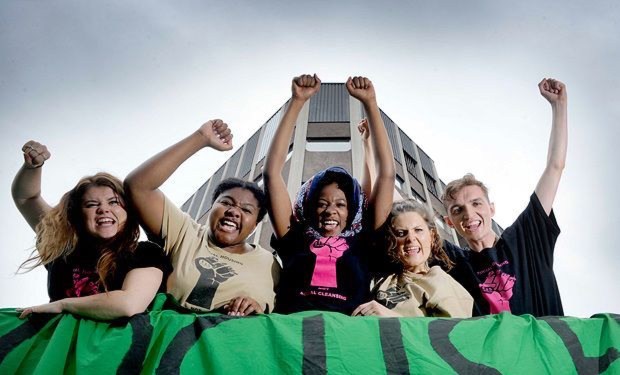
It’s so easy to ignore the homeless people that line the periphery of routine journeys and forget they are just as human as the rest of us, with passions, fears and often troubled pasts. The Marked puts homeless young man Jack at the centre of a desolate, urban landscape populated with pigeons, people who move him on and demons from his past. Masks and puppetry add a richness to his story, but not always warmth. In most of Jack’s encounters, be they real or in his head, he is believably under threat.

Peter Morton’s puppets are sweet and whimsical, with Jack’s pigeon companion being particularly lovely and with an excellent range of movement. Jack as a child has a sadness to him, emphasised further by familial alcoholism that we can assume eventually drives him away from home.

Grotesque masks by Grafted Cede Theatre are skilfully used to differentiate between fantasy and reality, with the haunted, oversized faces ever in the back of Jack’s eyes. Zahra Mansouri’s costumes make these figures larger than life and all the more threatening, rendering Jack helpless in their presence and the audience to empathise.

Devised by the cast of three and presumably with the support of director Allin Conant, the spoken text centres around Jack’s encounters with a homeless couple, Pete and Sophie. Here is where the show falls short: the potential for conflict and tenderness amongst the three isn’t fully realised due to too few, underwritten scenes. Though these human characters ground Jack in reality somewhat, there is also little focus on the dichotomy of reality vs. demons. There is real potential for a fight for Jack’s life or sanity between the two forces, but the script doesn’t capture as much of Jack’s struggle as it could.

Visually, this is a wonderful production that makes some powerful points on the mental health of homeless people. Jack becomes a fully realised person through the creatures that haunt him, but his encounters with other humans don’t do him full justice.

The Marked tours nationally through 2017.

The Play’s the Thing UK is committed to covering fringe and progressive theatre in London and beyond. It is run entirely voluntarily and needs regular support to ensure its survival. For more information and to help The Play’s the Thing UK provide coverage of the theatre that needs reviews the most, visit its patreon.
Love, Lies and Taxidermy and Scorch, Edinburgh Festival Fringe

First loves: awkward, hormonal milestones of young adulthood that make you feel like you’re on top of the world in a bubble that’s just the two of you. That is, unless you’re a trans or gender fluid teen who is still exploring gender identity, or someone with extensive family problems. But issues like these, when married with a youthful story of falling in love, make for some powerful and moving theatre.

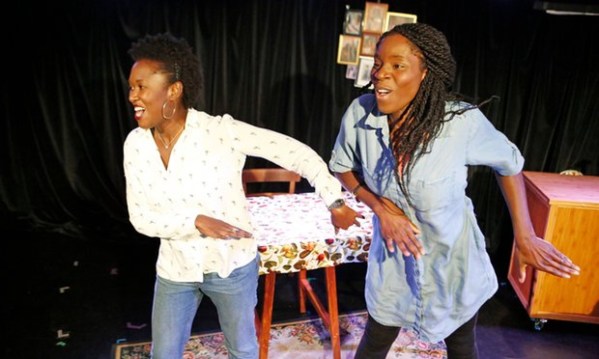
Love, Lies and Taxidermy compares falling in love for the first time to living in a film. With narration incorporating stage directions, short scenes reminiscent of quick cuts and a wonderfully ridiculous conclusion, the play feels like a teen romcom, but has enough substance to ensure it isn’t total frivolity. It’s fluffy, sweet and addresses how social class can effect young love.

Set in Myrthyr Tydfil where all road lead to Tesco, Ash and Valentine meet at hospital when they’re both waiting to see if they qualify for paid medical trials. Ash’s dad is on the verge of bankruptcy, and Val’s parents are separated so he wants to send them on a cruise in hope they will fall in love again. The tentatively begin dating, but life has a way of interfering with their time together. Ash has other ideas to earn some quick cash courtesy of an aspiring filmmaker college mate, but devoted Val vehemently opposes them. Cue a mad dash adventure to rescue Ash from her poor choices and live happily ever after.

There are a few lose ends in the narrative that get forgotten in favour of the “boy rescues girl” plot line, like Val’s quest for money for his parents. They could easily be trimmed to get to the point faster, or developed further to make a more fully-formed story.

The cast of three display remarkable energy as they play all the roles. Remy Beasley and Andy Rush are Ash and Val, the young couple who clearly fancy the pants off each other. Rush, though the hero, goes against the stereotypical popular lad who wins the girl through violence and strength. Awkward and geeky, his devotion to the bold and brassy Beasley is utterly adorable. Beasley’s confidence also goes against the romcom trope; she most definitely does not want to be rescued even though she doesn’t want to make the money in the way she has chosen.

The ending, however unrealistic, charms and delights. Though there is no set to portray the described splendour, the text more than makes up for its absence. The intimacy of the Roundabout suits this play well, though a larger venue would give more scope for design.

Scorch takes a different tone from Love, Lies and Taxidermy, though it also has a generous helping of youthful optimism about love. Kez, a bio-girl who dresses as a boy when not at school Orr home, has met Jules online and is smitten despite the “cool dude” exterior. This story has a darker outcome what with the complexities of gender identity and disclosure as it reinterprets the classic coming-of-age tale.

Kez is perky, accepting and generally at peace with her discomfort in a female body. Amy McAllister embodies the role with verve and charisma, making the audience sympathetic to consequences that arise from not telling Jules that she has a female, strap-on wearing body. The character’s good intentions are sweet, but not enough to save her.

Kez grows up quickly over the course of the story, and the Internet gives her a wealth of information to help her explore her gender identity and legal options. Her social media accounts facilitate meeting girls, and it’s all too easy to set up alternative profiles that portray her as a boy. It also helps her find a local support group, so the sword that is growing up in the digital age is well and truly double-sided.

This is a well-formed script with several layers. Whilst it is a powerful piece of storytelling as a solo performance, introducing additional actors to take on other roles would add depth to Kez’s experiences. McAllister uses the space well, though the opportunity to fully engage with the audience is missed.

Both productions are generally excellent examples of storytelling. The differing perspectives on teenage love are delightfully nostalgic and provocative without becoming twee or trite. The Roundabout enhances their intimacy, but limits scope for design and staging. These two plays would be served just as well, if not better, in a larger space that enables them to extend their production values.

The Play’s the Thing UK is committed to covering fringe and progressive theatre in London and beyond. It is run entirely voluntarily and needs regular support to ensure its survival. For more information and to help The Play’s the Thing UK provide coverage of the theatre that needs reviews the most, visit its patreon.

World Without Us, Edinburgh Festival Fringe

https://www.thestage.co.uk/wp-content/uploads/2016/08/World-Without-Us-700x455.jpg

Imagine the world if the entire human population disappeared suddenly, without a trace. What would it look like after a day, a month, a century, an era? A lone performer from Belgian company Ontroerend Goed methodically describes how the theatre space we sit in would change as a focal point within the wider world’s transformation. Delivered in a near monotone on a stage bare except for a grey obelisk, World Without Us is a meditative account of our solar system’s lifespan, and humanity’s inconsequence in the great scheme of planetary existence.

Karolien De Bleser quietly narrates this epoch-spanning journey of our planet with matter of fact coolness. What she describes really is remarkable in its compressed state, but the almost total lack of inflection makes the text pedestrian even in its most dramatic moments. Her movement around the space is relaxed and random, to look for meaning in it feels silly what with the story she tells.

With the ability to focus on the story without the mind drifting to topics such as what to have for lunch, the overall effect is a sense of calm acceptance that our lives, whilst impacting the planet immediately, really don’t matter. Our absence has little effect other than the gradual decay and burial of the artefacts we leave behind. Even in periods of environmental turmoil such as we see in the planet’s history, the impact is meaningless.

Even though the sun eventually swells and engulfs the Earth before it dies, all is not lost. Lightyears away, a single human artefact remains with a friendly but assumptive purpose. Its contents are, depending on one’s world view, absurd or incredibly beautiful. Perhaps they are both.The whimsy of human invention is particularly poignant at this moment.

World Without Us is a lovely, contemplative piece of performance and would work particularly well as an audio recording. As theatre, it could come across as flat, or upsetting or remarkable, depending each individual’s world view. Calmly provocative, it is wonderfully wide open to interpretation and effect.

World Without Us is now closed.

The Play’s the Thing UK is committed to covering fringe and progressive theatre in London and beyond. It is run entirely voluntarily and needs regular support to ensure its survival. For more information and to help The Play’s the Thing UK provide coverage of the theatre that needs reviews the most, visit its patreon.


Electric Eden, Edinburgh Festival Fringe

https://www.thestage.co.uk/wp-content/uploads/2016/08/Electric-Eden-700x455.jpg

Tommy Eden, a pensioner with a love for street performing since he retired, is dead. Local entrepreneur Alexander Sheldon’s security guards are responsible. Sheldon didn’t like Tommy performing outside his high end spa and leisure centre, but when the guards manhandled him off his patch, Tommy’s 87-year-old body couldn’t take it. Local young people, angry at the rapid gentrification of their town and the death of a local treasure, organise a protest/party in the abandoned club across the road, and everyone’s invited.

Not Too Tame’s Electric Eden doesn’t manage to deliver much of a party, though. Shouty political slogans and several under-developed subplots give a vague picture of a bigger problem, and staging choices fight against the attempted audience immersion. The concept promises a dynamic execution, but the delivery disappoints.

Seven characters at the party are featured, including organiser Greg (Andrew Butler) and Tommy Eden’s granddaughter, Grace (Louise Haggerty). Their stories, as well as those of the other five characters, are gradually presented through disconnected scenes in between dance numbers and party games. The audience are sometimes invited to join the dancing, other songs are tightly choreographed.

An exposition of protest rhetoric delivered down a mic, petition signing and ordering drinks from the bar is too long. Each of the characters’ individual stories only gets a couple of scenes, so they come across as generic snapshots of character types rather than real people.

The audience are provided with chairs so even though director Jimmy Fairhurst wants to create a party atmosphere, inevitably the majority of the audience end up sitting and watching for the entire performance. Choosing a club as a venue adds little with such a clear distinction between the actors and the audience, and the continuous reiteration that this is a party comes across as forced and false.

The performances are fine and there’s some tight choreography, though this also feels out of place with the attempts to create an anarchic/punk atmosphere. Electric Eden tries to be both a genuine party and a play, but the two aesthetics are so diametrically opposed that neither ends up working within the piece.

The whole experience is frustratingly flat, though it shows such promise on paper. With a script overhaul and a clear vision as to what Electric Eden wants to achieve, it would be a stronger piece. As is, it comes across as a confused and undeveloped piece.

Electric Eden runs through 29th August.

The Play’s the Thing UK is committed to covering fringe and progressive theatre in London and beyond. It is run entirely voluntarily and needs regular support to ensure its survival. For more information and to help The Play’s the Thing UK provide coverage of the theatre that needs reviews the most, visit its patreon.