We Are Ian, VAULT Festival

in-bed-with-my-brother-68weareian160321mattaustin

by guest critic Martin Pettitt

We enter into a long damp and dingy chamber, in the distance there is a flashing screen with 3 sets of legs beneath, feet bedecked in shoes with multi-coloured lights, gyrating and popping to the pronounced beat of the music. The screen blinks with various versions of the words: We Are Ian. In terms of stage set, that was it apart from a bulb hanging from the ceiling and a vast amount of digestive biscuits.

Continue reading

A Year From Now, VAULT Festival

https://newimages.bwwstatic.com/upload11/1522200/tn-500_redbellyblack'sayearfromnow-courtesyofvickibaron_3.jpg

by guest critic Jo Trainor

“Two or three people with guitars call themselves a band, they’re a group!”

Red Belly Black Theatre Company asked fourteen people where they think they’ll be a year from now, and have used their voices to create an hour of witty, beautiful and moving theatre.

Lip-synced verbatim is a new experience for this reviewer, and if you’re not used to it there is a brief moment where you need to get on board with the style. Luckily Red Belly Black are so precise with their movements and mannerisms that it’s impossible not to love A Year From Now.

Continue reading

Politic Man, Ivy House

What with growing up outside of the UK, my knowledge of British history is quite patchy. I can tell you a lot about the late Elizabethan and early Jacobean eras when Shakespeare was alive, but outside of these time periods, I know little. I quite like social history, so learning about new-to-me historical figures through theatre is an event of joyous discovery. What with my leftie sentiments currently battered, encountering someone from the past committed to social justice and equality adds to the excitement even if the play has its shortcomings.

Continue reading

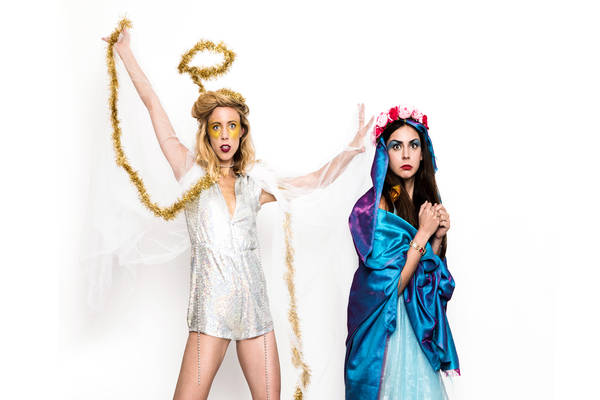
Narcissistic Nativity, Fucking Little Elf Bitch, Rosemary Branch

rsz_nativity-website

After 20 years running the Rosemary Branch, Cecilia Darker and Cleo Sylvestre moved on to pastures new in June this year. Unattended Items, a company with a focus on interactive theatre and design-led work, took over and have been busy programming work that has similar practices to their own.

Their Christmas bill of adults-only shows is no different. Urban Foxes Collective’s Narcissistic Nativity is a feminist, live art piece fighting against the patriarchy; Mammalian’s Fucking Little Elf Bitch is a one-woman show on the perils of working in a grotto. Both break down the fourth wall and use non-linear structures, and both need some tweaking for the sake of clarity, but this pair effectively balance current issues and laughs.

Continue reading

Tonight With Donny Stixx, The Bunker

https://i0.wp.com/exeuntmagazine.com/wp-content/uploads/Sean-Michael-Verey-in-Tonight-with-Donny-Stixx-at-The-Bunker-photo-by-savannah-photographic-6.jpg

Donny Stixx is a teenaged magician with boundless dedication to his craft and desperation for fame. Rather than doing things that boys his age normally do, he spends hours honing his skills and tweaking the act he performs at kids’ parties, hospices, churches and for anyone else that will watch. The only thing he ever thinks and talks about is his magic. But Donny’s pretty obviously on the autism spectrum; this combined with his unstable upbringing and lack of an appropriate support system is a particularly deadly combination. Philip Ridley’s 2015 Edinburgh award-winning solo show explodes onto a bare, grey stage in a linguistically vivid documentation of fanaticism and social disorder with a phenomenal performance by Sean Michael Verey.

Verey is an unrelenting force with inimitable energy and charisma that shines through a character who has precious little social intuition. Though Donny is awkward and frustrating, Verey’s performance captivates. Having a totally plain stage that is anywhere and everywhere means it’s entirely on the actor to hold attention – but the performance makes it work and is never, ever boring.

Ridley’s text is dense and Verey races through it; it would otherwise be double the length. Though the pace is exhausting to take in, it’s necessary. The language and imagery richly creates a wonderfully detailed believable world. Director David Mercatali coaxes the nuance from Donny’s biographical story incredibly well despite the speed – the sparsely used pauses are devastating. When the pace finally lets up, it’s like cold air hitting a friction burn.

A clearly foreshadowed conclusion results in awed, uncomfortable silence. After a week that saw the broken American political machine elect an orange fascist for its next president, Ridley’s play is far from comforting. Whilst Verey’s depiction of Donny’s passion is delightful and his performance is nothing short of extraordinary, his vulnerability weighs heavily on bruised and helpless liberal consciences. There is no safety net, and fanaticism is the new normal in this dark play from the innocent days of pre-2016. It’s a hard show to sit through, but absolutely worth it.

Tonight With Donny Stixx runs through 3 December.

The Play’s the Thing UK is committed to covering fringe and progressive theatre in London and beyond. It is run entirely voluntarily and needs regular support to ensure its survival. For more information and to help The Play’s the Thing UK provide coverage of the theatre that needs reviews the most, visit its patreon.

Howl, Rosemary Branch Theatre

https://i0.wp.com/egyptiantheatre.org/wp-content/uploads/2012/08/DSC96451.jpg

With Halloween becoming more and more popular this side of the pond, horror theatre and live events are proliferating. The London Horror Festival is bigger than ever, new scare attractions appear all over the country every year and independent events like Frissonic’s Howl expand the otherworldly and terrifying offers for thrill seekers this time of year. A site specific, immersive performance for an audience of six, Howl is a considered, effective performance that induces plenty of jumps. Though the story of a disappeared sister and mysterious voices is patchy, it is well delivered, and combines audience manipulation with technology to create a delightfully creepy event.

The choice of a small audience generates fear from the beginning – there is less protection with fewer people, particularly when paranormal investigator Rory places us on isolated chairs around a large, long-abandoned storage room. We are there to help Rory look into a something he heard when he was recently alone in the theatre, and we use sound to try evoke it again. Wireless headphones, increasing pace and anxiety, and customised audio content create heavy tension and uncertainly ripe for scares.

The ending in a different room is too rushed and betrayed by the lack of a full blackout. Though there is a clear resolution, the reasoning leading up to that point is never fully explained. How does this voice connect to Rory’s sister who disappeared all those years ago? How did we find him and decide we want to help? Rory is very much a character of the present, but frustratingly little of his past is revealed.

Frissonic nail the scares in Howl with their tech and small-audience approach, but adding flesh to the skeletal story will hugely improve it. Currently running at 40 minutes, another 15 or 20 minutes of text will make this feel more theatrical and less reliant on the scares.

Howl runs through 31 October.

The Play’s the Thing UK is committed to covering fringe and progressive theatre in London and beyond. It is run entirely voluntarily and needs regular support to ensure its survival. For more information and to help The Play’s the Thing UK provide coverage of the theatre that needs reviews the most, visit its patreon.
Acorn, Courtyard Theatre

acorn-c-hannah-ellis-1

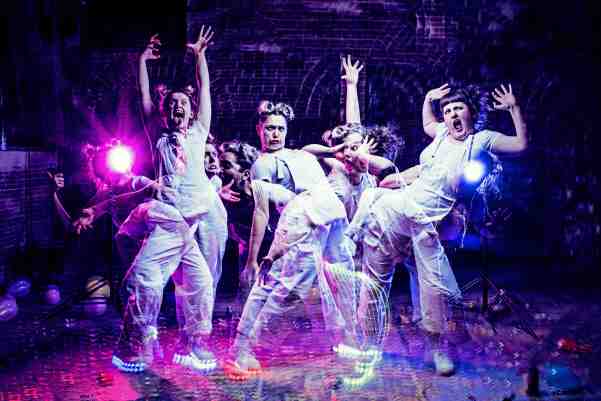
Persephone and Eurydice’s myths are defined by men. What happens when these men are removed and the characters plunged into a modern dreamscape? Maud Dromgoole’s Acorn brings these women and their fates together in a world of fragmented narratives and moments of biting wit, but the worlds that Dromgoole weaves together are so disconnected from each other in this cerebral play that it interferes with its immediacy.

Rather than nurturing plants, this Persephone looks after people – she is a doctor, but one that struggles to connect with her patients. Her opening monologue justifying her disdain for patients’ personal lives is equally hilarious and disturbing, the best scene in the play. Deli Segal brings a simple humanity to this cold character, making her quirky and likeable despite an autistic-like inability to understand others. Lucy Pickles’ Eurydice is a sweet contrast, alternating between a blushing bride and mental health hospital patient. Pickles is no less of a performer, but Persephone has the more dynamic and well-written character.

Dromgoole employs a range of styles, arguably too many for an hour long script. Though this strengthens the ability to relate to the story within individual scenes, the overall effect is one of indecision. An unrelated, recorded dialogue between two men fills transitions unnecessarily and doesn’t link to the women’s stories, then overlapping speech cause dialogue to be missed.

Phil Lindley’s design is simple and precise, allowing for detail and layers to emerge through Jai Morjaria’s lighting and Tom Pearson’s underused projections. The design concepts are most excellently married and add polish to a script that feels under-developed.

Acorn certainly deserves to extending and refining – the characters are excellent, as are the foundations of the stories seen here. Dromgoole uses language well and is clearly confident experimenting with form, style and classical influence, but reinvention with the goal of creating a modern myth doesn’t quite reach the enduring scale of the original material.

Acorn runs through 29 October.

The Play’s the Thing UK is committed to covering fringe and progressive theatre in London and beyond. It is run entirely voluntarily and needs regular support to ensure its survival. For more information and to help The Play’s the Thing UK provide coverage of the theatre that needs reviews the most, visit its patreon.

Undead Bard, Theatre N16

robert-crighton-in-metal-harvest

Professor Ashborn is on a mission to disprove Shakespeare’s existence, but the academics with leather patches on their elbows are trying to stop him. Following Ashborn’s lecture and an interval, Undead Bard creator Robert Crighton summons Shakespeare to talk to him about his life, work and death in an unrelated second half. This two-part show on Shakespeare in the modern world, bardolatry and the authorship debate certainly has some very funny moments of satire, but others are utterly bizarre and the poor execution of an idea. A significantly stronger first act sets up a reasonably enjoyable event, but the second is self-indulgent and anti-climactic in this overly long solo performance.

The paranoid Professor Ashborn’s lecture rips the piss out of Shakespeare academics, those that believe Shakespeare wrote Shakespeare’s works, those that believe someone else did under Shakespeare’s name and anyone with a love for Shakespeare’s plays. Crighton as Ashborn talks the audience through his various ridiculous authorship theories with energy and eccentric humour, evoking plenty of laughs. The script follows a natural rhythm of discovery, disappointment and eventual confession; it’s a story carefully crafted with intuition and skill.

Considering the second act, the first would be better served as a stand-alone piece. After what is quite a good piece of character storytelling, this random, rambling seance on the mundanity of Shakespeare’s life and afterlife is, well, mundane. The inclusion of toilet humour and sexual innuendo do not improve the piece. Shakespeare’s confusion at his legacy is cute, but it absolutely doesn’t warrant nearly an hour of discourse and disconnected pop culture references.

Crighton clearly has an aptitude for crafting a story, as evidenced in the first part of the show. Unfortunately, the rest of it is a muddled letdown that needs to be sent back to the drawing board or discarded completely.

Undead Bard runs through 13 October.

The Play’s the Thing UK is committed to covering fringe and progressive theatre in London and beyond. It is run entirely voluntarily and needs regular support to ensure its survival. For more information and to help The Play’s the Thing UK provide coverage of the theatre that needs reviews the most, visit its patreon.

Interview: Isley Lynn on Skin a Cat

rsz_skin-a-cat-main-image-digital

The upcoming opening of new venue The Bunker has certainly generated plenty of buzz, but what has excited me most about their debut season is that Rive Productions is bringing back Isley Lynn’s Skin a Cat for a three-week run. Hugely deserving winner of Vault Festival’s Pick of the Year, Skin a Cat is the coming-of-age story of Alana, a young woman who, like most young people, just wants to lose her virginity – but there’s something in the way. I spoke with writer Isley Lynn about the importance of Alana’s story, why stories like hers need to be told and how Lynn is working for more diversity in British theatre.

TPTTUK: Why does Alana’s story need telling?

IL: I’ve always been most interested in telling stories I haven’t heard before. I get so bored and frustrated when I see a show that’s beautifully produced/designed/directed/written/performed but tells me nothing I didn’t already know, or shows me nothing I haven’t seen so many times over. The bar really is so low for new stories – stories about differently abled people, women-centred stories, unconventional stories of anyone non-white, I could go on. Stories that give us new perspective are so important and exciting that I want to spend my time telling them. And the stories about sex – especially first sex – never matched up with my own experiences, so I figured I should tell mine. It really was as simple as that, but that’s also why it’s important.

TPTTUK: You use several dramatic forms and styles in Skin a Cat. Tell me a bit about these choices and the reasons behind them.

IL: To be honest, the play was so easy to write that it came out without too much thought. The stylistic qualities were organic to the material – and I had plenty of lived material to work with! I felt the direct address was important because it allows Alana to be honest and open with the audience in a way she isn’t able to be with the characters onstage with her. In a play about the pressures of how others see you and what effort it is to please, it felt crucial to keep this [play focused on] her story, her testimony, her voice.

So much of the action happens mid-coitus, and I had no idea how to put sex on stage. All credit to our wickedly brilliant director Blythe Stewart for its staging (this was definitely the most fun I’ve ever had in rehearsals, and I’m still impressed with how she managed to create a representational, physical language without resorting to silly hip thrusts).

TPTTUK: What would you like audiences to take away from Skin a Cat?

IL: We only had six performances at the Vault Festival, but after every one I had someone approach me and share their own embarrassing story, or their own experience of sexual shame or difference. That’s exactly the reaction I hope for at the Bunker – I want people to be able to see themselves in Alana’s story, and feel emboldened to talk about their experiences with strangers and friends and loved ones, because that’s the only way we can start to realise how we all “fall short” of the expectations placed on us – and not just with sex, but in so many other areas of our lives – and how unimportant and unhealthy those expectations can be.

TPTTUK: What are the biggest issues in the theatre industry today? Is your work combating them?

IL: I hope I am – I’m trying to. So many of the issues in our industry have their roots in the lack of representation. I’ve already talked about how important it is to have a diversity of stories and that’s a big part of it, but the responsibility for that is at the feet of everyone, not just writers – It’s important to create opportunities for underrepresented people on the stage, but it’s worthless if those individuals are not in a position to take opportunities available to them because they can’t afford to work for low or no pay, for example, or if they couldn’t afford the outrageous drama school audition [fee] in the first place. I have no idea how to fix that with unpaid work being the foundation for any career (certainly mine) and so much the norm.

Often, only people with strong financial support behind them can take full advantage of what’s out there. There are great one-off schemes, and great venues doing their part (like the Hope Theatre with their Equity house agreement on pay), but until the entire industry is a viable career option [for anyone], we won’t have a community that reflects the world we live in, and that’s the primary job of the arts.

TPTTUK: Isley Lynn fans are dying to know: what’s coming up next?

IL: I’ve been working with one of my absolute favourite actors on a one woman show that, if all goes well, should have a life at the 2017 Edinburgh Fringe and hopefully beyond. It’s about a English-Egyptian woman who takes up pole dancing when her husband leaves her for the revolution in Cairo. It’s going to be a unique perspective on the battle over women’s bodies and what that means when you have to navigate two very different worlds, when you’re not fully on one side or the other.

Skin a Cat runs 12 October – 5 November.

The Play’s the Thing UK is committed to covering fringe and progressive theatre in London and beyond. It is run entirely voluntarily and needs regular support to ensure its survival. For more information and to help The Play’s the Thing UK provide coverage of the theatre that needs reviews the most, visit its patreon.
Team Viking, Edinburgh Festival Fringe

https://i0.wp.com/www.pxleyes.com/images/contests/old-camera/fullsize/Viking-Funeral-4ca7e68bcb25e_hires.jpg

How far would you go for your best mate? Are there any limits, any lines, you wouldn’t cross?

What if your best friend was dying?

What if he asked you to ensure he had a viking funeral?

James Rowland does exactly that for his best friend Tom. He grew up as part of a neighbourhood trio that stayed close well into adulthood. As children, their favourite game was to play Vikings (as in the Kirk Douglas film). When Tom is diagnosed with terminal cancer at age 25 and given only a short time to live, he calls in one final favour from James and Sarah, the other third of their childhood gang. Tom doesn’t care about logistics and legalities, and his magnetic charisma convinces Sarah and James to do this for him, and James is here to tell us the story of their friendship through life and death.

Rowland’s engaging, laddish charm makes you laugh loads, then the tiniest change in pace and inflection turns on the tears. His script approaches death and friendship with respectful levity that does not gloss over the reality of grief, but neither is it too weighty. It’s a perfectly balanced emotional journey, and Rowland’s relaxed delivery draws the audience to him and to each other.

Director Daniel Goldman chooses simple staging – Rowland is on a small, bare stage with few props and tech, and the venue’s lighting is barely existent. The piece would work well in the round to foster it’s warmth and inclusivity. It’s simple, storytelling structure would also suit the intimacy of a circle.

Team Viking is an exemplary solo storytelling piece excelling in its honesty and simplicity. It’s a powerful tribute to his friends, but it’s not insular – it’s the complete opposite, and a truly delightful, heartwarming adventure story for those who have loved and lost.

The Play’s the Thing UK is committed to covering fringe and progressive theatre in London and beyond. It is run entirely voluntarily and needs regular support to ensure its survival. For more information and to help The Play’s the Thing UK provide coverage of the theatre that needs reviews the most, visit its patreon.