Red Riding Hood, Pleasance Theatre

rsz_red_riding_hood_artwork

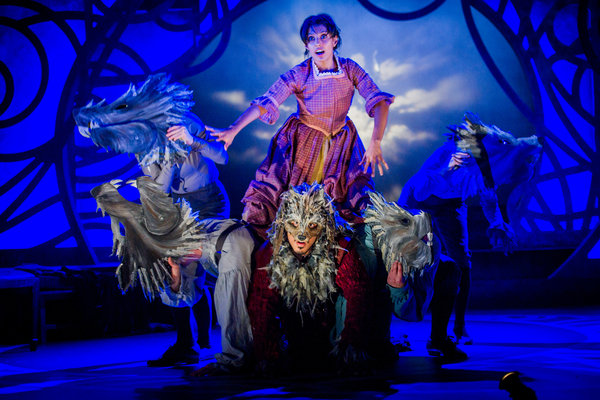
As it’s the run up to Christmas, pantos are saturating our stages. There are the traditional ones and plenty that give themselves another label in the hope of getting attention: boutique, adult and gay spring to mind. Then there are other shows that are close to panto in that they’re family friendly and/or based on fairytales, like Polka Theatre’s Beauty & the Beast. New musical Red Riding Hood, by the team that brought audiences the stage adaptation of The Secret Diary of Adrian Mole, Jake Brunger and Pippa Cleary, also falls into this category. The largely excellent, Disney-style songs are this production’s strongest feature, but unfortunately the cheap-looking set, and now-antiquated style of children’s theatre prevent this show from being a stand-out option this holiday season.

Nazarene Williams excels as Little Red. Clever and feisty, she’s a wonderfully pro-active character for young girls to identify with. Her charming sidekick William the Woodcutter (Matthew Jay-Ryan) is dopey and fun, but a good enabler and supports Red on her quest to save her family’s bakery. Matthew Barrow has more character as the wolf; his dad lacks energy in comparison. Mum Holly-Anna Lloyd is a strong singer, but she looks the same age as her daughter and the character lacks maturity. Patsy Blower completes the cast of five as the witty grandma. All of them are strong singers with that powerful, modern American Broadway tone that kids recognize from Disney films.

The book and design are a let down, though. Brunger’s writing is simplistic and not suitable for children in the upper years of primary school, and there are some unnecessary scenes that seem like they were written to add length rather than the main storyline. Three schools were there, and on several occasions the children got bored and started talking amongst themselves: a powerful indicator of this production’s issues. The story has a well-shaped structure and an interesting plot, but the dialogue isn’t far off that in Town Hall Cherubs, which is pitched to 2-5 year olds. This makes the actors perform in that exaggerated style of performance that used to be the signature of all children’s theatre, but many productions have now become much more sophisticated, even for very young children. The design looks great in dim light and the patchwork tree leaves are a particularly lovely idea, but with the lights up, they look like cheap, enlarged photocopies and the flats themselves are flimsy. The birds in the forest are origami paper cranes that the actors fly around, but there is no movement within the birds themselves. The paper rabbit on a stick slid across the floor has the same disappointing lack of impact. Grandma’s pet parrot, an actual puppet, is a much better use of puppetry. There are obvious budget constraints here, but a simpler approach may have been more effective rather than trying to make the set look grand but not having the materials available to do so.

The songs are excellent though, and there are plenty of them. From moving duets to powerful solos and whole-cast numbers, they pull back the attention every time. There are some trite lyrics here and there, but Pippa Cleary’s music is great. The show isn’t beyond rescue, though. With some re-writes and additional invention (like William’s wonderful magic book) to make it more distinctive and develop the characters, this could be an excellent example of modern children’s theatre.


The Play’s the Thing UK is committed to covering fringe and progressive theatre in London and beyond. It is run entirely voluntarily and needs regular support to ensure its survival. For more information and to help The Play’s the Thing UK provide coverage of the theatre that needs reviews the most, visit its patreon.

Mirror Mirror: A Snow White Pantomime, King’s Head Theatre

rsz_tpw3-k1hri_f6bbtm3nyb5zo_ieq3wud5gnorjqw1hmth7eapkugyw_g9qolxtc-nh9sl6jp3piyv_ekam1gf0

They are new to the King’s Head, but Charles Court Opera aren’t new to pantomime. This year’s Mirror Mirror: A Snow White Pantomime is their ninth “boutique” panto. Though an opera company, this show and cast of six are anything but stereotypical opera fare. John Savournin’s script is fresh and witty, the performances are camp and vibrant, and the re-written pop song soundtrack is so well sung that it deserves a cast recording. There’s plenty of typical panto interaction, made easier and more personal in a fringe venue but doesn’t overwhelm the space, either. Though the costumes are detailed and fun, the set is a bit analog and takes up a lot of playing space, restricting movement and choreography. Some of the performances were more genuine than others, but this remains a wonderfully current panto with excellent writing.

Savournin also directs and plays Snow White, the ditzy, ingénue widow of Barry White living with the seven dwarfs, all distinctly and energetically played by Matthew Kellet. Greedy queen Andrea Tweedale uses her mirror (Simon Masterton-Smith) to help her search for a husband, but her plans are thwarted when prince Larry Black (Amy J Payne) and his valet Harry (Nichola Jolly) show up looking for a bride and instead of being impressed by her beauty, Larry falls for Snow. The traditional story veers off in numerous contemporary directions from there, which adds to the audience’s delight and prevents the show from becoming stale or generic. The music is mostly cleverly reworked pop songs, but there’s a bit of musical theatre thrown in and the Act one Finale numbers are fantastic.

No individual performer overshadows the others, instead they are a balanced lot with clear strengths. Payne and Jolly are a charismatic pair, with Kellett’s range of dwarves a hilarious counterpoint to the leads. Savournin’s Snow is shallow but sweet and doesn’t fall short in any of the creative roles he takes on. Tweedale stokes the audiences’ booing and aww-ing brilliantly. The height difference between Savournin and Payne supports the comedy heavily peppering the dialogue, as does the cross-gender casting that goes beyond the dame and principal boy. There is some lovely chemistry between some of the characters but even though it’s a panto, there could be more between Payne and Savournin.

There’s loads of audience interaction and mess, the best being a Great British Bake Off-style competition that results in dough everywhere. Of course, there’s your usual panto call and response but not so much so that the script is otherwise flimsy. The unique visual gags Savournin employs are much more satisfying, anyway (pro tip: look out for Barry). A few give a nod to tradition, but this is definitely a language-focused script. This gives the performance a richness and depth missing from more traditional fare, hence the “boutique” label. Charles Court Opera is certainly onto a winning formula here within London pantomime offerings and is not one panto fans should miss.


The Play’s the Thing UK is committed to covering fringe and progressive theatre in London and beyond. It is run entirely voluntarily and needs regular support to ensure its survival. For more information and to help The Play’s the Thing UK provide coverage of the theatre that needs reviews the most, visit its patreon.
Piaf, Charing Cross Theatre

rsz_eventgallery-7928

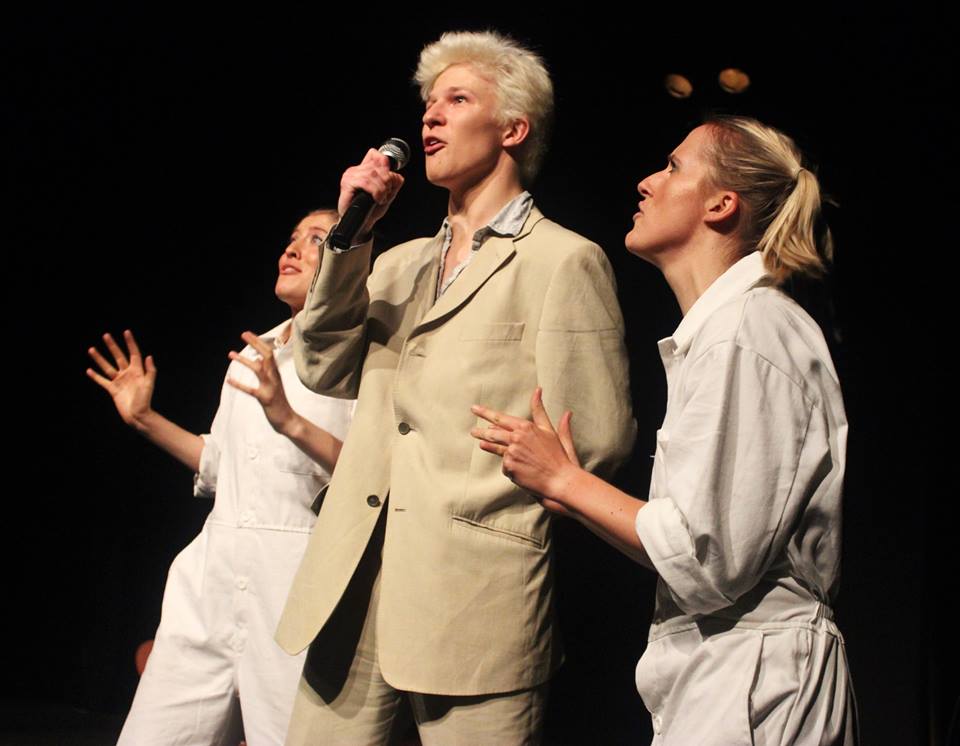
Icon Edith Piaf inspired numerous films and plays, including 1978 play with music, Piaf. The four foot, 8 inches tall chanteuse from a broken home died at just 47, but left a songbook often heard in popular culture. These songs, which feature heavily, epitomize the defiant spirit of a France under attack, painfully relevant today. Addicted to drink and painkillers, the little sparrow must have struggled immensely with her inner demons but Pam Gems’ script avoids such nuance, for her or any of the other characters. Cameron Leigh’s belter of a voice reveals Piaf’s passion and turmoil through her songs, and the rest of the cast provide good vocal support, but Gems’ diabolically awful book manages to be rushed, tedious and two-dimensional all at once.

Portrayed as a selfish, junkie nymphomaniac who treats people as commodities, there is little room for audience sympathy in the first half. The scenes are short and delivered with an even, speedy pace; it’s as if director Jari Laakso feels uncomfortable with Piaf’s poor characterization and the gaping jumps in time that leave even the most important of events glossed over, and he wants to get to the interval ASAP. The second half marginally improves as Piaf’s health declines and she is seen as frail, vulnerable and poor. A few of the lines get laughs, as the humour is less distasteful than earlier in the play.

Cameron Leigh is an explosive barrage of rudeness as Edith Piaf and clearly struggles to find any decency in the script’s portrayal. Instead, she wisely focuses on revealing the character’s emotional life in her songs, the best feature of this play. Backed up by her best friend Toine (Samantha Spurgin), Marlene Dietrich (the imposingly glam Valerie Cutko) and an array of multi-rolling men and actor-musos, their vocal prowess makes this production bearable. It’s a small cast for the number of characters, but there is some good physical multi-rolling and costume indications help make up for scarcity in the dialogue.

Laakso and the cast energetically do their best, but the overwhelming issue in Piaf is Gems’ atrocious script. Otherwise, the songs are well sung, the production suits the theatre well and the set (Phillipa Batt) and lighting (Chris Randall) are well considered and often striking. It’s just a shame Gems isn’t alive to re-write it.


The Play’s The Thing UK is an independent theatre criticism website maintained voluntarily. Whilst donations are never expected, they are hugely appreciated and will enable more time to be spent reviewing theatre productions of all sizes. Click here to make a donation with PayPal.

Town Hall Cherubs, Battersea Arts Centre

rsz_c_alex_brenner_strictly_no_usage_without_credit_town_hall_cherubs__battersea_arts_centre__dsc5380

Dear Town Hall Cherubs,

I know we only met yesterday afternoon but I haven’t been able to stop thinking about you since then. Concentrating at work today has been really hard – I couldn’t wait to leave so I could pen this missive, and I’ve been fighting the tiredness that comes with broken sleep filled with golden apples, inflatable little friends, snow and glitter. I’m off somewhere else tonight, but I’m still smiling at the memories of your gentle journey of discovery around Battersea Arts Centre. I’d love to keep you all to myself, but your warm, generous nature shouldn’t be caged, nor is it fair of me to prevent others, young and old, from experiencing the wonderful joy you evoke. So here’s a review for you to share with families far and wide:

❄ ❄ ❄ ❄ ❄ ❄ ❄ ❄ ❄ ❄ ❄ ❄ ❄ ❄ ❄ ❄ ❄ ❄ ❄ ❄ ❄ ❄

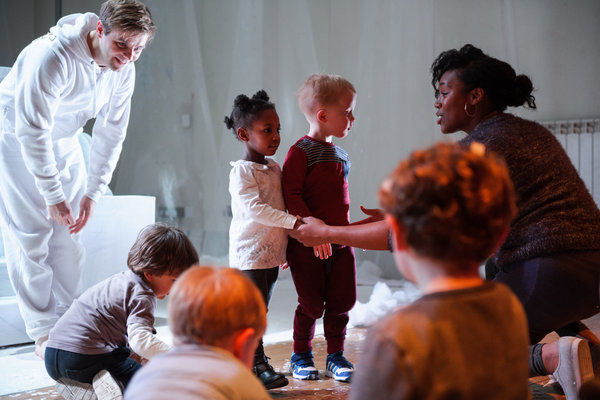
The first generation of immersive theatre fans are growing up. The twenty-somethings who discovered Punchdrunk in their early days are 30-somethings. Now immersed in nappies and temper tantrums as well as non-traditional theatre, these new parents will have high expectations of children’s theatre. Pros arch, run-of-the-mill theatre isn’t enough for them, or their progeny. Fortunately, that first wave of immersive theatre makers is also starting families of their own. Merging interactive, immersive and promenade theatre to create a site-specific adventure for 2-5 year olds, Theatre Ad Infinitum and Sarah Golding from Battersea Arts Centre team up to create children’s show Town Hall Cherubs, a winter adventure that brings the building’s distinctive architecture to life among a landscape of sensory-focused design elements.

Dani (Danielle Marshall) gently rallies a group of children, parents and early years teachers in a cozy corner next to the BAC’s grand staircase. Soothing music and colouring in a drawing of a cherub warms the children to her before they head up the stairs to a discovery on the landing. They find a cherub (joyful and wide eyed Barra Collins) and a fabric garland that continues their music-accompanied journey through several rooms; each contains interactive, sturdy set and design. My favourite is a room full of “little friends”, inflatable blobs by Amy Pennington that the children can dance and climb cardboard mounts with, roll, cuddle and any other imaginative play they can create. The children also discover a giant kaleidoscope by Ted Barnes and Amy Pitt, and a replica of the BAC staircase that Deborah Pugh brings to life as Sarah, a dragon-seahorse creature that’s scared of falling down.

Though the kids won’t notice or care, the moral tacked onto the end feels unnecessarily teacher-y, and Cherub’s plan to go on an adventure and then return home could have been clearer at the beginning. These tiny potential improvements certainly don’t detract from the quiet, calming joy of the event.

This isn’t a high energy, raucous performance. It’s intimate, gentle and encouraging with the pace dictated by the group. As an adult without a child there, it was a joy to observe the children’s reactions to their discoveries and freedom to engage with their new surroundings without fear. It’s a powerful reminder to notice the tiny details around us and enjoy the pleasure of experiencing something new beyond our regular routines.

❄ ❄ ❄ ❄ ❄ ❄ ❄ ❄ ❄ ❄ ❄ ❄ ❄ ❄ ❄ ❄ ❄ ❄ ❄ ❄ ❄ ❄

Thank you again, Town Hall Cherubs, for having me along on your gorgeous little adventure.


The Play’s The Thing UK is an independent theatre criticism website maintained voluntarily. Whilst donations are never expected, they are hugely appreciated and will enable more time to be spent reviewing theatre productions of all sizes. Click here to make a donation with PayPal.

Beauty & the Beast, Polka Theatre

Beauty and the Beast - Polka Theatre - 20 November 2015 Writer - Charles Way Director - Roman Stefanski Designer - Laura McEwen Music - Julian Butler

Cold, dark days make me want to see feel-good theatre, especially in the run up to the holidays. Bonus points if it’s colourful, has some depth and at least some non-formulaic elements, even in a classic story. Polka Theatre’s Beauty & the Beast for ages 6-12 meets these criteria with a surprisingly complex storyline that keeps adult attention as well as kids’. Despite the target age range, there is some great humour and a touch of innuendo adults will appreciate (kids definitely won’t get it), sumptuous set and lighting and an adapted, relevant script. Some of the performances are wooden from the dated language and there are some dodgy movement-based transitions, but the school group audience was quiet and focused for most of the nearly two hours with interval.

Charles Way’s adaptation of the traditional story gives a much wider context than the Disney film and is more relatable to a modern, young audience. Belle is still the main character, but we get to know her father, Mr Godwin (Simon Holmes) and sister Cassandra (Géhane Strehler) well. Belle and Cassandra are complete opposites: Belle’s bookish, a visionary and frightened by most things; Cassandra loves boys, pretty dresses and adventures. The two bicker regularly and their money-driven merchant father is tired of it, a family dynamic that many children will recognize. Beginning in London and moving to the remote countryside when Mr Godwin loses his fortune, the girls also have to cope with big life changes and overcome adversity.

The women’s performances are consistently stronger than the men’s. Ritu Arya’s Belle is convincingly performed with a wonderfully dry sense of humour and an excellent character arc that isn’t overly saccharine. She carries the story and its energy well without being a stereotypical children’s performer, dealing with the old fashioned language brilliantly. Géhane Strehler is great contrast, giving young girls two opposite ideals to potentially relate to. Both have flaws, virtues and detail. Emma Cater is a sinister housekeeper for Jason Eddy’s Beast, a gentle man with stylized physicality and an imposing presence. Eddy doesn’t quite manage to carry that through after his transformation, but it’s so close to the end that it doesn’t matter much.

The set is layers of swirling panels that change colour and glow according to location, with the Beast’s castle the richest of them all. Laura McEwen’s set and Ian Scott’s lighting work together in wonderful harmony, with the occasional addition of puppets. Stage combat from RC Annie also adds a visual component, but the fights are slower that fight speed and brief. Some of the transitions lag and have abstract movement to fill the time, but this doesn’t contribute to the story and usually look pretty naff. Costumes, also by McEwen indicate the characters’ circumstances and changes in social class, but the highlight is the headdress and mask for the Beast.

Though there are still age and gender stereotypes, the adapted script empowers the young female characters. The detail and length will occupy adults as well as children and Way’s story is excellently constructed. With wonderfully visual design and a stirring score by Julian Butler, this is a lovely production harking back to the classical story without the glitz of Disney-fication or the panto cheese, and a solid option for a family holiday show.


The Play’s The Thing UK is an independent theatre criticism website maintained voluntarily. Whilst donations are never expected, they are hugely appreciated and will enable more time to be spent reviewing theatre productions of all sizes. Click here to make a donation with PayPal.

La Soirée, Southbank Centre

rsz_1bret_pfister_image_by_bertil_nilssonSouthbank Centre has a spiegeltent in residence under the Hungerford Bridge; it’s a sexy, glam, velvet and mirrored thing miles away from shabby travelling circuses with tired acts. It’s a fitting home for La Soirée, a heady mix of circus, cabaret and variety performance from around the world. Each act has a distinct character combined with extraordinary skill sets, often leaning towards adult and edgier content. Though the characters created as a vehicle for the skills on display generally rely on stereotypes, this doesn’t diminish the impressiveness of the techniques. The sumptuous environment and range of talent on show makes for a frivolous, fun night of light entertainment with heaping dose of sex appeal.

Though not solely circus, La Soirée seems to focus on circus arts and use other performance styles to add variation. They also change the lineup on a regular basis, so any given night is unique. These artists are multi-skilled, too: The English Gents are a pair of balancing acrobats, who separately are a bubble artist and a pole dancer. Captain Frodo contorts himself through tennis racquets as well as doing a bit of comedy magic. My favourite is Asher Treleaven, who has a sexual Diablo routine as well as a side-splittingly funny stand up act around a Mills & Boon novel. Then there’s a hoop artist, an aerialist using a single strap and a hand balancer on a motorbike. A singer, and modern clown/comedian Mooky with a double act composed of herself and a willing audience member complete the lineup. All of these performances take place on a tiny round stage, no more than 2 metres across.

There’s plenty of subversion in the event, as there always has been in circus – the exotic on display for the everyday Joe to get a glimpse at those who are unwilling or unable to conform to the status quo. From large tattoos and a lesbian kiss, to deliberately dislocated joints and extreme flexibility, that “otherness” is still very much present, even though its more mild forms no longer shock us. That subversion is sexy, titillating and occasionally grotesque, making the groups of business people on corporate outings squirm as well as gasp. It’s so easy to be impressed by the physical abilities, but the additional layers of characterization make these acts stand out from others I’ve seen previously. I don’t see much circus, cabaret or variety, but La Soirée has such a high quality range of acts that it’s hard not to be impressed.


The Play’s The Thing UK is an independent theatre criticism website maintained voluntarily. Whilst donations are never expected, they are hugely appreciated and will enable more time to be spent reviewing theatre productions of all sizes. Click here to make a donation with PayPal.

In the Heights, Kings Cross Theatre

rsz_sam_mackay_as_usnavi_and_the_cast_of_in_the_heights_photo_credit_johan_persson

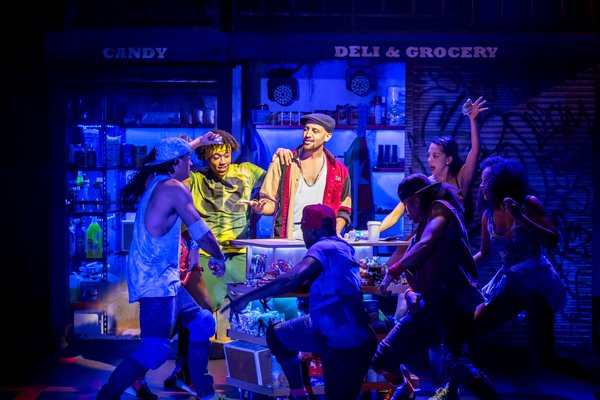
Way up in Manhattan, so far north that it’s nearly the Bronx, is Washington Heights. You take the A or the 1 train to 181 Street to find this primarily Hispanic neighbourhood that’s not on any tourist radar. In the Heights shows the day-to-day struggles and celebrations of a group of residents on one block far removed from downtown prosperity with a soundtrack of salsa, hip-hop and poppy musical theatre.

The songs are the most innovative aspect of this mostly-sung musical with a stellar cast, but the book is rather sparse and the large cast of characters means it’s a cracking ensemble performance with frustratingly little development for any one character. The book and lyrics rely on stereotypes of Latino immigrants in New York City, though it both fulfills and destroys them within the diverse array of characters. The story feels rather tenuously squeezed around the songs with the dialogue serving as a plot point connector; most, of the scenes aren’t substantial enough to stand on their own. But, going back to the music, the songs make up the bulk of this musical and create a fabulous atmosphere complimented by excellent design. The Latin and hip-hop tunes are the best and most original, resulting in a fun evening and a memorable soundtrack.

This production is the same one that received numerous accolades and award nominations last year at Southwark Playhouse, and deservedly so. The Kings Cross Theatre suits this show well, with a wide traverse stage and audiences on either side, creating intimacy and suiting Drew McOnie’s circular, street party choreography. There are still design relics from The Railway Children, but Takis’ urban set and Gabriella Slade’s bright, revealing costumes pull the focus onto this completely contrasting world. With the performances practically in the laps of the front rows, it’s hard not to get up and dance. Some people do during the curtain call.

It’s not all a party, though. Nina (Lily Frazer), the first of the neighbourhood to go to university, has dropped out after her first year. Her father Kevin (David Bedella) hates her boyfriend Benny (Joe Aaron Reid) and is furious about Nina’s deceitful behaviour. Corner shop (or “bodega” in NYC lingo) owner Usnavi (Sam Mackay) and salon owner Daniela (Victoria Hamilton-Barritt) are getting priced out due to rising rents. Others came here for a better life only to find themselves cleaning houses and pigeonholed by poverty. The joy in this show comes in the characters’ ability to party and find solace in each other in the face of adversity – a powerful message for modern times.

I wanted to know more about these characters, though. This is a “slice of life” show that tries to fit in a lot of big personalities and backstories in a short amount of time, so the main characters and their tales have little space to grow. The storyline feels rushed and the ending, though a happy resolution, is a bit too “musical theatre twee” for a world that’s poor and gritty, albeit one soaked with colour and excellent music. It’s still possible to be pulled into this little stretch of Washington Heights in the height of summer and to want to dance the night away to this extraordinary blend of Latino, rap and musical theatre.


The Play’s The Thing UK is an independent theatre criticism website maintained voluntarily. Whilst donations are never expected, they are hugely appreciated and will enable more time to be spent reviewing theatre productions of all sizes. Click here to make a donation with PayPal.

See What I Wanna See, Jermyn Street Theatre

Displaying The cast of See What I Wanna See at Jermyn Street Theatre. C Photography by Jamie Scott-Smith.jpg“The truth is rarely pure and never simple,” says Oscar Wilde in The Importance of Being Earnest. Indeed. We often encounter conflicts or situations where opposing viewpoints create very different stories. Michael John LaChiusa adapts three Japanese short stories by Ryūnosuke Akutagawa, including “The Grove” on which Akira Kurosawa based his western hit Rashomon, intertwining them to create a production showing that, well, we often see what we want to see and that “truth” is a flighty creature that can never be pinned down and shown objectively. See What We Wanna See, a chamber musical produced by Aria Entertainment at Jermyn Street Theatre, is a delicate, intimate performance with a strong cast. However, LaChiusa’s trilogy with loosely connected themes has little else that links them and feels like an evening of short plays rather than a cohesive, full-length musical.

As the prelude to each act, “Kesa and Morito” shows a medieval Japanese couple recently discovered having an affair. They are seeing each other for the last time. Both have plans for their final encounter and blackouts preclude discovery of their fate. “R Shomon” follows as the bulk of the first half, a thriller set in 1950’s New York. Four characters tell totally conflicting witness statements to an unseen policeman. Who is telling the truth about the death of The Husband? How is this piece connected to the opening where Kesa shares her story in a single song? The audience never finds out. The ending to this mini-musical is deliciously ambiguous with some complex musicality in the songs, but the connection to the “Kesa and Morito” prologue is tenuous at best.

The second half is the same structure. Morito shares his side of the story for the duration of a single song, then “Gloryday” is the rest of the act. This is a more compelling story than “R Shomon” and could be a longer, standalone production. A disaffected priest creates a hoax miracle that takes post-9/11 New York City by storm, making some pointed criticism of Jesus and his followers by comparing them to the vulnerable that fall for his trick. The end has a poignant twist and reiterates the show’s focus on the fluidity of truth within deceit and crime. Whilst these are good stories and maintain audience interest, there is no linking transition or any comment on the three other than presenting them together. This emphasizes the timelessness of the theme, but takes no particular point of view on it. LaChiusa’s message is consequently unclear.

The cast of five is fantastic; in a small theatre with a four-piece band are quiet enough that the actors don’t need mics so detail isn’t lost through amplification. There is no week link; they all have the chance to play at least one substantial role with the others showcasing their range. Jonathan Butterell as the priest that loses his faith in the second act’s “Gloryday” is particularly touching. Mark Goldthorp as the reserved 1950s taxi company boss in the first half’s “R Shomon” is quietly enigmatic and counters the brashness of Marc Elliott’s Thief and Cassie Compton’s resentful Wife. The priest’s Aunt Monica as given by Sarah Ingram is light relief but still possessing emotional depth.

LaChiusa’s music is reminiscent of a gentler, simpler Sondheim with influences spanning different eras and cultures. Simon Anthony Wells’ design similarly captures the different worlds in the production. Despite compelling individual stories, great performances and some lovely songs, the audience is left questioning what they are meant to take from the production and unsatisfied by the lack of a deeper connection between the three component tales. It’s still definitely worth seeing the London premiere of this unique, cosy production by Aria Entertainment, a producer vital to musical theatre for staging new and rarely staged work.


The Play’s The Thing UK is an independent theatre criticism website maintained voluntarily. Whilst donations are never expected, they are hugely appreciated and will enable more time to be spent reviewing theatre productions of all sizes. Click here to make a donation with PalPal.

Edinburgh Festival Fringe, 13 August: Part One

It’s fair to say that I’m not generally drawn to comedy or light subject matter. My favourite theatre is intense, serious and powerful, often with a heavy dose of suffering and/or death. I might need a break from all the despair after today, though. From mental health to forced prostitution to the government breaking up families, I’ve been put through the emotional wringer. These four productions are radically different in style and execution, catering to diverse audiences, but all are excellent offerings at this year’s fringe.

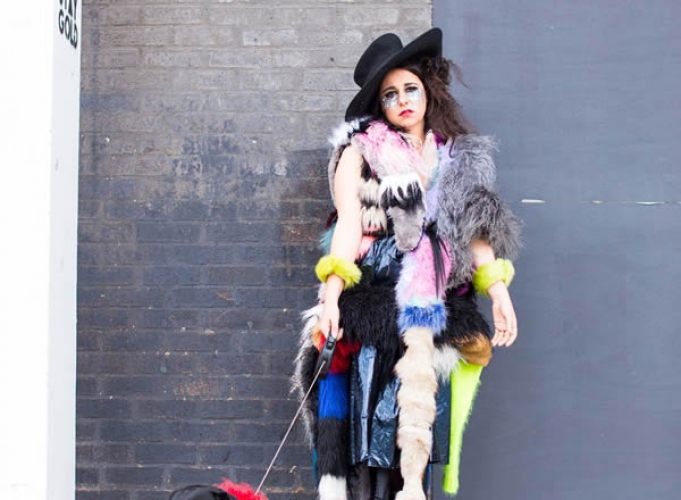
my-beautiful-black-dog_681x500My Beautiful Black Dog at Udderbelly Cowgate is a rock musical/gig/spoken word/live art show created and performed by southeast Londoner Brigitte Aphrodite. It celebrates her depression, or as she calls it in attempt to accept it as part of who she is, Creshendorious. There is glitter and sequins everywhere, emphasizing her party girl highs and contrasting her lows. Aphrodite is honest, frank and a highly skilled wordsmith in her songs and spoken text. Her songs manage to be both dry and celebratory; they create a party-like atmosphere that has the audience dancing and laughing along. It is rough and ready, and intimate, like a secret basement gig by your favourite band. The projected images and song titles added an element of set, but weren’t particularly needed and sometimes hard to see on the theatre’s brick back wall. On stage with her is Quiet Boy, who provides backing vocals, guitar accompaniment and a character who tries to coax her out of the road case she sometimes hides in, but it is very much Aphrodite’s show.

The party vibe abruptly drops when Aphrodite reads a (glittery) letter that explains exactly how she feels when she is fighting her black dog. Her honesty is brutal, but necessary. My Beautiful Black Dog takes a (sequined) tyre iron to the stigma and silence surrounding mental health issues. In these moments, the shine is a shallow sticking plaster, trite and useless. Rather than ending on a somber note, she ends on a song – not a happy ending, but a hopeful one. Aphrodite knows her depression will return, but next time may it be with understanding and acceptance from those around her. This production is difficult to experience, particularly if mental health issues affect you. It forces open a dialogue about mental health issues and even though it a (sparkly) genre mash-up, it is a vital show that could be scaled up to a big show, complete with lights, confetti and the sparkle it deserves.

Blind_Mans_Song,_Edinburgh_Fringe_2015,_courtesy_Francois_Verbeek_1_751x500Blind Man’s Song in Pleasance Dome is Theatre Re’s non-verbal dance theatre offering this year. As blind man Alex Judd plays keyboard and electric violin, a masked Guillaume Pigé and Selma Roth personify the images and emotions in his head. There is love, violence, travel, and a host of other encounters between the characters. There are moments of narrative, but this piece is very much open to individual interpretation. A simple, black set paired with smoke, side lighting and timeless costumes evokes the silent film era or a painting coming to life. The soaring emotion in the blind man’s music could imply that these are his memories or dreams. The mood and music varied enough throughout to maintain audience attention, and the performers’ skills in dance and mime were evident. It’s a captivating watch, if a little long. Sadly, some of the audience members were less appreciative. An older couple noisily left part way through and an American voice a few rows back at one point proclaimed, “This is stupid.” Abhorrent behaviour.

The music is richly augmented by a recorded track, but deliberately repetitive and grating at times. I found my mind wandering occasionally, but this was due to a moment triggering my own imagination. The young boy sitting in front of me had some lovely responses to the piece that drew my eye away from the stage: at times he conducted the music, at others he swayed mirroring the performers on stage, or wiggling abstractly in a dance of his own. Blind Man’s Song certainly triggers strong reactions from its audience though strangely, not all positive. It is a meditative, evocative performance if an individual permits it to be, but perhaps a challenging offering to our short attention spans.


The Play’s The Thing UK is an independent theatre criticism website maintained voluntarily. Whilst donations are never expected, they are hugely appreciated and will enable more time to be spent reviewing theatre productions of all sizes. Click here to make a donation with PalPal.

The Quentin Dentin Show, ACT Theatre at Kingston College

IYAF 1Disclaimer: due to TfL journey planner buggery I arrived at the theatre, the ACT at Kingston College in deepest, darkest zone 6, about ten minutes into the show. Fortunately, I only missed exposition that was covered as the story continued.

Keith (Jack Welch) and Nat (Shauna Riley) have been together for a while now. Their relationship has stagnated, as has Keith’s writing career. Nat’s had enough. They’re both chronically unhappy. The final straw as Keith’s radio breaking, but out of the static arrives weird and wonderful singing therapist Quentin Dentin (Henry Carpenter), and his two Friends (Caldy Walton and Ella Donaldson). Cloaked in white with matching hair, Quentin is a Christ-like figure there to save Nat and Keith’s relationship and to make them happy again.

Of course, this is all rather creepy and surreal. The story takes a turn to a darker side as the couple’s treatments prove ineffective. Production company Slick Rat state that one of the primary influences on the show is The Rocky Horror Picture Show; Quentin has similar qualities to Frank N. Furter, and the couple are a rather more street-wise, contemporary Brad and Janet who go along with the strange man that appeared out of their radio with little question. Musically, the songs have a 1970’s glam rock vibe and Quentin also looks a bit like David Bowie. In summary, the title role is a Frank N. Furter/Jesus/David Bowie hybrid in a new rock musical. What’s not to like?

Not much, actually. Though this is a new musical by a young company, a long development period and support from places such as Rich Mix and The National Theatre Studio have helped Slick Rat shape their idea into a quirky little show with potential.

There are still some issues that should be looked at, such as clichéd lyrics (“Swim with the fishes/all that glitters is gold”) and an abrupt ending. Not that it necessarily needs to be positive, but it’s quite vague in its current form. The transitions into the songs are similarly abrupt, but all that is needed to correct this would be more lead-in music and/or dialogue that echoes the coming lyrics. Even though I missed to beginning exposition, is ten minutes of a one-hour show too much of an introduction?

The performances are good, particularly from Donaldson, Walton and Riley (Friends and Nat). Quentin could use an injection of charisma to avoid him becoming too creepy, but this could also be addressed in the writing. Similarly, Keith could do with more external artistic angst, frustration and clear isolation from the rest of the world. The music is fun and the premise both entertaining and thought-provoking: are we allowing society to dictate that we must be happy all the time? Are we too enamoured of miracle cures? What role does religion play in this?

This one-act could nicely develop into a more complex story with the addition of more characters and songs without losing its message. It has a distinctive musical style that manages to not muddy from all its influences. It would certainly benefit from the addition of a bigger budget, good design and a whole band rather than the sole onstage guitarist. In its current state, it captures the innovation and spirit of fringe theatre and admirably contributes to new British musicals, an area sorely underdeveloped in favour of revivals and American imports. It’s worth catching at Edinburgh Fringe, particularly for those interested in new musical theatre.


The Play’s The Thing UK is an independent theatre criticism website maintained voluntarily. Whilst donations are never expected, they are hugely appreciated and will enable more time to be spent reviewing theatre productions of all sizes. Click here to make a donation with PalPal.