Bruce, Edinburgh Festival Fringe

Who knew a block of yellow foam could be such fun? Bruce is the not very bright, cop-turned-novelist-turned-astronaut, stuck in a time warp, lead character of Bruce. Created and controlled by Tim Watts and Wyatt Nixon-Lloyd, Bruce is a rectangular, Sponge Bob-like head with a white pair of hands. All of the other characters are played by the same head and hands, but Watts and Nixon-Lloyd use an array of voices to effectively distinguish them from each other.

The pace is relentless, perhaps too much so at the beginning as the audience starts to work out the story. When the time travel element is introduced at the end, it is similarly a lot to process at speed. The script is wonderfully funny, with a mix of humour styles and jokes catering to a wide variety of tastes. The puppetry is well rehearsed, with the two actors working in smooth tandem without any lag between the one controlling the head and the one playing the hands.

The entire concept is simple, but well executed and without self-referential flourish. The most complex aspect is the script, which has sufficient detail to keep audience interest. Laughs were widespread and regular. There isn’t a deeper level of social comment; Bruce is silly for the sake of it. I generally prefer my comedy with a heavy dose of social commentary, but after the serious shows I’ve seen over the past few days, this is a welcome break.


The Play’s The Thing UK is an independent theatre criticism website maintained voluntarily. Whilst donations are never expected, they are hugely appreciated and will enable more time to be spent reviewing theatre productions of all sizes. Click here to make a donation with PalPal.

Tether, Edinburgh Festival Fringe

Mark is an aspiring Olympian who just isn’t good enough to make Team GB’s marathon team. Becky is a completely blind marathon runner who needs a guide when she runs. Tether isn’t about running, though. Two deeply flawed individuals find themselves in an unusual relationship where they must navigate clashing aspirations, inherent selfishness and potholes.

Playwright Isley Lynn’s script is some of the best new writing I’ve seen in a long time. The characters are intricately detailed and exquisitely sculpted with enough contrasting goals to create natural dramatic conflict without excess. Using Mark’s girlfriend and Becky’s running club mate as a point of reference in their conversation prevents the play from becoming just about Mark and Becky, placing it in the real world even though we only ever see the two of them. The story’s dramatic arc is textbook, but hugely effective with a satisfying resolution. My only issue is the length – this play simply must be lengthened so the story can be continued. I was so engrossed that the abrupt ending was frustrating.

Lee Drage’s and Maisie Greenwood’s performances are similarly excellent; the characters are a gift for any performer. Considering they are actually running for a large part of the play, their endurance is admirable. Both embark on a journey of softening and discovery: Mark realises how selfish he is; Becky gradually drops her prickly guard and is able to trust Mark. The massive argument they barrel towards is a necessary and inevitable wake up call for both of them. Also commendable is casting visually impaired Greenwood as Becky. Director Bethany Pitts uses simple but effective staging and the clever use of harnesses allows for a realistic run and an obvious metaphor.

This is an unmissable new play from a Royal Court graduate that offers insight into a world rarely considered before the London Paralympics 2012. It is a great step towards increasing the visibility of disabled performers and deserves further attention beyond Edinburgh Fringe.


The Play’s The Thing UK is an independent theatre criticism website maintained voluntarily. Whilst donations are never expected, they are hugely appreciated and will enable more time to be spent reviewing theatre productions of all sizes. Click here to make a donation with PalPal.

Edinburgh Festival Fringe, 13 August: Part Two

Camilla Whitehill’s Where Do Little Birds Go? tells the true story of Lisa Prescott, an 18-year-old nightclub hostess kidnapped by the Kray twins in 1966. Re-named Lucy Fuller, Jessica Butcher tells Prescott’s story through this harrowing solo performance. Humour and music are used to break up the horror of Fuller’s imprisonment with an escaped murderer who rapes her for hours on end, but some of the music transitions feel forced. Lucy loves singing; Butcher shares this love with gusto. She also wonderfully and ever so slowly transitions from the bright eyed, bushy tailed girl from Hastings who moved to London with hopes, dreams and £5 in her pocket, to a quietly streetwise, mature young woman.

Whitehill’s script contains some witty one-liners but doesn’t shy away from graphic incidents, like Lucy adventures as a nightclub hostess who offers “afters” to her best clients, and her experiences at the hands of the Krays. Justin Nardella’s set is Winston’s, the Mayfair club where Lucy worked before her capture and after her release. It cleverly uses sturdy levels to break up Fuller’s movements, but some of director Sarah Meadows’ blocking feels arbitrary. Meadows does have a good sense of storytelling, but struggles with the script’s abrupt ending. The audience never learns the how Lucy regained her freedom, though Butcher’s excellent performance draws attention away from this issue. Overall, this is a good offering from Duckdown Theatre and Heavy Weather Theatre that with further script development could be an excellent play.

https://i0.wp.com/lovelettershome.org/wp-content/uploads/2015/08/Love-Letters-Summerhall.jpgMy last production of the day is Katharine Rose Williams Radojičić’s Love Letters to the Home Office, which receives a one-off table reading at Summerhall. This is one of the most important plays of contemporary British theatre. Not because of innovation or style, but content: it exposes the consequences of the 2012 Home Office legislation that breaches the human rights of an estimated 50,000 families in the UK.

This new ruling states that in order for a UK citizen to bring their non-European spouse into the country, the UK partner must earn a minimum of £18,600 a year or have £62,500 in savings. With travel and technology connecting people unlike that in past generations, couples forming from all corners of the globe are becoming more and more common. The income requirement discriminates against the working poor, though. It means that if the UK partner earns the minimum wage, they must work 60 hours a week. People who work in many jobs vital to UK societal function would not be able to living in the UK with their non-EEA partners. Such roles include teaching assistants, cleaners, caretakers, administrators, technicians, support workers, receptionists, and so on. The non-EEA partner’s income and savings are not considered in the application. Basically, if you are poor, you better fall in love with someone that is a European citizen or you will not be able to live together as a married couple unless you leave the UK.

Love Letters to the Home Office uses verbatim theatre from real-life people affected by this ruling. It is a politically charged play with a clear agenda: to spread the word about this home-wrecking Tory ruling. The stories are heart rending. A little boy stranded with his mum in America calls his Samsung tablet Dada. A single mum who can’t earn the required income because she is caring for her daughter must wait until her daughter’s old enough to go to school before increasing her working hours. A woman from the Philippines is unable to attend her husband’s funeral in the UK because her visa application had been rejected. These stories go on and on. There’s also a lot of factual information in the script that quotes from government legislation and academic studies amongst the actual stories. I struggle to imagine a dynamic staging and want to hear more first-hand accounts, but the script content is still hugely powerful and a motivational call to action.

The programme contains advice on how to engage politically if you are moved to act. It also has links to the project’s website, with many more accounts from people affected by this law. The website also allows for contributions, which opens the play to potential of constant change. The script could alter with every performance in order to provide a voice for these oppressed people who did nothing more than fall in love with a non-European whilst earning less than £18,600 a year.


The Play’s The Thing UK is an independent theatre criticism website maintained voluntarily. Whilst donations are never expected, they are hugely appreciated and will enable more time to be spent reviewing theatre productions of all sizes. Click here to make a donation with PalPal.

Edinburgh Festival Fringe, 13 August: Part One

It’s fair to say that I’m not generally drawn to comedy or light subject matter. My favourite theatre is intense, serious and powerful, often with a heavy dose of suffering and/or death. I might need a break from all the despair after today, though. From mental health to forced prostitution to the government breaking up families, I’ve been put through the emotional wringer. These four productions are radically different in style and execution, catering to diverse audiences, but all are excellent offerings at this year’s fringe.
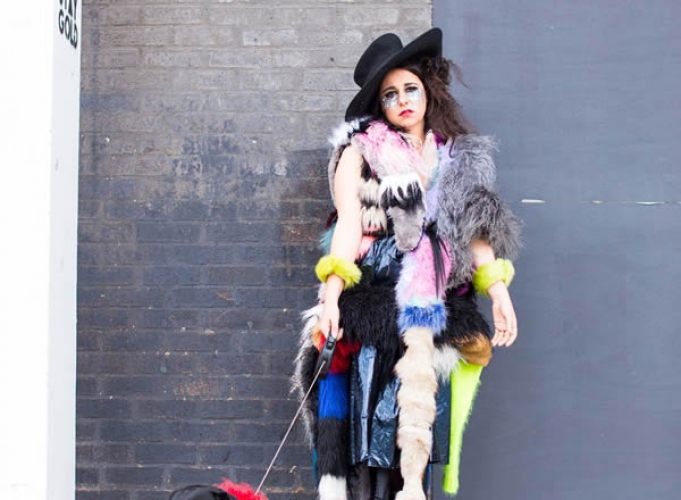
my-beautiful-black-dog_681x500My Beautiful Black Dog at Udderbelly Cowgate is a rock musical/gig/spoken word/live art show created and performed by southeast Londoner Brigitte Aphrodite. It celebrates her depression, or as she calls it in attempt to accept it as part of who she is, Creshendorious. There is glitter and sequins everywhere, emphasizing her party girl highs and contrasting her lows. Aphrodite is honest, frank and a highly skilled wordsmith in her songs and spoken text. Her songs manage to be both dry and celebratory; they create a party-like atmosphere that has the audience dancing and laughing along. It is rough and ready, and intimate, like a secret basement gig by your favourite band. The projected images and song titles added an element of set, but weren’t particularly needed and sometimes hard to see on the theatre’s brick back wall. On stage with her is Quiet Boy, who provides backing vocals, guitar accompaniment and a character who tries to coax her out of the road case she sometimes hides in, but it is very much Aphrodite’s show.

The party vibe abruptly drops when Aphrodite reads a (glittery) letter that explains exactly how she feels when she is fighting her black dog. Her honesty is brutal, but necessary. My Beautiful Black Dog takes a (sequined) tyre iron to the stigma and silence surrounding mental health issues. In these moments, the shine is a shallow sticking plaster, trite and useless. Rather than ending on a somber note, she ends on a song – not a happy ending, but a hopeful one. Aphrodite knows her depression will return, but next time may it be with understanding and acceptance from those around her. This production is difficult to experience, particularly if mental health issues affect you. It forces open a dialogue about mental health issues and even though it a (sparkly) genre mash-up, it is a vital show that could be scaled up to a big show, complete with lights, confetti and the sparkle it deserves.
Blind_Mans_Song,_Edinburgh_Fringe_2015,_courtesy_Francois_Verbeek_1_751x500Blind Man’s Song in Pleasance Dome is Theatre Re’s non-verbal dance theatre offering this year. As blind man Alex Judd plays keyboard and electric violin, a masked Guillaume Pigé and Selma Roth personify the images and emotions in his head. There is love, violence, travel, and a host of other encounters between the characters. There are moments of narrative, but this piece is very much open to individual interpretation. A simple, black set paired with smoke, side lighting and timeless costumes evokes the silent film era or a painting coming to life. The soaring emotion in the blind man’s music could imply that these are his memories or dreams. The mood and music varied enough throughout to maintain audience attention, and the performers’ skills in dance and mime were evident. It’s a captivating watch, if a little long. Sadly, some of the audience members were less appreciative. An older couple noisily left part way through and an American voice a few rows back at one point proclaimed, “This is stupid.” Abhorrent behaviour.

The music is richly augmented by a recorded track, but deliberately repetitive and grating at times. I found my mind wandering occasionally, but this was due to a moment triggering my own imagination. The young boy sitting in front of me had some lovely responses to the piece that drew my eye away from the stage: at times he conducted the music, at others he swayed mirroring the performers on stage, or wiggling abstractly in a dance of his own. Blind Man’s Song certainly triggers strong reactions from its audience though strangely, not all positive. It is a meditative, evocative performance if an individual permits it to be, but perhaps a challenging offering to our short attention spans.


The Play’s The Thing UK is an independent theatre criticism website maintained voluntarily. Whilst donations are never expected, they are hugely appreciated and will enable more time to be spent reviewing theatre productions of all sizes. Click here to make a donation with PalPal.

Catalpa, Edinburgh Festival Fringe

tumblr_inline_nrvc51lXq21ty6pcm_500In 1876, Captain George Anthony was hired to sail The Catalpa from Massachusetts to Freemantle, Australia to rescue six Irish prisoners. Numerous difficulties nearly scuppered the mission, creating fascinating narrative potential for songwriters and playwrights. Actor/writer Donal O’Kelly frames this nautical tale with a frustrated screenwriter who keeps being rejected by Hollywood producers. After the latest, “no”, he returns to his flat alone and enacts the entire story he sees in his head that no one appreciates. Youthful American company 35 Brookline brings this one-man show from Boston to Edinburgh with a great performance by Joseph Freeman, but some script issues and production choices prevent this play from reaching its full potential.

There are some wonderful moments. Freeman’s ability to embody honest tenderness as George saying goodbye to wife Greta and daughter Pearl, and later imagining them on his journey, are the best in the play. The model Catalapa at sea on the screenwriter’s bed with a small torch sun is simple but effective object manipulation. Freeman’s energy and commitment to the role are excellent and unwavering. In a play written 20 years ago, Freeman feels too young for the screenwriter character, though. The language doesn’t sit organically in a contemporary character of his age and a man reaching that level of bitterness is usually middle-aged rather than early-to-mid twenties, though his youth suits the characters in the Catalpa story.

The introduction of O’Kelly’s script is rushed, not giving the performer enough time to suitably build to the desperation required to carry him through the enactment of his script alone in his flat. It’s also an unconvincing scenario, and one that feels plausible with the addition of copious amounts of alcohol. The script also fails to return to the screenwriter at the end of the play, creating an abrupt ending and the feeling of incompletion.

Though the pace and energy are generally good with suitable attention paid to the more intimate moments, other climactic moments could have been slowed down more. The story depicted in lengthy and complicated, which can be hard to follow at pace. I’m unsure whether this is a script or directorial issue, but it’s easy to lose track of the story. There is much more potential for sound and lighting detail to add even more atmosphere, but this is underused. What is there is supportive of the story with the exception of a few blackouts.

This is certainly a quirky and endearing piece of theatre, but one that does not manage to fully satisfy. The story is wonderful as is Freeman’s performance, but other elements of the production don’t knit together as smoothly as they could.


The Play’s The Thing UK is an independent theatre criticism website maintained voluntarily. Whilst donations are never expected, they are hugely appreciated and will enable more time to be spent reviewing theatre productions of all sizes. Click here to make a donation with PalPal.

Goodstock, Edinburgh Fringe

4619333323_702x449If you’re a woman with the BRCA1 gene, you have a 40% chance of developing ovarian cancer, and an 80% chance of developing breast cancer. Olivia Hirst is a playwright and actor. She has the BRCA1 gene and a family tree peppered with ancestors and family members who died from these cancers. Among those are her aunt, and her grandmother Elizabeth who survived a cancer diagnosis. Being a performing artist, Olivia wrote an autobiographical play about having BRCA1. Lost Watch’s Goodstock affectionately presents the major, real-life decisions she must make with humour, frankness and music.

An episodic structure frames the stories of numerous characters, with a particular focus on Olivia and her family. Illona Linthwaite plays her spunky and caring grandmother, Rianna Dearden plays Olivia’s parents, several doctors and Olivia’s aunt, as well as a host of musical instruments during scene transitions. Olivia plays herself. The cast of three clearly demonstrates great conviction in their story, endowing each character with charm and honesty. They often employ direct address, creating a relaxed, conversational environment. Olivia’s script cleverly utilizes levity, storytelling and meta-theatre to contrast quite a lot of science and grief, creating a well-balanced production. It could easily tend towards sentimentality, indulgence or preaching, but instead manages to be both informative and heartwarming.

One of Olivia’s decisions is what kind of preventative surgery to have. Medicine recommends breast removal by age 30, and the ovaries by age 35. Olivia is 26. She’s also recently single and faces the consequential decision of how to deal with becoming infertile. But, does she risk passing down this gene to her children if she can’t afford embryonic screening? It’s a lot for a 20-something to deal with, and her inner conflicts move the audience to tears.

There’s a lot packed into this gem of an hour-long play, but the only unclear aspect is what Hirst and the company want the audience to take away. It is a celebration of life, and raises awareness of what life is like for young women who know they have the BRCA1 gene, but this microcosmic biography doesn’t convey one particular message. Regardless of this, it is a wonderful piece of theatre with skilled performances and a distinctive writing style that is a vital contribution to this year’s Fringe.


The Play’s The Thing UK is an independent theatre criticism website maintained voluntarily. Whilst donations are never expected, they are hugely appreciated and will enable more time to be spent reviewing theatre productions of all sizes. Click here to make a donation with PalPal.

Butoh Beethoven, Edinburgh Festival Fringe

web.phpCulture vulture audiences will know Beethoven, but may not be familiar with Butoh, the Japanese modern dance developed out of the devastation of WWII that translates to “darkness dance”. It wholly rejects the conventions of classical dance by tapping into the inner life of the dance’s subject. In this case, the eponymous composer and Butoh founder Hijikata Tatsumi inspire french creator and performer Vangeline.

A row of pig masks on the back wall of the tiny theatre watches this non-speaking show that embraces the grotesque. Vangeline is dressed in a glowing white, glamorous gown made of shirt sleeves. Her makeup starkly matches, and evokes the spirit of these dead men. A red glowing heart in her hands followed by a light up conductor’s wand are a focal point, but not as intriguing as the expression that soon dominates Vangeline’s face. Her vigorous movements fill the small stage, but expression begins small, then grows into an gaping mouth and searching tongue. Her eyes are closed most of the performance but her mouth exhibits passion, struggle and ecstasy brought on by the symphony she conducts. As the music climaxes, so does she but this is not sexual…or perhaps it is?

The character the audience sees is also a non-character, more of a personification of the pleasure we feel when listening to our favourite piece of music. This creates a simple narrative, but lacks enough substance for a 45-minute performance. I want to know more about this creature but she never satisfies this curiosity. Her movements are intriguing and full of feeling, but the promised parallels between the performance and film noir never materialize. Knowing only basic information about Butoh, the tribute to the dance’s founder is not clear other than the chosen dance form itself.

Butoh Beethoven, whilst using a form unique to most audiences in this country, is certainly a cultural experience but one that is not entirely accessible to those unfamiliar with Butoh due to the lack of speech. It falls into the genres of performance art and live art and though the production contains captivating physical images and outstanding sound design, it is only fully accessible to audiences with a specific knowledge of the dance form.


The Play’s The Thing UK is an independent theatre criticism website maintained voluntarily. Whilst donations are never expected, they are hugely appreciated and will enable more time to be spent reviewing theatre productions of all sizes. Click here to make a donation with PalPal.

Divas and Islands, Edinburgh Festival Fringe

Divas Press ImageAdam and Damien, with a trio of backing singers, narrate their doomed-to-fail relationship from beginning to end. Magnus and Sophie, a high flying city couple and the epitome of pop culture, also use narration to tell the audience about their perfect relationship and their perfect lives that really aren’t so perfect. Fine Mess Theatre present these couples with two comedic short plays, Divas and Islands to remind us that we are all flawed creatures searching through the mess that is modern life to find that one person whose flaws fit ours. Also, city workers do their reputations no favours.

Divas follows a format similar to Jason Robert Brown’s The Last 5 Years. Adam (Joel Samuels) tells their story backwards, starting with their breakup. Damien (Daniel Ward) starts at the beginning. They address the audience, but rarely directly to each other. Three women in sequined black dresses sing stereotypical diva anthems a cappella, but also step in to take on the role of the other partner and friends as a mini-chorus. Things aren’t right, though. Adam is middle class and works in the corporate world. He desperately seeks out culture: book groups, art galleries, opera, fine food and wine. Damien is a working class barista who believes Adam is completely above him. Feeling the need to impress on one of their first few dates, he creates a new biography: he works in the music industry, he lives with hipster housemates, his parents are dead, the works. Lies are never infinitely sustainable, and in this case, all does not end well. As the story unravels, what is true and what is fabrication becomes increasingly unclear, but it works well by showing the two sides to every relationship.

Though the two men are desperately in love with each other, Samuels and Ward haven’t fully captured that chemistry. The staging is that of a cabaret, with a shiny red backdrop and the men using handheld microphones. The singers are not amplified, so the sporadically used microphones seem unnecessary and an obstacle to the characters’ relationship. There is little physical contact, though it is often discussed. Not that they need to be all over each other, but it may have helped create a stronger sense of their relationship. The cabaret format is a lovely idea to frame a couple that loves the genre, but it further distances the characters from each other. More direct interaction would certainly support their relationship, though it would have to be carefully placed and in order not to muddy the contrasting chronologies.

Islands_Press_ImageIslands is the stronger, more polished play, but with less likeable characters and a more conventional format. Magnus (Kyle Ross) and Sophie (Eva Tausig) are performed well, and hilariously embody aspects of corporate and pop culture that everyone loves to hate. From workplace affairs to text speak, they lead fabulously comfortable lives that look perfect from the outside. A quick pace generates some great comedic moments, but they are still two people desperately seeking the perfect compliment to themselves. There is also a heavy dose of narration, but the two regularly interact so their relationship seems genuine. Though this is a two-hander, the performances and the script are good enough to keep attention throughout, but there is perhaps one subplot too many. The puzzling element is the costume design – both characters are just in underwear. The stripped back costume contrasts their carefully constructed lives, but it doesn’t really add anything to their relationship and feels gratuitous.

Fine Mess Theatre are a new company of actor-writers that focus on new writing and clearly have the courage to experiment with form and structure. Their strengths are their characters and story ideas, but the structure doesn’t always support their characters’ relationships with each other. Narration and direct address is often ignored in character-driven work, but exploring it as a storytelling device is a worthy experiment. They are certainly a company to watch as they develop and refine their style.


The Play’s The Thing UK is an independent theatre criticism website maintained voluntarily. Whilst donations are never expected, they are hugely appreciated and will enable more time to be spent reviewing theatre productions of all sizes. Click here to make a donation with PalPal.

The Ghost Sonata, Rose Playhouse

A mysterious old man manipulates a poor student, then a wealthy colonel. A woman – or is she a parrot? – lives in a wardrobe. A beautiful, sick daughter always stays indoors. Servants control their masters. There is discussion of past love affairs, betrayal, and deceit. Strindberg’s The Ghost Sonata is inhabited by a cast of damaged, dysfunctional characters drawn to a house that rots them all from the inside. Director Charlotte Ive has adapted the original to suit a small cast and stage at The Rose on Bankside with good intuition for creating mystery without losing momentum. Though I am unfamiliar with Strindberg’s script, Ive seems to have made some edits but keeps the crux of the story, all which is made clear at the end. There are some issues, but this is a lovely intimate piece of theatre with strong directorial choices that mostly support the performance, and an able, predominantly female, cast.

They story is slow to develop, but does so with deliberating measure, managing to escape stagnation. The start is somewhat unclear: the initial location is vague, as is why two characters meeting for the first time are in what is an obviously engineered situation. These factors enhance the mysterious aspect of the story, but do not foster understanding. Foss Shepherd is Jacob Hummel, an 80-year-old, chatting to female Charley Willow who plays young male student Arkenholtz. Willow’s gender is not particularly well disguised, and a less convincing boy than she is as the old colonel. Hummel clearly wants something from Arkenholtz, but what and why is only revealed later. Shepherd and Willow’s performances have enough tension and energy to keep the story moving; lesser talent would cause the action to stall.

Making up the rest of the cast are Sophie Lakely and Olivia Meguer, who play the rest of the roles. Meguer as the revolting chef who stuffs the family full of food drained of nutrients is particularly fun to watch. Lakely as the supposedly ill daughter never quite connects with Willow’s student, though her conviction is genuine. They also play disembodied ghosts voiced from the audience or the edge of the stage. Shepherd bends and twists his way through his performance as Hummel, though I wonder why Ive did not cast an older man. Though with this run starting the same time as Edinburgh Fringe and Camden Fringe, perhaps the older male fringe actors were otherwise engaged.

The design is provincial and pretty with flower garlands canopied over the stage, drawing attention away from the heavy gray concrete that forms the theatre’s walls and ceiling. A small table, jug and basin and other items add period signposts without taking up too much space. The costumes are simple, but in keeping with the time period. Ive chose not to use the entire site, with the exception of an unlit dancing couple at the far side of the pool that preserves the old Rose’s foundations. For a production that is adapted to The Rose, neglecting this part of the venue raises a question: what then makes the Rose so vital to this production?

This is a production that requires patience and acceptance from its audience. The performances are worthy of attention as the plot gently and almost imperceptibly unfolds. The characters switch between expressionism and naturalism without fanfare; very little information is actually revealed until the end. The language is evocative of broken people in a time long ago who don’t quite manage to cope with life as they should and is a wonderful, odd production despite its shortcomings.

NOTE: The performance reviewed was a preview performance.


The Play’s The Thing UK is an independent theatre criticism website maintained voluntarily. Whilst donations are never expected, they are hugely appreciated and will enable more time to be spent reviewing theatre productions of all sizes. Click here to make a donation with PalPal.


Elephant Man, everything theatre

“…In his original adaptation, writer and director Steve Green confronts audiences with the uncomfortable social history of ownership, entrapment and public appearance in the Victorian era.

“Actor Daniel Christostomou plays Merrick as a sensitive, articulate young man caged by his physical deformities and Victorian attitudes. Rather than prosthetics or make up, costume designer Anastasia Sarajeva has created an evocative, confrontational structure of wire, chain link and mesh for Chrisostomou…

“Steve McGarrick’s portrayal of Frederick Treves is warm but scientific…He genuinely cares for Merrick, but also has a sense of ownership for the man and wants to “keep him” in hospital for the sake of medical research. This is thinly veiled as concern for Merricks’ wellbeing.

“Adam Trussell’s Tom Norman keeps Merrick in a caged bed…as a freak show specimen in a Whitechapel shop front. Trussell also portrays Dr Reginald Tuckett, a deeply disturbed colleague of Treves. Trussell’s characters are very similar to each other, which unfortunately doesn’t allow him to show much range as an actor.

“Amy Sayers and Katie Turner also play a range of characters in Merrick’s life. Many of these characters are also caged, but by prejudices and attitudes that prohibit them from seeing Merrick as fully human.

“Despite Chrisostomou’s incredible performance and the unique approach to Merrick’s experience, the script falls short…

“Regardless of the confusing and unpolished script, the characters and the performances still make this a production worth catching…”

Read the entire review on everything theatre here.