Dominoes, Tara Theatre

https://i0.wp.com/farm1.static.flickr.com/133/360046773_f06607e09c_o.jpg

There’s a database where you can look up the size of reparations paid to slave owners after slavery was abolished. In Dominoes, History teacher Leila and her fiancé Andy share the same last name – McKinnon. Andy’s white and Scottish, Leila’s half black-Caribbean. When curiosity gets the better of her in the run up to their half term wedding, she makes a discovery that pits family and friends against each other and threatens to destroy her big day.

Continue reading

Identity Crisis, Ovalhouse

https://i0.wp.com/thenubiantimes.com/wp-content/uploads/2016/07/Identity-crisis-image.png

Phina Oruche has had an extraordinary career. Growing up in Liverpool to Nigerian parents and desperately wanting to see more of the world, she let her best friend Amy talk her into doing a modelling photoshoot as a teenager. Soon she found herself living and working in London, then New York and LA. Eventually tiring of the high fashion world and feeling the pull of her home, she moved back to the UK where he career led her firmly into the film and telly world. Now a mum and conflicted about the cultural pushing and pulling on her life, she examines who she really is the self-penned Identity Crisis. The punchy tapestry of characters and experiences has messy and confusing moments and no clear resolution or story, but it’s brimming with heart and life.

Continue reading

Bunny, White Bear Theatre

https://newimages.bwwstatic.com/upload11/1554375/tn-500_bunny-catherinelamb-rehearsalimagesbydashtijahfar_dsc0628.jpg

Katie is a fairly average eighteen-year-old living a life busy with A-levels, uni applications and her older boyfriend, Abe. She’s not sure what she wants to do with the rest of her life, but she’s enjoying the here and now of Luton in the springtime. Her fragmented story by Jack Thorne focuses on one afternoon after school that starts out predictably, but soon spirals out of her comfort zone. The action that unfolds tests Katie’s maturity and independence, but the story is not one that is particularly interesting even with good delivery.

Continue reading

Feature | No, Dominic Cavendish – You Are the Thought Police

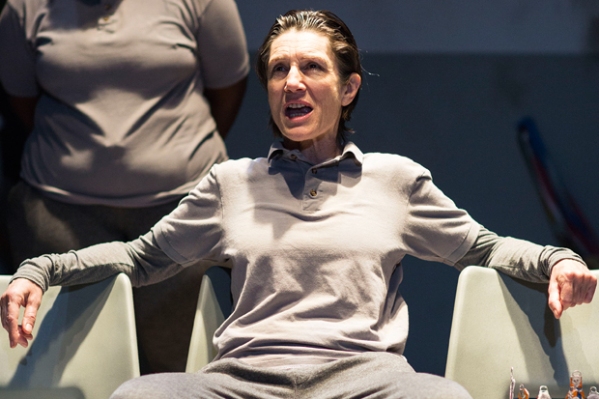
harriet-walter-as-king-henry

by Dr. Jami Rogers, University of Warwick

Dominic Cavendish can rest assured: he will not lose the opportunity to see his favourite (white) male actors in leading Shakespearean roles. After all, what producer would refuse Kenneth Branagh the chance to play Leontes in The Winter’s Tale or stop inviting Ralph Fiennes to work his way through the classical canon? The star system remains overwhelmingly skewed towards the (white) male and, as such, any (white) male classical actor who fancies it will most likely be first in line for a West End Shakespearean lead. Antony Sher has just played King Lear and Simon Russell Beale showed us his Prospero, to name two more male classical actors who are not exactly short of Shakespearean work. Cavendish’s opinion piece is misguided in its assertion that men are an endangered species on the classical stage – and somewhat light on facts.

Continue reading

The Wild Party, The Other Palace

https://i0.wp.com/7210-presscdn-0-59.pagely.netdna-cdn.com/wp-content/uploads/2017/02/Frances-Ruffelle-as-Queenie-and-the-cast-of-The-Wild-Party.-Photo-Credit-Scott-Rylander.jpg

Newly rebranded as The Other Palace and now part of Andrew Lloyd Webber’s empire, the former St Jame’s Theatre aims to focus on new British musical theatre. With Paul Taylor-Mills at the creative helm and two spaces in which to develop and showcase new work from the UK, their debut production is…(drumroll)…an American musical from 2000. An odd choice considering the Broadway production nearly two decades ago left critics unimpressed.

Continue reading

Feature | Barker’s Play Doesn’t Erase Minorities – The Print Room Does

http://www.trbimg.com/img-5296a467/turbine/la-ol-katy-perry-american-music-awards-yellowf-001/600/600x399

by Daniel York

I actually sat down and read In The Depths of Dead Love last night.

If anything, I’m even more angry now. The argument put forth by the Print Room is that, although the play is set in ancient China and the characters have Chinese names, the characters are not “Chinese” and it’s a very “English story”.

Is this true? Well, there are a lot of “deep bows” and talk of emperors but reading the work leaves me wondering just exactly how ethno-specific a play would have to be before the people who programmed and presented this one would consider that, yes, we might just have to cast some actors who aren’t actually Caucasian and middle-class.

The thing that really does disgust me, though, is the Print Room’s argument that they should have the right to cast “the best actors for the roles, independent of ethnic origin”. Leaving aside that being “independent of ethnic origin” appears to be a privilege that only applies to white people, we have the Print Room citing Christopher Hurrell’s defence that, “the characteristics [Barker’s play] seeks in actors are not social, cultural or ethnic—they’re technical, aesthetic and artistic.”

Let’s just pause there. Would it have to be written in pidgin English before the demands were relegated to “social, cultural or ethnic”?

And this is what is utterly despicable about the whole argument I’ve had so many times in the past and, I hope, not too many more in the future: the sheer racial and social snobbery embodied by organisations like the Print Room and the Wrestling School when they assert that they cast “the best actors for the role”. What they’re actually saying is “you little ethnics just aren’t up to the job”.

This would be bad enough but we’re now all pretty much certain that they never met or considered any actors of any other ethnic background other than white Caucasian for this production. This play which was produced on the radio in 2013, which Christopher Hurrell maintains was given a reading at the Print Room in 2013. They’ve had FOUR YEARS to develop this. FOUR YEARS in which it looks as if they never once even considered casting actors who weren’t white. I presume, they never once considered that actors who weren’t white Caucasian were up to the “technical, aesthetic and artistic” demands of the play.

The racial and social snobbery is compounded by the Print Room alleging that the protests have come from “some members of the public” when in fact it’s mainly members of the theatre community. When they argue that the references to China are merely “oblique”. When they give trite lectures about The Great Man being a “fabulist” whose work “is poetic and often difficult to pin down in time or place”.

Yes, we do understand all those things. Because we’ve actually read a few books too. We understand the arguments perfectly because, believe it or not, we’re “artists” as well.
And, as artists, we politely but firmly reject this cultural ethnic elitist high-handedness.

Please join us in in our protest this Thursday Jan 19th. If you can’t physically make it (or even if you can) please partake in the “thunderclap” social media protest.

The Play’s the Thing UK is committed to covering fringe and progressive theatre in London and beyond. It is run entirely voluntarily and needs regular support to ensure its survival. For more information and to help The Play’s the Thing UK provide coverage of the theatre that needs reviews the most, visit its patreon.

Glockenspiel, Tristan Bates Theatre

https://i0.wp.com/www.stevendykesplaywright.com/wp-content/uploads/2015/09/glockenspiel-columbia-1-770x513.jpg

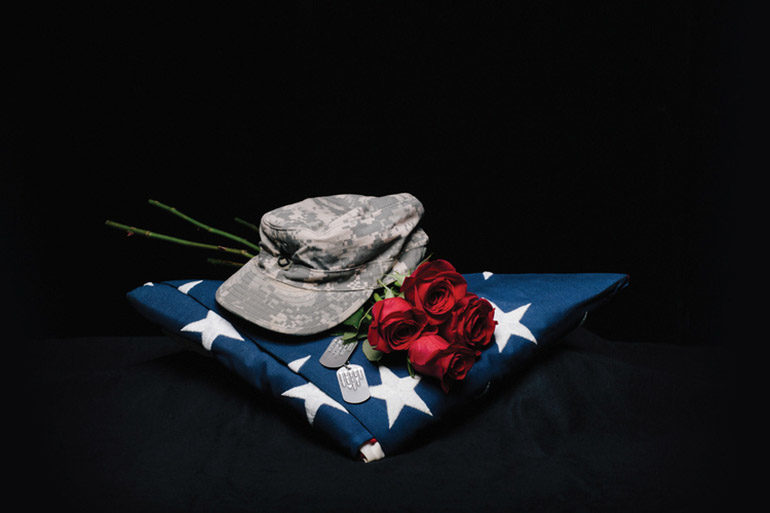
In the programme notes for Steven Dykes’ Glockenspiel, we are told that 40% of current personnel have been deployed more than once, and 27% of those veterans deployed to Iraq and Afghanistan suffer from anxiety disorders and/depression. A fifth of ex-service people are unemployed, and a fifth report cases of domestic violence. Male ex-service members are twice as likely to commit suicide than their non-serving peers. So it’s no secret that the US doesn’t look after its veterans very well. The play tries to look at the effects of service on those now finding their way in the civilian world, but Old Sole Theatre Company’s execution doesn’t deliver the power needed for this slowly-developing script.

Continue reading

Editorial | An Open Letter to the Print Room

https://s3.amazonaws.com/wos-photos-production/89185.jpg

I never make New Year’s resolutions. They work for other people and that’s great, but they aren’t my thing. But Daisy Bowie-Sell’s tweet from a few days ago asking what theatre’s resolutions should be for 2017 resonated with me. An industry making resolutions? Now that’s something I can get behind – people working together for a common goal is what theatre is about on a microcosmic level anyway, and more unity is surely a good thing in a world becoming increasingly polarised.

Continue reading

Feature: Scenes From A Yellowface Execution

https://girlsdofilm.files.wordpress.com/2014/09/breakfast-at-tiffanys-mickey-rooney-3.jpg?w=800

By Daniel York

Before we go any further, let me lay a couple of things out there:

Howard Barker is a first-rate dramatist.

The Print Room in Notting Hill is a great small-scale theatre.

But they have epically and catastrophically screwed up their casting choices in Barker’s latest offering, In The Depths Of Dead Love. According to the theatre’s website, the play is set in “Ancient China”, concerns an “Emperor” and “Imperial Court” and features characters called “Chin” and “Mrs. Hu”, with an entirely white cast who (without wishing to sound too ironically stereotypical) one would normally expect to see on TV taking tea with Lady Mary Crawley in Downton Abbey.

It’s also doubly ironic that in post-referendum, post-truth Brexit Britain, we’ve spent the last few months being told that you simply cannot call people stupid or racist.

Well, here’s the deal. We don’t actually have to be stupid to do stupid things and we’re all perfectly capable of perpetuating systemic racism without actually being consciously racist. Yes, it’s a subtle one, folks, and interestingly, I can honestly say, hand on heart, I have never once heard the immortal words “I don’t have a racist bone in my body” said by any person of colour. Not one. Because people of colour are ten times as aware of racism as white people. It’s just a fact.

Now, what that hotbed of London fringe theatre that is the Print Room have done, in a play by one of Britain’s most eminent playwrights, is perpetuate the practice of “yellowface,” i.e. when a person who is not of East Asian descent plays a character of East Asian descent. Yellowface, like blackface and brownface, is a remnant of a time when actors of colour were simply not allowed on our stages.

There’s often confusion about a couple of things here. People like to kid themselves that blackface only ever happened in some bygone Edwardian hinterland and only then because there were no black actors around to play Othello. However, this isn’t actually true. The last blacked up Moor of Venice on our stages was as recently as 1990. The practice was only ended by protest from black actors.

Yellowface has lingered on a lot longer, unfortunately. We did however think we’d finally laid the culturally appropriated beast to rest (on British stages at least) in 2012 when, after the Royal Shakespeare Company elected to cast only 3 (out of a cast of 17) East Asian actors in minor roles (including a dog and a maid) in the Chinese classic, The Orphan Of Zhao, a mass social media protest that went viral globally caused considerable embarrassment to both the RSC and the British theatre industry as a whole.

Since then we have seen a whole slew of productions in major theatres: Chimerica, #AiWeiWei, The World Of Extreme Happiness, Yellowface, You For Me For You, P’yongyang, Shangrila, The Sugar-Coated Bullets Of The Bourgeoisie-in major venues, achieving enormous success with casts of real-life East Asian actors, not Caucasians doing an “ethnic turn”. We will also shortly see Snow In Midsummer, at the RSC no less, and Chinglish at the Park Theatre. These are cast with actors who can actually trace their roots to Eastern Asia.

The other confusion that lingers about yellow (and black and brown) face is that if you don’t have the make-up on, the taped eyelids and the dodgy Mickey Rooney in Breakfast At Tiffany’s accent, this somehow ceases to be dodgy theatre practice and magically becomes instead a perfectly valid form of “colour-blind casting”.

But this is the deal. If you take an East Asian character and cast it with a white actor, you’re effectively saying there is no East Asian actor who was good enough/clever enough/talented enough/capable enough to play it.

Or they simply did not exist.

In other words: erasure.

 Daniel York (sometimes known as Daniel York Loh) is a mixed-race British East Asian actor, writer, filmmaker and musician. As an actor he has appeared at the RSC, National Theatre and Royal Court, as well as in the feature films The Beach and Rogue Trader. His short films have been seen in major film festivals where they have been nominated for awards. His first full-length play, The Fu Manchu Complex, ran at Ovalhouse in 2013. Along with composer Craig Adams, he won the 2016 Perfect Pitch award to create an original stage musical, Sinking Water, based on events around the 2004 Morecambe Bay Chinese cockle-picker tragedy, which is currently being developed under commission by Theatre Royal Stratford East. He is one of 21 writers of colour featured in the collection of essays, The Good Immigrant, which won the 2016 Books Are My Bag Reader’s Choice award. He is one-third of the alt-folk trio Wondermare whose self-titled debut album is available to buy on itunes. He has served on the Equity Minority Ethnic Members Committee, is a founder member of British East Asian Artists and has worked with Act For Change to promote diversity in UK media.

Father Comes Home From the Wars (Parts 1, 2 & 3), Royal Court

https://i0.wp.com/www.officiallondontheatre.co.uk/servlet/file/store5/item374788/version1/fileservice770/374788_770_preview.jpg

American, Pulitzer Prize-winning playwright Suzan-Lori Parks doesn’t shy away from epic projects. Six years ago, she wrote a play a day to create 365 Days/365 Plays, then went on to write the nine-part Father Comes Home From the Wars. Parts one, two and three centre around Hero, a strapping young slave on a remote Texan farm. Spanning the Civil War, this epic story with influence from Greek myths and contemporary socio-political issues in Parks’ distinctive, poetic language takes its time to develop and has some discordant stylistic choices, but its narrative and historical interpretation is both compelling and important.

Each of the three parts has moments of profound brilliance and devastation, but Parks is in no rush to tell her story. The dialogue-driven script takes its time, meandering around a complex landscape of slavery, loyalty and race within this particular slave family. Though set in war time, there is little action – broader issues drive the conversation more so than current events. This is more of a kitchen sink drama than a wartime adventure story.

Part one solely takes place on the farm as Hero debates whether or not join his master in battle. The rest of the slaves take bets and try to persuade him one way or the other, but in the back of Hero’s mind is a promise from the Boss-Master – but is he likely to keep his end of the deal? Hero’s loyalty is split between his owner and his wife Penny, but the lure of the cast-off but smart uniform proves too much. Though little happens, the domesticity of part one has some of the tension that precedes a huge decision. Seeing a tall, strapping black man in the prime of his life wearing Confederate greys is most unsettling; this paired with the ingrained, accepted attitude that he is the property of his owner is a potent reminder that there has been insufficient progress in America’s attempts at racial equality.

Part two, though set at a particular moment in the midst of the war, has the calm of an eye of a storm and is by far the best of the three parts. Hero and Boss-Master have captured a Yankee prisoner whilst separated from their regiment during a battle. Hero’s loyalty is tested again, this time by his prisoner upon discovery of a secret that’s hidden in plain sight and only skin deep. Racial identity, individuality and freedom intertwine in an intoxicating allure of potential for Hero, who is still doggedly loyal to his owner. The powerful ending devastates in its frank depiction of ingrained attitudes of racial inferiority and liberal frustration with this mentality.

Part three is the more mature sibling to part one. The characters are older, wiser and more world weary in the face of Southern defeat. The pre-war certainty has given way to a chance at the great unknown of freedom, and for the first time they can choose where they live – anywhere in the great, wide world, or on the farm they have known forever. Penny and Hero’s devotion is destabilised in this irrevocably changed world that is now free, but cold and dangerous – and still is for black Americans today. The morality of freedom isn’t black or white here, but the ominous, thought-provoking grey of Hero’s, (now called Ulysses) uniform.

Neil Patel’s unforgiving desert of a set doesn’t have bells and whistles, but it’s sparsity highlights the richness of Park’s language and characterisation. Steve Toussaint is the remarkable Hero, painted with delicate light and shade. The rest of the cast are excellent in their own right, though lack the development of the initially appropriately-named lead.

Parks’ script is almost completely bedded in realism (that’s occasionally heightened), though a talking pet and some contemporary costumes slightly skew reality. Both are used sparingly and without any evident justification across the three parts so their inclusion feels jarring and unnecessary. The onstage musician, though very much a separate commentator, doesn’t clash the way these choices do.

For a play set during a war and a pivotal moment of America’s history, it is oddly detached from violence and conflict. Instead, Parks’ text goes after deeper themes within this transition from slavery to freedom. Though a greater sense of danger and looming dread would add needed further tension in parts one and two, the nuance that flows through the story is undeniably exquisite.

Father Comes Home From the Wars (Parts 1, 2 & 3) run through 22 October.

The Play’s the Thing UK is committed to covering fringe and progressive theatre in London and beyond. It is run entirely voluntarily and needs regular support to ensure its survival. For more information and to help The Play’s the Thing UK provide coverage of the theatre that needs reviews the most, visit its patreon.