Live from Television Centre

On Sunday night, theatre people ( and hopefully others) up and down the country tuned in to BBC Four to watch Battersea Arts Centre and Arts Council England take over the former Television Centre, now a building site for luxury flats. Over two hours, four theatre companies streamed their work for live audiences in the comfort of their homes, to push the boundaries of theatre’s adaptability to the popular small screen and to challenge typical TV programming. I watched in bed and with twitter open so I could keep half an eye on #livefromTVC; it was a gloriously anarchic experiment that I hope ushers in a new era for telly and theatre even though not every element worked as well as it could have – but that’s the point of experimentation.

Gecko’s The Time of Your Life celebrates life cycles in a circular swirling movement with a “Truman Show”-style storyline of meta-television. The close-up nature of telly supports the characters’ intimacy and expressiveness well, but the narrow framing reduced their normally expansive work to a much smaller scale. I didn’t mind the spinning camera work, but twitter buzzed with complaints of dizziness. It was rough and ready, with limbs often out of the frame and movements ahead of the action, but that supports the “liveness”. Their piece wasn’t the most accessible and most suitable to open the evening either; Richard DeDomenici’s Redux Project would have been a more appealing start to non-theatre goers.

The long running Redux Project is adapted for the evening with joyfully irreverent recreations of classic moments from BBC television history. DeDomenici has a friendly, laid-back persona thinly veiling biting political commentary just as sharp as “The Revolution Will Be Televised”, but less blatant and without personal attacks. The live artist aims, “to disrupt the cinema industry by making counterfeit sections of popular films”; he satisfies with powerful alternative perspectives that are funny on the surface, but pose bigger challenges to cinematic convention underneath.

Common Wealth’s No Guts, No Heart, No Glory is a verbatim piece sharing the experiences of young women from Bradford who are Muslim boxers. It’s a powerful piece challenging stereotypes and giving voice to a demographic often ignored at best or stigmatized at worst. This worked brilliantly on telly, capturing the intensity and passion of the characters despite some strange camera angles.

Backstage in Biscuit Land by Touretteshero (Jess Thom) becomes Broadcast from Biscuit Land, the wonderful show that’s inclusive, informative, and contains plenty of biscuits and cats. Thom has a noticeable form of Tourettes that manifests in physical and verbal tics used for comedic effect in her show, and a reminder that understanding for people with disabilities is still lacking. In a more surreal moment, Thom reminisces about a particularly funny tic about Keith Chegwin in a quiet theatre; cameras then reveal Cheggers there in the live studio audience.

The variety of the evening reminds audiences of the power of live performance and its relevance to everyone. I’m certain that anyone who watched would be able to find something appealing in the evening, and hopefully discovered a company or artist previously unknown to them. Even if it was mainly theatre makers and goers that watched, TV can still reach audiences that are otherwise unable to travel to an individual performance. At best, those who don’t consider themselves theatre people will have found pleasure in the event, and there’s hope that the powers that be discover there is room for dancing biscuits, physical theatre and political performance on our small screens as well as our big stages.


The Play’s The Thing UK is an independent theatre criticism website maintained voluntarily. Whilst donations are never expected, they are hugely appreciated and will enable more time to be spent reviewing theatre productions of all sizes. Click here to make a donation with PayPal.
Four Minutes Twelve Seconds, Trafalgar Studios

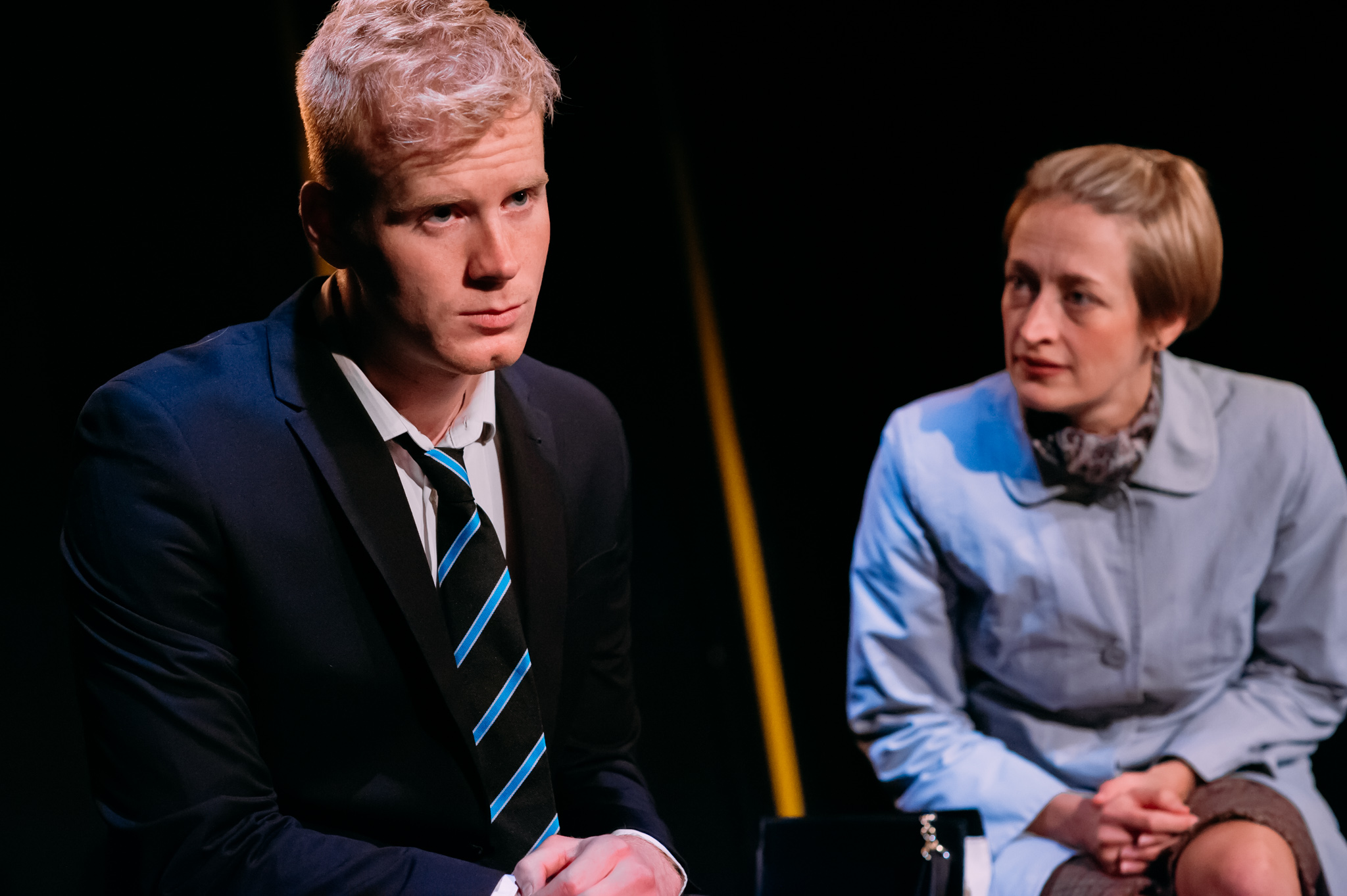
rsz_four_minutes_twelve_seconds_-_kate_maravan_2_-_photo_ikin_yumWhat do you do if your teenaged son’s ex-girlfriend accuses him of sexual assault? What if her family refuses to go to the police and takes justice into their own hands instead? Di (Kate Maravan) and David (Jonathan McGuinness) don’t know either, and they’re living this nightmare every moment of Four Minutes Twelve Seconds. They have huge aspirations for their bright boy, hoping he makes it out of the Croydon that they themselves never managed to leave. But those dreams are teetering precariously on top of vicious rumours…or are they facts? Seventeen-year-old Jack who the audience never sees, may or may not have uploaded a film, that may or may not show him forcing himself on his girlfriend Cara (Ria Zmitrowicz) in the run-up to his A-level exams. As his parents try to discover the objective truth of the situation, some awful discoveries come to light. In short, fast scenes spanning several months, social class, parental aspiration and sexism influence the four characters’ choices in this riveting, dialogue-driven one-act.

This energetic first play by James Fritz, writer of the acclaimed Ross & Rachel at this year’s Edinburgh Fringe, doesn’t shy away from honest, infuriating material confronting ingrained attitudes that interfere with rape convictions (at the end of the play I was so angry I was shaking with the knowledge that these sorts of things probably happen all the time). A ferocious Maravan leads with an intense, focused performance and a satisfying character journey. To see a mother cope with drastically altering perceptions of her own child is heart rending, particularly as her husband’s views often clash with her own.

This is definitely an “issue” play, albeit a sophisticated one, that looks at the role of social media and the selfie culture in the lives of young people who don’t fully understand the implications of putting every detail of their life on the internet. It also looks at consent, sexist definitions of rape and how police view rape accusations. There’s also the question of how to treat crimes committed within one’s own family, vigilante justice and taking responsibility for mistakes. It’s a packed script, but manages to not overwhelm with ideas. Fritz’s dialogue is advanced for a first play, if formulaic in its gradual revealing of information. He liberally uses humour and nuanced humanity to counter the dark subject matter; these characters could easily be portrayed as stereotypes, like the sort in a bad TIE play.

On that note, this would be an excellent production to tour to secondary schools, colleges and unis, particularly since this attitude is so prevalent: https://metrouk2.files.wordpress.com/2015/10/12165535_470783216459605_1739814260_o.jpg?w=748&h=561&crop=1Frankly, this is a crucial piece of theatre that all young people growing up in our cyber-obsessed culture should see. With simple design elements that draw attention to the dialogue and story, it would be easy to tour this powerful production.

Four Minutes Twelve Seconds is hip as well as topical and provocative. Witholding Jack’s appearance draws attention to the wider impact of his actions rather than wallowing in his emotional state, a wise choice by Fritz. Excellent performances by the company and snappy dialogue keep our attention as well as enrage, but what would we do if we were in Di and David’s shoes? Though we all strive for justice for rape victims, we are but judgemental, selfish humans after all, and that is the real flaw in the system.


The Play’s The Thing UK is an independent theatre criticism website maintained voluntarily. Whilst donations are never expected, they are hugely appreciated and will enable more time to be spent reviewing theatre productions of all sizes. Click here to make a donation with PayPal.

The Notebook, Battersea Arts Centre

https://i0.wp.com/www.forcedentertainment.com/wp-content/uploads/2014/10/The-Notebook-Forced-Entertainment-Rehearsal-Image-April-2014-photo-Tim-Etchells-DSC04935.jpgNearly everyday we see news of refugees fleeing war torn lands in search of safety abroad. No matter how the press spins objective facts to suit their own agenda and their readers’ opinions, the perspective of these events unfailingly separates “them” from “us”. These people running for their lives are The Other that we must either keep out or allow in. It’s all very black and white, heavily doused with an air of superiority; we either look down on them as vermin that need controlling or as victims that need handling with kid gloves. We never really hear from these refugees, though. It’s all, “me, me, me” and a flamboyant display of either virtue or condemnation.

The Notebook, with a stark simplicity that forces the audience to sit and listen for two unrelenting hours, slowly unpacks the horrors of war that drives people to flee from a first person perspective. It makes us take the focus off ourselves for once and genuinely listen to the stories of those in need. Told by nameless twin boys moved to their grandmother’s home in the Hungarian countryside, they come of age during World War II, the subsequent Russian occupation and descent of the Iron Curtain. Adapted from Agota Kristóf’s novel of the same name, Forced Entertainment strips the story down to a text that’s read from thick notebooks by two identically dressed actors (Robin Arthur and Richard Lowdon) who represent the boys. This is storytelling in its most raw, boiled down form, with language being almost the sole vehicle of communication.

The set is two wooden chairs and the lighting rarely changes. There isn’t much to look at, which makes this show a tough one for those used to constant visual stimulation in both real and theatrical worlds. There were times I internally railed against the form, like a kid with ADD in a lesson that lasts more than three seconds. One woman walked out part way through. Others fidgeted and checked their watches. We just aren’t used to sitting down and just listening for a couple of hours anymore. The story is unquestionably riveting, though. Through use of precisely timed delivery, often in unison, childhood innocence breaks down and is eventually destroyed, despite their mother’s attempts to protect it. Their grandmother’s house is hardly a haven, and they must resort to deplorable behaviour to eek out a sub-par existence even though the bombs are a distant threat. It’s understandable though, considering the abuse they endure from their grandmother, the general public and those in positions of trust. The people in this story are rarely kind; even though it’s unsaid it’s given that it’s not their fault. The human spirit can endure only so much.

The language doesn’t hold anything back. It is often explicitly graphic with appalling acts emphasised by unemotional delivery. The audience inevitably uses their imagination to make up for the lack of visuals; these images are far worse than anything that could be presented on stage. Though the performance could use shortening, it’s soaked with detail and condenses years into hours. Shaving off half an hour would still maintain impact, but it’s not Forced Entertainment’s job to make us comfortable. Director Tim Etchells wants us to think, empathise and listen, really listen, even if the process isn’t easy. The Notebook is a hard production to watch, but the message of acceptance and universal humanity is a vital one.


The Play’s The Thing UK is an independent theatre criticism website maintained voluntarily. Whilst donations are never expected, they are hugely appreciated and will enable more time to be spent reviewing theatre productions of all sizes. Click here to make a donation with PayPal.

First Love is the Revolution, Soho Theatre

https://i0.wp.com/exeuntmagazine.com/wp-content/uploads/love5.jpgRomeo and Juliet gets a modern, interspecies remix by Rita Kalnejais in the south London-set First Love is the Revolution. Awkward, lonely Basti (James Tarpey) is trying to make the best of his teen years in a broken home when he meets Rdeca (Emily Burnett), a sassy fox cub hunting on her own for the first time. With Rdeca’s family not the most functional either, the two black sheep find solace in each other when they discover they understand each other’s speech. Using a bold metaphor for the deliberate choice to alienate or accept of The Other, this urban adventure through back gardens and fox dens is simultaneously funny, brave and disturbing, whilst excellently performed and with writing that keeps the audience on its toes.

The cast of six with a 50/50 gender split is also commendably diverse in age and ethnicity. Hayley Carmichael leads the pack as the fox family’s fierce matriarch. Tarpey and Burnett are the only cast members who do not play multiple roles, though the skill in these young actors is evident in their charming chemistry. Lucy McCormack of performance art acclaim plays a wide array of roles from Rdeca’s hyper but affectionate sister, to the neighbourhood cat that taunts thuggish guard dog Rovis (Samson Kayo) and the prozzie who lives upstairs from Basti. Basti’s dad (Simon Kunz) who wants his meek son to uphold the fighting, womanizing “ideal man” is also Gregor mole and a delightfully gossipy old hen in a cardigan, tweed skirt and wellies on a never ending search for grass seed. Director Steve Marmion’s choice to use animalistic physicalities is just enough of a reminder that not everyone in this play is human, but the movement is not so overpowering that it interferes with the characters’ relationships.

Anthony Lamble’s set design is almost post-apocalyptic; it is certainly grim enough to reinforce the lack of comfort in all of the characters’ lives, human or animal. Human domesticity precariously sits on rolling black slopes that the actors nimbly climb over and tunnels they scurry through. Philip Gladwell’s lighting smoothly morphs through sunsets and sunrises that dictate the wild rhythm of Rdeca and Basti’s all-night adventures.

Kalnejais’ use of the animal/human relationship is a lovely idea, with Basti paralleling the open minds of those willing to see The Other as themselves; he is a citizen opening his home to a refugee rather than labeling her as a pest. The concept harks back to ancient fables and folktales, connecting our often-disconnected present from the rich heritage of our storytelling past. However, whilst I certainly don’t believe she is advocating bestiality, it is the first thing that springs to mind when Basti and Rdeca are caught in a compromising position. It’s not revolutionary, just gross. Maybe it makes me a prude, but I find fox and human sex damages the metaphor rather than reinforces it.

Regardless of acts that would have the RSPCA up in arms, this is a stunning production in Soho Theatre’s main house that brings the emotional scale of Shakespeare to modern day London, with a visceral fervor that celebrates the magic of young love and accepting those that are different from us.


The Play’s The Thing UK is an independent theatre criticism website maintained voluntarily. Whilst donations are never expected, they are hugely appreciated and will enable more time to be spent reviewing theatre productions of all sizes. Click here to make a donation with PayPal.

Five Guys Chillin’, King’s Head Theatre

https://i0.wp.com/www.ayoungertheatre.com/wp-content/uploads/2015/10/5-Guys-Chillin.jpg“Netflix and chill” takes on new meaning in Five Guys Chillin’. Well, the “chill” part does, and is also substituted with “chill out”. Rather than awkward hetero teenagers using the word to arrange a sexual encounter, in this context it’s multiplied by whatever factor the host fancies to make a drug fuelled sex party, usually in someone’s home. The verbatim play, carved out of more than 50 hours of interview transcript, graphically details typical chill out behaviour as well as frank discussion of issues within the gay community. Despite many funny moments, some great staging, and the raising of important points, there is precious little plot; this makes the production more of a live interview with the questions omitted rather than a play that tells a story.
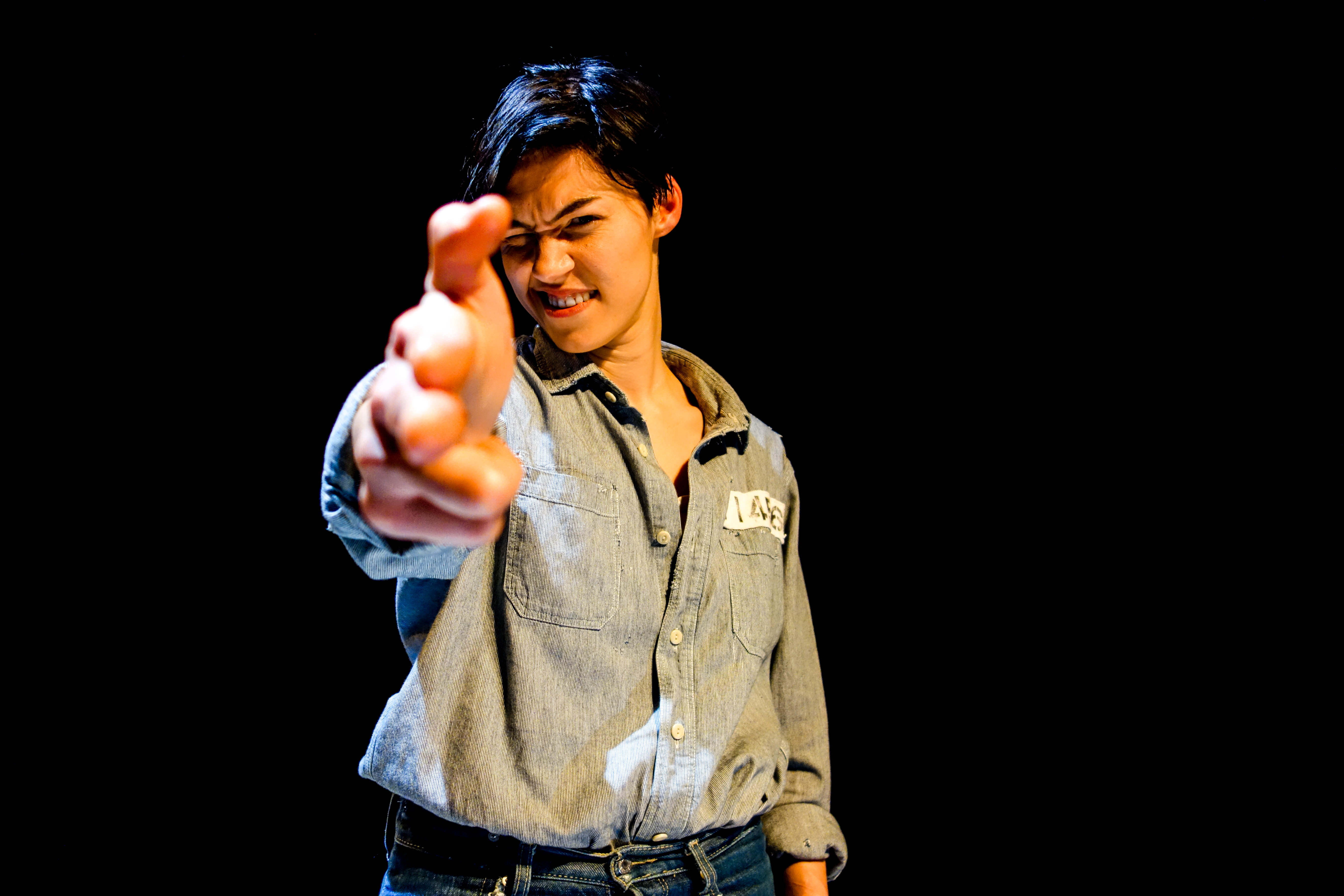
The performances are a mixed bag, and the script doesn’t support the actors by giving them many opportunities to respond. They speak in broken up monologues rather than dialoguing with each other; through they listen to what each other says, there is no natural conversation. It sounds rather fake and forced, because it is. Matthew Bunn’s J. is the notable exception, the hilarious host who loves drugs, but is unemployed and struggling with his HIV status. There are a couple of gorgeous sequences, by movement director Chris Cuming, that provide more atmosphere and characterisation than the script does; without showing explicit acts they express the drugged up, party vibe in the guys’ heads.

There’s a fair amount of gross-out humour, made all the more horrific by knowing that the events described actually happened at some point in real life. From drinking piss out of someone’s arse to having a preference for being pounded by gonorrhoea-ridden cocks because they’re self lubricating (#sorrynotsorry), there’s no shortage of bodily function nastiness. The predominantly male, and presumably gay, audience also find the descriptions repulsive. This is all balanced by serious talk about protection, STIs, drug addiction and the desperate search for intimacy within these casual encounters. Most culturally unique of the characters, Amrou Al-Kadhi plays character PJ of Pakistani decent who struggles to balance familial expectations with being an otherwise-out gay man. It’s a poignant reminder that people in this country still run the risk of being ostracised by their families because of their sexuality.

The confessional, eye-opening Five Guys Chillin’ is certainly a cultural experience for those not familiar with chill outs, but as a piece of theatre, the solely-verbatim script is a let down. Not that it doesn’t have some great moments, but a lack of dramatic arc and dialogue cobbled together from material that was originally solo doesn’t hold up for over an hour.


The Play’s The Thing UK is an independent theatre criticism website maintained voluntarily. Whilst donations are never expected, they are hugely appreciated and will enable more time to be spent reviewing theatre productions of all sizes. Click here to make a donation with PayPal.

The State vs John Hayes, King’s Head Theatre

Lucy Roslyn, The State vs John Hayes (c) Jemma Gross (7)Elyese Dukie is going to die tomorrow. Though she needs to get through tonight first, at least she’s not alone. We’re in there with her, in her cell on Texas’ Death Row in 1959, as is John Hayes. But we’re not really there, and neither is John. We’re all in Elyese’s head, a figment of her very ill mind, but she’s still going to get the chair in the morning because “they would never send John…but they would send me.” For one of fictional Elyese/John’s last hours, we join her on an exquisitely performed journey akin to riding a rollercoaster handcuffed and blindfolded as Elyese reviews the dark corners and glowing intimacies of her past that led her to this moment.

Epsilon Productions continues to mature with this topical, one-woman show that’s part of The King’s Head Theatre’s new, new writing festival, #Festival45. Lucy Roslyn’s script unfolds Elyese’s troubled past spiraling towards the moment she murders her husband Dale, lover Lorraine and births John Hayes, her killer alter-ego spawned from Schizophrenia, Multiple Personality Disorder or severe childhood trauma. Elyese certainly isn’t alone in her struggle against those that live inside her head but take over her body, what with 73% of female inmates in America currently diagnosed with mental health issues; the percentage of mentally ill prisoners in the less-aware 1950s is unimaginable.

Roslyn, who also performs, begins the piece as John. We only meet Elyese later. She embodies him with perfectly sculpted hand movements and a southern redneck accent, deep as John, light and fragile as Elyese. His/her charm and charisma is unquestionable but can turn to violence and grief on a hair trigger, showing Elyese as a victim of the system unable or unwilling to provide her with the care she needs. As such, it’s a powerful critique of the US justice system.

Lighting designer Sherry Coenen reminds us of John’s threatening presence with greenish pulses when Elyese is struck with a crippling back spasm, a symbol of the control he has over her. The subtle heartbeat in dangling filament lights is Elyese’s, which will cease all too soon as electricity surges through her slender, fragile-looking body. The current seating arrangement, irregular and with a thrust so deep it’s nearly in the round, didn’t quite work with the lighting – those sat along the back wall of the stage had lights in their eyes.

The script begins as a straightforward monologue to the audience, with John flirting and joking. The structure becomes fragmented as her mental state breaks down; though she evokes sympathy she also evokes fear. If John will kill those Elyese loves the most, anyone is at risk, though it’s understandable how people immediately fall for his charms. There are times where the text rambles, but these moments are few and lead up to important story points; Roslyn’s performance adds light and shade that keeps the momentum going. Her performance consistently captivates with its commitment and intensity as well as using high levels of detail to differentiate the two characters from each other. A political firecracker with a stellar performance and numerous layers, this Argus Angel winner packs one hell of a punch.


The Play’s The Thing UK is an independent theatre criticism website maintained voluntarily. Whilst donations are never expected, they are hugely appreciated and will enable more time to be spent reviewing theatre productions of all sizes. Click here to make a donation with PayPal.

Payne Killer, London Horror Festival

rsz_1payneAny theatre festival programme is hit or miss if you aren’t familiar with individual shows or participating companies. So far, the productions I’ve seen at the London Horror Festival have ranged from ok to quite good, until Payne Killer. Lack of direction and a hackneyed story concept caused rushed, hammy performances and poor technical choices. There is also some awkward stage combat, no subtlety and a twist at the end ruined by the final moment. Phil Newman’s detailed set design helps provide some relief from the experience, as do a few moments in Rowan Dixon’s script that are probably quite funny if delivered well, but these two features aren’t enough to save the production from inflicting the horrors of bad theatre on its audience.

In a production that requires suspense, varied pace is a vital element, particularly at the beginning. The actors in this two-hander start off relentlessly, with no pauses to allow for phrasing or building up to the first major plot revelation. They tire and slow down just as things should be picking up, so they phone it in for the rest of the play. No director is credited so I assume that the two performers, also founders of producing company The Uplifters, self-directed – a mistake that could have easily been avoided and choosing otherwise would have had a hugely positive impact on the production. A director or a lighting designer could have also sorted out the cheesy lighting states during the characters’ reflective, confessional monologues that were also confusing and unnecessary: spotlights indicated soliloquies, but the other character could hear them and subsequently commented on the revealed information.

The set, a middle class, older woman’s living room, is unusually detailed for such a small theatre but fits the space well. Down to the newspaper holder and the trinket-filled bookcase, it creates the feel of a lived-in home that is well looked after, even if the furniture hasn’t been replaced since the 70s. It serves the production well, with only a slippery rug causing any interference to the actors.

Dixon’s script isn’t bad per se, but neither is it inventive or seemingly well researched. The characters are rather under-developed and cliched; something that research on serial killers may have helped. There are some nice moments, particularly when the two display some vulnerability, but due to the aforementioned performance issues these are glossed over.

A good production team, script rewrites and possible recasting might salvage Payne Killer, but The Uplifters may choose to move on and focus on the musicals they typically produce, which are familiar ground and probably better quality than their venture into horror theatre, a genre that should be scary for its content rather than its production values.


The Play’s The Thing UK is an independent theatre criticism website maintained voluntarily. Whilst donations are never expected, they are hugely appreciated and will enable more time to be spent reviewing theatre productions of all sizes. Click here to make a donation with PayPal.

Ideomotor, London Horror Festival

https://i0.wp.com/www.londonhorrorfestival.com/wp-content/uploads/2015/09/IDEO.jpg

By guest reviewer Michaela Clement-Hayes

There’s nothing quite like sibling rivalry and the hatred you feel for your brother or sister is only matched by one thing. The hatred you often feel for your flat mates. It doesn’t matter how much you love them, there are times when you just want to kill them. True to form, there’s not a lot of love lost between flat mates Charlie, Leo and Penny. Leo (Paul Duncan McGarrity) has just moved to London from up north and is trying to fit in. The trouble is, he goes to work all day and Charlie (David Ahmad) and Penny (Brydie Lee-Kennedy) don’t. They also don’t clean, cook or remember his birthday. So when Leo comes home to find the other two holding a seance for Lenny Henry (Penny’s AWOL hamster), tempers fray and lies begin to unravel. But is the ouija board being manipulated by one of his flatmates, or is it actually trying to warn them?

With Ideomotor, writer and director Gavin Innes has taken an everyday familiar situation and given it a slight paranormal twist. It seems like your average house-share drama – missing food, issues with the cleaning rota and a couple of accidents involving alcohol, but is there more to it? The script perhaps tries too hard to be funny in places but the audience do enjoy most of the jokes and although some of the twists are easy to guess, we are still left trying to piece the puzzle together following an ending that is quite creepy, but brilliantly executed.

The actors themselves are believable and while nerves perhaps get the better of them a couple of times, movement is slick and the space is used well. At first glance the set (designed by Isabella Van Braeckel) looks simple, but the attention to detail is actually very precise, from the discreet name labels on the jars of herbs to the reduced sticker on the pizza box and even the new 5p bags from Sainsbury’s.

Despite its weaknesses, Ideomotor is a story as dark as its humour is light, lulling the audience into a false sense of security before throwing them off their guard and leaving them with many unanswered questions.


The Play’s The Thing UK is an independent theatre criticism website maintained voluntarily. Whilst donations are never expected, they are hugely appreciated and will enable more time to be spent reviewing theatre productions of all sizes. Click here to make a donation with PayPal.

Next Lesson, Pleasance Theatre

image1In 1998, Thatcher introduced controversial Section 28 that banned promotion of homosexuality, publishing materials that supported it and teaching its acceptability in schools. Playwright Chris Woodley, fascinated by the change in schools’ attitudes towards homosexuality in pupils and staff between his student years in the 1980s and his teaching career in the 2000s, documents the effects of Section 28 on those affiliated with schools: pupils, teachers, and staff and parents alike. The play loosely centres on the character Michael, a GCSE student at Beckenham High School in 1988, who returns to teach there in 1996. Though Section 28 was not repealed in England until 2003, difference becomes more acceptable as time passes but Woodley still shows the impact on individual lives through such bigoted legislation.

A diverse cast of characters populates Beckenham High over nearly 20 years with their day-to-day battles and victories of being gay during and after Section 28. Superbly acted and well-written, Woodley’s script contains excellent scenes but the story as a whole could use more focus on Michael, as his journey is partially eclipsed by episodes from the lives of other gay people working and studying at Beckenham High. Though their stories are equally valid, if this play were to be lengthened Michael’s character arc should move to the forefront to give the whole piece a stronger focus. The early part of the play shows Michael coming out to his mother, but the audience doesn’t see him again until years later as an English teacher. In the meantime, teachers battle against curriculum restrictions and the stigma of being out at work. Not that these are issues that ever disappear completely, but these early scenes capture the stress of being gay in a Section 28 world. During his teaching career, we meet other gay teachers and students who become increasingly comfortable with expressing their sexuality.

An ensemble of six adeptly play several roles each, except Stanley Eldridge as Michael. Director Andrew Beckett uses costume, small set changes, the year written on a chalkboard and music to indicate scene and character changes. Within the scenes, the direction is otherwise wonderfully unnoticeable. The cast is balanced, with no one standing out as stronger or weaker than the others and I’m hard-pressed to choose a personal favourite.

Some particularly good moments include Michael’s estranged mother surprising him at work on his birthday; the brightly coloured helium balloon and gift bag juxtapose his rage and her half-hearted apologies. The scenes discussing the impact of the Admiral Duncan bombing in 1999 on Michael’s life are powerfully moving and a reminder that the individuals cannot always speak for the entire gay community. Student Chloe (Anne Odeke) hilariously defends punching a male student after bullying her for being a lesbian to her form tutor. The script is filled with other great moments, but there was no singular moment of climax.

This is without a doubt an important play and introduces Woodley’s gift for creating excellent character-driven scripts. There is easily scope for this play to develop and it also deserves to be seen for its documentation of a moment in history that we have mercifully moved past, but its scars are still present in homophobia in and out of the classroom.


The Play’s The Thing UK is an independent theatre criticism website maintained voluntarily. Whilst donations are never expected, they are hugely appreciated and will enable more time to be spent reviewing theatre productions of all sizes. Click here to make a donation with PayPal.

Infection, London Horror Festival

https://theplaysthethinguk.com/wp-content/uploads/2015/10/830f1-imgp2396.jpg

Sam, Dominique and Will don’t always get on with each other. It doesn’t help that they’re under a lot of stress due to a zombie-alien invasion, and can’t work out if any other people survive in their town. Dom and Will are brother and sister who don’t have much in common, and Will has no patience with Dom’s bestie Sam, a vegan, weed-smoking student. Considering all of that, they do quite well for most of Infection, a new play by the Brighton-based Bath Street Productions. With scenes alternating between the past and the present and clear transitions making this is easy to follow, but performances vary according to emotional intensity, and some of the writing is similarly overwrought. There are some witty one-liners and moving moments that, with the absence of the zombie-aliens, prevents Infection from becoming too much like a zombie film, even with strong parallels to Shawn of the Dead.

The script by Faye Woodbridge has a clear dramatic arc and climax, with a format that facilitates suspense by starting in the present, than jumping back to the beginning of the invasion two weeks previously, moving the plot forward by jumping back and forth until we’re back in present. The story itself isn’t particularly inventive, especially as we never properly see the zombie aliens or learn about how the invasion started. Other survivors communicate through graffiti on the supermarket walls, but these are never seen either. Infection is a microcosm but lacks the scope present in zombie films, despite all of the references the characters bandy around. It suits a small-scale theatre space, but doesn’t quite capture the fear of the situation what with exclusively showing such a small group of characters. There’s no sense of scale. There are some minor anomalies – though the attacks are actually seen once, the three keep getting injured without clear explanation. How do zombie aliens sprain the girls’ ankles and dislocate their shoulders? Surely they’d go for something a bit more deadly? Despite the supermarket messages, the characters comment on the town’s emptiness. Even with these issues, it wouldn’t take much development to expand the play and make the invasion’s impact more widely felt, even without adding the invaders.

Writer Woodbridge also plays Dom, giving the most consistent and believable performance from the cast of three. Direction was occasionally obvious through mechanical blocking with no clear purpose; no individual director was credited in the programme, instead directorial credit lies with the production company. A designated outside eye not part of the cast would be able to provide more unity in movement. Martin Wright’s transition sound design is excellent, providing clarity and reinforcing the gravity of their situation.

The most interesting aspect of this script is the gender dynamics that emerge during a time of crisis. Will (Michael Williams) feels obligated to protect his young sister Dom, even though they’ve grown apart as adults and don’t really know each other anymore. He treats Sam (Katie Newman) more like a bloke than he does his sister, despite her diminutive size and more girlish tendencies. Will revels in being the big, strong man even though his foolhardiness and bravado cause further problems, and Dom’s insistence of proving that she can look after herself exacerbates the danger in their situation. The girls’ comic one-liners help draw attention to the ridiculousness of Will’s old-fashioned mindset, as well as add levity to the script.

Though this certainly is not a bad production, but in order to stand out in the zombie field something dramatically different needs to be done. It’s easy to go with a popular formula for success and this is a good representation of it, but not a particularly inventive one.


The Play’s The Thing UK is an independent theatre criticism website maintained voluntarily. Whilst donations are never expected, they are hugely appreciated and will enable more time to be spent reviewing theatre productions of all sizes. Click here to make a donation with PayPal.