Worlds, VAULT Festival

rsz_cuqpbbhxyaavfql

by guest critic Willa O’Brian

Housed in the studio space at the Vault Festival, which exudes graffiti-chic and pulls hip, supportive and discerning audiences, Bruised Sky productions presents Worlds, written and directed by Martin Murphy. Worlds opens with a nondescript pop song of the ilk that seems intended to tug on one’s heartstrings. The kind you hear over a montage of the hero of the rom-com sadly perusing photos of his ex-girlfriend when he has an epiphany about how to win her back. Needless to say, not an auspicious start, but we discover that one of the characters, Bas is a Dublin-boy living in London making a killing at being a musician, “mostly pop, really if I’m being honest with myself.” In a world where the number of downloads rather than emotional authenticity are the barometer to success, the track overlaying the opening is a rather fitting choice.

Continue reading

Wayward, VAULT Festival

https://i0.wp.com/www.vaultfestival.com/wp-content/uploads/2016/11/Catriona-MacLeod-WAYWARD-Supporting-Image01.jpg

by guest critic Martin Pettitt

After enduring the disorganisation of the first night of Vault Festival, entering the performance space is an instant antidote. Through hallways of cluttered objects and draped fabrics, we are guided by the music into a cavernous, atmospheric space arranged with a hotchpotch of tables and chairs and twinkling decorations. This physical preamble is wonderfully relevant to the down-the-rabbit-hole story we are treated to.

Continue reading

Assisted Suicide: The Musical, Royal Festival Hall

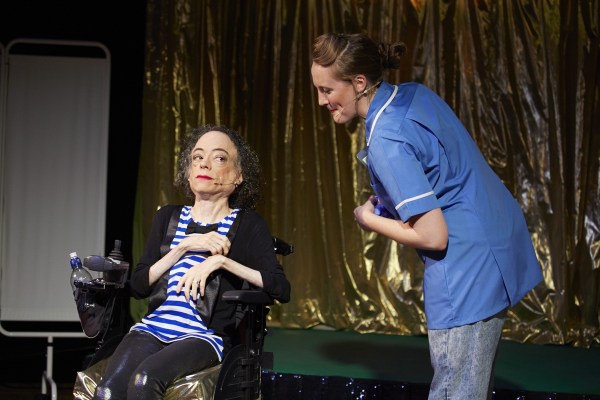
It’s uncomfortable to watch a play that conflicts with your politics or world view, and Liz Carr’s Assisted Suicide: The Musical does just that. The gay actor and comedian aligns with cuddly liberal ideology other than her avowed opposition to legalising assisted suicide in the UK. As a disabled woman, she worries that disabled people will consequently feel pressured to end their lives so they are no longer burdens on their loved ones, especially as many non-disabled people flippantly comment how hard their lives must be. After all, if you’re told the same thing over and over again, it’s too easy to start believing it.

Continue reading

The Wild Party, Hope Theatre

rsz_wildparty_afphotography-529-1000x600

By guest reviewer Martin Pettitt

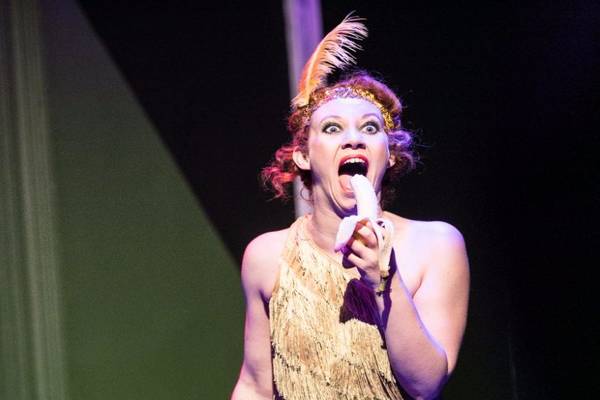
The Wild Party, a simple and to-the-point title, perfectly describes the show as well as the evening I experienced. There was so much to like about this performance. Adapted into a performance piece here by Mingled Yarn Theatre Company, The Wild Party was originally a book-length narrative poem by Joseph Moncure March in the roaring twenties. Initially deemed too racy to publish, it has since become a seminal work finding ever more relevance as we venture further into the 2000s.

Continue reading

The People Show 124: Fallout, Toynbee Studios

https://i0.wp.com/cdn.paper4pc.com/images/desert-landscape-pictures-wallpaper-2.jpg
Making devised work for the past 50 years, People Show are nothing less than prolific. Their multidisciplinary works are numbered as part of the title; the company’s works now number 132. To celebrate their anniversary, the company’s taken over Toynbee Studios for three days, filling the venue with performances, films and an exhibition celebrating their half a century of work.

People Show 124: Fallout, first performed in 2013, is resurrected here. The piece deconstructs speeches by public figures and adds light, sound and film; the overall effect is one of provocative absurdity – isolated soundbites lose all meaning, even in a world that’s said to be falling apart. This short piece drives its point home quickly and efficiently and stimulates the senses, but with its message emphasising meaninglessness, it soon becomes repetitive.

Everything in the room is white, even the padded floor is powdered with talc to add an additional layer of frost. Pillows attached to the walls evoke a soothing dreamscape. But soon, pulsing colours disturb the peace as the cast of four fiercely deliver snippets of text. The lights are often so bright they are uncomfortable, even though the colours are childlike and fun. The juxtaposition is clever and sharp, and the switch from austere to saturated is an effective one.

The actors’ tone ranges from gentle to antagonistic, with a decidedly post-apocalyptic bent to the text. Projections of sweeping desert landscapes back up the promises of nuclear fallout, though the dreamy atmosphere from the beginning still lingers – what is real, and what is the product of our subconscious? The disconnect from reality diminishes any potential meaning, making the outcome decidedly absurd, even though the intention seems to want to carry more weight.

This colourful world enhanced with gorgeous projections, bright lights and music is integrated  with the text, though there is a lack of development in the core idea of the piece. If real life is has no purpose and we’re better off in a dream because the world is hellbent on destroying us, that’s fine – but a performance telling us that is not an easy thing to execute and in this case, not done fully effectively.

People Show 124: Fallout is now closed.

The Play’s the Thing UK is committed to covering fringe and progressive theatre in London and beyond. It is run entirely voluntarily and needs regular support to ensure its survival. For more information and to help The Play’s the Thing UK provide coverage of the theatre that needs reviews the most, visit its patreon.

Bianco, Southbank Centre

https://i0.wp.com/caramellattekiss.com/wp-content/uploads/2014/06/6T9T8237e1.jpg

By guest critic Rebecca Nice @rebeccajsnice

NoFit State Circus takes London by storm with a big show in a big top with grand ideas and huge audiences. A must-see on the London tourist and art scene, the slightly ominous looking grey tent is nestled into a winter wonderland of overpriced bars with a ticket price to match but the raucous, everyone-welcome, ‘roll up roll up’ nature of circus emanates from the tent in boundless quantities. Programmed by the Southbank Centre in a key Christmas location, Bianco will undoubtedly reach new audiences – which brings a certain responsibility to the oeuvre. The show not only introduces circus to new and well-seasoned theatregoers, but it sits within a concentration of productions in Southbank’s multiple venues that all want to be the cream of the crop. Based on a series of short acts that each display a specific circus skill, Bianco is accessibly fast paced but disappointingly repetitive in its lack of dramaturgy.

The main attraction of Bianco is a set made of scaffold ladders and truss that are separated, wheeled about and reset between acts. Audiences can move at their will, see things close up, from behind or directly underneath. The crew happily holler ‘mind ya backs’ as they restage and point you in new directions. This makes for constantly changing viewpoints; you always have the best seat in the house as you watch from wherever you want to be. Four towers form a central square area where truss cross bars support trapeze acts and tightrope walkers accompanied by live music. The greater sense of agency makes for a work that is almost promenade and immersive in terms of the sensory landscape. This culminates in a final snow scene where glowing white (foam) snowflakes descend upon our shoulders.

The original music ranges from folk to lyrical, acapella to rock and pop, as singer-musicians Andy Moore, Annette Loose, Doug Kemp and Matt Collins swap microphone for guitars, saxophone to accordion and double bass to drums. The strong musical score sets the tone and atmosphere for each piece and holds the work together during down moments where scenery is being set.

No Fit State travels and lives together, erecting and dismantling the big top and their lives to pack them away for the next place. This traditional circus lifestyle is evident in the precision, communication and identity of the cast and this connection feeds through into performance both in terms of the mechanics of the show and the performative camaraderie between characters.

Artistic Director Tom Rack and Director Firenza Guidi work here with a cast of seventeen, each with their own act, and it is the stringing of these together like a never-ending list of circus skills that is a downfall for the work. Bianco is long and relentless with one person after another selling their wares. Any loose plot or theme to mesh these phrases together are lost and the sheer volume of content begins to hinder the success of the piece as each new act blurs into another and recalling previous ones becomes impossible.

Out of a whopping number of acts (over eighteen), from solos to full ensembles, few stand out in either creating striking visual compositions or containing themes and characters that allow the circus skills to be fully shown off. The female juggling solo may not throw the highest club or make the most complex siteswaps but the throws and catches between the legs, behind the body and into the audience make a vivacious, flirty and clumsy character fully realised and incredibly funny, firmly rooted in her choreography and clowning. The sheer volume of this company in numbers of performers and size of the performance space provides tableaus not seen before. Five ropes in line, each with an individual aerial performer who turn and ascend in unison are a feast for the eyes. The entire cast emerging from the dark, lit by flaming torches or a man spinning inside his cyr wheel flanked by four figures dangling from aerial hoops make for striking compositions. A solo female performer hangs upside down from a rope with her legs bent and toes facing the ceiling. As the loose end of the rope drapes on top of her feet in a perfect curve, she lets herself slowly down as if magically walking upside down along this arc. Gems like this unexpected delicacy in a fresh take on an old trick appear sporadically in Bianco, but are in danger of being lost with the acts being so short and so many. Hula hoops are spun and aerial hoops rotate, performers swing from swags of loose hanging rope or shimmy along a tightrope. Jugglers swing on a trapeze, two aerial silks support solo and duet. A trampoline is rolled out, there is a handstand act and a contortionist with a wine glass balancing act. Box frames spin on high with strings of beads creating sparkling halos and another trapeze act appears, this time with a dress embellished with fluorescent lights. Many acts like these are cut short before they reach their true potential.

I delight in the seaside swim scene with up to nine performers diving from the heights of the big top onto a central trampoline. Dressed in old fashioned striped bathing suits with arm bands or goggles, this scene is visually wonderful but could be stronger if the choreography and swimming motifs were tighter and crisper. Compositions of performers diving one after the other can be more tightly woven into mini sketches. What if someone wearing a shark fin dived in, or someone belly-flopped and bounced everyone out of the sea? What if someone was scared of the water and got stuck on the high hanging rubber ring? Scenes like these don’t quite reach a climax in humour and pacing of skills.

After two hours and twenty minutes of high energy, constant tricks and emotive portraits of people laughing, shouting, twisting and turning on high, both audience and cast are exhausted and elated. A sinuous male aerial act returns to close the show on a rope as his curly locks and chiaroscuro muscles form a Christ-like visage. The lyrical piece is an unapologetic show of human beauty as the Vitruvian man soars in circular flight as artificial snow falls from the darkness. It is this image that leaves an imprint in my mind, of hundreds of tiny people looking up to the dark depths of the tent top, dancing in the snow.

Bianco runs through 22 January.

Tickets arranged by Theatre Bloggers.

The Play’s the Thing UK is committed to covering fringe and progressive theatre in London and beyond. It is run entirely voluntarily and needs regular support to ensure its survival. For more information and to help The Play’s the Thing UK provide coverage of the theatre that needs reviews the most, visit its patreon.
The Beggar’s Opera, Brockley Jack

tbo-006

By guest critic Michaela Clement-Hayes, @_mickychaela

London in 1728 was a dark and dangerous place. Highwaymen, hangmen and harlots roamed the streets and life was hard. John Gay’s satirical musical The Beggar’s Opera steps away from the traditional romanticised stories of heroes and villains, unrequited love, choosing instead to tell a tale of rogues and murderers. And a little bit of love, for good measure.

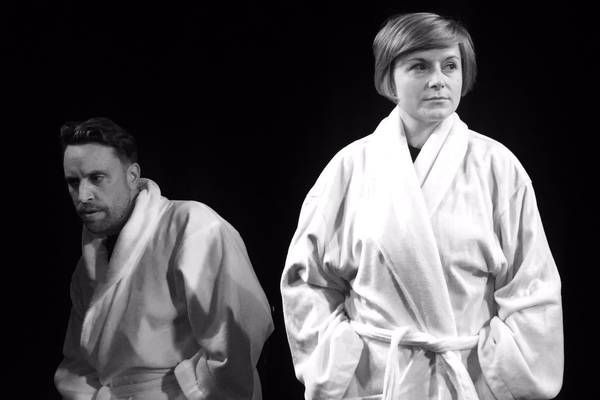
Polly Peachum (Michaela Bennison) has defied her parents and married the notorious highwayman Macheath (Sherwood Alexander) However, he has most certainly not forsaken all others. Wanted for his crimes, he leaves Polly with a promise to return.

Lazarus Theatre have taken David Gay’s story and brought it into the 21st century with a bang. Literally – there are party poppers. It’s a whirlwind of a tale – quirky and fun, transcending the centuries and combining modern day with the past.

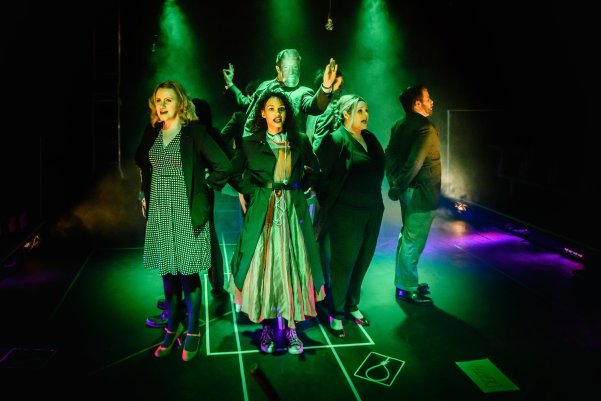
Performances are strong from everyone, with the cast acknowledging the audience with intense stares throughout, involving them discreetly yet hardly breaking the fourth wall. The staging is simple yet effective, with ladders, coloured masking tape and a few pieces of furniture whisked on and off, and the cast adopting masks and a few props as they switch from key character to chorus.

Singing is good, but feels a little strained in places. However, this does not detract from the story (adapted and directed by Ricky Dukes), and the new lyrics (penned by Bobby Locke) are both clever and amusing.

It’s fun, fast-paced and funny – a very enjoyable show.

The Play’s the Thing UK is committed to covering fringe and progressive theatre in London and beyond. It is run entirely voluntarily and needs regular support to ensure its survival. For more information and to help The Play’s the Thing UK provide coverage of the theatre that needs reviews the most, visit its patreon.

The Last Five Years, St James Theatre

https://www.thestage.co.uk/wp-content/uploads/2016/11/Samantha-Barks-as-Cathy-in-THE-LAST-FIVE-YEARS-at-St-James-Theatre.jpg

The most moving performances are often largely removed from our day-to-day lives. But every so often you come across a piece of theatre that, whilst it may not be the objective best thing you’ve seen, encapsulates your life so well that you can’t not fall in love with it.

The Last Five Years is good though, even if it’s been a favourite of mine since I discovered it as a student back in 2002. The Jason Robert Brown musical, now 15 years old, is a wonderfully simple (albeit heteronormative) tale of boy and girl meeting, falling in love and falling apart. Framed by the late 90s NYC arts world (that I watched as a teenager in the suburbs and later joined as a drama school student), his story is told in chronological order and hers in reverse. There are two performers; the only time they interact directly is at their wedding, making the songs function more like reflective monologues. Though there is hardly any book, Brown’s lyrics tell the story clearly and sensitively. Dynamic staging and committed performances, like those in this anniversary production that Brown directs, are necessary to keep this quirky little musical from falling flat. It’s a powerful, disarming show when executed effectively, and this production may well be its new definitive.

Jamie is a writer and Cathy is an actor. They are 23 when they meet; neither has had any success yet but both are wide-eyed, bushy tailed, and ready to fall in love. Jamie quickly becomes a bestselling novelist whilst Cathy is left in his wake, waitressing and doing summer theatre in the depths of the Midwest. It’s within this career disparity that their relationship deteriorates, and I find Cathy painfully echoes my own life as a failed actor. The isolation and jealousy that Brown fosters in his songs is wholly believable and all too familiar.

Both characters are flawed but generally likeable and despite reservoirs of love, it’s not enough to save their marriage. Though both characters can be irritating in their own way, their good intentions and fundamental incompatibility also ring true to anyone that’s endured the heartbreak of an ended relationship or marriage. Here is yet another parallel to my past, but this time I’m more like Jamie – I married young and naive and was divorced by 30 as a result of my own mistakes.

Samantha Barks and Jonathan Bailey are Cathy and Jamie. Barks is a stronger singer, but Bailey’s full of charisma and confidently flirts with the audience – it’s a lovely touch. Both have great emotional range and their chemistry is undeniable. Their performances, layered with Brown’s storytelling, reduces many to tears. Sniffling and eye wiping is plentiful in this intimate house.

The small scale of the show is fleshed out with some delightful video design by Jeff Sugg and Derek McLane’s set. These provide the context that’s missing from the script and grounds their story in a real time and place, though its Gabriella Slade’s costumes that indicate the 1990s setting. The videos are simple and cartoon-like, a sweet and charming addition that Brown underuses.

Though more of a song cycle with hardly any spoken dialogue (if you were to listen to the soundtrack you would hear almost the entire show) and arguably rather insubstantial, this one-act show has the ability to burrow into the depths of your guts. It’s a heartfelt love letter to the countless New York City artists doing their best to get by and find meaning in each other, and to everyone that’s every fallen in and out of love. The poignant, timeless story of youthful love and loss has the sorts of songs that you play on loop whilst crying in bed with a heart broken by your own failures (I’ve done this more than I care to admit), and those you can dance to after a brilliant first date or a career win. With the excellent performances and slick design of this production, it’s not one to miss – even if you cry through it.

The Last Five Years runs through 3 December.

The Play’s the Thing UK is committed to covering fringe and progressive theatre in London and beyond. It is run entirely voluntarily and needs regular support to ensure its survival. For more information and to help The Play’s the Thing UK provide coverage of the theatre that needs reviews the most, visit its patreon.
Songs For the End of the World, Battersea Arts Centre


https://i0.wp.com/www.domcoyote.com/wp-content/uploads/2015/12/millygraphic-2-e1469019899426.jpg

Jim Walters is the first person sent to colonise Mars. But when a global apocalypse occurs, trapping him in the Earth’s orbit and running out of oxygen, he and his guitar are left to broadcast music to the devastation below. Can anyone hear him? Are there any survivors? Will he ever know? Dom Coyote and his band the Bloodmoneys present a post-Brexit apocalypse in the gig-theatre Songs For the End of the World, a piece overly heavy on the ‘gig’ and reliant on a plot constructed of dystopian tropes. Though the story is thin, Dom Coyote’s songs are fantastically varied and plentiful, helping to gloss over any shortcomings in the script.

There’s rockabilly, 90s rock anthems, glam rock, and blues numbers with a touch of connecting story sprinkled in between. Set in Ashley Coombe, the village serves as a window into the attitudes of small, English towns of this dictatorial era – the elderly preacher woman who runs the place condemns foreigners, terrorists and space exploration whilst the rebels put on club nights in an underground bunker. The country is now called New Albion and rather than run by an individual, a corporation dictates all rules and procedures. These plot devices are predictable within a story of a dystopian future, but are simplistic enough to work within the gig-theatre format without needing much explanation. As these two tribes clash, Jim Walters is in space – a symbol of both human progress and arrogant dominion. It’s no surprise which side survives down on Earth, and that the future beyond the end of the show looks particularly bleak.

Though the story is overly familiar, the music is wonderfully varied. David Bowie’s promised influence is clear, but not limiting in style. All of the characters in this Little England kitsch/cold international corporation hybrid are suitably blown out of proportion, but feel eerily familiar in a fundamentalist-driven, isolationist Britain and a world where Donald Trump may become the next leader of its most powerful country. Staging is fairly static as per the usual gig-theatre approach, but there is some variation in movement and costume. The lighting design adds power and hope to the bleak, clinical setting.

A more substantial script and dynamic staging would lend more theatricality to the excellent set of tunes in of Songs For the End of the World; as is, it is overly driven by music and the narrative potential is neglected. That said, it would make a fantastic concept album, and the design is strong – an extra half hour of script would add polish to this fun, vibrant performance piece.

Songs For the End of the World is now closed.

The Play’s the Thing UK is committed to covering fringe and progressive theatre in London and beyond. It is run entirely voluntarily and needs regular support to ensure its survival. For more information and to help The Play’s the Thing UK provide coverage of the theatre that needs reviews the most, visit its patreon.
Kissing the Shotgun Goodnight, Ovalhouse

rsz_kissing_the_shotgun_goodnight_credit_the_other_richard

Along with tickets, we are handed earplugs. Considering Christopher Brett Bailey’s first work This Is How We Die, I’m not surprised. A brilliant, relentless barrage of contemporary American myth followed by an encore of noise and light, Bailey isn’t known for doing things by halves, or even singular wholes. The slight, constantly startled-looking Canadian with gravity defying hair attacks performance making with the energy of a supernova. Kissing the Shotgun Goodnight has the same verve, but is otherwise a rather different beast. Whilst This Is How We Die was dominated by language, Kissing the Shotgun Goodnight has very few words – but the earplugs are definitely needed. This anthemic music and light show fills the room with sound, colour and vibration but is the difficult second album to This Is How We Die. Much more of a gig than a piece of theatre, it lacks the satisfaction of characters and narrative, even a hint of one. Bailey’s mind blowing poetry teases with a few tiny fragments, but otherwise leaves us desperately gagging for more of his words.

Though given earplugs, there is the choice of whether or not to use them. Notices state that the sound level is consistently over 100 decibels and that, “if you wear plugs the whole time you might compromise enjoyment of the show. and if you don’t wear them at all you will take home whistling ear canals”. Being one of those people sensitive to loud noises who constantly asks my other half to turn down the telly, I want to play it safe but I don’t want to miss out. So I opt for one plug in, with the other ready. This choice no doubt effects the experience – if I leave them out the whole time and feel discomfort, would I like the show less? Or would I like it more because it’s not actually ‘that’ loud? I use the plugs in response to the volume level – sometimes I have both in, sometimes none. It’s an interesting premise to consider that the experience and quality of the show hinges on these earplugs, adding an additional level of individual, subjective response.

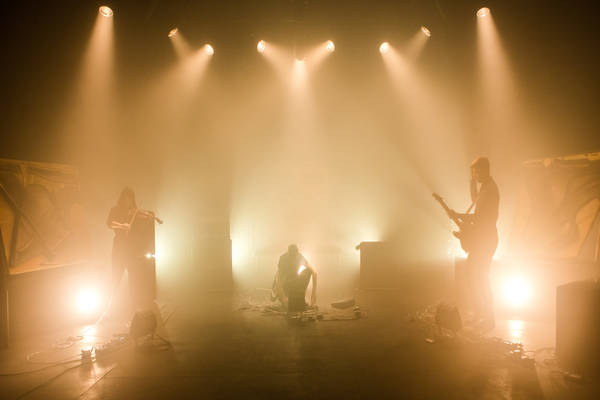
Bailey’s voice, slow and unseen, repeats, “this is a hell dream” in a brief textual introduction. Violinist Alicia Jane Turner uses loop pedals to sculpt a cinematic score reminiscent of mid-90s rock anthems. Her work is wonderfully angry, sweeping and alive. George Percy and Bailey are both on guitar, forming a silhouetted triptych with Bailey soon in the middle – amongst the monolithic speakers and flight cases forming a brutalist, urban landscape, he cuts the figure of a scrappy dystopian overlord. It suits him. If this is what hell is like, it’s fucking glorious.

Behind each performer is a wooden panel of about a metre square made of deconstructed pianos and their strings. These are visually impressive structures in and of themselves; their music evokes the violence and community of tribalism. Combined with excellent sound-responsive lighting (that malfunctioned to the point that the show needing to be stopped briefly), the overall effect is one of epic, soul shaking community.

The title paired with the music evokes the American paradox of a friendly but violent people who love their guns as much as their families. The music’s scale captures the expanse and variation of the North American landscape, and the few words he shares on the experience of waking up from a nightmare to find the world unchanged darkly foreshadow Trump’s America. Whether or not this is an intentional message, it is certainly a powerful one.

Kissing the Shotgun Goodnight is certainly wide open to interpretation and shows Bailey’s ambition and range as a performer of work designed to push the senses to their extremes. His textual dexterity is certainly missed (particularly by the coked up, flailing pair of young women sat next to me commenting on how disappointing this work is compared to his first) and comparatively this piece is somewhat disappointing, but it absolutely has its merits as a visceral, “fuck you/I love you” performance piece.

Kissing the Shotgun Goodnight tours nationally through November.

The Play’s the Thing UK is committed to covering fringe and progressive theatre in London and beyond. It is run entirely voluntarily and needs regular support to ensure its survival. For more information and to help The Play’s the Thing UK provide coverage of the theatre that needs reviews the most, visit its patreon.