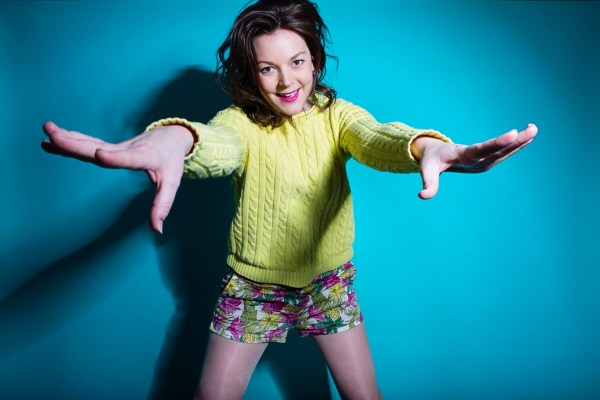
Damned Rebel Bitches, Traverse Theatre

By guest critic Liam Rees

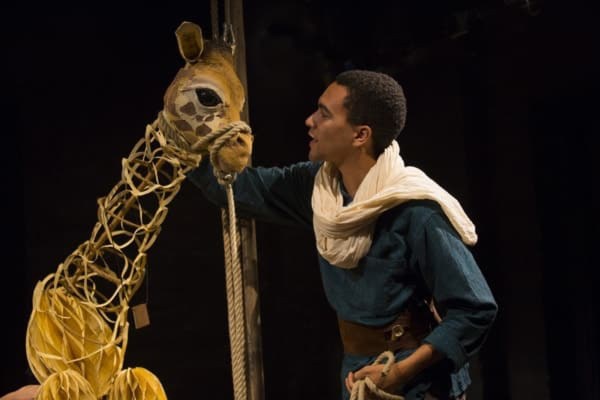
Damned Rebel Bitches is a real joy to watch thanks, in no small part, to Tina Gray’s delightful portrayal of Ella, a no-nonsense, free-spirited, gin-loving octogenarian. It tells Ella’s life story, from surviving the Clydeside Blitz and falling in love, to saving her feckless grandson’s failing marriage in the middle of Hurricane Sandy. By writer and director Sandy Thomson, this transatlantic epic about survival in the face of disaster doesn’t have any time for tired stereotypes. It’s definitely a breath of fresh air.
Continue reading

The Fall, Royal Court

By guest critic Nastazja Somers

Oh Dionysus, as someone who grew up in Poland I really do miss political theatre. The real thing, you know? The thing that grabs you, makes you stand up and cheer for the performers. The thing that forces you to scream inside and ask yourself “Fuck, fuck, fuck, why are people so blind to this?” And by political theatre I do not mean Brexit plays or Donald Trump plays. I am talking about the kind of theatre that makes you question everything and makes you want to understand more. The kind of theatre that comes from the heart and the gut. 

Continue reading

Mouthpiece, Edinburgh Festival Fringe

Reconciling feminism with the more mundane aspects of modern life is hard. What if all you can afford to buy is Primark but you know the clothes are made in sweatshops by women and girls? What if you don’t want to be one of those people who worries about their weight, but you want to be healthy? What do you say in the eulogy for your mum who held traditional values and ideas about womanhood? 

Continue reading

Me and Robin Hood, Royal Court

https://d19lfjg8hluhfw.cloudfront.net/wp-content/uploads/2017/08/31163848/use-58-1024x683.jpg

by guest critic Maeve Campbell

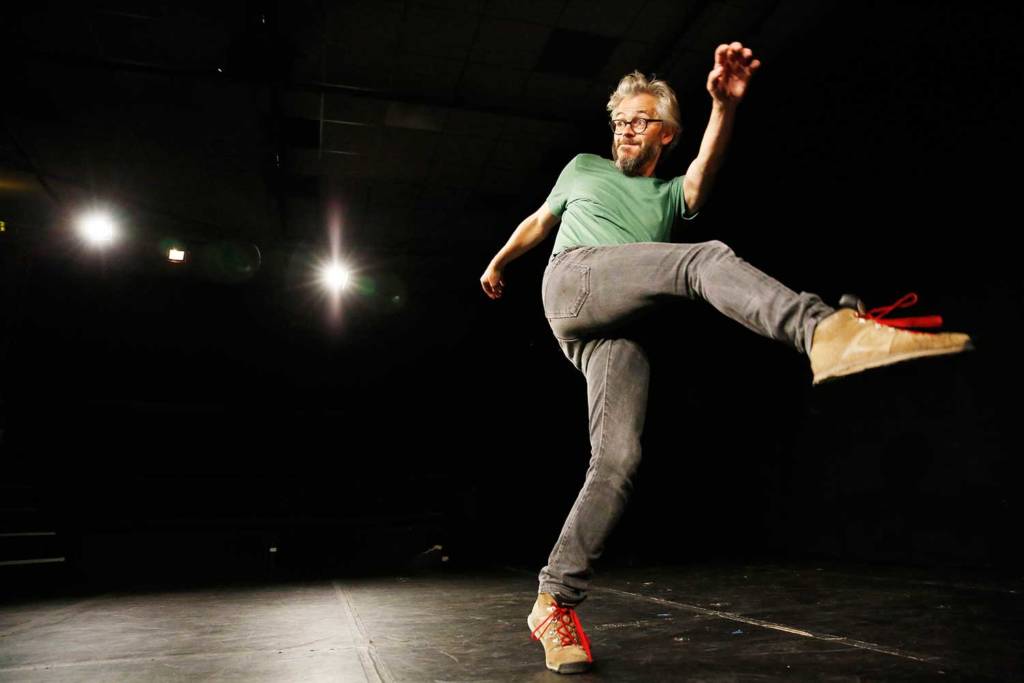
Shon Dale-Jones and Hoipolloi’s Me and Robin Hood has admirable intentions in aiming to raise awareness and money for charity ‘Street Child’. Dale-Jones’ one-man show is a personal narrative, part biography and part discussion on class and wealth divisions in Britain. The mythical medieval do-gooder is a central figure in the piece, an inspiration and obsession for the socially conflicted Dale-Jones.

Continue reading

Sagar Mega Drive, Edinburgh Festival Fringe

By guest critic Jo Trainor

Sonic was always my go to when playing Sega, but Fiona Sagar has got a slightly different cast of characters to choose from in her show Sagar Mega Drive

They come fast and furiously, Sagar throwing on costumes in seconds to squeeze all six of them in within her hour. There doesn’t appear to be any link between them, ranging from an Australian nursery teacher to a chihuahua. Although they all fit within the premise of being from Sega, some sort of connection would have helped shape the piece. There’s a lot of interaction in the show, and Sagar creates a great rapport with her audience throughout. This People are so open to coming on stage with her, and everyone gives it their all rather than having awkward silences. 

Continue reading

Three Shows Inspired by Shakespeare, Edinburgh Festival Fringe

In a festival that worships the new and the innovative, Shakespeare adaptations are surprisingly ten a penny at the fringe. Many are school groups, though there are some from professional companies in the mix. These are often adaptations or new work inspired by Shakespeare’s stories, characters or themes. Though more likely to be of higher quality, theatremakers often struggle to find a balance between innovation and the original source material.

Continue reading

The Class Project, Edinburgh Festival Fringe

Rebecca Atkinson-Lord speaks with an accent that she stole. Her family all have Wolverhampton accents, but her parents’ decision to send to private school meant that she adopted a voice that endowed her with a social status above the rest of her family. It allowed her to ‘pass’ as part of the elite and has benefited her career, her relationships and numerous other areas of her life.

Her reflection on her voice and tribute to the rich history of the West Midlands and Black Country is a moving acknowledgement of the deep-seated bias and associations between accent and social class in Britain. Though not confrontational, it asks the audience to reflect on their own attitudes towards people and the way they speak.

Continue reading