The Subterranean Season, VAULT Festival

https://i0.wp.com/www.vaultfestival.com/wp-content/uploads/2016/11/Rebecca-Durbin-The-Subterranean-Season-Supporting-Image-02.jpg

by guest critic Jo Trainor

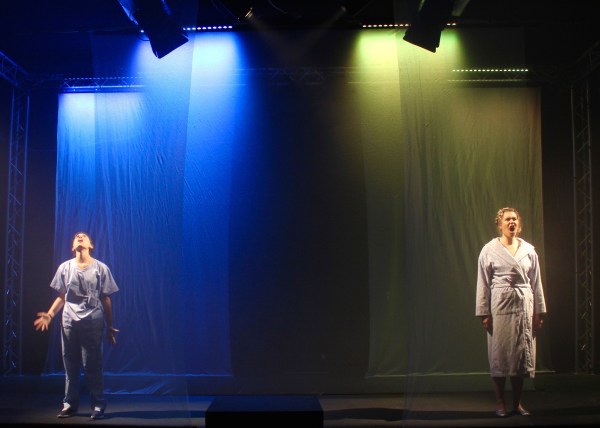
A calcification called Danny Dyer, porn, truffle oil and guitar guns – PLAY Theatre company are back at the VAULT Festival after winning the People’s Choice Award last year. The Subterranean Season comprises of four writer/director teams and ten actors putting on a series of short performances. Although each of the four plays are independent, and different in substance and style, the patchwork production doesn’t feel jarring or disconnected. The energy on stage and the skill of the writers make The Subterranean Season a cohesive performance.

Continue reading

Only Bones, Soho Theatre

rsz_11maxresdefault

by guest critic Rebecca JS Nice

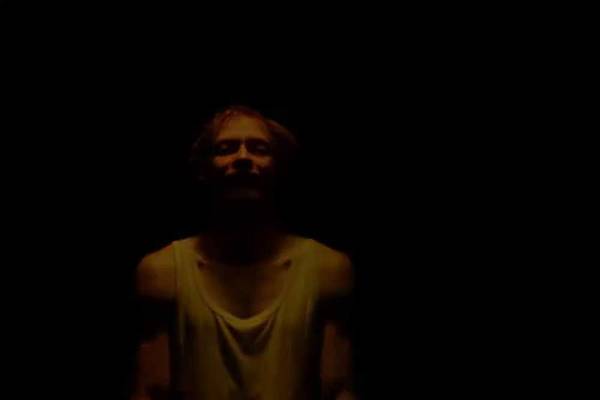
Short and sweet, classic and comical. Thomas Monckton performs a solo piece glued to his spot, centre stage beneath a low hanging lamp, which obscures his body from the shoulders up for at least half of the work. Only Bones is a classic example of body manipulation that playfully explores all the possibilities that a clown can find and make with only his body, one square metre of space, and one light. These creative boundaries have been stretched and tested but remain in performance to give the show a formal identity and context for Monckton’s shenanigans.

Continue reading

Assisted Suicide: The Musical, Royal Festival Hall

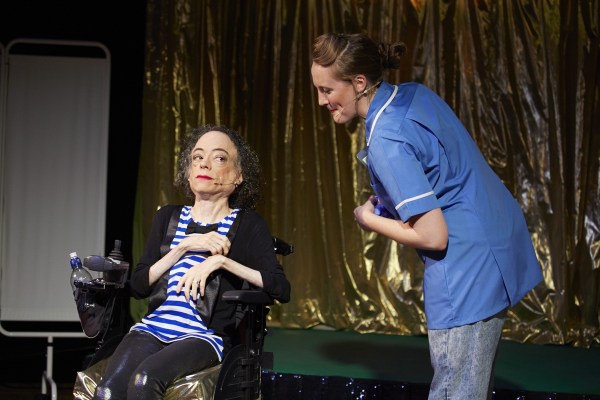
It’s uncomfortable to watch a play that conflicts with your politics or world view, and Liz Carr’s Assisted Suicide: The Musical does just that. The gay actor and comedian aligns with cuddly liberal ideology other than her avowed opposition to legalising assisted suicide in the UK. As a disabled woman, she worries that disabled people will consequently feel pressured to end their lives so they are no longer burdens on their loved ones, especially as many non-disabled people flippantly comment how hard their lives must be. After all, if you’re told the same thing over and over again, it’s too easy to start believing it.

Continue reading

The Doppel Gang, Tristan Bates Theatre

doppel-gang

By an anonymous guest critic

If you’re a Marx Brothers fan like myself, you might go to this production by the company JUST SOME THEATRE with some trepidation. Are these four performers going to do justice to the Brother’s brilliant form of slapstick comedy? It’s nice to report that the answer is yes. The company’s attempt to create new Marx Brothers material is actually the strongest part of this show.

Continue reading

The Trackers of Oxyrhynchus, Finborough Theatre

trackers

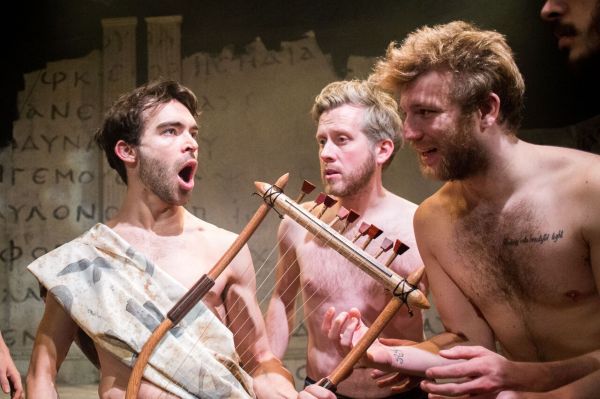
In the first part of Tony Harrison’s The Trackers of Oxyrhynchus, Victorian archaeologist Grenfell struts and frets around a group of silent Egyptians sifting through scraps of papyrus. He maniacally monologues on his quest to find Sophocles’ lost plays and works himself into such a frenzy that he begins to hallucinate. This triggers an inexplicable leap to ancient Greece where a satyr play is acted out and cloth phalluses abound, then another transition to a modern day street populated by homeless men.

Though there is some thematic consistency, the three stories are otherwise unrelated by plot and style. What initially appears to be a play-within-a-play turns out to be a disjointed and disappointing triptych, much like the fragments of papyrus that litter the stage.

Continue reading

Monorogue: Elf Off, Old Red Lion Theatre

https://i0.wp.com/northpoleexperience.com/wp-content/uploads/2014/09/slide-1.jpg

The Salon:Collective’s Monorogue is back again, this time with a Christmas edition. The monologue showcase is now in Santa’s workshop, where perky elf Gingersparkles is interviewing human candidates for a vacancy in the Lapland workshop. Seven lacklustre individuals who can’t otherwise find seasonal employment are created and performed by Salon:Collective actors in this spunky, lighthearted show where the audience gets to vote for the best performer/character. Distinctive characters and good performances are the trademark of this regular event, and the framework around the monologues makes for more palatable viewing.

The set is a simple construction of heaps of brightly wrapped presents, Christmas decorations and toys. It’s easy, cheap and hugely effective in the intimate blackbox theatre. Though perhaps unintended, it is also a lovely juxtaposition to some of the more down-at-heel characters.

The performances are generally good, though some of the characters tend towards stereotypical and miss opportunities for nuance. The standouts are Lucy Gallagher and Louise Devlin’s intense Scottish tomboy Mae, and Angela Harvey’s struggling mum of five Hayley. Rachel Stoneley’s confused but sweet stripper, Jade, is a great way to wrap up the candidates. Laurie Stevens is the adorable Gingersparkles, but she surprises with a ferocious climax that wraps up the evening well.

The scripts have a strong lean towards comedy, which suits the time of year, but some of them lack depth and choose to mock personality traits rather than empathise. Whilst there is nothing overtly offensive and the stereotypes created are identifiable and relatable, there is room for more variation.

Monorogue proves again that they offer an entertaining event that allows actors and playwrights to showcase their talents without taking the more common, in your face approach to self-marketing usually found in showcases. The theme sets the actor/writers a challenge and gives the audiences a needed framing device, and the performances are usually good.

Monorogue: Elf Off is now closed.

The Play’s the Thing UK is committed to covering fringe and progressive theatre in London and beyond. It is run entirely voluntarily and needs regular support to ensure its survival. For more information and to help The Play’s the Thing UK provide coverage of the theatre that needs reviews the most, visit its patreon.

Bianco, Southbank Centre

https://i0.wp.com/caramellattekiss.com/wp-content/uploads/2014/06/6T9T8237e1.jpg

By guest critic Rebecca Nice @rebeccajsnice

NoFit State Circus takes London by storm with a big show in a big top with grand ideas and huge audiences. A must-see on the London tourist and art scene, the slightly ominous looking grey tent is nestled into a winter wonderland of overpriced bars with a ticket price to match but the raucous, everyone-welcome, ‘roll up roll up’ nature of circus emanates from the tent in boundless quantities. Programmed by the Southbank Centre in a key Christmas location, Bianco will undoubtedly reach new audiences – which brings a certain responsibility to the oeuvre. The show not only introduces circus to new and well-seasoned theatregoers, but it sits within a concentration of productions in Southbank’s multiple venues that all want to be the cream of the crop. Based on a series of short acts that each display a specific circus skill, Bianco is accessibly fast paced but disappointingly repetitive in its lack of dramaturgy.

The main attraction of Bianco is a set made of scaffold ladders and truss that are separated, wheeled about and reset between acts. Audiences can move at their will, see things close up, from behind or directly underneath. The crew happily holler ‘mind ya backs’ as they restage and point you in new directions. This makes for constantly changing viewpoints; you always have the best seat in the house as you watch from wherever you want to be. Four towers form a central square area where truss cross bars support trapeze acts and tightrope walkers accompanied by live music. The greater sense of agency makes for a work that is almost promenade and immersive in terms of the sensory landscape. This culminates in a final snow scene where glowing white (foam) snowflakes descend upon our shoulders.

The original music ranges from folk to lyrical, acapella to rock and pop, as singer-musicians Andy Moore, Annette Loose, Doug Kemp and Matt Collins swap microphone for guitars, saxophone to accordion and double bass to drums. The strong musical score sets the tone and atmosphere for each piece and holds the work together during down moments where scenery is being set.

No Fit State travels and lives together, erecting and dismantling the big top and their lives to pack them away for the next place. This traditional circus lifestyle is evident in the precision, communication and identity of the cast and this connection feeds through into performance both in terms of the mechanics of the show and the performative camaraderie between characters.

Artistic Director Tom Rack and Director Firenza Guidi work here with a cast of seventeen, each with their own act, and it is the stringing of these together like a never-ending list of circus skills that is a downfall for the work. Bianco is long and relentless with one person after another selling their wares. Any loose plot or theme to mesh these phrases together are lost and the sheer volume of content begins to hinder the success of the piece as each new act blurs into another and recalling previous ones becomes impossible.

Out of a whopping number of acts (over eighteen), from solos to full ensembles, few stand out in either creating striking visual compositions or containing themes and characters that allow the circus skills to be fully shown off. The female juggling solo may not throw the highest club or make the most complex siteswaps but the throws and catches between the legs, behind the body and into the audience make a vivacious, flirty and clumsy character fully realised and incredibly funny, firmly rooted in her choreography and clowning. The sheer volume of this company in numbers of performers and size of the performance space provides tableaus not seen before. Five ropes in line, each with an individual aerial performer who turn and ascend in unison are a feast for the eyes. The entire cast emerging from the dark, lit by flaming torches or a man spinning inside his cyr wheel flanked by four figures dangling from aerial hoops make for striking compositions. A solo female performer hangs upside down from a rope with her legs bent and toes facing the ceiling. As the loose end of the rope drapes on top of her feet in a perfect curve, she lets herself slowly down as if magically walking upside down along this arc. Gems like this unexpected delicacy in a fresh take on an old trick appear sporadically in Bianco, but are in danger of being lost with the acts being so short and so many. Hula hoops are spun and aerial hoops rotate, performers swing from swags of loose hanging rope or shimmy along a tightrope. Jugglers swing on a trapeze, two aerial silks support solo and duet. A trampoline is rolled out, there is a handstand act and a contortionist with a wine glass balancing act. Box frames spin on high with strings of beads creating sparkling halos and another trapeze act appears, this time with a dress embellished with fluorescent lights. Many acts like these are cut short before they reach their true potential.

I delight in the seaside swim scene with up to nine performers diving from the heights of the big top onto a central trampoline. Dressed in old fashioned striped bathing suits with arm bands or goggles, this scene is visually wonderful but could be stronger if the choreography and swimming motifs were tighter and crisper. Compositions of performers diving one after the other can be more tightly woven into mini sketches. What if someone wearing a shark fin dived in, or someone belly-flopped and bounced everyone out of the sea? What if someone was scared of the water and got stuck on the high hanging rubber ring? Scenes like these don’t quite reach a climax in humour and pacing of skills.

After two hours and twenty minutes of high energy, constant tricks and emotive portraits of people laughing, shouting, twisting and turning on high, both audience and cast are exhausted and elated. A sinuous male aerial act returns to close the show on a rope as his curly locks and chiaroscuro muscles form a Christ-like visage. The lyrical piece is an unapologetic show of human beauty as the Vitruvian man soars in circular flight as artificial snow falls from the darkness. It is this image that leaves an imprint in my mind, of hundreds of tiny people looking up to the dark depths of the tent top, dancing in the snow.

Bianco runs through 22 January.

Tickets arranged by Theatre Bloggers.

The Play’s the Thing UK is committed to covering fringe and progressive theatre in London and beyond. It is run entirely voluntarily and needs regular support to ensure its survival. For more information and to help The Play’s the Thing UK provide coverage of the theatre that needs reviews the most, visit its patreon.

Acorn, Courtyard Theatre

acorn-c-hannah-ellis-1

Persephone and Eurydice’s myths are defined by men. What happens when these men are removed and the characters plunged into a modern dreamscape? Maud Dromgoole’s Acorn brings these women and their fates together in a world of fragmented narratives and moments of biting wit, but the worlds that Dromgoole weaves together are so disconnected from each other in this cerebral play that it interferes with its immediacy.

Rather than nurturing plants, this Persephone looks after people – she is a doctor, but one that struggles to connect with her patients. Her opening monologue justifying her disdain for patients’ personal lives is equally hilarious and disturbing, the best scene in the play. Deli Segal brings a simple humanity to this cold character, making her quirky and likeable despite an autistic-like inability to understand others. Lucy Pickles’ Eurydice is a sweet contrast, alternating between a blushing bride and mental health hospital patient. Pickles is no less of a performer, but Persephone has the more dynamic and well-written character.

Dromgoole employs a range of styles, arguably too many for an hour long script. Though this strengthens the ability to relate to the story within individual scenes, the overall effect is one of indecision. An unrelated, recorded dialogue between two men fills transitions unnecessarily and doesn’t link to the women’s stories, then overlapping speech cause dialogue to be missed.

Phil Lindley’s design is simple and precise, allowing for detail and layers to emerge through Jai Morjaria’s lighting and Tom Pearson’s underused projections. The design concepts are most excellently married and add polish to a script that feels under-developed.

Acorn certainly deserves to extending and refining – the characters are excellent, as are the foundations of the stories seen here. Dromgoole uses language well and is clearly confident experimenting with form, style and classical influence, but reinvention with the goal of creating a modern myth doesn’t quite reach the enduring scale of the original material.

Acorn runs through 29 October.

The Play’s the Thing UK is committed to covering fringe and progressive theatre in London and beyond. It is run entirely voluntarily and needs regular support to ensure its survival. For more information and to help The Play’s the Thing UK provide coverage of the theatre that needs reviews the most, visit its patreon.

Undead Bard, Theatre N16

robert-crighton-in-metal-harvest

Professor Ashborn is on a mission to disprove Shakespeare’s existence, but the academics with leather patches on their elbows are trying to stop him. Following Ashborn’s lecture and an interval, Undead Bard creator Robert Crighton summons Shakespeare to talk to him about his life, work and death in an unrelated second half. This two-part show on Shakespeare in the modern world, bardolatry and the authorship debate certainly has some very funny moments of satire, but others are utterly bizarre and the poor execution of an idea. A significantly stronger first act sets up a reasonably enjoyable event, but the second is self-indulgent and anti-climactic in this overly long solo performance.

The paranoid Professor Ashborn’s lecture rips the piss out of Shakespeare academics, those that believe Shakespeare wrote Shakespeare’s works, those that believe someone else did under Shakespeare’s name and anyone with a love for Shakespeare’s plays. Crighton as Ashborn talks the audience through his various ridiculous authorship theories with energy and eccentric humour, evoking plenty of laughs. The script follows a natural rhythm of discovery, disappointment and eventual confession; it’s a story carefully crafted with intuition and skill.

Considering the second act, the first would be better served as a stand-alone piece. After what is quite a good piece of character storytelling, this random, rambling seance on the mundanity of Shakespeare’s life and afterlife is, well, mundane. The inclusion of toilet humour and sexual innuendo do not improve the piece. Shakespeare’s confusion at his legacy is cute, but it absolutely doesn’t warrant nearly an hour of discourse and disconnected pop culture references.

Crighton clearly has an aptitude for crafting a story, as evidenced in the first part of the show. Unfortunately, the rest of it is a muddled letdown that needs to be sent back to the drawing board or discarded completely.

Undead Bard runs through 13 October.

The Play’s the Thing UK is committed to covering fringe and progressive theatre in London and beyond. It is run entirely voluntarily and needs regular support to ensure its survival. For more information and to help The Play’s the Thing UK provide coverage of the theatre that needs reviews the most, visit its patreon.