Auld Acquaintance, Bread & Roses Theatre

Imogen and Jake are a trendy, young couple with a new born daughter. It’s nearly Christmas and they are at their mother’s house with Jake’s brother Rob and his wife, Natasha. Everything should be perfect, but it’s far from it: Jake and Rob’s mum is dying in a hospice, Imogen has fallen out of love with Jake whilst struggling with post-natal depression, Rob and Imogen hate each other but Imogen and Natasha are old school friends with an intimate secret.

This one act play by Natalie Audley, newly re-worked for London after a 2014 run at Brighton Fringe, still needs some refining. There are some killer one-liners and painfully spot-on insight on fertility and relationships, but an abrupt ending and wordy lines that uncomfortably stumble from the actors’ mouths give the script a weight that goes against it comedic instincts. The pace varies, but feels slower than it ought to. Audley clearly leans towards poetry and language-driven plays, but some trimming here and there would go a long way.

Performances are mixed and take some time to find their rhythm. Charlie Lees-Massey is by far the best of the cast of four as Natasha. Her moment of surrender to Imogen (Emily Ambler) is sexy as hell, and she maintains a consistent energy and believability throughout. Ambler’s best moments are with Lees-Massey, as are Tom Everatt’s at Rob. Matthew Corbett as Jake seems awkward throughout, though this could be a character choice. Director Courtney Larkin deftly moves her actors around the tiny stage without it feeling crowded or blocking sight lines.

There’s still a clunkiness to the script but further expansion and chiselling will refine the dialogue and turn this into a polished piece of contemporary naturalism. The issues presented are crucial ones to examine on stage, especially as they are told from a female perspective and with a 50/50 gender split cast, but more development is crucial to give them the power they deserve.

The Play’s the Thing UK is committed to covering fringe and progressive theatre in London and beyond. It is run entirely voluntarily and needs regular support to ensure its survival. For more information and to help The Play’s the Thing UK provide coverage of the theatre that needs reviews the most, visit its patreon.

Fucking Men, King’s Head Theatre

rsz_richard_de_lisle_&_haydn_whiteside_2__f-cking_men_c_andreas_griegerSchnitzler’s La Ronde has been remade dozens of times and might be coming back into fashion again, what with the recent Hope Theatre production of Hello Again. Joe DiPietro’s Fucking Men follows Schnitzler’s format but sets the 2008 story in gay New York. The show also has the distinction of being the longest running show on the London fringe beginning with it’s 2008 Finborough run and followed by several transfers and extensions. After a brief break, it’s back at The King’s Head. At an hour long, three actors play all ten characters in ten brief scenes, too brief for much character development (with a few exceptions), but an effective snapshot of the ability sex has to cut across social groups.

Performances vary with the character, but the actors’ energy and commitment is consistent. Richard De Lisle excels as the other married guy and the journalist, the latter particularly moving. Harper James entertains as the enthusiastic “straight” soldier who likes to fuck guys and has a satisfying character journey that we see though the adorably sweet Hayden Whiteside as the escort. The short scenes lend themselves to stereotypical performances that are tough to fight against; this is a play that could definitely do with lengthening.

The small stage and Jamie Simmons’ universal set pieces are used well but some of the transitions take too long. His costumes give good character identification, important in scenes that aren’t long enough to have much exposition. Mark Barford’s direction is conservatively sexy: there’s a changing room scene with full frontal, but that’s it. Otherwise, all bits are covered at least with pants, with a bit of bum here and there. A bit more nudity wouldn’t be gratuitous, but neither is it necessary, either.

Despite the sex, this play is about the immediacy of relationships formed in passing encounters and the loneliness they can embody. The LGBT vehicle brings up issues more common in the gay scene (like monogamy and HIV), the overriding desperation for human contact transcends gender and sexuality.

This is a tender, fun production that deserves development and a good counterpoint to the camp Mirror Mirror: A Snow White Pantomime on earlier in the evening. Though not explicitly seasonal, Fucking Men is an important reminder that even during the holidays, some people are still lonely and desperate for even the most fleeting of human contact regardless of how comfortable their lives may be otherwise.


The Play’s the Thing UK is committed to covering fringe and progressive theatre in London and beyond. It is run entirely voluntarily and needs regular support to ensure its survival. For more information and to help The Play’s the Thing UK provide coverage of the theatre that needs reviews the most, visit its patreon.

Wilde Without the Boy/The Ballad of Reading Gaol, Rose Playhouse

rsz_wilde-without-the-boy-publicity-shot

Near the end of his two-year imprisonment for gross indecency, Oscar Wilde was a man broken from hard labour, isolation and social disgrace. Until a sympathetic warden at Reading Gaol allowed him restricted writing privileges, he hadn’t been able to write at all. Provided with a single sheet of paper that would be collected and replaced when that one was filled, Wilde penned an 80-page letter of 50,000 words to the selfish lover who was his downfall, Lord Alfred ‘Bosie’ Douglas. Heavily edited and published posthumously by Wilde’s friend and former lover Robbie Ross, the chatty letter was titled “De Profundis”. After Wilde’s release, he wrote poem “The Ballad of Reading Gaol” whilst exiled in Paris; this work details the execution of a fellow inmate.

In Wilde Without the Boy/The Ballad of Reading Gaol, actor Gerard Logan and director/writer Gareth Armstrong team up to create a staged version of these two narratives as a one-man show in two acts. Dramatic in structure and reasonably well performed, this is a text-heavy piece that suits the intimate Rose Playhouse. However, the consistent, even tone and pace that Logan employs has a lulling effect and the verbosity overwhelms with details. There is little to watch; though Wilde Without the Boy gives insight into Wilde’s state of mind at this challenging point in his life, it would make more sense as an audio recording and I cannot discern why it was put on the stage. The Ballad of Reading Gaol is performed with more vocal and physical variation so even though it is the shorter part of the event, it is the more compelling piece.

The set is simple: a bare table and two chairs for the first act, with a stack of documents that are occasionally referenced as letters. The red rope lighting that outlines the Rose’s archaeological remains casts a faint red glow on the walls reminiscent of the passion and anger that constantly burns in Wilde’s heart. Whether or not this was intentional, it effectively contributes to the heavy mood of both pieces. In the second piece, the table is covered with summer linen and a sole green carnation rests there. It is another powerful symbol of Wilde’s homosexuality that is repeatedly denied in Wilde Without the Boy. This show completely ignores the vast space beyond the stage, a decision that suits the script, but it’s still a shame to neglect such a unique feature. The musical score, intermittent in Wilde Without the Boy but a constant presence in The Ballad of Reading Gaol, is latterly a character in itself and Logan’s delivery is impeccably timed to its rise and fall. No programme was supplied, but whoever designed or composed this score deserves acknowledgement.

Though both are interesting pieces of text in that they aren’t normally performed or read by anyone other that Wilde enthusiasts or students, their theatrical potential is limited. Even with Armstrong’s adaptation and edit of the letter, as a one-person show it’s still more of a recitation with a thin story arc detailing Wilde’s views of Bosie and his experiences in prison. Logan has some lovely emotional moments, but it’s not enough to keep the mind from drifting. The Ballad of Reading Gaol has an actual storyline, which is an immense boost to Logan’s performance. He has a compelling stage present and vocal agility, but Wilde Without the Boy is not the best showcase of his abilities, the Rose as a venue or theatre itself.


The Play’s the Thing UK is committed to covering fringe and progressive theatre in London and beyond. It is run entirely voluntarily and needs regular support to ensure its survival. For more information and to help The Play’s the Thing UK provide coverage of the theatre that needs reviews the most, visit its patreon.

Torn Apart (Dissolution), Theatre N16

rsz_1broken_heart_by_chain_saw

Love is one of the best things in the world, or the worst. It feels like floating, butterflies, warmth and fuzziness, or being trapped in a cage with no way out. Everyone wants to love and be loved, but when it backfires, the effects are devastating. For life, sometimes. Torn Apart (Dissolution) presents three interconnected relationships across generations and international borders. These people are broken at worst or dysfunctional at best, which makes for some good dramatic tension but the playwright BJ McNeill’s structure, style and storyline deteriorates towards the end. Some lovely set-piece scenes, a few good performances and a powerful set design help offset these issues, but new company No Offence Theatre need to continue developing their ideas in order to better showcase them.

The international company founded by two actors, Australian Hannah Kerin and Polish Natazja Somers is admirably diverse, and the play suits their strengths well. Complimented by Simon Donohue and Elliott Rogers, they form two couples that are related but never met. Rogers, at only twenty years old, possesses a presence and rich emotional range rare in a performer so young. He is excellent contrast to his carefree girlfriend Casey (Kerin) and the two fill the intimate Theatre N16 wonderfully. Somers and Donohue as Alina and an unnamed soldier have a more mature, world-weary energy that add another layer of contrast. Less developed are scenes with lesbian couple Holly (Katherine Eskenazi) and Erica (Monty Leigh), but they create a rare and commendable female-strong cast. The action flips between these three couples’ stories, revealing their connection at a good pace.

Szymon Ruszczewski’s set is simple but evocative. A bed with white linens sits in the middle of the stage, inside a white cube with threads creating walls the audience can see through – or thin bars, trapping the unhappy couples inside a generic, characterless bedroom. Ruszczewski has also designed the lighting, which is the most successful plot I’ve seen in this low-ceilinged theatre with several nooks and crannies that tend to cast stark shadows.

McNeill also directs. There’s a good use of diagonal lines so all sides can see, but some odd choices as well. Gratuitous female toplessness doesn’t add anything to the story. If the point is that the audience is witnessing private, intimate moments, why isn’t everyone naked when they’re having sex? He also doesn’t include a curtain call; this is incongruent with the naturalistic style of the piece that has a literal fourth wall. Several of the characters toy with the strings that make up the set walls, which makes their meaning jarringly ambiguous – are they walls, or are they bars, or are they just strings? Structurally, the last couple of scenes change style, and neither develops the plot. Ending with the last soldier/Alina scene would be abrupt, but a reinforcement of the horror that lurks in some relationships.

There is definite potential in this new company and their creatives, as well as scope to continue developing and refining their work. Their goal to create truly international work not limited by where their artists are from is a wonderful one that will garner them more attention with the overall increase in quality of their work.


The Play’s The Thing UK is an independent theatre criticism website maintained voluntarily. Whilst donations are never expected, they are hugely appreciated and will enable more time to be spent reviewing theatre productions of all sizes. Click here to make a donation with PayPal.

Skyline, Ugly Duck

rsz_278df7cf00000578-3032452-image-m-8_1429115791409It’s panto season, and our stages are filled with villains, heroes and dames. Playwright David Bottomley’s new work-in-progress has some passing resemblance to the characters in Britain’s traditional seasonal offerings, but his new play on the London housing crisis is darker, angering fare. Capturing its victims’ lack of power and its perpetuators’ greed, Skyline doesn’t offer a solution but still states a clear opinion on the issue. With a cast of five playing seven characters, the audience sees a microcosmic cross section of social classes who, with poetic and pointed language, are a powerful reminder of the importance of secure housing. There is still some work to be done on the script, but the staged reading in conjunction with a pre-show talk and an exhibition by Alternative Press makes a powerful point that something needs to change to prevent social cleaning through housing policy in London.

Bottomley has a clear gift with words. There’s a subtle poetry that effectively captures his characters’ feelings, laying them exposed and raw for the taking. There could be more differentiation between their rhythms and word choices, though. Drag queen Roxanne’s (Paul L. Martin) closing monologue is similar to that of unemployed single dad and grandfather from Africa, Rex (Kevin Golding). His 28-year-old daughter Tanya occasionally sounds like her Tory MP Francesca (Karen Hill). He does well to go against stereotypes, but there’s a middle ground between them and homogenisation that hasn’t been completely reached yet.

His most complex character is Francesca. Despite being a Tory who’s having an affair with villainous property developer Jasper (Cameron Robertson), the favours she grants him directly conflict with her instinct to do right by her constituents, and values the old London that Jasper desperately wants to demolish. Her dialogue is occasionally overwritten, but she otherwise feels like a real, well-rounded individual. Jasper does as well, though not to the same extent. He could perhaps do with a touch more humanity to make him less cartoonish, even though there must be people out there as horrible as he is. Rex’s inner anguish erupts in balance to the calmer Tanya, who satisfyingly shows her true feelings in Francesca’s surgery. An interesting experiment would be to explore further integration of these characters: what if Rex and Jasper meet? Tanya and Roxanne? There’s space for more scenes without the play feeling too long.

Skyline has plenty of excellent moments, like the only scene between Jasper and Roxanne (a colourful character that’s underused) that shows how truly horrible Jasper is, and Roxanne’s need for a place she can put down roots. Rex’s desperation and Tanya’s resignation come to a head in a climactic final scene, just after Francesca and Jasper do the same. Even though there’s resolution, Bottomley skilfully alludes to the wider landscape and the struggles countless Londoners face due to the housing crisis in these final scenes. Roxanne’s gorgeous monologue that serves as an epilogue underlines the entire play, but dilutes the power in Tanya and Rex’s scene. It would work well earlier, maybe in the scene between her and Jasper.

Though Skyline is still in its development stage, it is remarkably polished and well-structured. A good cast own Bottomley’s rich language and the call for change is clear but not preachy. Some gentle development will whip this story into an even more powerful piece of political theatre.


The Play’s The Thing UK is an independent theatre criticism website maintained voluntarily. Whilst donations are never expected, they are hugely appreciated and will enable more time to be spent reviewing theatre productions of all sizes. Click here to make a donation with PayPal.

Spin Cycle, Theatre N16

https://pbs.twimg.com/media/CTpuSCxWcAEiYNI.jpgWe’ve seen “Mad Men,” or at least heard the clichés about cutthroat ad agency types. Competition for clients, drug and drink fueled late nights, ruthless bidding for commissions regardless of morals. Steve Thompson’s Spin Cycle uses all these ingredients, but the writing style doesn’t match director Stephen Oswald’s delivery. It’s either a farce that was delivered as naturalism, or a naturalistic piece (albeit with a liberal use of humour) that attempts a farcical production. All of the characters are pretty stereotypical with at least some degree of reinforcement from the script, causing the two hours of day-to-day office life to feel repetitive and lacking in depth. There are clear individual storylines, but everything that goes wrong is treated as a crisis that’s conveniently and speedily resolved. The performances are generally quite good in this strong ensemble, but the actors are unable to show much range or development due to a lack of character journey.
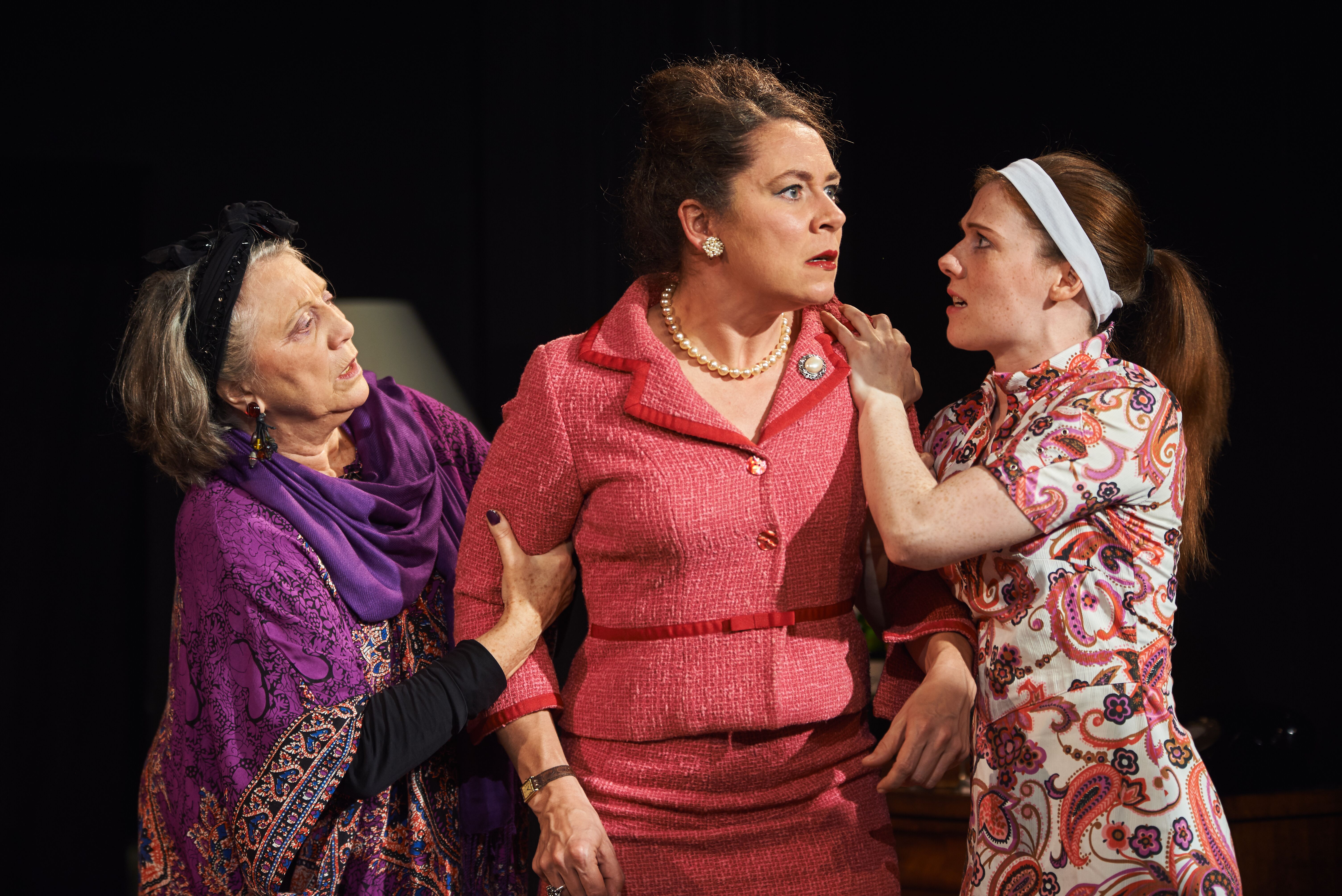
Jane (Anneli Page) is the boss, with a good balance of motivation and friendliness. Page easily adopts Jane’s quick wit but also shows some warmth and vulnerability; it’s a shame she is prevented from more than a bit of this. The character has an underlying humanity that is neglected in favour of style, but I chalk this up to a directorial choice. Ash Merat as Piers is the prodigal son with a dangerous edge, also well played. Both Mary Looby and Dan Shelton play three roles each and show excellent contrast between them. They are clearly skilled performers who deserve a shot at a meaty lead, but are excellent character actors as well.

My inkling is that the script is the issue here. It tends towards a circular structure with slow development and a few random sections of rhyming verse that don’t contribute anything other than questions about the reason for their existence. The storyline doesn’t follow a standard dramatic arc, which isn’t necessarily a problem, but the repetition employed quickly becomes tedious. The script could easily be halved and still make its point about the awfulness of the advertising industry, but at least the performances were good enough to get us through two hours of corporate rhetoric and pandering to the Tory party to make a buck.


The Play’s The Thing UK is an independent theatre criticism website maintained voluntarily. Whilst donations are never expected, they are hugely appreciated and will enable more time to be spent reviewing theatre productions of all sizes. Click here to make a donation with PayPal.

The Killing of Sister George, London Theatre Workshop

JHDTHmHNUC5s8ahQ6vv0FnjNF0ywJmSNOl7h0gT9Ch8,hFmORSc8H8GW1FxpEpv8GOdBhVvJqoliuWLo_jZszeU,PCCZDB9Yh7LIfBnwbk-dicJH55Con_eOwl7icS3jyXYIf a play includes the BBC, lesbians and emotional instability within the arts, it would be fair to assume it’s a contemporary text. The Killing of Sister George, written in 1964 by Frank Marcus, is refreshingly ahead of its time and despite its age, doesn’t feel particularly dated. In an excellent production by Artful Theatre, this all-female four hander kills off a beloved radio drama character to look at the difference between public perception and actual reality.

The cast of characters is a vibrantly coloured one. June Buckridge (Sioned Jones) has played Sister George on the popular radio drama “Applehurst” for over six years. Over that time, she’s lived with her “flatmate,” Alice “Childie” McNaught (Bryony Rawle) who she emotionally manipulates and abuses. Sister George is lovely and virtuous, June is anything but. Jones captures the blur between actor and long-embodied character exquisitely, embodying June’s aggression that covers her fragility. Sarah Shelton is Mrs. Mercy Croft, the BBC’s assistant executive head who is tasked with breaking bad news to June. Initially cold and businesslike, she warms to Rawle’s vulnerable Childie. Rounding off the cast is Janet Amsden as the eccentric clairvoyant Madame Xenia who lives upstairs, a woman who adds some much needed levity and stability. Marcus would have done well to include more of Madame Xenia, as even though there is plenty of comedy written into the script, the story is a dark one indeed. The four women fill the intimate venue with energy so it’s fit to burst.

Despite mentions of telegrams and conspicuously absent mobile phones and computers now vital to working professionals, the play feels modern due to themes that are still relevant. June and Sister George could not be more different, and the public adore Sister George; June doesn’t cope well under the immense pressure of living up to the ideals belonging to someone imaginary. June’s work-life balance is disturbed when Mrs Croft visits her home for meetings, a feeling actors know all to well what with the amount of admin and line learning that happen at home. There is also the implication that these women have no one else in the world that’s a friend or family. Of course there are work colleagues, clients, and fellow cast members, but there’s a desperation and heavy loneliness that hangs over these four.

I hadn’t been to London Theatre Workshop before, or seen a production of the quintessentially English The Killing of Sister George, and was impressed by both. A well-looked after gastro pub theatre space and a new-to-me play that could easily come across as stuffy and old fashioned is instead filled with life.


The Play’s The Thing UK is an independent theatre criticism website maintained voluntarily. Whilst donations are never expected, they are hugely appreciated and will enable more time to be spent reviewing theatre productions of all sizes. Click here to make a donation with PayPal.

Five Guys Chillin’, King’s Head Theatre

https://i0.wp.com/www.ayoungertheatre.com/wp-content/uploads/2015/10/5-Guys-Chillin.jpg“Netflix and chill” takes on new meaning in Five Guys Chillin’. Well, the “chill” part does, and is also substituted with “chill out”. Rather than awkward hetero teenagers using the word to arrange a sexual encounter, in this context it’s multiplied by whatever factor the host fancies to make a drug fuelled sex party, usually in someone’s home. The verbatim play, carved out of more than 50 hours of interview transcript, graphically details typical chill out behaviour as well as frank discussion of issues within the gay community. Despite many funny moments, some great staging, and the raising of important points, there is precious little plot; this makes the production more of a live interview with the questions omitted rather than a play that tells a story.
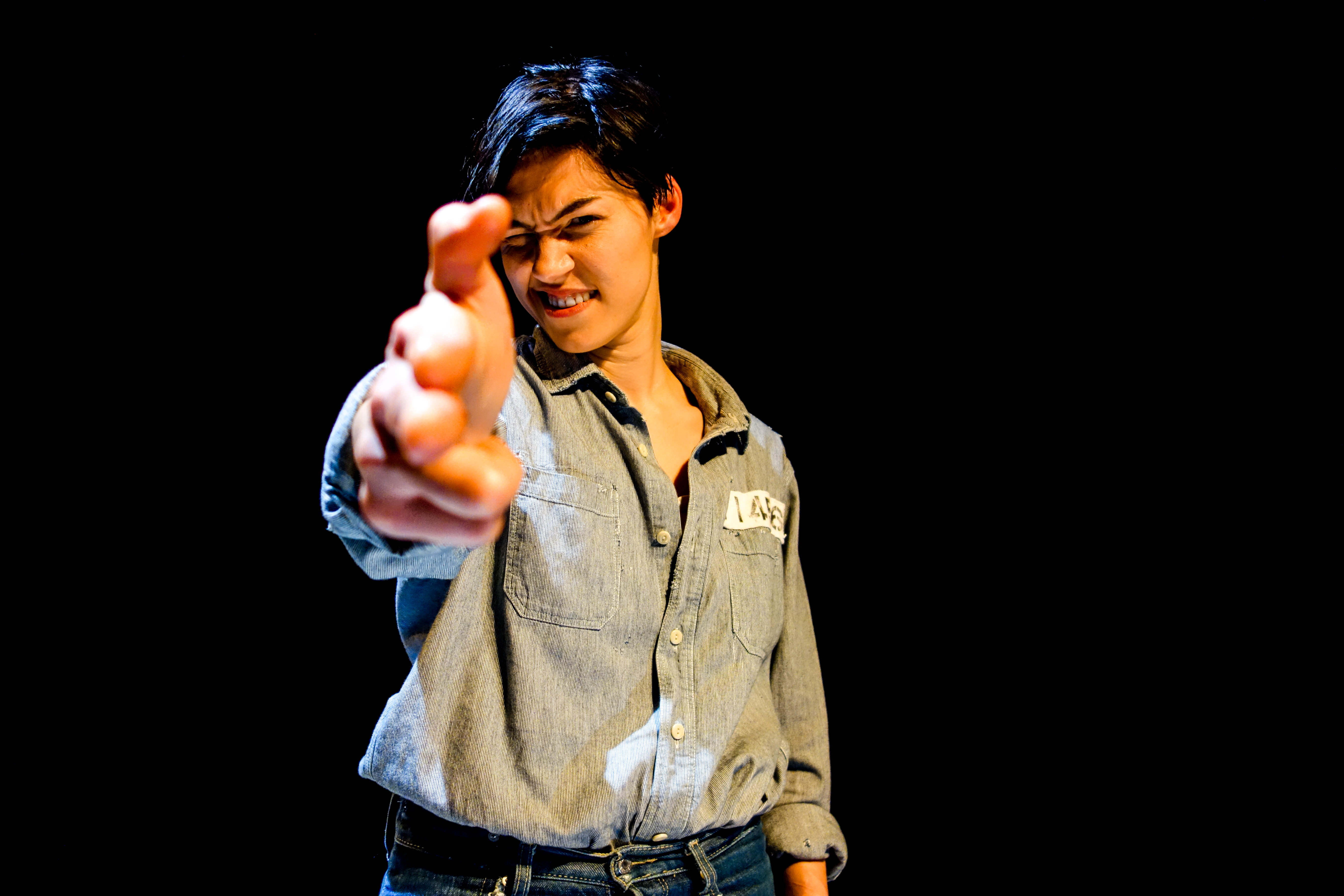
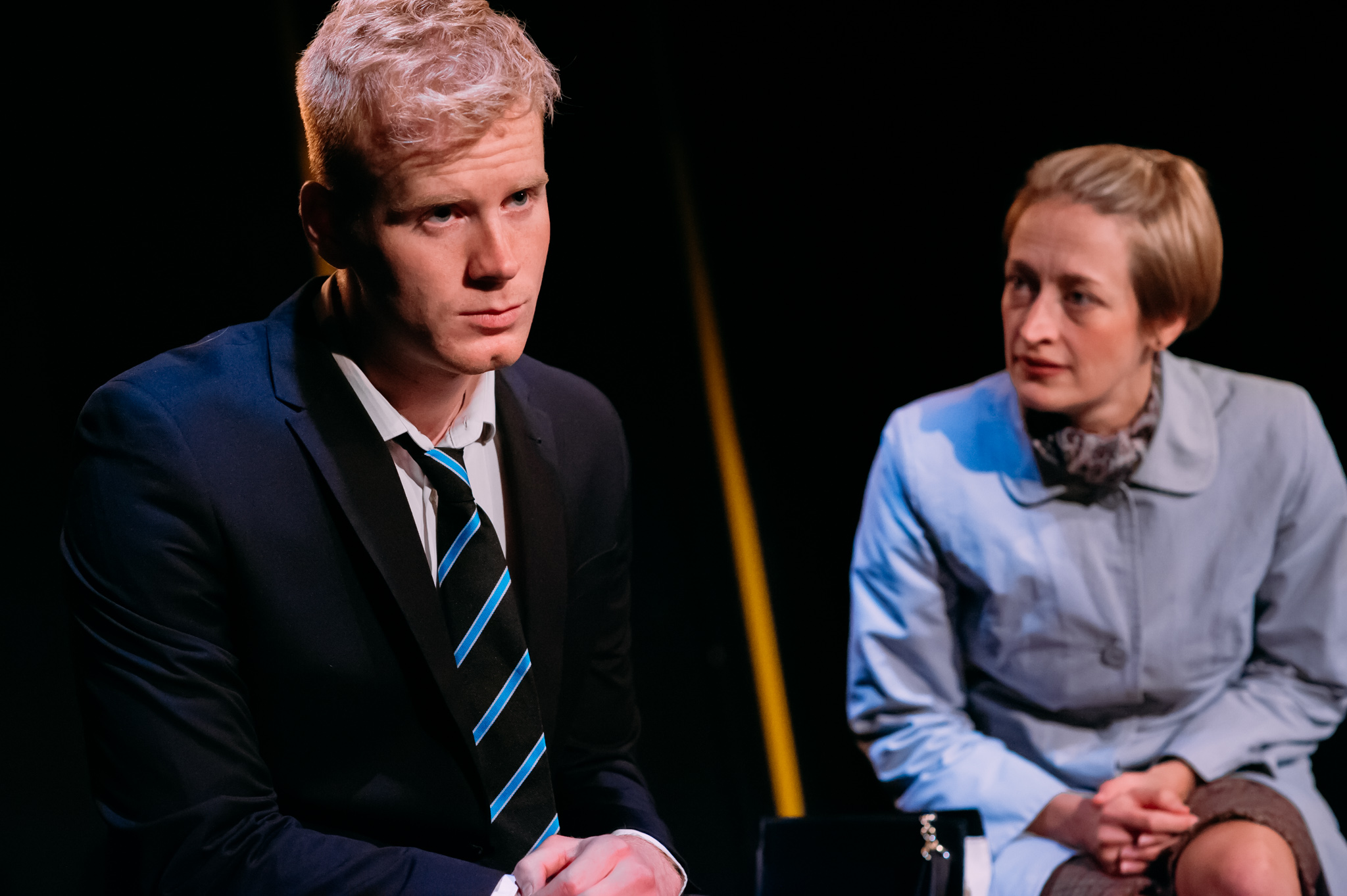
The performances are a mixed bag, and the script doesn’t support the actors by giving them many opportunities to respond. They speak in broken up monologues rather than dialoguing with each other; through they listen to what each other says, there is no natural conversation. It sounds rather fake and forced, because it is. Matthew Bunn’s J. is the notable exception, the hilarious host who loves drugs, but is unemployed and struggling with his HIV status. There are a couple of gorgeous sequences, by movement director Chris Cuming, that provide more atmosphere and characterisation than the script does; without showing explicit acts they express the drugged up, party vibe in the guys’ heads.

There’s a fair amount of gross-out humour, made all the more horrific by knowing that the events described actually happened at some point in real life. From drinking piss out of someone’s arse to having a preference for being pounded by gonorrhoea-ridden cocks because they’re self lubricating (#sorrynotsorry), there’s no shortage of bodily function nastiness. The predominantly male, and presumably gay, audience also find the descriptions repulsive. This is all balanced by serious talk about protection, STIs, drug addiction and the desperate search for intimacy within these casual encounters. Most culturally unique of the characters, Amrou Al-Kadhi plays character PJ of Pakistani decent who struggles to balance familial expectations with being an otherwise-out gay man. It’s a poignant reminder that people in this country still run the risk of being ostracised by their families because of their sexuality.

The confessional, eye-opening Five Guys Chillin’ is certainly a cultural experience for those not familiar with chill outs, but as a piece of theatre, the solely-verbatim script is a let down. Not that it doesn’t have some great moments, but a lack of dramatic arc and dialogue cobbled together from material that was originally solo doesn’t hold up for over an hour.


The Play’s The Thing UK is an independent theatre criticism website maintained voluntarily. Whilst donations are never expected, they are hugely appreciated and will enable more time to be spent reviewing theatre productions of all sizes. Click here to make a donation with PayPal.

The State vs John Hayes, King’s Head Theatre

Lucy Roslyn, The State vs John Hayes (c) Jemma Gross (7)Elyese Dukie is going to die tomorrow. Though she needs to get through tonight first, at least she’s not alone. We’re in there with her, in her cell on Texas’ Death Row in 1959, as is John Hayes. But we’re not really there, and neither is John. We’re all in Elyese’s head, a figment of her very ill mind, but she’s still going to get the chair in the morning because “they would never send John…but they would send me.” For one of fictional Elyese/John’s last hours, we join her on an exquisitely performed journey akin to riding a rollercoaster handcuffed and blindfolded as Elyese reviews the dark corners and glowing intimacies of her past that led her to this moment.

Epsilon Productions continues to mature with this topical, one-woman show that’s part of The King’s Head Theatre’s new, new writing festival, #Festival45. Lucy Roslyn’s script unfolds Elyese’s troubled past spiraling towards the moment she murders her husband Dale, lover Lorraine and births John Hayes, her killer alter-ego spawned from Schizophrenia, Multiple Personality Disorder or severe childhood trauma. Elyese certainly isn’t alone in her struggle against those that live inside her head but take over her body, what with 73% of female inmates in America currently diagnosed with mental health issues; the percentage of mentally ill prisoners in the less-aware 1950s is unimaginable.

Roslyn, who also performs, begins the piece as John. We only meet Elyese later. She embodies him with perfectly sculpted hand movements and a southern redneck accent, deep as John, light and fragile as Elyese. His/her charm and charisma is unquestionable but can turn to violence and grief on a hair trigger, showing Elyese as a victim of the system unable or unwilling to provide her with the care she needs. As such, it’s a powerful critique of the US justice system.

Lighting designer Sherry Coenen reminds us of John’s threatening presence with greenish pulses when Elyese is struck with a crippling back spasm, a symbol of the control he has over her. The subtle heartbeat in dangling filament lights is Elyese’s, which will cease all too soon as electricity surges through her slender, fragile-looking body. The current seating arrangement, irregular and with a thrust so deep it’s nearly in the round, didn’t quite work with the lighting – those sat along the back wall of the stage had lights in their eyes.

The script begins as a straightforward monologue to the audience, with John flirting and joking. The structure becomes fragmented as her mental state breaks down; though she evokes sympathy she also evokes fear. If John will kill those Elyese loves the most, anyone is at risk, though it’s understandable how people immediately fall for his charms. There are times where the text rambles, but these moments are few and lead up to important story points; Roslyn’s performance adds light and shade that keeps the momentum going. Her performance consistently captivates with its commitment and intensity as well as using high levels of detail to differentiate the two characters from each other. A political firecracker with a stellar performance and numerous layers, this Argus Angel winner packs one hell of a punch.


The Play’s The Thing UK is an independent theatre criticism website maintained voluntarily. Whilst donations are never expected, they are hugely appreciated and will enable more time to be spent reviewing theatre productions of all sizes. Click here to make a donation with PayPal.

Next Lesson, Pleasance Theatre

image1In 1998, Thatcher introduced controversial Section 28 that banned promotion of homosexuality, publishing materials that supported it and teaching its acceptability in schools. Playwright Chris Woodley, fascinated by the change in schools’ attitudes towards homosexuality in pupils and staff between his student years in the 1980s and his teaching career in the 2000s, documents the effects of Section 28 on those affiliated with schools: pupils, teachers, and staff and parents alike. The play loosely centres on the character Michael, a GCSE student at Beckenham High School in 1988, who returns to teach there in 1996. Though Section 28 was not repealed in England until 2003, difference becomes more acceptable as time passes but Woodley still shows the impact on individual lives through such bigoted legislation.

A diverse cast of characters populates Beckenham High over nearly 20 years with their day-to-day battles and victories of being gay during and after Section 28. Superbly acted and well-written, Woodley’s script contains excellent scenes but the story as a whole could use more focus on Michael, as his journey is partially eclipsed by episodes from the lives of other gay people working and studying at Beckenham High. Though their stories are equally valid, if this play were to be lengthened Michael’s character arc should move to the forefront to give the whole piece a stronger focus. The early part of the play shows Michael coming out to his mother, but the audience doesn’t see him again until years later as an English teacher. In the meantime, teachers battle against curriculum restrictions and the stigma of being out at work. Not that these are issues that ever disappear completely, but these early scenes capture the stress of being gay in a Section 28 world. During his teaching career, we meet other gay teachers and students who become increasingly comfortable with expressing their sexuality.

An ensemble of six adeptly play several roles each, except Stanley Eldridge as Michael. Director Andrew Beckett uses costume, small set changes, the year written on a chalkboard and music to indicate scene and character changes. Within the scenes, the direction is otherwise wonderfully unnoticeable. The cast is balanced, with no one standing out as stronger or weaker than the others and I’m hard-pressed to choose a personal favourite.

Some particularly good moments include Michael’s estranged mother surprising him at work on his birthday; the brightly coloured helium balloon and gift bag juxtapose his rage and her half-hearted apologies. The scenes discussing the impact of the Admiral Duncan bombing in 1999 on Michael’s life are powerfully moving and a reminder that the individuals cannot always speak for the entire gay community. Student Chloe (Anne Odeke) hilariously defends punching a male student after bullying her for being a lesbian to her form tutor. The script is filled with other great moments, but there was no singular moment of climax.

This is without a doubt an important play and introduces Woodley’s gift for creating excellent character-driven scripts. There is easily scope for this play to develop and it also deserves to be seen for its documentation of a moment in history that we have mercifully moved past, but its scars are still present in homophobia in and out of the classroom.


The Play’s The Thing UK is an independent theatre criticism website maintained voluntarily. Whilst donations are never expected, they are hugely appreciated and will enable more time to be spent reviewing theatre productions of all sizes. Click here to make a donation with PayPal.