Lemons Lemons Lemons Lemons Lemons, Camden People’s Theatre

rsz_8ba7e0f9-eb48-4cc6-a4fa-d91796add7eb-2060x1236

(c) Giulia Delprato

Austerity sucks. People all over the country have had their benefits cut, work opportunities reduced and wages frozen. Austerity has badly affected young people at the onset of their careers, inhibiting the making of an independent, adult life. Young couples don’t have it any easier, even if one of the pair has a great job. For Bernadette and Oliver, life’s about to get even harder. They live in a Britain where the government isn’t just limiting welfare, arts council grants and junior doctors’ salaries. The newest austerity measure is on their speech – not what they say, but how much. Every individual is limited to 140 words a day in Sam Steiner’s Lemons Lemons Lemons Lemons Lemons.

Steiner uses the word limit to frame Bernadette and Oliver’s journey as a couple and their efforts to overcome obstacles within their relationship. The audience sees them meet at a cat funeral, wake up together for the first time, make up coded abbreviations to use when the Hush Law comes into effect. They fight, they fuck, they count their words, and it’s lovely despite the dark premise. Euan Kitson (Oliver) and Beth Holmes (Bernadette) are charmingly intimate with each other, as they should be after their runs at Latitude, Edinburgh and Warwick Arts Centre. Fundamentally a love story, these two do their best to get by and stay together even though they’re chalk and cheese. Despite stylized blocking and choreography, and no physical contact for the entire play, these young actors are sweetly genuine.

The short scenes alternate between their pre- and post- speech limited relationship, with transitions well marked with movement and the use of microphones by director Ed Franklin. Steiner’s slow plot reveal keeps the audience keen, as do his conflicting characters trying to make it work one day at a time. The amount of time passing isn’t clear though, and there are logistical points that are ignored. Has the government installed internal speech limiters in everyone? If not, why don’t they ignore the law in the privacy of their homes? How does Bernadette go to work as a courtroom lawyer with a mere 140 words? How do they remember their word count? So many questions go unanswered which make the situation implausible, particularly with naturalistic performances.

Also jarring with the performance style is the abstract movement direction/choreography. With real-life dialogue and performance, the angular, distant movements provide visual variation that are pleasing to look at, but interfere with the actors’ connection to each other. In a world where words can’t be the sole means of communicating between a couple, there’s a blatant lack of contact even though they are often physically close. It makes sense to use movement to indicate scene changes, but the unfaltering style Franklin chooses is coldly repetitive. There’s a sense of showing off his cleverness or wanting to veer away from naturalism just for the sake of it. However, his sense of timing and interpretation of a script with little more than the dialogue and scene delineations is poignant and intuitive.

Considering production company Walrus are fresh out of Warwick uni and Lemons Lemons Lemons Lemons Lemons is the creative team’s first professional endeavor, this slightly dystopian two-hander is an excellent piece of theatre. With no set and a focus on the words that the government brutally restricts, this tale of young love is wonderfully performed and an easy, touching watch.


The Play’s The Thing UK is an independent theatre criticism website maintained voluntarily. Whilst donations are never expected, they are hugely appreciated and will enable more time to be spent reviewing theatre productions of all sizes. Click here to make a donation with PayPal.
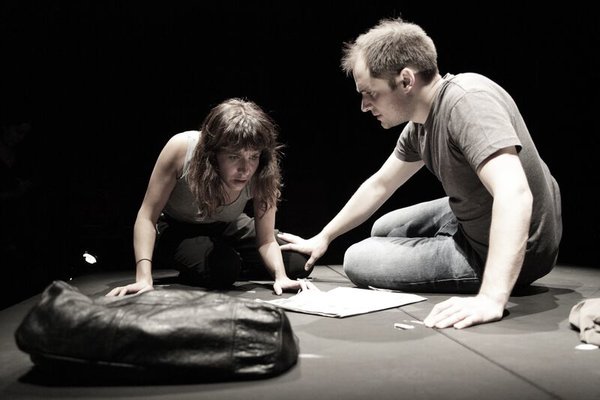
Claustrophobia, Hope Theatre

rsz_claustrophobia_at_hope_theatre__lgpr

I imagine getting stuck in a lift is pretty high on the list of “Worst Things Ever.” Well, it’s obviously not as horrible as the death of a loved one, terrorism, cancer and a host of other things, but in terms of scary experiences that can ruin your day, it’s definitely up there. And, the longer you’re trapped, the worse it gets. In Claustrophobia, Aidan and Rachel are on their way home when the lift their in stops moving. As minutes turn into hours, their phones run out of battery and they run out of food and water. Mental and emotional deterioration sets in.

Playwright Jason Hewitt cleverly breaks down the play’s structure as the characters do the same, and employs an ending device that creates ambiguity and questions about what is and isn’t real. Though the script addresses the crisis effectively through its structure, the characters lack development and some of the scene transitions are clunky. Director Sharon Burrell does an admirable job with this well-performed two hander in an intimate space, but elements of the script let it down.

Michael Cusick and Natasha Pring play defensive, closed characters that don’t give much away about themselves for most of the show. They’re damaged people and often quite rude to each other, but their language conceals the inner workings of their minds. Their vulnerability comes through in abstract moments later in the play. Both attack the roles with commitment and energy that is amplified on the small, in-the-round stage and are a pleasure to watch.

Lighting by Tom Burgess and his projections (co-designed with Burrell) are rich and visceral during the character’s expressionist and dreaming moments. The projected video is abstract and wonderfully evokes specific moods that the lighting matches. This tech augments the language and adds clarity to sections of the script that veer from the previously established naturalism, but the transitions between these two styles are abrupt, and never fully explained; there is an unsatisfying lack of connection to the characters’ real life.

This is Hewitt’s first full-length play and even though it needs work, it shows his capacity for creative thought and a confidence to play with form. Burrell’s use of the space and staging is excellent and supports the script’s ideas, as do Cusick and Pring’s great performances. Though there are some issues, this is a polished production that shows promise.


The Play’s The Thing UK is an independent theatre criticism website maintained voluntarily. Whilst donations are never expected, they are hugely appreciated and will enable more time to be spent reviewing theatre productions of all sizes. Click here to make a donation with PayPal.

Spin Cycle, Theatre N16

https://pbs.twimg.com/media/CTpuSCxWcAEiYNI.jpgWe’ve seen “Mad Men,” or at least heard the clichés about cutthroat ad agency types. Competition for clients, drug and drink fueled late nights, ruthless bidding for commissions regardless of morals. Steve Thompson’s Spin Cycle uses all these ingredients, but the writing style doesn’t match director Stephen Oswald’s delivery. It’s either a farce that was delivered as naturalism, or a naturalistic piece (albeit with a liberal use of humour) that attempts a farcical production. All of the characters are pretty stereotypical with at least some degree of reinforcement from the script, causing the two hours of day-to-day office life to feel repetitive and lacking in depth. There are clear individual storylines, but everything that goes wrong is treated as a crisis that’s conveniently and speedily resolved. The performances are generally quite good in this strong ensemble, but the actors are unable to show much range or development due to a lack of character journey.
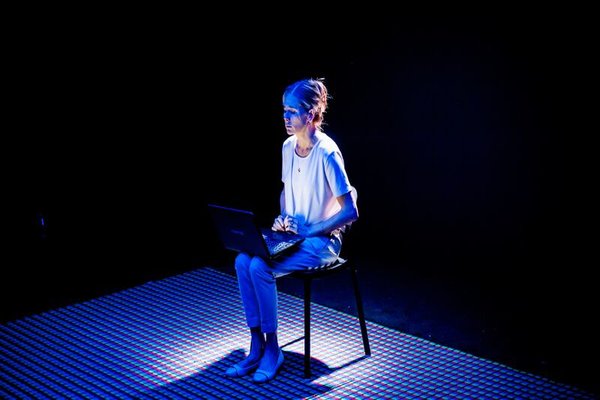
Jane (Anneli Page) is the boss, with a good balance of motivation and friendliness. Page easily adopts Jane’s quick wit but also shows some warmth and vulnerability; it’s a shame she is prevented from more than a bit of this. The character has an underlying humanity that is neglected in favour of style, but I chalk this up to a directorial choice. Ash Merat as Piers is the prodigal son with a dangerous edge, also well played. Both Mary Looby and Dan Shelton play three roles each and show excellent contrast between them. They are clearly skilled performers who deserve a shot at a meaty lead, but are excellent character actors as well.

My inkling is that the script is the issue here. It tends towards a circular structure with slow development and a few random sections of rhyming verse that don’t contribute anything other than questions about the reason for their existence. The storyline doesn’t follow a standard dramatic arc, which isn’t necessarily a problem, but the repetition employed quickly becomes tedious. The script could easily be halved and still make its point about the awfulness of the advertising industry, but at least the performances were good enough to get us through two hours of corporate rhetoric and pandering to the Tory party to make a buck.


The Play’s The Thing UK is an independent theatre criticism website maintained voluntarily. Whilst donations are never expected, they are hugely appreciated and will enable more time to be spent reviewing theatre productions of all sizes. Click here to make a donation with PayPal.

Four Minutes Twelve Seconds, Trafalgar Studios

rsz_four_minutes_twelve_seconds_-_kate_maravan_2_-_photo_ikin_yumWhat do you do if your teenaged son’s ex-girlfriend accuses him of sexual assault? What if her family refuses to go to the police and takes justice into their own hands instead? Di (Kate Maravan) and David (Jonathan McGuinness) don’t know either, and they’re living this nightmare every moment of Four Minutes Twelve Seconds. They have huge aspirations for their bright boy, hoping he makes it out of the Croydon that they themselves never managed to leave. But those dreams are teetering precariously on top of vicious rumours…or are they facts? Seventeen-year-old Jack who the audience never sees, may or may not have uploaded a film, that may or may not show him forcing himself on his girlfriend Cara (Ria Zmitrowicz) in the run-up to his A-level exams. As his parents try to discover the objective truth of the situation, some awful discoveries come to light. In short, fast scenes spanning several months, social class, parental aspiration and sexism influence the four characters’ choices in this riveting, dialogue-driven one-act.

This energetic first play by James Fritz, writer of the acclaimed Ross & Rachel at this year’s Edinburgh Fringe, doesn’t shy away from honest, infuriating material confronting ingrained attitudes that interfere with rape convictions (at the end of the play I was so angry I was shaking with the knowledge that these sorts of things probably happen all the time). A ferocious Maravan leads with an intense, focused performance and a satisfying character journey. To see a mother cope with drastically altering perceptions of her own child is heart rending, particularly as her husband’s views often clash with her own.

This is definitely an “issue” play, albeit a sophisticated one, that looks at the role of social media and the selfie culture in the lives of young people who don’t fully understand the implications of putting every detail of their life on the internet. It also looks at consent, sexist definitions of rape and how police view rape accusations. There’s also the question of how to treat crimes committed within one’s own family, vigilante justice and taking responsibility for mistakes. It’s a packed script, but manages to not overwhelm with ideas. Fritz’s dialogue is advanced for a first play, if formulaic in its gradual revealing of information. He liberally uses humour and nuanced humanity to counter the dark subject matter; these characters could easily be portrayed as stereotypes, like the sort in a bad TIE play.

On that note, this would be an excellent production to tour to secondary schools, colleges and unis, particularly since this attitude is so prevalent: https://metrouk2.files.wordpress.com/2015/10/12165535_470783216459605_1739814260_o.jpg?w=748&h=561&crop=1Frankly, this is a crucial piece of theatre that all young people growing up in our cyber-obsessed culture should see. With simple design elements that draw attention to the dialogue and story, it would be easy to tour this powerful production.
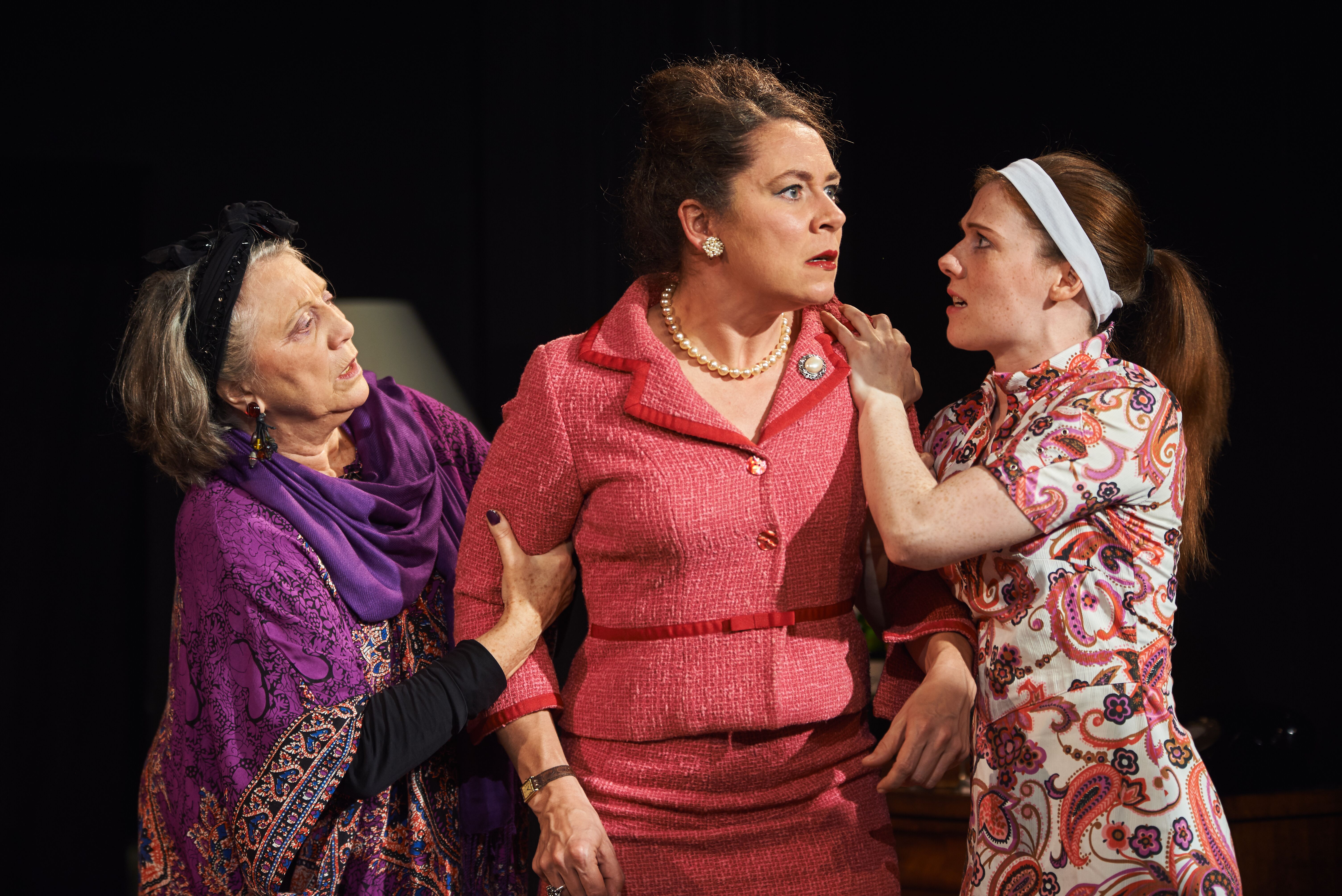
Four Minutes Twelve Seconds is hip as well as topical and provocative. Witholding Jack’s appearance draws attention to the wider impact of his actions rather than wallowing in his emotional state, a wise choice by Fritz. Excellent performances by the company and snappy dialogue keep our attention as well as enrage, but what would we do if we were in Di and David’s shoes? Though we all strive for justice for rape victims, we are but judgemental, selfish humans after all, and that is the real flaw in the system.


The Play’s The Thing UK is an independent theatre criticism website maintained voluntarily. Whilst donations are never expected, they are hugely appreciated and will enable more time to be spent reviewing theatre productions of all sizes. Click here to make a donation with PayPal.

The Killing of Sister George, London Theatre Workshop

JHDTHmHNUC5s8ahQ6vv0FnjNF0ywJmSNOl7h0gT9Ch8,hFmORSc8H8GW1FxpEpv8GOdBhVvJqoliuWLo_jZszeU,PCCZDB9Yh7LIfBnwbk-dicJH55Con_eOwl7icS3jyXYIf a play includes the BBC, lesbians and emotional instability within the arts, it would be fair to assume it’s a contemporary text. The Killing of Sister George, written in 1964 by Frank Marcus, is refreshingly ahead of its time and despite its age, doesn’t feel particularly dated. In an excellent production by Artful Theatre, this all-female four hander kills off a beloved radio drama character to look at the difference between public perception and actual reality.

The cast of characters is a vibrantly coloured one. June Buckridge (Sioned Jones) has played Sister George on the popular radio drama “Applehurst” for over six years. Over that time, she’s lived with her “flatmate,” Alice “Childie” McNaught (Bryony Rawle) who she emotionally manipulates and abuses. Sister George is lovely and virtuous, June is anything but. Jones captures the blur between actor and long-embodied character exquisitely, embodying June’s aggression that covers her fragility. Sarah Shelton is Mrs. Mercy Croft, the BBC’s assistant executive head who is tasked with breaking bad news to June. Initially cold and businesslike, she warms to Rawle’s vulnerable Childie. Rounding off the cast is Janet Amsden as the eccentric clairvoyant Madame Xenia who lives upstairs, a woman who adds some much needed levity and stability. Marcus would have done well to include more of Madame Xenia, as even though there is plenty of comedy written into the script, the story is a dark one indeed. The four women fill the intimate venue with energy so it’s fit to burst.

Despite mentions of telegrams and conspicuously absent mobile phones and computers now vital to working professionals, the play feels modern due to themes that are still relevant. June and Sister George could not be more different, and the public adore Sister George; June doesn’t cope well under the immense pressure of living up to the ideals belonging to someone imaginary. June’s work-life balance is disturbed when Mrs Croft visits her home for meetings, a feeling actors know all to well what with the amount of admin and line learning that happen at home. There is also the implication that these women have no one else in the world that’s a friend or family. Of course there are work colleagues, clients, and fellow cast members, but there’s a desperation and heavy loneliness that hangs over these four.

I hadn’t been to London Theatre Workshop before, or seen a production of the quintessentially English The Killing of Sister George, and was impressed by both. A well-looked after gastro pub theatre space and a new-to-me play that could easily come across as stuffy and old fashioned is instead filled with life.


The Play’s The Thing UK is an independent theatre criticism website maintained voluntarily. Whilst donations are never expected, they are hugely appreciated and will enable more time to be spent reviewing theatre productions of all sizes. Click here to make a donation with PayPal.

The Devil is an Ass, Rose Playhouse

rsz_devil-is-an-ass-700x455Enthusiastic little devil Pug wants a crack at antagonizing mortals, but big man Satan isn’t sure he’s ready. After some discussion, Pug eventually gets his way and finds himself in London, where he is encouraged to bother greedy Fabian Fitzdottrell, an odd little man obsessed with using the dark arts to get rich. Taking up a position as his servant, Pug witnesses all sorts of bad behaviour and scheming from Fitzdottrell and the various con men after his money. Ben Jonson’s The Devil is an Ass is less about the devil and more about devilment, and Mercurius bring this farcical, Jacobean world to life with a snappy edit, good energy and some excellent performances in original dress.

At just over an hour, the edited script becomes focused on plot points rather than character development, but it works well for this story consisting of constant attempts at trickery that go wrong. Short, energetic scenes keep the action ticking along nicely in The Rose’s intimate staging area; only two moments are staged at the back of the archaeological site across the pool of water preserving the theatre’s remains. It’s a shame to rarely this part of such a unique venue, particularly as it would have expedited some of the longer transitions. Director Jenny Eastop’s use of fabric drapes and a few wooden chairs to create various locations is lovely though, particularly when arranged to make windows across a courtyard from which handsome Wittipol (Monty D’Inverno) attempts to woo Fitzdottrell’s much abused wife (Beth Eyre). Handy signs also add clarity and sumptuousness to a story driven by money and deception.

The men lead in the performances, with Michael Watson-Gray as the hapless Fitzdottrell who is unable to decline Meercraft’s (Benjamin Garrison) blatant exploitation of his greediness. Watson-Gray’s Fitzdottrell is also wonderfully abhorrent in the way he treats his wife and the men that he, in turn, also tries to con. Garrison gives a performance nearly identical to the style of Jack Whitehall, but this professional debut of a recent graduate shows confidence, presence and style. D’Inverno is delightful disguised as a Spanish lady in his attempts to get some alone time with Mistress Fitzdottrell, and Nicholas Oliver as Ambler is also very good. Some of the other performances lack confidence and seem unsure about handling the text, but do not detract from the others much.

Rather than forcing this play into an unrelated time period, Eastop wisely focuses on the text-based comedy and leaves the setting in its original time and place. As Pug becomes more and more baffled by the antics of these mere mortals and misses the roaring fires of home, his frustration eventually explodes after a run in with a lady of fashion, of which there is no greater hell. With a focus on money as much as the dark arts, there is some contemporary relevance, but it is very much a relic of its time. There are definitely some great choices in Mercurius’ funny production of Jonson’s rarely staged play that makes it worth seeing in this very special venue.


The Play’s The Thing UK is an independent theatre criticism website maintained voluntarily. Whilst donations are never expected, they are hugely appreciated and will enable more time to be spent reviewing theatre productions of all sizes. Click here to make a donation with PayPal.

Invisible Treasure, Ovalhouse Theatre

https://files.list.co.uk/images/i/invisible-treasure-lst184367.jpg

Invisible Treasure has no script and no actors. It’s not a play, but a playspace. For this hour long part-video game, part-puzzle, the audience/participants must work together to interpret the cryptic tasks that pop up on a small screen in the sterile room where they are deposited by theatre staff. The sensors, cameras and microphones that monitor the group at all times determine whether or not you progress to the next level or not, and the chance of failure is very real indeed. A giant white rabbit sinisterly lurks in the corner, its unblinking eyes the Big Brother that is unseen but all seeing. As the levels get harder, group dynamics become more pronounced. Emotions build and there’s potential for rebellion, made more exciting by each group’s unique composition. fanSHEN’s installation/event/environment’s use of interactive technology gives audiences a high degree of agency, but is still a powerful reminder that we are never truly free.

Hellicar & Lewis’ technical design is hugely impressive, or at least it is to a tech Luddite like myself. Others may find it less so but the unification and application are still incredibly inventive. The levels’ tasks require both problem solving and play that the group, on the whole, enjoyed even though some went on a bit too long. Those that aren’t keen on audience interaction or are introverted may find it challenging to engage, but as everyone is in the same position, it also might not feel so threatening. With clear leaders and followers quickly emerging, it’s possible to not contribute ideas but not joining in doesn’t feel like an option. It’s fascinating to watch others, and easy to let go and remember the childlike joy of playing without knowing where the game will lead.

When describing the experience with a friend afterwards, he boldly stated that it doesn’t sound like theatre. To be honest, I still haven’t decided if it is. But it is incredibly theatrical. With practitioners constantly trying to push the limits of immersive and interactive theatre, Invisible Treasure is certainly at the forefront and will create a personal experience and reaction for each person that attends. It’s tempting to go again and see what differs.

On completion of the levels, bonus rounds and free play sections the group is released into an analogue liminal space to process their thoughts and feedback on their experience. This relaxed environment provides an opportunity to decompress and discuss, but could, for some, lessen the impact of the experience by discovering how it works. Though this project is still in the early stages of its development, its certainly furthering the merging of theatre and gaming to empower audiences, and a wonderfully fun experience.


The Play’s The Thing UK is an independent theatre criticism website maintained voluntarily. Whilst donations are never expected, they are hugely appreciated and will enable more time to be spent reviewing theatre productions of all sizes. Click here to make a donation with PayPal.

Five Guys Chillin’, King’s Head Theatre

https://i0.wp.com/www.ayoungertheatre.com/wp-content/uploads/2015/10/5-Guys-Chillin.jpg“Netflix and chill” takes on new meaning in Five Guys Chillin’. Well, the “chill” part does, and is also substituted with “chill out”. Rather than awkward hetero teenagers using the word to arrange a sexual encounter, in this context it’s multiplied by whatever factor the host fancies to make a drug fuelled sex party, usually in someone’s home. The verbatim play, carved out of more than 50 hours of interview transcript, graphically details typical chill out behaviour as well as frank discussion of issues within the gay community. Despite many funny moments, some great staging, and the raising of important points, there is precious little plot; this makes the production more of a live interview with the questions omitted rather than a play that tells a story.
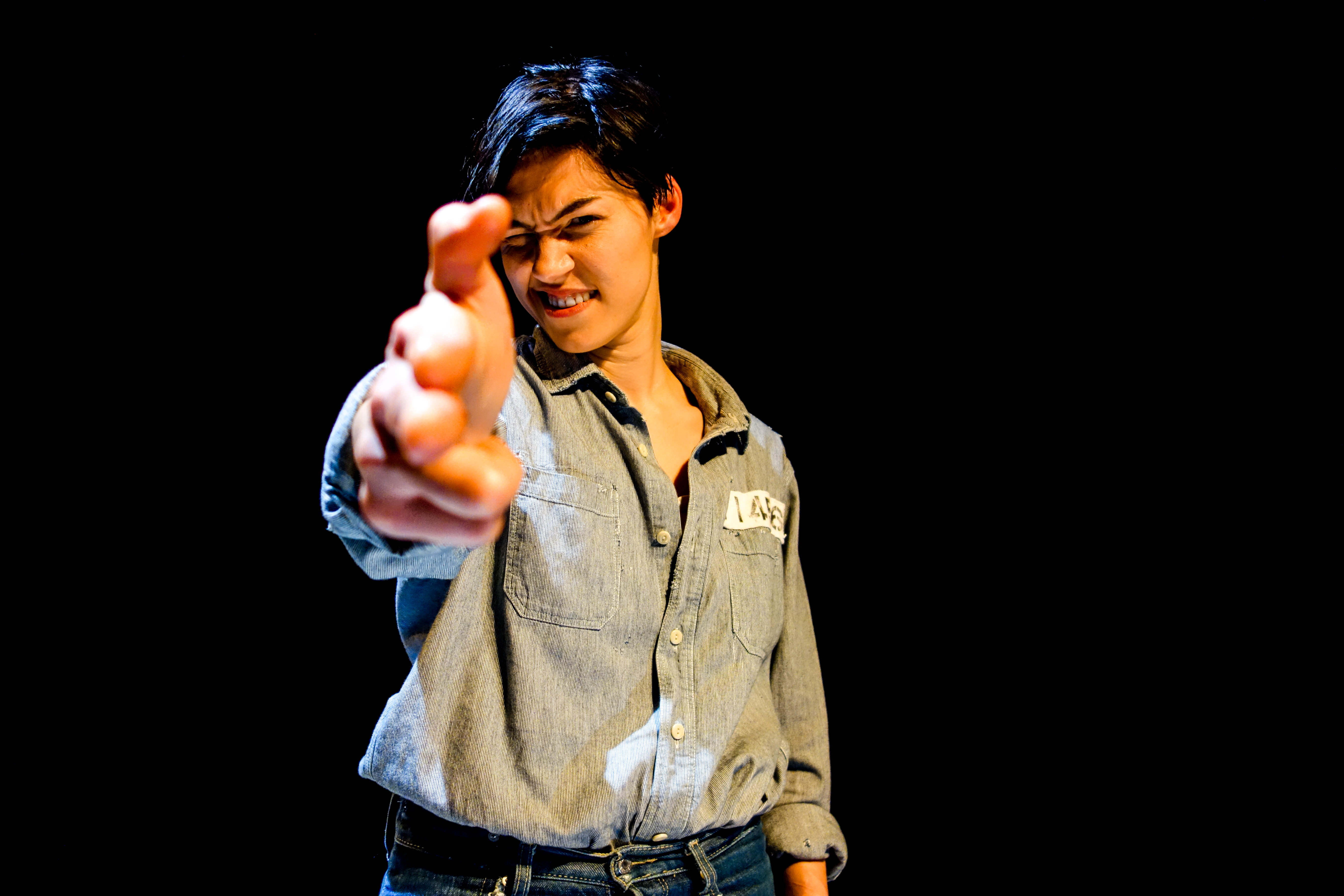
The performances are a mixed bag, and the script doesn’t support the actors by giving them many opportunities to respond. They speak in broken up monologues rather than dialoguing with each other; through they listen to what each other says, there is no natural conversation. It sounds rather fake and forced, because it is. Matthew Bunn’s J. is the notable exception, the hilarious host who loves drugs, but is unemployed and struggling with his HIV status. There are a couple of gorgeous sequences, by movement director Chris Cuming, that provide more atmosphere and characterisation than the script does; without showing explicit acts they express the drugged up, party vibe in the guys’ heads.

There’s a fair amount of gross-out humour, made all the more horrific by knowing that the events described actually happened at some point in real life. From drinking piss out of someone’s arse to having a preference for being pounded by gonorrhoea-ridden cocks because they’re self lubricating (#sorrynotsorry), there’s no shortage of bodily function nastiness. The predominantly male, and presumably gay, audience also find the descriptions repulsive. This is all balanced by serious talk about protection, STIs, drug addiction and the desperate search for intimacy within these casual encounters. Most culturally unique of the characters, Amrou Al-Kadhi plays character PJ of Pakistani decent who struggles to balance familial expectations with being an otherwise-out gay man. It’s a poignant reminder that people in this country still run the risk of being ostracised by their families because of their sexuality.

The confessional, eye-opening Five Guys Chillin’ is certainly a cultural experience for those not familiar with chill outs, but as a piece of theatre, the solely-verbatim script is a let down. Not that it doesn’t have some great moments, but a lack of dramatic arc and dialogue cobbled together from material that was originally solo doesn’t hold up for over an hour.


The Play’s The Thing UK is an independent theatre criticism website maintained voluntarily. Whilst donations are never expected, they are hugely appreciated and will enable more time to be spent reviewing theatre productions of all sizes. Click here to make a donation with PayPal.

The State vs John Hayes, King’s Head Theatre

Lucy Roslyn, The State vs John Hayes (c) Jemma Gross (7)Elyese Dukie is going to die tomorrow. Though she needs to get through tonight first, at least she’s not alone. We’re in there with her, in her cell on Texas’ Death Row in 1959, as is John Hayes. But we’re not really there, and neither is John. We’re all in Elyese’s head, a figment of her very ill mind, but she’s still going to get the chair in the morning because “they would never send John…but they would send me.” For one of fictional Elyese/John’s last hours, we join her on an exquisitely performed journey akin to riding a rollercoaster handcuffed and blindfolded as Elyese reviews the dark corners and glowing intimacies of her past that led her to this moment.

Epsilon Productions continues to mature with this topical, one-woman show that’s part of The King’s Head Theatre’s new, new writing festival, #Festival45. Lucy Roslyn’s script unfolds Elyese’s troubled past spiraling towards the moment she murders her husband Dale, lover Lorraine and births John Hayes, her killer alter-ego spawned from Schizophrenia, Multiple Personality Disorder or severe childhood trauma. Elyese certainly isn’t alone in her struggle against those that live inside her head but take over her body, what with 73% of female inmates in America currently diagnosed with mental health issues; the percentage of mentally ill prisoners in the less-aware 1950s is unimaginable.

Roslyn, who also performs, begins the piece as John. We only meet Elyese later. She embodies him with perfectly sculpted hand movements and a southern redneck accent, deep as John, light and fragile as Elyese. His/her charm and charisma is unquestionable but can turn to violence and grief on a hair trigger, showing Elyese as a victim of the system unable or unwilling to provide her with the care she needs. As such, it’s a powerful critique of the US justice system.

Lighting designer Sherry Coenen reminds us of John’s threatening presence with greenish pulses when Elyese is struck with a crippling back spasm, a symbol of the control he has over her. The subtle heartbeat in dangling filament lights is Elyese’s, which will cease all too soon as electricity surges through her slender, fragile-looking body. The current seating arrangement, irregular and with a thrust so deep it’s nearly in the round, didn’t quite work with the lighting – those sat along the back wall of the stage had lights in their eyes.

The script begins as a straightforward monologue to the audience, with John flirting and joking. The structure becomes fragmented as her mental state breaks down; though she evokes sympathy she also evokes fear. If John will kill those Elyese loves the most, anyone is at risk, though it’s understandable how people immediately fall for his charms. There are times where the text rambles, but these moments are few and lead up to important story points; Roslyn’s performance adds light and shade that keeps the momentum going. Her performance consistently captivates with its commitment and intensity as well as using high levels of detail to differentiate the two characters from each other. A political firecracker with a stellar performance and numerous layers, this Argus Angel winner packs one hell of a punch.


The Play’s The Thing UK is an independent theatre criticism website maintained voluntarily. Whilst donations are never expected, they are hugely appreciated and will enable more time to be spent reviewing theatre productions of all sizes. Click here to make a donation with PayPal.

Hello Again, Hope Theatre

https://i0.wp.com/grumpygaycritic.co.uk/wp-content/uploads/2015/10/Hello-Again-1402b.jpg

Knickers, bras and other vintage undergarments (oh my!) dangle from the Hope Theatre ceiling in dim light, the discarded ghosts of sexual encounters long past. Arthur Schnitzler’s 1897 Reigen, or La Ronde as it is more commonly known from the French translation, is reinvented in musical form in Michael John LaChiusa’s early 1990s Hello Again. Not content with the original story, LaChiusa spreads Schnitzler’s shags, blowjobs and wanks over the 21st century, updates some of the characters, includes gay relationships and adds a nearly continuous score mostly of duets, with musical influences from a host of eras. The sex is seen rather than just talked about, but otherwise Schnitzler’s format is replicated. Five actors each takes two characters and accompanied by a solitary keyboard, create an intimately filthy but strangely moving chamber musical in one of London’s newest pub theatres.

Hello Again, though titillating, also looks at the desire for sexual satisfaction through entirely unromantic, desperate scenarios. In ten short scenes, we see an array of social classes, professions and sexualities get their jollies before they run out of time; there’s the married housewife in her affair with a student, the soldier and the nurse before he ships out and the gentleman and cabin boy on the sinking Titanic amongst others. One-off and long-running relationships are accompanied by a range of musical styles on a bare bones set, but the minimalism means nothing is held back and it’s practically in your lap if you’re in the front row. Though there’s plenty of bonking, little is seen – a bum here, cleavage there; the acts themselves are staged realistically rather than stylized or hinted at by director Tania Azevedo. In our porno-fied modern culture where hardcore images and video are a couple of clicks away, to show the grunting and thrusting act without the bits strikes an interesting balance between honesty and discretion. With the audience split over three sides, more diagonals could have been used in the staging to improve sightlines for everyone, but otherwise the small space with no backstage is used well.

LaChiusa keeps the scenes short, but this enhances the immediacy and primal nature of sex. There are some good numbers, but the hodge podge of styles prevents much in the way of recurring motifs. The settings and characters are clear and believable, though their brevity needs the characters to get to the point quickly. As we don’t really get to know these people before us, they become an everyman of their character type: they are us, and we could easily be them. The ensemble cast is consistently good, with newcomer Isabella Messarra and veteran Miles Western giving the most striking vocal performances. Messarra’s Nurse is a wonderful force that literally dominates the posh student she cares for, Western is the smug senator exploiting a beautiful but lonely film star.

This is an excellent and largely faithful adaption of Schnitzler’s play that doesn’t shy away from explicitly prurient moments all sexual human beings can relate to. LaChiusa’s characters speak to all of us, even if his music is less satisfying. Azevedo’s direction and multi-roll casting suits the piece, as the intimate venue fits this infrequently staged and rarely seen musical.


The Play’s The Thing UK is an independent theatre criticism website maintained voluntarily. Whilst donations are never expected, they are hugely appreciated and will enable more time to be spent reviewing theatre productions of all sizes. Click here to make a donation with PayPal.